Three Deathbed Wishes That Shaped Israel's Return
Jacob made Joseph swear an oath. Simeon confessed he had wanted Joseph dead. Moses came back to a country built on both stories.
Table of Contents
 Click for full size
The father who refused Egyptian soil
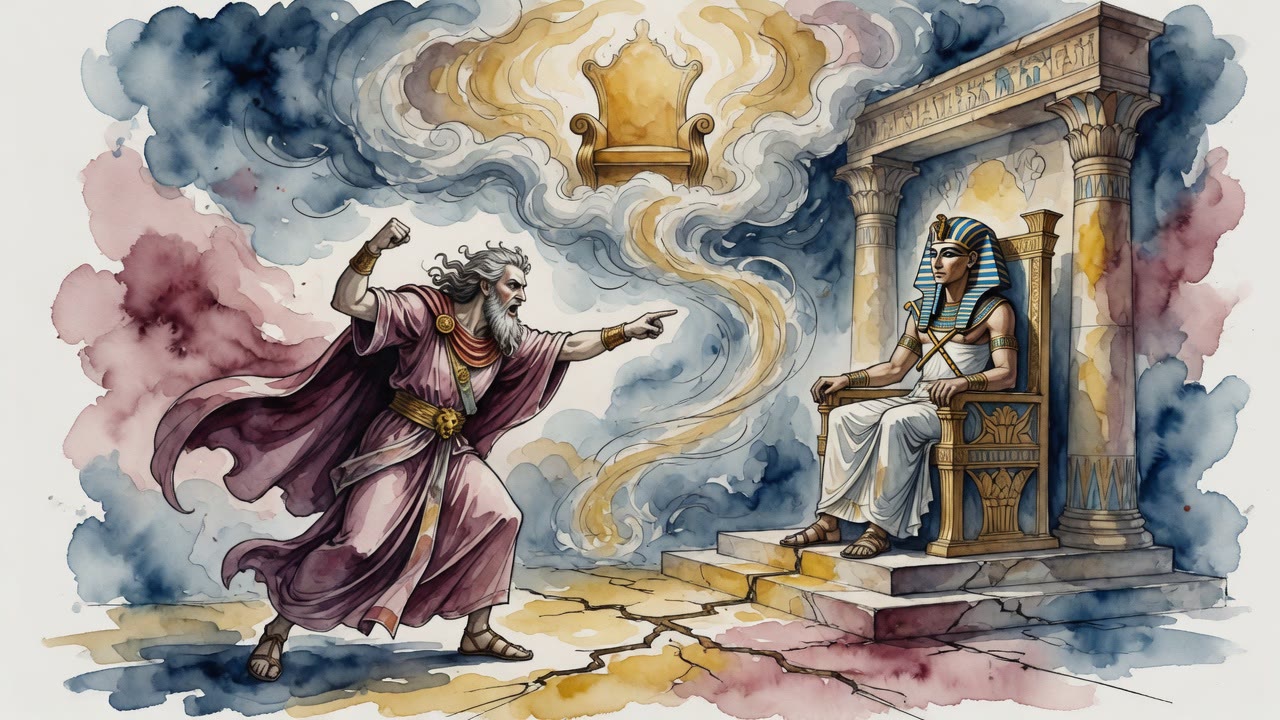
Jacob had seventeen good years in Egypt with Joseph. Then his body failed, and he called the one son who could actually do something about a burial. Not Reuben. Not Judah. Joseph, because Joseph held a vizier's seal and could speak to Pharaoh in a language Pharaoh would respect.
"If I have found grace in thy sight," he said, "bury me not, I pray thee, in Egypt."
He gave reasons. A man in Jacob's position, making this request from a dying bed in a foreign country, knew he only had one chance to make the argument. He did not want vermin from Egyptian soil at his body. He did not want his descendants to confuse Egypt with a holy place because their father lay there. He did not want his grave turned into an idolater's shrine. And he wanted to lie beside Abraham and Isaac at Machpelah, so that on the day of resurrection he would not have to roll underground from Egypt to Canaan while others rose where they already rested.
He asked three times. A man of Jacob's stature should not have needed to ask once. But he was old, dependent, in someone else's country. Even a patriarch depends on favors in a strange land.
The oath Joseph did not want to swear
Joseph said yes immediately. But Jacob was not satisfied with a simple yes. He said: swear to me. Put your hand under my thigh and swear.
The tradition that Louis Ginzberg gathered in his Legends of the Jews, drawn from centuries of rabbinic commentary, says Joseph resisted the oath. Not because he intended to bury his father in Egypt, but because the oath would bind him to negotiate with Pharaoh for the right to leave the country, and Pharaoh might refuse. Joseph would then be in violation of an oath to his dying father, which was a worse situation than not having sworn at all.
Jacob told him to swear anyway. The man who had wrestled with an angel and walked away with a limp had spent his whole life trusting the outcome to God while doing everything in his human power to secure a result. He was not going to stop that practice on his deathbed.
Joseph swore. Jacob died comforted. And then Joseph had to go explain to Pharaoh that he needed a funeral leave of absence to carry a patriarch's body back to Canaan across a desert.
The brother who confessed at his own death
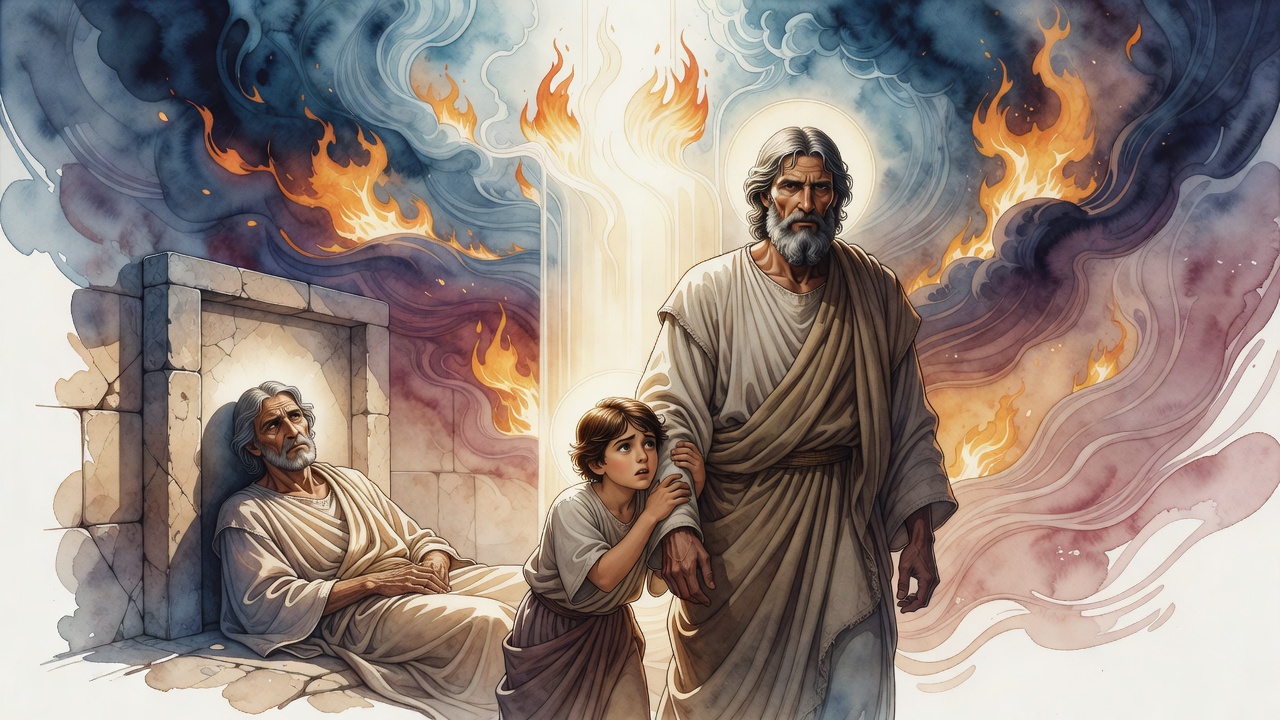
Simeon died knowing what he had done. He had been the one, when Joseph went out to find his brothers in the fields at Dothan, who had first proposed killing him. The others modified the plan to selling instead. Simeon had wanted blood.
The legends say that as Simeon lay dying in Egypt he called his children around him and made a confession. He told them exactly what he had done and exactly why it was wrong. He told them the sins he had committed against Joseph were the source of his own suffering, and he instructed them to avoid the same error. Do not let envy into the house. Envy drove him to want his own brother dead. Envy was a poison that killed the person who drank it.
He did not ask them to tell Joseph. He asked them to remember the lesson. It was not a scene of reconciliation with the brother who had, in the end, saved the whole family from famine. It was a private accounting, done at the end of a long life, to make sure at least his children would not repeat his worst moment.
Moses walked back into a country built on both stories
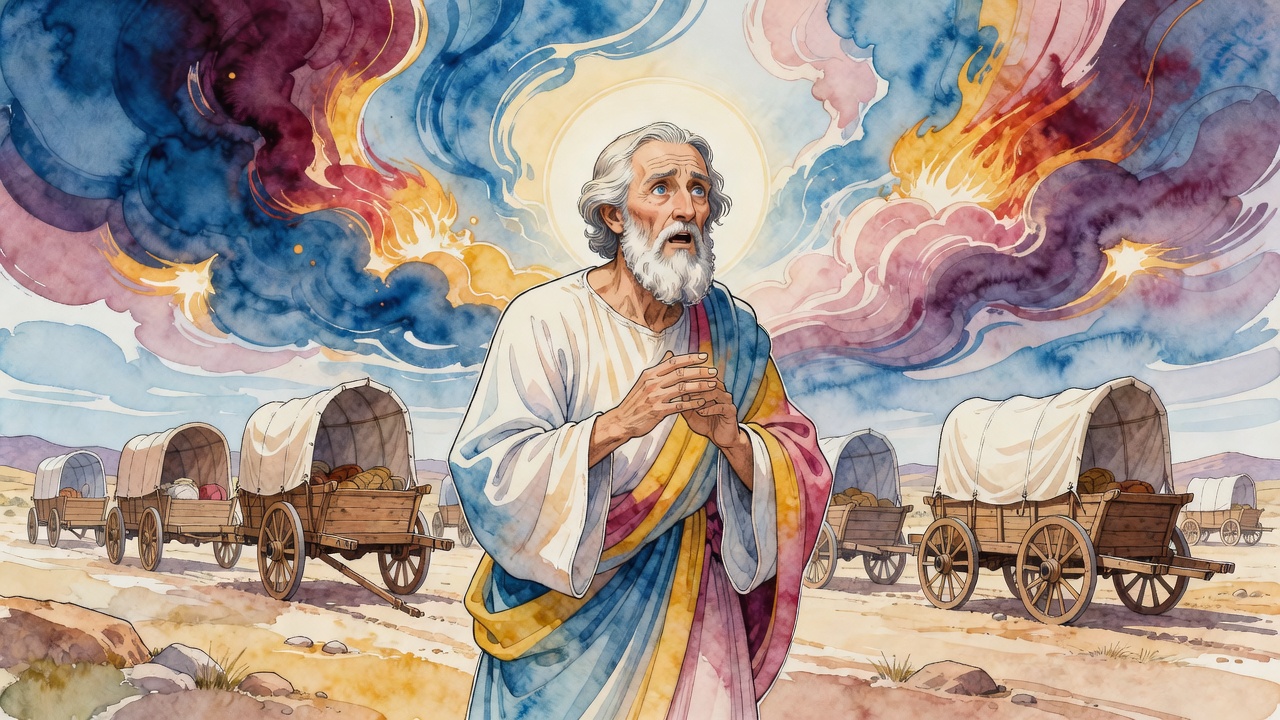
Generations later, when the burning bush sent Moses back to Egypt, he was walking into a country shaped by both of these deathbed scenes. Jacob's bones were there, waiting. The memory of Simeon's confession was there, passed down through his children. The whole architecture of the descent into Egypt and the need for an exodus out of it was built on a stolen birthright, a near-murder, a forgiving brother, a dying father's oath, and an older brother's private accounting.
Moses did not know all of this in detail. But he was carrying it anyway. The rabbinic tradition Ginzberg assembled insists that the Exodus was not a rescue from random suffering. It was the conclusion of a family story that had been running for four generations, and every deathbed wish in that story had shaped the path Moses was now walking.
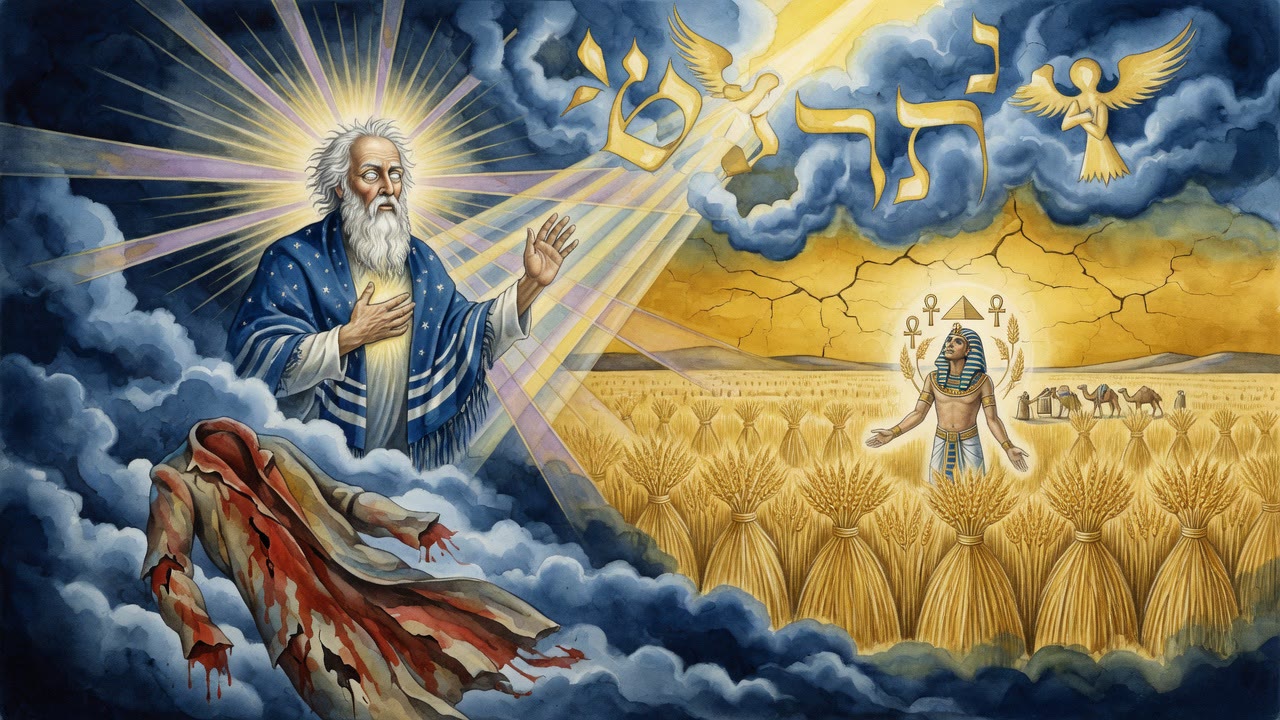
He went back to Egypt to bring a promise out with him. The promise had been made before the slavery began. Jacob had made Joseph swear it. The oath was still running.
← All myths