4 min read

Titus Stormed the Sanctum and Heaven Stayed Mute

Titus dragged blasphemy into the Holy of Holies. The God who split the sea could have answered at once. Silence itself became a wonder.

Curated by Arthur · Told by Maggid ·
Table of Contents
  1. The Wonder That Does Not Strike
  2. Man Sits Low and Learns the Quiet
  3. Fathers, Sons, and a Future That Outshines Egypt
  4. The Cost of a Mute Heaven

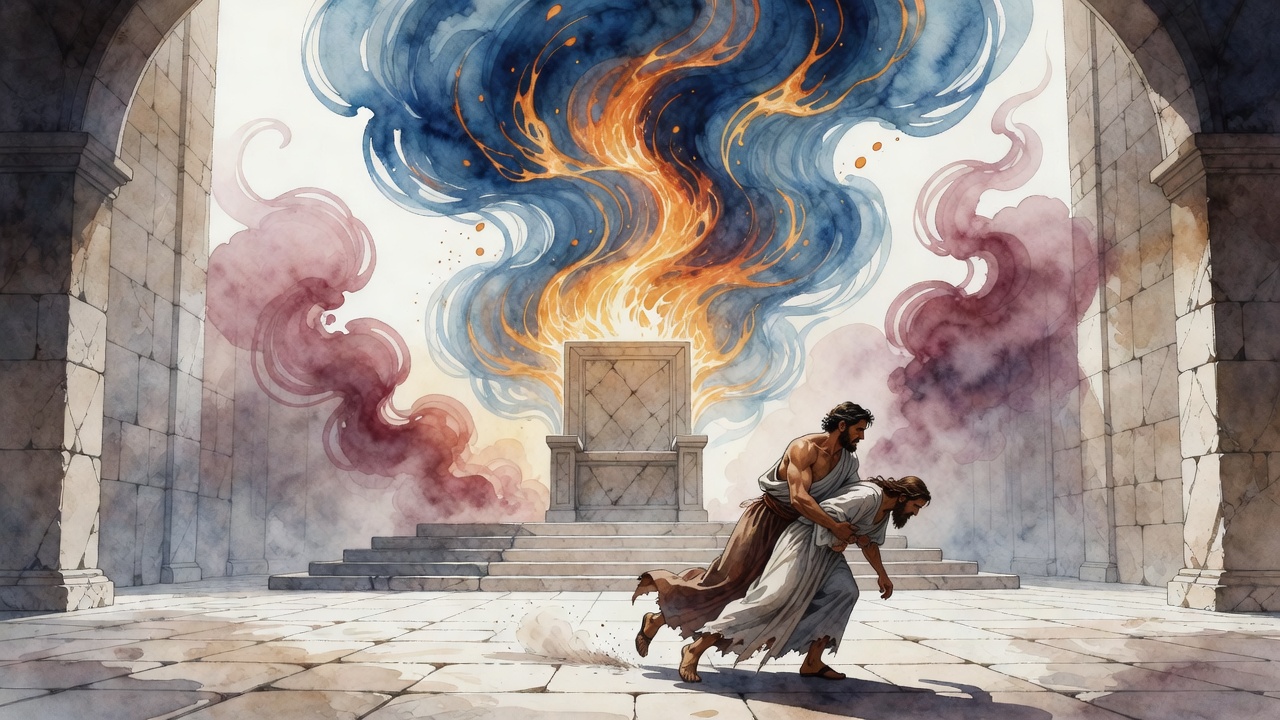
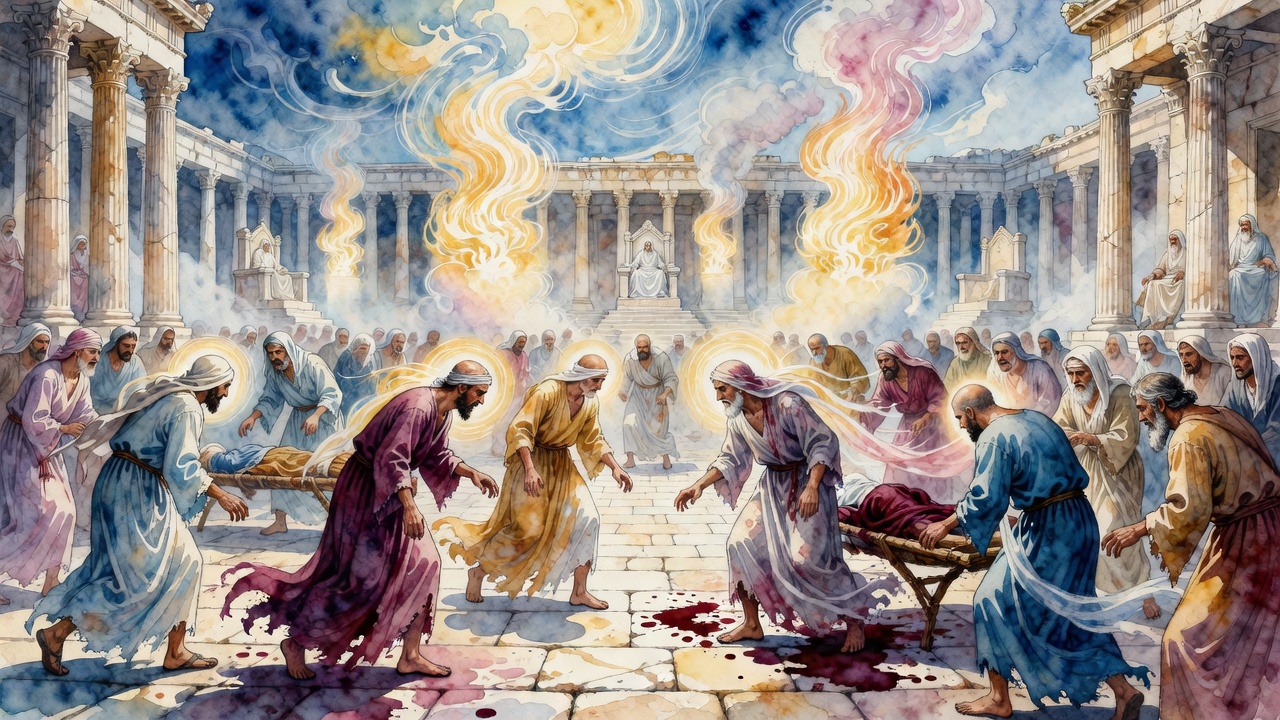
Titus shoved the curtain aside with a soldier's hand and walked into the place no Roman map had ever earned. Smoke from the burning city still clung to his cloak. Behind him a woman laughed the way people laugh when they want heaven to notice.

Titus Stormed the Sanctum and Heaven Stayed Mute Click for full size

He hurled his blasphemies upward. He named the God of Israel as if the Name were a defeated provincial. The stones of the Holy of Holies did not crack. No fire fell. No angel closed a fist around his throat. The air stayed ordinary. That ordinariness was the wound.

The Wonder That Does Not Strike

At the sea, the same God split water and drowned chariots. The song that rose afterward calls Him doer of wonders, and the midrash refuses to freeze that verb in the past. He worked wonders with the fathers. He works them in every generation. He will work greater ones for the children still unborn. Micah promises sights the fathers never saw.

Then the praise turns hard. Rabbi Ishmael rereads "Who is like You among the mighty" as "Who is like You among the mute." Who else can hear His Name reviled and keep silent? Abba Chanan hears the same word as hardness, a restraint that terrifies more than a thunderbolt. God listens to the curses of the wicked and does not strike.

The wicked one is named. Titus. The power that drowned Pharaoh is the power that withholds itself. Withholding is its own kind of strength, and the generation that watched the Temple burn had to learn that strength the long way.

Man Sits Low and Learns the Quiet

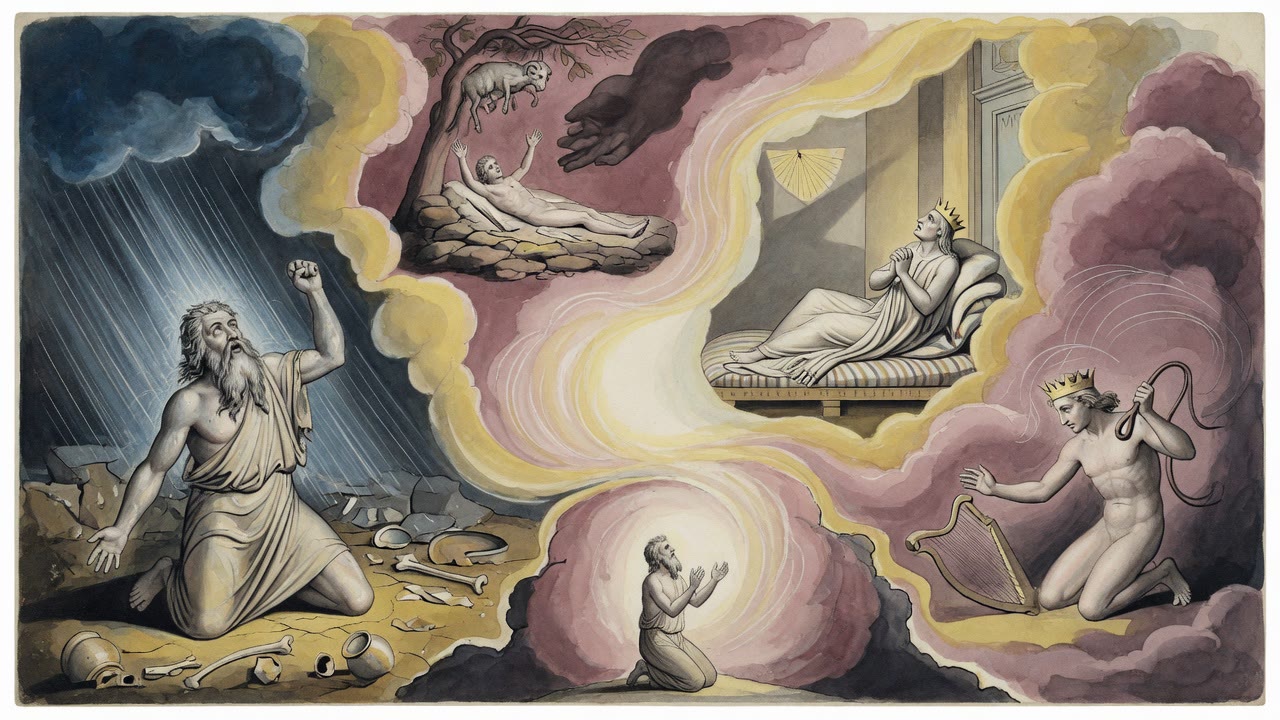
Far from the burning sanctuary, another midrash opens on a different posture. Man shall sit in silence and be brought low. Not as theater. As truth. The creature who can still speak after such days has already been measured against a sky that does not always answer on demand.

Rabbi Abbahu pushes the quiet further back than history. Teshuvah, return, repentance, existed before the mountains were born. Before the earth was brought forth, from eternity to eternity, You are God. Inside that eternity sat the possibility of course-correction, written into the foundations before any sinner needed it.

Reish Lakish adds that Torah stood two thousand years before the world, delight of the craftsman day by day. Blueprint before bricks. Law before the first crime. So when heaven stays mute under Titus's mouth, it is not empty. It is holding an older plan than his sword.

Fathers, Sons, and a Future That Outshines Egypt

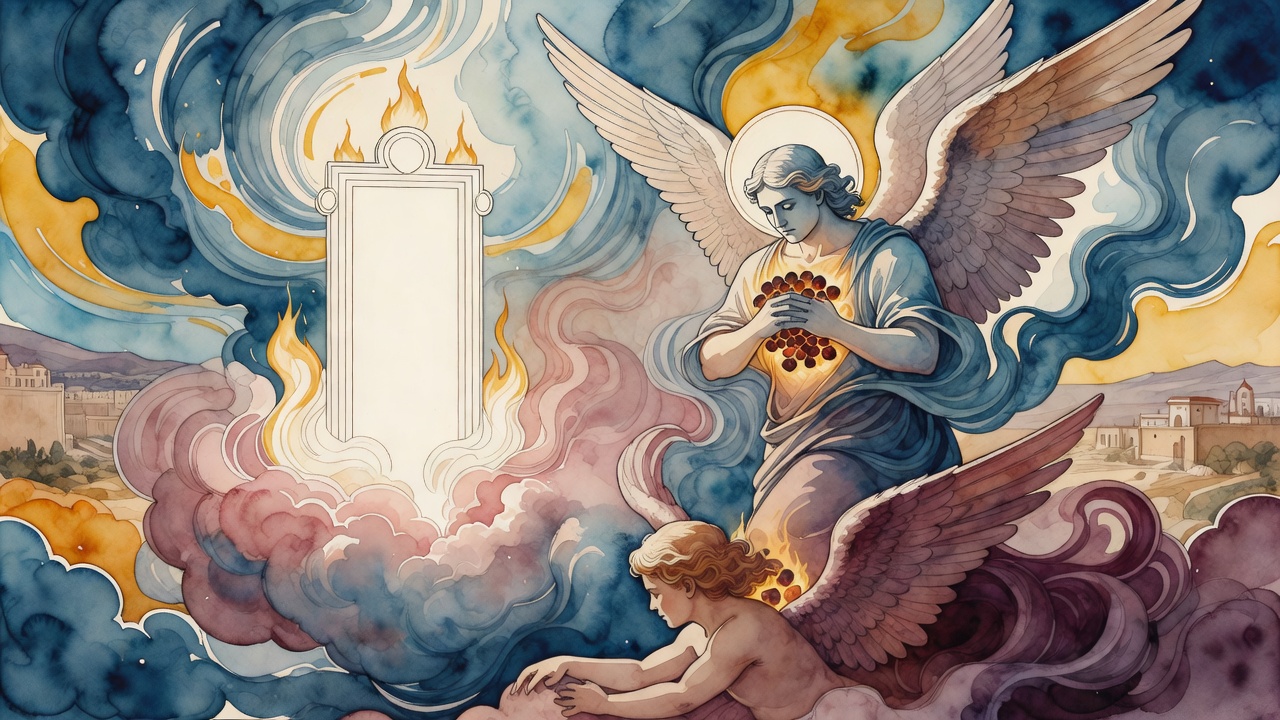
The sea-song is not a museum piece. The midrash conjugates wonder across three tenses. What was done in Egypt is not the ceiling. The future redemption will outshine it. That claim is a refusal to let Titus write the last chapter of God's verbs.

Still, the silence in the sanctum remains. Children asked why the fire of Sinai did not answer a general in armor. The midrash answers with a character portrait of God: able to answer, choosing not to, for reasons that include judgment on a sinful city as much as patience toward a blasphemer.

In the alleyways someone still sang a scrap of the sea-song because the mouth needed work that was not screaming. Doer of wonders. The words tasted wrong against the smoke and right against the memory of Egypt.

The Cost of a Mute Heaven

Israel learned both lessons at once. God is not absent when He does not strike. He may be measuring a generation, sparing a remnant, or saving a greater wonder for later. The same God who shepherds with cloud and fire can also sit still while a general spits on the floor of holiness.

Sitting low becomes the human answer. Not surrender to Titus. Alignment with the God who already built return into the universe before the first mountain stood. Silence under blasphemy is not the end of wonders. It is one of them, and it hurts.

Mute is not weak. Mute is a king who can end a court with one gesture and chooses instead to let a fool finish his speech so history can record the fool. Titus left alive. The midrash does not call that Rome's victory. It calls it restraint. Titus gets a night in the story. He does not get the last word.

What looked like a small rule from far away was a spine up close. Break it and the whole walk changes.


← All myths

From the tradition

Sources

2 sources

The texts behind this telling. Some cards carry a translation of the source; others are our own retelling of it, and each card says which. Every card links out to the original.

Yalkut Shimoni on Torah 250:6Yalkut Shimoni on Torah

Translation of the source text.Torat Emet (Yalkut Shimoni) · CC-BY-NC

Another interpretation of "doer of wonders" (Exodus 15:11): He did a wonder with us, and He does with us in every generation, as it is said, "Wondrous are Your works, and my soul knows it well" (Psalms 139:14); "Many things have You done, O LORD, Your wonders" (Psalms 40:6). Another interpretation of "doer of wonders": with the fathers, and He is destined to do with the children, as it is said, "As in the days of your going out from the land of Egypt I will show him wonders" (Micah 7:15) "I will show him" what I did not show the fathers, for the signs and wonders that I am destined to do with the children are greater than the wonder and the wonders that I did with the fathers. And so it says, "To Him who alone does great wonders, for His kindness endures forever" (Psalms 136:4); "Blessed is the LORD God, the God of Israel, who alone does wonders, and blessed is His glorious name forever, and may His glory fill the whole earth, Amen and Amen" (Psalms 72:18-19).

Rabbi Ishmael taught: "Who is like You among the mighty [ba-elim]" (Exodus 15:11) [read it: ba-illemim] who is like You among the mute, who hears the reviling and the blasphemy of that wicked one and keeps silent. Abba Chanan says: "Who is like You, mighty One, O LORD" (Psalms 89:9), "mighty" meaning hard [steadfast], for You hear the reviling and the cursing of that wicked one and keep silent. "And he said, Where is their God, the rock in whom they trusted" (Deuteronomy 32:37) this is the wicked Titus, who reviled and blasphemed toward Heaven above. What did he do? He seized a harlot by the hand and entered the Holy of Holies, and so forth.

Full source
Midrash Tehillim 90:7Midrash Tehillim

Retold in our words. Read the original at the link below.Rabbi Mike Feuer, Jerusalem Anthology · CC-BY

Our ancestors grappled with the very same feeling. And in the beautiful pattern of Jewish tradition, we find wisdom woven into stories, like this gem from Midrash Tehillim, a collection of rabbinic interpretations on the Book of Psalms.

The Midrash (rabbinic interpretive commentary) opens with a powerful image: "Man shall sit in silence and be brought low." What does this mean? Is it about humility? About acknowledging our limitations? Perhaps. But it's also a moment to pause and reflect on something far grander than ourselves.

Rabbi Abbahu offers a profound perspective. He suggests that teshuvah (repentance) – repentance, return, the act of aligning ourselves with our best selves – actually preceded the creation of the world. How can that be? He points us to (Psalm 90:2): "Before the mountains were born, before You brought forth the earth and the world, from eternity to eternity, You are God." Before there was anything, there was God. And inherent in God, was the possibility of return, of correction. The very foundation of existence includes the opportunity to course-correct, to turn back towards goodness.

Rabbi Reish Lakish adds another layer to this cosmic timeline. He says that the Torah existed 2,000 years before the creation of the world! He finds support for this idea in (Proverbs 8:30), where wisdom declares, "I was with Him as a master craftsman, and I was His delight day by day." The Torah, in this understanding, isn’t just a book; it’s the very blueprint of creation, the divine wisdom that guided the formation of everything.

Two thousand years!

But there's more. The Midrash then touches upon the nature of divine time. "The day of the Holy One, blessed be He, is a thousand years," it states, referencing (Psalm 90:4): "For a thousand years in Your sight are like a day that has just gone by."

Now, we're not meant to take this literally as a mathematical equation. It's not about converting human years into God-years. Instead, it offers a glimpse into a reality where time operates differently. Where the constraints and pressures that we experience here on earth are simply not relevant. What seems like an eternity to us is but a fleeting moment in the grand scheme of things.

So, what's the takeaway from this brief but potent Midrash? Maybe it’s this: amidst the chaos and the noise of our daily lives, we need to remember that we are part of something much larger, something timeless. We are participants in a story that began long before we arrived and will continue long after we're gone. And within that story, there is always the potential for return, for teshuvah, for aligning ourselves with the divine blueprint. A reminder that even when we feel lost or overwhelmed, we are never truly alone. And that even in the face of eternity, our actions, our choices, still matter.

Full source