5 min read

Tobit Goes Blind After Burying the Slain

Tobit risks mockery to bury the dead in Nineveh, then wakes blind under a wall while Akikar keeps him and Tobiah prepares to travel.

Curated by Arthur · Told by Maggid ·
Table of Contents
  1. Akikar Keeps the Household Alive
  2. The Money Left in Media
  3. The Blessing Before Departure
  4. What the Dark Did Not Cancel

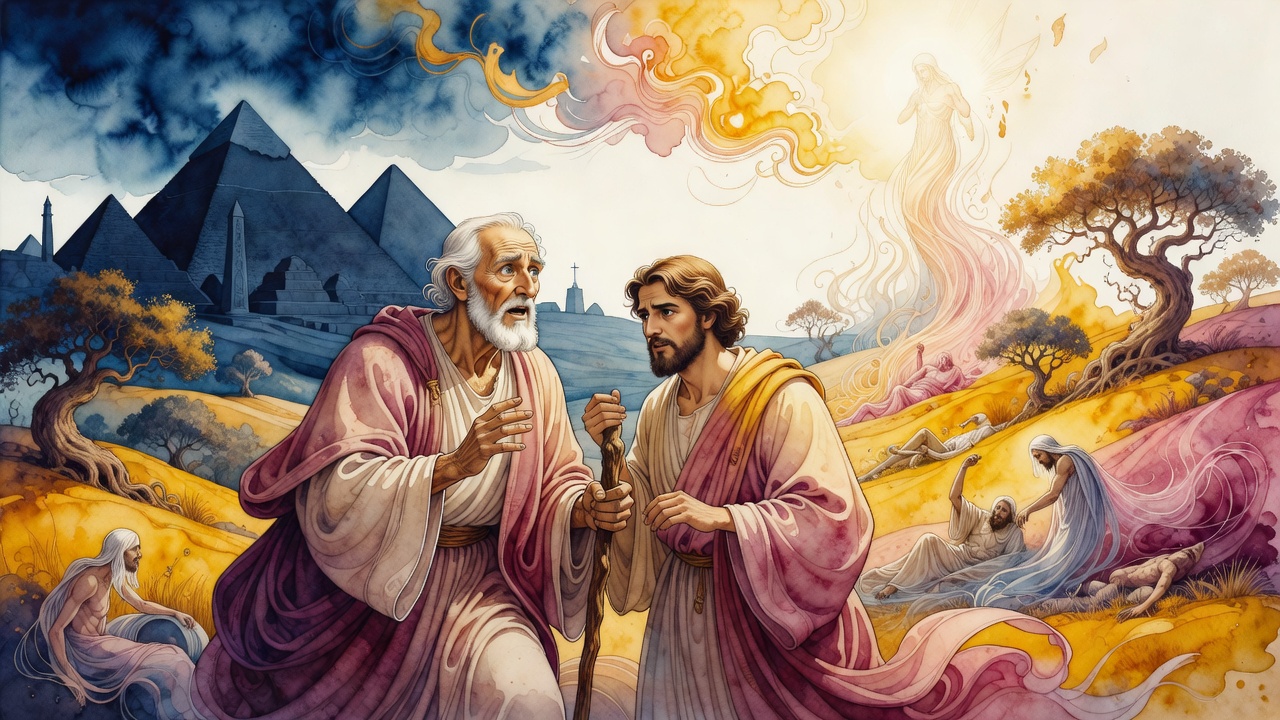
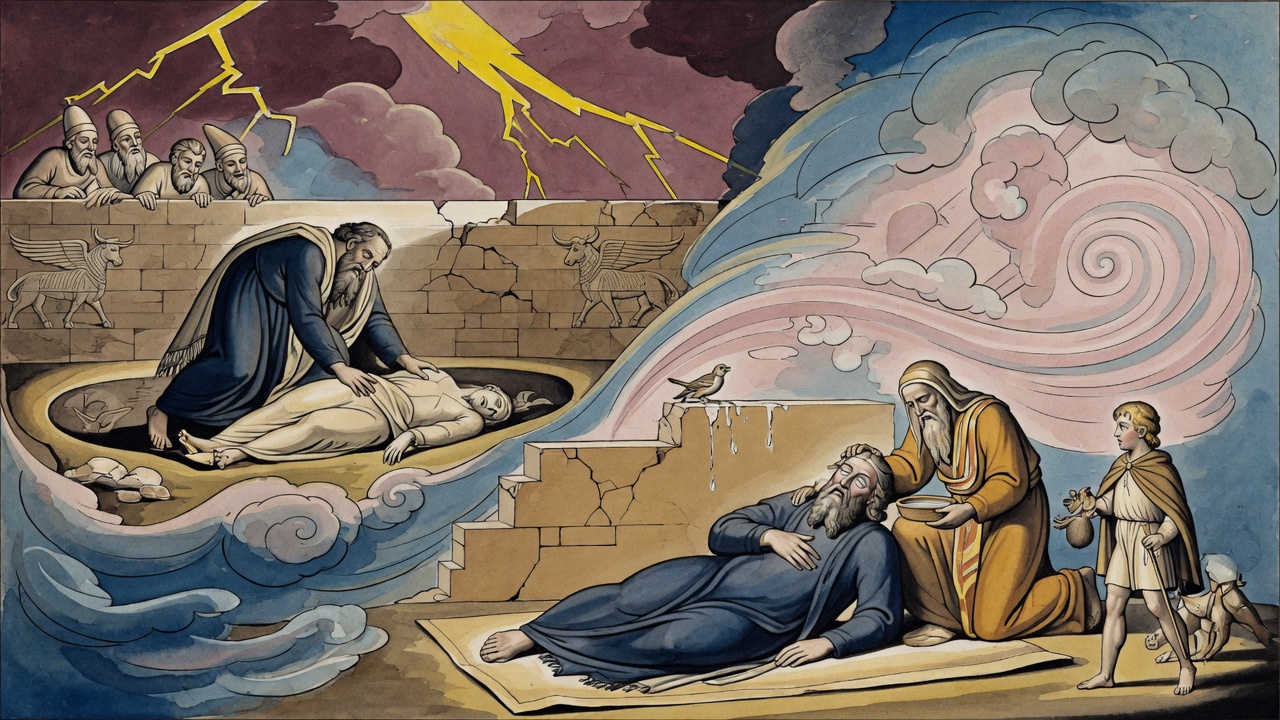
Tobit waited for the sun to drop. In Nineveh, burying the slain was a crime of kindness. When the street emptied, he went out, found the body, and put it in the ground. His own kinsmen mocked him. This man does not fear for his soul, they said, and he buries the slain.
Tobit Goes Blind After Burying the Slain Click for full size

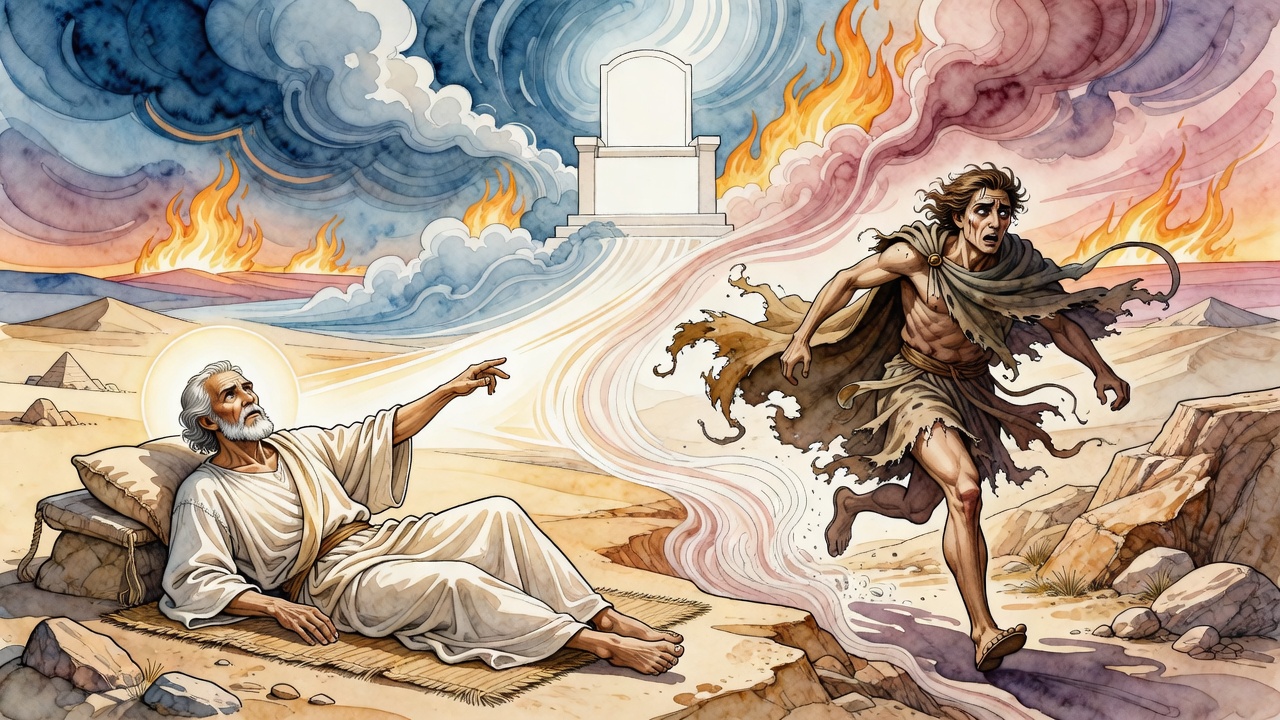
He washed afterward, trying to cleanse himself in a land that felt unclean, far from the Temple and its waters. Exhausted, he lay down by a wall with his face uncovered. Birds roosted above him. Droppings fell into his eyes. Whiteness spread. Four years of dark followed. Physicians failed. The man who had handled death for strangers could no longer see his own door.

Akikar Keeps the Household Alive

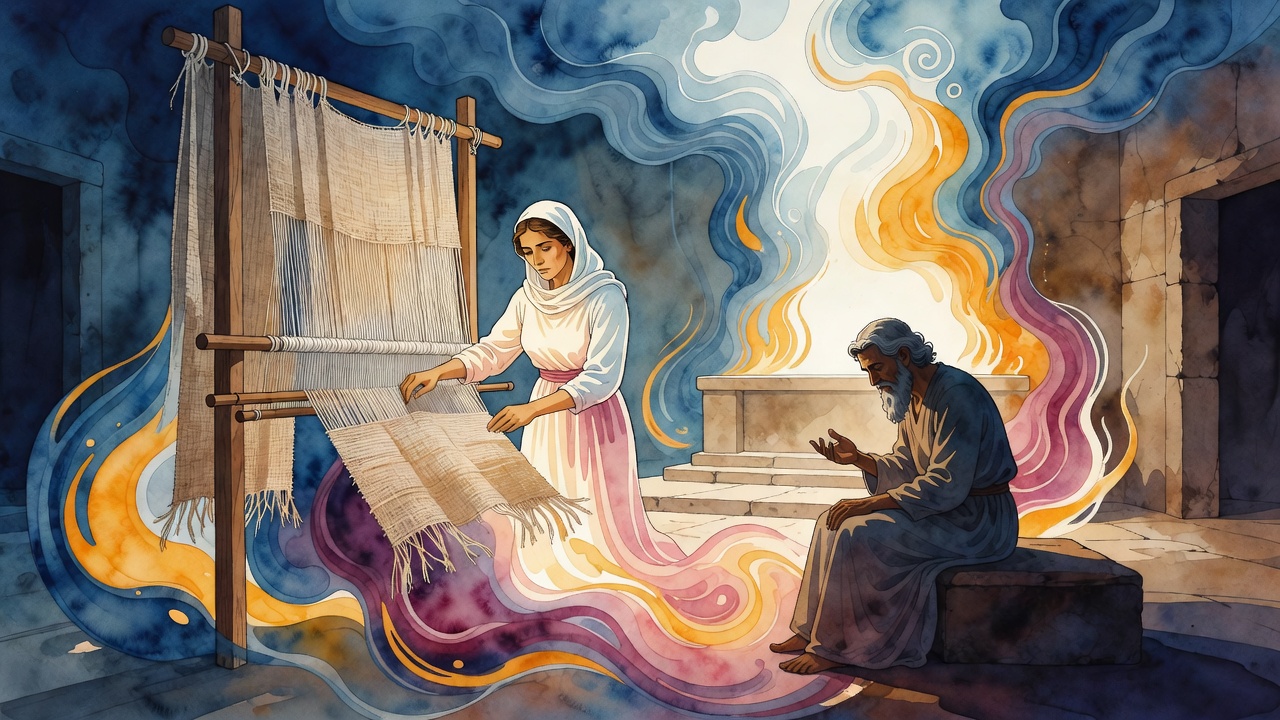
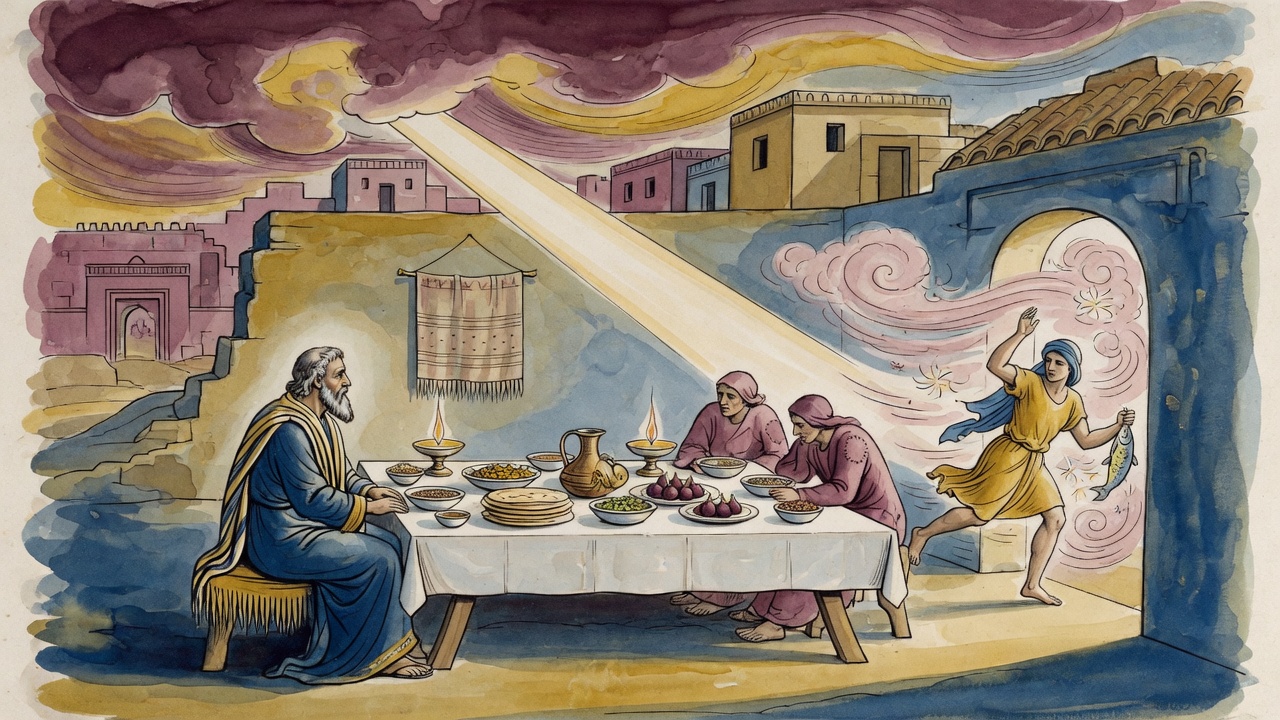
Blindness did not empty the house of kin. Brethren and kindred grieved. His kinsman Akikar provided for him, a practical mercy that kept food on the table while Tobit's eyes stayed sealed. The exile community that had laughed at his funerals still knew how to hold up a fallen relative when the damage became undeniable.

Tobit had buried corpses while others looked away. Now he needed hands for every ordinary task. The ledger of chesed (loving-kindness) ran both ways, though it ran slowly, and the years of darkness made every kindness feel like a rope thrown into a well.

The Money Left in Media

Under the blindness, Tobit remembered a bag of money left twenty years earlier with a man named Gabael in Media. The sum was large enough to matter. The distance was long enough to frighten. He called his son Tobiah and spoke like a man racing his own death.

Tobiah asked the hard questions. Gabael will not know me. I will not know him. What sign shall I give so he hands me the money? I do not even know the roads to Media. The boy had never walked that map. The father had only memory and a blind face turned toward a son he could not see.

"This is the sign," Tobit said. Gabael gave me his bag and took mine when I placed the money in his hand twenty years ago. A swap of bags. A tactile password older than the son's whole life. Then the father added what the road required: go find a trustworthy man to walk with you. We will pay his wages. Go while I yet live, and receive the money.

The Blessing Before Departure

Tobit's last gift before the journey was not coin. It was a prayer spoken over a son stepping into unknown miles. May the Lord God of Israel keep you in all your journey. May He grant you favor, kindness, and mercy in the man's eyes and in the eyes of all who see you. May He send you away in honor and peace and bring you back to us in peace before I die.

The house held a blind father, a retained memory of a bag exchange, and a boy who needed a companion he had not yet met. Outside, Nineveh went on killing and ignoring the dead. Inside, the family treated trust like a tool you can hand to the next generation even when your own eyes have failed.

What the Dark Did Not Cancel

Tobit's blindness did not cancel the graves he had dug. It did not cancel Akikar's support. It did not cancel the money waiting in Media or the sign of two bags traded in a better year. Misfortune sat on him like a weight, and still the household organized a journey. The mockery of the burial days and the silence of the blind days belonged to one life. The same man who would not leave a corpse in the street would not leave his son without a blessing and a plan.

When Tobiah went to seek a guide, the road ahead was still blank. The birds were gone from the wall. The whiteness stayed in the father's eyes. Somewhere in Media, a man named Gabael still held a bag that remembered a handshake from twenty years before. The rest would be walked one mile at a time.

In the first weeks of the white film, Tobit still tried to find the doorframe with his palms. He miscounted steps. He bruised his shin on a stool that had never moved. Anna, his wife, learned a new voice for directing him without shame. The mockers from the burial nights grew quieter when they saw the cost he paid for mercy, or else they simply found other sport. Exile cities are full of both kinds of neighbors.

Tobiah listened to the plan about Media with the fear of a young man who has never been trusted with a fortune or a map. He repeated the sign of the bags until the words sat in his mouth like a second name. If Gabael lived, if the roads were open, if a guide could be found who would not rob a blind man's son, the household might rise from the floor where misfortune had pinned it.


← All myths
From the tradition

Sources

2 sources

The texts behind this telling. Some cards carry a translation of the source; others are our own retelling of it, and each card says which. Every card links out to the original.

Book of Tobit 2:5Book of Tobit

Retold in our words. Read the original at the link below.Sefaria-hosted English translation · CC-BY

The Book of Tobit, a beautiful and often overlooked story from the Apocrypha, tells of a righteous man living in exile in Nineveh. He's committed to burying the dead, a sacred act of kindness, even when it puts him at odds with his own community.

The sun dips below the horizon, casting long shadows across the land. Tobit, driven by his unwavering sense of duty, goes to bury a man who was slain. It's a dangerous task, fraught with risk. And what does he get for his trouble? Mockery. "This man feareth not for his soul," his own kinsmen sneer, "and he burieth the slain!" They don't understand his devotion to chesed (Lovingkindness), to loving-kindness, even in the face of death.

Tobit perseveres.

The story continues: After burying the dead, he washes himself, attempting to purify himself in a land considered unclean. Remember, he's in exile, far from the Temple in Jerusalem, far from the rituals he knows. There's a deep sense of longing here, a yearning for the spiritual purity that seems just out of reach. As the prophet Jeremiah said of them, ‘Thou shalt not be made clean any more.’

Exhausted, he lies down by a wall, his face uncovered. He doesn't realize that birds are perched above him, waiting. And then, it happens. Bird droppings fall into his eyes.

What follows is even more devastating. A whiteness forms in his eyes, and he goes blind. Four years of darkness. Four years of relying on others.

He seeks help from physicians, but they are powerless to heal him. This detail emphasizes the feeling of helplessness that permeates the story. Sometimes, even the best efforts of medicine cannot alleviate suffering.

Yet, even in his blindness, Tobit is not abandoned. His brethren and kindred are grieved by his affliction, and his kinsman Akikar provides for him. Akikar's support is a small glimmer of hope in the darkness, a reminder that even in times of great hardship, there is still compassion and kindness to be found.

This part of Tobit's story reminds us that even when we strive to do good, even when we act with the purest intentions, life can still throw us curveballs. It can feel unfair, unjust even. But it also highlights the importance of community, of supporting one another through difficult times. Because even when we are blinded by misfortune, there are still those who will offer us a guiding hand.

What does it mean to be tested? Is it a punishment? Or is it an opportunity to reveal our true character? The Book of Tobit doesn't offer easy answers, but it does remind us that even in the darkest of times, hope, faith, and human kindness can still shine through.

Full source
Book of Tobit 5:4Book of Tobit

Retold in our words. Read the original at the link below.Sefaria-hosted English translation · CC-BY

Tobit, blind and burdened by misfortune, remembers he entrusted a significant sum of money to a man named Gabael, living far away in Media. Twenty years prior, to be exact! But how could young Tobiah, who has never met Gabael, possibly retrieve it?

"Now therefore, my father," Tobiah asks, his voice likely tinged with anxiety, "give me counsel how I can receive the money from the hand of Gabael, for he will not know me, and I shall not know him; and what sign shall I give him so that he may give me the money; and I know not either the ways by which they go to Media." It's a daunting situation!: no introductions, no mutual acquaintances, just a considerable amount of money hanging in the balance. How do you prove you're the rightful recipient? How do you even find your way to a place you've never been?

Tobit, despite his blindness, possesses the inner vision of a wise father. He reassures Tobiah, "This is the sign that thou shalt give him. He gave me his bag, and took from my hand mine, when I put the money in his hand this day twenty years ago." A simple exchange of bags! A tangible connection to the past, a silent confirmation of trust. It's a clever detail that speaks volumes about the honest dealings between Tobit and Gabael.

Beyond the practicalities, Tobit understands the deeper need for companionship and protection on such a journey. "Now therefore go and seek thee a man who may be trusty to go with thee, and we will give him his wages; and go, my son, while I yet live, and receive the money."

Can you feel the urgency in his words? The desire to see his son safely return, with the money in hand, before his own time comes?

And then comes a beautiful blessing, a prayer woven with hope and parental love. "…and may the Lord God of Israel keep thee in all thy journey, and grant thee favour, kindness, and mercy in the man’s eyes, and in the eyes of all that see thee, and may he send thee away in honour and peace, and bring thee back to us in peace before I die."

It’s a reminder that sometimes, the most valuable things we can give our loved ones aren't material possessions, but our prayers, our blessings, and our unwavering faith in their safe return.

This short passage from the Book of Tobit isn't just about retrieving money; it's about the anxieties of venturing into the unknown, the importance of trust and guidance, and the profound love between a father and son. It's a timeless reminder that even in the face of uncertainty, faith and family can light the way.

What journeys are you about to begin? And who will you choose to accompany you on the road?

Full source