5 min read

Tobiyyah Refused Food Until Sarah Was His Wife

Seven husbands died on Sarah's wedding nights. Tobiyyah refused bread and wine until the marriage deed was sealed, then brought her home to blind Tobit.

Curated by Arthur · Told by Maggid ·
Table of Contents
  1. Dead Husbands and a Living Demon
  2. A Tablet Stronger Than a Curse
  3. Nineveh, Rage, and a Man Who Dug Graves
  4. Eyes Opened at the Threshold
  5. What Refusing Bread Protected
Tobiyyah Refused Food Until Sarah Was His Wife Click for full size

Dead Husbands and a Living Demon

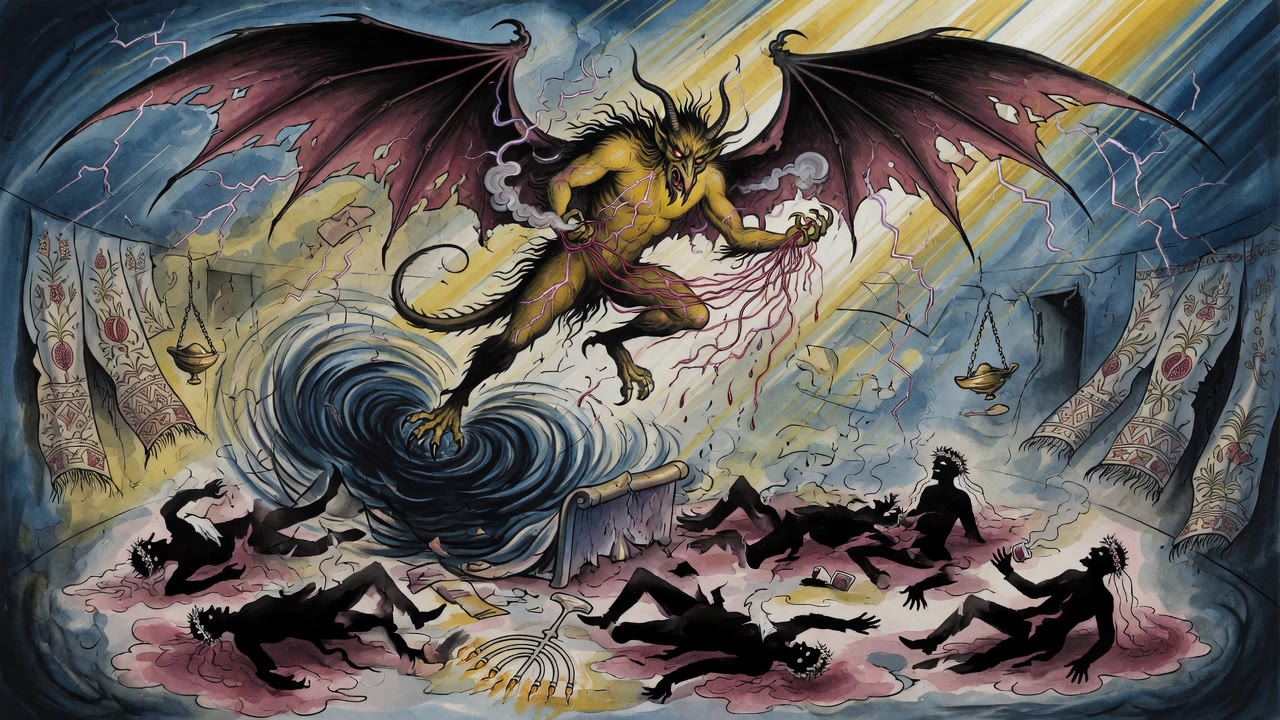
In the house of Reuel the name Sarah carried a shadow no lamp could lift. Seven times she had been given in marriage. Seven times the groom died on the wedding night. The Book of Tobit names the killer: the demon Asmodeus, who would not let a living man keep her. Food still appeared on the table. Custom still demanded hospitality. Hope had learned to flinch when the door opened for a new suitor.

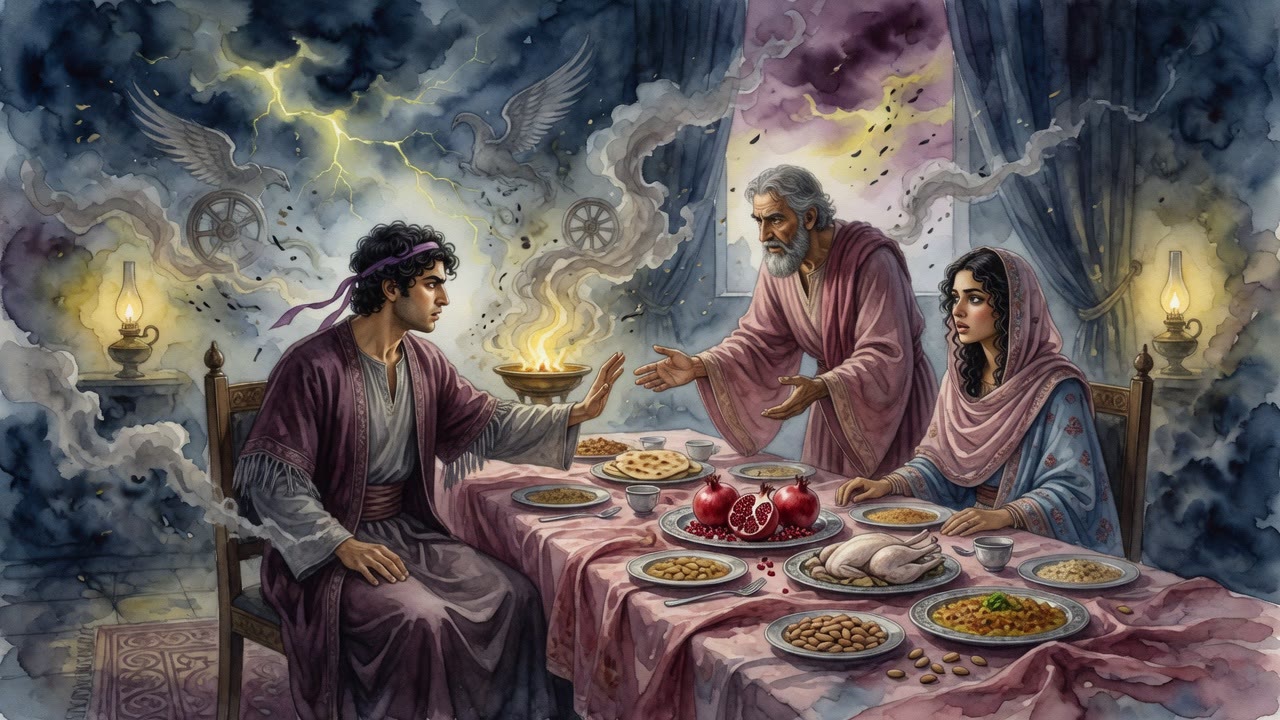
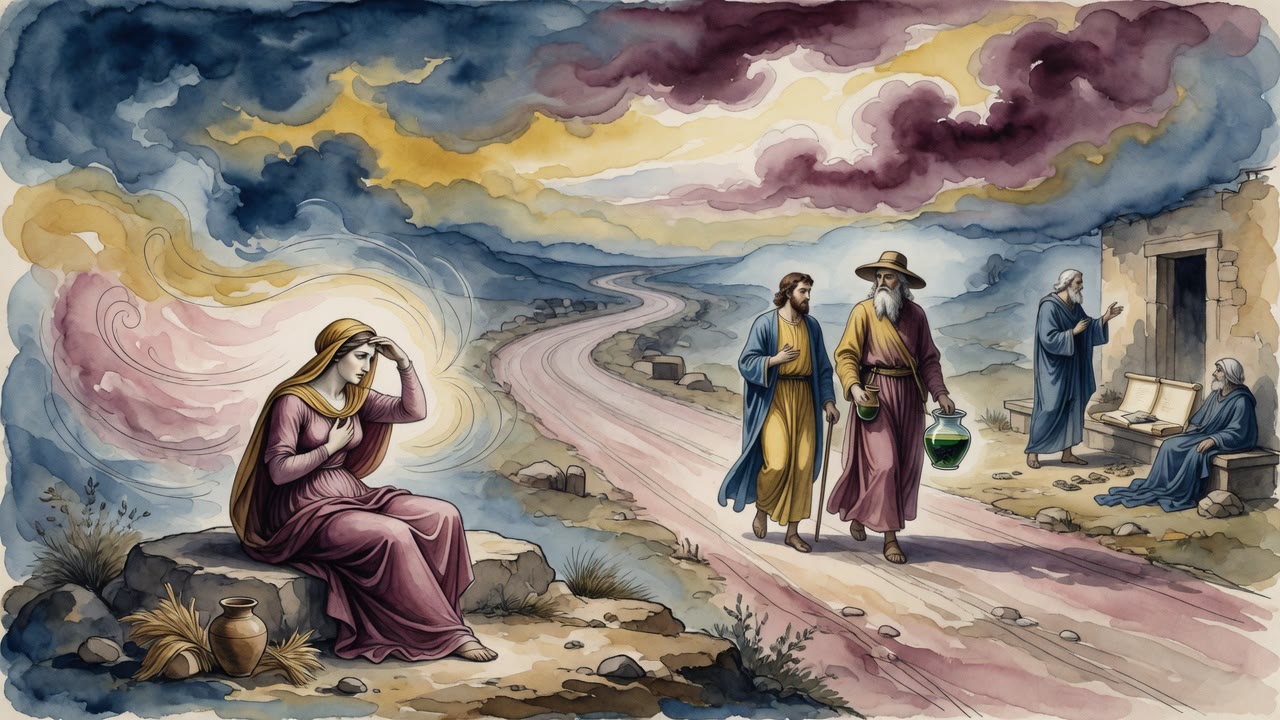
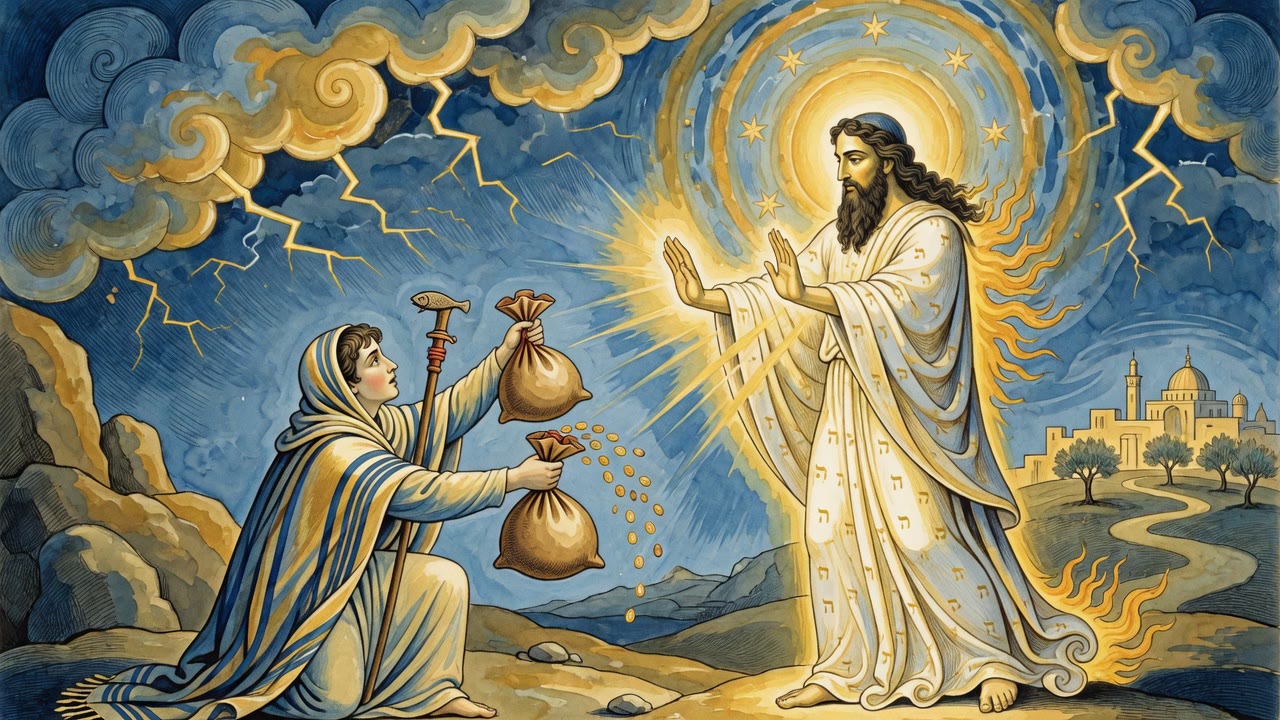
Tobiyyah, son of Tobit, arrived on a road that began with silver stored in Media and continued under the guidance of a companion whose true name would later break open like light. He sat before Reuel with a purpose that would not wait for polite courses. "I will neither eat nor drink before thou hast given her to me to wife." The refusal was a vow with an empty plate for a witness.

Reuel knew the ledger of graves. He also heard fate pressing. "Take her, for she is thy sister, and thou art her brother." Kinship language sealed a match inside the law of Moses and Israel. He called down the kindness and peace of the God of heaven upon the night that had killed seven men.

A Tablet Stronger Than a Curse

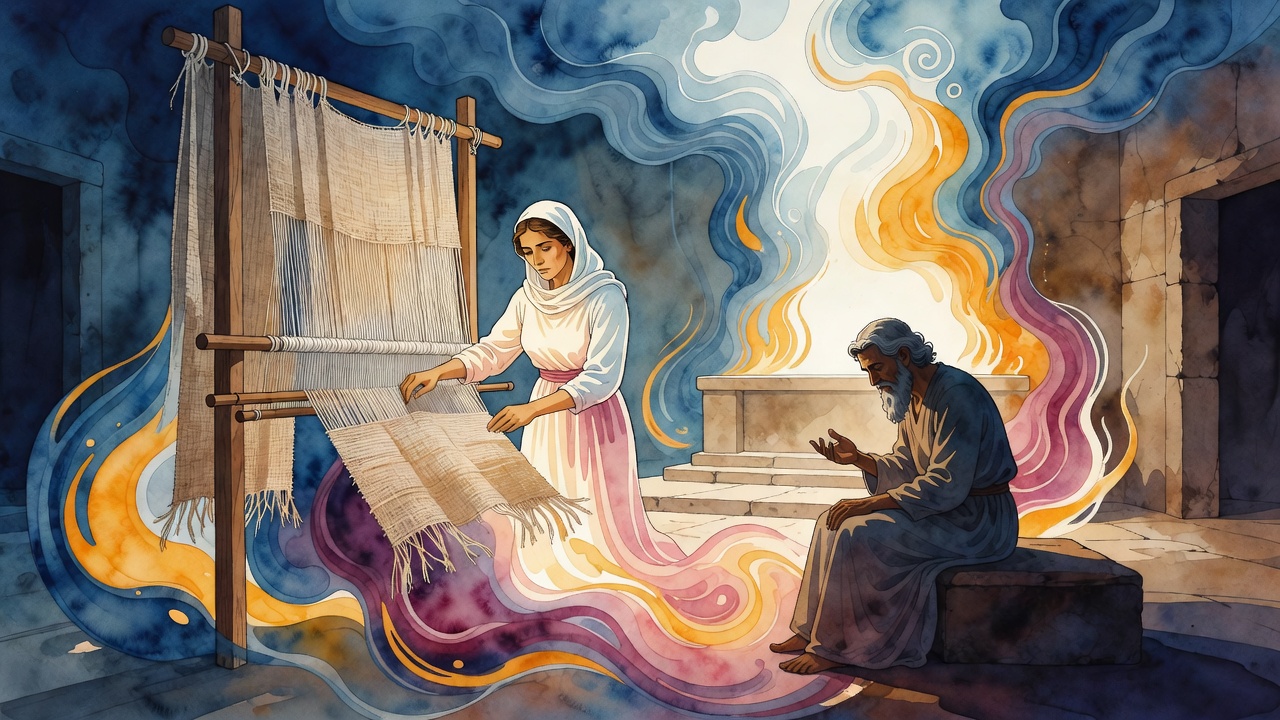
Reuel ordered his wife Ednah to bring a tablet. On it he wrote the marriage deed, the ketubah that bound husband to wife with obligation and protection, and sealed it before witnesses. Only then did the household move toward the meal Tobiyyah had delayed. Law first. Bread second. The order mattered. Asmodeus had thrived on nights of haste and terror. Tobiyyah answered with contract, blessing, and a stubborn empty stomach.

The father who had buried seven sons-in-law placed his daughter's hand into a young man's keeping. The act looked ordinary. In that house ordinary had become the rarest miracle. Sarah stepped from a reputation of death into a covenant written in ink and witnessed by people who still trembled.

Far away in Nineveh, Tobit had buried the slain of his people when kings made corpses of Israelites and left them outside the walls. The son's courage at a wedding table was cut from the same cloth as the father's courage at a grave. Both refused to let empire or demon set the last term of a Jewish life.

Nineveh, Rage, and a Man Who Dug Graves

Tobit's story began under Assyrian power. When Shalmaneser died and Sennacherib took the throne, roads to Media closed under war. Tobit's silver sat out of reach. He still gave bread to orphans and widows. He still went out to bury Israelites murdered in the king's fury after Sennacherib returned from Judah "with confusion of face," humiliated by the God of Israel and hungry for revenge on the exiles in his streets.

Burying the dead was not a safe hobby. It was a sacred duty performed under a crown that hated the duty. Tobit risked his body for bodies the empire treated as refuse. Blindness later took his eyes. Charity did not leave his house. When he sent Tobiyyah on the road, he loaded the boy with counsel: honor the righteous dead, listen to good counsel, ask of the Lord who alone directs paths.

The journey that retrieved silver also retrieved a bride with a demon in her history. Providence does not always send soft errands.

Eyes Opened at the Threshold

Tobiyyah returned to Nineveh with Sarah. Tobit went out with his wife Hannah to meet the daughter-in-law. In that meeting the father's darkness broke. His eyes were healed. The Book of Tobit calls it an exceeding marvelous thing. Neighbors gasped. Jews of Nineveh rejoiced. Gifts poured toward the pair who had walked through demon and distance into a home that could finally see.

Tobit blessed Sarah: "Blessed art thou, my daughter, of the Lord, and blessed is the Lord, who hath brought thee to us with joy." The man who had handled corpses now handled a living future. The woman who had been a rumor of death became a name spoken with gratitude in an exile city.

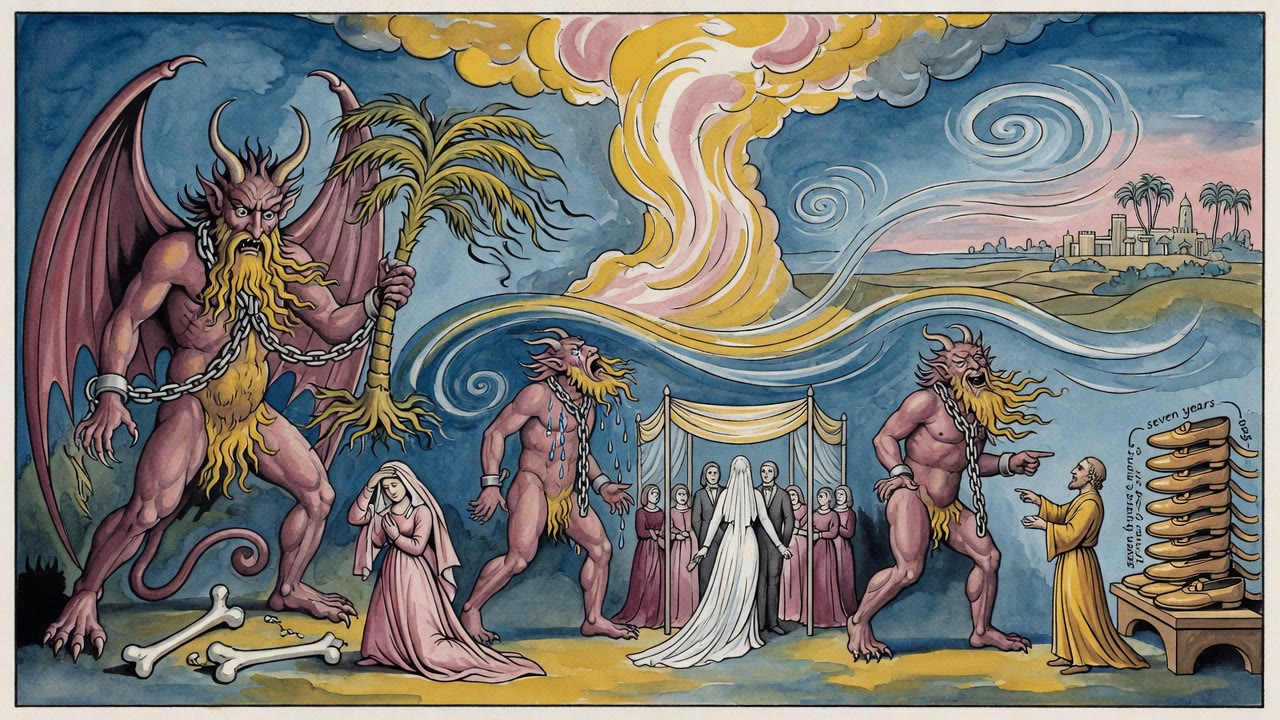
Asmodeus had owned seven nights. He did not own the eighth. The tablet, the refusal of food, the road, the angelic companion the book later unveils, and the old man's buried kindness converged into one household standing in light.

What Refusing Bread Protected

Tobiyyah's empty plate looks small beside plagues and seas. It is not small. It is the shape of a will that will not pretend the crisis is a dinner party. He would not swallow courtesy while the real bond remained unsealed. Reuel would not give a daughter without law. Tobit would not leave Jewish dead to dogs. Sarah would not remain a story other people told about graves.

In Assyrian night, under kings who confused face and policy, a family kept practicing Jewish stubbornness: bury, bless, contract, refuse the easy bite. The demon that killed grooms met a young man who had been taught that the Holy One alone holds counsel. The blindness that punished or tested a righteous man met a morning when a bride's arrival and a father's sight arrived together.

That is the Tobit the sources refuse to reduce to advice literature. It is a war story fought with graves, tablets, and a marriage that insisted on being real before it agreed to be polite.


← All myths

From the tradition

Sources

4 sources

The texts behind this telling. Some cards carry a translation of the source; others are our own retelling of it, and each card says which. Every card links out to the original.

Book of Tobit 7:6Book of Tobit

Retold in our words. Read the original at the link below.Sefaria-hosted English translation · CC-BY

Book of Tobit turns to Tobiyyah and the Heavenly Realms.

Remember Tobiyyah, our hero, sent on a quest to retrieve some much-needed silver? He’s arrived at the house of Reuel, and after a series of divinely guided events, he's now face-to-face with Sarah, Reuel's daughter.

There’s a catch. Sarah has a… reputation. A rather unfortunate one. She's been married seven times before, and each husband has met an untimely demise on their wedding night, thanks to a pesky demon named Asmodeus.

So, imagine the scene. The tension is palpable. Food is offered, as is customary. But Tobiyyah, bless his heart, refuses to eat or drink. He’s got one thing on his mind: "I will neither eat nor drink before thou hast given her to me to wife." Strong words. Reuel, understandably hesitant, but also recognizing the hand of fate (and perhaps a bit worn down by the whole seven-dead-husbands thing), relents. "Take her," he says, "for she is thy sister, and thou art her brother." Now, this isn't meant literally. In ancient Jewish custom, "brother" and "sister" could also refer to close kin or those within the same community. Here, Reuel is emphasizing the familial bond and perhaps highlighting the appropriateness of the match within their shared heritage.

Then comes the formal pronouncement: "Behold, I give her to thee to wife, according to the law of Moses and Israel, and may the Lord God of heaven make you dwell this night in peace, and command upon you his kindness and his peace." It’s a beautiful blessing, a plea for divine protection and marital harmony.

What happens next is so beautifully simple. Reuel takes Sarah, his daughter, and gives her to Tobiyyah. A symbolic act of handing over responsibility, of entrusting his daughter's future to this young man. He blesses them, invoking divine favor upon their union.

But it’s not all just heartfelt pronouncements. There’s also a practical side to all of this! Reuel instructs his wife, Ednah, to bring a tablet. This wasn't an iPad, of course. This would have been a clay or wooden tablet. On this, he writes the ketubah (כתובה), the deed of marriage. It's a legally binding contract, outlining the husband's responsibilities to his wife, ensuring her financial security and protection. He then seals it before witnesses, making it official and binding.

And finally? Only then, after all the important stuff is handled, can the celebration begin. "And they ate and drank and were merry." The relief must have been immense. A marriage contract signed, a blessing given, and hopefully, just hopefully, a future free from demonic interference.

The story of Tobiyyah and Sarah reminds us that even in the face of daunting challenges, faith, courage, and a little bit of divine intervention can pave the way for unexpected blessings. It also reminds us that even in ancient times, the importance of a solid marriage contract was well understood! As we continue our journey with Tobiyyah and Sarah, let's carry with us this sense of hope and the understanding that even the most difficult situations can lead to joy and fulfillment.

Full source
Book of Tobit 11:5Book of Tobit

Retold in our words. Read the original at the link below.Sefaria-hosted English translation · CC-BY

He was a good man, generous and righteous, but life had dealt him a seriously cruel blow: blindness. But don't worry, this isn't a tragedy; it's a story of hope, faith, and a seriously happy ending.

We pick up with Tobi’s son, Tobiyyah (sometimes rendered as Tobias), returning home with his new bride, Sarah. Now, Sarah’s story is a whole other level of dramatic. Let's just say she had… a bit of a marriage problem before Tobiyyah came along. But that’s in the past! This is a fresh start.

The scene: Tobi ventures out with his wife, Hannah, to meet Sarah, his new daughter-in-law. And what happens next? It's nothing short of a miracle. As they meet, Tobi's eyes are healed! moment. Years of darkness, suddenly replaced by light. It must have been absolutely astounding!

The Book of Tobit tells us that everyone who saw and heard about it was amazed. It was, as the text says, "an exceeding marvelous thing." You can just picture the whispers, the gasps, the sheer disbelief turning into joyous celebration.

Tobi, overcome with gratitude, blesses Sarah. "Blessed art thou, my daughter, of the Lord, and blessed is the Lord, who hath brought thee to us with joy." It's a beautiful sentiment, a heartfelt expression of thanks for the blessings in his life, for his son's safe return, and for the miraculous restoration of his sight.

And the rejoicing didn't stop there. The Book of Tobit emphasizes that all the Jews in Nineveh joined in the celebration. This wasn't just a private family affair; it was a community-wide expression of joy and gratitude for the kindness the Lord had shown to Tobi and his son. And naturally, Tobiyyah and Sarah were showered with gifts – a fitting reward for their courage, faith, and love.

What I find so powerful in this part of the story is the reminder that even in the darkest of times, hope remains. Tobi had suffered greatly, but his faith and righteousness were ultimately rewarded. It’s evidence of the power of belief, and to the idea that even when things seem impossible, miracles can happen. It’s a story that invites us to reflect on our own lives, to appreciate the blessings we have, and to never give up hope, even when faced with seemingly insurmountable challenges.

Full source
Book of Tobit 1:6Book of Tobit

Retold in our words. Read the original at the link below.Sefaria-hosted English translation · CC-BY

Our story kicks off during a turbulent time. Shalmaneser, King of Assyria, has just kicked the bucket, and his son, Sennacherib, takes the throne. Now, this wasn't just a changing of the guard. Suddenly, travel became dangerous. The highways to Media, where Tobit had some money stashed away, were shut down because of wars.

Tobit, despite his own troubles, wasn't one to sit idly by. He was a man of great tzedakah, charity. He gave generously to the poor, especially orphans and widows. But what really sets him apart is what he did next.

He saw the slain of his people, the Israelites, left unburied outside the walls of Nineveh. In Jewish tradition, this is a profound act of disrespect, not just to the deceased but to God. So, Tobit didn't rest. He didn't stay quiet. He took it upon himself to bury them, risking his own safety to perform this sacred duty.

Then, things got even worse. Remember Sennacherib, the new king? Well, he wasn't exactly a fan of the Israelites. The Book of Tobit tells us that Sennacherib returned from Judah to Nineveh "with confusion of face" because the Lord God of Israel had smitten him in the land of Judah. He was furious, feeling humiliated, and he took it out on the Israelites throughout his kingdom. The text says he "killed exceeding many of them."

He's out there, burying the dead, showing compassion, while the king is on a rampage. It's like shining a light in the darkest of nights, knowing it might draw the attention of something dangerous.

But Tobit doesn't stop there. He's not just burying bodies; he's wrestling with the bigger picture. He sought to understand why this calamity had befallen his people. He knew that God, the Kadosh Baruch Hu, the Holy One, blessed be He, is a God of truth and justice. So, where was the justice in all this suffering?

Tobit dove deep, trying to find the root cause. He observed that the tribes of Israel "did not lay to heart the destruction of their brethren". Sennacherib had burned their strongholds, slain their young men, and even ripped open pregnant women. It was a time of unspeakable horror, and perhaps, Tobit thought, a lack of solidarity and shared grief had contributed to their plight.

That our collective actions, or lack thereof, can influence our fate. Tobit wasn't just a passive observer; he was actively trying to understand the events unfolding around him, trying to find meaning in the chaos.

So, what do we take away from this opening of the Book of Tobit? We see a man of unwavering faith and courage, willing to risk everything to do what's right, even in the face of immense adversity. And we are left pondering the relationship between our actions, our suffering, and the mysterious ways of the divine.

Full source
Book of Tobit 4:6Book of Tobit

Retold in our words. Read the original at the link below.Sefaria-hosted English translation · CC-BY

We all do sometimes. But what if there were little nuggets of wisdom, ancient guiding stars, to help us find our way? That's what I find so compelling about the Book of Tobit, a story brimming with practical and spiritual advice.

A short but powerful section: Tobit 4. It's basically a father, Tobit, giving his son, Tobias, some last-minute instructions before he embarks on a journey. And honestly? It's advice that resonates just as powerfully today as it did centuries ago.

"Spend freely thy bread and wine on the burial of the righteous…" It starts with a call to honor the dead. Now, you might be thinking, "Okay, that's nice, but what's that got to do with me?" Well, Honoring those who came before us, especially those who lived righteous lives, is about more than just ritual. It's about recognizing the value of goodness in the world and ensuring their memory continues to be a blessing. It's about tikkun (spiritual repair) olam, repairing the world, even in small, seemingly simple ways.

It doesn't stop there. "…and hearken and attend to every one who giveth thee good counsel." Listen to good advice! Sounds simple. But how often do we actually do it? We're so busy, so convinced we know best, that we shut ourselves off from the wisdom of others. Maybe it’s a friend, a mentor, or even just someone you meet along the way. Be open to hearing their perspectives, their experiences. You never know where you'll find that game-changing insight.

And then comes the really crucial part: "And at all times ask of the Lord, and he shall direct thy paths and thy counsel, for there is no counsel in the power of man, but in the hands of the Holy One (blessed is he) alone…" Here, Tobit gets to the heart of it. True guidance comes from something bigger than ourselves. It comes from HaShem, the Name, as we often reverently refer to God. We can turn to the divine for direction. "For he doeth whatsoever pleaseth him, one he bringeth low, and another he lifteth up." Life has its ups and downs. It's not always fair, and sometimes things happen that we just can't understand. Tobit acknowledges this, reminding Tobias (and us!) that ultimately, everything is in God's hands.

"And keep my words, and all that I have commanded thee, and let them not depart from thine eyes." Remember what I've told you, son. Hold it close. This isn't just about remembering instructions; it’s about internalizing values, making them a part of who you are.

Finally, the encouragement: "And be strong and of good courage, for the Lord will be with thee a help and profit, if thou seek him with all thy heart and all thy soul." Be strong. Be brave. Have faith. If you seek God with all your heart, you won't be alone. A promise that resonates throughout Jewish tradition.

So, what does all this mean for us today? Maybe it's a call to be more mindful of how we honor the past, to be more open to the wisdom of others, and to cultivate a deeper connection with the divine. Maybe it's a reminder that even when we feel lost, we're never truly alone. And perhaps, just perhaps, it's an invitation to step forward with a little more courage, knowing that we have everything we need to work through the journey ahead.

Full source