5 min read

Reuel Dug a Grave Before the Wedding Ended

Seven men had married Sarah and seven died before morning. On the eighth night her father sent a maid into the chamber to look. She found the couple asleep.

Curated by Arthur · Told by Maggid ·
Table of Contents
  1. Corpses Outside the Wall
  2. Ten Talents in Media
  3. Seven Dead Grooms
  4. The Chamber That Did Not Need the Grave
  5. Wonders and Terrible Things
Reuel Dug a Grave Before the Wedding Ended Click for full size

Corpses Outside the Wall

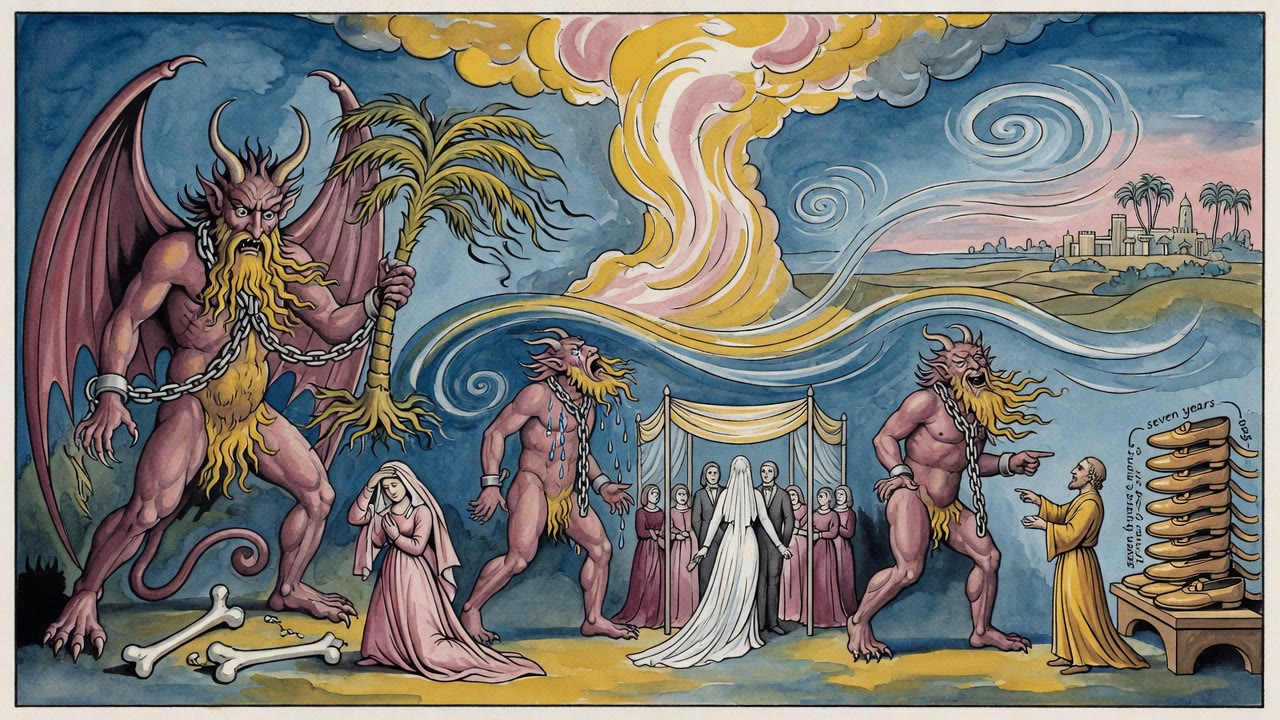
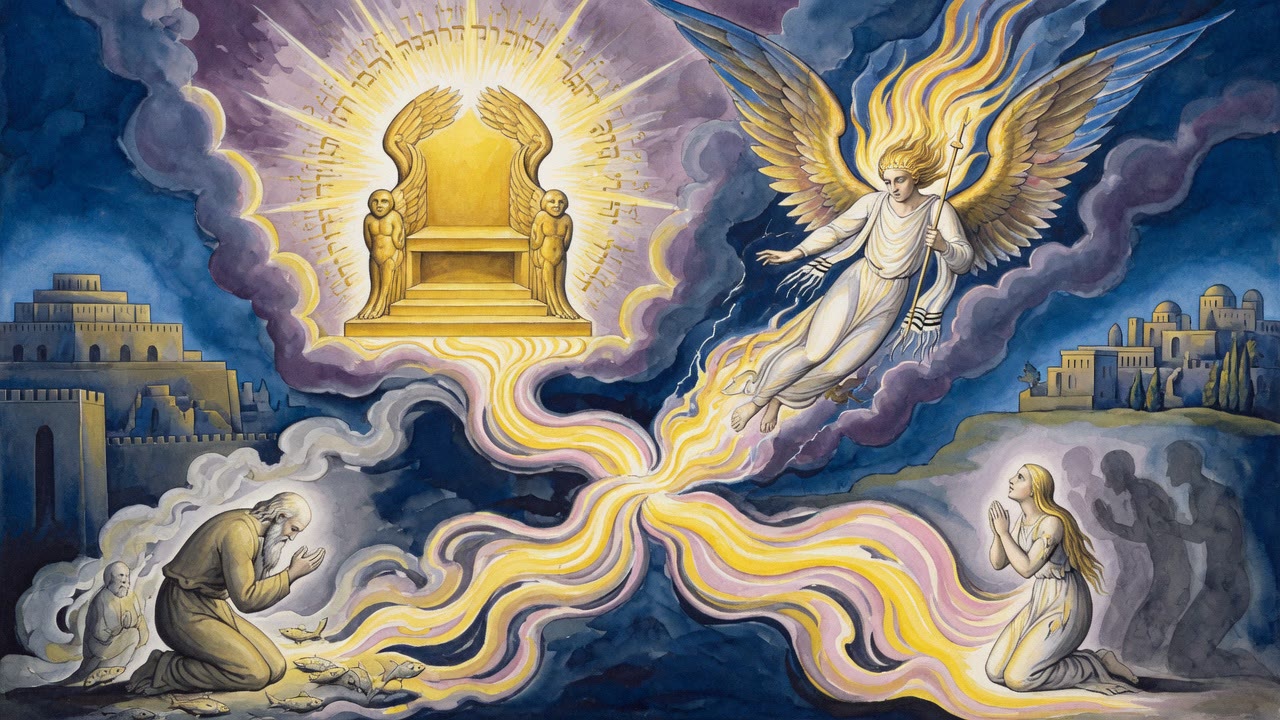
Tobit lived under the eye of Sennacherib and still stole the dead. When he saw the slain of Israel cast outside the wall of Nineveh, he buried them again and again. The streets became his night route. Dogs and soldiers were not the only hunters in that city. Tobit hunted dignity for bodies the empire had thrown away.

Informers told the king that Tobit's men searched every street for the slain of his nation. The king's men hunted the corpses Tobit had already hidden in earth. He kept burying. He prayed to the Lord God of Israel as a man who admitted guilt and still trusted justice: God had dealt truly, and the people had done wickedly. Faith, for him, looked like a shovel in the dark and a prayer that did not ask for easy nights.

Burial was not a single kindness. It was a habit that risked his life and taught his household that the dead still belonged to Israel even when the wall spat them out.

Ten Talents in Media

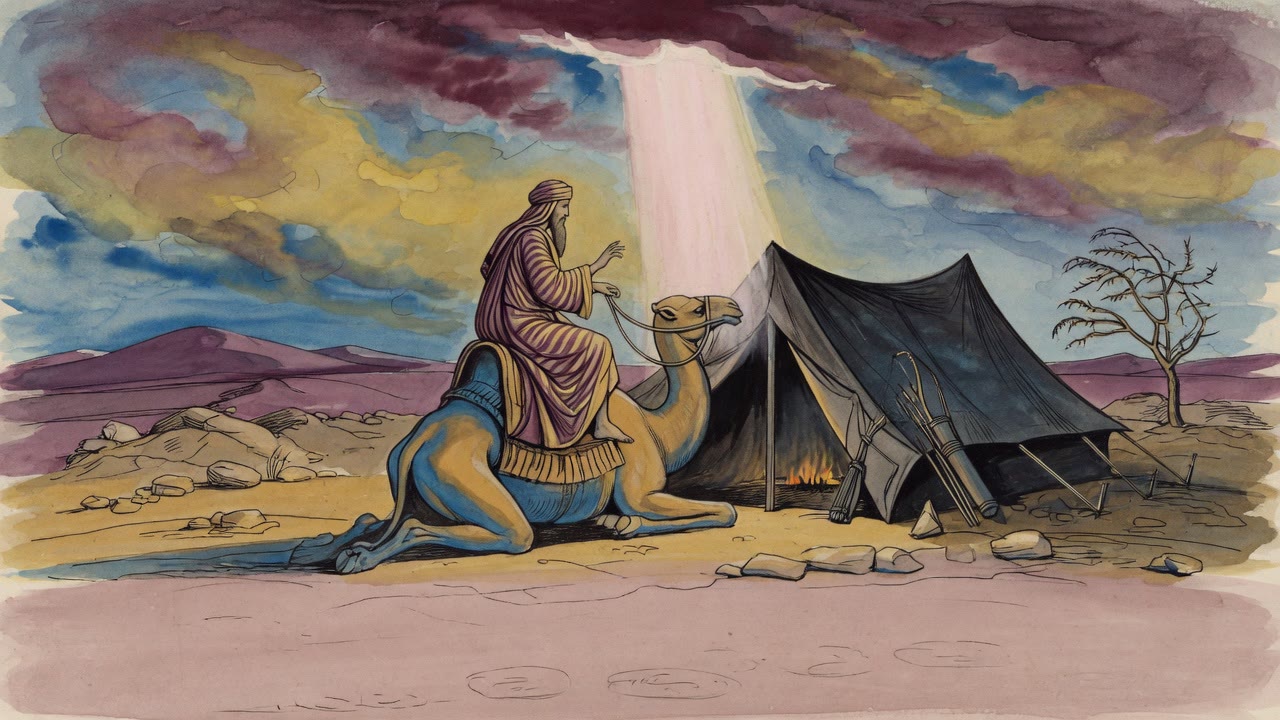
Years later, blind and near the edge of his strength, Tobit called his son Tobias. "I know not the day of my death," he said, and then he opened the map of a secret. Ten talents of silver rested with Gabael his kinsman in Rages of Media, far from Nineveh, far from safety, a sum large enough to reshape a family's future if the road did not eat the boy first.

The silver was a trust and a test. Tobit did not send Tobias with only a road and a name. He sent him with fear of the Lord and a warning against sin, promising that great riches follow a life kept clean of it. The journey that began as money retrieval became the road that would carry Tobias into a house where seven grooms had already died on the wedding night.

Media waited with a vault. Another house waited with a demon. Tobit could see neither. He could only send his son into both.

Seven Dead Grooms

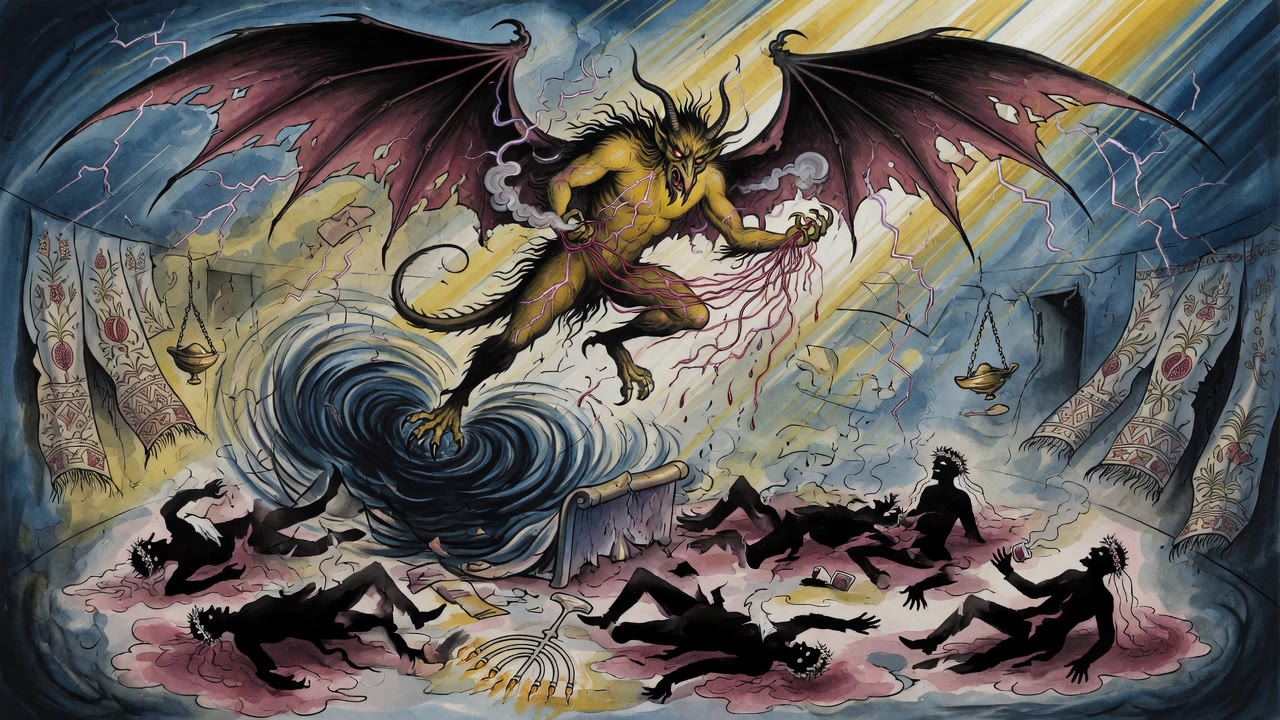
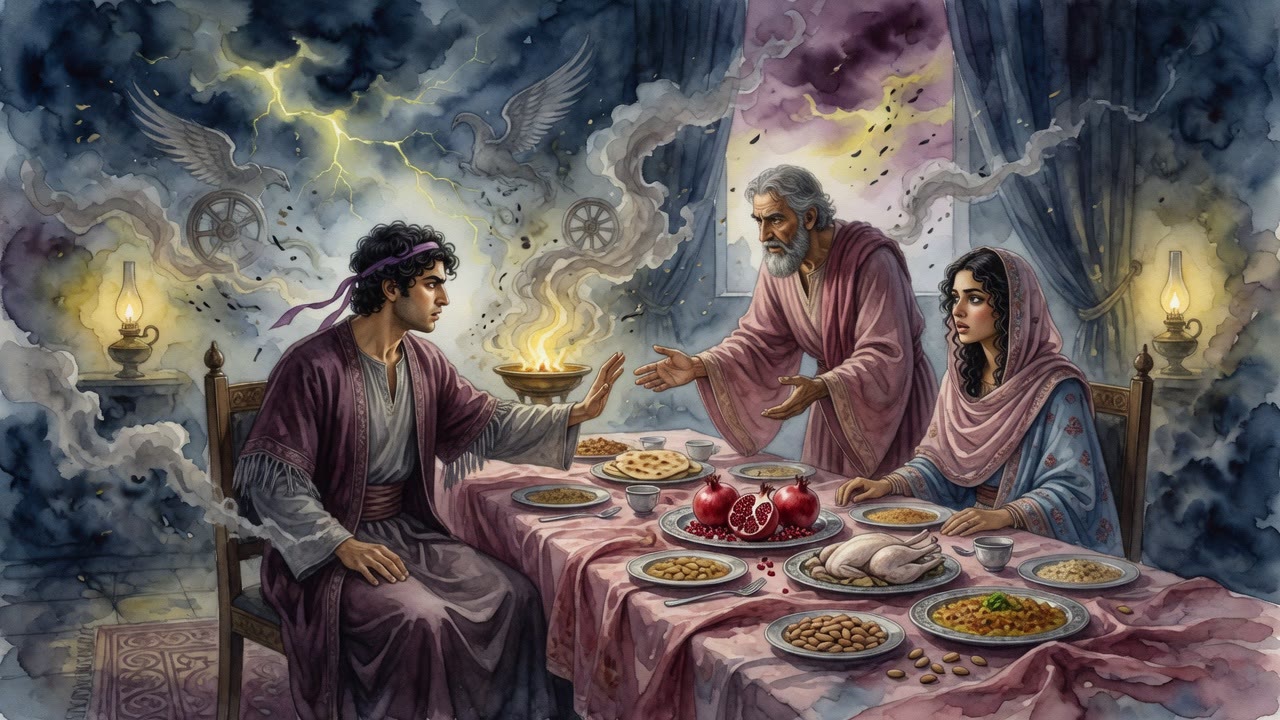
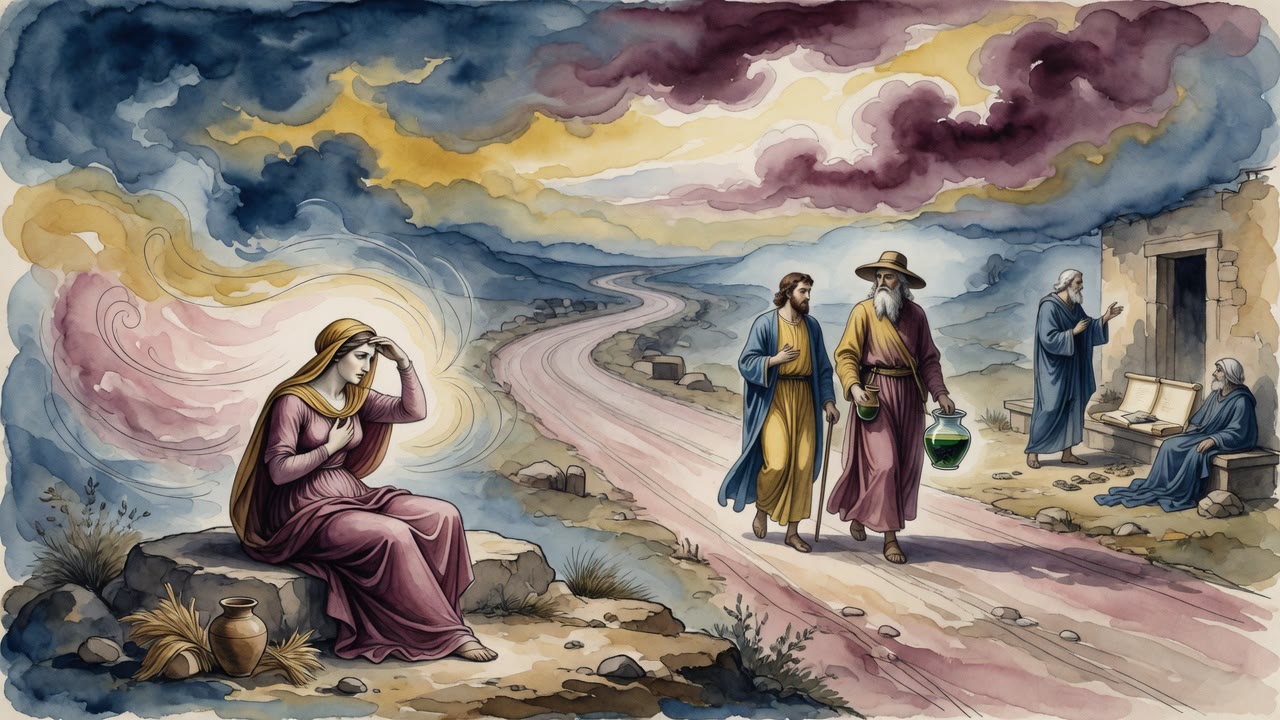
Sarah, daughter of Reuel, had watched seven wedding nights end in a corpse. The demon Asmodeus killed each husband before the marriage could stand. The house learned the sound of celebration turning into silence. When Tobias arrived and the match was sealed, Reuel's joy sat next to a terror he could not hide from his wife Ednah or from himself.

Under cover of night, Reuel ordered servants to dig a grave. "If the youth is dead," he said, "we will bury him in the night, so that no man know it, and there will be no reproach to us." The sentence was practical and merciless. Shame had already visited that courtyard seven times. An eighth public funeral might finish the family's name.

He called Ednah into the plan. Together they sent a maid to the bridal chamber as a scout for disaster. The maid slipped in, held her breath, and found Tobias and Sarah asleep, alive, peaceful. She ran back with a report that undid the shovel. The grave became an empty hole of fear. Reuel had prepared for shame. God had prepared a morning.

The Chamber That Did Not Need the Grave

Tobias had entered that room knowing the story of the seven. Prayer and the strange medicines of the road met the demon's claim on the night. The house that had learned to dig in secret learned, for once, to leave the earth closed. Servants who had dirt on their hands from a preventive burial stood useless in the best way.

Reuel's caution was not cruelty. A father who has already paid seven times counts before he celebrates. The miracle did not erase the graves of the past. It stopped the next one and turned a wedding back into a wedding.

Wonders and Terrible Things

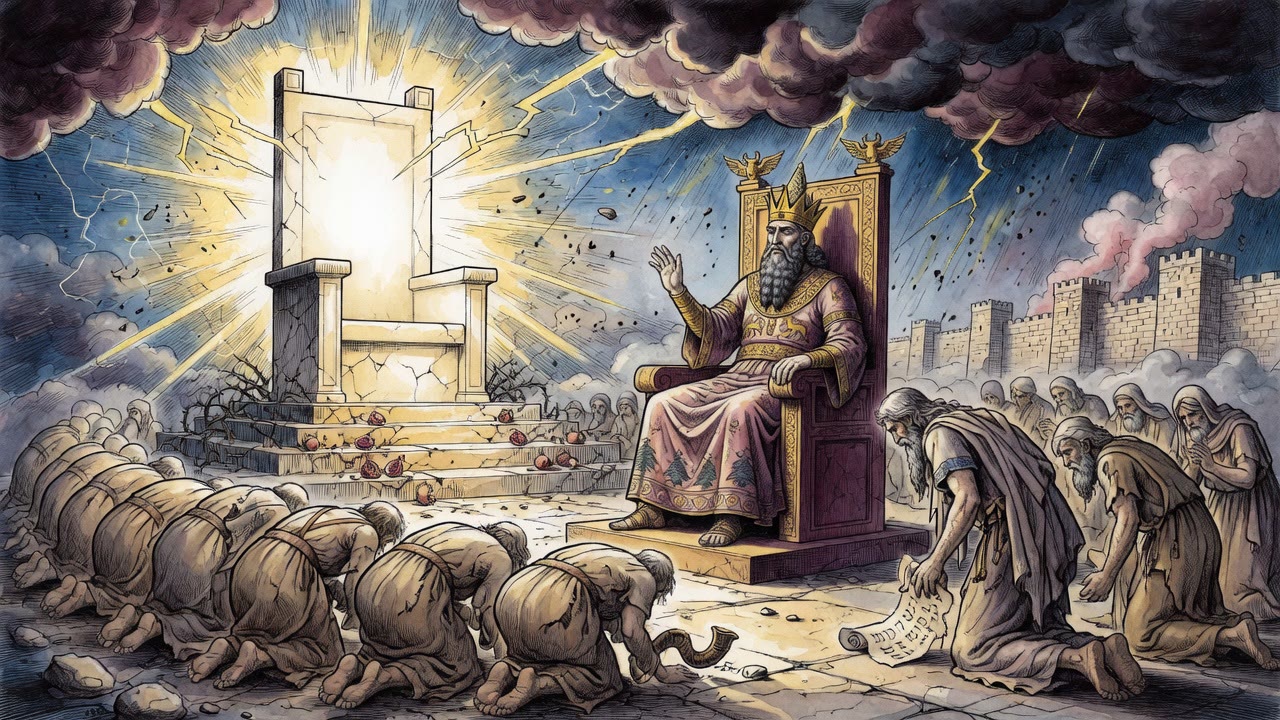
When Tobit's own story turned from burial and blindness toward recovery, he blessed the Lord who had shown wonders, marvels, and great and terrible things to all who trusted Him. He did not separate the soft mercies from the hard ones. The same God who saw corpses outside Nineveh's wall also saw a dug grave waiting under a wedding feast in Media's orbit.

He cried out for salvation and for Ariel, for Jerusalem rebuilt before the eyes of Israel. The man who had stolen bodies for burial now asked for a city that would not cast its dead into shame. Between Nineveh's nights and Media's silver, between Reuel's shovel and Sarah's sleep, the book holds one stubborn claim: trust can walk through terrible things without calling them the last word.

The maid who had peeked into the chamber still tasted fear when she spoke. Alive meant the grave was a wasted hole, and wasted fear is still fear that once dug dirt. Reuel ordered the servants to fill what they had opened. Ednah wept with a different wetness than mourning.

Across the distance of roads and years, Tobit's blindness and Reuel's shovel were two ends of one rope. One man buried strangers under a tyrant. The other almost buried a son-in-law under a wedding canopy. Both learned that earth is quick to take what God has not yet released.


← All myths

From the tradition

Sources

4 sources

The texts behind this telling. Some cards carry a translation of the source; others are our own retelling of it, and each card says which. Every card links out to the original.

Book of Tobit 1:9Book of Tobit

Retold in our words. Read the original at the link below.Sefaria-hosted English translation · CC-BY

Book of Tobit turns to Faith of Tobi.

He tells us, in the very first chapter, of his devotion to the dead. "And when I saw the slain of Israel cast forth outside the wall, I many times stole their corpses and buried them..." Can you picture it? Risking everything to give these fallen souls a proper burial, a final act of respect and remembrance.

It wasn't just a one-time thing. Tobi did this "many times." This wasn’t simply fulfilling a religious obligation; it was an act of defiance, a quiet rebellion against the tyranny that surrounded him. He recognized God's justice even in the face of suffering. "O Lord God of Israel," he prays, "thou art righteous in all that hath come upon us, for thou hast dealt truly, and we have done wickedly.

His actions didn't go unnoticed. Word eventually reached Sennacherib, the king of Assyria, a ruthless ruler not known for his tolerance. The king's men searched for the bodies, but Tobi was too clever, too driven by his faith.

"Then went the men of Nineveh and told the king, saying, Thy servant Tobi.. he sendeth his men over all the streets of Nineveh to seek the slain of his nation, and he burieth them privily, and feareth thee not."

Think about the courage it took to act with such conviction! Knowing the risks, facing potential punishment, yet driven by an unshakeable sense of what was right. Tobi wasn't just burying bodies; he was burying hate, burying despair, and planting seeds of hope.

Tobi’s actions remind us that even in the darkest of times, even when faced with seemingly insurmountable challenges, we have the power to make a difference. That even the smallest act of kindness, performed with intention and love, can ripple outwards and create waves of positive change. What acts of kindness, of courage, await our own hands?

Full source
Book of Tobit 5:1Book of Tobit

Retold in our words. Read the original at the link below.Sefaria-hosted English translation · CC-BY

Book of Tobit turns to Tobit Reveals Hidden Money to His Son.

Tobit, knowing his time might be limited – “for I know not the day of my death” – reveals a secret to Tobiyyah. He says, “And now, my son, I will signify to thee the matter of the money which I have in the hand of Gabael my brother and kinsman, ten talents of silver in the city Rages in the land of Media…”

Ten talents of silver! That was a considerable sum. And it wasn't just about the money, was it? It was about entrusting his son with a crucial task, a responsibility that spoke volumes about the faith he had in him. This wasn't just about retrieving wealth; it was about maintaining family ties and fulfilling obligations.

Media, where this fortune was stashed, wasn't exactly around the corner. It was a distant land, fraught with potential dangers. But Tobit’s focus wasn't on the risks, but on the values he wanted to instill in his son.

He doesn't just send Tobiyyah off with a map and a pat on the back. Instead, he imparts some profound wisdom. "And thou, my son, if thou fear the Lord and keep thyself from all sin, he will give thee great riches." This wasn't a guarantee of material wealth, mind you. It was a promise of something far more significant: spiritual wealth, a life lived with integrity and guided by faith. Tobit understood that true riches weren't measured in silver, but in the quality of one's character.

How does Tobiyyah respond? He answers his father with simple, heartfelt obedience: "All that thou hast commanded me, my father, I will do." No hesitation, no arguments, just a son's willingness to honor his father's wishes and embrace the challenge ahead. It's a beautiful moment of filial piety, evidence of the strong bond between father and son.

It’s striking how Tobit ties the retrieval of the money to fearing the Lord and keeping oneself from sin. He elevates a seemingly mundane task to a spiritual level. He understands that the journey itself – both literal and metaphorical – is an opportunity for growth and for demonstrating faith. How often do we view our daily tasks, our responsibilities, as opportunities for spiritual growth? Tobit teaches us that even the most practical of errands can be infused with meaning and purpose, that every action can be an act of devotion.

And so, with a father's blessing and a son's unwavering commitment, the stage is set for an adventure. It's a story about family, faith, and the enduring power of love and responsibility.

Full source
Book of Tobit 8:4Book of Tobit

Retold in our words. Read the original at the link below.Sefaria-hosted English translation · CC-BY

He’s just given his daughter’s hand in marriage to Tobias, a young man he barely knows. But here's the kicker: Sarah has a terrible history. Seven previous grooms, each one dead on his wedding night, slain by the demon Asmodeus.

So, what's a worried father to do? Reuel, understandably terrified that Tobias will meet the same grim fate, takes a rather… proactive approach. The Book of Tobit tells us that he instructs his servants to dig a grave, secretly, under cover of darkness. "If the youth is dead," he says, "we will bury him in the night, so that no man know it, and there will be no reproach to us." Can you feel the anxiety radiating off the page?

He then calls his wife, Ednah, into his confidence. Together, they decide to send a maid to peek into the bridal chamber. A grim fact-finding mission. Was Tobias still among the living? If not, they’d bury him before sunrise, keeping their daughter's reputation (and their own) intact. A desperate plan born of fear.

The maid slips into the room, holds her breath, and… beholds a miracle! Tobias and Sarah are both asleep, peaceful and joyful. Imagine the wave of relief that washed over her! She rushes back to Reuel and Ednah, breathlessly announcing, "He liveth!"

The response is immediate and powerful. Reuel, overwhelmed with gratitude, breaks into a heartfelt blessing. "Blessed art thou, O Lord God of our fathers," he cries, "who hast shewn us this great kindness, for it is thou, O Lord, who smitest and healest, and killest and makest alive, who hast wrought this wonder with these twain, and thou livest and art established for ever and ever."

Talk about a change of heart!

Reuel immediately orders the grave to be covered up – no need for that now! – and instructs his servants to prepare a great feast. God, in his infinite mercy and kindness, had spared Tobias and Sarah, and given them cause for celebration.

What strikes me most about this passage is the raw humanity of Reuel. He’s flawed, scared, and acts in ways that might seem… extreme. But ultimately, he’s driven by love for his daughter and a deep-seated belief in God. And when faced with a miracle, he doesn't hesitate to acknowledge it and give thanks.

It's a reminder that even in the darkest of times, even when we're digging metaphorical graves of our own, hope can still bloom. And sometimes, just sometimes, we might be surprised by the dawn.

Full source
Book of Tobit 13:2Book of Tobit

Retold in our words. Read the original at the link below.Sefaria-hosted English translation · CC-BY

The Book of Tobit knows that feeling. And in Chapter 13, we find a burst of praise, a song of hope rising from the depths of despair. It's a moment of pure, unadulterated faith.

Tobit, blind and broken, having endured so much, erupts in a blessing. "And blessed is the Lord," he proclaims, "who hath shewn to me and my father and my forefathers, and every one who hath trusted in him, wonders, and marvels, and great and terrible things." "Great and terrible things." It's not just about the good stuff, the miracles and the joys. It's about recognizing God's presence even in the face of suffering. It's about acknowledging that even the difficult experiences can ultimately lead to something profound.

That even in the darkness, there's a divine hand at work.

Tobit doesn't stop there. His blessing becomes a prayer, a fervent plea for the future. "O lord of the world," he cries out, "shew us in our days salvation and redemption by the coming of the Redeemer and the building of Ariel before the eyes of all Israel..."

Ariel, often understood as a poetic name for Jerusalem, the City of God. It represents the heart of Israel, the place where the divine and the earthly meet. Tobit is yearning for the restoration of Jerusalem, for the return of his people to their homeland.

His prayer is steeped in the words of the prophets, echoing their visions of a brighter future. He quotes Jeremiah: "In his days Judah shall be saved and Israel shall dwell safely" (Jeremiah 23:6). And Isaiah: "And the ransomed of the Lord shall return" (Isaiah 35:10). And the Psalms: "The Lord doth build up Jerusalem, he gathereth together the outcasts of Israel" (Psalm 147:2).

These aren't just pretty words. They're anchors. They're promises that have sustained the Jewish people through centuries of exile and hardship. They are a reminder that even in the darkest of times, hope remains.

What's so powerful about this passage is its universality. We all face moments of darkness, times when we feel lost and alone. Tobit's prayer reminds us that even then, we can turn to something greater than ourselves. We can find strength in faith, in the promises of redemption, and in the hope for a better tomorrow.

It’s a prayer for salvation, for redemption, for the rebuilding of not just a city, but a people. A prayer that resonates even today. A prayer that maybe, just maybe, we can whisper along with him.

Full source