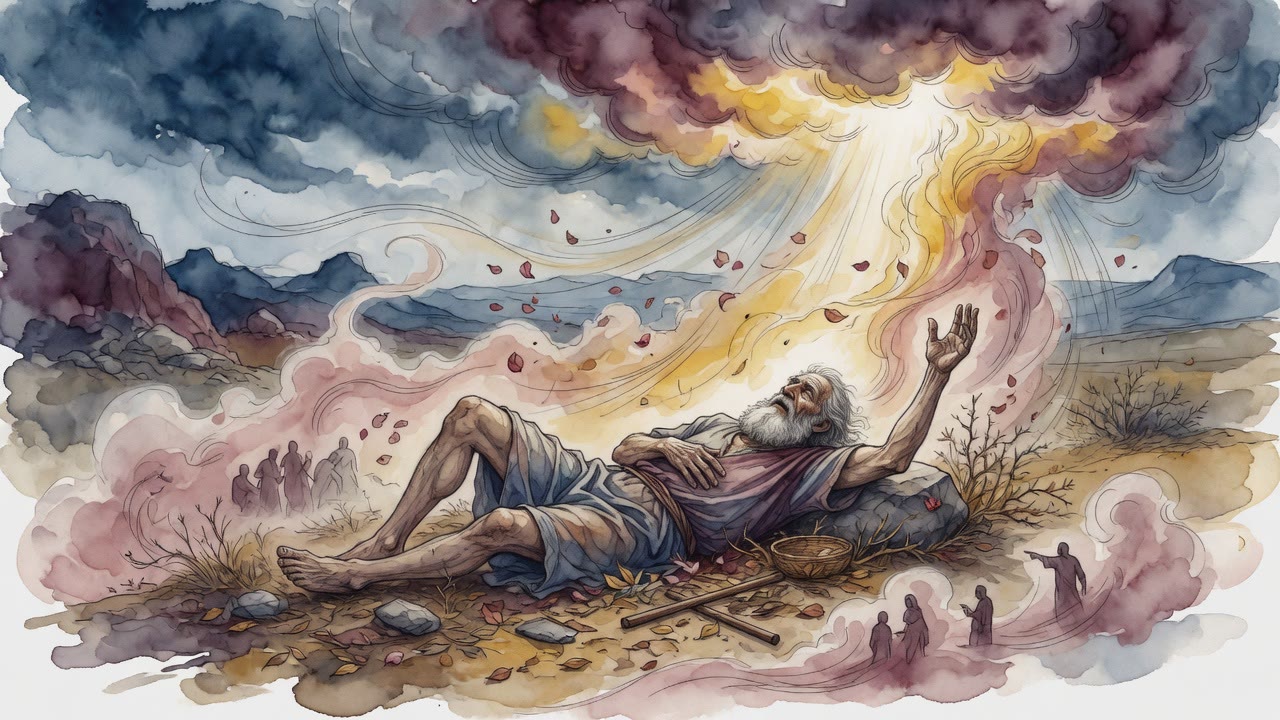
The Town Would Not Eat Until Samuel Blessed
Saul entered a town hunting donkeys and found people waiting with full plates and empty mouths. Samuel had to bless first, or the meal stayed untouched.
Table of Contents
 Click for full size
Donkeys Lost, a Table Waiting
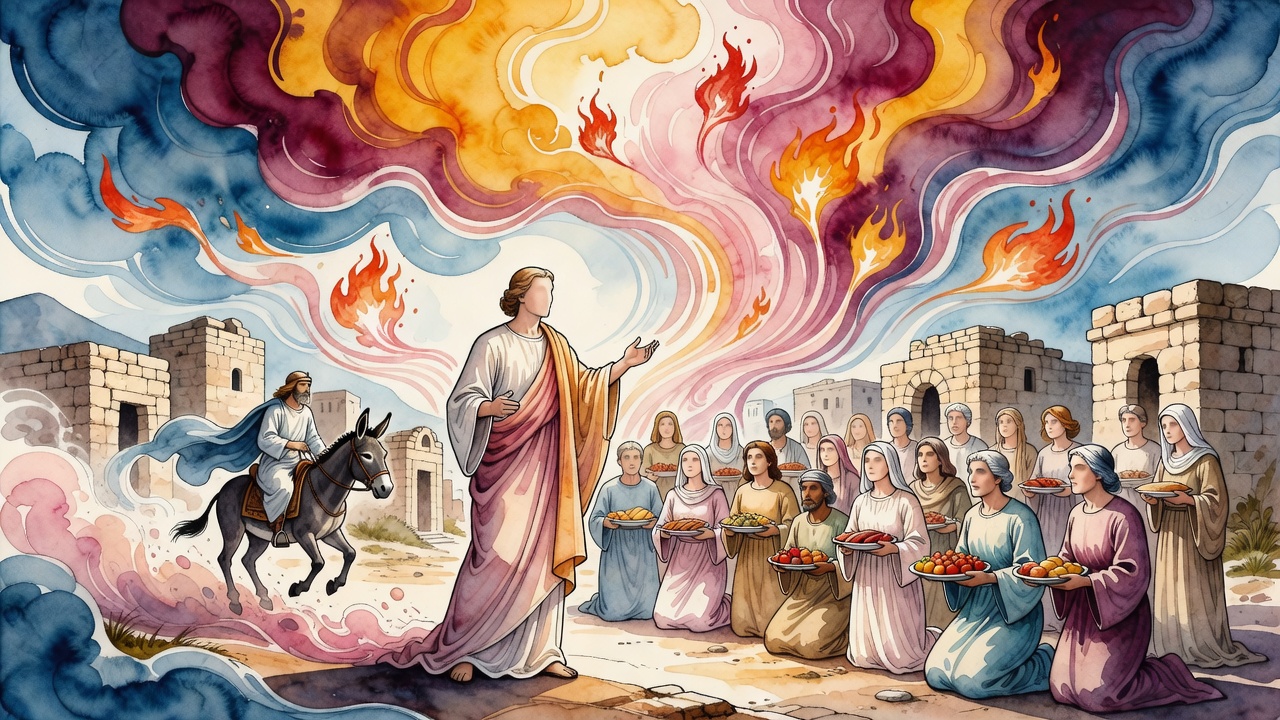
Saul came into the town with the smell of road on him and a servant who still believed the animals could be found. He was tall enough to draw eyes and unsure enough to ask directions twice. The people he met did not first speak of donkeys. They spoke of timing.
"As soon as you enter the town you will find him before he goes up to the high place to eat, for the people will not eat until he comes, because he must bless the sacrifice." The sentence made Saul stop mid-stride. Hunger was present in the air, the thick hunger of a community meal, yet no hand moved toward the meat.
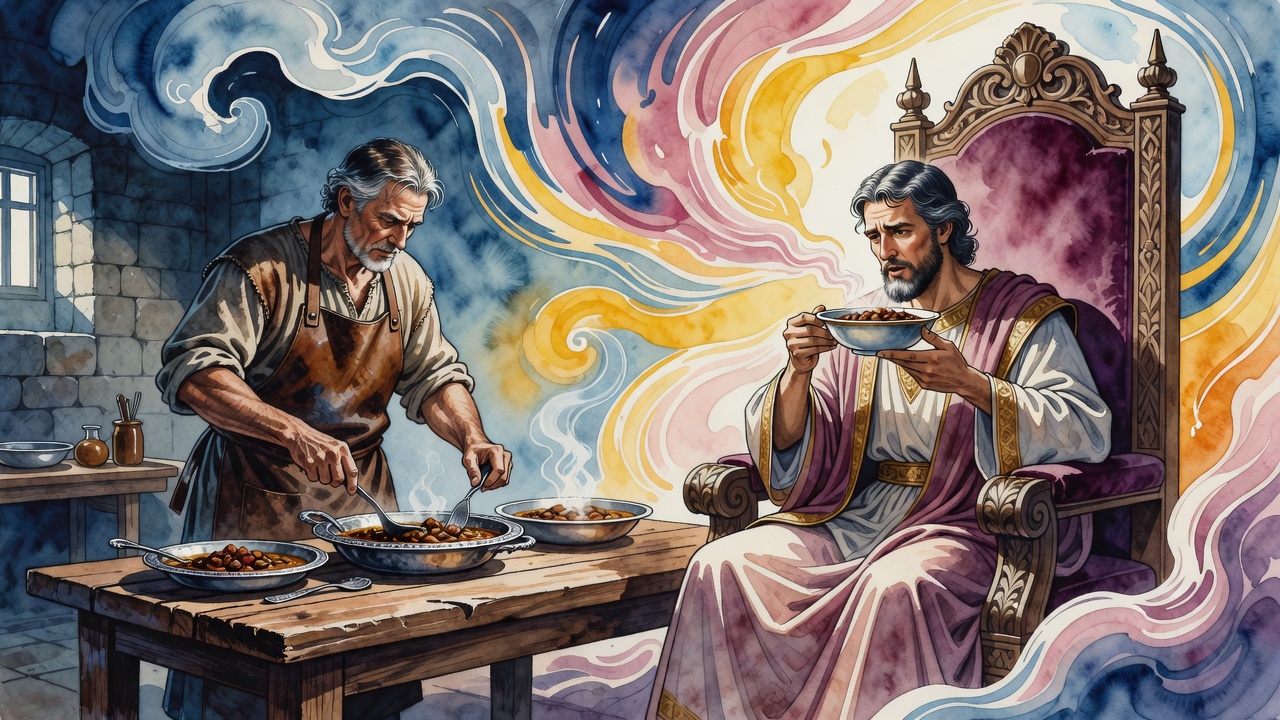
Samuel had not yet arrived. The plates held their heat. The town held its breath. Food without his blessing was only potential, not yet permitted to become nourishment.
The Prophet's Mouth as a Gate
Rabbi Nathan later took that scene and set it like a stone in the foundation of daily practice. Blessing before eating is not a late invention of anxious schools. In the days when judges still shaded into prophets, a whole town waited for one mouth to open correctly.
Saul watched farmers and elders stand with the patience of people who fear profaning a gift more than they fear a cold roast. Hierarchy here was not vanity. It was the knowledge that a meal can be a sacrament or a raid on the world, depending on whether heaven is addressed first.
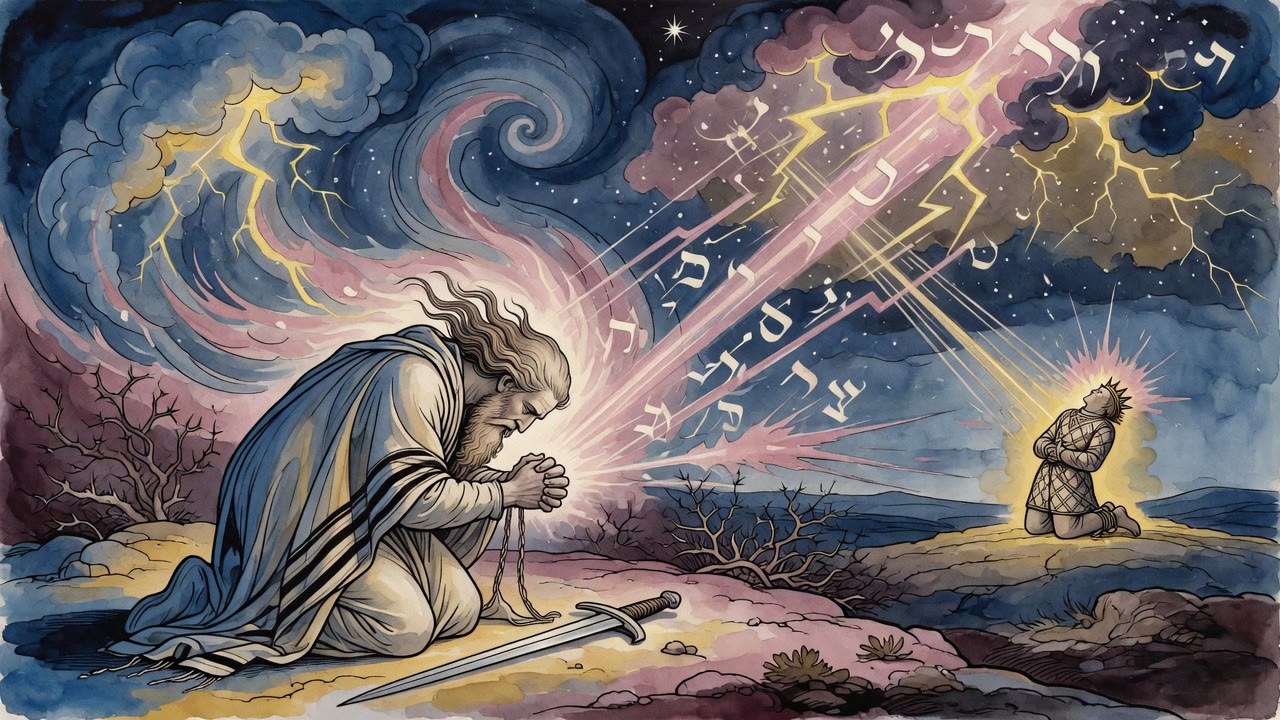
When Samuel came, the air changed the way air changes when rain finally smells itself on dust. He saw Saul before Saul understood what he was being seen as. Lost donkeys were already becoming a smaller story than the one heaven was writing on a tall young man.
Bless, Then Break Bread
Samuel spoke the blessing over the offering. Only then did the people sit. Sound returned: talk, the knock of cups, a child's laugh that had been bottled by ritual delay. Saul ate as a guest who has walked into a rule larger than hospitality manuals.
The teaching travels forward into every kitchen where a Jew waits to say words before bread. The town of Samuel is still present in miniature whenever a hand hovers and then stops for a sentence of thanks. Authority at that table was spiritual before it was royal. Saul would learn both kinds, and confuse them, and pay.
For one afternoon he was only a witness to a people who refused to treat hunger as an emergency that cancels speech toward God.
Solitary Ones Settled, Rebels Still Fed
Another strand in the same midrashic weave hears the psalm: God settles the solitary in a home, and brings out prisoners in season, while rebels may still find themselves handled with a strange fairness. Israel in Egypt had been rebellious and idol-curious, yet the Exodus still came for the sake of the Name among the nations.
Saul, solitary in his own way despite the servant at his side, was being settled into a story that would house him and then unhouse him. The meal was the first door of that house. He crossed it without knowing the floor plan of kingship waiting upstairs.
Jeremiah's later witness in the Mekhilta's company keeps the eyes of the Lord on all the ways of humankind, great in counsel and mighty in deed. The town meal sits under those eyes. So does the private grab of food without blessing. Heaven is not confused about which is which.
What Saul Carried Away from the Table
He left with directions that would end in anointing oil and a crown heavy enough to bend a neck. The donkeys would be found, because some searches end as pretexts. The taste of meat taken only after a prophet's blessing would stay longer than the taste of success. On the road he tried to explain the delay to his servant and found he could not make it sound practical. Practical men eat when food is hot. This town had been impractical on purpose.
Years on, when Saul's own table became a place of spears and moods, the first meal in Samuel's town stood as a silent contrast. Once he had seen a community refuse to eat until speech toward heaven opened the door. Later he would learn how a king can close doors with a look. The memory did not save him from every error. It remained anyway, like a stone in a shoe, reminding him that authority once meant waiting, not seizing.
The plates of that day were ordinary clay. The rule on them was not. A people taught a future king that hunger is real and still not sovereign. Blessing holds the gate. Without it, the town stays standing, bowls full, mouths closed, waiting for the right voice. Saul carried that image into fields where donkeys no longer mattered, and into nights when a crown made sleep thinner than any road he had walked to find Samuel.
← All myths