The Two Shekhinahs and the Window Between Houses
A king married off his daughter and could not bear the empty hall, so he cut a window so they could still meet face to face.
Table of Contents
 Click for full size
The King Who Married His Daughter to Light
There was a king whose daughter was good and pleasant and beautiful and perfect, everything a father could want and more than he could bear to give away. When the time came he married her to a king's son. He did not send her out empty. He wrapped her in fine cloth, set a crown on her head, hung her with ornaments, and poured great wealth into her new house, so that she crossed to her husband trailing gold.
Then the king sat alone in his own hall and could not stand it.
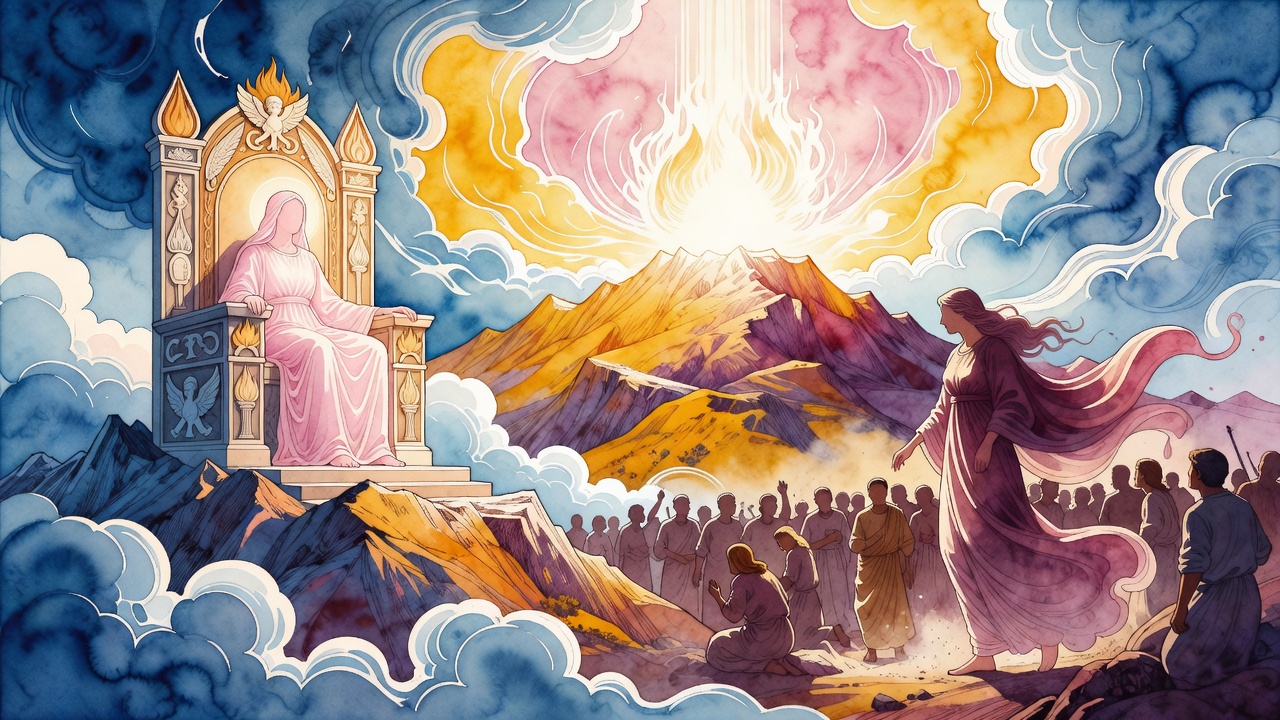
He wanted her near. Not to undo the marriage, only to see her face. But a king cannot abandon his own house to live in his son-in-law's rooms, and a bride cannot be hauled back to her father every hour of the day. So he did the one thing left to a man who loves and cannot hold. He cut a window in the wall between the two houses. Whenever the daughter longed for her father, or the father for his daughter, they leaned to the opening and were together through it. "All glorious is the king's daughter within," the poet sang of her. "Her clothing is of wrought gold."
One Daughter Above, One Bride Below
The king in that story is God, and the daughter is the Shekhinah (the Divine Presence) (שכינה), the Presence He could neither lock inside His own house nor lose into the world below.
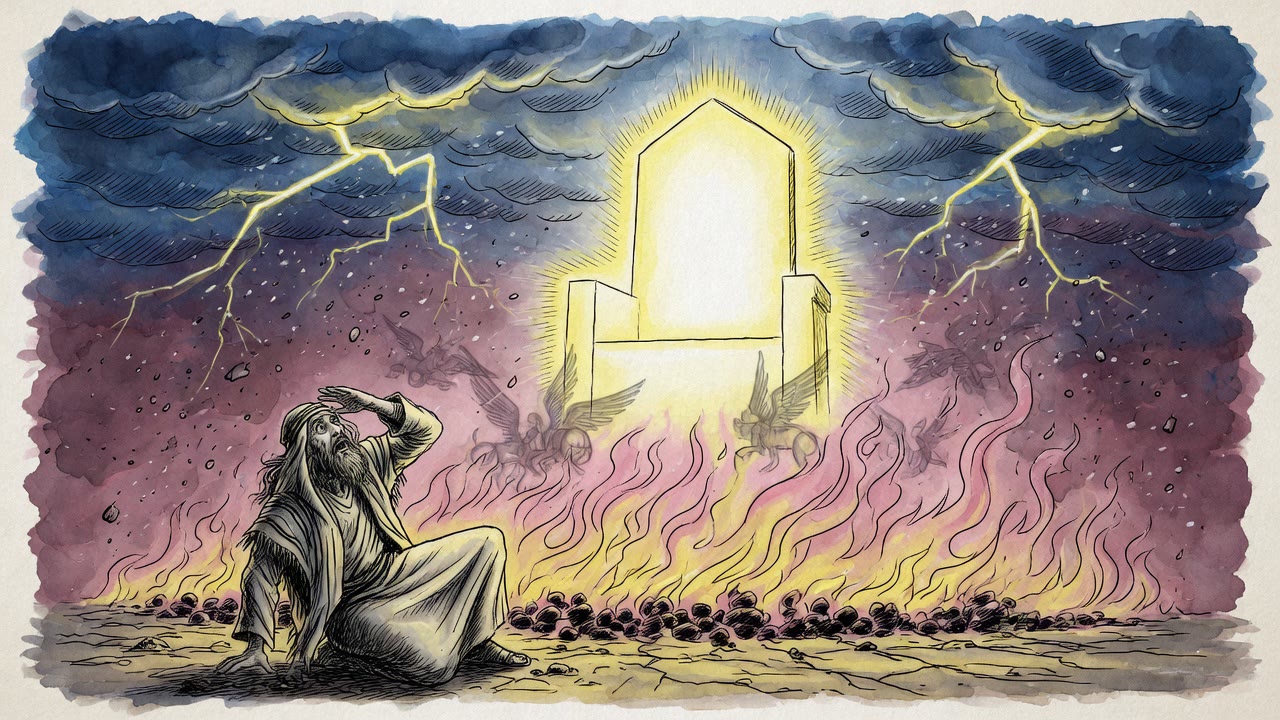
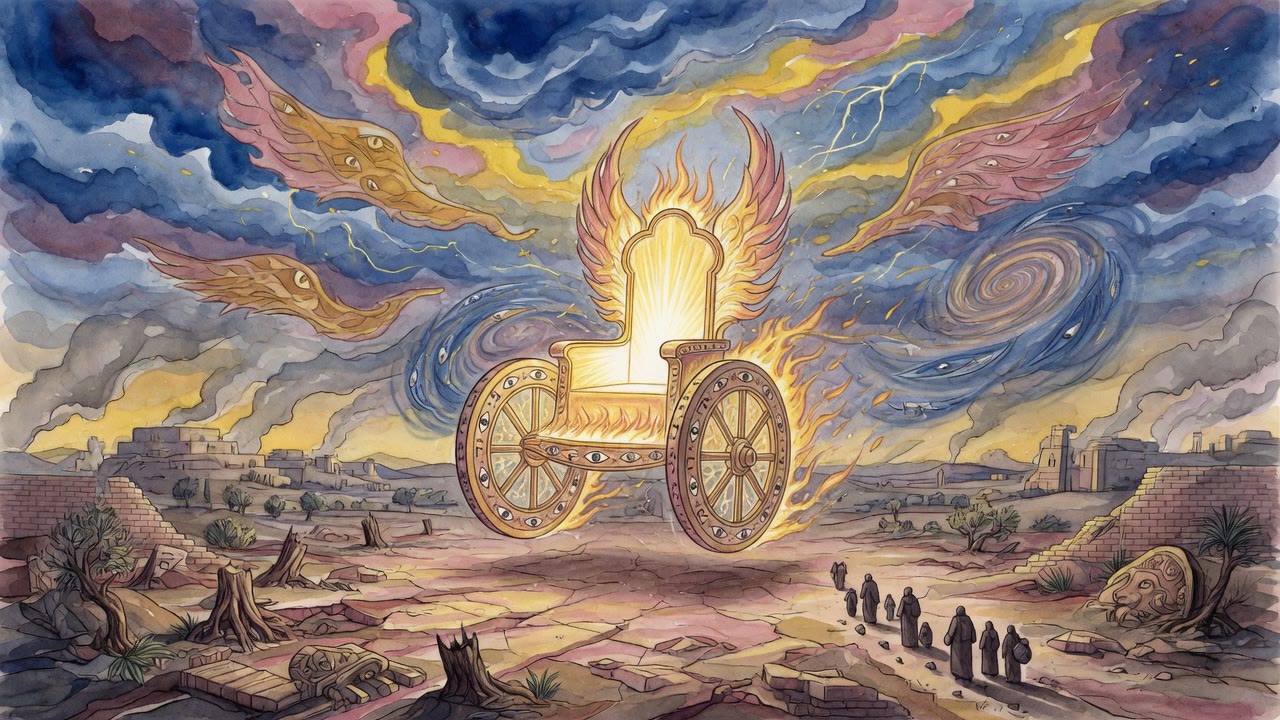
She lives in two places at once. In the highest heaven she is the daughter within, seated close to the Throne of Glory, the Kisei ha-Kavod, robed and crowned at her Father's side. And she is also the bride who comes down, who leaves the upper house and walks among Israel, who made her home on earth in the Temple in Jerusalem. Daughter above on the throne. Bride below in the sanctuary. One Presence, split across the wall of the world, joined only through the window her Father cut for her.
The Question That Guttered the Candles
In the study halls the candles burned down while men argued it to the bone. If the Presence is here and there at once, where did God Himself actually dwell?
Some said the highest heaven and nowhere lower, a king on the Throne of Glory ruling every world beneath Him. Others said He hangs balanced exactly between the upper world and the lower, weighing on neither, and they had a verse to press into the argument: "The heaven is My throne, and the earth is My footstool." Up above, or strung between the two. No one could pin Him to a single room, because the Presence herself would not hold still. She was daughter and bride, throne and sanctuary, the here that was also the there.
What the Window Costs
A window is not a door. The king does not walk through and take her back. The daughter does not abandon the marriage and return to her father's table. The opening only lets faces meet. That is the price of love that will not cancel a gift already given. The Presence stays among Israel in the lower house, and the Throne keeps its place above, and the cut in the wall is how both claims remain true at once.
Students who wanted a map with one pin went home unsatisfied. The teachers who kept the window open went home with a harder job: to speak of a God who will not choose between nearness and height, because both are already spoken in the same Name.
The Hall After the Wedding
Imagine the king's empty hall after the wedding feast. Gold still on the floor from the procession. Cups not yet cleared. The father stands where the window will be and puts his hand on the stone before the chisel starts. He is not undoing the marriage. He is refusing a silence that would make the marriage into exile for both of them.
Israel later walks into a world that looks like that hall after the guests leave. The Temple rises and falls. Exile lengthens. The window does not close. The daughter still turns her face toward the upper house. The Father still turns toward the lower one. The wall between them is real. The opening in it is also real.
That is why the argument in the study hall never ends with a single room. The Presence will not sit still long enough to be measured by one address. She is the king's daughter within, and she is the bride who crossed trailing gold, and the window is the only way both sentences can be true in one breath.
← All myths