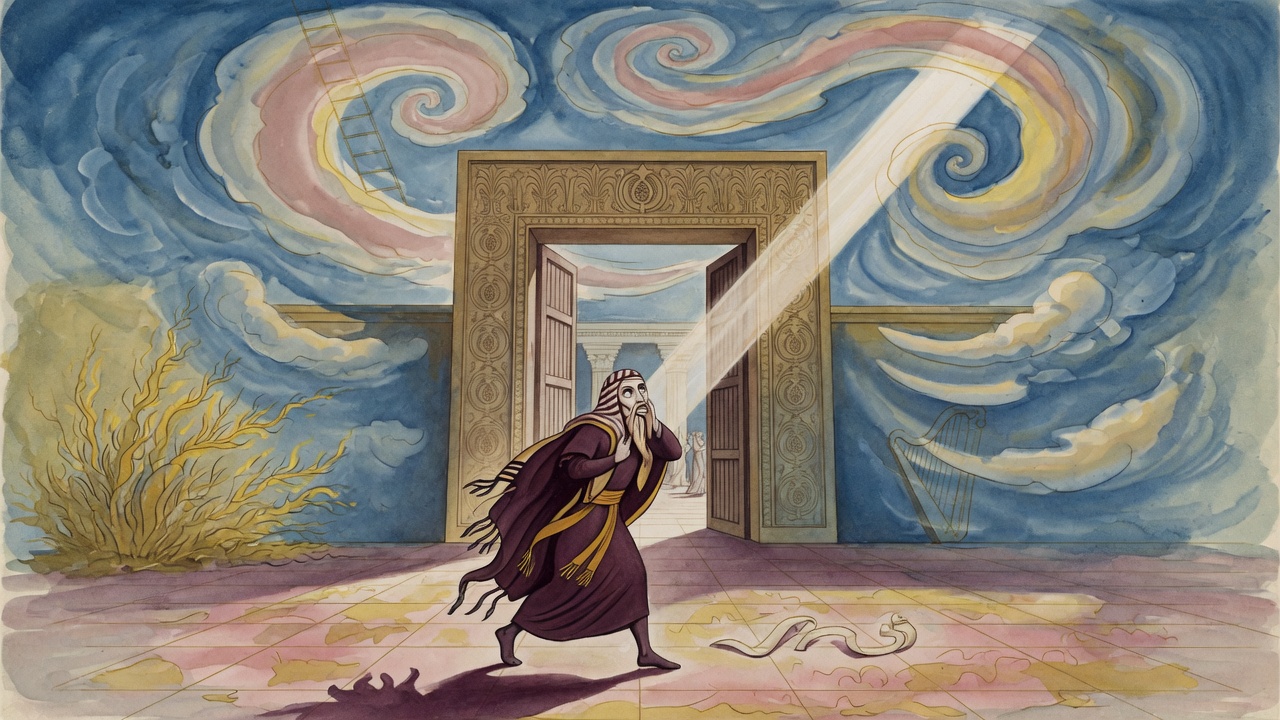
Vashti Wore Temple Garments at Her Feast
She opened six storerooms before noon and named the bedchamber last. The cloth on her shoulders had once belonged to the Temple in Jerusalem.
Table of Contents
The latch was warm. Vashti lifted it and let the women of a hundred and twenty-seven provinces walk into the first room. Gold threw light back at them. She did not wait for anyone to ask what else the house held.
 Click for full size
Six storerooms in a day. Then six again the next.
She Named the Rooms
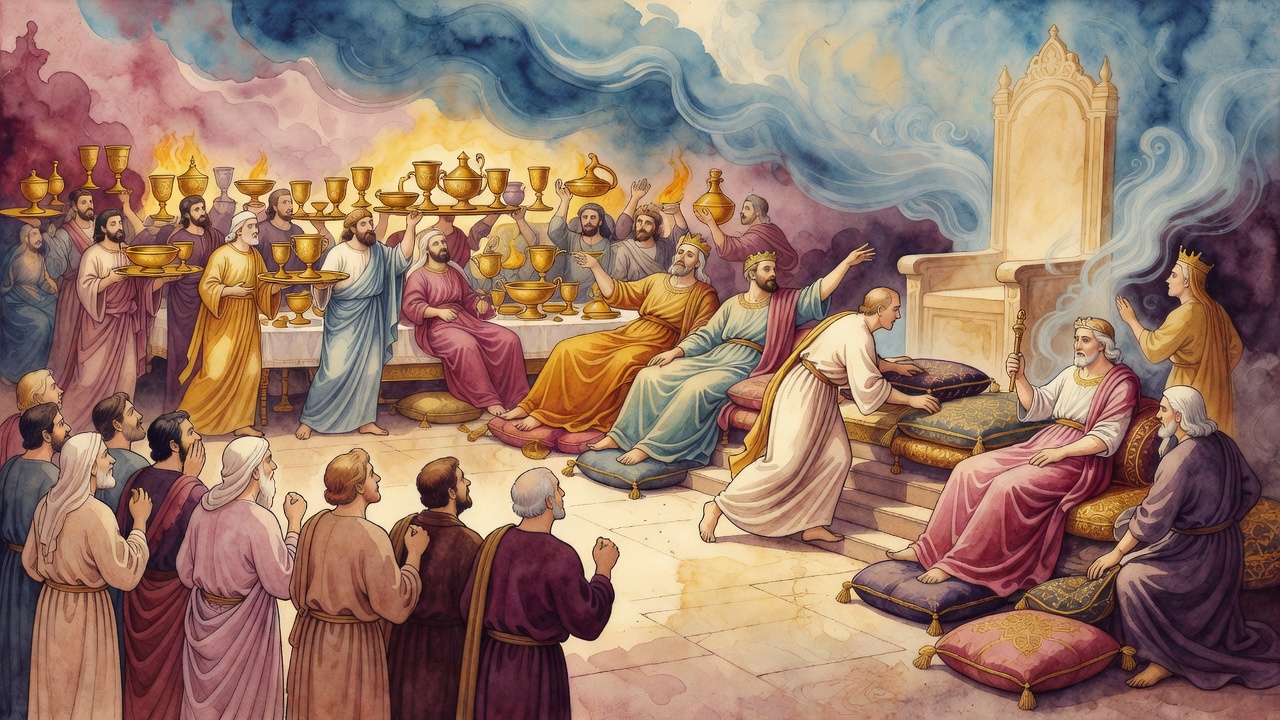
The king had his feast in the gardens. Vashti built hers in the halls. She would not sit quiet behind the men's noise. Food from the land of Israel came to her tables. Liqueurs and sweets stood in place of the outer banquet's wine. The rooms themselves did the rest of the work.
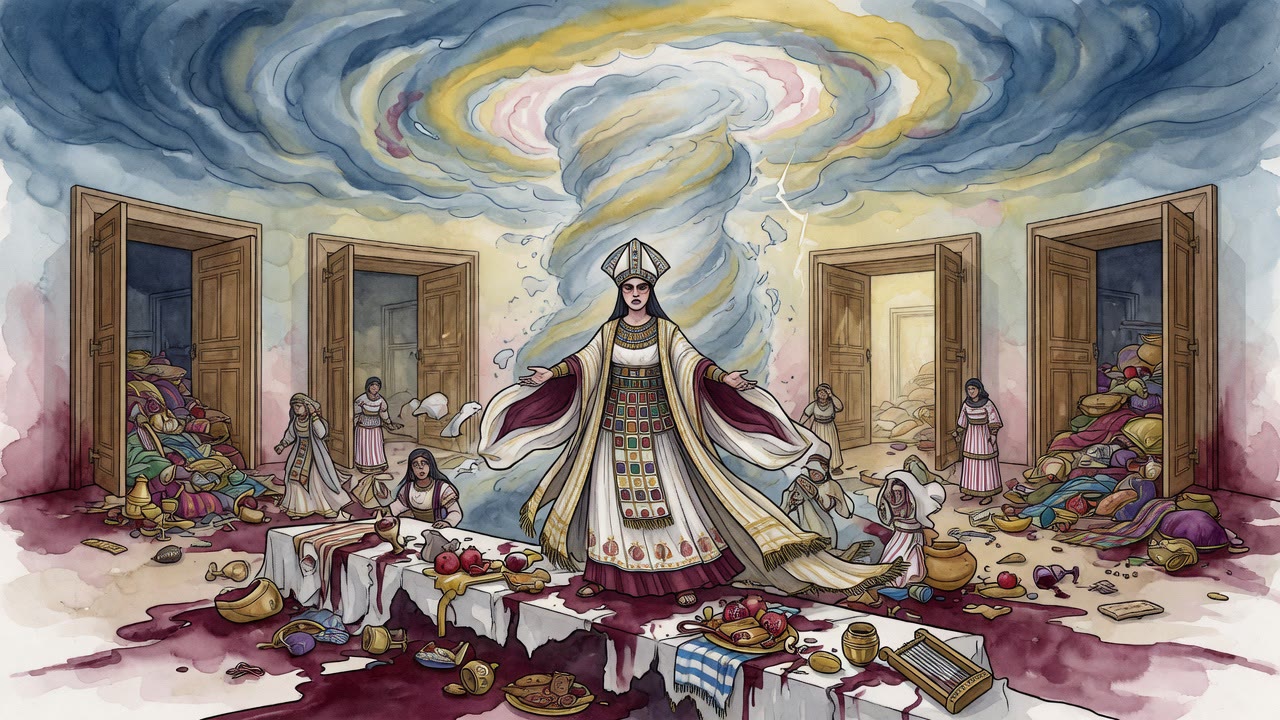
She walked her guests through the palace as if she were reading a map she owned. "This is the dining hall. This is the wine room. This is the bedchamber." Curiosity moved with the women from threshold to threshold, and Vashti fed it. Every door she opened made the palace feel less like a residence and more like a body being shown.
The gardens could wait. The women wanted the inside of the house, the arrangement of it, the proof that the house of Ahasuerus could swallow whatever it desired and still have another door left.
The Cloth Was Not Hers
Then she put on the garments of the high priest.
The robes that had belonged to the service of God, the vestments once bound to the Temple in Jerusalem, rested on a Persian queen at a feast of imperial women. Thread that had been cut for awe now moved through a banquet as display.
No one in the room needed a speech about conquest. The fabric said it. In Jerusalem those garments had meant measured approach, danger, the careful walk toward holiness. In Shushan they made guests stare. The same cloth that should have made a priest careful now made a queen shine.
She wore stolen sanctity without trembling. The storerooms had been the rehearsal. The vestments were the point.
The King Sent Twice
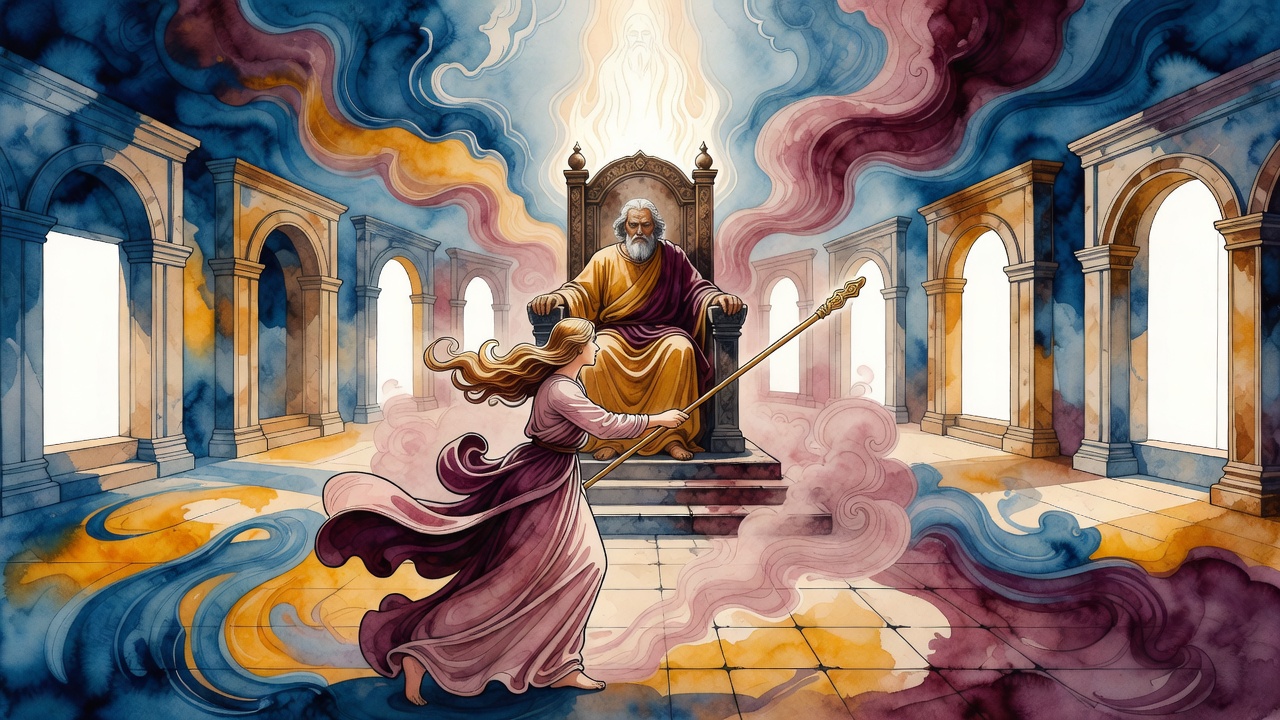
Outside her banquet, Ahasuerus wanted another kind of showing. He sent for Vashti so the princes could admire her. She refused. He sent again, and this time death stood behind the command, dressed in royal impatience.
A woman of the Persian aristocracy caught her arm. Better to be killed by the king, she said, than to let strange eyes devour her beauty and stain the name of her ancestors.
Vashti had walked through six treasuries and put the high priest's robes on her own back. She would not now be carried into the men's hall as one more object on a table. Pride met pride. The palace tightened around the refusal.
The Sages Will Not Sit the Case
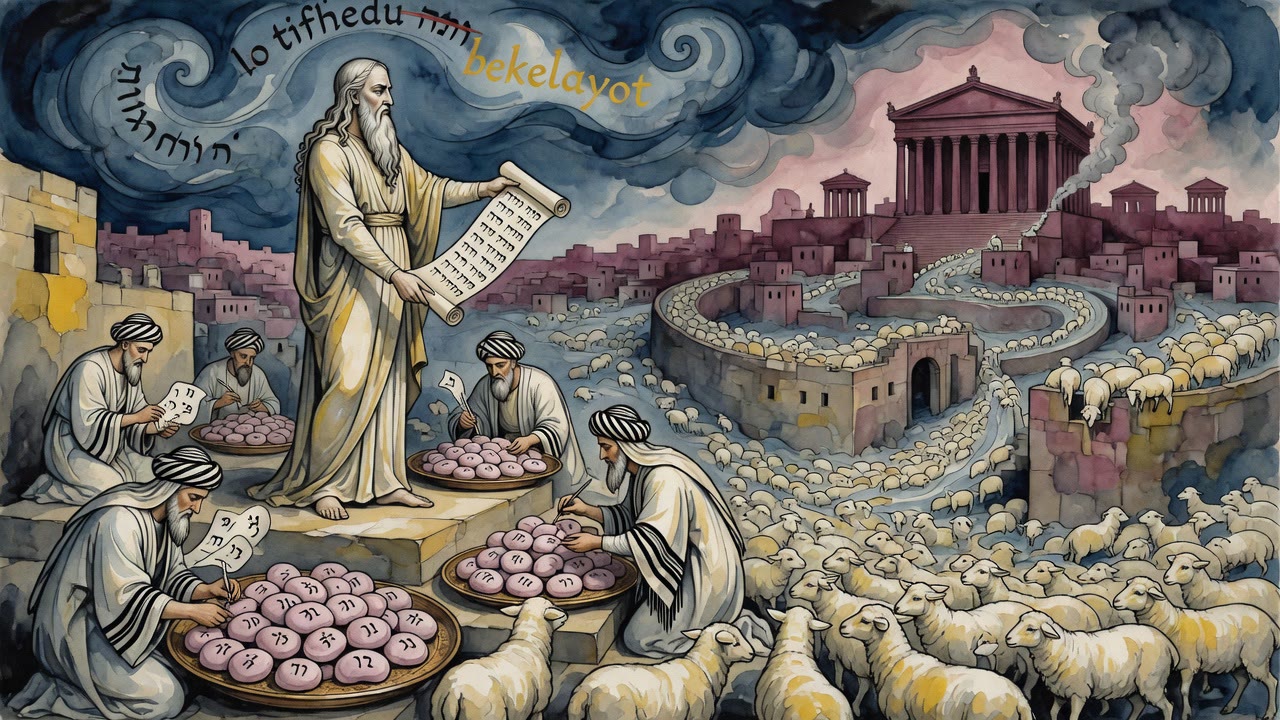
The king turned to the Jewish sages and asked them to judge her. That should have been a clear word. It was not.
They ran the paths in silence. If they condemned Vashti and the king sobered into grief, he would blame them for her blood. If they urged mercy while the wine still sat in him, he would accuse them of insulting his throne. Every road led back to their necks.
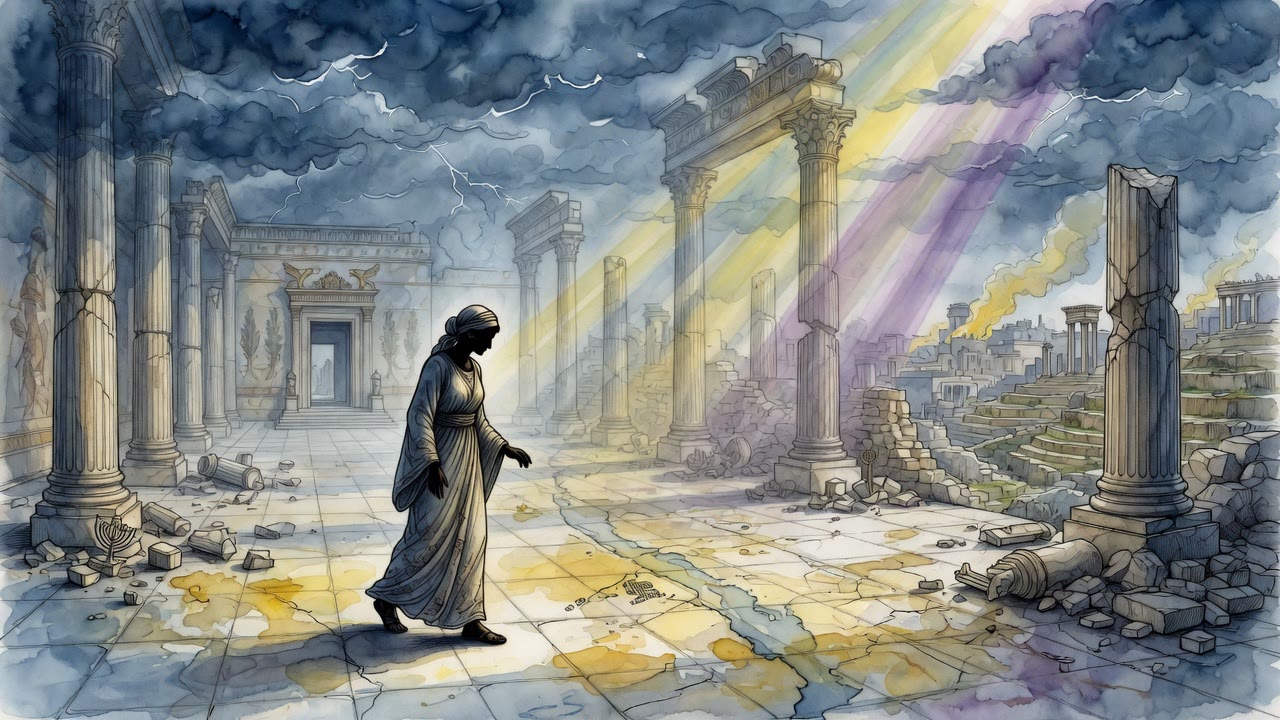
So they stepped aside. Since the destruction of the Temple, they said, since they no longer lived in their land, they had lost the power to give wise counsel in matters of life and death. Let the king ask the settled nations, the ones who had not been poured from vessel to vessel.
The answer sounded humble. It was also a door out of the room. They had not forgotten how to reason. Their minds worked too quickly, tracing every way the king's anger could return to them. Survival had trained wisdom to duck.
The Seat Beside Him Emptied
Vashti's banquet ended with no crown left on it. The storerooms closed. The sweets came off the tables. The garments went back to wherever the empire kept what it had no right to touch.
The sages survived the day by refusing the center of it. The queen who had named every chamber was driven out of her own.
An empty place opened beside the king. Into that vacancy another woman would be carried, hidden under another name, silent until silence became impossible. Vashti had worn the garments of a ruined sanctuary and turned them into spectacle. The next queen would enter the same empire with nothing visible in her hands, and the empire would learn which was more dangerous, a robe from Jerusalem or a woman who refused to wear one.
← All myths