Israel Ran From the Lion and Met the Bear Again
He outran the lion and met a bear on the same road. Home was no shelter. When he leaned on the wall, the snake was already in the plaster.
Table of Contents
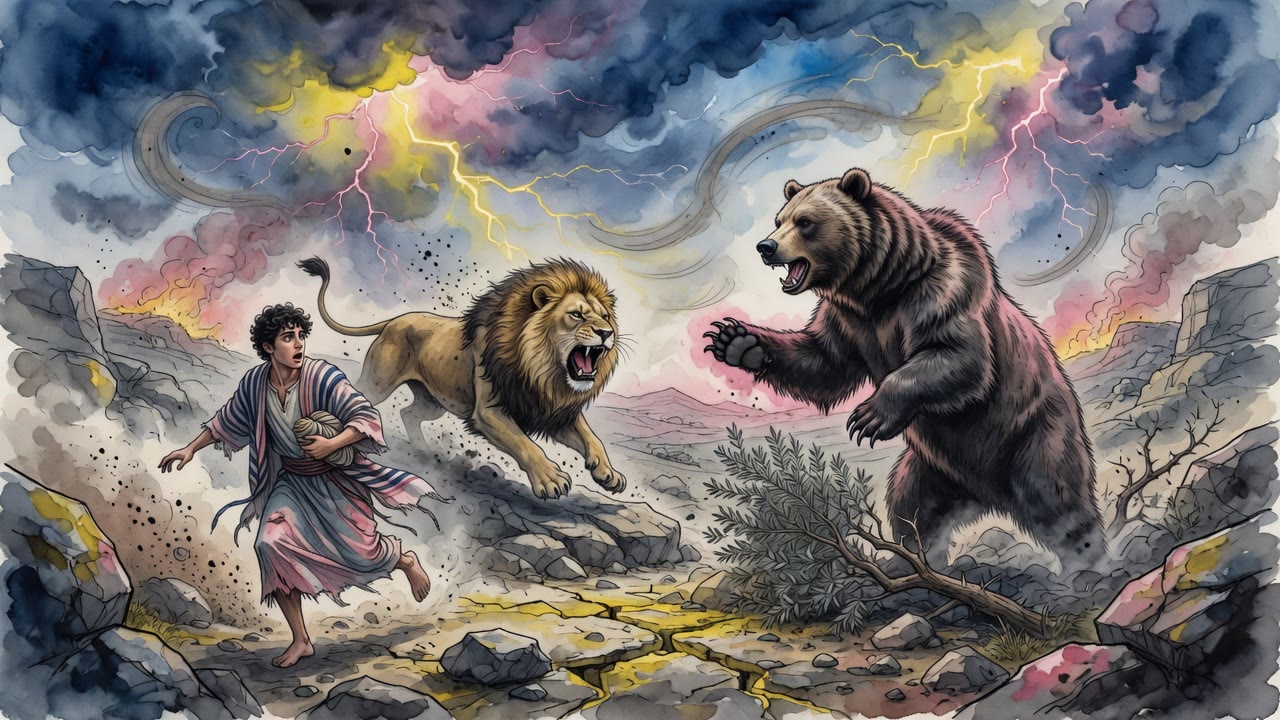
The man ran from the lion and survived.
 Click for full size
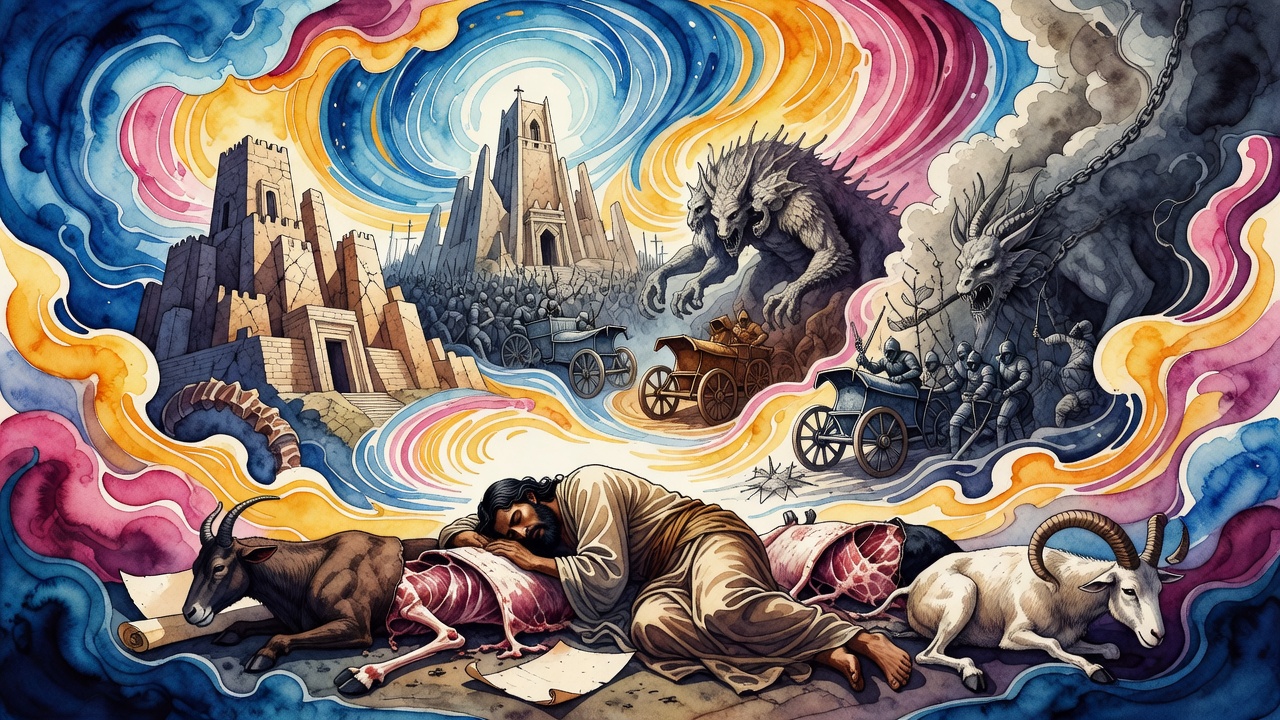
That should have been the end of the danger. Breath tearing in his chest, dust under his feet, the jaws behind him, he broke free. Then a bear rose in the path. He escaped that too, somehow. He reached home, the only place left in the world that still promised walls, roof, and rest. He leaned his hand against the wall.
A snake struck from inside the house (Amos 5:19).
The Lion Was Already in the City
Judah ran that way when Babylonia came. Nebuchadnezzar tore through Jerusalem. The First Temple burned. Families vanished into foreign roads. Prophets learned to speak beside rivers. Daniel had already seen Babylonia as a lion in his night vision, a beast with wings and a hunger that knew how to devour cities (Daniel 7:4).
Israel escaped the lion, but not by becoming untouched. Exile had teeth. Survival after Babylonia was not victory in the easy sense. It was the stunned fact that the people were still breathing after the lion had done what lions do. They ran. They lived. The road did not empty.
The Bear Met Him on the Path
Then came the bear. Media rose in the path where Babylon had been. No ruined Temple this time. No Babylonian flames licking Jerusalem's stones. The danger changed shape. Court language. Sealed orders. Provincial scribes. A date chosen by lot. A man who wanted every Jewish body marked for the same day.
Daniel had seen this beast too, another one resembling a bear (Daniel 7:5). Jeremiah had seen a wolf of the deserts waiting in the same chain: lion, wolf, leopard, and the beast that mauls whoever passes (Jeremiah 5:6). The names shift because empires shift. Teeth remain teeth.
Israel kept escaping one animal only to find another waiting at the bend. The man in Amos does not look heroic. He looks exhausted. He lives long enough to meet the next mouth.
He Leaned His Hand on the Wall
The strangest part of the image is not the lion or the bear. It is the house. A man expects danger outside. Forest, desert, road, battlefield. He does not expect the wall of his own home to bite him.
They came home to rebuild. Jews who had never seen Jerusalem still called Persia a place to lean. Language, markets, offices, streets. They put their hands on the wall of a life they had built in a foreign kingdom and tried to raise the Temple again.
The snake was already in the plaster.
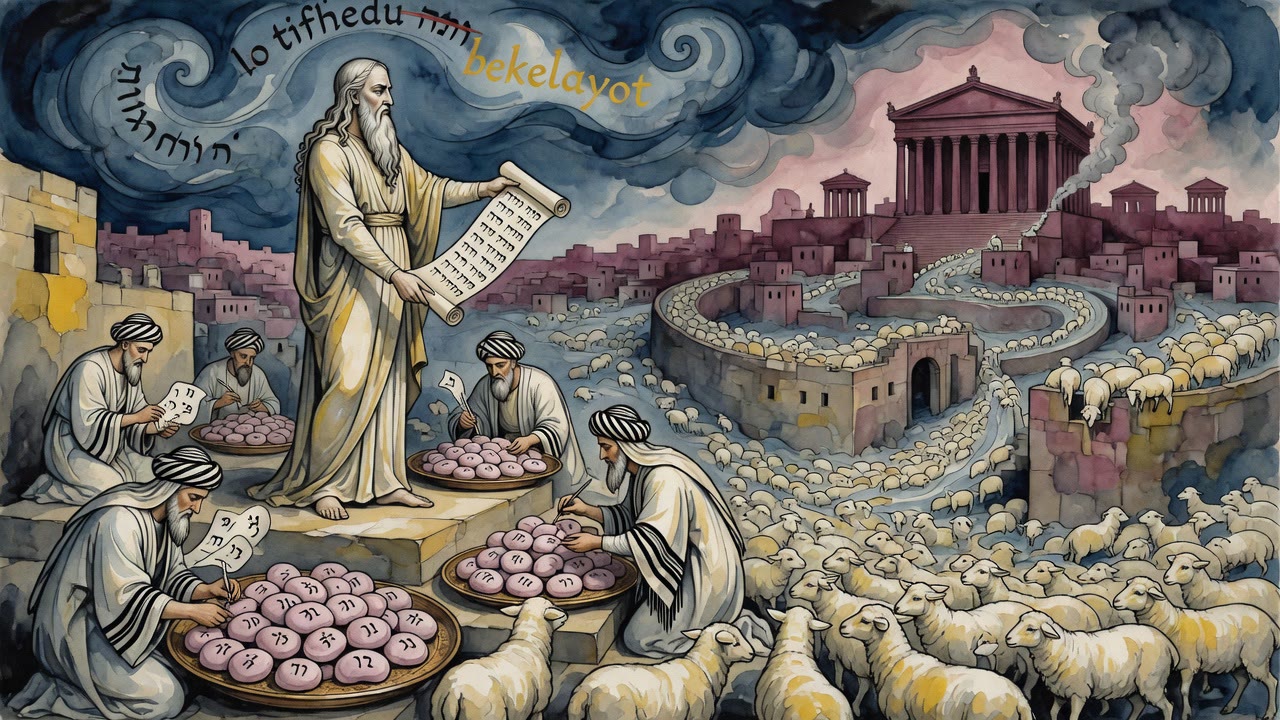
Haman crushed like a serpent. He and his son Shimshai the scribe wrote an accusation against the dwellers of Judea and Jerusalem in the beginning of Ahasuerus's reign (Ezra 4:6). The letters went up. The rebuilding stalled. Ordinary streets turned into hunting ground. The house was not false. Jews did live there. They built lives there. The snake in the wall meant that no empire could become absolute shelter.
Mordecai Went Down Against the Letters
The people cried out. Let Mordecai go down as an emissary, they said. He is from the tribe of Benjamin, of whom it is written that God dwells between his shoulders (Deuteronomy 33:12). Send him against the accusation. Send him so the Temple can rise.
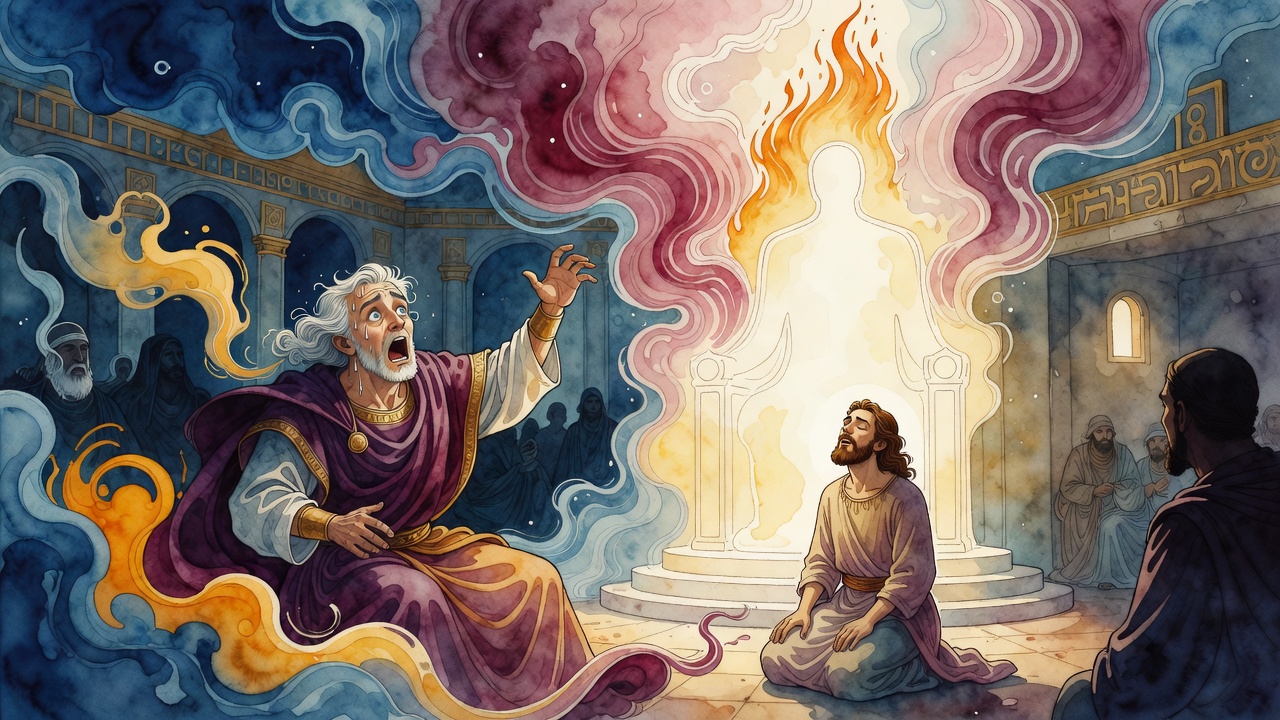
Mordecai went down. Haman went down to prevent the building. Two men on the same road, one carrying a people's hope, one carrying a letter that wanted the work stopped. The days of Ahasuerus opened on that quarrel. A feast in a palace. A decree. A date. The snake that had waited in the wall showed its full length.
The man in Amos had thought home would be the end of running. The wall was another mouth. Mordecai did not lean and wait to be bitten. He went down into the house where the snake lived and argued for the stones of the Temple while the letters still traveled.
I Have Not Spurned Them
Under the chase a promise kept moving. Even in the land of their enemies, God said, I have not spurned them, I have not rejected them, I have not destroyed them, and I have not broken My covenant with them (Leviticus 26:44).
The lion still charged. The bear still rose. The snake still waited in the wall. None of them received the last word. "I have not spurned them" walked through Babylonia. "I have not rejected them" walked through Media. "To destroy them" named Greece and still refused the destruction. "To violate My covenant with them" named Rome and still held the covenant. "I am the Lord their God" pointed past every beast still on the road.
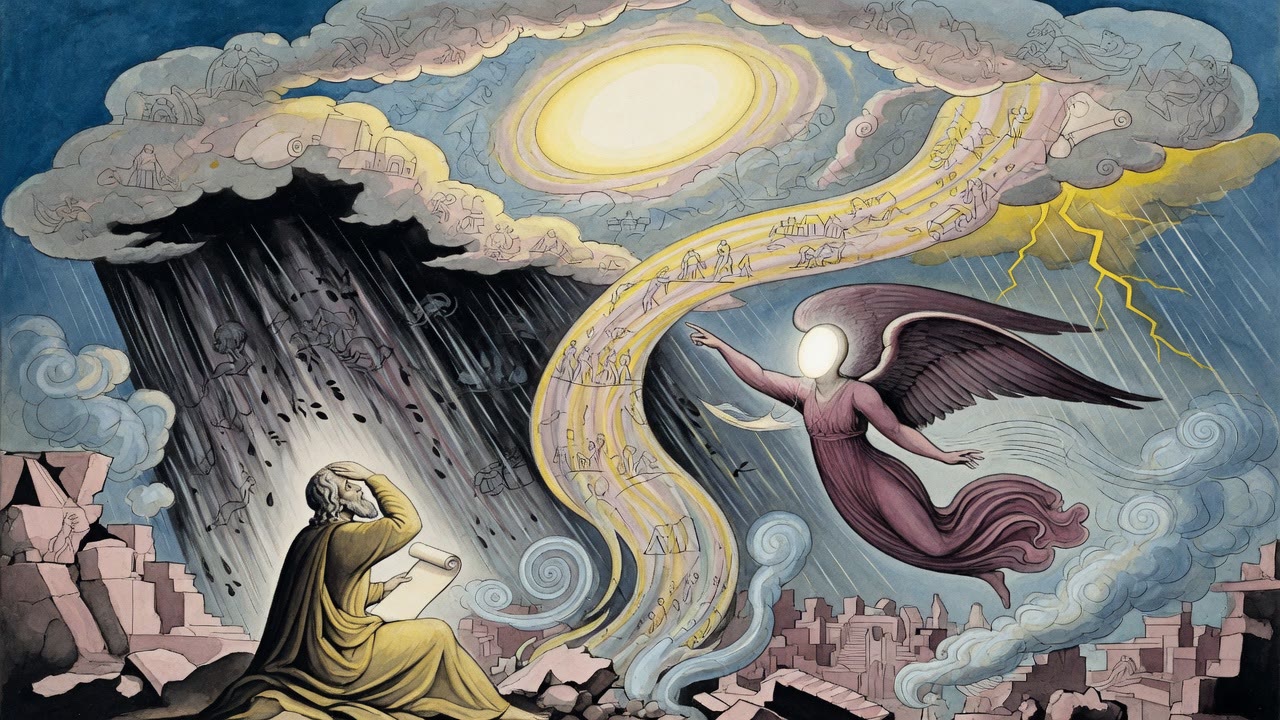
Under Vespasian the Second Temple fell, and the verse did not break. Under Trajan the persecution came, and the verse did not break. In the days of Haman every Jewish body was marked, and the verse did not break. The man kept running. He did not look like a victor. He looked like someone who had outlived a lion, a bear, and a snake in the plaster, and still had ground under his feet because the promise had never left the dust.
The house did not cancel the wilderness. It brought the wilderness inside the wall. The man kept his palm on the plaster where the snake had been, and the promise stayed in the dust under his feet.
← All myths