Parshat Vayikra5 min read

Vine and Olive Wood Were Barred From the Altar Fire

Every tree may feed the altar except vine and olive, whose fruit is too precious, while peace offerings share meat three ways.

Curated by Arthur · Told by Maggid ·
Table of Contents
  1. Wood That Will Not Burn
  2. Why the Nations Have No Share
  3. The Seal Before the Sentence
  4. Faces Lifted Both Ways
  5. Fire, Portion, and Mercy
Vine and Olive Wood Were Barred From the Altar Fire Click for full size

Wood That Will Not Burn

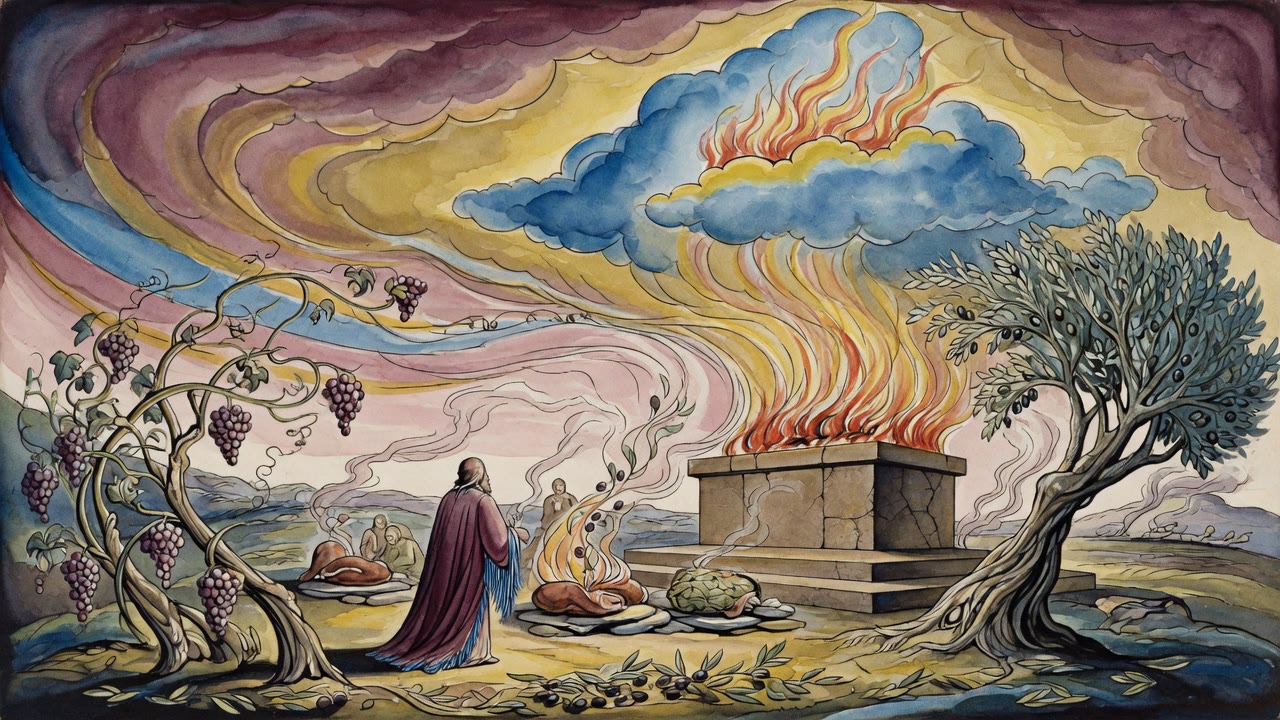
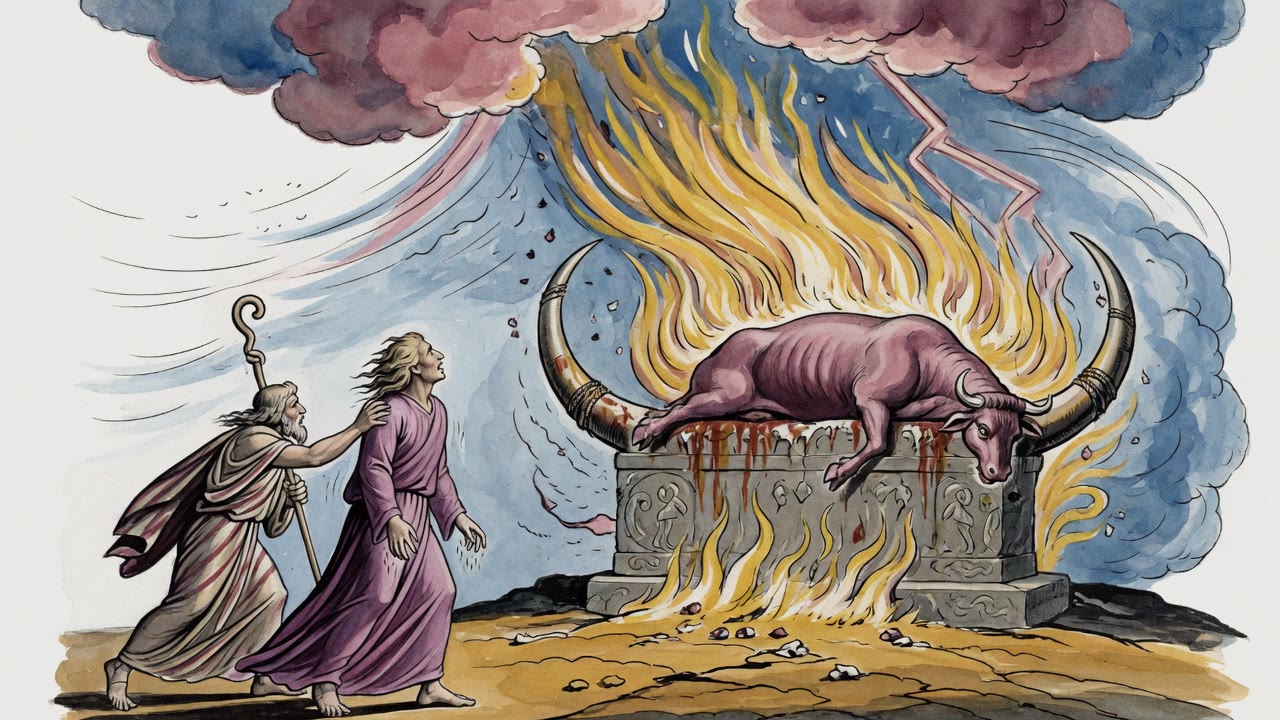
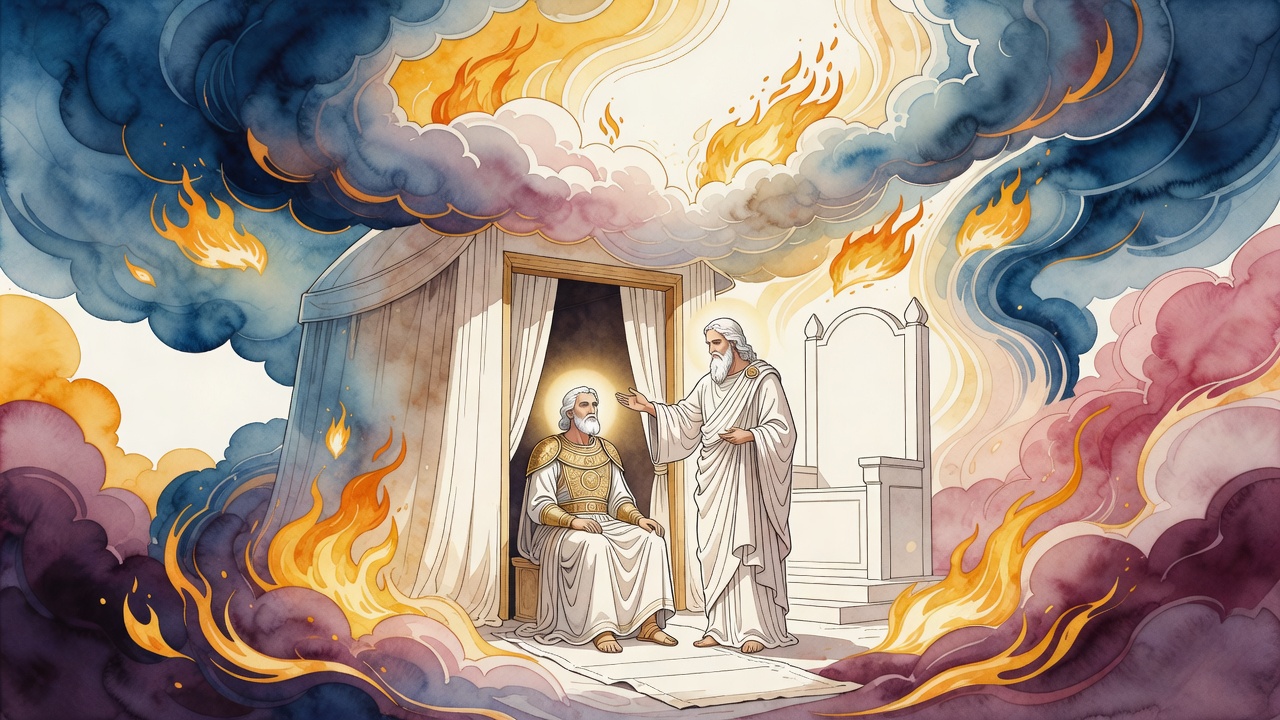
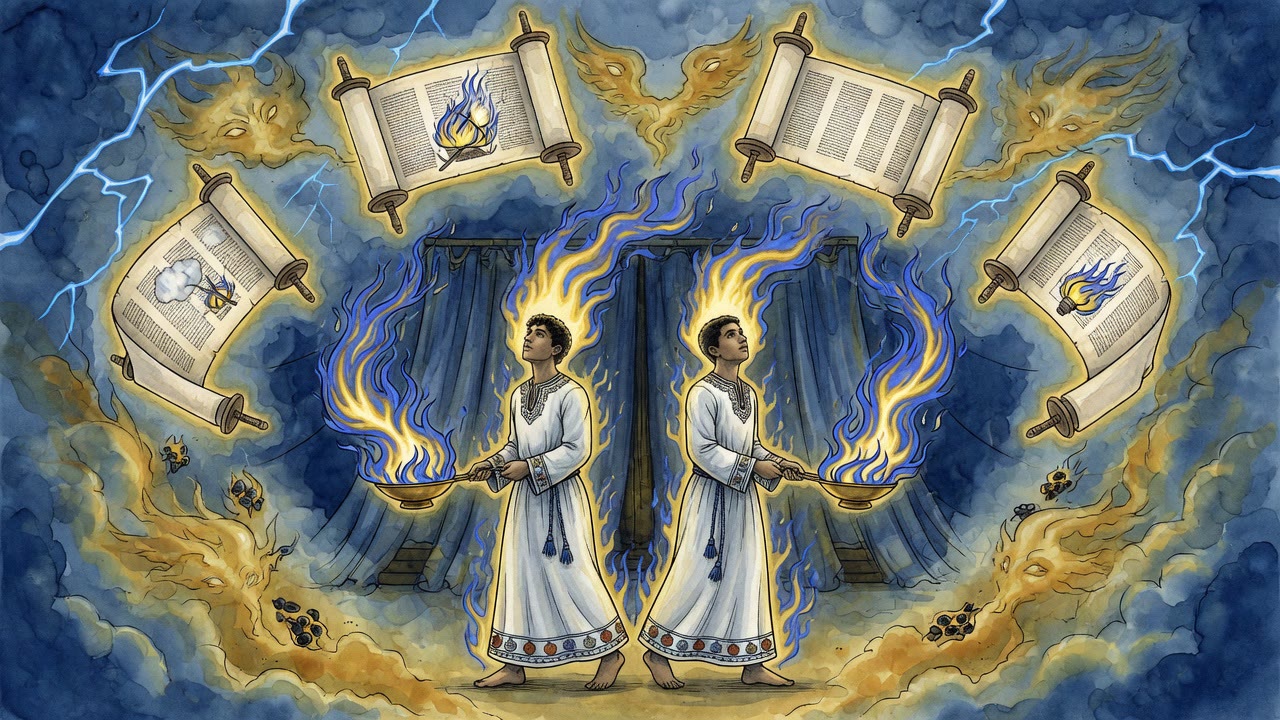
The sons of Aaron put fire upon the altar and lay wood in order upon the flame. The sages asked which trees may feed that holy fire. The answer is almost everything. Every kind of wood may be laid upon the fire of the Lord, save two. The vine and the olive are barred.

Not because they are unworthy. Because they are too worthy. The vine yields the grape. The olive yields its oil. Fruit that gladdens and fruit that anoints are too precious to be turned into smoke. A tree is honored for the sake of what it bears. Among the children of Israel the same rule holds. By the merit of the sons, the fathers are crowned. Righteous children return glory upward, lifting the names of those who raised them, as the fruitful vine and olive are too cherished to be burned.

Other logs crack and feed the perpetual flame. The vine keeps its wine. The olive keeps its pressed gold. The altar eats freely, but it will not eat the parents of joy and anointing.

Why the Nations Have No Share

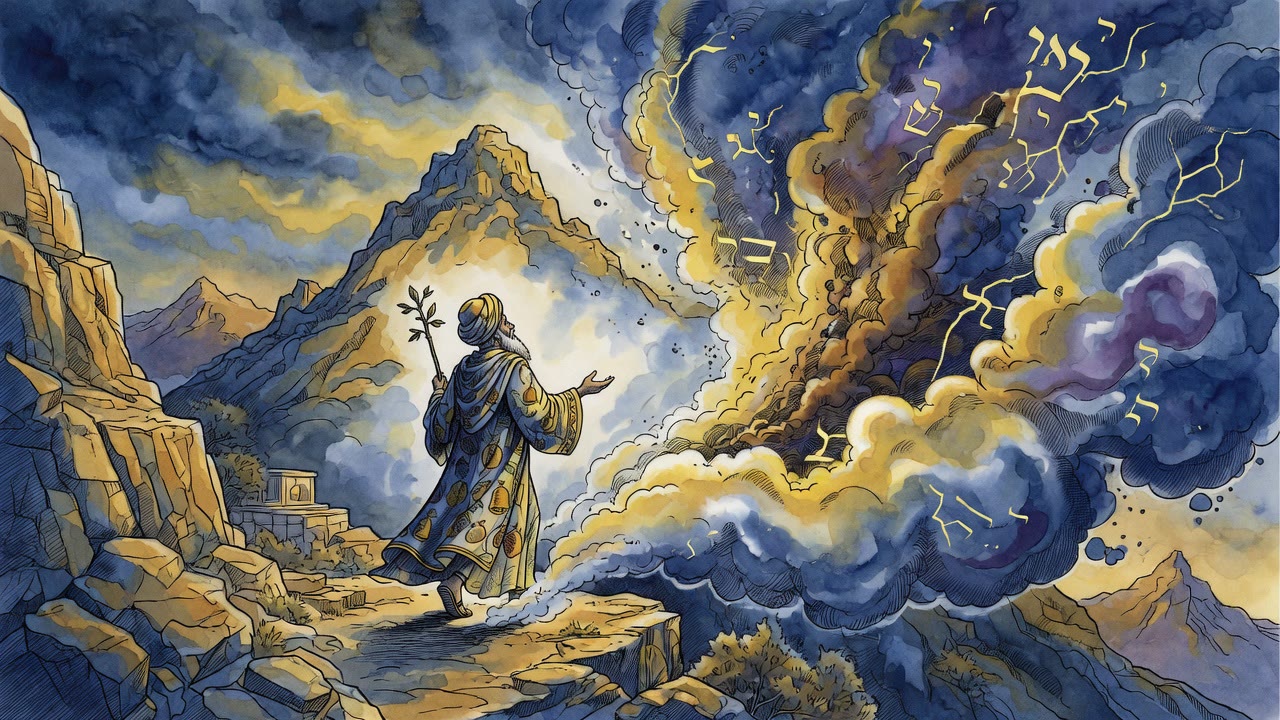
The nations demanded an answer of their own. Why did the Holy One command sacrifices of Israel alone and say nothing of the kind to us? They put the question to Balaam, and he answered without flattering them. The offerings are nothing but peace. Only one who received the Torah, in whose pages these offerings are written, may bring them. You spurned the Torah at the start. Now you covet its altar? The one who accepted it is the one who offers, as it is written: The Lord will bless His people with peace.

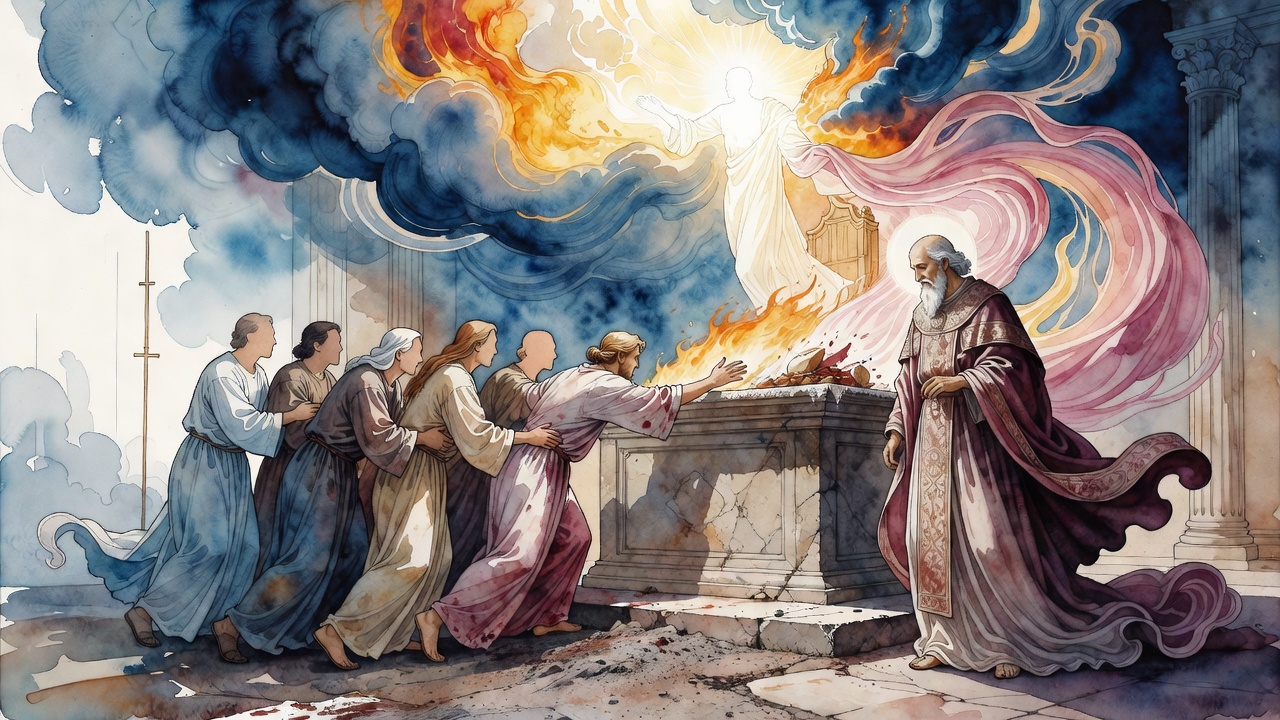
Peace is not a mood. It is a portion system. The burnt offering rose wholly in flame. The sin offering and the guilt offering fed the altar and the priests and left nothing for the people. Israel tasted none of it. The thanksgiving offering shares its bounty with everyone: blood and inner portions to the altar, breast and thigh to the priests, skin and flesh back to Israel. Altar, priest, and people each receive a share. That is why it bears the name peace offering. It makes peace among them all.

A table where only Heaven eats is not called peace. A table where three parties leave satisfied is. Balaam's refusal still rings: no Torah, no peace portion.

The Seal Before the Sentence

When Israel brought the peace offering, the Holy One would lift up His face to them, as Scripture promises: The Lord lift up His face unto you and grant you peace. How can the Most High show favor? One verse says He does not desire the death of the wicked. Another says He desired to slay them. The hinge is a seal. Before the sentence is sealed He waits. Once sealed, the verdict stands. Daniel called it the writing of truth.

Rabbenu the Holy One passed through Simonia, and the whole town begged an elder to teach them Torah. He gave them Rabbi Levi bar Sison. They pressed him: if there is no falsehood in Torah, why does Daniel call it the writing of truth? The young teacher fled, ashamed, to Rabbi. A great answer was yours to give, Rabbi told him. When a man sins, the Holy One inscribes death upon him. Repent, and the writing is annulled. Refuse, and it stands as the writing of truth.

Favor and judgment share a desk. The pen can still be lifted. After the seal, the page hardens.

Faces Lifted Both Ways

To the nations He does not lift His face. To Israel He does. For Israel lifts a face to Him first. A poor man with four children takes one small loaf, and though they rise still hungry, they bless Him: And you shall eat and be satisfied. Says the Holy One: as they show Me favor, so I show favor to them. Therefore this is the law of the peace offering.

Favor is not a soft gaze that ignores blood. It is the table where three parties eat from one animal, the wood that spares its own best fruit, and the writing that can still be erased before it hardens into truth. The altar burns what may be burned. It spares what still has fruit left to give.

The poor man's blessing and the peace portions climb the same ladder. Human favor shown upward draws divine favor shown downward.

Fire, Portion, and Mercy

Vine and olive stay living trees because their children are wine and oil. Fathers among Israel are lifted by children whose deeds still fruit. Nations without Torah have no peace portion on that table. Israel, who accepted the book, eats the shared meat and feels the face of Heaven turn toward a loaf that barely stretches.

The peace offering ends with silence after the blessing, grease on priestly hands, smoke that did not need the vine's trunk or the olive's heartwood. Somewhere a sentence is still unsealed. Somewhere a child is still the fruit that keeps a parent from the fire.

Aaron's sons stack ordinary wood. The barred trees stand outside the pyre with their future cups and lamps intact. Peace is carved into meat, into spared trunks, into a face that lifts because a hungry family still blessed the Name.


← All myths
From the tradition

Sources

3 sources

The texts behind this telling. Some cards carry a translation of the source; others are our own retelling of it, and each card says which. Every card links out to the original.

Midrash Tanchuma Buber, Vayikra 7:1Midrash Tanchuma Buber, Vayikra

Translation of the source text.Midrash Tanchuma (Buber), Public Domain, on Sefaria · CC-BY-SA

"And the sons of Aaron the priest shall put fire upon the altar, and they shall lay wood in order upon the fire" (Leviticus 1:7). All the trees are fit for the arrangement of wood, except for the vine and the olive. Why? Because they produce excellent fruit. From this you have learned that by virtue of the sons the fathers are honored.

Full source
Midrash Tanchuma Buber, Tzav 6:1Midrash Tanchuma Buber, Tzav

Translation of the source text.Midrash Tanchuma (Buber), Public Domain, on Sefaria · CC-BY-SA

Another interpretation of (Leviticus 7:11): "And this is the law of the sacrifice of peace offerings, etc." This is as Scripture says (Psalms 85:9): "Let me hear what God, the LORD, will speak; for He will speak peace to His people and to His pious ones." The nations of the world said to Balaam: Why did the Holy One, blessed be He, tell Israel to bring Him offerings, and to us He said nothing? Balaam said to them: The offerings are nothing but peace, and whoever received the Torah, in which they are written, must offer an offering. You, from the start, rejected it, and now you seek to offer offerings? The one who received it is the one who offers, as it is said (Psalms 29:11): "The LORD will give strength to His people; the LORD will bless His people with peace." Therefore it is said (Psalms 85:9): "Let me hear what God, the LORD, will speak; for He will speak peace to His people and to His pious ones." What did He speak? (Leviticus 7:11): "And this is the law of the sacrifice of peace offerings, etc." Why is it called the sacrifice of peace offerings? Because it makes peace between the altar, and the priests, and Israel. Come and see: the burnt offering was entirely for the flames; and the sin offering, its fats and its sacrificial portions were for the altar, and its skin and flesh for the priests, and Israel had no benefit from it; and likewise the guilt offering. But the thanksgiving offering, its blood and its sacrificial portions were for the altar, and the breast and the thigh for the priests, and its skin and its flesh for Israel. It is thus found to make peace between the altar, and the priests, and Israel. Therefore it is called the sacrifice of peace offerings, for it made peace for all.

Full source
Midrash Tanchuma Buber, Tzav 7:1Midrash Tanchuma Buber, Tzav

Translation of the source text.Midrash Tanchuma (Buber), Public Domain, on Sefaria · CC-BY-SA

[And this is the law of the sacrifice of peace offerings (Leviticus 7:11).] When they would offer the sacrifice of peace offerings, the Holy One, blessed be He, would lift up His face to them, as it is said, "The Lord lift up His face unto you and grant you peace" (Numbers 6:26). Is it possible that the Holy One, blessed be He, lifts up a face to creatures? Two verses contradict one another. One verse says, "[For] [if] I desire the death of the wicked" (Ezekiel 33:11), and one verse says, "For the Lord desired to slay them" (1 Samuel 2:25). How does He not desire the death of the wicked? Rather, before their sentence is sealed He does not desire it; after the sentence is sealed, "the Lord desired to slay them." And so Daniel says, "But I will tell you that which is inscribed in the writing of truth" (Daniel 10:21).

Our Rabbis said: There was an incident with Rabbenu the Holy One, that he was passing through Simonia. All the people of the city went out to meet him. They asked of him one elder to teach them Torah. He gave them Rabbi Levi bar Sison. They said to him, "Rabbenu, what is the meaning of what is written in Daniel, 'But I will tell you that which is inscribed in the writing of truth' (Daniel 10:21)? Is there then a false matter in the Torah, that it says 'truth'?" He found no answer to give them. Immediately he went out [from there and came] before Rabbi. He said to him, "I could not stand before them. They asked me one matter, and I found nothing to answer them." He said to him, "What is the matter?" He said to him, "'But I will tell you that which is inscribed in the writing of truth', is there then a false matter in the Torah?" He said to him, "There was a great answer for you to give them." He said to him, "You should have said to them: When a person sins, the Holy One, blessed be He, inscribes death upon him. If he repents, the writing is annulled; if he does not repent, 'that which is inscribed in the writing of truth.'"

So [here] too, one verse says, "The Lord lift up His face, etc." (Numbers 6:26), and one verse says, "Who does not lift up a face" (Deuteronomy 10:17). If He lifts up, why does He not lift up? Rather, to the nations of the world, "Who does not lift up a face," but to Israel, "The Lord lift up His face unto you." The Holy One, blessed be He, said: Just as Israel lift up a face to Me, so I lift up a face to them. And how do they lift up a face to Me? A poor man of Israel has four children; he takes one loaf. They sit and eat all that loaf, and they are not satisfied from what is in it, yet they bless and say, "And you shall eat and be satisfied [and bless]" (Deuteronomy 8:10). So I too will lift up a face to them, "The Lord lift up His face unto you." Therefore it is said, "And this is the law of the sacrifice of peace offerings" (Leviticus 7:11).

Full source