Parshat Noach4 min read

Watchers Took Human Shape and Birthed Giants

Angels wore men's forms, giants rose hungry, and the earth filled with blood until kin ate kin and the flood waited.

Curated by Arthur · Told by Maggid ·
Table of Contents
  1. Bodies Borrowed for Desire
  2. Hunger That Emptied Fields
  3. Unlike Kin Who Devoured Kin
  4. Sons of God and Sons of Flesh
  5. The Flood Waiting in the Wings
Watchers Took Human Shape and Birthed Giants Click for full size

Bodies Borrowed for Desire

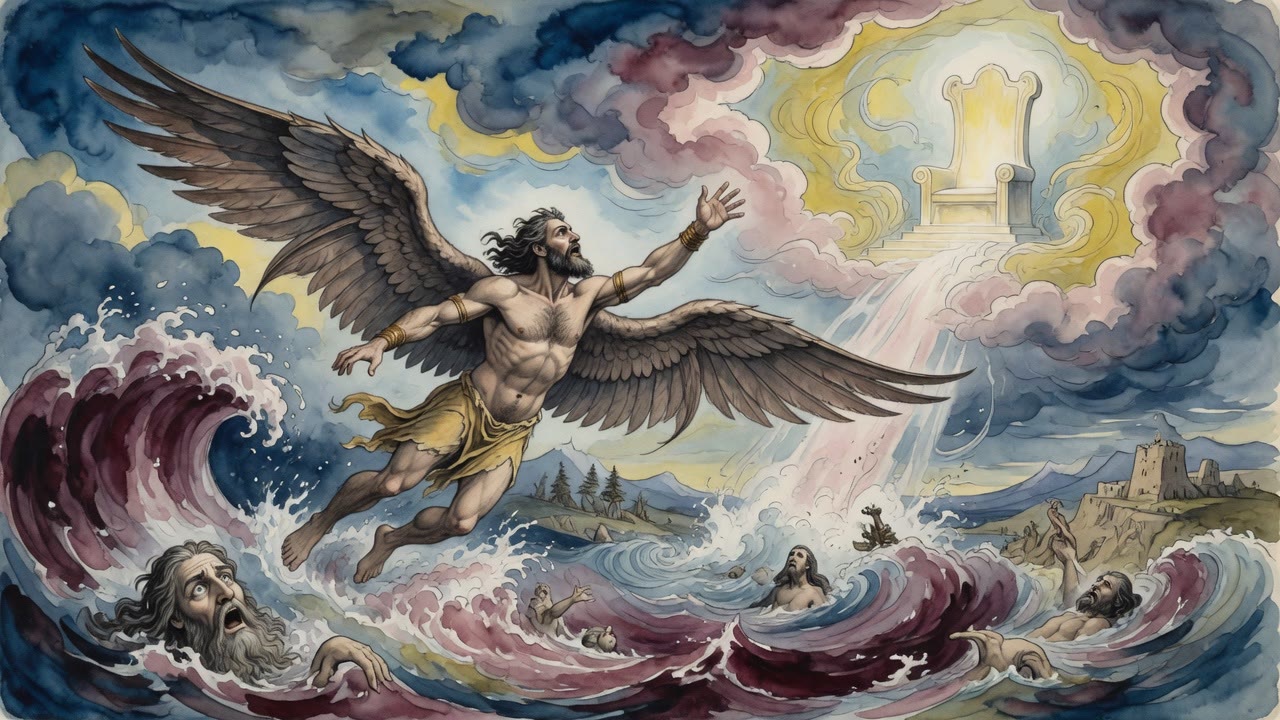
Angels who were never born of women learned to wear men's shape. They imitated faces, voices, the weight of a hand on a door. Daughters of men met forms that should have stayed pure spirit, and the world conceived what it could not feed. The Nephilim rose, giants of old, men of renown and of ruin (Genesis 6:4).

Virtue from the fathers' height did not stick. The worst of mortal appetite did. Proud contempt for the supreme Deity grew in tall bodies that mistook size for permission.

A woman who had looked up at a borrowed face later held a child whose shadow stretched across two fields. Neighbors called the birth a wonder until hunger spoke first.

Hunger That Emptied Fields

They ate the yield of the earth until human stores failed. Then they turned on the people who had farmed for them. Birds, beasts, reptiles, fish: nothing that moved was safe. Blood became drink.

Shemhazai's sons Hiwa and Hiya alone were said to swallow a thousand oxen, a thousand camels, a thousand horses in a day. An ell of giant is a famine with legs.

Farmers stopped planting rows that would only vanish into a single meal. Children learned to run at the sound of heavy steps.

Unlike Kin Who Devoured Kin

They begat sons, the Naphilim, and they were all unlike, and they devoured one another. Giants slew the Naphil, the Naphil slew the Eljo, the Eljo slew mankind, and one man another.

Everyone sold himself to work iniquity and shed much blood. After that they sinned against beasts and birds and all that moves. Imagination itself turned vain and evil continually.

Brotherhood among the tall was only a pause before the next bite. When they finished one another, the smaller world still paid.

Sons of God and Sons of Flesh

The phrase "sons of God" can name angels, incorporeal and unproduced by mortals. It can also name excellent men who wear virtue like a lineage. The wicked are called bodies or flesh. The giants kept the bulk of bodies and lost the claim of heaven.

Voluntary, deliberate wickedness made them a warning carved in bone. Choice, repeated until the ground itself cried out.

Moses could use the same phrase for the excellent living. The giants proved how far a borrowed glory can fall when it refuses virtue.

The Flood Waiting in the Wings

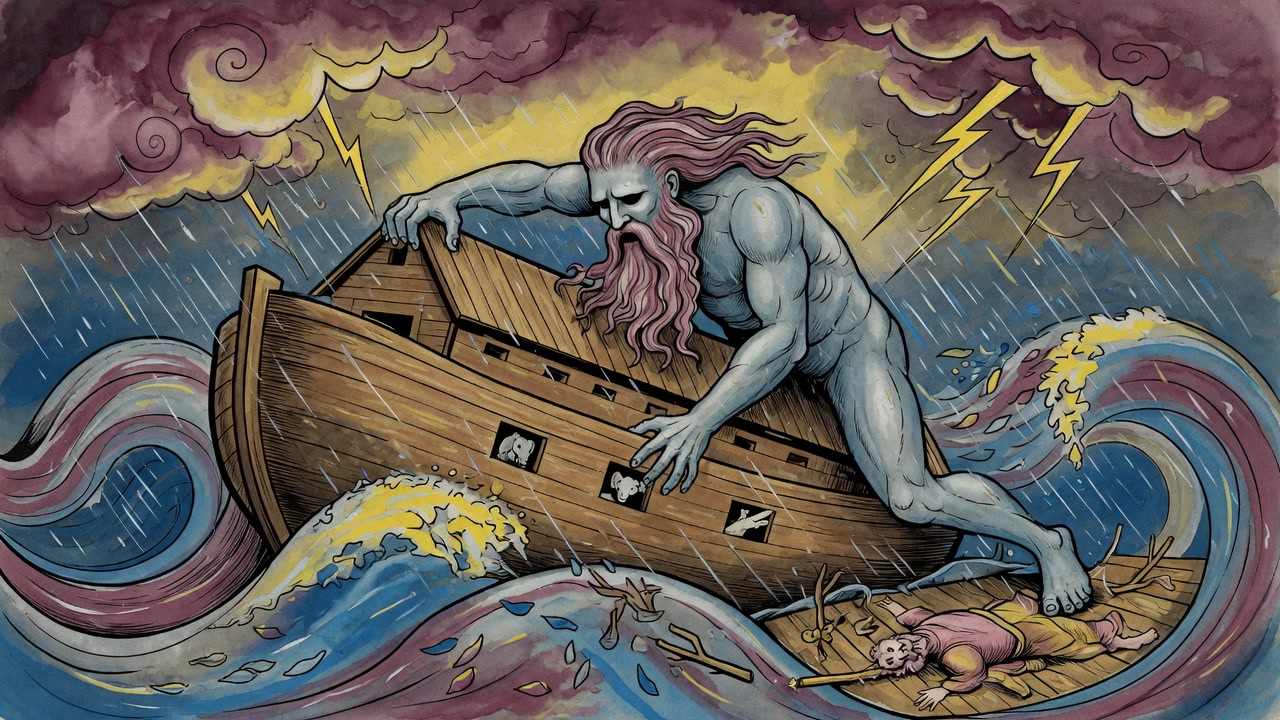
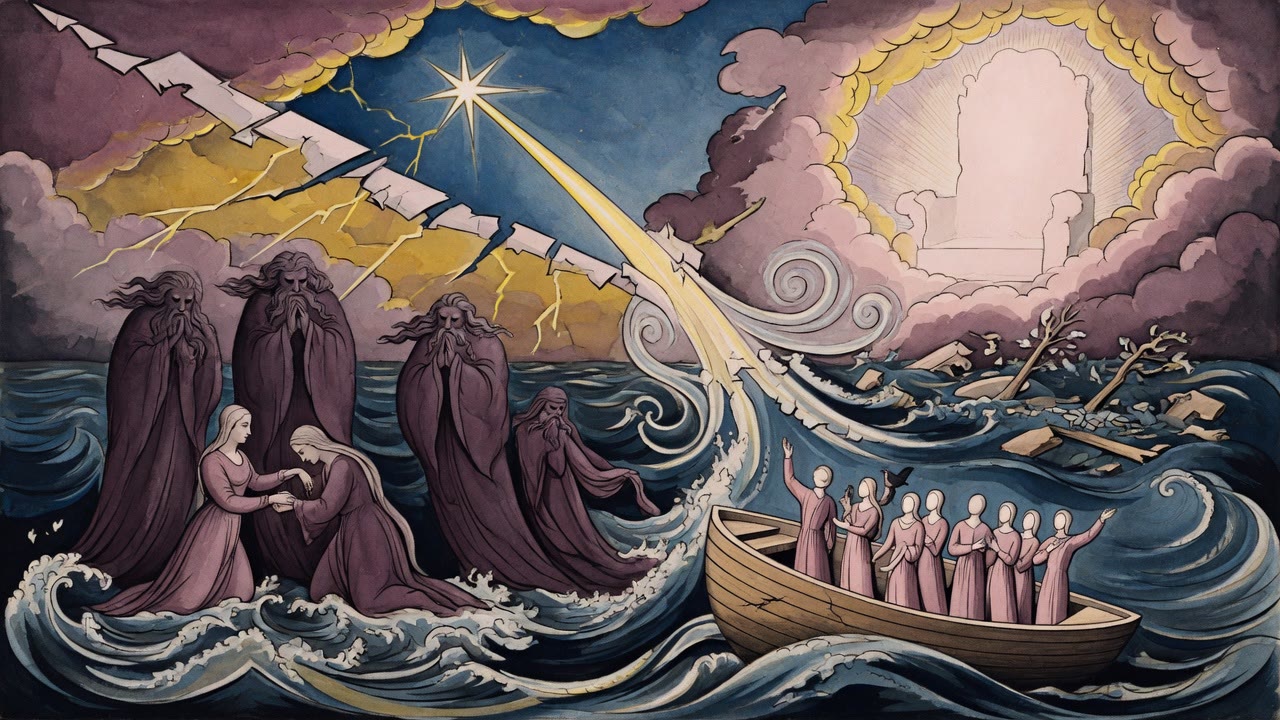
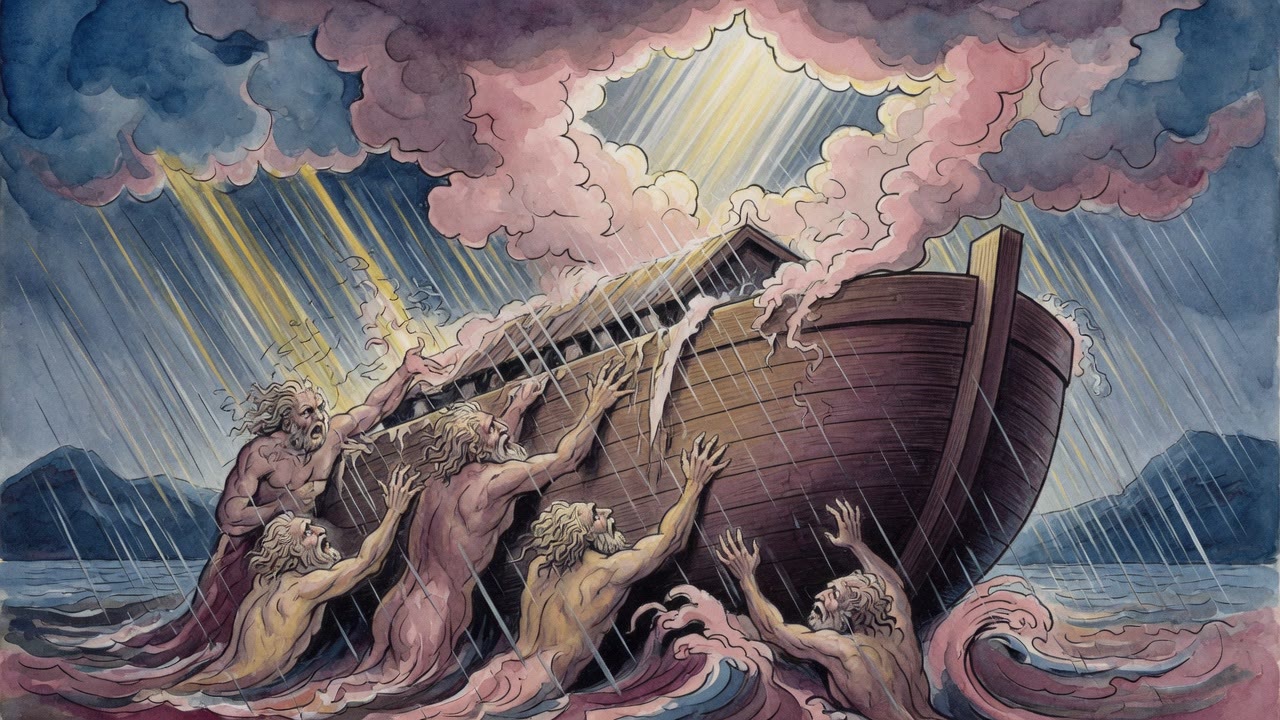
When the earth could no longer hold the noise, the reset approached. The giants' story is the prelude to water, the reason a wooden hold would have to carry a thinner world.

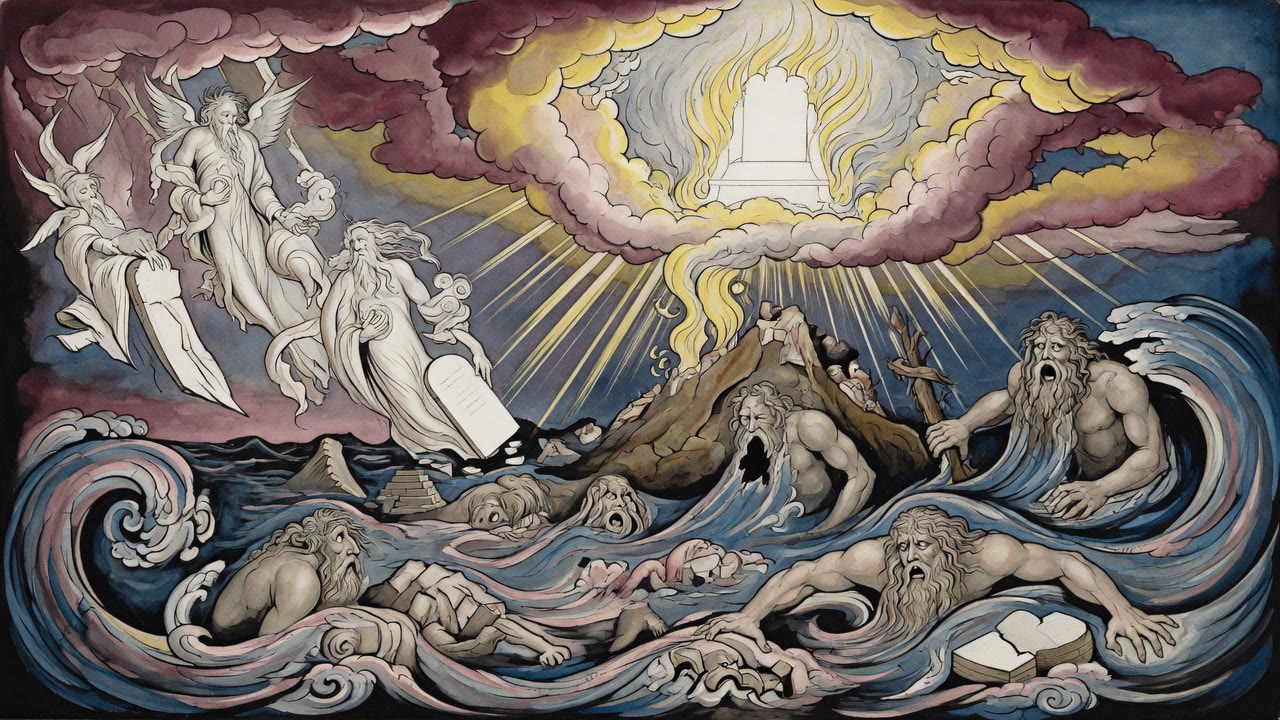
Somewhere a mother buried a child who outgrew mercy. The field remembered teeth. Heaven counted blood. The next chapter would drown hunger rather than argue with it.

By the time the first clouds gathered with intent, the Nephilim had written their indictment in empty granaries and red soil. Watchers who took human shape left a legacy measured in ells and graves.

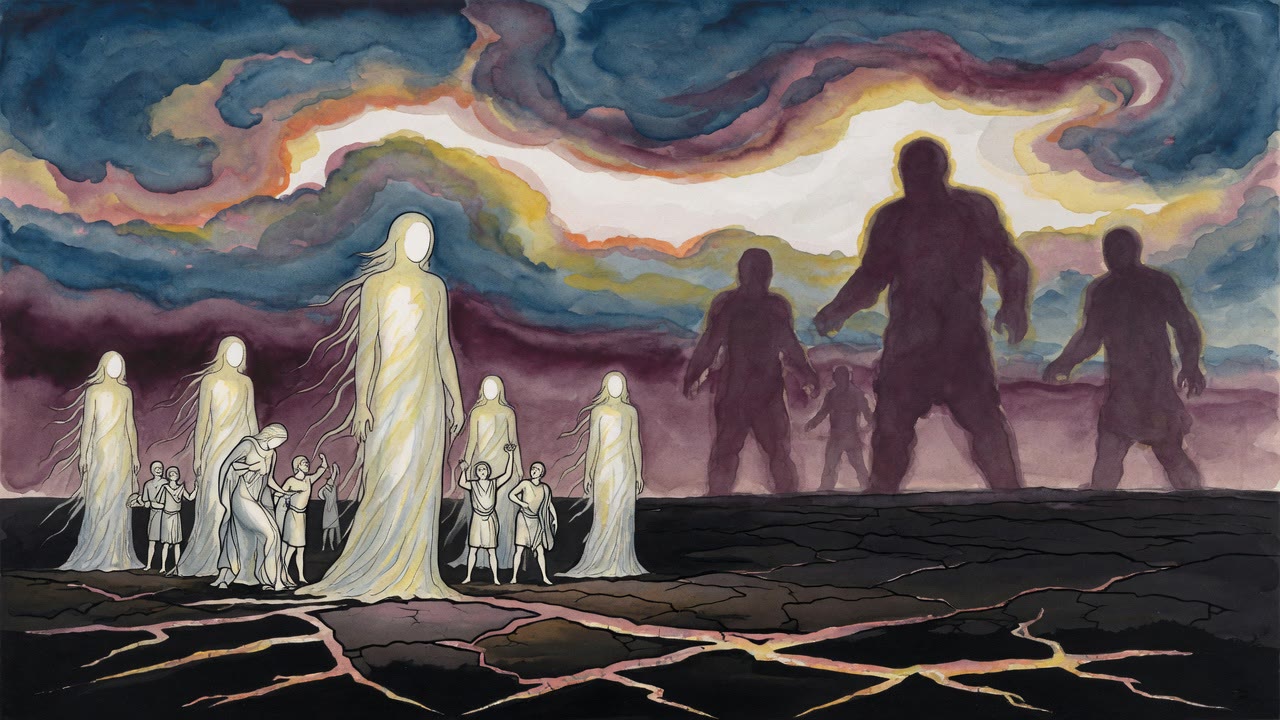
At the edge of a ruined orchard a giant sat chewing a bone the size of a man's arm and stared at the horizon as if the horizon owed him more. Smaller men dragged grain toward caves. A mother pressed her palm over a child's mouth when the ground shook. The child still heard the chewing.

Angels who still kept their posts above watched the sentence on the earth moving toward water. The Watchers who had worn flesh had taught a new arithmetic: take until like turns on like. When Naphilim ate Naphilim, the pattern completed itself.

Noah, still years from the first plank, heard rumors of men who were not only men. He stored the fear without knowing it was prophecy. The day would come when a wooden hold would be the only answer tall enough for a world that had grown too tall in the wrong way.

Noah, still years from the first plank, heard rumors of men who were not only men. He stored the fear without knowing it was prophecy. The day would come when a wooden hold would be the only answer tall enough for a world that had grown too tall in the wrong way.


← All myths
From the tradition

Sources

3 sources

The texts behind this telling. Some cards carry a translation of the source; others are our own retelling of it, and each card says which. Every card links out to the original.

The Midrash of Philo 4:2The Midrash of Philo

Retold in our words. Read the original at the link below.The Works of Philo Judaeus, trans. C. D. Yonge, London, H. G. Bohn, 1854-1890 · Public Domain

One such answer comes from a text attributed to Philo of Alexandria, a Jewish philosopher who lived in Egypt during the first century. While scholars debate whether he actually penned The Midrash of Philo, it offers a unique lens through which to view familiar stories. This particular passage explores the origins of giants, and it's definitely a head-turner.

Philo, or rather the author of this Midrash (rabbinic interpretive commentary), tackles the story of the nephilim (נְפִילִים), those mysterious figures mentioned in (Genesis 6:4), often translated as giants. Now, poets might call them “sons of the Earth,” but the Midrash sees something else at play. It suggests that these giants weren't just big guys; they were the product of something far more… unusual.

In this interpretation, these giants were born from the union of "angels and mortal women." Whoa. The text explains that angels, beings of pure spirit, have the ability to "imitate the appearance of men" and "transform themselves so as to assume the human shape." And apparently, on this particular occasion, they did just that, connecting with women and creating a race of giants. Spiritual beings taking on human form… It’s a powerful image, filled with both wonder and potential danger.

Here's the kicker: what happens when those children, these giant offspring, inherit the worst qualities of their mortal mothers and reject the virtue of their angelic fathers? According to the Midrash, they are doomed. Their wickedness, their "proud contempt for the supreme Deity," leads to their condemnation. They become examples of "voluntary and deliberate wickedness."

Now, let’s pause and consider the term "sons of God" (b'nai elohim). We find it used in various ways throughout Jewish scripture. The Midrash suggests that Moses sometimes uses it to refer to angels because they weren't "produced by any mortal" and are "incorporeal." But there’s another layer to it. Moses, as a "exhorter and teacher of virtue," also uses "sons of God" to describe "men who are very excellent and endowed with great virtue." In contrast, the wicked and depraved are simply called "bodies, or flesh."

Isn't that fascinating? The distinction isn't just about physical form, but about moral character. It's about aligning oneself with the divine, striving for virtue, or succumbing to the base desires of the flesh.

So, what are we to make of this strange tale of angels, women, and giants? It's not just a historical account; it's a moral lesson. It prompts us to ask ourselves: what kind of offspring are we creating in the world, through our actions and our choices? Are we striving to be "sons of God," embodying virtue and righteousness, or are we succumbing to the darkness within?

Full source
Book of Jubilees 7:30Book of Jubilees

Retold in our words. Read the original at the link below.Sefaria Community Translation · CC-BY

Chapter 7 of Jubilees dives right into the chaos following the emergence of the Nâphîlîm, those figures often translated as "giants" or "fallen ones." Think of them as the offspring of a forbidden union, and their existence sets off a chain reaction of violence. The text pulls no punches.

"And they begat sons the Nâphîlîm, and they were all unlike, and they devoured one another." Can you imagine such a fractured, destructive family line? This isn't just sibling rivalry. This is existential conflict at its most brutal. They were "all unlike" – different from each other, different from humanity, different from what creation intended. This difference, this otherness, fueled their destructive tendencies.

Then comes the domino effect. "And the Giants slew the Nâphîl, and the Nâphîl slew the Eljô, and the Eljô mankind, and one man another." It's a horrifying cycle of violence, an escalating chain of death that spreads like wildfire. It’s a stark illustration of unchecked aggression and the disintegration of social order.

It doesn’t stop there. The corruption deepens.

"And every one sold himself to work iniquity and to shed much blood, and the earth was filled with iniquity." People willingly chose evil. It wasn't just a lapse in judgment; it was a conscious decision to embrace wrongdoing. The choice was made to "sell themselves" – a powerful phrase that suggests they gave up their very souls for wickedness. The earth itself became saturated with sin.

And in a particularly disturbing turn, the verse states: "And after this they sinned against the beasts and birds, and all that moveth and walketh on the earth: and much blood was shed on the earth." This isn't just about human-on-human violence anymore. It's a complete disregard for the natural world, a transgression against all living things. It points to a total breakdown of empathy and a loss of respect for God's creation.

Finally, we read, "and every imagination and desire of men imagined vanity and evil continually." This is perhaps the most damning indictment of all. It wasn't just their actions that were corrupt; it was their very thoughts, their innermost desires. Every waking moment was consumed by wickedness. Their minds were incubators of evil, constantly generating new ways to sin.

Reading this passage from the Book of Jubilees, one can't help but wonder: What does it mean to reach such a point of moral decay? What are the warning signs? And how do we prevent ourselves, as individuals and as a society, from sliding down that slippery slope? The flood, in this context, isn't just a divine punishment, but a cosmic reset button, a desperate attempt to cleanse a world drowning in its own depravity. A harsh, but ultimately necessary, measure to allow for a fresh start.

Full source
1 Enoch 7:2-5Apocrypha

Retold in our words. Read the original at the link below.Sefaria-hosted English translation · CC-BY

(Genesis 6:4) mentions the Nefilim. That word, Nefilim, generally understood to mean “giants.” But who were they, really? And where did they come from? "The Nefilim were on the earth in those days. And also afterward, when the sons of God went to the daughters of humans and had children by them. These were the heroes of old, men of renown."

Well, Jewish tradition has a lot to say about it, filling in the gaps with some truly wild stories.

One particularly striking account tells us that the "Sons of God" – often interpreted as Watchers – took wives from among the daughters of men. And these unions… well, they didn’t produce ordinary children. These women gave birth to giants. Really big giants. Now, an "ell" is an old measurement, but whatever it was, it’s clear – these guys were HUGE.

Hungry. Very, very hungry.

The story goes that these giants quickly devoured all the resources of humanity.: imagine trying to feed beings that size. It wouldn’t take long to strip the world bare. And when the humans couldn't sustain them any longer? The giants turned on them, devouring people, too. It gets worse. They began sinning against every living creature – birds, beasts, reptiles, fish. They devoured each other, drank blood. You can imagine the scene… it wasn't pretty.

The earth itself cried out against this lawlessness. The air was thick with the stench of rotting carcasses.

One particularly gruesome detail involves Shemhazai, a Watcher, who supposedly fathered two sons, Hiwa and Hiya. According to the tale, these two alone consumed a thousand oxen, a thousand camels, and a thousand horses every single day. Can you even imagine the logistics of that?

It’s no wonder, then, that God decided to cleanse the earth with the Flood.

But where did these giants come from, really? Why were they so…awful?

Some say these giants, born of spirit and flesh, are the evil spirits that still roam the earth today, relentlessly pursuing us. Others offer a slightly different take. According to this version, the angels transformed themselves, taking the shape of men, and appeared to the women while they were with their husbands. The women, bewitched by these angelic forms, lusted after them. As a result, they gave birth to giants. It’s a fascinating idea – that even the thought of infidelity could have such monstrous consequences. The Testament of Reuben gives us this version.

And while most accounts attribute the birth of the Nefilim to these unions, the Zohar, that foundational text of Kabbalah, offers a different, darker origin. The Zohar tells us that Samael (the angel of death), often identified as the angel of death, copulated with Eve, "injecting her with slime," and from that union came Cain, whose very essence was different from other humans. The Nefilim, then, issued from the seed of Cain.

These myths – and they are myths, stories meant to teach us something profound – also provide a potential origin for the giants that the Israelites encountered in the Land of Israel, as described in (Numbers 13:31-33).

What are we to make of all this? Maybe it's about the dangers of unchecked power, or the consequences of straying from our moral compass. Maybe it's about the dark side of desire. Or maybe, just maybe, it's a reminder that even the smallest seed of corruption can grow into something truly monstrous.

Full source