The Dying Sages Recited Psalms and Judah Spoke Before a Viceroy
Zavdi's mouth was already dry. He still found a psalm about a table prepared. In Egypt Judah had to find words with no book in his hand.
Table of Contents
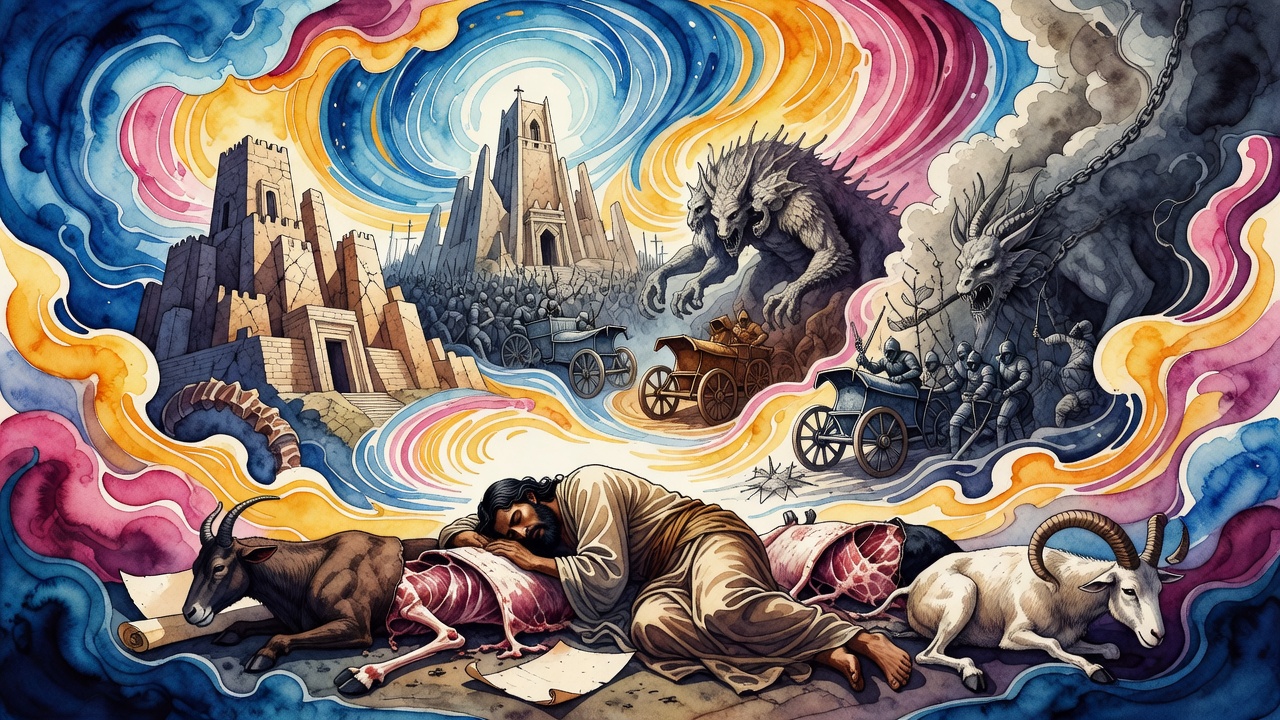
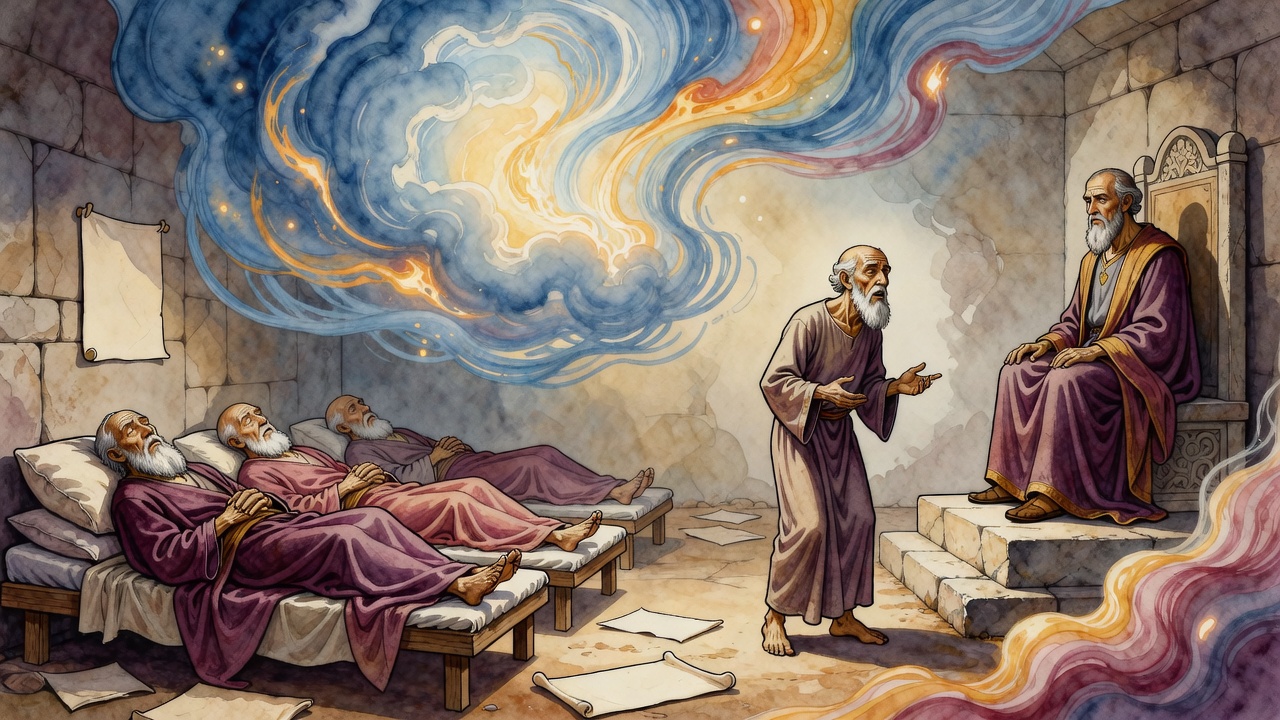
Zavdi ben Levi was dying. The room smelled of fever and old wool. His children waited for instructions, for a will, for a last charge about the field. He opened his mouth and recited none of that. He recited Psalms.
 Click for full size
Three Beds, Three Verses
"For this let every pious man pray," he said, and then, "our heart rejoices in Him" (Psalms 32:6; Psalms 33:21). The first line is a man still asking. The second is a man who has already been answered. He threw both into the air while the body shut down.
Rabbi Yehoshua ben Levi was dying in another house. He reached for a table. "You prepare a table before me," and then, "let all who put their trust in You rejoice" (Psalms 23:5; Psalms 5:12). The table was already set. Trust was the only thing left to bring to it.
Rabbi Yosei bar Patron was dying in a third bed. "For one day in Your courtyard is better," and then, "Your kindness is better than life" (Psalms 84:11; Psalms 63:4). He spent his last breath on a math problem. One day inside the Presence outweighed the years behind him.
No one wrote down what they left their children. They wrote down the verses. The sages were not improvising. They were dying inside a literature they had memorized, and they chose the lines that would carry them across.
Judah Stood Before a Man He Did Not Know
Judah stood in Egypt before a viceroy. He did not know he was standing before his brother Joseph. He knew only that the man in front of him held Benjamin in his hand, and behind Benjamin was Jacob's life, and behind Jacob's life was the question of whether the family survived at all.
There was no psalm book in that throne room. Judah had to find the words himself. He gave the whole history: the father, the dead son, the surviving son, the hostage who could not be brought to the old man in chains. He had done this kind of talking before, badly, in a field at Dothan, when the brothers wanted to kill Joseph and Judah said, what profit is there if we kill our brother and cover his blood. Let us sell him instead. The hand that would have moved toward the pit moved toward a different outcome. He had been trained in the wrong direction. He had still been trained to find words when there were none.
What Shall We Say
"What shall we say to my lord?" Judah asked. The question had more than one address. Tamar still sat in it. Bilhah sat in it. Dinah sat in it. And behind those names sat the old man in Canaan, and Joseph sold, and Simeon left as collateral, and Benjamin about to be kept.
If they claimed innocence, they would not be believed. If they admitted guilt, they condemned themselves. Rabbi Yitzchak said God was like a creditor who had waited for this hour, or like a man draining a barrel until only the dregs were left. Judah had no clean speech left. He offered the only thing he still owned. Himself.
Joseph had been waiting twenty years to see whether the brother who sold him would, when pressed against a wall in Egypt, do it again. Judah did the opposite. He put his own body in Benjamin's place.
Joseph Shook Out His Purple Robe
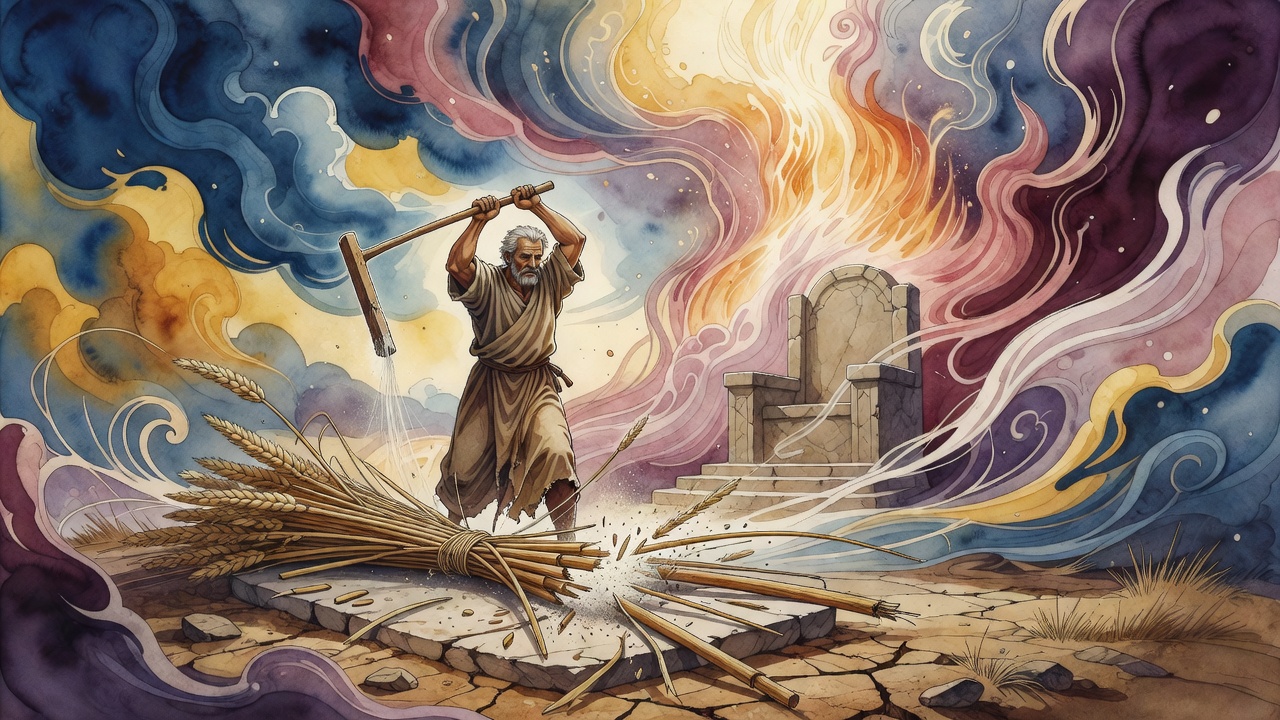
Joseph said the man in whose hand the goblet was found would be his slave, and the rest could go up in peace to their father. Rav Huna, in the name of Rabbi Aha, said Joseph shook out his purple robe when he said it, a royal oath, as if he would be stripped of the cloth if he broke the word.
The brothers did not take the peace. What kind of peace is it to walk home without Benjamin. The Divine Spirit still whispered a different peace, the kind that sits with those who love the teaching, but the throne room had not reached that verse yet. Joseph's face had not broken yet. Judah kept talking until it did.
The dying sages had reached for lines already written. Judah reached for an argument and found himself making the speech that opened his brother. Both mouths did the same work from the same interior place. This is what I have. This is who I am. Take what You take.
Jacob's Legs Stood on the Sea
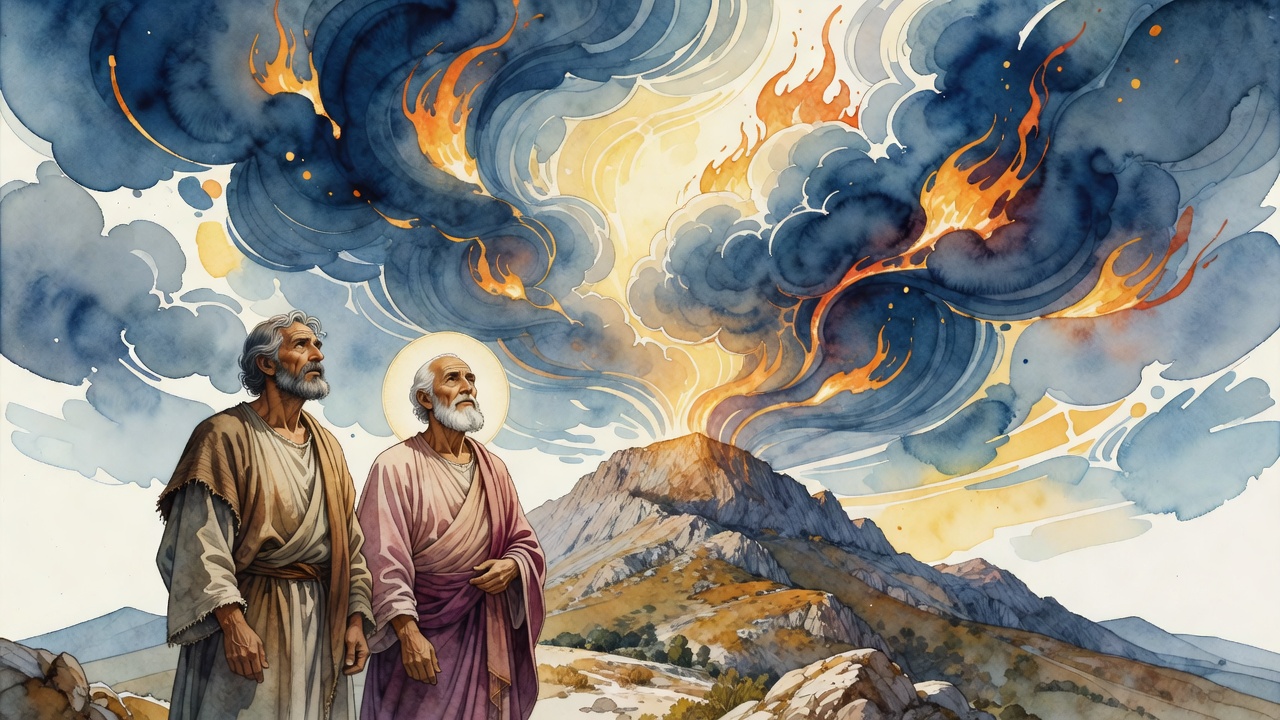
Rabbi Pinhas, quoting Rabbi Hoshaya, said the Holy One took the legs of the patriarch Jacob and stood them on the sea, so the old man could watch the miracles that would be done for his children. Rabbi Huna widened it. God stood the feet of all the patriarchs on the water (Psalms 78:12).
Judah speaking in Egypt and Zavdi reciting in a sickbed are the same pair of legs, later, still trying to stand on something that should not hold a body. The sea held. The psalm held. The speech held long enough for Joseph to weep.
Zavdi's children never got the field instructions they wanted. Benjamin did not go into chains. The last words were not advice. They were the verses and the offer a man makes when there is nothing left to protect.
← All myths