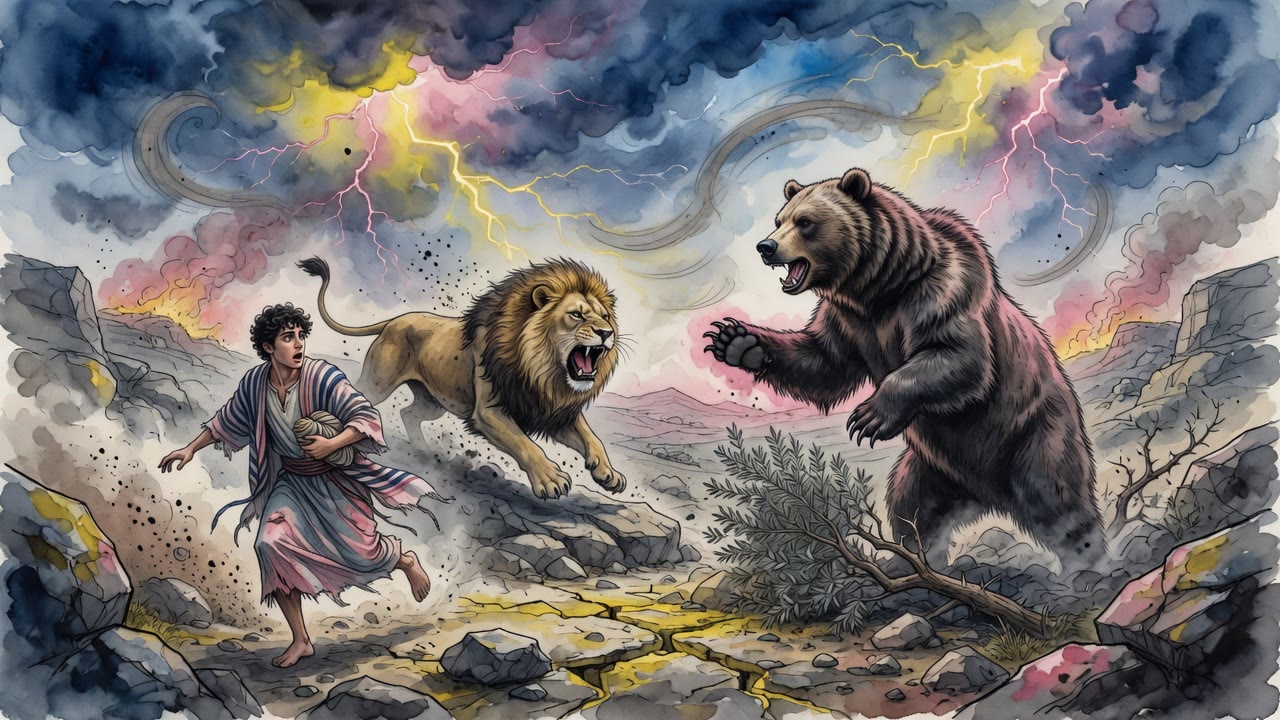
When the Shofar Scrambled the Accuser's Case
Ha-Satan had the year's unpaid vows stacked by name. Then a ram's horn rose in a shaking hand, and the pages would not stay in order.
Table of Contents
 Click for full size
The Accuser Arrives With a Full Docket
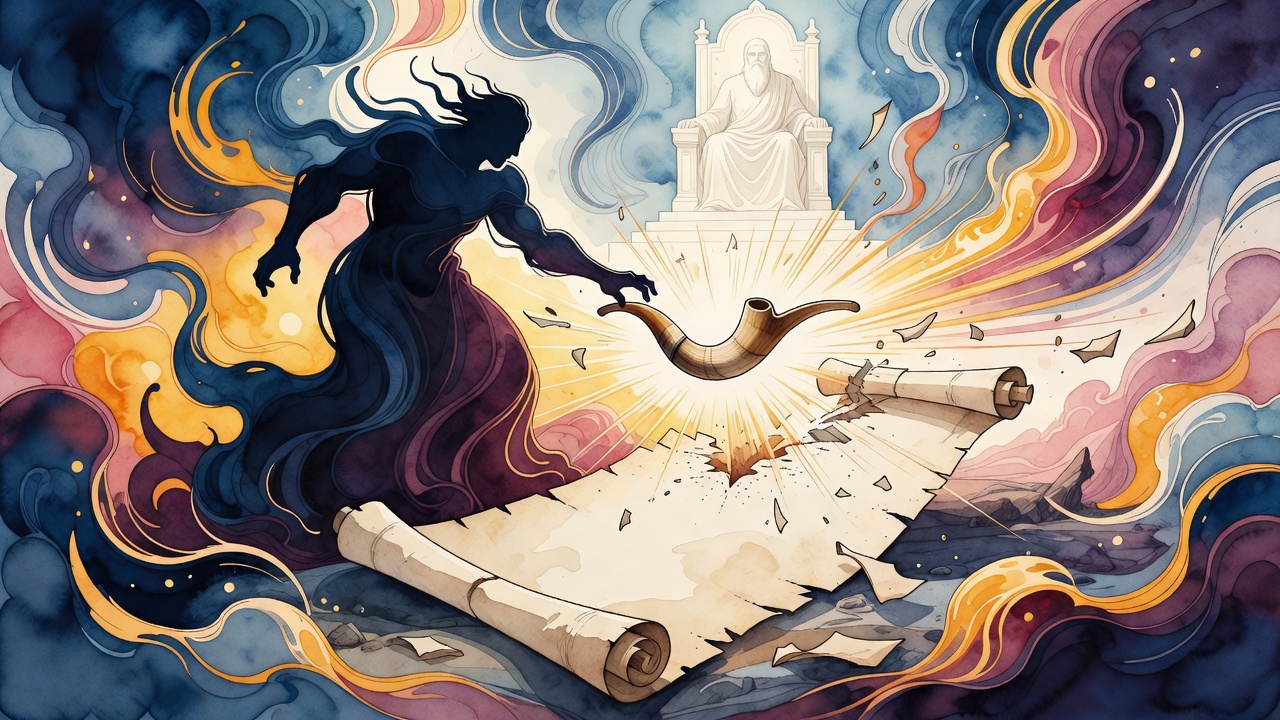
Ha-Satan unrolled his brief on the first of Tishri and set the first unpaid vow on top. Idle speech. Unkept charity. A court that delayed judgment. A household that forgot the poor at its gate. He cleared his throat for the yearly prosecution. The Accuser works for God. He does not rebel. He arrives with names, dates, and every failure Israel left on the table of the year that just died.
Below him, in the court of earth, a ram's horn waited in a trembling hand. Israel stood in white linen and empty stomachs. The year had closed. The books were open. Heaven's clerk inked the margins and waited for the first charge to land.
The Accuser never comes late on this day. The calendar gives him the hour the way a court calendar gives a prosecutor a docket morning. He had the sequence ready. He had the names in order. He had already chosen which vow to read first.
The Horn Tears the Pages
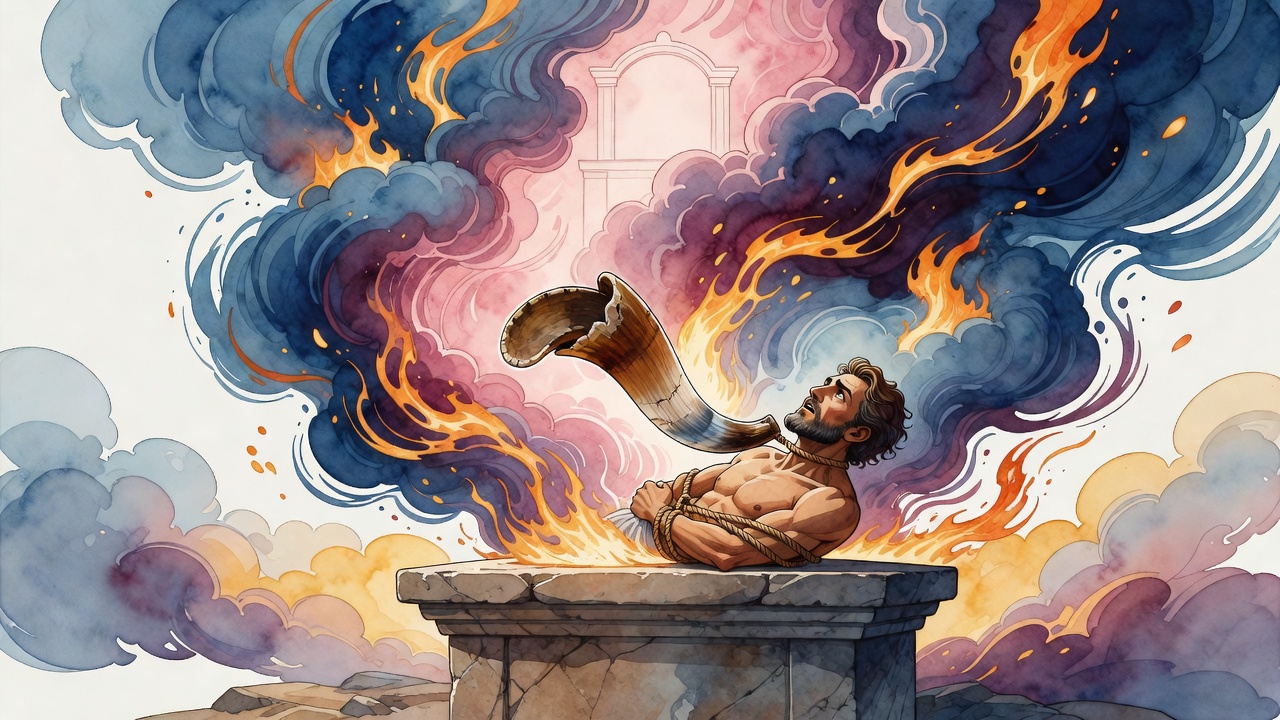
Then the shofar (שופר), the horn of a ram, rose.
Not a polite call to assembly. A raw animal cry that cut the air into pieces. The blast did not persuade the Accuser. It scrambled him. His carefully ordered case lost its sequence. Names blurred. Charges tangled. The courtroom of heaven filled with a sound that is not argument and not apology, only a horn that will not let the indictment hold still long enough to land.
Second and third blasts followed. One long. Then broken. Then a raw stutter. With every change of length the Accuser's pages reshuffled in his hands. He grabbed at a name and found another. He is still the officer of the court. He still works for the Judge. A prosecutor who cannot keep his exhibits in order is a prosecutor already losing.
Children covered their ears. Old men straightened. Women who had spent the night counting private failures felt, for one long note, as if those failures had been thrown into a wind too strong to reassemble them into a single charge sheet.
Five Refusals and a Band of Gold
Between the first blast and the sealing of the decree, bodies became evidence of seriousness. No food. No drink. No bath. No oil on the skin. No leather on the foot. The marriage bed left empty. Hunger was not theater. A nation that would not even anoint itself asked the court to weigh intention, not only failure.
On that day Aaron's heirs wore a thin band of gold on the forehead, the tzitz (ציץ), letters of the Name standing proud of the metal rather than cut into it. Craftsmen had pushed the letters out from behind so holiness rose to meet the eye. The frontlet was built for favor, never for exposure of guilt.
When the community brought an offering still stained by contact with the dead, the gold did not prosecute. It won mercy for an iniquity that stood before the Lord, and then fell silent. The Accuser looked for a way to use that stain. The plate would not help him. It was never his tool.
Seventy Bulls for Strangers
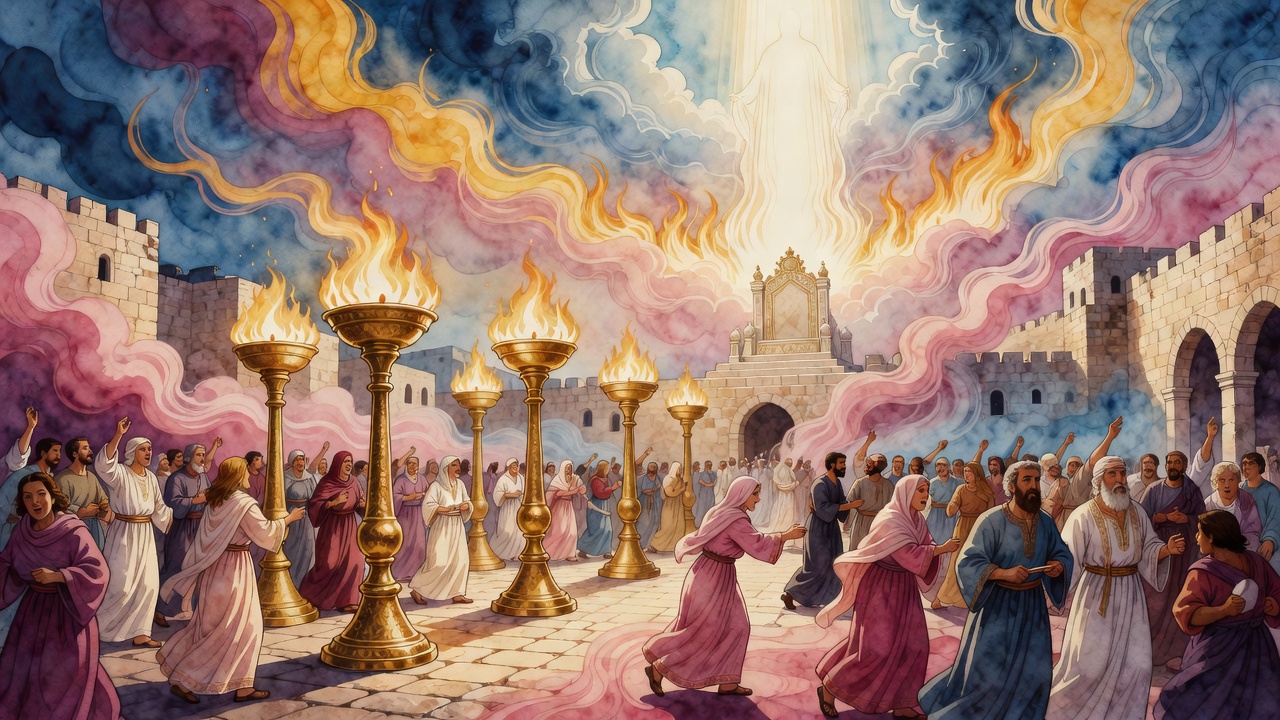
After the Accuser's brief was torn by sound, the festival opened its second work. Over seven days of Sukkot, Israel led seventy bulls to the altar, thirteen on the first day, twelve on the second, the count falling by one each morning until the last bull stood alone.
Those seventy were not Israel's private harvest tax. They were offered for the seventy nations. The Temple did not shrink to a national shrine. It behaved like a priest-house for the whole earth. While Magdiel's towers elsewhere claimed eternity, Jerusalem spent its cattle on strangers who would never send a note of thanks.
Priests moved in ordered groups. Thirteen orders for thirteen bulls. Two for the rams. Eight for the lambs, paired and unpaired with a care that treated counting as liturgy. On the sixth day a vase of water rose with the wine, poured out in thanks for rain still withheld and still hoped for. On the seventh, the ninety-eight lambs of the week stood against the ninety-eight curses Moses had once spoken over a people who would forget.
The Accuser watched cattle leave the yard for nations that had not asked. He could not file ingratitude as a charge against the givers. The imbalance was the point, and it kept slipping out of his brief.
A Throne of Fringes
While the altar burned, a man in the courtyard bound boxes on arm and head and let the fringes at his corners hang. "My Name" and "My Remembrance," counted letter by letter, climbed toward three hundred sixty-five and two hundred forty-eight. Together they reach six hundred thirteen, the full count of the commandments. He wore the count. He did not leave it on a shelf.
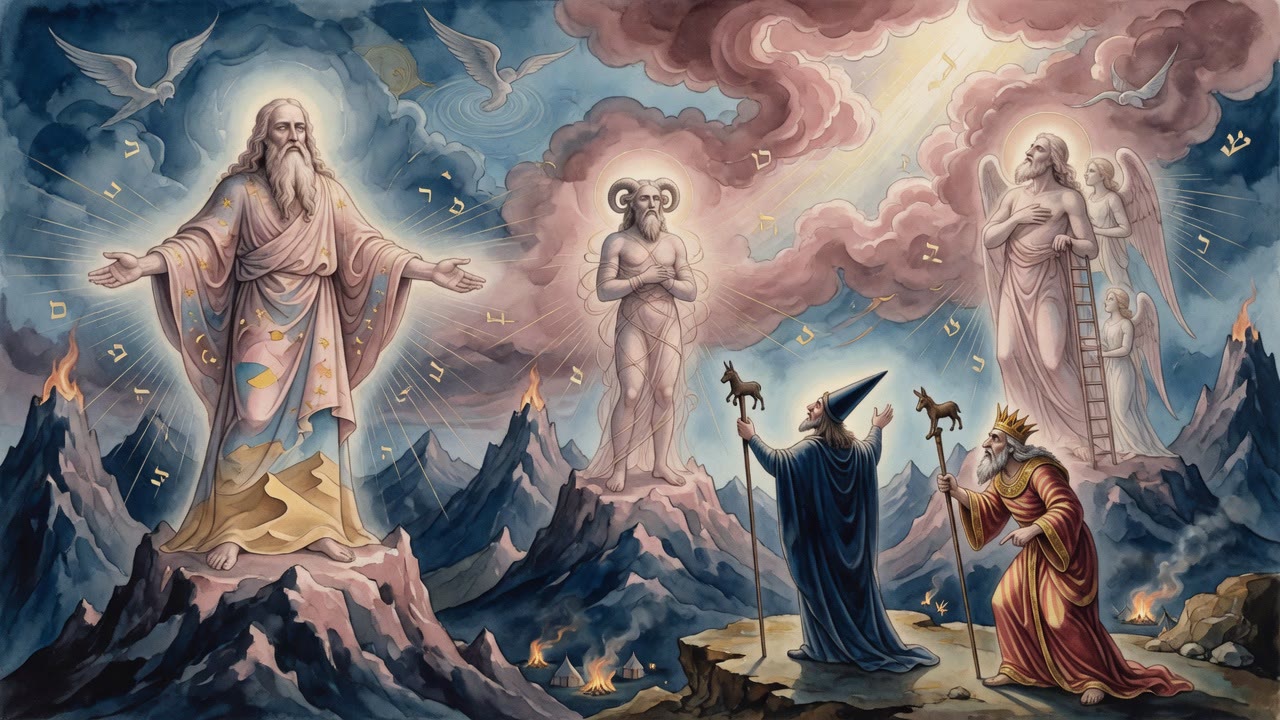
Fringes at the corners of a garment become a throne. The boxes invite the Presence to descend. When the Sh'ma is spoken, hosts of praise arrive, and the Shekhinah (שכינה), the indwelling presence of God, is not a theory but a guest who expects a standing place. The man rose. The Accuser heard the standing and lost another page.
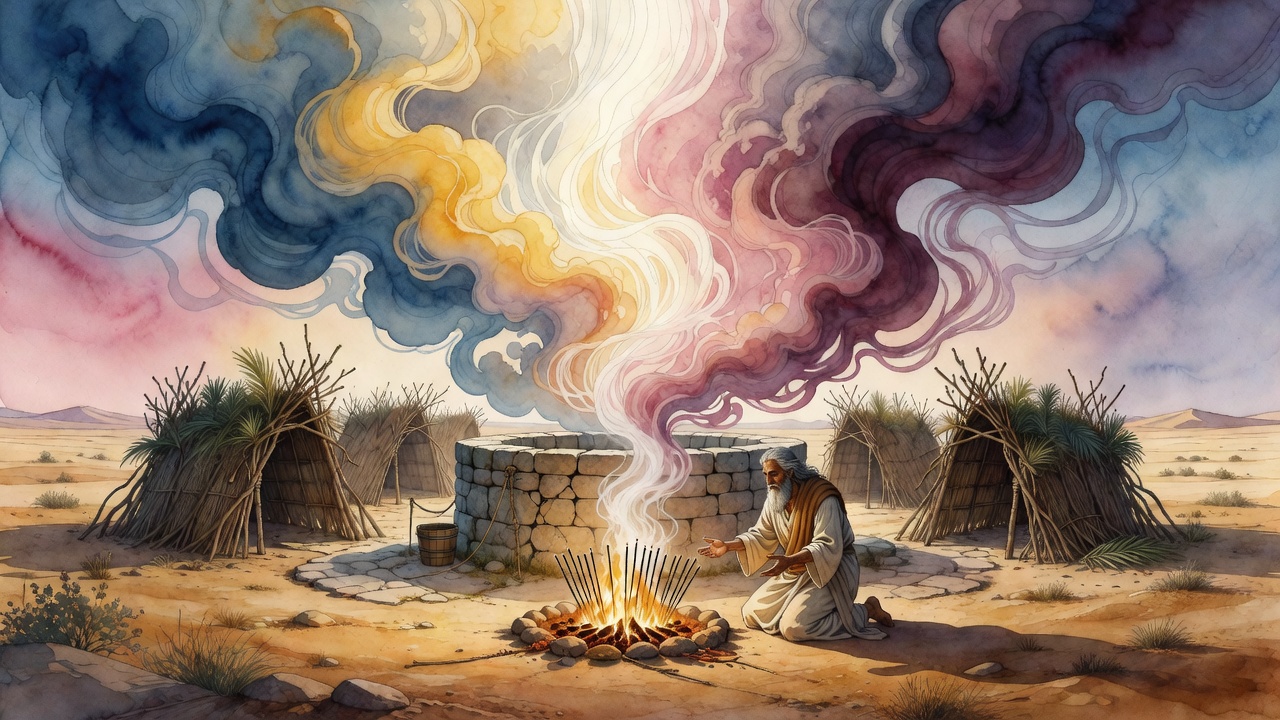
When the last echo died, the Accuser gathered what he could. He would return. He always returns. The shofar does not fire him. It only makes sure his first hour is chaos. Later, under the sukkah's thin roof of branches, families looked up through gaps at the same sky that held his courtroom. The seventy bulls were already being counted down in the Temple's memory. Israel sent cattle anyway. A people that fights the Accuser with a horn also spends sacrifice on strangers, and the prosecutor, still hired, already losing, cannot make those two facts sit still on the same sheet.
← All myths