When the Sea and the Earth Went to War Over the Drowned
God orders Rahab to swallow the waters of creation. He refuses and is slain, and then the sea and the earth quarrel over who must take the dead.
Table of Contents
Rahab, prince of the sea, stood at the edge of a world that did not yet exist, and the waters rose around him without a shore to stop them.
 Click for full size
The Holy One had finished pouring out the deep, and now the deep had to be put somewhere. So the command came down to the one creature large enough to hold it. "Open your mouth," God said, "and swallow all the waters of creation."
Rahab looked at the flood he was meant to drink. He looked at the breadth of himself, already vast, already full. And he refused. "Master of the World," he said, "it is enough for me that I stand within my own." Then the prince of the sea began to weep, as if the asking itself were a cruelty.
The Prince Who Would Not Drink the Flood
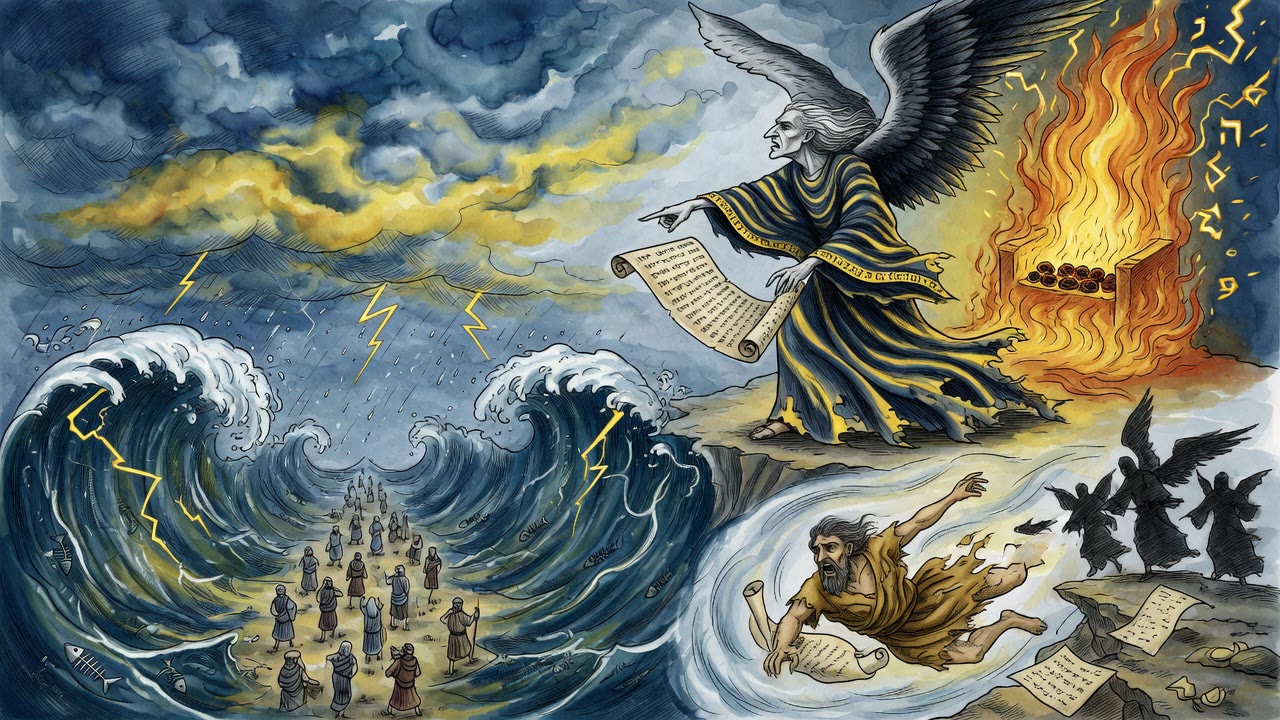
God did not argue. He struck Rahab with His foot and killed him on the spot, and the great body of the sea-prince sank into the very waters he had refused to take. The deep closed over him. What he would not swallow now swallowed him.
And the waters, leaderless, lay down. They received the corpse of their prince. They received the weight of the One who had trodden upon them and pressed them flat beneath His heel. This was how the sea first learned obedience. Not by persuasion. By a death.
But a tamed thing is not yet a bound thing. The waters were quiet, and quiet is not the same as kept.
Sand Set as a Bar and Doors
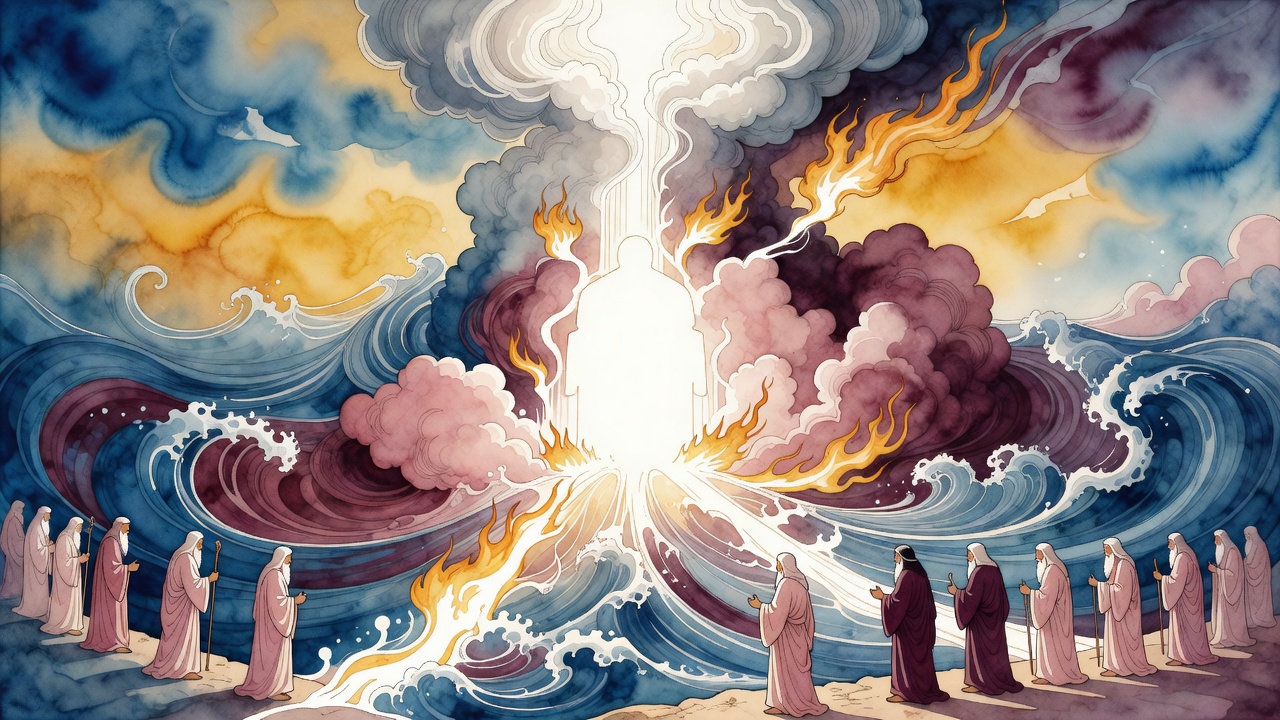
So God went down to the shoreline and built a wall out of the softest thing He could find. He took sand, mere sand, and laid it as a bar and a set of doors across the mouth of the sea. "Thus far shall you come," He told the water, "and no farther."
It was an absurd boundary, and the sea knew it. A grain of sand can be moved by a child. A line of grains can be erased by one wave. Still the wave broke against the sand and drew back. It broke again and drew back again, and it has been breaking and drawing back ever since, against nothing but a fear it cannot name.
Then the sea found a different complaint. "Master of the World," it said, "if You shut me in like this, my sweet waters will mingle with the salty. The springs that feed the living will sour inside me." It was a real fear. A sea is not one water. It is fresh and brine and bitter current all pressed together in the dark.
"No," God answered. "Each and every one has a storehouse of its own." And He hid storehouses inside the deep, sealed rooms where the sweet stayed sweet and the salt stayed salt and no door between them ever opened. The waters lay layered and separate inside their own enormous body, touching everywhere, mingling nowhere.
The Springs Hidden in a Human Face
If that seems too strange to believe, God built a smaller proof and set it where no one could miss it. He put it in the front of every human head, in a span no wider than a hand.
Look at a face. There are springs in it, four of them, and not one tastes like another. The waters of the eyes run salt. The waters of the ears run oily. The waters of the nose run foul. The waters of the mouth run sweet. They sit a finger's width apart and they never blend.
Each spring was made cruel or kind on purpose. The eyes weep salt so grief will sting and stop, because a person who could cry over the dead painlessly at every hour would weep himself blind. The ears run oil so a hard word slides in one and out the other and never reaches the heart to kill it. The nose runs foul so its own rot revives a man before a worse stench can. And the mouth runs sweet, so that when the body heaves up its food, something gentle waits to call the soul back. A face is a sealed sea in miniature. If a span can hold four springs unmixed, the great deep can hold its storehouses without trouble.
The Sea and the Earth Refuse the Drowned
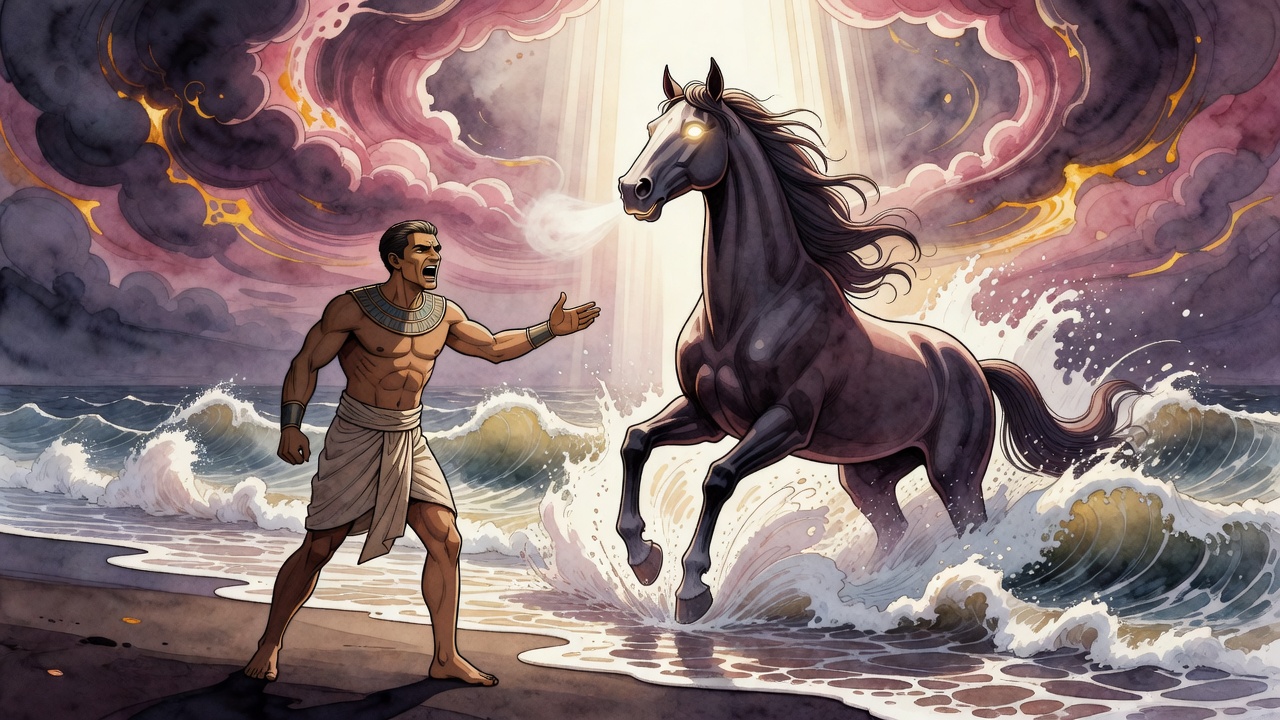
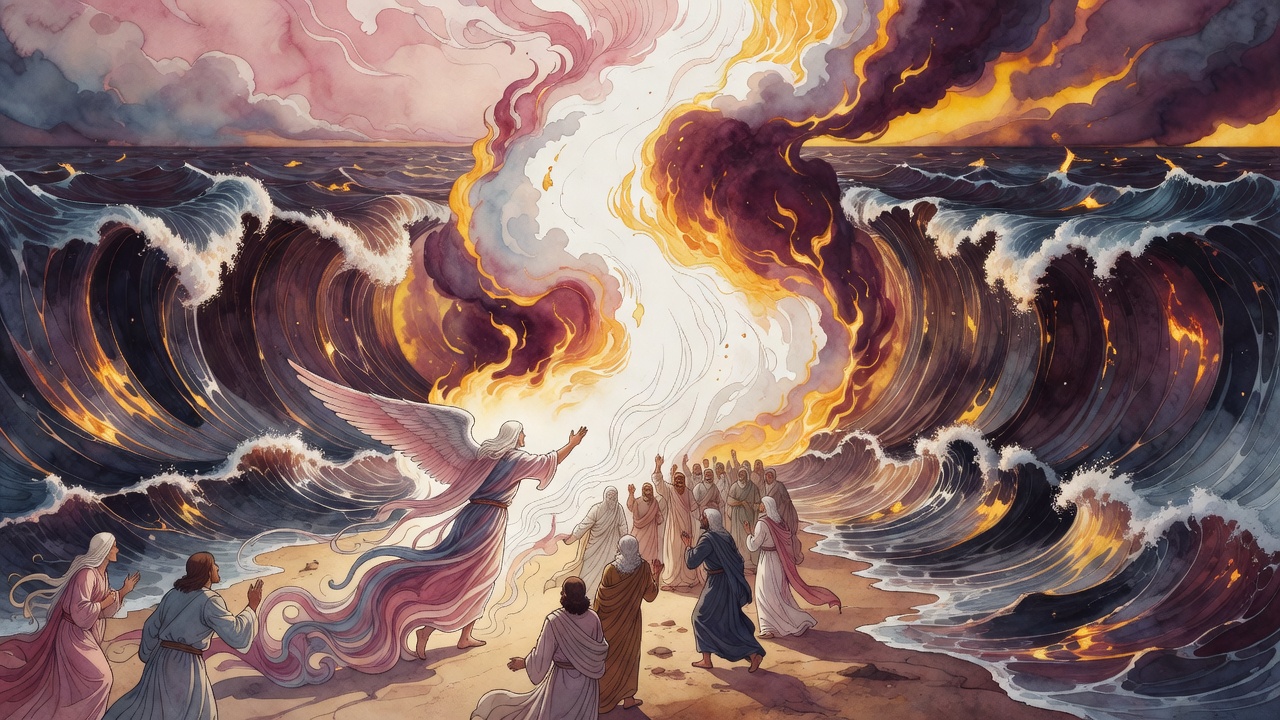
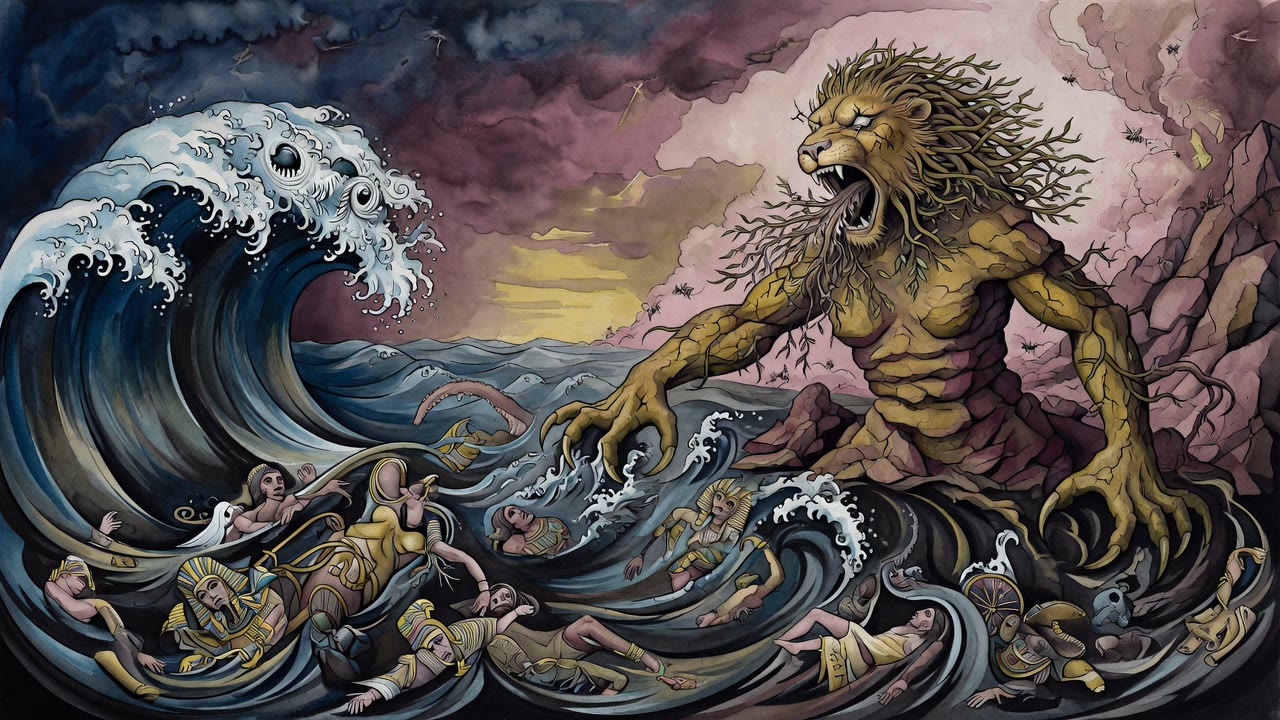
Generations later the binding held its first terrible test. Pharaoh's army drove into a sea that had opened like a corridor, and the walls of water remembered they were water and came down. An entire host sank into the storehouses of the deep.
Now the sea turned to the dry land with the drowned still tumbling in its current. "Take back your children," the sea said. "Dust they are, and to dust they return. They belong to you." It was a cold, lawyer's argument, and the sea meant every word.
The earth would not open. The earth was afraid. These were slain men, and the earth had buried slain men before and heard what their blood could do. Long ago the ground had drunk one murdered brother's blood, and that blood had cried out from the soil until it reached the Throne. The earth feared that every drowned Egyptian inside it would wait, silent, until the Day of the Great Judgment, and then rise to testify against the ground that had hidden the crime.
So the sea pushed the bodies toward the shore and the shore pushed them back, and the host that had hunted Israel floated unclaimed between two elements that each wanted the other to be guilty.
The Oath That Opened the Ground
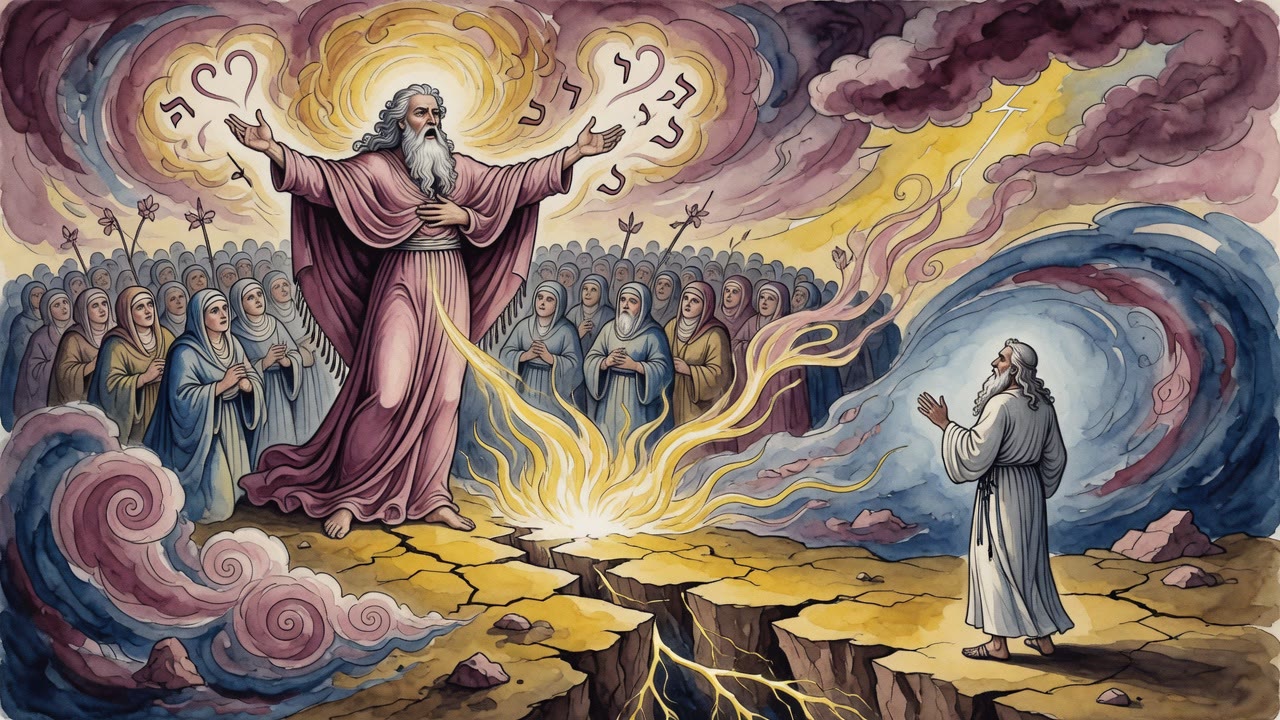
God ended the quarrel with His own hand. He stretched His right hand over the dry land and swore an oath, a promise that could not be broken, that the drowned would never be permitted to testify against the earth in the world to come. The blood of these men would stay silent. The ground would carry no charge for carrying them.
Only then did the earth open its mouth and take them in.
And in heaven, where the ministering angels had been gathering to sing, a hymn died before it began. The angels had seen the enemy of Israel swallowed and wanted to celebrate the victory. God stopped them in the doorway of their own song. "The work of My hands is drowning in the sea," He said, "and you would sing?" The hall went quiet. The boundary held, the deep kept its dead, and no praise rose over the water closing above a defeated man.
← All myths