5 min read

The Woman Who Sat on a Well to Save Israel

Avshalom's hunters search a house. A wife uncovers herself on a well mouth, shames their eyes, and hides two messengers whose line will one day stop Haman.

Curated by Arthur · Told by Maggid ·
Table of Contents
  1. Hunters at the Door
  2. Promise Spoken Over Shame
  3. Amalek at the King's Right Hand
  4. Plot Turned Back on His Head
The Woman Who Sat on a Well to Save Israel Click for full size

Hunters at the Door

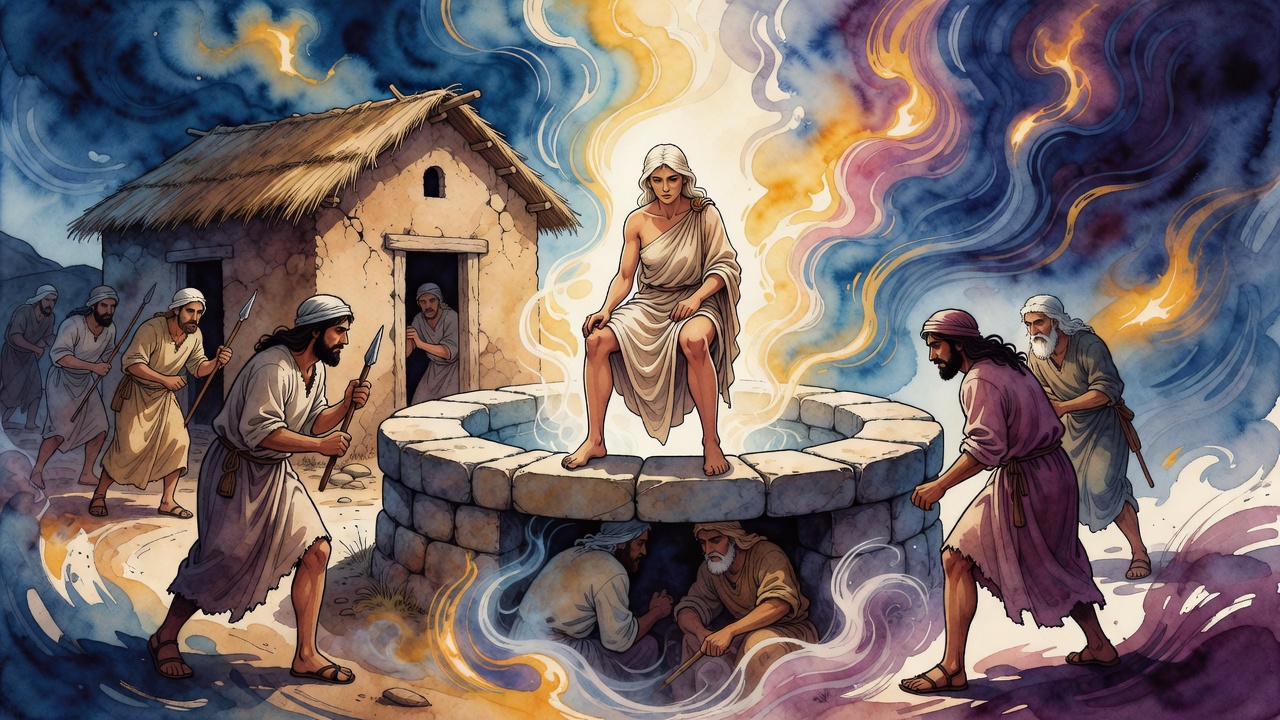
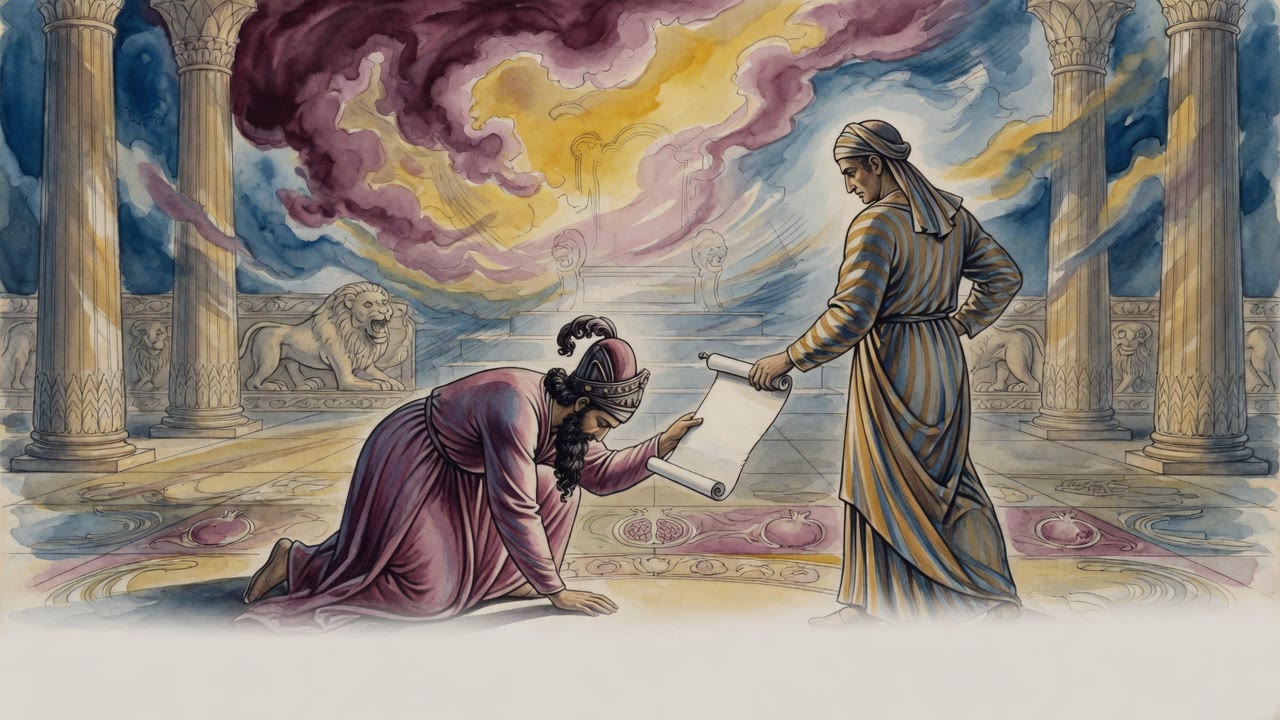
Boots hit the packed earth outside Shimi's house while Avshalom's rebellion still chews the roads of Israel. Two messengers of David, Achimaatz and Yonatan, have already dropped into the well. Water cools their ankles. Stone presses their shoulders. Above them, the wife of Shimi makes a choice no court will ever invent for her.

She uncovers herself and sits on the mouth of the well. Cloth falls. Skin shows. Shame becomes a door-lock. When the soldiers burst in and see her sitting there, immodest and disgraced, they turn away at once. Impossible, they reason, that two righteous men could be hidden in this well while so esteemed a woman sits uncovered above them. They leave. The righteous live.

Scripture will later hint at the covering she spread and the grain she strewed. The midrash hears more: she made herself coarse and loathsome to shield two lives. Courage here does not look like a sword. It looks like a body used as a shield against other men's eyes.

Promise Spoken Over Shame

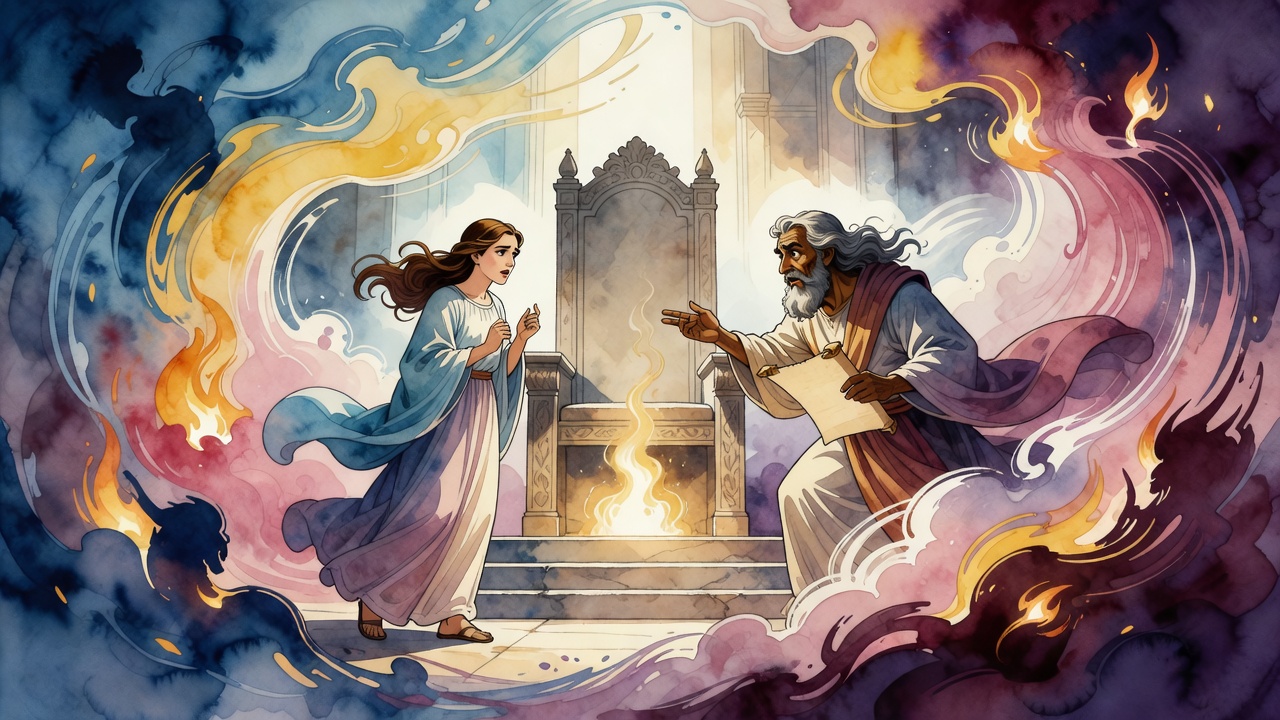
The Holy One answers her. Because you disgraced yourself for these two righteous men, I will bring forth from you two who will stand in Israel's breaches, and for their sake I will save Israel from slaughter. The line runs forward through generations until names the court of Persia will learn: Mordechai and Esther.

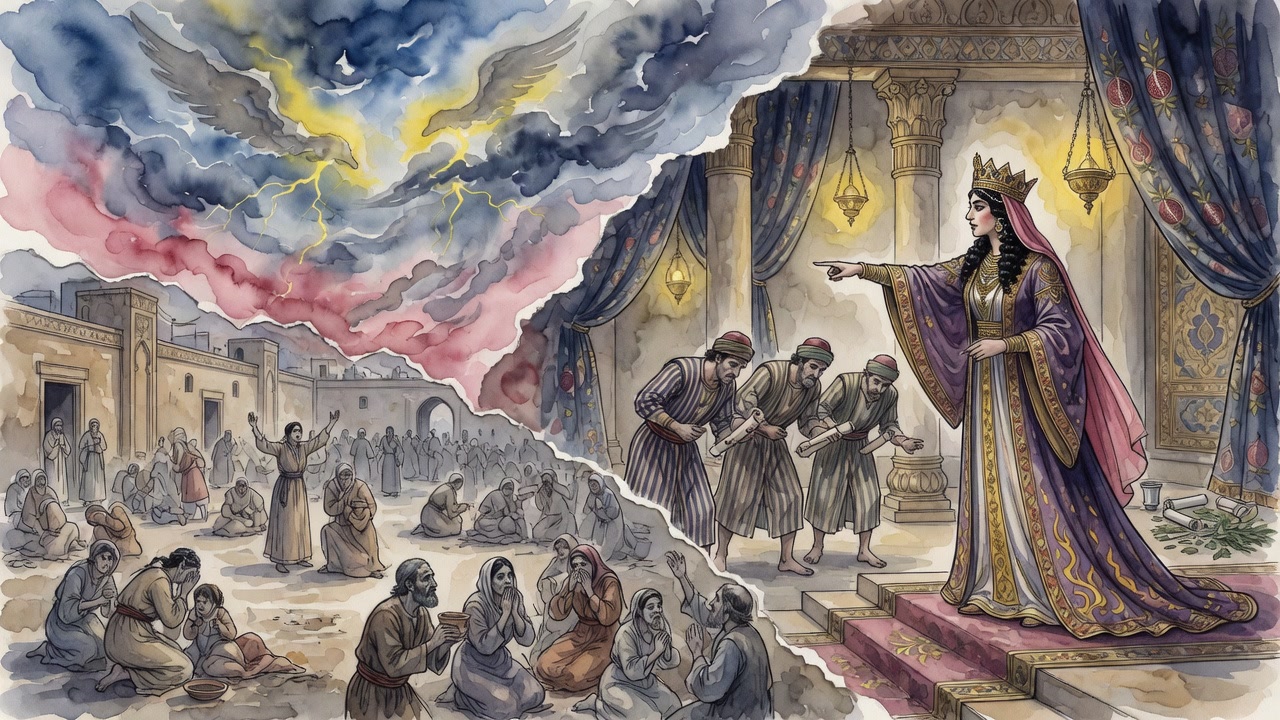
Purim does not begin at a banquet. It begins at a well mouth where a woman chooses shame over blood on the floor. The miracle of later letters and seals rides on an earlier, dirtier courage. Heaven keeps that ledger even when kings forget it.

Rabbi Shmuel bar Nachman, citing Rabbi Yonatan, will not let the story float free of ancestry. Why did the great rescue come through Mordechai and Esther? Because a grandmother of their house once sat where decency said she should not sit, so that messengers of the king of Israel might climb out breathing.

Amalek at the King's Right Hand

Centuries later, in Shushan, Haman son of Hammedatha, of the seed of Amalek, sits at the right hand of Ahasuerus and is called father of the king. Honor swells him until he cannot bear it. He plots not only against a people but, the expanded decree will say, against the crown itself: to murder the king and seize what is not his.

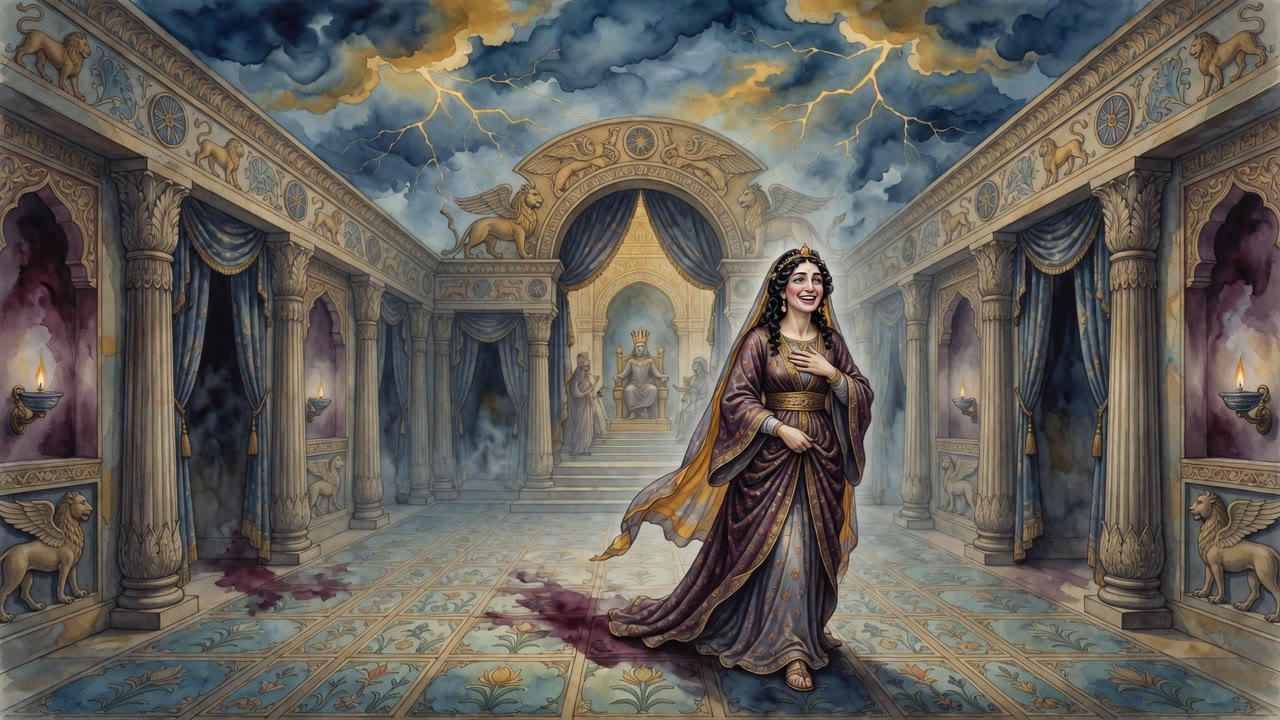
Evil men draw near the throne with lies and ask that the innocent be killed and clean blood poured out. The king, late to wisdom, will confess he was deceived. The targeted ones were the righteous: Esther, praised in her splendor, and Mordechai, wise in all wisdom, in whom no blemish was found. Their nation, he now understands, are children of the Lord who created heaven and earth.

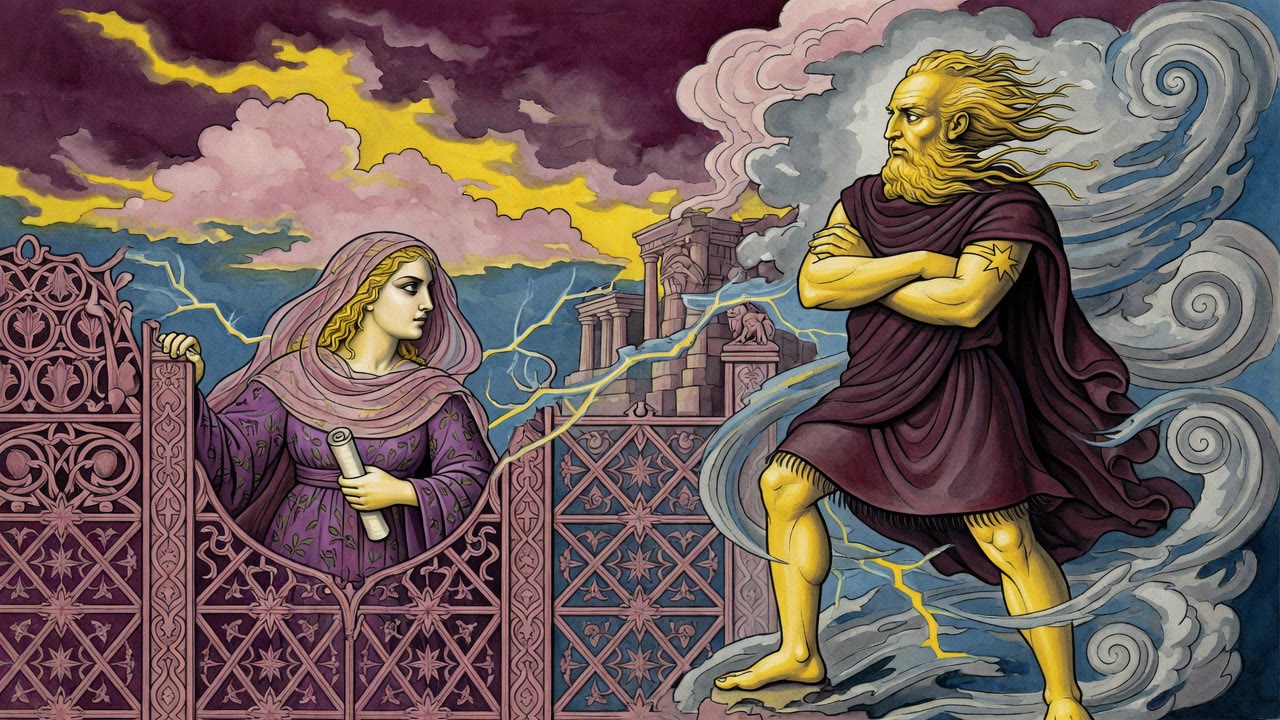
Amalek does not vanish when the desert of the wilderness is left behind. The war against Amalek waits on throne and rest and proper order, the teachers say, because the hand on the throne of the Lord must first sit true before the seed of Amalek is cut off. Haman climbs high enough to force that old war into a Persian court.

Plot Turned Back on His Head

Ahasuerus writes not a thin counter-edict but a sweeping proclamation to dwellers of sea and dry land, to provincial rulers and army chiefs. He begins with a lesson in rulership: one who reigns over many peoples must not exalt himself. He must walk every day in a calm and lowly spirit, securing peace between people and people, tongue and tongue.

Then he names the deceiver. Haman is hanged. All his designs are brought upon his own head. From the Creator of heaven and earth, the scheme is turned back upon him. The gallows built for Mordechai becomes the measure of the plotter. The seed of Amalek tastes its own rope.

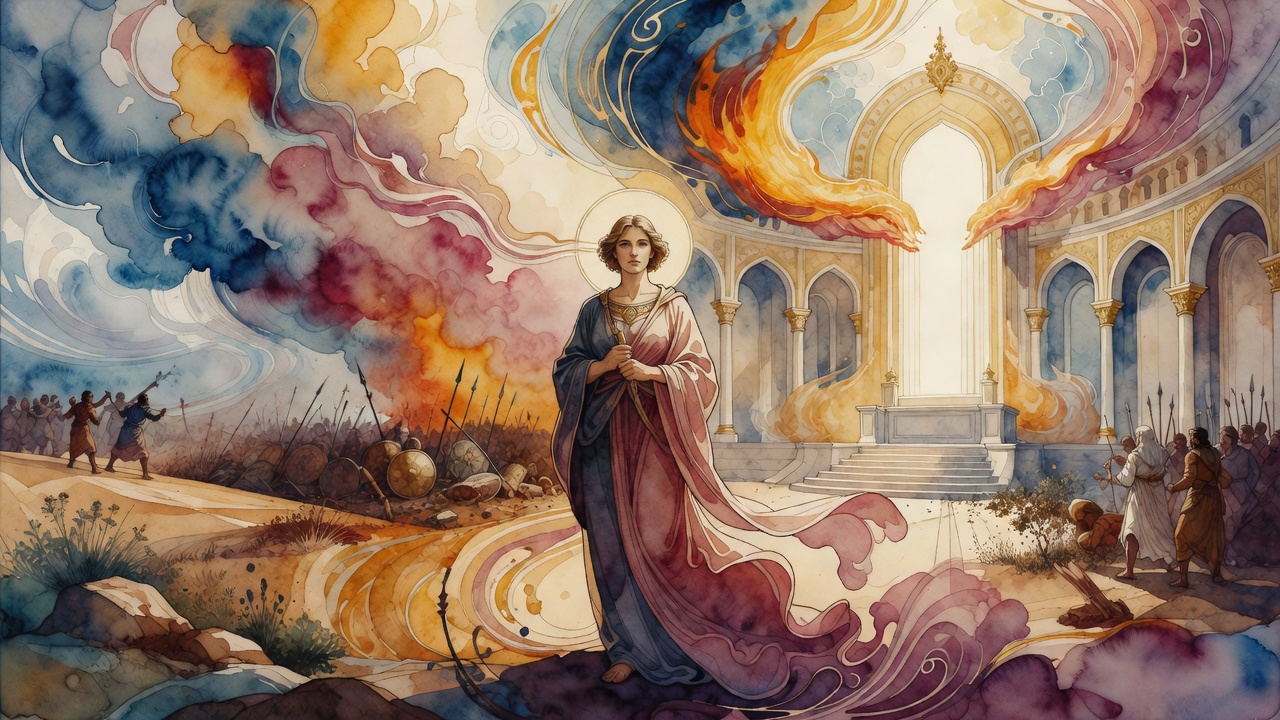
Between the well and the gallows runs one bloodline of courage. A woman who used shame as shelter. Two messengers who lived. A people who would later refuse to bow. A queen who would risk the throne room. A wise man who would not kneel. Heaven's answer to Avshalom's hunters becomes heaven's answer to Haman's seals.

If you only know Purim as costumes and noise, climb back down the well. Feel the grain she strewed. Hear the soldiers leave because they cannot imagine holiness under immodesty. Then walk forward into Shushan and hear a king admit he almost spent clean blood for a lie. The same God who hid men under a woman's disgrace hangs an Amalekite on his own pride.

That is how Israel is saved in breaches: not only by public glory, but by private costs that never make a parade. The wife of Shimi never sees Esther's crown. Esther never sits on that well. The story holds them in one hand anyway, because slaughter was already cancelled once in miniature before it was cancelled for a kingdom.


← All myths
From the tradition

Sources

3 sources

The texts behind this telling. Some cards carry a translation of the source; others are our own retelling of it, and each card says which. Every card links out to the original.

Midrash Shmuel 32:4Midrash Shmuel

Translation of the source text.Midrash Shmuel, Krakow 1893, Public Domain, on Sefaria · CC-BY-SA

Rabbi Shmuel bar Nachman said in the name of Rabbi Yonatan: For what reason did Mordechai and Esther merit that this miracle be performed through them? Because of the wife of Shimi, the mother of their father, who saved two righteous men from being killed. And these are they: Achimaatz and Yonatan. At the time when the servants of Avshalom pursued after them, they ran and entered the house of Shimi. What did that righteous woman do? She brought them inside the well, and she uncovered herself and sat upon the mouth of the well, in order to save the two righteous men from death. When the servants of Avshalom entered and saw her, that she was uncovered, they turned back. They said: Is it possible that two righteous men are hidden inside the well and an esteemed woman such as this is uncovered over them? From where do you derive that it is so? As it is written, "And the woman took and spread the covering over the face of the well, and strewed ground grain upon it" (II Samuel 17:19). What is the meaning of "and strewed ground grain upon it"? That she made herself loathsome and disgraced herself in order to save the two righteous men from death. The Holy One, blessed be He, said to her: Since you have disgraced yourself for the sake of these two righteous men, I will bring forth from you two righteous ones who will stand in the breaches of Israel, and for their sake I will save Israel from being killed.

Full source
Targum Sheni on Esther 8:13:1Targum Sheni on Esther

Translation of the source text.Berlin, 1898 · Public Domain

The text of the decree that was published is interpreted thus: King Ahasuerus sent letters to the dwellers of the sea and the dry land, and to the rulers of the provinces, and to the chiefs of the armies who dwell in all the earth. And much writing I have written to make known to you that, because I rule over many peoples and reign over the dwellers of the sea and the dry land, in that kingship let us not exalt ourselves, but in a calm spirit and in lowliness of spirit let us walk all our days, and in great peace, to establish for you abundant peace, and all who dwell under the kingdom, and everyone who wishes to do business by sea and by land, going to and fro between people and people and between tongue and tongue: I am one, from the end of the earth to the end. Thus I have written to make known to you concerning their integrity and their righteousness, that we were loving to every people and honoring all kings and doing good with the rulers of the earth. And there are among them evil men who drew near to the kingdom, and the kingdom was handed into their hands, and by their deceit and their falsehood they led the kingdom astray, and they wrote the letters that are not right before Heaven, and also evil among the sons of men. And against the kingdom they are harsh, and this is the request that they requested of the king: that righteous men should be killed and much innocent blood poured out, though they had done no evil and were not liable to a sentence of death. And these are righteous men: Esther who is praised in all splendor, and Mordecai who is wise in all wisdom, and no blemish was found in them nor in their people. And I had thought in myself that another nation had petitioned me, as though I did not know that the Jews petitioned me, who are called the children of the Lord of all, who created heaven and earth, and over kings great and mighty He has set me to rule them and not to be ashamed of them. Therefore also, that Haman son of Hammedatha from India, who was of the seed of the house of Amalek, came to us and saw from us great good and abundant praise and greatness, and we made him great and honored him and called him "father of the king," and at the right hand of the king he sat. And he did not know how to bear his honor, nor to accept the kingdom, but he was scheming in his heart to kill the king and to take from him the kingdom. Therefore Haman son of Hammedatha we hanged, and all that he had set up we brought upon his head; and from Him who created heaven and earth his scheme was brought back upon his head.
Full source
Sifrei Devarim 67:3Sifrei Devarim

Retold in our words. Read the original at the link below.Sifrei by Rabbi Shraga Silverstein · CC-BY

Our tradition grapples with these questions all the time, especially when it comes to seemingly disparate commandments. to one such conundrum, found in Sifrei Devarim, concerning the wiping out of Amalek and the building of the Beit Hamikdash, the Temple.

You're faced with two crucial tasks: eliminating the descendants of Amalek, that ancient enemy of the Israelites, and establishing the kingship. Which one takes priority? It's not immediately clear, is it? That's precisely the question the sages pondered. The answer, according to the Sifrei Devarim, lies in the verse from Shemot (Exodus 17:16): "For a hand upon the throne of the L-rd: The L-rd shall war against Amalek." The key here is "the throne of the L-rd."

The text explains that when the king sits upon the throne of the L-rd, then you cut off the seed of Amalek. But how do we know that "the throne of the L-rd" even refers to the king? The answer is in I (Chronicles 29:23): "And Solomon sat on the throne of the L-rd as a king." Aha! So, establishing the kingship, the "throne of the L-rd," precedes the commandment to wipe out Amalek.

Okay, so we know kingship comes before wiping out Amalek. But what about the Temple? Does building the Beit Hamikdash come before or after dealing with Amalek? The Sifrei Devarim doesn't leave us hanging. It refers to the verse in Deuteronomy: “…and you will dwell in the land that the L-rd your G-d causes you to inherit, and He gives you rest from all of your foes roundabout and you will dwell secure (only then) (11) the place that the L-rd your G-d shall choose (i.e., the Temple) etc.”

This implies that security from enemies, which includes dealing with Amalek, must come before building the Temple. We also find support for this idea in II (Samuel 7:1-2): "And it was, when the king (David) dwelt in his house and the L-rd had given him rest roundabout from all of his foes, that the king said to Nathan the prophet: See now, I am living in a house of cedar while the ark of G-d dwells within the curtain, etc." David only considers building the Temple after he's achieved peace and security.

So, to recap: First, secure the land and defeat your enemies, including wiping out Amalek. Then, establish the kingship. And finally, build the Temple. It suggests that physical security and justice are foundational before we can truly create lasting sacred spaces.

Full source