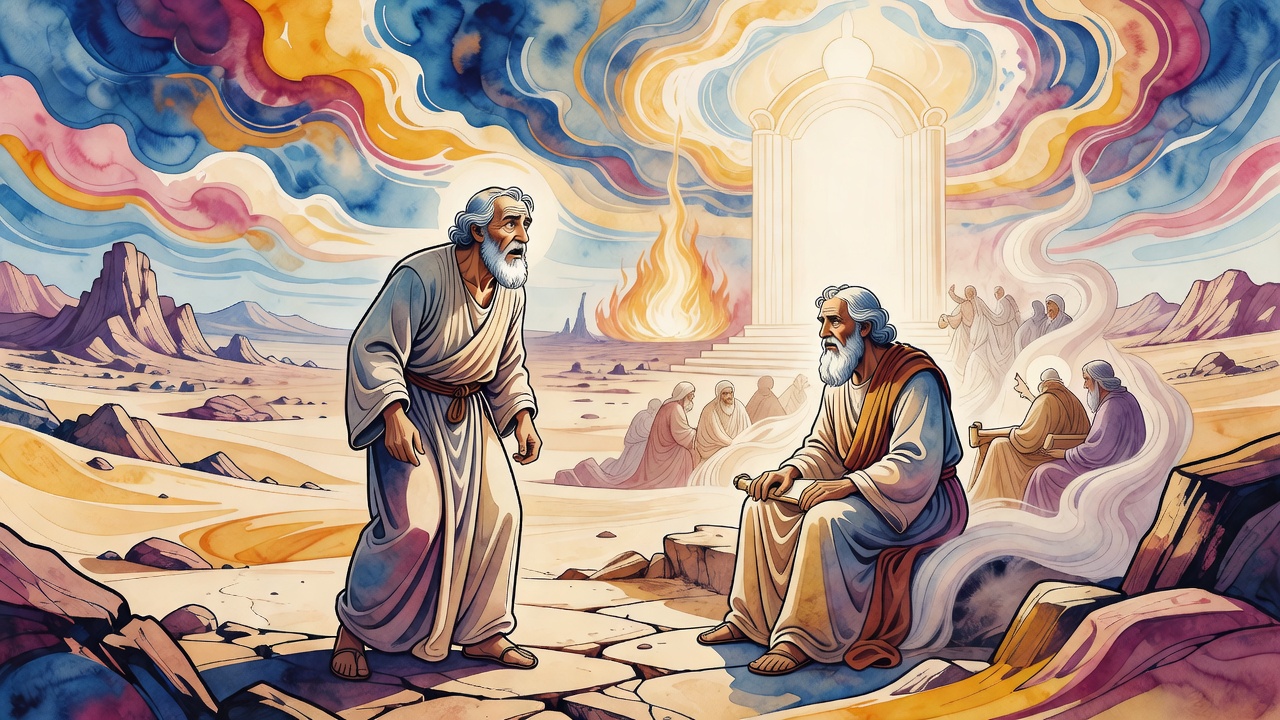
Yithro Left the Altars of Midian for Moses
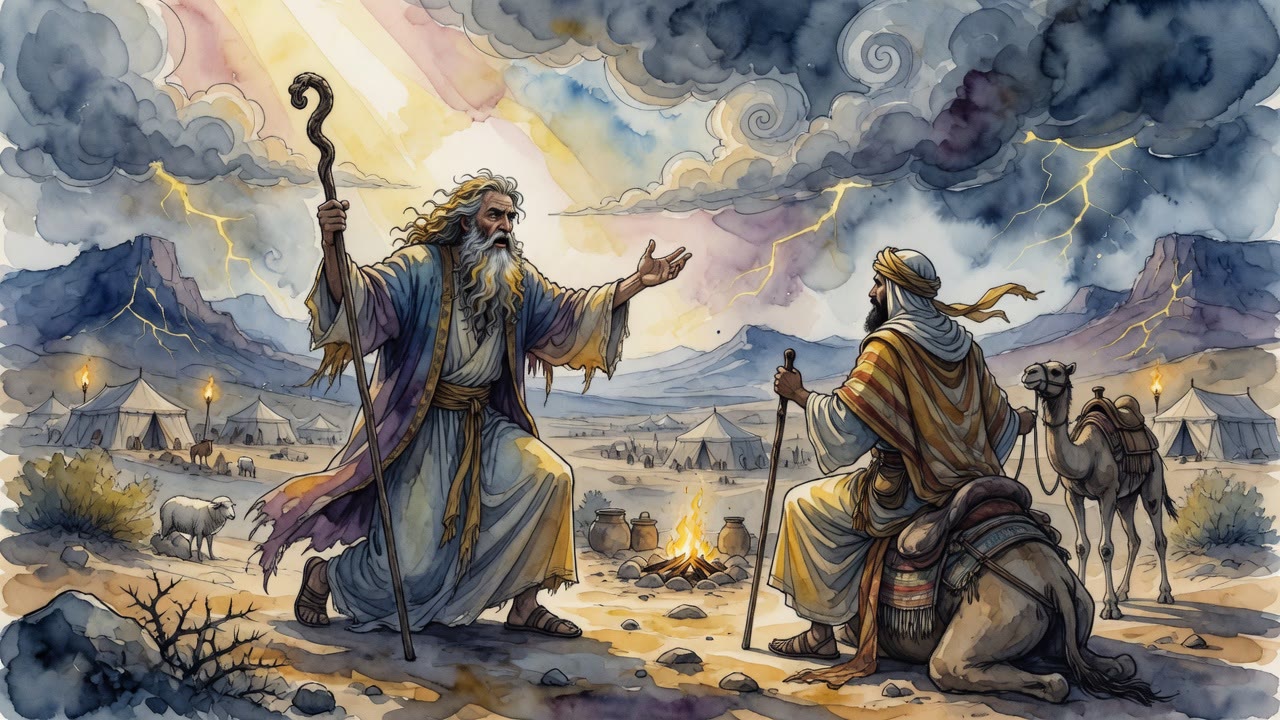
Yithro, called Cohein of Midian, heard what God did for Moses and Israel. He left rank behind and rode toward the camp at the mountain of God.
Table of Contents
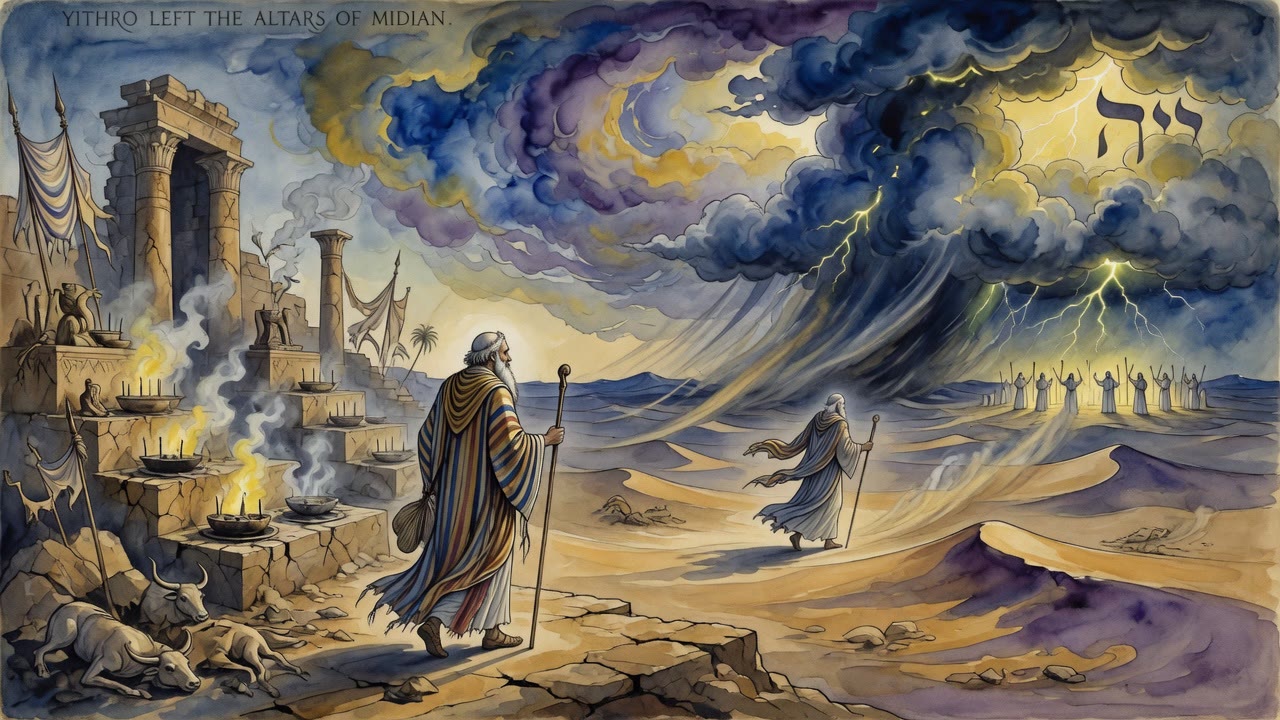
Yithro packed for a road that would end his old life. Midian still held his tents, his daughters' histories, the reputation that made people call him the Cohein of Midian (Exodus 18:1). News had arrived of what God had done for Moses and for Israel: Egypt broken, sea split, a nation walking free. Yithro did not send a polite letter. He put family on the path toward the mountain of God.
 Click for full size
Behind him lay an argument the later sages would never fully settle. What had "Cohein" meant when it named him?
Priest or Officer
Rabbi Yehoshua took the word straight. Yithro had been a priest, a man who officiated at Midianite rites and served foreign gods. The book of Judges uses the same title for Jonathan and his sons who were Cohanim to the tribe of Dan until exile, priests of idolatry in plain light (Judges 18:30). If the word can mean that there, it can mean that here. On this reading Yithro abandoned an altar when he rode toward Moses.
Rabbi Elazar Hamodai refused the incense. Cohein, he said, can mean officer, dignitary, a man of rank. David's sons were called Cohanim though they were not Levitical priests (2 Samuel 8:18). They held civic power. So too, perhaps, Yithro: a Midianite authority who chose a new allegiance without having poured oil on foreign statues every dawn.
Either way the cost was real. Priest or officer, he left the center of his standing to sit in the dust of a freed slave-camp and hear Torah take shape.
What He Heard When He Arrived
Moses came out to meet him. The greetings of kin and the reports of miracles filled the tent. Yithro rejoiced for the good done to Israel and blessed God who delivered the people from Egypt's hand. A man who may once have served other powers now spoke blessing over the Name that shatters empires. The conversion, if that is the word, happened in public joy, not in a whispered footnote.
He watched Moses judge from morning to evening and told him the system would kill him. Advice from the outsider restructured Israel's courts. The Cohein of Midian became the architect of delegated justice among a people still learning how to be free without a Pharaoh's whip for a clock.
Midian's Old Debt and Pinchas
Midian would not stay only a place of Yithro's past. The Midianites had a long shadow in Israel's memory, including the sale that sent Joseph toward Egypt (Genesis 37:36). Generations later, when Moses sent a thousand from each tribe against Midian, he sent Pinchas with them, and the holy articles in his hand, the Ark's gravity riding with the campaign (Numbers 31:6).
Why Pinchas and not Elazar the high priest? Pinchas had a personal stake. He went to avenge what Midian had done in the line of his mother's father, Yithro. Rank alone did not choose the leader. Fire in the belly did. The holy things were "in his hand," meaning under his domain and power, not merely luggage on a cart. Family honor and sacred charge traveled the same road into battle.
The priest who left Midian and the priestly grandson who struck Midian stand at two ends of one rope. One walked away from Midian's altars or offices. One returned with the Ark against Midian's war.
The Road Between Two Loyalties
Yithro's story refuses a simple costume. If he was a priest of idols, his ride is a renunciation. If he was a dignitary, his ride is a transfer of political faith. The Mekhilta keeps both possibilities alive because both teach the same motion: a man of Midian heard what God did and moved his body toward that hearing.
Moses needed such a man. Israel needed courts that would not exhaust a single prophet. Midian, later, would learn that blood debts and sacred vessels can arrive together under Pinchas' command. Between those hours, a father-in-law sat in a tent and blessed the God of the Exodus with a mouth that Midian had trained for other work.
The pack animals shifted. The mountain waited. Yithro kept walking.
A Guest Who Reordered the Camp
Israel had prophets and priests in the making, yet it took an in-law from Midian to say that one man judging from morning to evening would collapse. Humility is easy to praise and hard to practice. Moses practiced it by listening to Yithro and building a ladder of officers over thousands, hundreds, fifties, and tens.
The man who may have poured Midianite libations, or who may have only held Midianite rank, became midwife to Israel's judicial structure. That irony is not a joke. It is the plot. God can draft help from outside the census when the census is still learning how to live without a whip.
Pinchas later carried holy things into Midian's war with family fire in his chest. Yithro earlier carried advice into Moses' tent with family care in his mouth. Between advice and war stands the long education of a people that must judge itself and sometimes fight the land that once sheltered its teacher.
← All myths