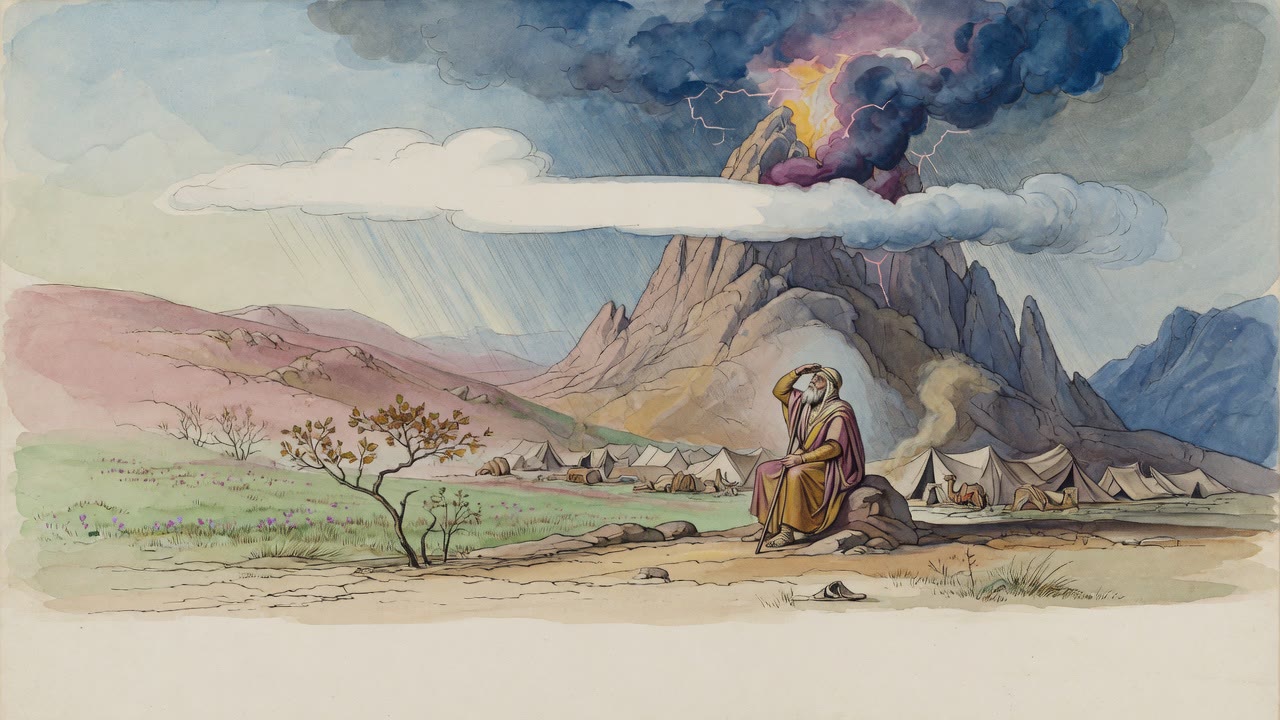
Moses Pleads Na So Yithro Will Not Leave
At the desert edge Yithro turns for Midian. Moses grips him with a single word of plea and names the damage his departure would do to heaven's honor.
Table of Contents
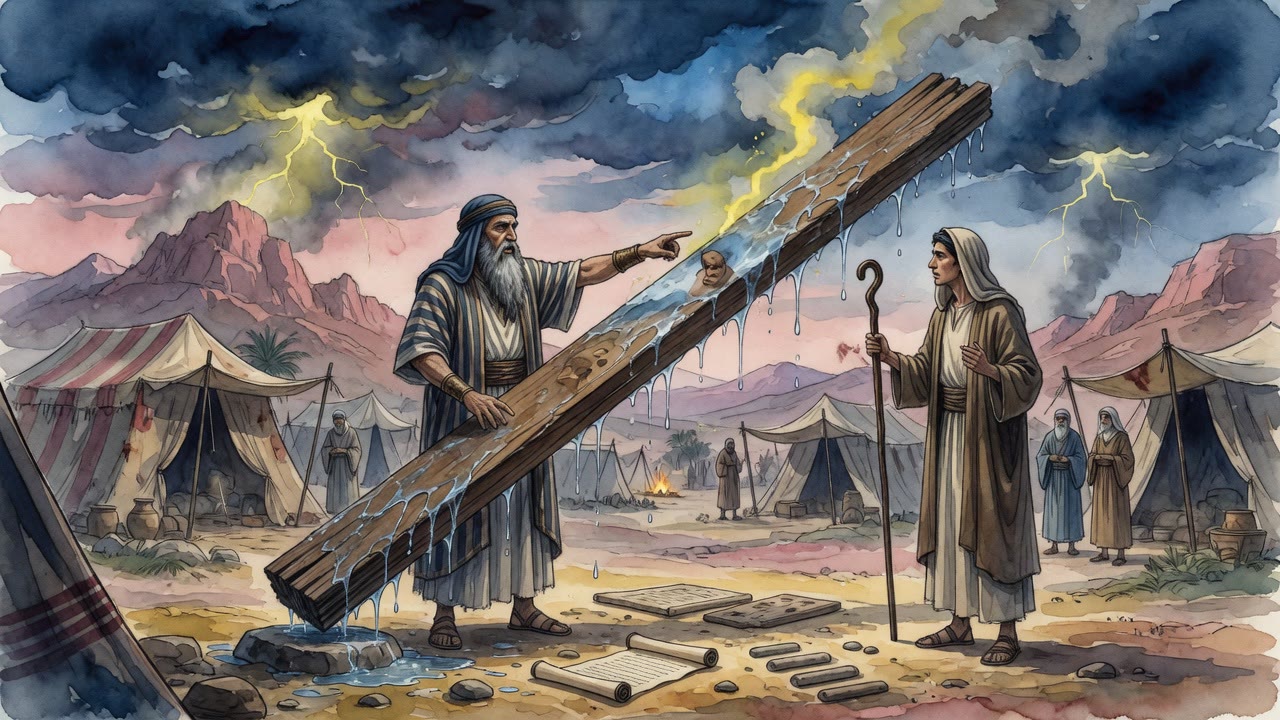
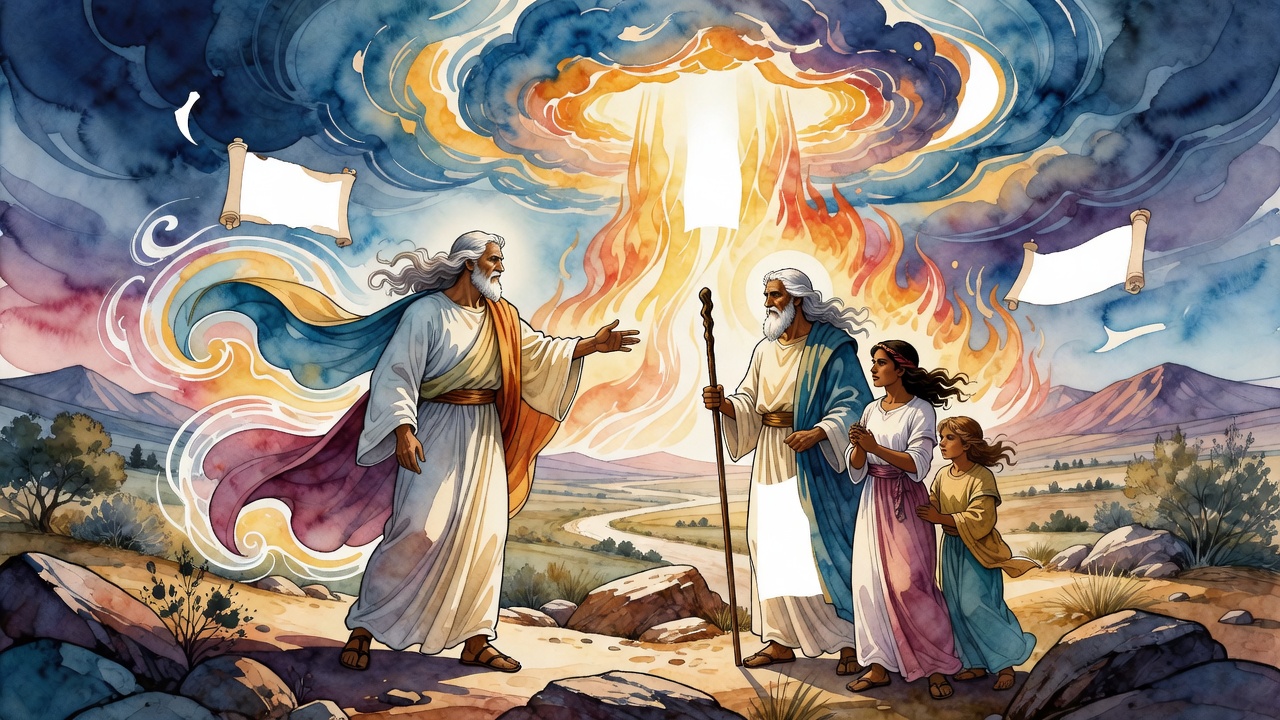
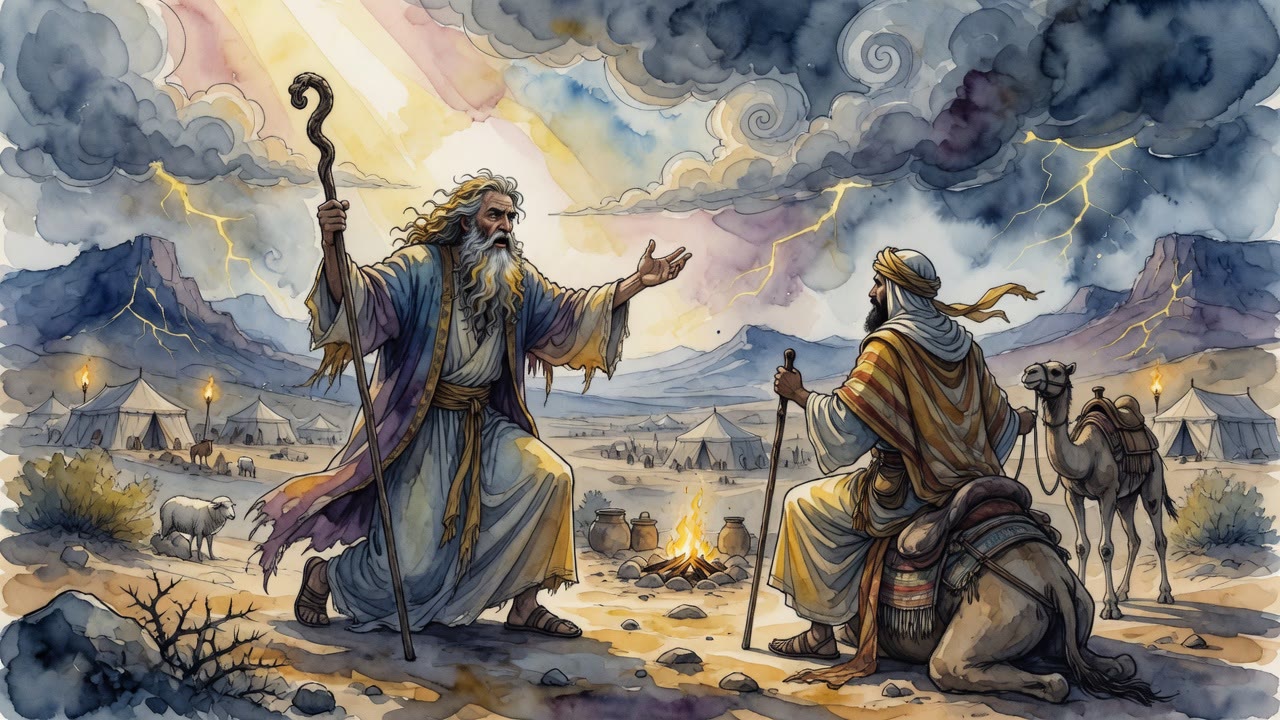
Yithro had already turned his face toward Midian when Moses caught his sleeve. Dust rose off the path. The camp behind them still smelled of manna and goat-hide tents. Ahead, the road home ran flat and ordinary, the kind of road a man walks when miracles have finished surprising him and he wants his own door again.
 Click for full size
"I will go to my land and to my birthplace," Yithro said (Numbers 10:30). The words were not cruel. They were final. A father-in-law had visited, judged, advised, and now meant to leave the nation that still lived under cloud and fire.
Moses did not loosen his grip. One word left his mouth first, short as a breath held too long.
"Na. I pray you, do not leave us."
The Word That Was Already a Decree
Na is plea. In Moses's mouth it thickened into something harder. If Yithro would not stay by kindness, Moses would bind him by urgency. The man who had spoken with God at a bush and at a mountain was not bargaining for company on a dull march. He was staring at a hole that would open in the people the moment Midian's priest walked away.
Yithro pulled once, not free. "My land waits. My people know my name."
"Stay," Moses said again. The staff in his other hand did not strike earth. It only leaned, as if even wood refused to point the road home.
Around them Israel packed for travel. For nearly a year the nation had sat at Sinai without complaint, eleven months of tents fixed under a mountain that still hummed with law. No man had counted the days as a sentence. They had waited as if waiting itself were service. Now the cloud would lift and the columns would move, and at that exact threshold the convert with royal standing meant to peel off toward Midian.
Moses heard the future gossip before it formed. He saw lips in the ranks already shaping a story that would travel faster than the ark. A woman packing dried fruit looked up, recognized the Midianite's set face, and looked down again as if she had already rehearsed the version she would tell her sister by nightfall.
Yithro felt that look land. He had entered Israel as a man who judged idols and chose the living God. Leaving now would rewrite the entrance as a failed errand. He shifted his weight toward the path anyway. Home is a habit stronger than many visions.
What the Camp Would Say
If Yithro left now, the people would invent his motive for him. He came for land. He came for silver. He came for a share of the spoil of Egypt, and when the spoil stayed in other hands he folded his tents and went home. Conversion would shrink into a business trip that failed. Faith would look like appetite wearing a clean cloak.
Moses said that fear without dressing it gently. Yithro's face tightened. A man who had left idol thrones for the God of Israel does not enjoy hearing his exit priced like a market stall. Still the road pulled. Still Midian smelled like a life he already knew how to live.
"They will not understand," Moses said. "They will measure you by the empty hands you carry out of here, not by the God you already chose."
A boy driving goats cut between them and stared. Moses waited until the animals passed. The plea needed privacy and could not have it. The whole camp was a single open room of dust and rumor.
God's Honor on a Single Departure
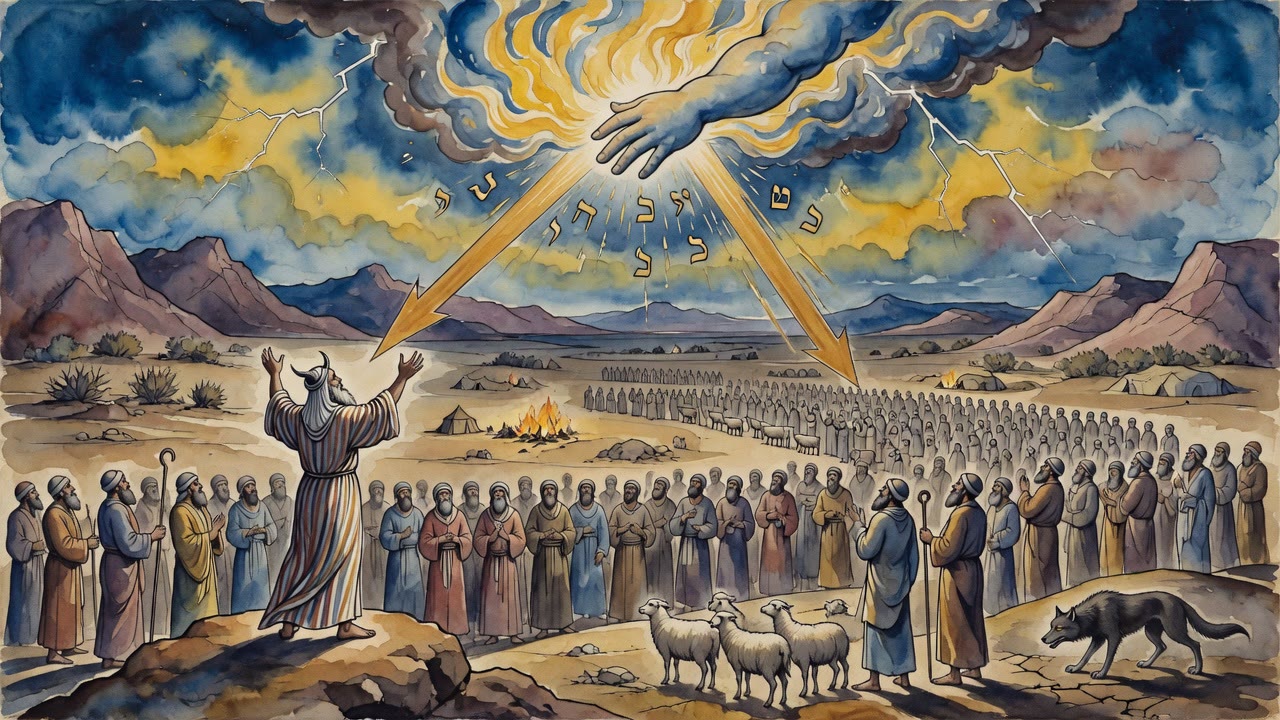
Then Moses raised the stakes past rumor. Yithro's leaving would not only stain a convert's name. It would diminish God's honor in the eyes of every outsider still watching from the dunes.
Yithro was not a nameless hanger-on. He was father-in-law to the man heaven called king over Israel. His presence was an open door. Strangers who might crawl under the wings of the Shechinah (שכינה), the divine presence, would see a Midianite of rank still walking among the tents and think the door wide enough for them too. If even he turned back, the door slammed in their faces.
"If Yithro, father-in-law of the king, did not take it upon himself to remain," the watchers would say, "how much more so we."
The sentence hung between them like heat. Moses had made Yithro's private road into a public theology. One pair of sandals pointed at Midian could close a generation of possible arrivals.
Yithro looked past Moses at the camp, at the cloud, at the people who had not grumbled through a year of mountain-sitting and were about to lift stakes into a harder wilderness. He had seen favors and wonders. He had watched the desert behave like a court under orders. Moses pressed that memory too. Yithro had known their camping, their chanothenu, the grace folded into the word itself. A man who saw that and still chose Midian's ordinary door would be choosing a quieter road over the road under God's cloud.
The Hand That Would Not Open
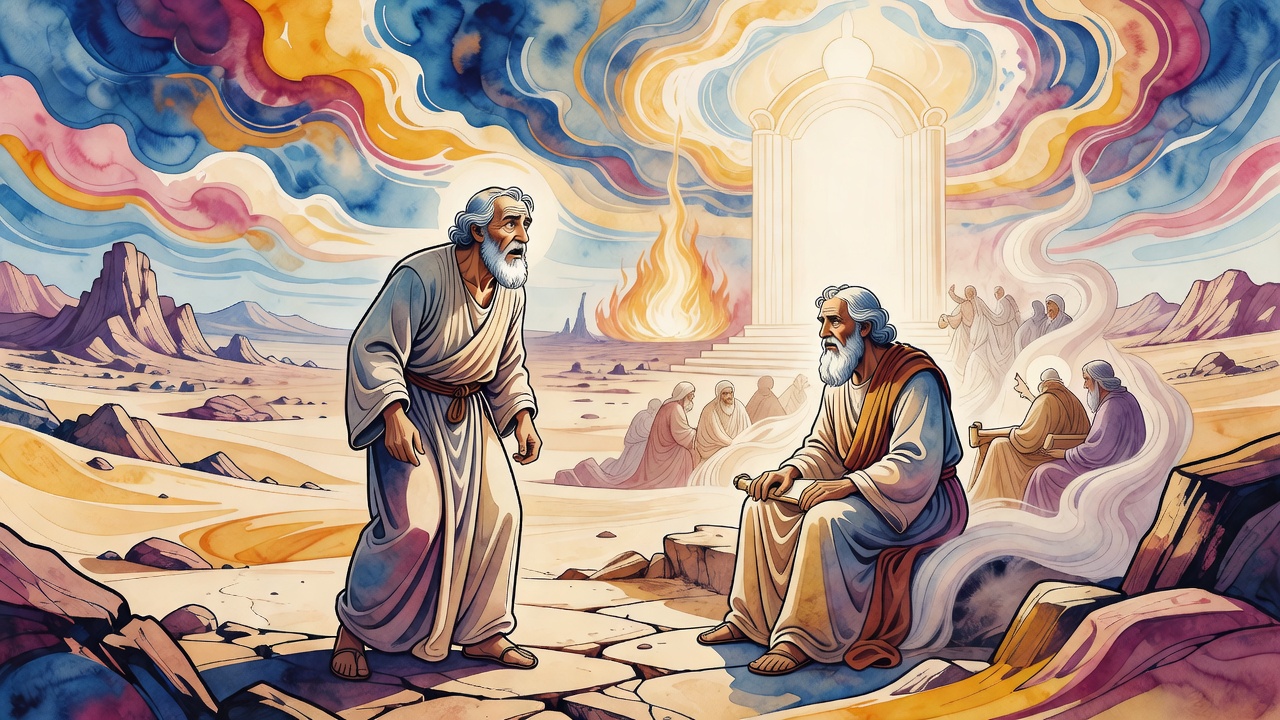
Yithro did not answer with a speech. He stood in the friction of two loves: home and the people who had become his kin by covenant more than by blood. Moses's fingers stayed on the sleeve. The plea had already become a decree in the air between them. Stay, or the damage spreads past both of us.
Wind pushed at the tent flaps behind the path. Somewhere a mother called a child by name. The ordinary noises of a nation about to move made the argument sharper, not softer. Ordinary life was what Yithro claimed to want. Ordinary life was also what converts would risk if the most famous outsider among them proved temporary.
Moses lowered his voice without loosening the hold. "Do not leave us." Three words after the first na, and still no softness that could be mistaken for courtesy alone.
Yithro's shoulder settled under the grip. The road to Midian did not vanish. It waited, patient as dust. What changed was the cost of walking it, named out loud by the man who knew how fragile a young people's faith can be when a great convert packs his bags at the wrong hour.
Behind them Sinai still owned the sky. Ahead, the march would test every vow. Between those two pressures Moses held a sleeve and refused to call the departure a private matter. Heaven's honor, the camp's rumor, and the empty place under the Shechinah's (the Divine Presence) wings all hung on whether Yithro took another step toward home or turned back into the dust of Israel.
← All myths