Parshat Behaalotecha5 min read

The Cloud Carried the Lame While the Ark Went First

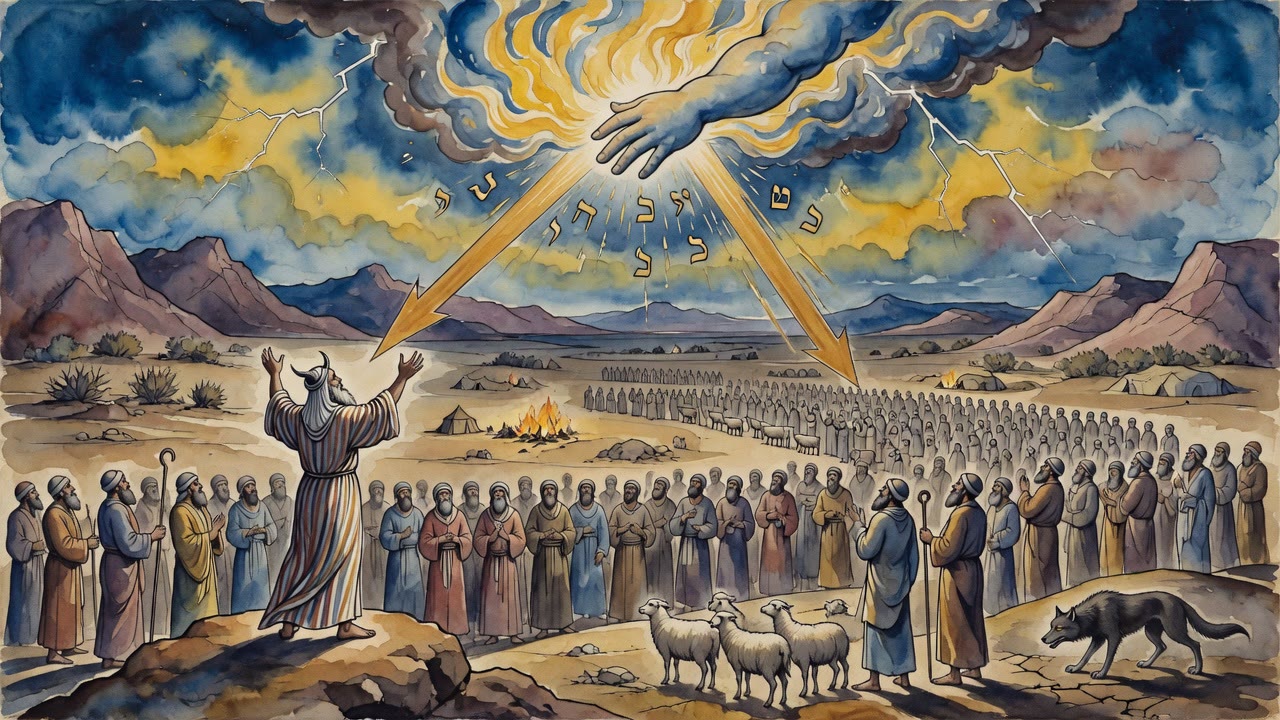
If one Israelite drifted out from under the cloud, the cloud went with him until he came back. Forty years, and no one in the camp needed a lamp at night.

Curated by Arthur · Told by Maggid ·
Table of Contents
  1. Eleven Months Without a Grumble
  2. Wings Over the Unfit
  3. Moses and the Moving Shade
  4. Stand, O Lord
  5. One Camp, Two Motions
The Cloud Carried the Lame While the Ark Went First Click for full size

Eleven Months Without a Grumble

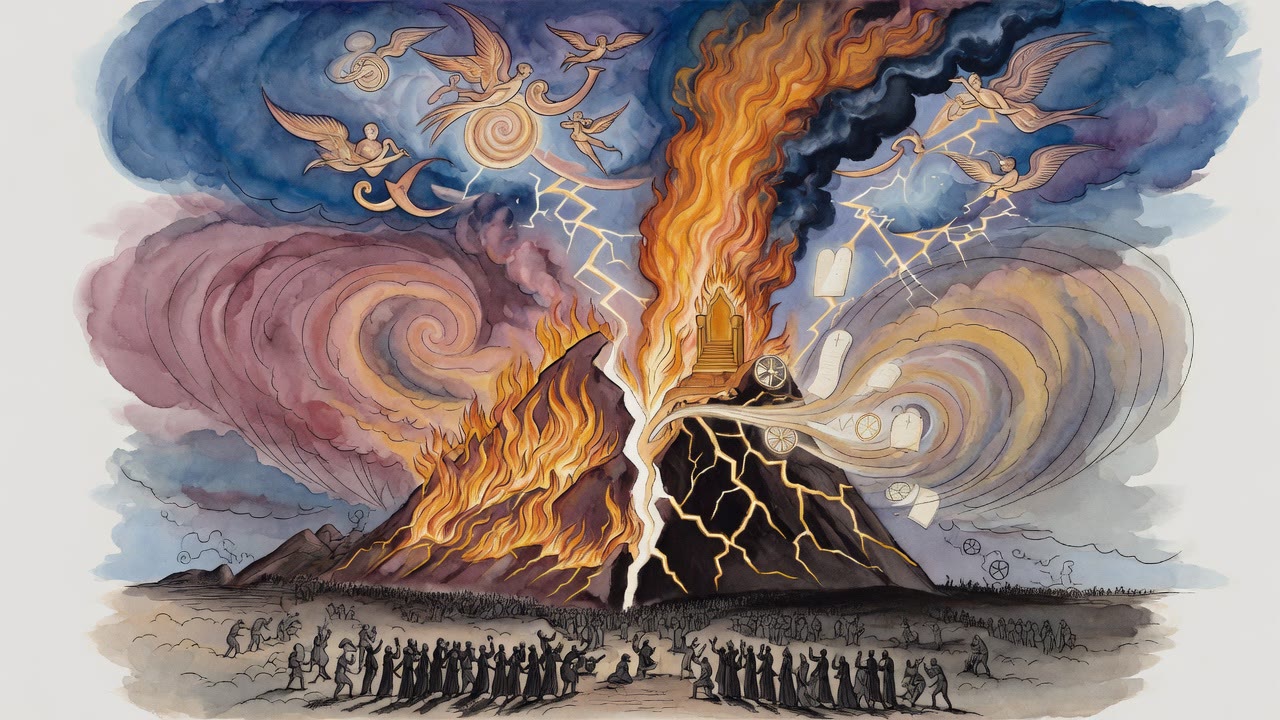
At Sinai the camp held still for months that stretched like a long breath. Sifrei Bamidbar counts about eleven months of encampment and hears in that stillness a compliment. Israel could stay under the mountain without the constant quarrel that later stained the road. Dust settled on tents. Children learned the shape of a holy mountain as the edge of daily life.

The Torah's own months sometimes jump order, first month and second month trading places in the telling, because spiritual order can outrank calendar pride. Man was even spoken as if already eaten for forty years before the journey ended (Exodus 16:35). For a season the people simply remained, and the midrash treats that remaining as praise.

Then the cloud lifted, and the walk began again. Staying had been obedience. Moving would be obedience of another kind.

Wings Over the Unfit

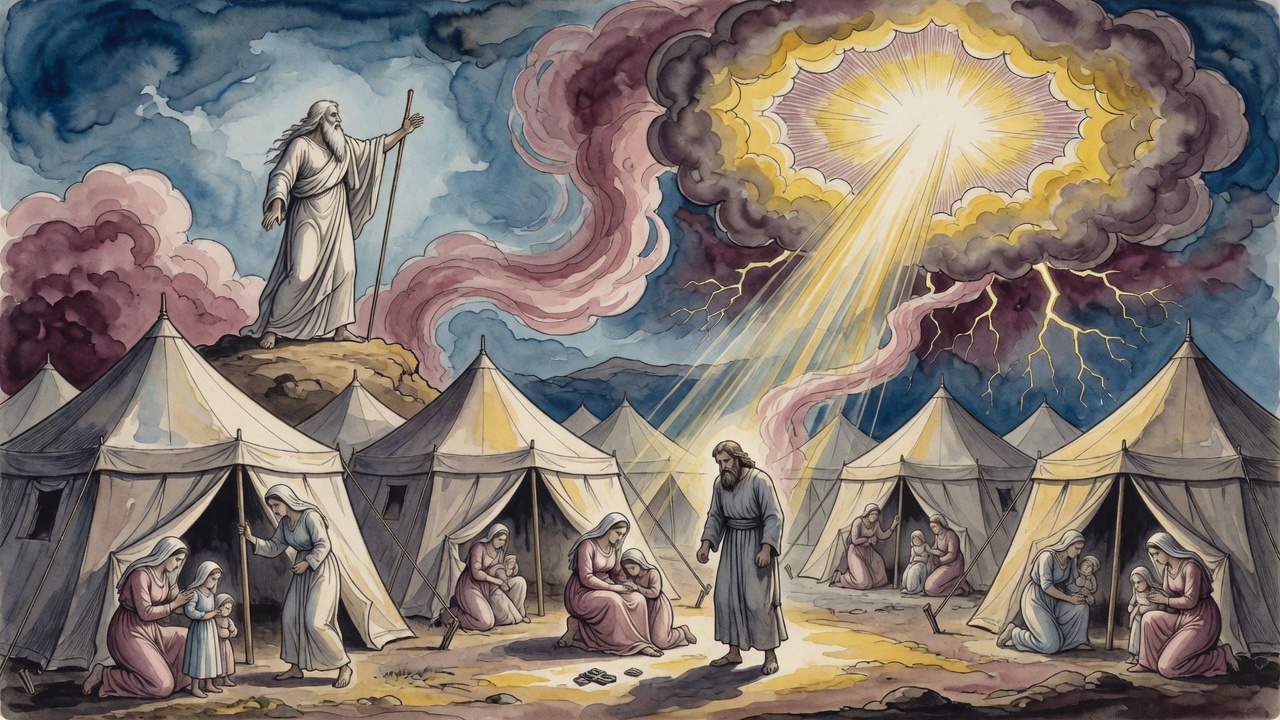
"The cloud of the Lord was above them by day when they set forth from the encampment," and the covering did not pick favorites among the healthy. It stretched over the lame and the blind, over the zavim and the lepers. Bodies the camp might have edged aside still traveled under the same shade.

If one Israelite drifted out from under the wings, the cloud withdrew with him until he returned. The Presence tracked a single stray the way a shepherd tracks a lamb. No one was disposable enough to leave uncovered if he still belonged to the people.

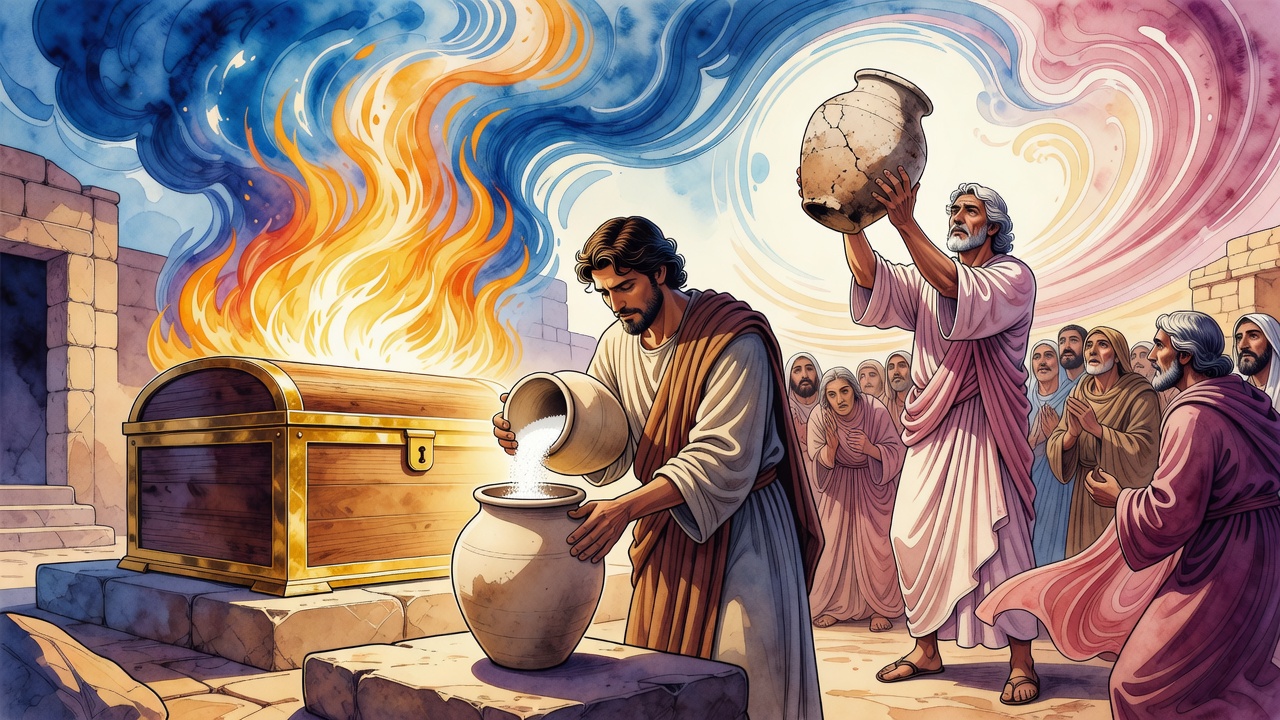
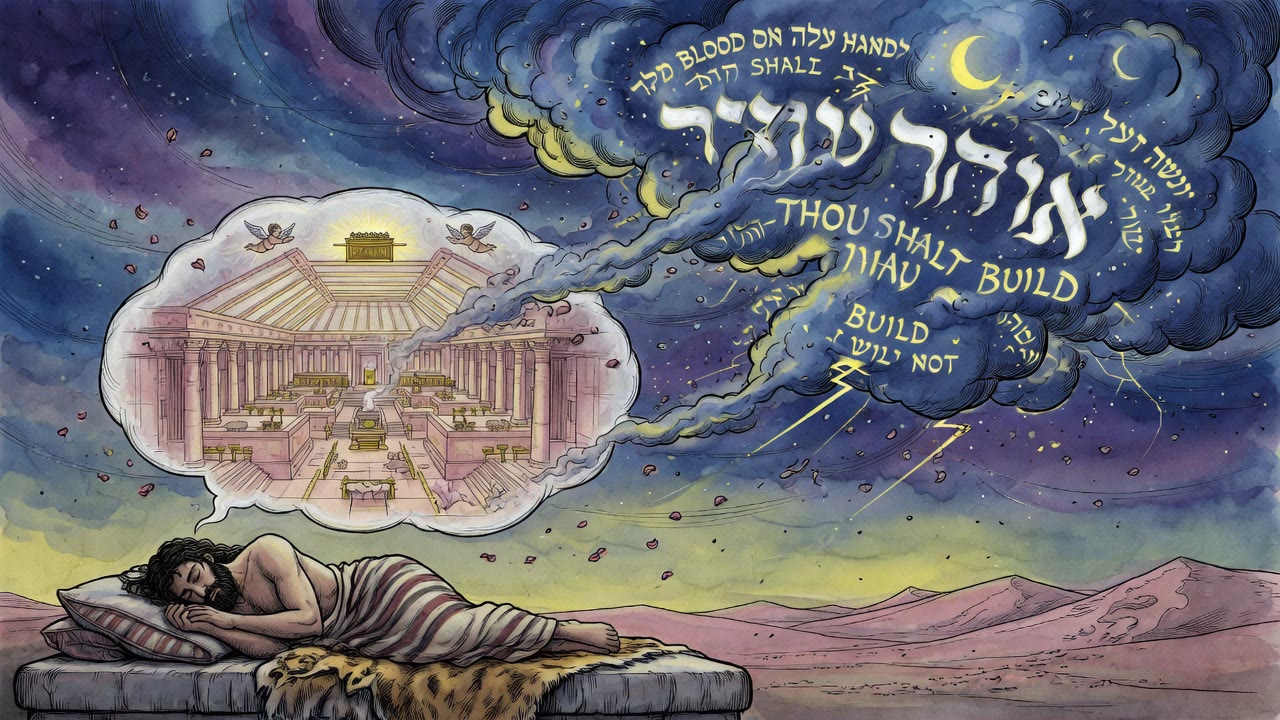
By day the cloud. By night the fire on the Mishkan, light for the house of Israel and not for the idolators who watched from outside (Exodus 40:38). Rabbi Shimon ben Elazar pushed further. All forty years they needed no lamp. Even a room within a room received a kind of torch that entered with a person until he came out again. Inner darkness met a private escort of light.

Moses and the Moving Shade

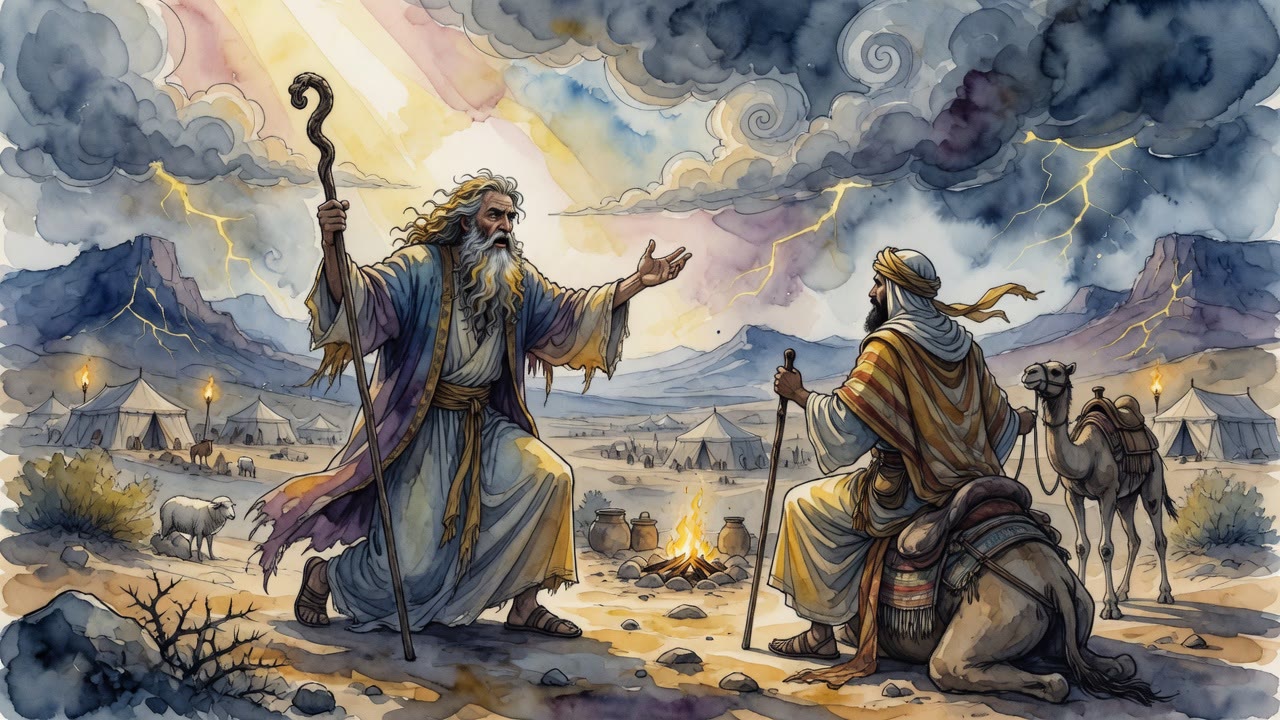
Moses lived in dialogue with that motion. When the cloud settled, Israel camped. When it rose, Israel marched. The midrash frames a cosmic choreography. Human leadership and divine guidance locked step so no captain could pretend the route was his invention alone.

The lame did not fall behind into a second, lesser story. The cloud's patience with the slow and the impure rewrote who counted as the center of the march. Holiness here was not a prize for the strong legs only. It was cover for the ones most likely to be left.

Moses did not invent the schedule. He read it in smoke and fire and taught a nation to pack when heaven packed. The pillar was not scenery. It was command.

Stand, O Lord

When the holy ark went out, the cry rose. "Stand, O Lord, and let Your foes be scattered." Sifrei Bamidbar hears foes as those massed to attack, haters in pursuit who must flee before the Face. "When Your face is with us, we will not flee before them, and if not, we will fall before them."

Protection was presence, not magic wood alone. The ark led into spaces where human courage would have thinned. Enemies stacked for a charge met a prayer that asked God to stand up first. Scattering was the hoped answer. Destruction of Israel was the feared other half of the bargain if the Face turned away.

The verse traveled with the ark like a weapon that only worked when the Presence agreed to move. Foes massed. Haters pursued. The camp's answer was not first a spear line. It was a plea that God stand and scatter.

One Camp, Two Motions

Cloud over the weak. Ark into the teeth of the strong. Together they made a people that could rest eleven months at a mountain and then move through a desert that hated them. Inner rooms glowed without oil. Strays found the shade returning for them. Foes were named as massed packs, not vague moods.

Israel learned travel as theology. Stay when the cloud stays. Move when it lifts. Cry when the ark lifts. Carry the lame under the same mercy that scares armies. The wilderness never became gentle. It became ordered around a Presence that refused to leave the afflicted in the rear and refused to let the ark go out as a silent box.

Sinai's long camp proved they could wait. The cloud proved they could move without abandoning the broken. The ark proved they could march toward enemies without pretending the victory was only theirs. Three lessons. One road. Forty years of dust under a shade that loved the leper as much as the warrior.

Eleven months under the mountain without a rising quarrel. A cloud that leaves the main camp to cover one Jew who wandered. An ark that goes out with a cry for God to stand and scatter massed foes. The desert demanded all three at different hours. Israel received rest, cover for the unfit, and a spear-point of Presence when enemies massed, each in its turn under the same Name.


← All myths
From the tradition

Sources

4 sources

The texts behind this telling. Some cards carry a translation of the source; others are our own retelling of it, and each card says which. Every card links out to the original.

Sifrei Bamidbar 83:3Sifrei Bamidbar

Retold in our words. Read the original at the link below.Sifrei by Rabbi Shraga Silverstein · CC-BY

It tells us that "the cloud of the L-rd was above them by day when they set forth from the encampment" – and this protection wasn't just for the healthy and able-bodied. The text specifically mentions that this divine shield extended "even over the lame and the blind and the zavim" (those afflicted with a genital discharge) "and the lepers." Everyone was under the cloud's protection.

What if someone decided to wander off? Did the cloud stay with the main group, or did it… follow them? Sifrei Bamidbar explores that too. It asks, "Whence is it derived that if one of the Jews withdrew from under the wings of the cloud, it withdrew with him until he returned? From 'And the cloud of the L-rd was above them.'" It seems that the Divine Presence, manifested in the cloud, was incredibly attentive, even to the individual.

Of course, this raises more questions. Did the cloud protect them at night as well as during the day? No, the text clarifies. It's written "by day" – meaning it protected them specifically during the day, and not at night. Okay, makes sense. But what about that pillar of fire? Did it provide light during the day? Nope, the text anticipates that question and answers it with a quote from (Exodus 40:38): "and fire was on it by night" – it gave light at night, but not in the daytime.

Then comes another fascinating point: who else did this pillar of fire illuminate? Just the Israelites, or everyone in the vicinity? Again, (Exodus 40:38) provides the answer: "and fire was on it by night in the sight of all of the house of Israel." So, it gave light for Israel, but not for the idolators. It wasn't a universal light, but a light specifically for the chosen people.

But R. Shimon b. Elazar takes it a step further. He asks, "Whence is it derived that all the forty years that Israel were in the desert they did not require a lamp, but even if one entered a room within a room, a kind of torch entered with him until he returned?" His answer? Again, (Exodus 40:38): "in the sight of all of the eyes of Israel in all of their travels." Even if someone went into the deepest, darkest room, the pillar of fire would provide light. It wasn't just about illuminating the camp; it was about providing individual, personalized light. Talk about concierge service!

You're wandering in the desert, but you never need a lamp. No matter where you go, a light follows you. It speaks to a level of divine care and attention that's both humbling and deeply comforting.

Full source
Sifrei Bamidbar 84:5Sifrei Bamidbar

Retold in our words. Read the original at the link below.Sifrei by Rabbi Shraga Silverstein · CC-BY

It’s a seeming contradiction that the ancient rabbis grappled with. How do we reconcile these verses?

The Sifrei Bamidbar, a collection of legal and narrative interpretations on the Book of Numbers, offers a beautiful explanation in section 84. It suggests that these verses aren't contradictory at all, but rather describe a collaborative process, a cosmic dance between the divine and the human.

Think of it this way: When the Israelites were ready to travel, signaled by the divine word, the pillar of cloud – that visible manifestation of God’s presence – would fold up, ready to go. But it wouldn't actually move until Moses spoke the words, "Stand, O L-rd." Similarly, when it was time to rest, the pillar of cloud would fold up, preparing to settle. But it wouldn't spread out and cover the encampment until Moses declared, "Rest, O L-rd."

So, both verses are true. "By the word of the L-rd they encamped and by the word of the L-rd they traveled," and "Moses said: Stand, O L-rd… Rest, O L-rd." It's a partnership, a perfect example of "by the mouth of the L-rd, by the hand of Moses," as the text says.

But there's more. The Sifrei Bamidbar dives deeper into the meaning of Moses' words, "And when it came to rest, he said…" Moses, in his immense humility and dedication to his people, was essentially saying: "I will not allow the Shechinah (שכינה), the divine presence, to rest until Israel travels in thousands and rests in ten thousands, until Israel becomes thousands of ten thousands, like the stars of heaven." It’s a powerful vision of growth and expansion, of Israel fulfilling its potential.

And then, a fascinating parallel is drawn. Just as the Shechinah only rests on high amidst "two thousands and two ten thousands" – a concept drawn from (Psalm 68:18), "the chariots of God are two ten thousands, two thousands" – so too, it only rests below when Israel is gathered in similar strength and numbers. The earthly and the heavenly realms mirror each other.

What does this all mean? It suggests that our actions, our growth, our striving to become "thousands of ten thousands," are not just for ourselves. They are essential for bringing the divine presence into the world, for allowing the Shechinah to dwell among us.

That our own journeys, our own striving for growth, are intimately connected to the divine presence in the world. That just as Moses' words were needed to set the pillar of cloud in motion, our actions are needed to bring the Shechinah to rest among us. So, what are we waiting for?

Full source
Sifrei Bamidbar 84:3Sifrei Bamidbar

Retold in our words. Read the original at the link below.Sifrei by Rabbi Shraga Silverstein · CC-BY

It's one the ancient Israelites knew all too well. They faced enemies on all sides, both seen and unseen. So, what did they do? They turned to prayer.

One powerful verse, traditionally recited when the aron hakodesh, the Holy Ark, was carried into battle, offers a glimpse into their mindset: "Stand, O L-rd, and let Your foes be scattered." It's a plea, a hope, a declaration of faith.

The Sifrei Bamidbar, an ancient collection of legal and ethical teachings related to the Book of Numbers, explores this verse, revealing layers of meaning. Who are these "foes" that we're asking G-d to scatter? The Sifrei clarifies: these are those "who are massed to attack us." It's not just about personal enemies, but about those who gather together to destroy us, to destroy the people of Israel. And those "haters" who are in pursuit? May they flee before You, it says. The hope is that through divine intervention, they will flee, and we, the Israelites, "will not be destroyed by them."

There’s a condition, isn’t there always? The Sifrei doesn’t shy away from it: "When Your face is with us, we will not flee before them, and if not, we will fall before them." It’s a stark reminder of the reciprocal relationship between G-d and the people. The "face" of G-d, in this context, isn’t a literal face, of course. It represents divine presence, divine favor, divine protection.

We see this idea echoed throughout the Torah. Remember Moses' plea in Exodus (Shemot) 33:15? "If Your 'face' does not go, do not bring us up from here." Moses understood that without G-d's presence guiding them, their journey was doomed. And just a verse later (33:16): "For how, otherwise, will it be known that I and Your people have found favor in Your eyes?" The presence of G-d is the ultimate sign of divine favor.

Think about the story in (Joshua 10:11). "And it was, when they fled before Israel, they were on the descent of Beth Choron, when the L-rd cast upon them great stones.." It's a vivid image of divine intervention. The enemies of Israel are fleeing, and G-d Himself is hurling stones from the heavens to aid in their defeat.

The Psalms, too, resonate with this theme. (Psalm 83:14-15) cries out, "My G-d, make them like whirling chaff, like stubble before the wind, like a fire burning mountains." It's a powerful image of destruction, of enemies being scattered and consumed.

What does it all mean? It's more than just a simple prayer for victory. It's an acknowledgement of our dependence on something greater than ourselves. It's a recognition that our strength, our safety, our very survival, is intertwined with our relationship with the Divine. It is a bold reminder that when we feel overwhelmed, facing impossible odds, we can turn to the Source of all strength and ask: "Stand, O L-rd, and let Your foes be scattered." And trusting that when we do, we are not alone.

Full source
Sifrei Bamidbar 64:1Sifrei Bamidbar

Retold in our words. Read the original at the link below.Sifrei by Rabbi Shraga Silverstein · CC-BY

Sifrei Bamidbar turns to Israel Camped Twelve Months at Sinai Without Complaint.

What’s so special about that? It's what comes next. The Sifrei Bamidbar sees this as a compliment to the Israelites!: they were encamped at Mount Sinai for a whopping eleven months! That’s dedication. But it’s more than just a pat on the back. It’s an introduction to a deeper idea.

The text goes on to suggest that there's no strict chronological order in the Torah. How can we understand that?

The Sifrei points out that earlier in the very same book (Numbers 1:1), it says, "And the L-rd said to Moses in the desert of Sinai in the tent of meeting on the first day of the second month (Iyyar)…" So, wait a minute. Chapter 9 mentions the first month (Nissan), while chapter 1 refers to the second month (Iyyar). Shouldn't things be in order? Well, according to this interpretation, the Torah isn't always concerned with a precise timeline. The message, the lesson, the spiritual truth – that’s what matters most.

Now, Rabbi takes a slightly different approach. He argues that we don't even need this verse to prove that the Torah doesn't always follow a strict timeline. He brings up a verse from Exodus (16:35): "And the children of Israel ate the manna for forty years until they came to an inhabited land". And they hadn't even arrived there yet when that was written! The Torah is speaking of the future as if it is already passed.

So, what does this all mean for us?

It challenges our linear way of thinking. We tend to see time as a straight line, one event following another in a neat and orderly fashion. But the Torah, in its wisdom, hints that things are more fluid, more interconnected. Maybe the order in which we encounter these stories isn't as important as the stories themselves, and what they teach us about ourselves, about G-d, and about our relationship with the Divine.

Perhaps the Torah is inviting us to step outside of time, to see the bigger picture, to understand that some truths transcend the constraints of chronology. And maybe, just maybe, that's a lesson we can apply to our own lives, too.

Full source