5 min read

Israel Wept at the Tent Doors Over Forbidden Kin Marriage

One man had a wedding arranged with his mother's sister. Moses cancelled it in public, and that night the man sat in his doorway and cried.

Curated by Arthur · Told by Maggid ·
Table of Contents
  1. The Sound Outside the House of Study
  2. What He Had Forbidden
  3. Tears That Were Also a Threat
  4. The Prophet Who Did Not Beg This Time
  5. After the Tears Dried
Israel Wept at the Tent Doors Over Forbidden Kin Marriage Click for full size

The Sound Outside the House of Study

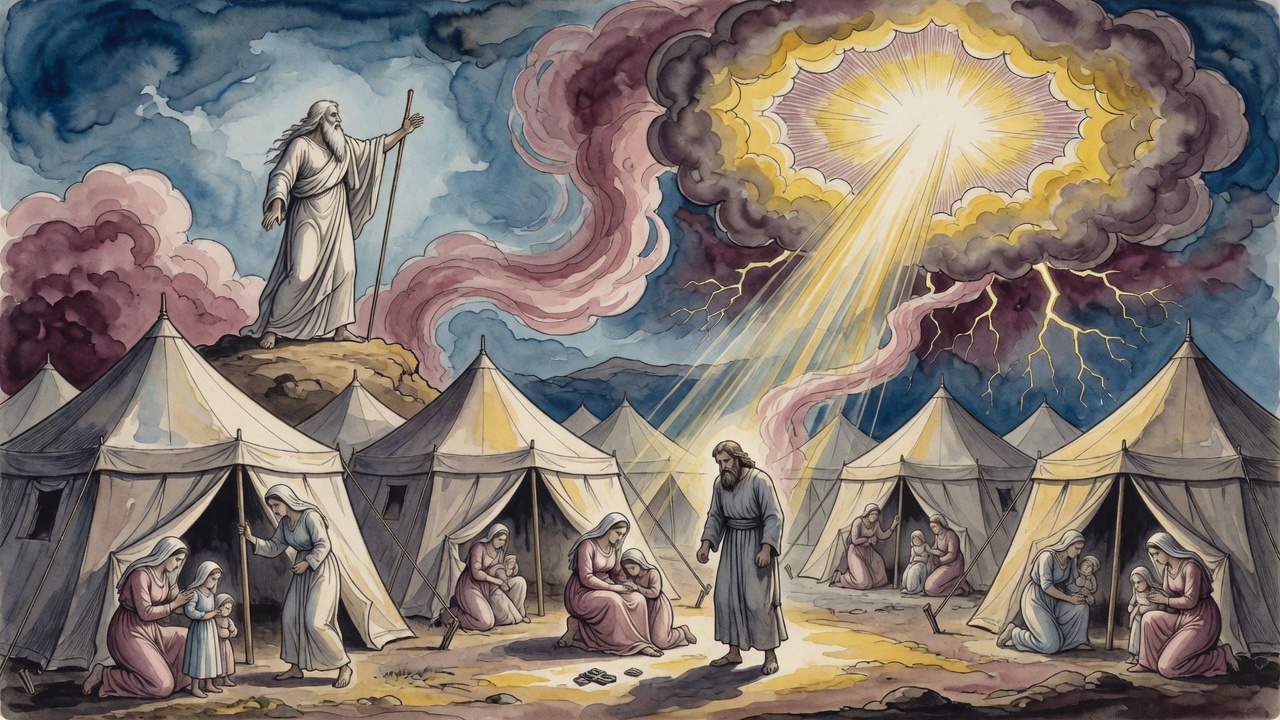
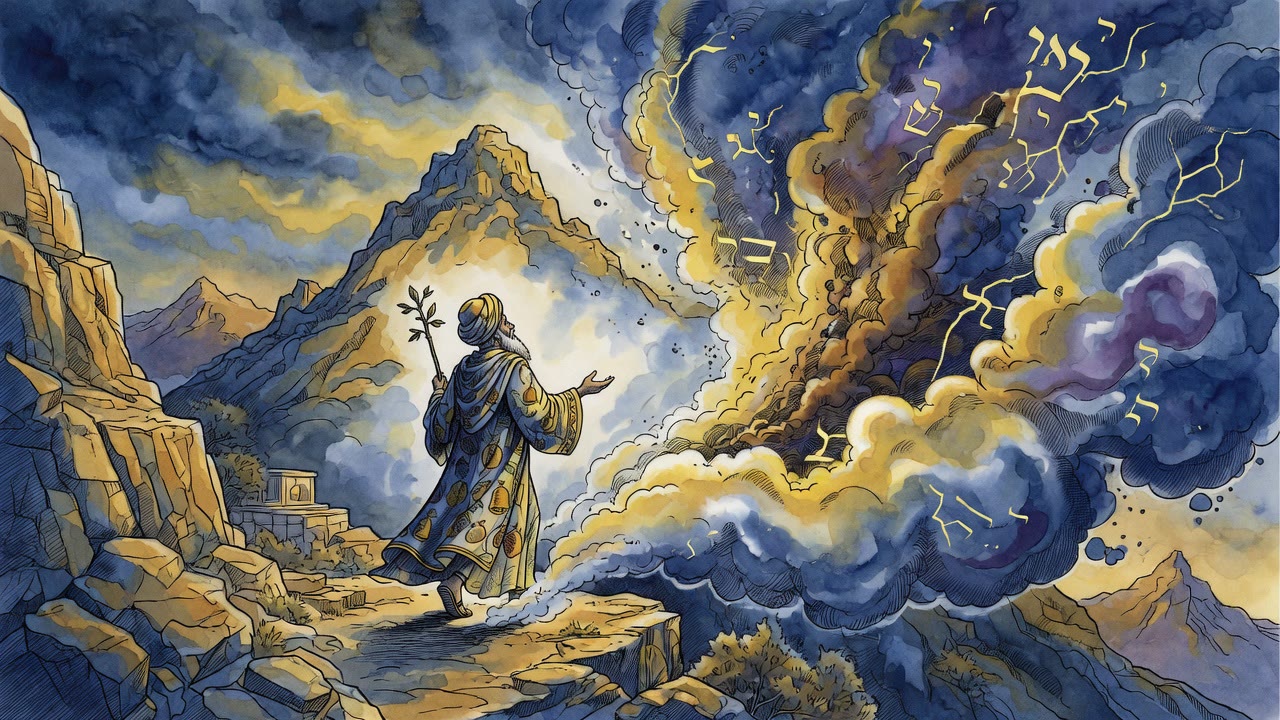
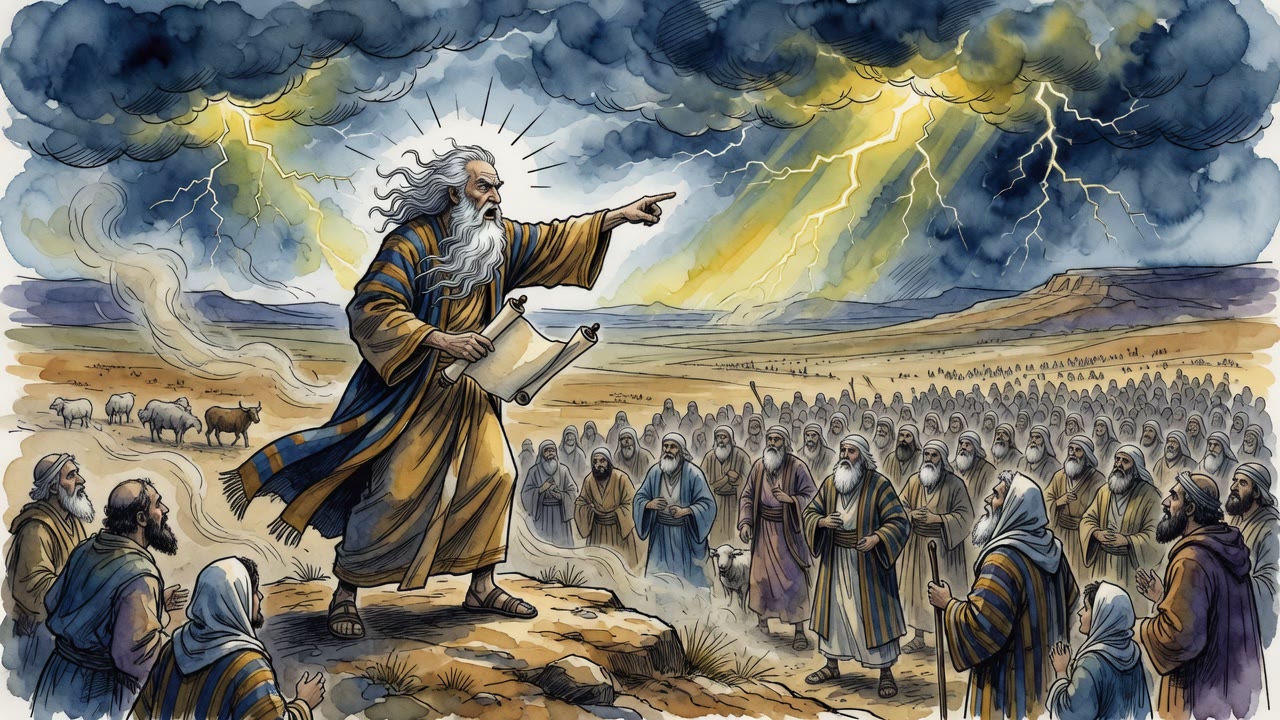
Moses came out the door of the house of study and walked straight into it. Not thirst. Not the cry for meat. Weeping, and it was organized: family by family, each cluster sitting at the door of its own tent, so the sound reached him in blocks as he went past.

They had waited for him. They knew which door he used and they had picked the hour when he would be out in the open with nothing to teach from.

What He Had Forbidden

The ban had come down in public, in front of the whole assembly, and that was the part that cut. A man could no longer marry his sister. He could no longer marry his father's sister or his mother's sister. Those had been ordinary matches. Households had been built that way for as long as anybody in the camp could remember.

Hearts had swelled around the practice, which was the trouble with it. This was not some rare vice hidden in three tents at the edge of the camp. It was how families held onto each other, and it had been declared dead in a single afternoon while everyone stood there listening.

Half the tents had someone inside them whose marriage now had a name it had never had before, or a wedding already arranged that a sentence had just cancelled.

Tears That Were Also a Threat

So they sat at their thresholds and wept where he would have to walk. A man with a match arranged with his mother's sister sat in his doorway and cried the way people cry at a funeral, and something had in fact died: the shape his life had been going to have. Children watched their parents weep over aunts they had just been told to call forbidden, and learned early what a boundary costs a household.

The grief was real. It was also an instrument. Every open tent flap was a small demonstration, the demonstrations had been arranged along his route, and the thing being asked of him was that he take the words back.

He kept walking. Nobody stopped him and nobody spoke to him. They only made sure he heard.

The Prophet Who Did Not Beg This Time

God's anger came down hard on the camp. In Moses' own eyes the thing was evil.

Once before, when they had melted their gold and danced around it, God had raged and Moses had thrown himself into the gap and argued Him down, pleading for people who had no case. This time the positions traded. God held His anger back, and Moses did not. The man who had begged for the calf-worshippers stood in front of the weeping tents and refused to treat the crying as a passing mood.

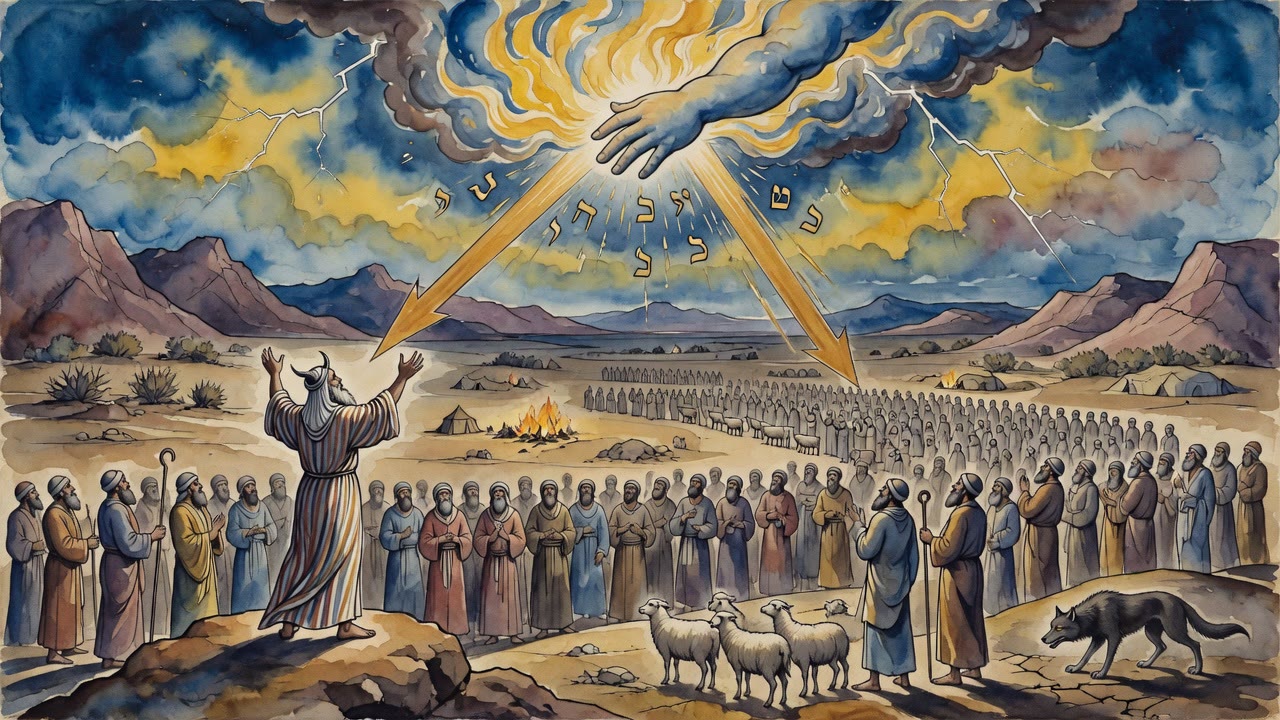
He had reason. At the mountain he had heard what came attached to the word against adultery: not only the act but the company a person keeps, so that the children coming after would not inherit it, with the hands and the feet and the eyes and the ears each named separately, and plague promised to a world that let it spread. The word against theft ran the same way. A man who kept the company of thieves would raise thieves. Famine followed robbery through the world. God would pardon idolatry in a man sooner than He would pardon stealing.

What the families at the doors were asking him to permit was that kind of inheritance. Not one wedding. A pattern that would run down through the tents into children not yet born.

After the Tears Dried

Nothing was reversed. The weeping went on for a while and then it stopped, the way weeping stops, and the tent doors went back to ordinary use: cooking, sleeping, a woman nursing at the same flap where she had sat and cried a week before.

Some houses rebuilt themselves on the new ground. Some carried the old want around like a stone in the shoe for the rest of the wilderness. Moses went on leading people who had shown him their worst grief over his hardest line, and he had to look at those faces every morning afterward.

He had heard two things that afternoon, the anger above him and the crying at the doors, and he had chosen which one to answer.


← All myths
From the tradition

Sources

2 sources

The texts behind this telling. Some cards carry a translation of the source; others are our own retelling of it, and each card says which. Every card links out to the original.

Sifrei Bamidbar 90:1Sifrei Bamidbar

Retold in our words. Read the original at the link below.Sifrei by Rabbi Shraga Silverstein · CC-BY

Sifrei Bamidbar turns to The Israelites Wept Over Forbidden Relationships.

The verse in Bamidbar (Numbers 11:10) states, "And Moses heard the people weeping by its families." Now, Rabbi Nehorai, whose teachings are preserved in Sifrei Bamidbar, offers a rather surprising explanation. He suggests that the Israelites were actually upset because Moses had instructed them to abstain from illicit relations. According to Rabbi Nehorai, before this decree, it was apparently common practice for a man to marry his sister, his father's sister, or his mother's sister! Can you imagine the social implications? This, of course, flies in the face of later established laws prohibiting such unions, but this interpretation paints a picture of a society undergoing significant moral and social transformation.

The text continues, "weeping by its families… because their hearts swelled in this sin." It implies that multiple families were involved and invested in these practices. Moses, in his role as leader and lawgiver, publicly prohibited these relationships, causing widespread grief and resentment. They were being asked to change deeply ingrained customs.

Where did this discontent manifest itself? "Each at the door of his tent," the verse tells us. Sifrei Bamidbar interprets this to mean that the people waited for Moses to leave the beit midrash – the house of study – so they could complain and grumble. They were, in a way, holding him captive with their disapproval. Imagine the atmosphere: the air thick with resentment, the constant murmur of discontent following Moses everywhere.

The verse concludes, "And the L-rd was extremely wroth, and in the eyes of Moses it was evil. God is angry, and Moses is also deeply troubled by the people's reaction.

And here's where it gets even more interesting. Sifrei Bamidbar points out a fascinating difference between this situation and the incident of the Golden Calf. In our verse, "the Holy One Blessed be He attenuates (His manifestation of wrath) and Moses exacerbates, whereas in the instance of the golden calf, the Holy One Blessed be He exacerbates and Moses attenuates.” In other words, in this situation, God's anger is somewhat tempered, while Moses seems to amplify the seriousness of the situation. Conversely, with the Golden Calf, God's anger is intense, but Moses pleads for leniency.

Why this difference? Perhaps it suggests that some sins are more offensive to human sensibilities while others are more offensive to divine ones. Maybe it's about the specific roles Moses played in each situation: as lawgiver versus intercessor. We can only speculate.

So, what does this all mean for us? It shows us that change, even when divinely mandated, isn't always easy or welcomed. And perhaps most importantly, it highlights the difficult and sometimes contradictory roles that leaders must play when guiding a people through moral and spiritual evolution. It also reminds us that the Torah, when read carefully, can reveal the most unexpected and human of stories.

Full source
Legends of the Jews 2:64Legends of the Jews

Retold in our words. Read the original at the link below.The Legends of the Jews by Louis Ginzberg (1909) · Public Domain

Legends of the Jews turns to The Spiritual Contagion of Adultery Theft and Lies.

First up: adultery. And it's not just the act itself that's the problem. Oh no. According to this teaching, simply being an accomplice, even a companion of adulterers, puts you and your future generations at risk. Why? Because "your children after you may not be adulterers." It's like a spiritual contagion!

It doesn't stop there. It’s a total sensory lockdown! Every part of your body, every way you interact with the world, needs to be pure. The stakes? "As a punishment therefore the plague will come over the world." Yikes.

So, this isn't just about personal morality; it’s about collective responsibility. Our actions, even our associations, have cosmic consequences.

Next, we have theft. "Be not thief, nor the accomplice or companion of thieves, that your children may not become thieves." See the pattern? Again, it’s not just the action, it’s the association. And the punishment? "As a penalty for robbery and theft famine will come upon the world."

Famine. A chilling prospect, especially in a world where so many already struggle with hunger.

But here’s the kicker: "God may forgive idolatry, but never theft." Wow. That’s a pretty strong statement. Now, idolatry, the worship of false gods, is considered one of the gravest sins in Judaism. Yet, this teaching suggests that theft is even less forgivable. Why?

The text doesn’t explicitly say, but we can infer that it's about trust. Idolatry might be seen as a misdirected spiritual impulse, while theft is a direct violation of the social contract, a betrayal of the fundamental bonds that hold a community together.

The passage concludes with a powerful image: God "is always ready to listen to complaints against forgers and robbers." It paints a picture of a God who is deeply invested in justice, a God who hears the cries of the oppressed and is ready to act on their behalf.

What do we take away from these ancient warnings? Perhaps it's a reminder that our actions ripple outwards, affecting not just ourselves but our communities and future generations. Maybe it's a call to examine our own lives, to consider the company we keep and the choices we make. Are we contributing to a world of purity and trust, or are we, even unintentionally, inviting plague and famine? It's a sobering thought, but one worth pondering.

Full source