Parshat Yitro6 min read

The Wet Beam Jethro Showed Moses at the Judgment Line

A Midianite priest reached the camp, watched Moses judge from dawn to dusk, then pointed at a waterlogged beam and said one man could not lift it.

Curated by Arthur · Told by Maggid ·
Table of Contents
  1. The Procession That Walked Out to Meet Him
  2. Now I Know, Said the Man Who Had Doubted
  3. The Line That Did Not End at Noon
  4. The Priest Pointed at a Beam

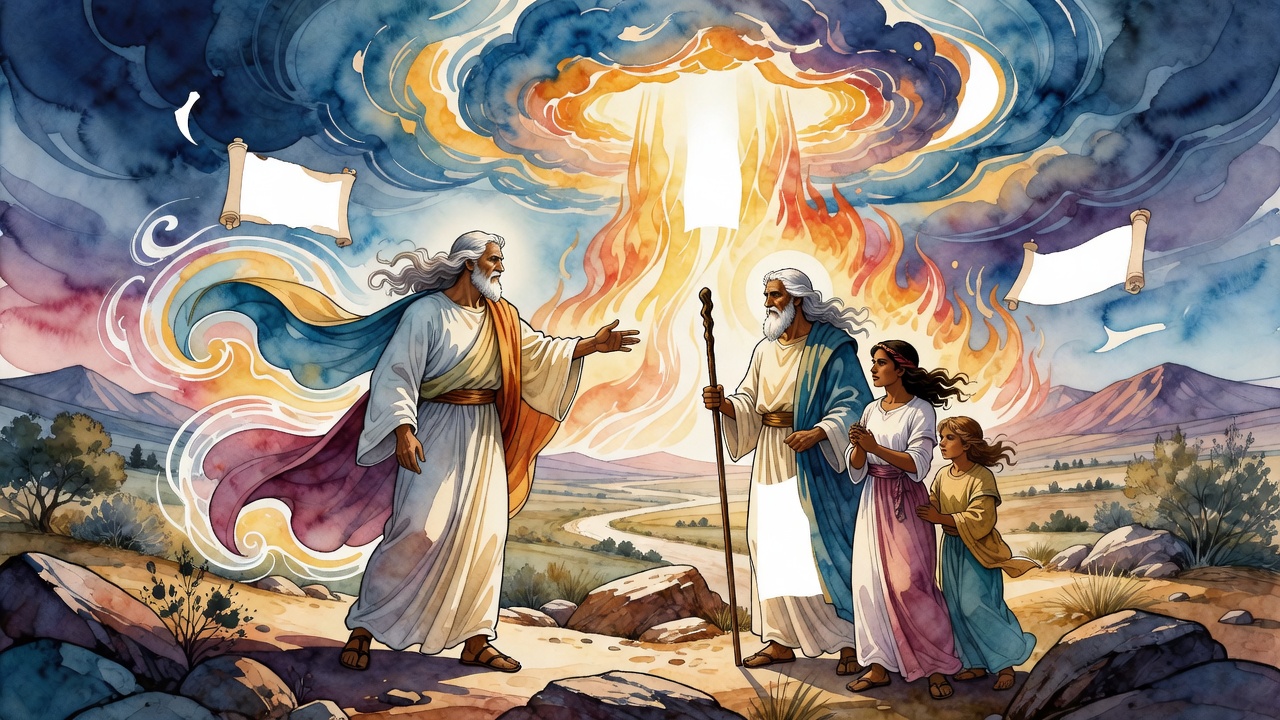
Dust rose on the wilderness road, and the camp turned toward it. A traveler was coming, a Midianite priest with a graying beard, and the man who walked first to meet him was the man who had split a sea. Moses did not send a messenger. He went out himself (Exodus 18:7).
He did not go alone. Aaron came at his shoulder. Behind Aaron walked Nadav and Avihu, his two eldest sons, and behind them seventy of the elders, the gray heads of Israel, and behind the elders the people poured out of the camp like water finding a slope. Some who told the story later swore the very Presence of God, the Shechinah (the indwelling nearness of the Holy One), moved out with that crowd onto the road.

The Procession That Walked Out to Meet Him

The welcome was enormous on purpose. This was not a quiet relative slipping into the back of the camp to be tolerated. This was a man met by the whole nation as if a king had arrived.

And the man they walked out to honor had once stood at altars that were not God's. Jethro had been a priest of Midian. He had handled the gods of the nations, tested them, weighed them, and set them down empty. He had searched and found nothing in them, and only the wreck of Egypt had turned his face all the way toward the God of Israel.

Moses did not hide that history. Aaron did not stand back from it. The elders did not wait inside their tents for the stranger to prove himself. They walked out to him on the open road. A man had turned, and a nation went out to bring him in. The first thing Jethro learned in that camp was not spoken. It was the dust on the leaders' feet, kicked up because they had run to meet a convert.

Now I Know, Said the Man Who Had Doubted

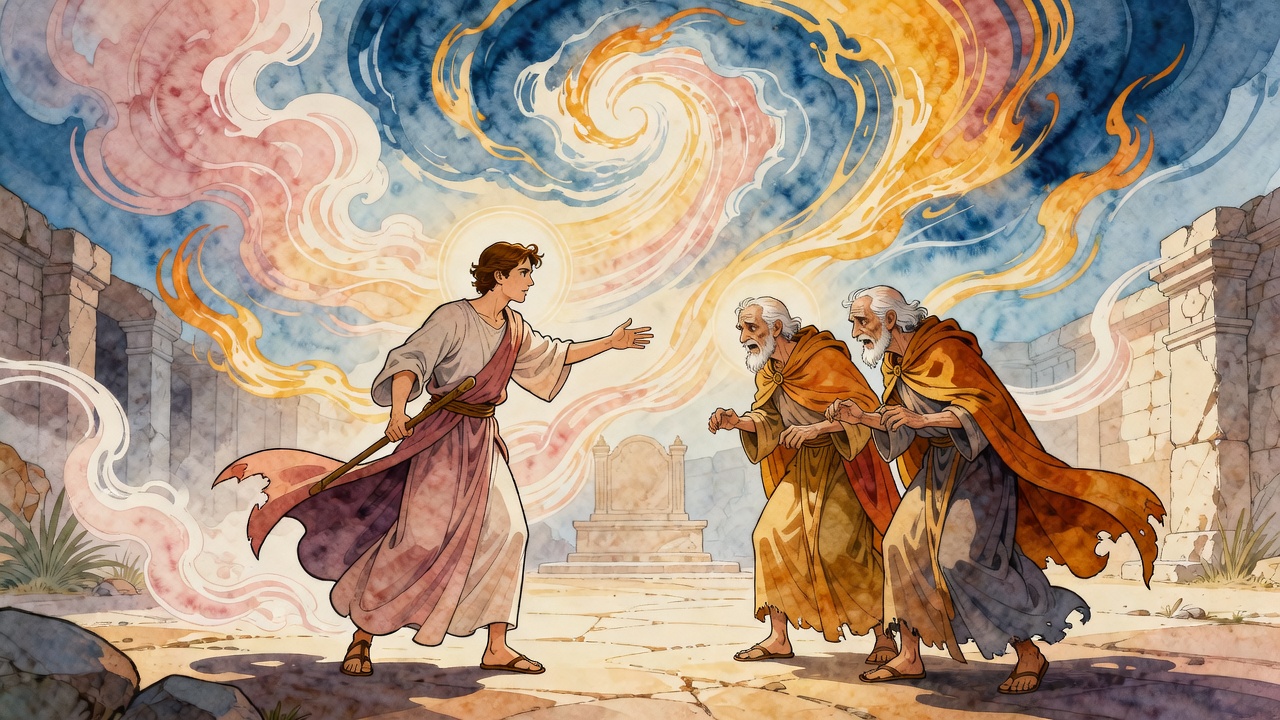
Inside the camp, Jethro spoke. He had heard everything, the plagues, the sea standing up like walls, the Egyptians and their horses gone under the water. And he said, "Now I know that the Lord is greater than all gods" (Exodus 18:11).

Now I know. The words held a whole life inside them. He was not meeting this God for the first time. He had known the name before, had half-believed before. The sea did not introduce him to God. The sea finished a sentence he had been speaking for years.

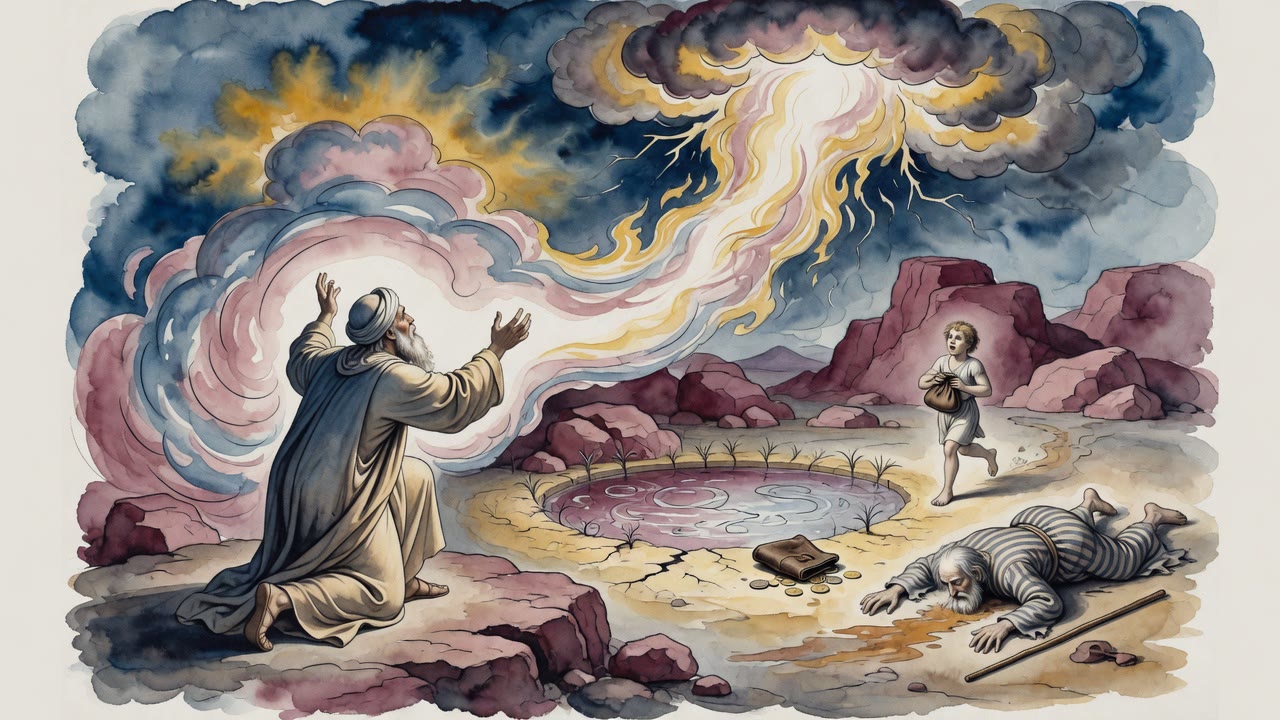
One detail had closed his fist around the certainty. The Egyptians had chosen water as their weapon. They had thrown the newborn boys of Israel into the Nile to drown. And at the sea, water was the thing that swallowed Egypt in turn. They were undone by the very evil they had devised. The punishment matched the crime stroke for stroke, middah k'neged middah (measure for measure), and that exactness was what made the old priest say he finally knew. A god of chance could drown an army. Only a God of justice would drown them in the very element they had used for murder.

The Line That Did Not End at Noon

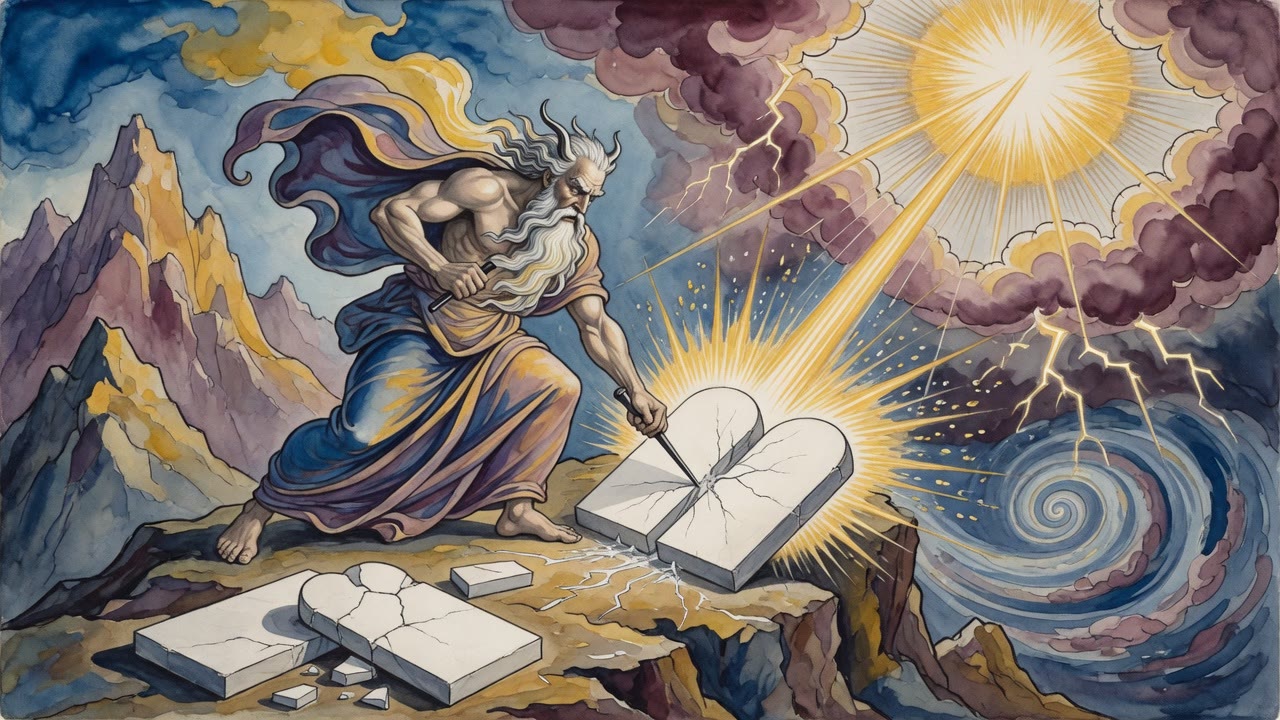
The next morning, the morning after the Day of Atonement, after Moses had come down the mountain a second time with new tablets of stone, he sat down to judge the people. And the people came (Exodus 18:13).

They came at first light with their quarrels and their broken agreements and their wounded claims, and they stood. One man stated his case, and Moses ruled, and the next stepped forward, and the next. The sun climbed. Ordinary courts emptied at midday so the judges could eat, but this line did not thin at noon. It stretched from morning all the way to evening, and Moses sat in the middle of it the entire day, alone.

There was a strange holiness in it. A judge who renders a true verdict, a ruling that is wholly correct, takes a hand in the work of making the world, the work where it says "and it was evening and it was morning" (Genesis 1:5). Moses was holding the day open from morning to evening the way creation itself was held. But a man is not the world. A man has shoulders, and shoulders tire.

The Priest Pointed at a Beam

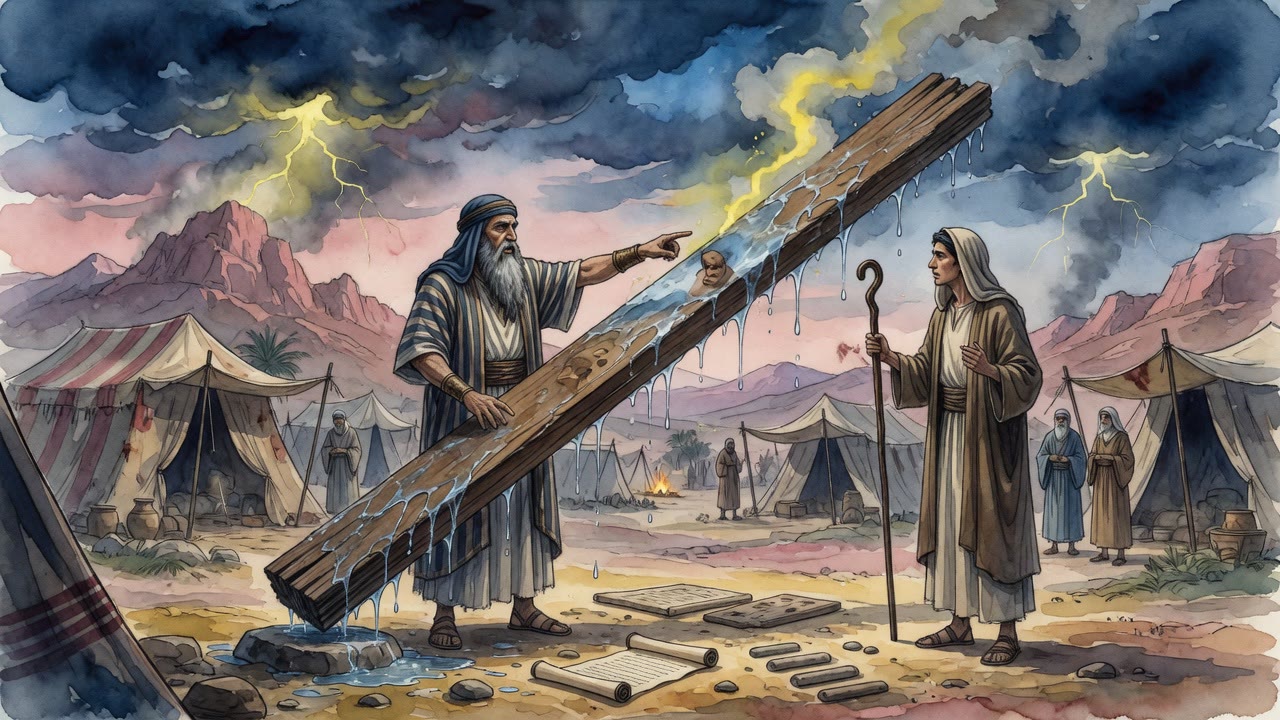
Jethro watched it from the side. He watched the line that would not end and the one man bent over it from dawn to dark, and he did not argue principles. He pointed.

"Look at that beam," he said. A roof beam, the kind any builder knew. "When it is moist, heavy, soaked through, at its full weight, two or three men get under it and they cannot lift it. But four or five men get under it, and it rises."

No theory of governance. No speech about authority. A wet beam, and human shoulders, and the plain arithmetic of weight against strength. Jethro spoke in the language of a man who had carried things, because the truth he was carrying to Moses was that simple.

"This thing is beyond your strength," he said. "You cannot do it alone" (Exodus 18:18).

It was not an insult. Moses was the greatest prophet who would ever live, and the priest knew it. The beam did not care. A waterlogged beam does not weigh less for the wisdom of the man beneath it. Some loads are not lifted by being the right man. They are lifted by being more than one man. The outsider who had once carried false gods and set them down knew the difference between a burden of competence and a burden of mass. And so the convert taught the prophet how to judge.


← All myths
From the tradition

Sources

5 sources

The texts this telling draws on, in full. Open a card to read inline, or expand it for a wider, quieter read.

Mekhilta Tractate Amalek 3:33Mekhilta DeRabbi Yishmael

The Mekhilta DeRabbi Yishmael describes the extraordinary reception that Jethro received when he arrived at the Israelite camp in the wilderness. The verse states simply: "And Moses went out to his father-in-law" (Exodus 18:7). But the rabbis saw far more in this brief phrase than a son-in-law greeting his wife's father.

In Mekhilta, when Moses went out to meet Jethro, he did not go alone. Aaron went with him, along with Nadav and Avihu, Aaron's two eldest sons, and seventy of the elders of Israel. Behind them followed the entire nation. What the Torah describes as "Moses went out" was in reality a full national procession, a welcoming delegation of the highest order.

The Mekhilta records an even more extraordinary claim. "Others say: even the Shechinah went out with them." The Shechinah, God's own indwelling Presence, accompanied the welcoming party. Jethro, a Midianite priest who had served other gods before recognizing the supremacy of the God of Israel, was greeted not only by the entire nation but by the Divine Presence itself.

This teaching elevates Jethro's arrival to an event of cosmic significance. A convert approaching the camp of Israel receives a welcome that rivals the reception at Sinai. The rabbis understood this as a statement about the value of the sincere convert. When someone comes to join Israel out of genuine conviction, having witnessed God's mighty acts and concluded that the God of Israel is supreme, then even the Shechinah rises to greet them. Jethro's welcome was not mere courtesy. It was a divine endorsement of his journey from idolatry to truth.

Full source
Mekhilta Tractate Vayehi Beshalach 7:3Mekhilta DeRabbi Yishmael

When Yithro, the father-in-law of Moses, heard about everything that had happened at the Red Sea, he made a remarkable declaration: "Now I know that greater is the Lord than all the gods" (Exodus 18:11). The Mekhilta unpacks the weight of that phrase "now I know." Yithro was not encountering God for the first time. He had already recognized the God of Israel in the past. But the events at the sea elevated his understanding to an entirely new level.

What specifically convinced Yithro? The verse continues with a phrase the Mekhilta reads as the key: "For they were destroyed by the very thing whereby they devised evil against them." The Egyptians had used water as their weapon of genocide, drowning Israelite baby boys in the Nile. God responded by destroying them with water at the Red Sea. The punishment mirrored the crime exactly.

This principle of measure-for-measure justice, middah k'neged middah, is what magnified God's name throughout the world. Yithro, a Midianite priest who had worshipped other gods and investigated every form of idolatry, recognized in this perfect symmetry something no other deity could achieve. Other gods might be powerful. Only the God of Israel was just with such precision that the very instrument of cruelty became the instrument of retribution. The drowning of the Egyptians was not random divine wrath, it was a mirror held up to their own wickedness.

Full source
Mekhilta Tractate Amalek 4:1Mekhilta DeRabbi Yishmael

(Exodus 18:13) "And it was on the morrow that Moses sat to judge the people": the Mekhilta first pins down which morrow Scripture means. It was the morrow of Yom Kippur, the day after Moses descended from the mountain with the second tablets, when he turned at once to the work of rendering justice among Israel. The verse continues that the people stood before him "from morning to evening," and this phrase provokes the rabbis’ question. Now did Moses truly judge Israel from morning until evening without pause? Do not judges ordinarily sit only until the time of the midday meal, after which the court adjourns?

From the apparent excess the sages draw a teaching about the dignity of judgment. We are hereby taught that one who renders a judgment of truth, a verdict that is wholly correct and just, is accounted by Scripture as if he were a partner with the Holy One Blessed be He in the work of creation, of which it is written (Genesis 1) "and it was evening and it was morning." The judge who labors honestly "from morning to evening" echoes the very rhythm by which the world was made. The true verdict does not merely settle a dispute; it sustains and repairs the created order, joining the human judge to the divine act that first brought order out of formlessness. So judging rightly is itself a form of partnership in creation.

Full source
Mekhilta Tractate Amalek 4:9Mekhilta DeRabbi Yishmael

Jethro watched his son-in-law Moses judging the entire nation of Israel alone, from morning until evening, and he gave him a piece of advice wrapped in a parable. "Look at that beam," Jethro said. "When it is moist, heavy, waterlogged, at its full weight, two or three men get underneath it and they cannot lift it. But four or five men get underneath it and they can."

The metaphor is deliberately physical. Not abstract principles of governance. Not philosophical arguments about distributed authority. A wet beam. Human shoulders. The simple mechanics of weight and strength. Jethro spoke in a language that any laborer would understand, because the principle he was teaching is that basic.

"For this thing is beyond your strength," Jethro concluded. "You will not be able to do it alone" (Exodus 18:18). The burden of judging an entire nation is not a beam that one man, even Moses, the greatest prophet who ever lived, can carry by himself. The issue is not competence. It is not wisdom. It is not even endurance. It is weight. The load exceeds the capacity of a single set of shoulders, no matter how strong those shoulders are.

This parable led directly to the appointment of judges over thousands, hundreds, fifties, and tens, one of the most consequential administrative reforms in the Torah. And it came not from God, not from a prophet, but from a Midianite priest who understood that even the holiest mission fails when one person tries to carry what requires many. The wisdom of delegation entered Israel's governance through the simplest of images: a beam too heavy for three men, light enough for five.

Full source
Targum Pseudo-Jonathan on Exodus 18:18Targum Pseudo-Jonathan on Exodus

The Targum Pseudo-Jonathan sharpens Jethro's warning with a realism the plain text softens: "Thou wilt verily wear thyself away. Aaron also, and his sons, and the elders of thy people, because the thing is heavier than thou art, able to do by thyself, (should take part in it.)" (Exodus 18:18).

The Aramaic phrase "verily wear thyself away", in Hebrew navol tibbol, is a doubled verb, the grammar of inevitability. Not might. Will. Jethro is not hedging. He is predicting burnout as a matter of physics.

Then comes the practical diagnosis: the burden is heavier than Moses alone can carry. Jethro names the candidates for delegation, Aaron, Aaron's sons, and the elders. These are not random choices. Aaron is Moses's brother, the high-priest-designate. Aaron's sons, Nadab, Abihu, Eleazar, and Ithamar, represent the next generation of priestly leadership. The elders carry tribal authority.

Jethro is effectively sketching the architecture of a functional judiciary before the Torah has even been given. He understands that great men collapse alone and that institutions must carry the weight great men cannot.

The takeaway: the measure of leadership is not how much you can carry. It is whom you have trained to carry with you. Even Moses needed a system bigger than Moses.

Full source