Heaven Helped Zepho Win His Wars, Then Zepho Welcomed Balaam
Zepho of Kittim won with help from heaven, then kept Esau's idols. When Balaam fled Africa, the king opened his court to dark wisdom.
Table of Contents
 Click for full size
A Victory No Captain Ordered
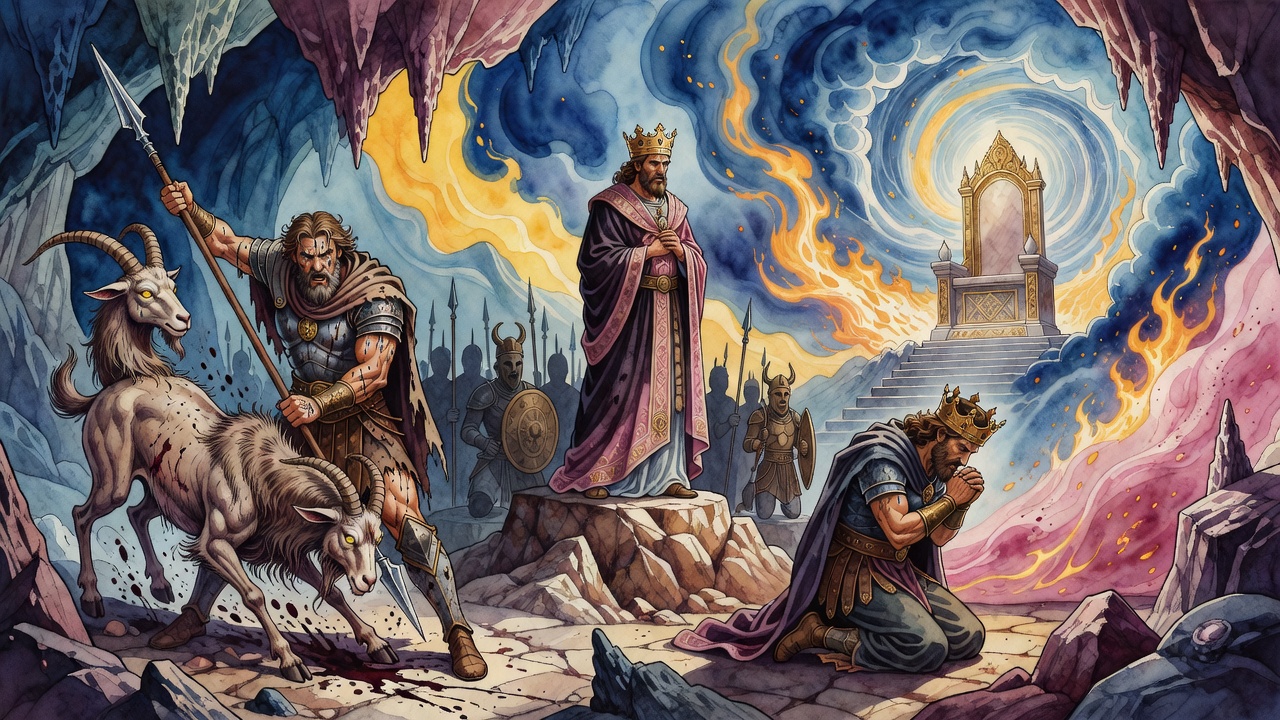
Zepho counted the enemy line at first light and knew the arithmetic was against him. He was king in Kittim, the land of ships, and he had won his earlier wars with the ordinary tools of kings, which are money, allies, and a reserve held back until the other side commits. None of those were going to carry that morning. So he gave the orders a losing man gives, and rode out to watch his own defeat.
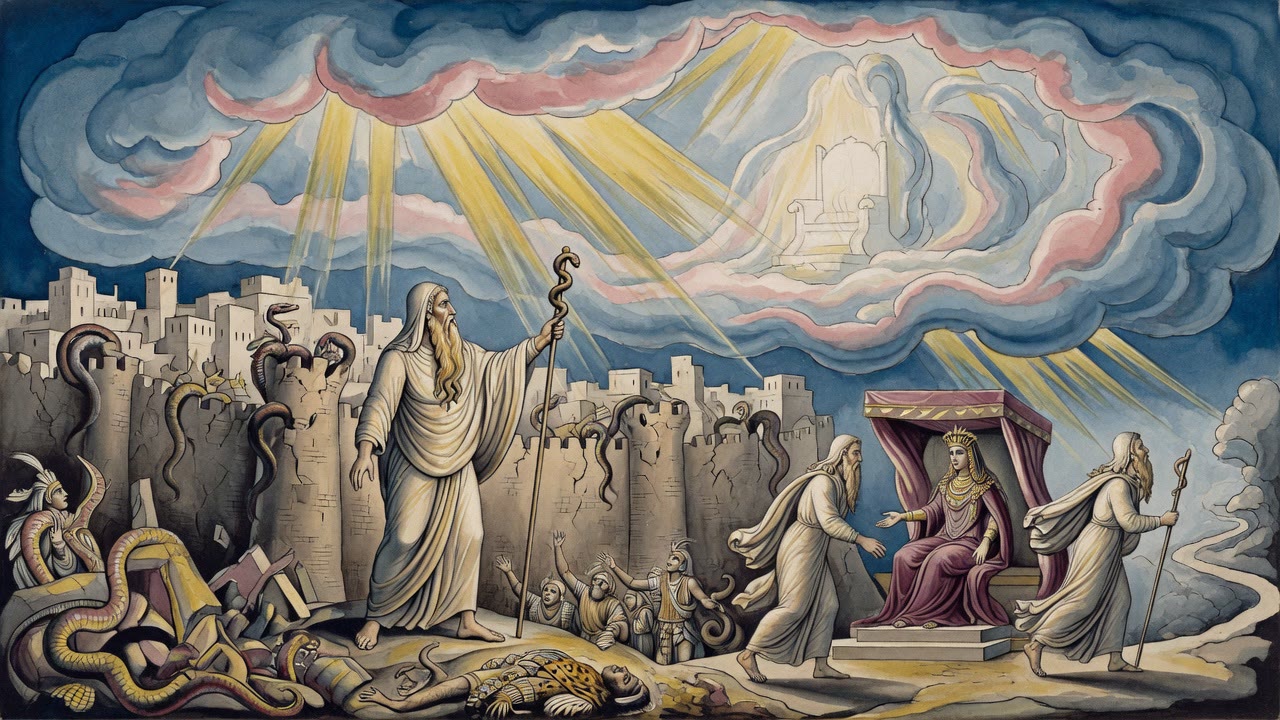
The field turned anyway. It turned at a place he had not reinforced and at an hour he had not chosen, and when it was over his officers walked the churned ground looking for someone to credit and came up empty. Zepho did not come up empty. He had felt the scale move under a weight he never set on it, because God had helped him win a battle he had no business winning.
A man who has felt that should go home and empty his temples. Zepho went home and had the temples swept.
The House That Taught Him Otherwise
He had been raised on a different account of how a battle is won. His fathers, the sons of Esau, had gone to war against the sons of Seir over grievances older than any man then living, and they had not gone alone. A messenger slipped out to Agnias, king of Africa, and Agnias sent foot soldiers and mounted men, because that is what a friend with troops is for. The sons of Seir answered by hiring the Midianites and the children of the East.
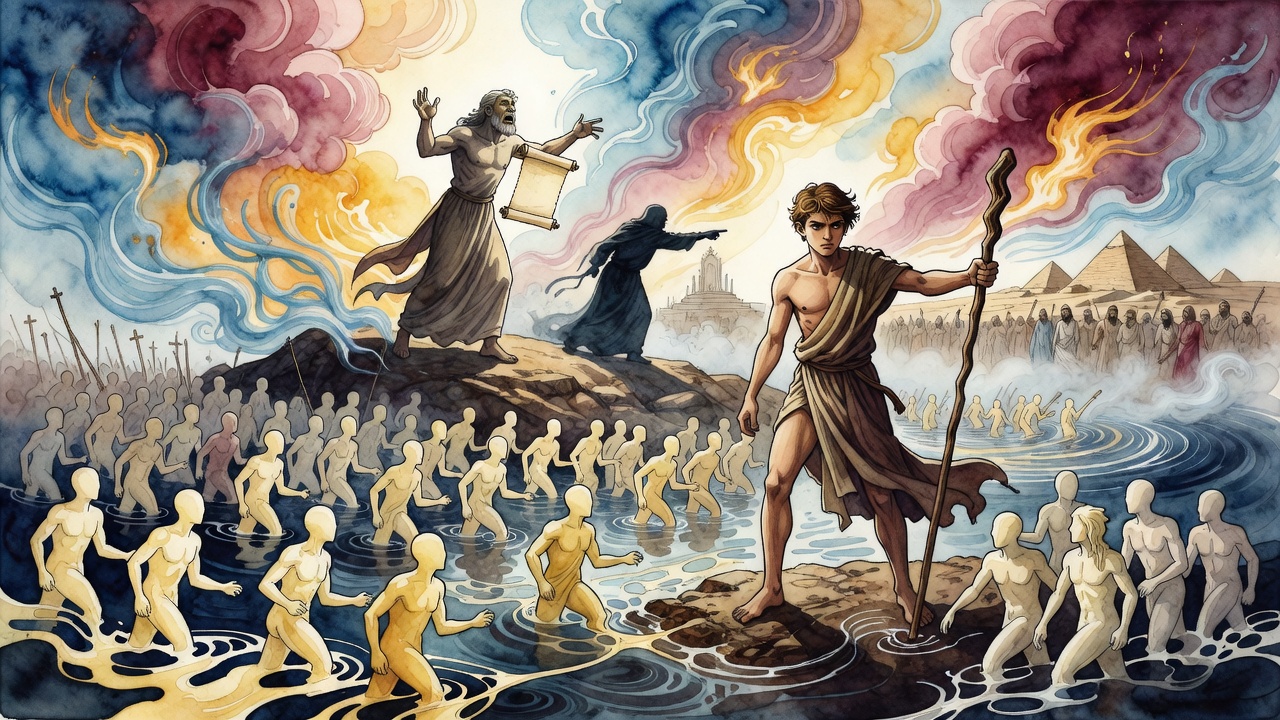
It went badly for Esau's line, and it went badly for a reason nobody in the family said out loud. Their own men were crossing the field in the middle of the fighting and turning up in the enemy's ranks. They were beaten, and beaten again, until the desert of Paran, where the whole thing finally swung. They killed every warrior the sons of Seir could put on the sand, and the Midianites and the children of the East ran for the hills.
So the family rule came down to Zepho intact. Buy the right ally, outlast your own deserters, and the field is yours. Paran had been won by men. This new battle had not been, and he knew the difference the way anyone knows the difference between a door he pushed and a door that swung open in front of him. Since the new fact would not fit inside the old rule, he did what his house had always done with facts that would not fit. He kept the crown and let the question go. Out of the wicked comes forth wickedness, the old proverb says, and Zepho was not other than the rest of Esau's sons.
Dust From Africa at the Gate
Then a steward came in with word that a man was standing at the gate on foot, African dust to the knee, and that Agnias had broken him in the field.
Zepho lost a breath to the name. Agnias was the friend who had saved his fathers. Agnias was the reason there had been anybody left standing at Paran to call it a victory. Whoever this man was, he had stood on the far side of that same king and been destroyed there, which made him either a warning delivered to Zepho's door or a bargain walking up the road. Zepho had about the length of time it takes a beaten man to lift his head, and he used it to decide the man was a bargain.
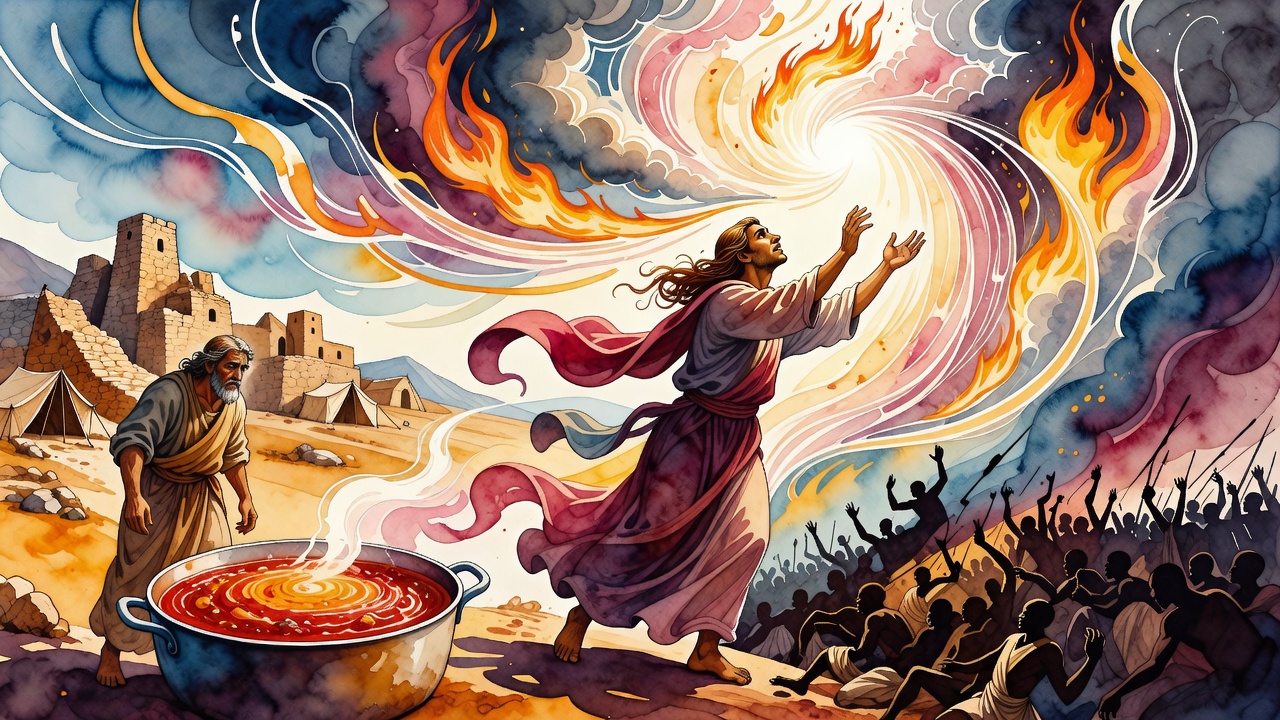
The stranger gave his name as Balaam. He carried the wreckage of a career and none of the shame of it, and he spoke in the manner of men who read birds and bowls and the twitch of a liver. Zepho welcomed him and took him in with honors, because the depth of the man's wisdom impressed him.
The Seat Beside the Throne
So the court of Kittim acquired a diviner. He was given a place near the throne, and a place near the throne is not a decoration. It is where a king's questions go at night, after the audiences are finished, when there is no army watching and no priest to perform for.
Zepho had one question he could have asked in that hour, and it was the only one worth the asking, since he had been carried through a battle by a power that wanted nothing from him except to be named. He asked the other things instead. He asked the man from Africa what the signs said, and what the neighboring kings intended, and what a curse cost if a curse were ever wanted, because Balaam sold that too, and would sell it years later to a king who wanted Israel cursed off the face of the earth.
The temples of Kittim stayed full. The gods of the country kept their niches and their portions of meat, and Esau's habits kept theirs, and a king who had been pulled out of a losing field by the God of Jacob never once said so in a room where saying it would have cost him anything.
What the Hall Smelled Of
A man who walks into a tanner's yard does not have to buy a hide. He can touch nothing and trade nothing, stand in the doorway a minute and leave, and the smell goes home in his clothes and stays there for days. It works the same in a perfumer's shop, where a man who buys nothing still comes out sweet, which is why the wise say that whoever walks with wise men grows wise and the companion of fools is broken (Proverbs 13:20).
Zepho bought nothing from Balaam that first night. He only sat with him. He sat with him the next night as well, and the night after that, and before long his questions were arriving already shaped for the kind of answer a diviner gives, which is the kind that never requires a king to change anything.
Out in the harbor the ships of Kittim went on loading for ports that would one day answer to other names. In the hall the incense went up the way it always had. It never did cover the other smell.
← All myths