Zepho and the Monster in the Mountain Cave of Kittim
Esau's grandson Zepho slays a half-goat beast in a mountain cave, is crowned king of Kittim, then begs the God of Abraham to save his idol army.
Table of Contents
 Click for full size
The Ox That Walked Into the Mountain
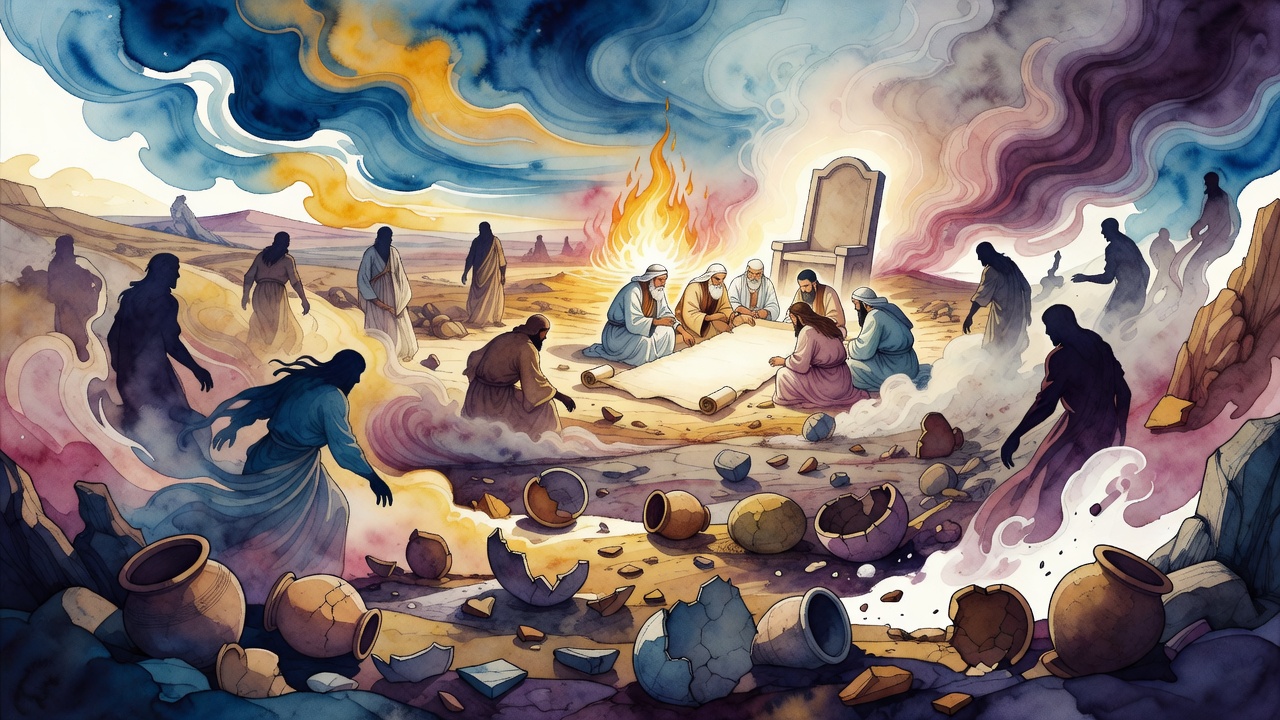
A single ox wandered off from the herds of Kittim, and a fugitive went up the mountain to find it. The fugitive was Zepho, grandson of Esau, and he had run a long way to reach these western islands. Behind him in Egypt lay the wreck of his ambition. He had begged King Agnias to march on Goshen, raised an army for it, and watched it collapse when a boy diviner named Balaam, barely fifteen and already famous for his wax figures and his bowls of trembling water, foretold defeat. Worse than the failed war was the memory under it. In an earlier clash the sons of Jacob had broken Zepho's people and dragged him off in chains, and Joseph himself had given the order. Zepho had worn those irons and remembered their weight.
So now he climbed alone, and the trail of the ox led him to a wall of stone where no cave should have been.
The Beast Behind the Stone
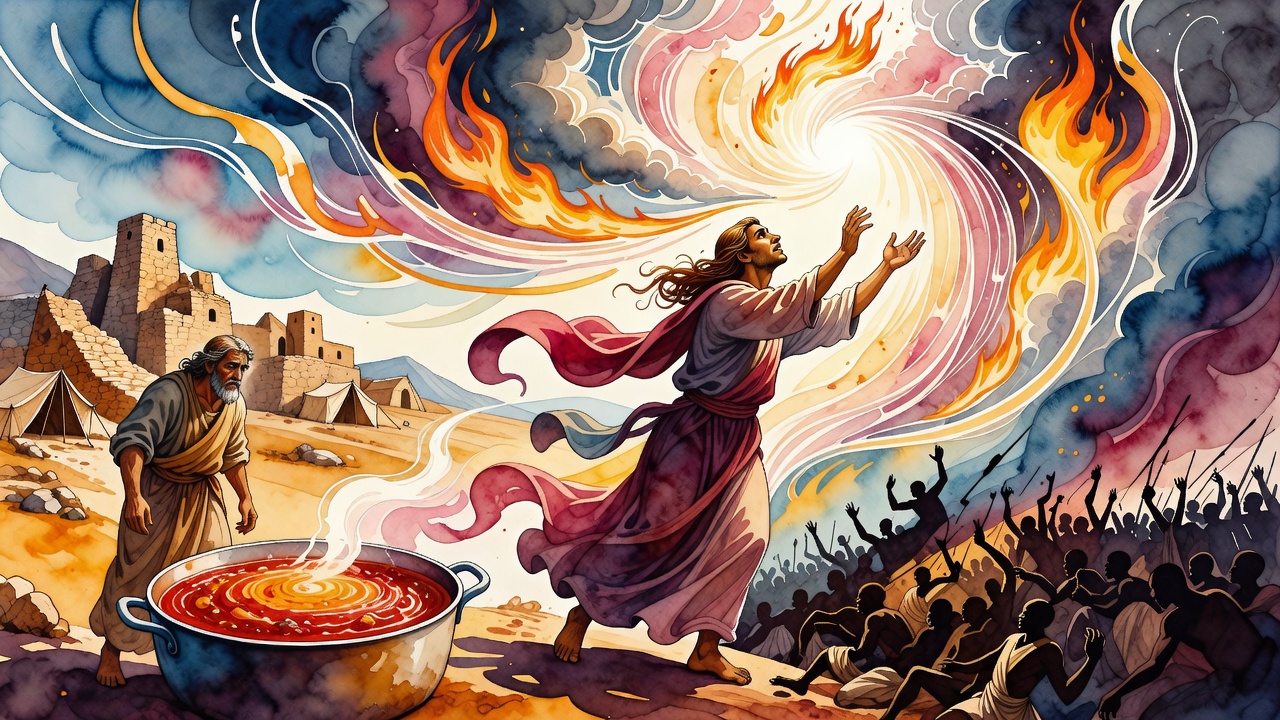
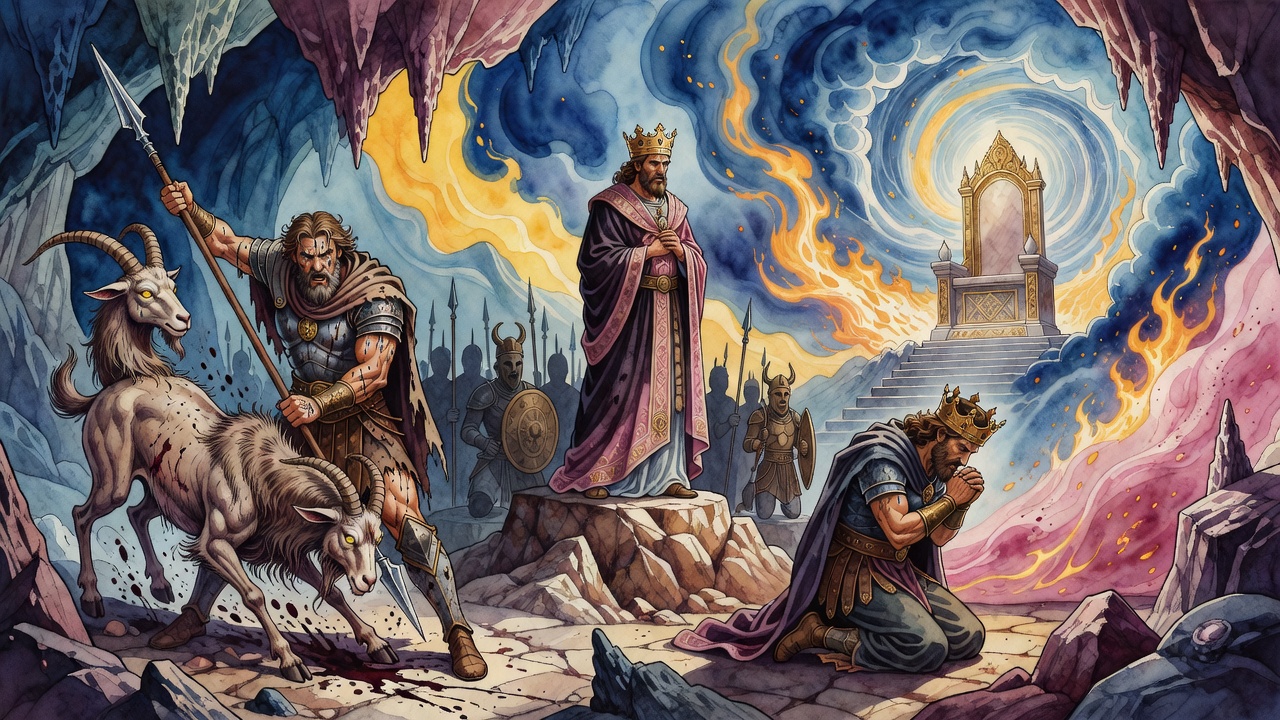
A great rock sealed the mouth of the cave. Zepho set his shoulder against it and shoved until it rolled aside, and from the dark came a stench of old kills and the sound of something breathing that was too large to be a man. Inside crouched the thing the herdsmen of Kittim spoke of only in whispers. From the waist up it had the shape of a man. From the waist down it was a he-goat, hoofed and rank, and it had eaten its way through the cattle of the land one beast at a time, dragging them into this hole in the mountain.
Zepho did not call for help. He drew his sword and went down into the dark after it. What happened inside left only one of them alive. When he climbed back into the daylight his arms were torn and his blade was wet, and the monster of the mountain would devour nothing more.
The people of Kittim had no word for what he had done. The terror that had thinned their herds for a generation was finished, killed by a stranger they had taken in out of pity. They set aside a day each year in his honor and brought him gifts and offerings, and the fugitive who had arrived with nothing became a man the islands could not stop praising.
The Crown Nobody Expected to Give Him
War came soon after, as it always did between Kittim and Africa. Agnias sent his soldiers across the water, and the people put Zepho at the head of their lines. He drove the Africans back to their own borders and returned with the kind of victory that rewrites a man's standing. This time the islanders did not merely thank him. They made him king.
He did not rest in the title. He marched against the sons of Tubal and the Islands of the Sea and subdued them, and the people built him a palace. For thirteen years the peace held. Then Agnias struck again, and Zepho shattered the African host and chased the survivors home. Agnias gathered a second army, and Zepho left none of them standing.
So Agnias did the thing a desperate king does. He emptied all of Africa, a multitude measured against the sand of the sea, joined it to the army of his brother Lucus, and turned the whole mass toward Kittim for a third and final war.
The Prayer of a Man Who Worshipped Idols
Now the islands that had crowned a monster-slayer looked thin against the horizon. Zepho sent to his kinsmen in Seir, the children of Esau, and asked them to fight beside him. They refused. They had already bound themselves to Agnias. The grandson of Esau stood with a smaller army than he had ever commanded, facing a host he could not count, abandoned by his own blood.
And the idol-king prayed.
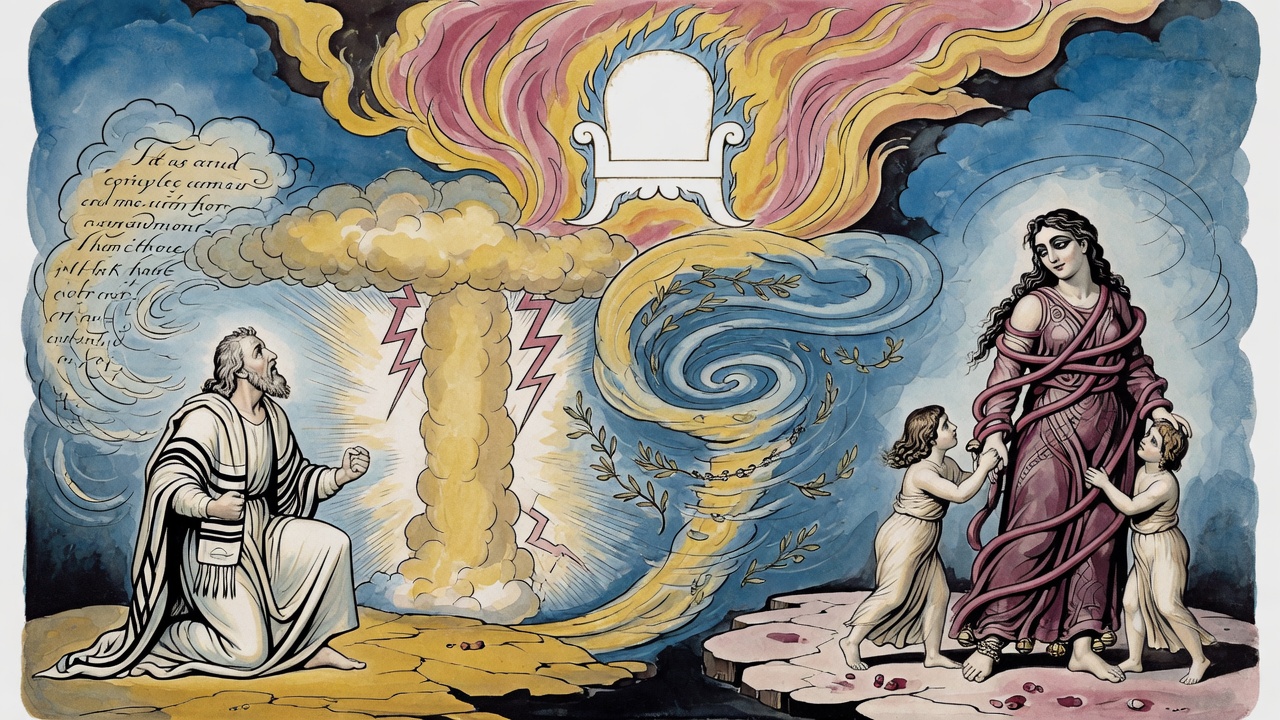
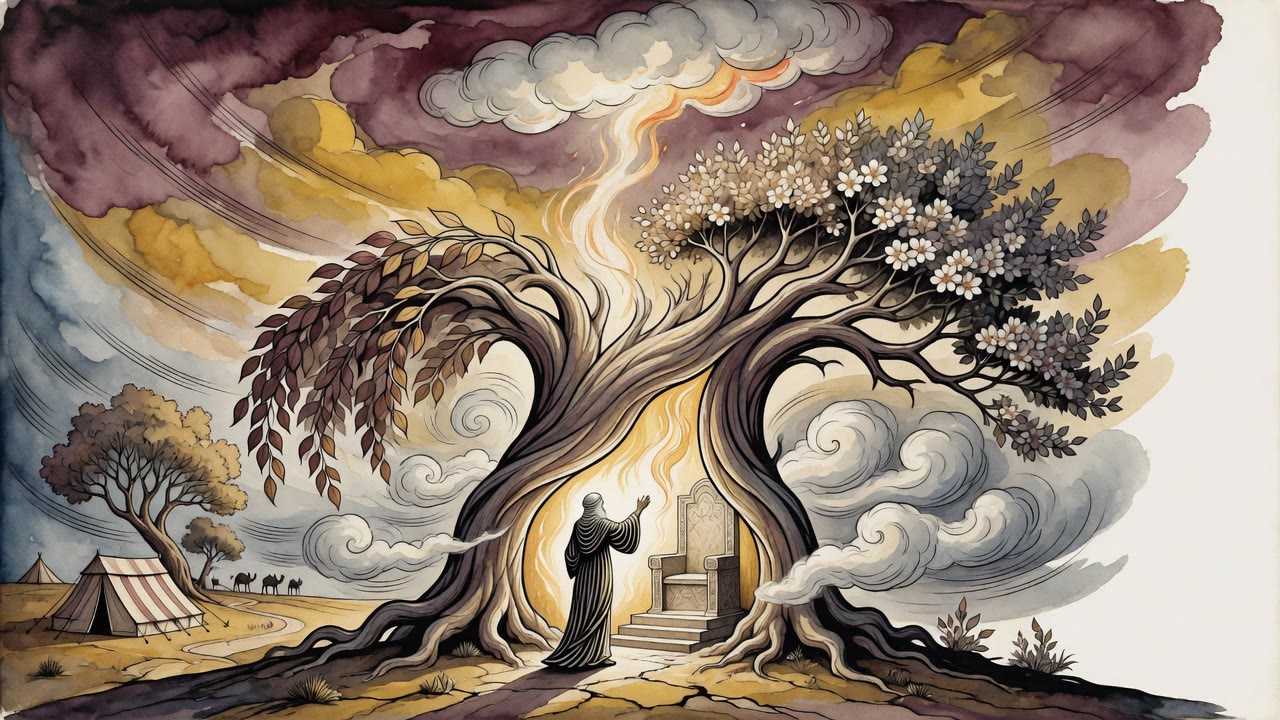
He did not pray to the gods of Kittim whose festivals he kept. He reached past them, back across the chain of his fathers, and called on the God of Abraham and Isaac, the God his grandfather Esau had been born to lose. He invoked the covenant as though it still had room in it for him, and begged for deliverance from a heaven he had never honored.
The God of his fathers heard him.
The battle that followed broke the African host. Zepho's smaller force tore through Agnias and Lucus until the field belonged to Kittim. A man who knelt to carved gods had been answered by the unseen one, saved by an inheritance he had spent his whole life refusing.
The Hatred That Outlived the Rescue
The rescue changed nothing in him. He rose from the victory and went back to the idols of his adopted people as if the heavens had never opened for him. When Balaam came fleeing west after his own disgrace, Zepho took the diviner in and kept him close, and the old hunger woke again, sharper now that fortune had proved him a king who could win.
He waited. He waited for the generation that had chained him to die out, for Joseph and his brothers to go down to their graves, for Pharaoh's strong men to follow them. When the last of them was gone, he moved. He allied with Hadad, king of Edom, and called the nations of the East and the Ishmaelites to his standard, until his army stretched across a three-day march when it lined up for battle.
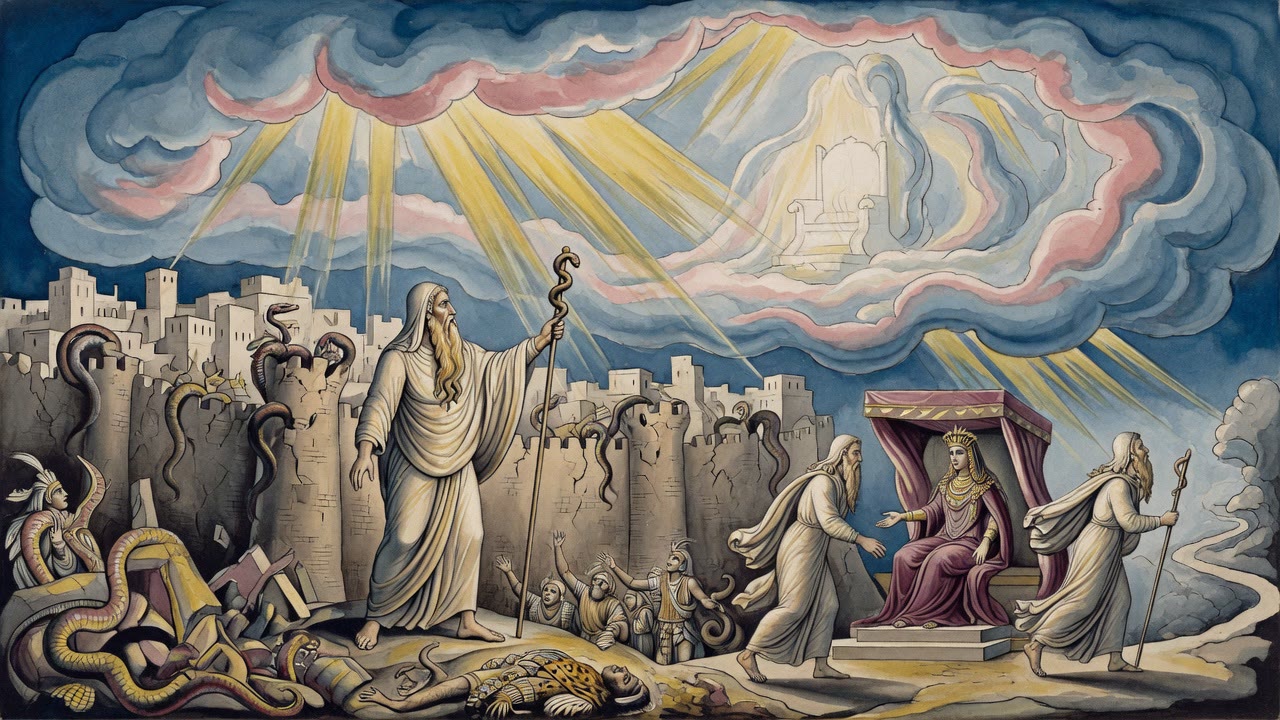
They gathered against Egypt in the Valley of Pathros, three hundred thousand Egyptians and a single small band of Israelites out of Goshen, one hundred and fifty men. The Egyptians did not trust the few from Goshen. Fearing they might turn in battle and join the sons of Esau and Ishmael, they struck a bargain. The Israelites were to hold back and lift no sword until it was certain the enemy had the upper hand.
The first clashes went against the Egyptians, and they broke. Only then did the small band move. The Israelites cried out to God and threw themselves into the rout, and the host that Zepho had built buckled under one hundred and fifty men. His army scattered. The Egyptians, instead of holding the ground their allies had won, fled across the valley, and in the smoke the Israelites turned on some two hundred of them and cut them down, sure they were the enemy.
The grandson of Esau lived on in Kittim, a king the God of his fathers had saved twice over, and worshipped wood and stone to the end.
← All myths