Parshat Shemot7 min read

Hadad of Edom and the African War Over the Bride of Chittim

Edom crowns Hadad, Africa wars over a stolen bride, and Chittim hoists infants on its walls, all while Israel groans unseen in Egypt's brickyards.

Curated by Arthur · Told by Maggid ·
Table of Contents
  1. The Beauty That Two Kings Wanted
  2. The Valley of Canopia Ran Red
  3. The Tribute of a Conquered Coast
  4. The Daughters Set Upon the Wall
  5. The Forgotten Cycle Beneath Egypt's Bondage

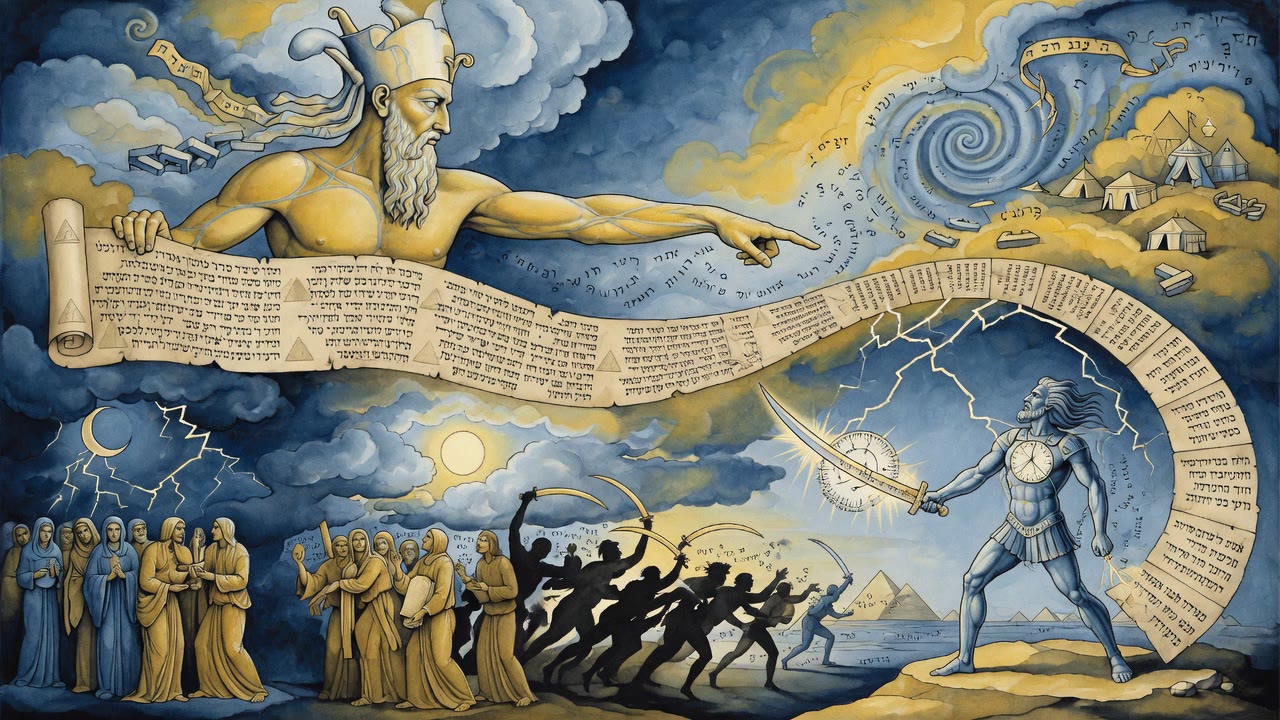
In the long shadow of Egypt, while Israel bent its back to the brickyards, the kingdom of Edom changed hands again. Baal Channan son of Achbor died, and the chiefs of Edom rode out to find a man strong enough to wear the crown. They settled on a hard-eyed warrior named Hadad, and they set him on the throne for what would be forty-eight years.
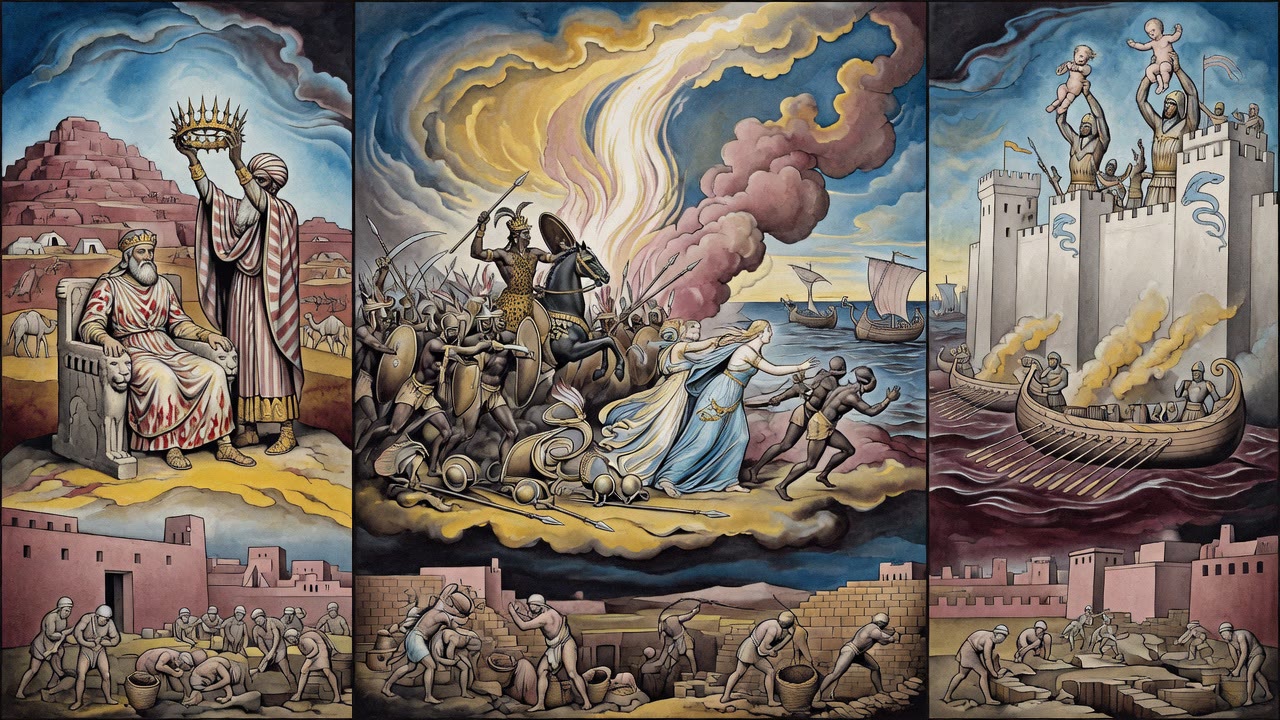
Hadad wanted what his fathers had let slip. Moab had once paid tribute to Edom, and he meant to drag it back into the harness. But Moab heard the rumor of his marching before a single spear left Edom. They chose a king of their own, sent runners to their Ammonite kin, and stood waiting in the open with a host that grew by the day. Hadad stood on his border, counted the watchfires across the valley, and felt the appetite go out of him. He turned his army around and went home. Sometimes the shadow of a battle is heavier than the battle.

The Beauty That Two Kings Wanted

Far from Edom, across the sea in the coastland of Chittim, another quarrel was catching fire over a single face. In the city of Puzimna there had lived a man named Uzu, whom the people had loved so wildly they worshiped him while he breathed and mourned him as a god when he died. He left behind one daughter, Jania, and the chroniclers swore that no woman in all the earth matched her for beauty and for wisdom.

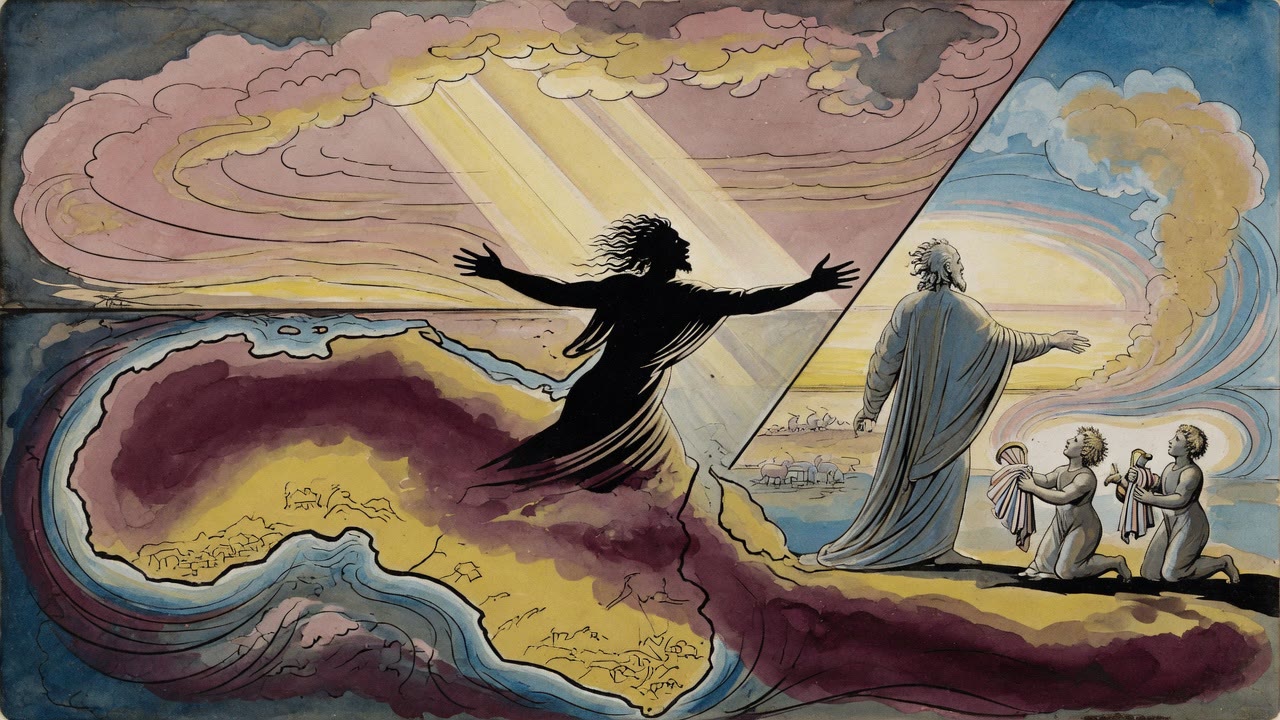
Word of her crossed the water to Africa, to Angeas, king of Dinhabah, and he sent messengers to Chittim to ask for her hand. The people of Chittim agreed. Then a second embassy arrived on the same shore, from Turnus, king of Bibentu, who had also heard the tales and meant to take her for himself. The men of Chittim wrung their hands and told Turnus's envoys the truth. "We have promised her already to Angeas, and we dare not anger him, for his arm is long." Then, frightened, they sent a runner to Africa. "Turnus is gathering an army. He means to pass through Sardunia and fall upon you and take the girl."

The Valley of Canopia Ran Red

Angeas did not wait to be struck. He summoned his host and sailed to Sardunia, where his brother Lucus sat as king. There the young Niblos, Lucus's son, came before his uncle and begged to lead the army into the field, and Angeas asked his brother to grant it, and it was granted. Then the two kings of one blood marched together toward Turnus.

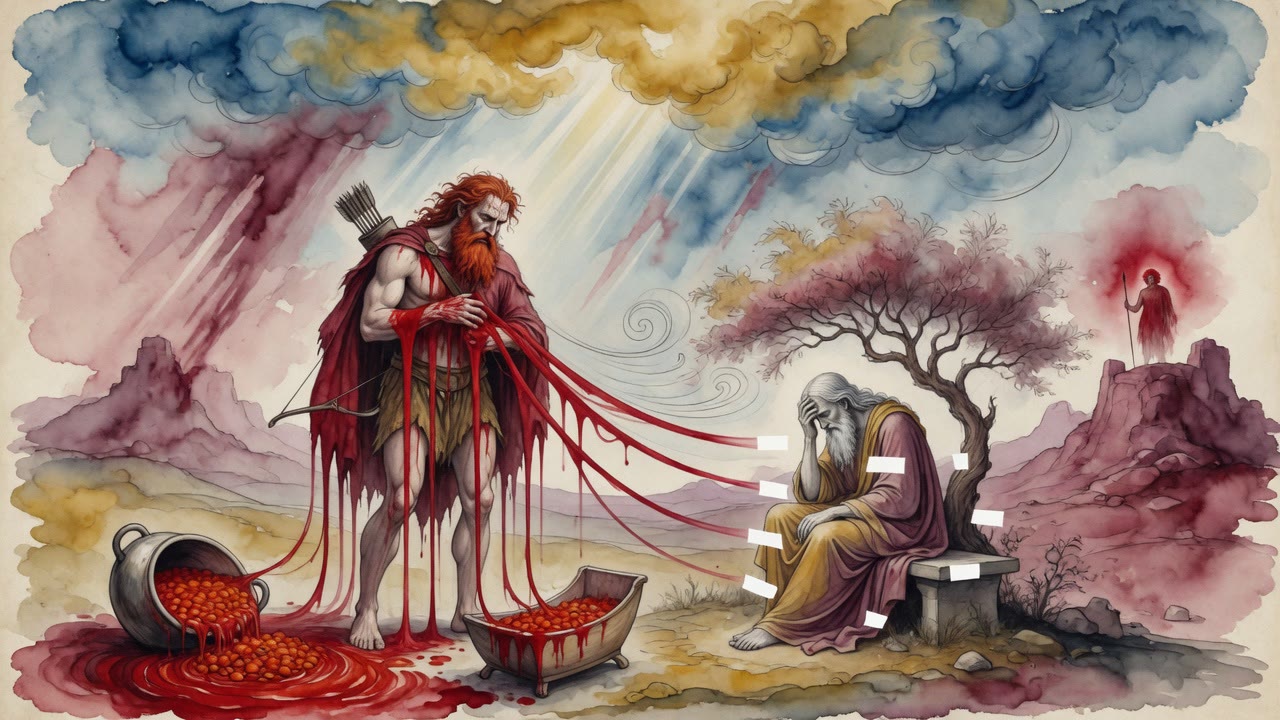
They met him in the valley of Canopia, and the slaughter there was terrible. Lucus's ranks were broken and scattered like chaff, and in the press Niblos was killed. When Angeas saw the boy dead he gave a great cry and commanded a coffin of gold be made for him there on the field. Then grief turned to fury. He threw himself back into the line, cut Turnus down, and put his whole army to the sword. The survivors ran, and Angeas and Lucus hunted them along the road that runs between Alphanu and Romah, killing as they rode until none were left to kill.

On that roadside Lucus buried his son in a coffin of brass and raised a high tower over the grave and called it by the boy's name. They buried Turnus nearby, the slayer and the slain laid down within sight of each other, a pavement of stone set between the two graves so that the road would remember them both.

The Tribute of a Conquered Coast

Lucus went back to Sardunia. Angeas turned toward Bibentu, the dead king's own city, and its people came out trembling and fell on their faces and begged for their lives. He spared the city, for it was counted as part of Chittim. But from that day the troops of Africa came against the coast of Chittim year upon year, stripping it of plunder. And always at the head of the raiders rode Zepho son of Eliphaz, grandson of Esau, who had fled Egypt and washed up in Dinhabah and been made captain of Angeas's host. Zepho carried an old grudge against the children of Jacob and had pressed his king to march on Egypt and avenge the wars of their ancestors, but Angeas knew the strength of Jacob's sons too well and would not be moved. So Zepho turned his sword on Chittim instead, and led the plunder season after season. At last Angeas himself went up to Puzimna and took Jania, daughter of Uzu, and carried her home to Africa for his wife.

The Daughters Set Upon the Wall

The coast of Chittim had drunk blood before. Generations back, when Abram still walked the earth, its people had fallen out with the children of Tubal, who held the land of Tuscanah and had built a city, Sabinah, in their own honor. The men of Chittim struck the children of Tubal a heavy blow, and Tubal made them swear a binding oath never to take their daughters in marriage, for no women on earth were said to be fairer than the daughters of Tubal, and kings sent from far countries to court them.

But beauty bends oaths. When the men of Chittim could find no brides by asking, they waited for harvest, and while the men of Tubal worked the fields, the young men slipped into Sabinah and carried the daughters off. Tubal hired ten thousand swords and went to war and began to win. Then Chittim did a cruel and cunning thing. They set upon the city walls the small children born of the stolen daughters and cried down to the besiegers, "Will you make war against your own flesh and blood?" The men of Tubal looked up, saw their grandchildren on the ramparts, let their arms fall, and went home. And the children of Chittim, having held their ground by holding up the innocent, built two cities by the sea and kept the coast that the kings of Africa would one day come to plunder.

The Forgotten Cycle Beneath Egypt's Bondage

So the nations turned their wheel of beauty and grudge and burial. Edom crowned and uncrowned its kings, Africa fattened on the coast of Chittim, Zepho nursed the old hatred of Esau against Jacob, and the towers stood over the graves on the road between Alphanu and Romah. And under all of it, unnoticed by these warring kings, Israel groaned in the brickyards of Egypt with no straw for the bricks, and its cry went up, and the Lord heard it, and resolved to take a people out of affliction and give them a land. The kings counted their dead and their tribute and their stolen brides, and never once looked toward the slaves whose God was already moving.


← All myths
From the tradition

Sources

7 sources

The texts this telling draws on, in full. Open a card to read inline, or expand it for a wider, quieter read.

Jasher 78Book of Jasher

The chapter opens with a change of leadership in Edom. Baal Channan, son of Achbor, dies and the Edomites reach out to find a new king. They settle on a man named Hadad. He reigns for forty-eight years. What does Hadad do? He decides he wants to bring Moab back under Edomite control, just like things used to be.

Moab? They're not having it.

The Moabites hear about Hadad's plan and they don't just sit around. They band together, elect their own king, and even reach out to their Ammonite brethren for backup. Hadad, suddenly facing a much tougher fight than he anticipated, gets cold feet and backs down. Sometimes, the threat of a fight is enough. Now, while all this political maneuvering is happening, something else is brewing. He marries Zipporah, the daughter of Reuel, a Midianite. The text makes a point of telling us that Zipporah is righteous, comparing her to the Matriarchs: Sarah, Rebecca, Rachel, and Leah.

Zipporah has two sons. The first is named Gershom, which Moses explains means, "I was a stranger in a foreign land." But here's a detail that raises an eyebrow: Gershom isn't circumcised right away, because Reuel, Moses’ father-in-law, commanded it. The second son, Eliezer, is circumcised, and his name is explained as a thank you: "Because the God of my fathers was my help, and delivered me from the sword of Pharaoh."

Why the difference in circumcision? The text doesn't explicitly say, but it hints at the tension between Moses' loyalty to his heritage and his life in Midian.

And while Moses is building a family, back in Egypt, things are going from bad to worse for the Israelites. Pharaoh, feeling the pressure, decides to ramp up the oppression. He issues a cruel decree: no more straw for making bricks! The Israelites have to gather their own straw, but they still have to meet the same impossible quotas.

"Give no more straw to the people to make bricks with, let them go and gather themselves straw as they can find it. Also the tale of bricks which they shall make let them give each day, and diminish nothing from them, for they are idle in their work."

The Israelites, understandably, are devastated. They mourn, they sigh, and, most importantly, they cry out to God.

And here's the turning point: "The Lord heard the cries of the children of Israel, and saw the oppression with which the Egyptians oppressed them. And the Lord was jealous of his people and his inheritance, and heard their voice, and he resolved to take them out of the affliction of Egypt, to give them the land of Canaan for a possession."

God hears their cries, sees their suffering, and decides to act. The Book of Jasher frames this as God being "jealous" for his people, a powerful way of saying that God isn't indifferent to their plight. He's about to intervene in a big way.

So, Chapter 78 sets the stage. We have political instability, a family being built in exile, and unbearable suffering escalating into a desperate plea. All the elements are in place for a major shift, a divine intervention that will change the course of history. What happens next? Well, that's a story for another time… but you know it's going to be epic.

Full source
Jasher 60Book of Jasher

This tale comes from a different, less-known source: The Book of Jasher. Specifically, Now, the Book of Jasher isn't part of the standard biblical canon, but it’s referenced in the Bible itself (Joshua 10:13 and (2 Samuel 1:1)8), which gives it a certain… allure, doesn't it? It’s considered by some to be a missing book of the Bible, a collection of stories offering a different perspective on familiar narratives.

It's about 72 years after the Israelites went down to Egypt, after Joseph's death. A fellow named Zepho, son of Eliphaz, son of Esau (yes, that Esau), makes a run for it from Egypt. Zepho and his crew end up in Africa, specifically Dinhabah, where they're welcomed by Angeas, the king. Angeas, impressed with Zepho, makes him captain of his army.

Zepho, being an Esau-ite (a descendant of Esau), has a bit of a grudge against the descendants of Jacob (the Israelites). He tries to convince Angeas to gather his forces and attack Egypt, seeking revenge. But Angeas isn't buying it. He knows the strength of the sons of Jacob all too well, remembering the battles between their ancestors. Zepho keeps pushing, but Angeas remains unconvinced.

Meanwhile, across the sea in the land of Chittim (often associated with Cyprus or other Mediterranean coastal regions), there’s a man named Uzu in the city of Puzimna. He’s been deified, practically worshipped, by the locals. When he dies, he leaves behind only a daughter, Jania. And Jania? She’s not just beautiful, she’s extraordinarily beautiful. The Book of Jasher tells us there was no one like her, “none seen like unto her for beauty and wisdom throughout the land." Quite the compliment!

Word of Jania's beauty reaches Angeas, king of Africa. He sends messengers to Chittim, asking for her hand in marriage. The people of Chittim agree. But, wouldn't you know it, trouble arrives in the form of messengers from Turnus, king of Bibentu. Turnus also wants Jania for himself! His people, too, have raved about her beauty.

The people of Chittim are in a bind. They tell Turnus’s messengers, "Sorry, we already promised her to Angeas. We can't risk angering him; he's too powerful!" They even send a warning to Angeas: "Turnus is coming for Jania, and he's gathering his army! He plans to attack you after passing through Sardunia."

Angeas is furious. He gathers his own army and sails to Sardunia, where his brother Lucus is king. Niblos, Lucus's son, meets Angeas and asks to be made captain of the army. Angeas agrees and asks Lucus to appoint Niblos. So, Angeas and Lucus, with a massive army, head towards Turnus.

They meet Turnus in the valley of Canopia, and a fierce battle ensues. Lucus and his army are decimated, and Niblos is killed. Angeas, grief-stricken, orders a golden coffin made for Niblos. He then throws himself back into the fray, defeats Turnus, and slaughters his army, avenging his nephew and brother's forces.

The survivors of Turnus's army flee, but Angeas and Lucus pursue them relentlessly, slaying them all on the road between Alphanu and Romah. Lucus commands a brass coffin be made for Niblos, burying him on the roadside and building a high tower over his grave, named after him, that stands to this day. Turnus, too, is buried there. The Book of Jasher tells us that even now, on the road between Alphanu and Romah, you can see the graves of Niblos and Turnus, side by side, with a pavement between them.

Lucus returns to Sardunia, and Angeas goes to Bibentu, Turnus's city. The people of Bibentu, terrified, beg for mercy. Angeas spares the city because it was considered part of Chittim. However, from that day on, Angeas's troops regularly raid and plunder Chittim, with Zepho, the captain of the host, always leading the charge.

Finally, Angeas travels to Puzimna and takes Jania, the daughter of Uzu, as his wife, bringing her back to Africa.

So, what do we make of this whirlwind of a story? It's a fascinating blend of tribal rivalries, the allure of beauty, and the ever-present thirst for revenge. The Book of Jasher, in its own unique way, paints a vivid picture of a world where personal vendettas and the pursuit of beauty could shape the course of nations. And it leaves you wondering: how many wars throughout history have been sparked by similar desires and conflicts?

Full source
Jasher 17Book of Jasher

A fascinating slice of ancient history from the Book of Jasher, a non-canonical Jewish text filled with captivating stories and alternative perspectives on biblical narratives.

In Book of Jasher, this all went down in the ninety-first year of Abram's life.

The children of Chittim, Meanwhile, the children of Tubal resided in Tuscanah, their territory also bordering the Tibreu. They even built a city called Sabinah (Understanding), named after Sabinah, the son of Tubal.

Then, BAM! Conflict erupts. The children of Chittim attack the children of Tubal, inflicting a heavy blow. As a result, the children of Tubal make the children of Chittim swear an oath: no intermarriage. Why such a drastic measure? Well, apparently the daughters of Tubal were renowned for their beauty. The text explicitly states: "...no women were then found in the whole earth so fair as the daughters of Tubal." Kings and princes from far and wide sought them as wives.

But oaths, as we know, can be tricky. Three years pass, and some twenty men from Chittim try to snatch some Tubal daughters, but they find none. The children of Tubal are sticking to their word. Frustrated, the men of Chittim wait for harvest time. While the Tubal men are out in the fields, the young men of Chittim sneak into the city of Sabinah and kidnap some of the daughters of Tubal. Scandalous. Enraged, the children of Tubal try to retaliate, but the Chittim have holed up in a well-defended mountain. A year later, the children of Tubal hire ten thousand mercenaries to bolster their forces and launch a full-scale war. They begin to gain the upper hand, and the children of Chittim, desperate, pull a rather… interesting move. They place the children born from the kidnapped daughters of Tubal on the city walls. "Are you going to war with your own children?" they cry. It works! The children of Tubal, seeing their own flesh and blood, cease fighting and return home.

The children of Chittim, now consolidating their gains, build two cities by the sea, Purtu and Ariza. And where is Abram in all this? He’s ninety-nine years old, minding his own business.

But then, a pivotal moment: God appears to Abram! God establishes a covenant with him: brit milah, circumcision, as a sign of the everlasting covenant between God and Abraham and his descendants. And, God changes his name from Abram to Abraham, and his wife Sarai becomes Sarah. God promises to bless them both and multiply their seed, so they will become a great nation, and kings will come forth from them. This moment, described toward the end of the chapter, marks a crucial turning point in the narrative, shifting focus from the battles of nations to the foundation of a lineage that would shape history.

So, what can we take away from this whirlwind of ancient skirmishes and divine encounters? The Book of Jasher, while not part of the biblical canon, offers a unique lens through which to view the world of the patriarchs. It paints a vivid picture of a world in flux, where alliances shift, conflicts erupt, and divine promises are forged amidst the chaos. It reminds us that even in the midst of war and political maneuvering, the seeds of faith and covenant can take root and blossom.

Full source
Legends of the Jews 1:441Legends of the Jews

Once upon a time, King Agnias had a queen named Yaniah. Now, Yaniah wasn’t just any queen; she was from the land of Kittim, a place far, far away from Africa, where Agnias ruled. She fell terribly ill. The royal physicians, scratching their heads, blamed the African climate, especially the water. Yaniah was used to the water of the river Forma back in Kittim. Her ancestors had even built a whole system to bring that specific water right to her house!

The king's concern. He loved his wife and would do anything to make her well. So, Agnias sent messengers all the way back to Kittim to fetch her some of that precious Forma water.

Guess what? When Yaniah drank the water from her homeland, she felt a little better. The king, seeing this, had an audacious idea. He noticed the Forma water was lighter, maybe purer, than the local water. He wouldn't just settle for small deliveries. Oh no. He decided to build a massive canal stretching all the way from Kittim to Africa!

Can you picture the scale of this project? A canal spanning continents, all for the sake of his wife's health and comfort.

But he didn’t stop there. Agnias also brought earth and stones from Kittim to Africa. He built Yaniah a palace, brick by brick, using materials from her homeland, a little piece of Kittim transported to Africa.

And, wouldn't you know it, surrounded by the familiar, drinking her accustomed water, Yaniah recovered.

Now, this story from Legends of the Jews (Ginzberg) seems simple enough, but it speaks volumes, doesn't it? About love, obviously, but also about the lengths to which people will go to maintain a connection to their roots, to the familiar comforts of home. What are the "waters of Forma" in your life – the things, the places, the people – that you would go to extraordinary lengths to keep close?

Full source
Legends of the Jews 1:436Legends of the Jews

Our story begins with messengers. The messengers of Agnias, to be precise, hurrying back from Kittim (often associated with Cyprus or sometimes Rome) with good news. They carry the promise that Yaniah will become Agnias's wife. Sounds like a simple enough transaction. A king seeks a bride, and a kingdom agrees.

Enter Turnus, the king of Benevento. He arrives in Kittim with the very same intention: to woo and win Yaniah. The people of Kittim, bound by their promise to Agnias, reject Turnus's proposal. Can you imagine the fury?

Turnus, spurned and enraged, doesn't take rejection lying down. He sets his sights on Sardinia, aiming to wage war against King Lucus. Lucus just so happens to be the brother of Agnias. Turnus figures, why not deal with Lucus first, then Agnias? It's a ruthless, calculated move.

Agnias is no fool. Hearing of Turnus's plot, he rushes to Sardinia to aid his brother. And so, a battle erupts in the Valley of Campania. The stakes? Love, honor, and perhaps the future of kingdoms.

Facing Turnus are Agnias, his brother Lucus, and Lucus's son, Niblos. Lucus wisely appointed Niblos commander-in-chief of the Sardinian troops. In the initial clash, Turnus triumphs. Tragedy strikes as Niblos falls. The Sardinians have lost their general.

But the tides turn! In the second engagement, Agnias's forces utterly rout Turnus's army. Turnus himself is slain on the battlefield. His army scatters, with Agnias in hot pursuit, all the way to the crossroads between Rome and Albano.

What becomes of the fallen? Niblos's body is enshrined within a golden statue. His grieving father, Lucus, erects a towering monument over his grave. And, in a strange act of respect or perhaps a warning, another tower is built over Turnus's grave. These two structures, connected by a marble pavement, stand facing each other at the crossroads where Agnias ended his pursuit.

Imagine that scene: two imposing towers, eternally facing each other, connected by a path of marble. Monuments to love, war, and the consequences of ambition. A constant reminder of the battle fought and the lives lost.

What does it all mean? Perhaps it's a story about the enduring power of promises. Maybe it's about the futility of war, or the lasting impact of grief. Or perhaps, it's simply a fascinating glimpse into a world where history and legend intertwine, leaving behind structures that speak volumes across the ages.

Full source
Legends of the Jews 1:452Legends of the Jews

It's not all grand battles and royal decrees; sometimes, it's about the deals that almost happened, the wars that never were, and the subtle shifts in power.

Take the story of Samlah of Masrekah, for example. After Hadad's passing, he ascended to the throne of Edom and ruled for eighteen years. Now, Samlah had a plan, a burning desire, really: to avenge Agnias, an old ally of the Edomites. Agnias had been tangled in a conflict with Zepho, and Samlah felt obligated to step in. He wanted to teach Zepho a lesson!

Here's the twist. The Edomites themselves? They weren't on board. They wouldn't allow Samlah to go to war with their own kinsman, Zepho.

The Sefer HaYashar (The Book of Jasher) fills in some fascinating details here. It tells us Agnias was king of Canaan, and Zepho, of Kitim (the Kittim), had captured him in battle. Agnias was even Zepho's master. Apparently, Agnias escaped from Zepho, built himself ships, and tried to take revenge.

And what of Zepho? In Samlah’s fourteenth year as king, Zepho finally died, having ruled over Kitim for a good fifty years. That's a long reign! He was succeeded by Janus, another member of the Kittim, who also enjoyed a similarly long tenure. Fifty years! These guys weren't just passing through; they were building legacies.

It makes you wonder, doesn't it? What were those fifty years like? What kind of king was Janus? And what about Samlah? Did he ever get over the fact that he couldn't pursue his war? These little snippets of history, these glimpses into the lives of kings and kingdoms, they're like pieces of a puzzle. Each one, on its own, might seem insignificant, but together, they paint a richer, more complex picture of the past. And remind us that even kings are subject to the will of their people.

Full source
Legends of the Jews 1:432Legends of the Jews

It’s a story filled with sibling rivalry, lingering resentment, and, well, a whole lot of armed conflict.

The animosity, didn’t just end with Jacob tricking Esau out of his birthright. Oh no. It simmered, festered, and eventually boiled over into outright war. Ginzberg, in his Legends of the Jews, paints a vivid picture of this clash.

It all stemmed from the sting of defeat. The sons of Esau, they just couldn’t let go of the humiliation Joseph and his people had inflicted upon them. Remember how Joseph rose to power in Egypt? Yeah, that didn't sit well. So, fueled by pride and a thirst for revenge, they hatched a plan.

They weren't alone,. They enlisted the help of Agnias, the Ishmaelites, and other nations of the East. Think of it as a very large, very angry coalition. Their goal? To launch a second campaign against Egypt and free Zepho and his followers from Joseph's control.

Now, imagine the scene: a massive army, numbering no less than eight hundred thousand infantry and cavalry, marching towards Egypt. It sounds pretty intimidating. But here’s where the underdog story kicks in. Despite their overwhelming numbers, this colossal force was defeated at Raamses by Joseph, his brothers, and… wait for it… a mere six hundred men!

Talk about David versus Goliath!

The defeat was crushing. They lost their king, Bela, and a quarter of their army was left on the battlefield. Can you imagine the morale after that? Utterly demoralized, they fled, with Joseph hot on their heels, cutting down many of the fleeing soldiers.

It just goes to show you, doesn't it? Sometimes, it's not about the size of your army, but the strength of your spirit. Or, perhaps, the blessings of something…more. Whatever it was, Joseph and his brothers clearly had something special on their side that day. And it’s a reminder that even the most lopsided odds can be overcome.

Full source