Zepho of the Kittim and the Wars That Devoured Kings
A grandson of Esau kills the beast in a sealed cave, and the people of Kittim beg him to lead their armies against the empire of Angeas.
Table of Contents
 Click for full size
The Beast in the Sealed Cave
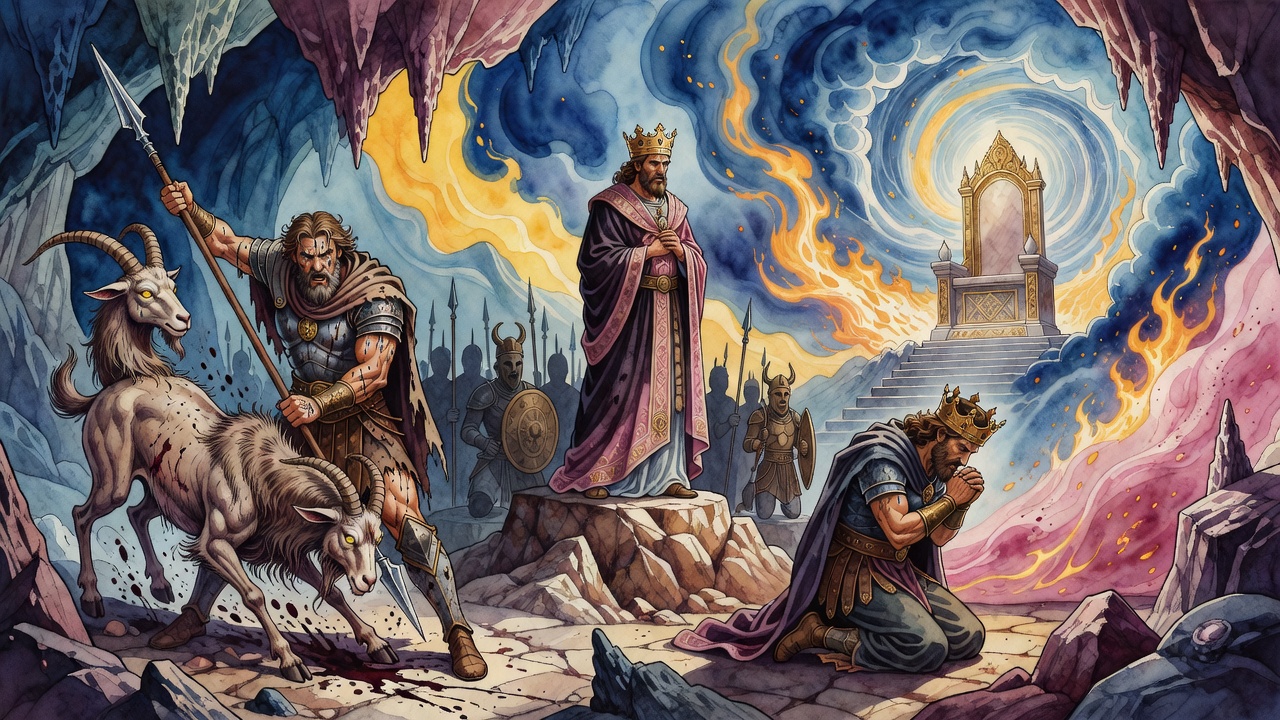
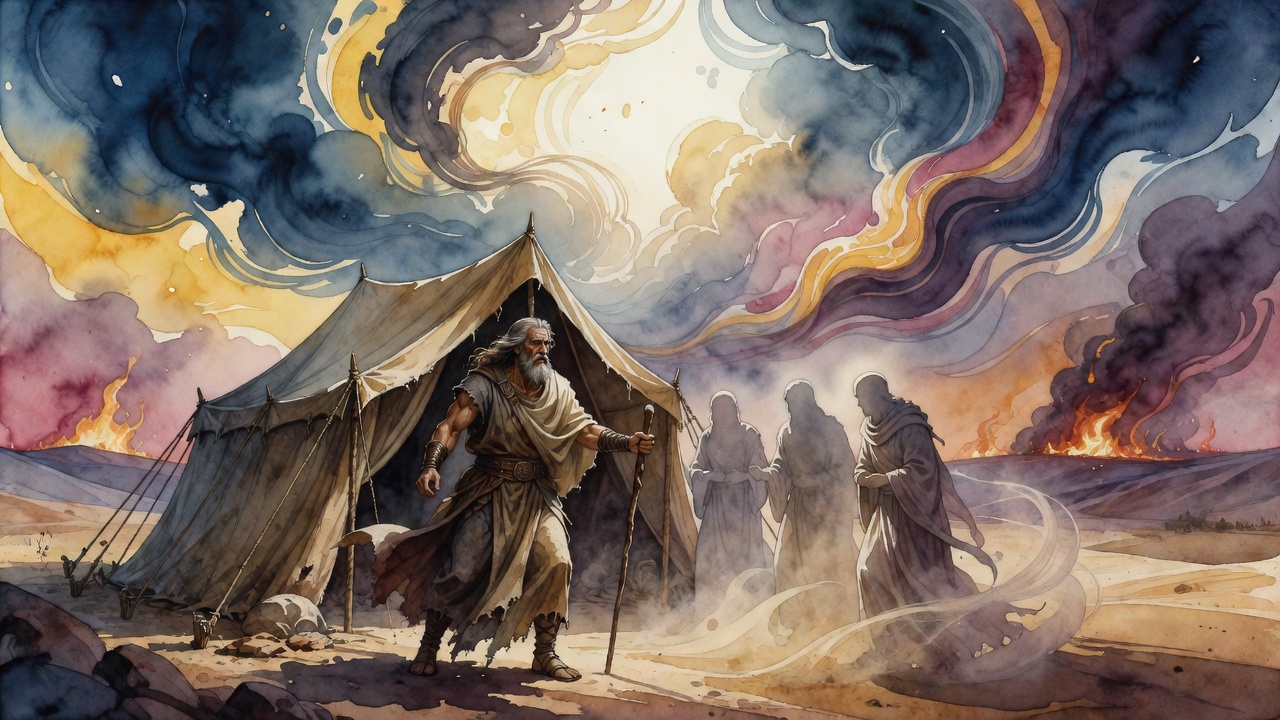
The ox had wandered off into the crags of Koptiziah, and Zepho went after it alone. He was a grandson of Esau, a son of Eliphaz, and he had come into these mountains with the people of Kittim, who had fled here from the armies of a king across the sea. A hero still has to chase a lost animal up a rockface like anyone else. He climbed until he found a cave mouth blocked by a single enormous stone. From behind it came a wet, tearing sound.
Zepho set his shoulder to the stone and heaved until it rolled aside. Inside, in the half dark, a creature crouched over a carcass. It was formed like a man from the waist up and like a he-goat below, and it was feeding on his ox. For years this thing had been dragging the cattle of Kittim off into the dark, and no one had dared the cave. Zepho did not wait. He killed it where it fed and hauled the body out into the light, so the people could see that the terror emptying their pastures was dead.
The Day They Carved His Name
Kittim went out of its mind with joy. The men who had lost calf after calf into the dark came to look at the split carcass and could not stop looking. They set aside a day in the year and called it by his name. On Zepho's day they brought him gifts and offered sacrifices, as though he were something more than a man. They pressed riches on him. They begged him not to leave. Lead our armies, they said. Stay and be our commander. The king across the water who had driven them into these crags still sat on his throne, and they wanted the man who had walked into the sealed cave standing between them and that throne.
His name was Angeas, king of Africa, and his was the empire that had scattered Kittim into the mountains in the first place.
When Angeas and Janus Both Lay Dead
Empires do not keep their shape. The years turned, and in one season both thrones emptied at once. Angeas of Africa died, and across the water Janus, king of Kittim, died as well. Into Africa's throne came Angeas's son, Asdrubal. Into the throne of Kittim came Latinus. Neither man would leave the other in peace.
A Victory Carried Home as a Bride
At first the war ran all one way. Latinus loaded his men into ships, crossed the sea, and came down on Africa. He beat Asdrubal in the field and beat him again, pushing deeper, until Asdrubal fell in battle and did not rise. His reign ended in the dirt of his own country. Latinus was not finished. Angeas had once cut a canal to bind Kittim and Africa together across the water, and Latinus tore it open and wrecked it, cutting the two lands apart, so that what the dead king had joined the living one unmade in an afternoon.
He sailed home with more than plunder. He carried back Ushpiziwnah, the daughter of the very Asdrubal he had killed. She was so beautiful that her people had taken to wearing her likeness on their clothing, so that a man might glance down at his own sleeve and find her face looking back. Latinus brought that face across the sea into Kittim as his bride.
The King Who Would Not Sound Retreat
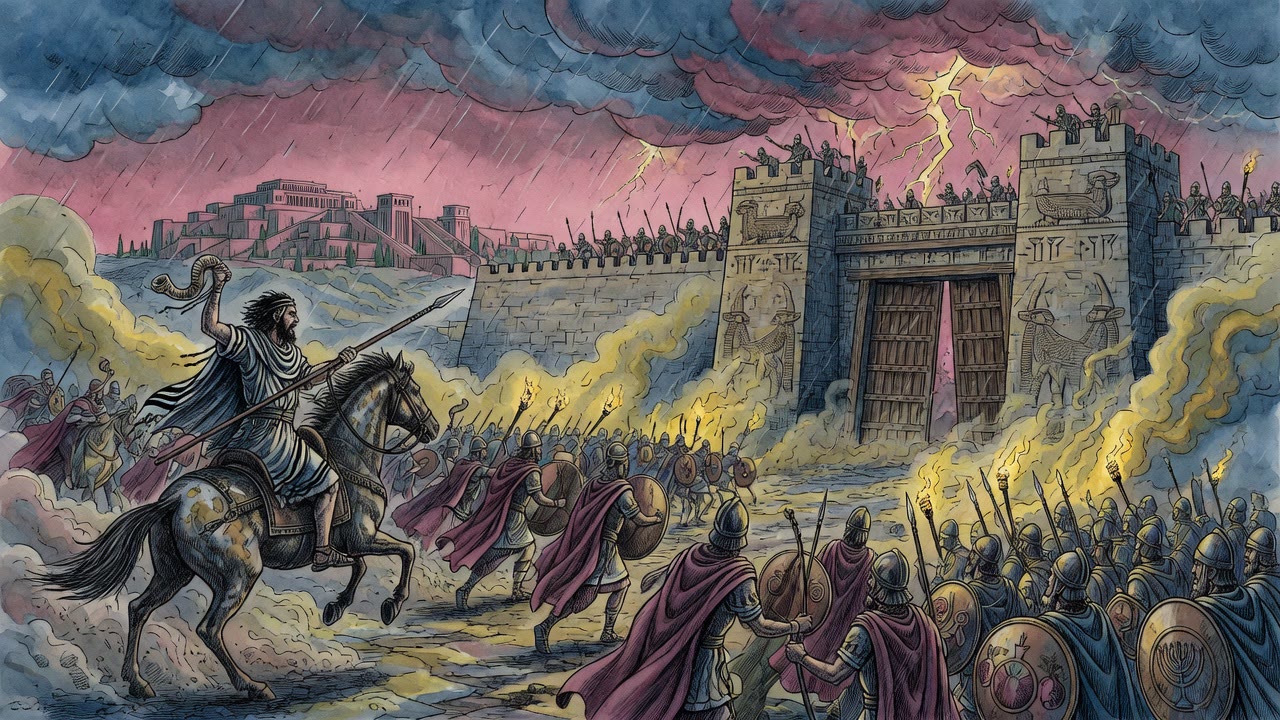
On another shore of the same churning world, a different army lost its nerve. These soldiers had beaten kingdom after kingdom, but now they stood before a handful of warriors so terrible that the men muttered these were not men at all but demons. Twelve of them. Twelve, against a whole city. The soldiers came to their king with one plea. "How long shall we fight these terrifying warriors?" they said. "Let us go back to our land, before they wipe us out root and branch and leave no remnant."
Their king would not hear it. "O you heroes, you men of might and valor," he thundered, "have you lost your senses? After you have subdued so many kingdoms and countries, you cannot hold out against twelve men? Is this your bravery?" His fear was not the twelve. It was everything standing behind them. "If the nations and the kings we have made our tributaries hear of this," he said, "they will rise against us as one man, and make a laughing-stock of us, and do with us as they please." So he drove them back into the fight with the only weapon he had left, which was their pride. "Take courage, men of the great city of Nineveh, that your honor and your name be lifted up, and you become not a mockery in the mouths of your enemies."
He would sooner watch his own men wiped out root and branch than let the empire catch the scent of his fear. Behind him lay the thrones that had emptied in a single season, the canal torn open, the dead king's daughter riding home on a conqueror's ship. The twelve waited in the field, taken for demons, and the men of Nineveh turned back toward them.
← All myths