13 texts
Consolation in Jewish mythology is documented here through 13 source passages from 4 distinct source names represented in this theme. The strongest clusters come from Rabbinic Midrash (13), with frequent witnesses in Pesikta Rabbati (5), Yalkut Shimoni on Torah (4), Pesikta de-Rav Kahana (3), and Yalkut Shimoni on Nach (1). These texts preserve how Jewish writers, sages, and mystics described consolation across biblical interpretation, rabbinic storytelling, medieval compilation, and kabbalistic teaching.
This page is a topic hub, not a single article. Use it to compare how different Jewish sources treat consolation: where the theme appears in narrative, how it changes across source families, which figures or symbols recur, and which passages are most useful for citation. Representative entries include Sing Barren One and Why Israel Is Called by Rachel, Wherever Scripture Says She Has None She Will Have, The Ten Words for Joy in the Mouth of the Prophets, Only the Holy One Himself Could Comfort Zion, and The Storm-Tossed City Rebuilt in Sapphire and Light. For synthesized anthology narratives, start with When Every Prophet Failed to Comfort Jerusalem, Every Prophet Ends With Hope Except Jeremiah, and The Heavenly Treasury Where Human Sorrows Are Counted.
Redemption (7), Messiah (2), Noah & Flood (2), Shekhinah (2), Women of the Bible (2), and Zion (2)
Isaiah's call to "sing, O barren one" sounds like a contradiction. Why would the childless woman be told to rejoice? The sages heard layers in that single word. Rabbi Meir caught a...
Just a single line, but the sages let it carry real weight. Isaiah praises the woman "that did not bear," and Rabbi Levi pulls back to notice a quiet pattern running through Script...
When Isaiah tells the once-sorrowing city to "break forth into singing and shout," the sages pause over how richly the Hebrew language can name happiness. They count ten distinct w...
How do you comfort someone whose grief has no equal? The sages picture the usual method: a widower will accept consolation when friends remind him that another man lost a wife just...
"O afflicted one, storm-tossed, not comforted." The sages read each word of that title as a wound. Afflicted of Torah, of commandments, of righteous men; stormed against by the nat...
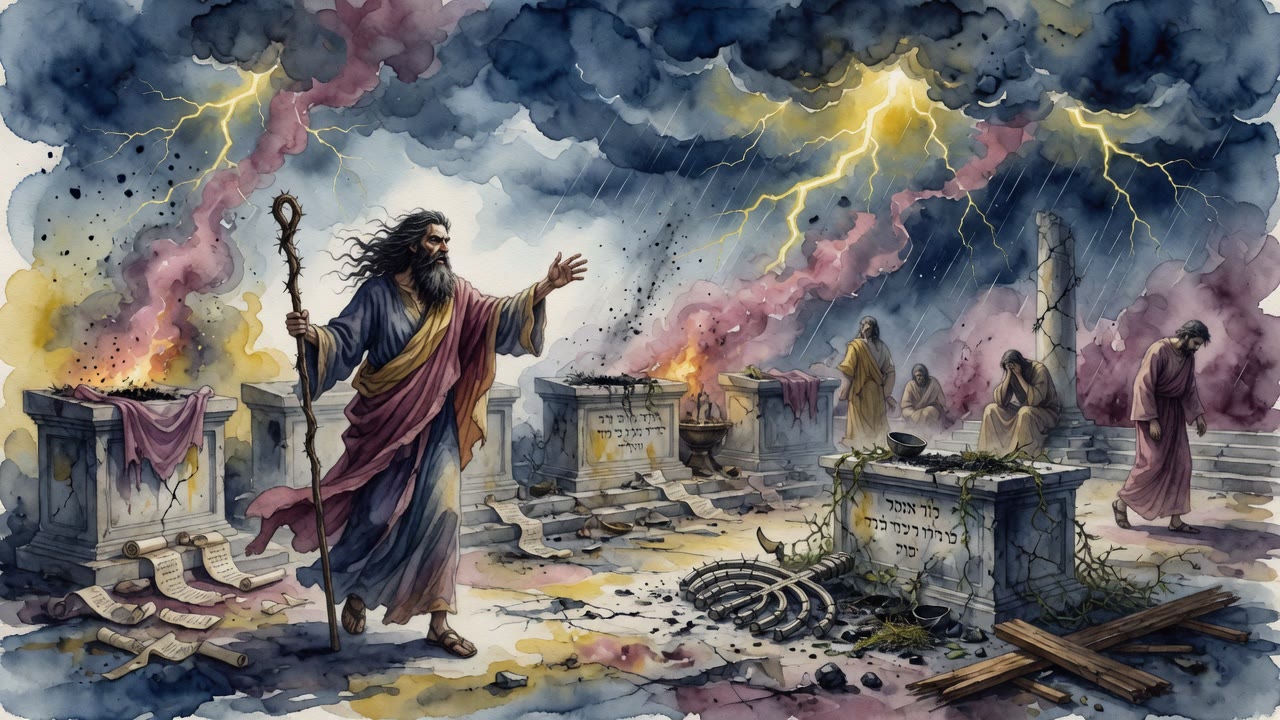
The Temple lies in ashes, and the people ask the hardest possible question. Your own Torah, they say, rules that whoever lights a fire must pay for the damage. And You lit this one...
The prophet calls the daughter of Zion to rejoice over a king who comes humble and riding on a donkey. But the midrash lingers first on the people who earned that joy: the mourners...
Zion is told to sing because God is coming back to dwell in her midst, and the midrash immediately raises the wound that makes the promise necessary. When the Second Temple went up...
When Lamech named his son, the Torah seems to mismatch the name and its meaning: "He called his name Noah, saying, this one shall comfort us" (Genesis 5:29). Noah means rest, yet L...
How did Lamech know, at the moment of his son's birth, that this child would comfort the world? Was he a prophet? Rabbi Shimon ben Yehotzadak traced the knowledge back to a traditi...
Rabbi Yitzchak lingered over a single word in the verse. Scripture says Abraham saw the place "from afar." Why that word, when the destination was already in view? He heard in it a...
Joseph's reply to his frightened brothers became a treasury of teachings. From the threefold plea "please forgive" the sages learned that one need not beg pardon more than three ti...
Rabbi Levi notices a pattern that runs like a hidden current through the whole of Scripture. Wherever the text declares that a woman has nothing, it is quietly promising that one d...