5 min read

Aaron Walked Up Mount Hor to Meet His Death

Aaron's staff struck the Nile and dust for Moses, then he followed his younger brother up Mount Hor while heaven watched him die.

Curated by Arthur · Told by Maggid ·
Table of Contents
  1. The River Exposed Pharaoh
  2. The Staff Passed to Aaron
  3. A Year of Blows and Waiting
  4. Moses Circled the Sentence
  5. The Cloud Covered Him Limb by Limb

Aaron's staff struck what Moses would not touch.

The Nile had once carried Moses in a basket and kept him alive. The dust of Egypt had once covered the body of the Egyptian Moses killed. Gratitude has a memory, even when judgment arrives with a staff in its hand.

The River Exposed Pharaoh

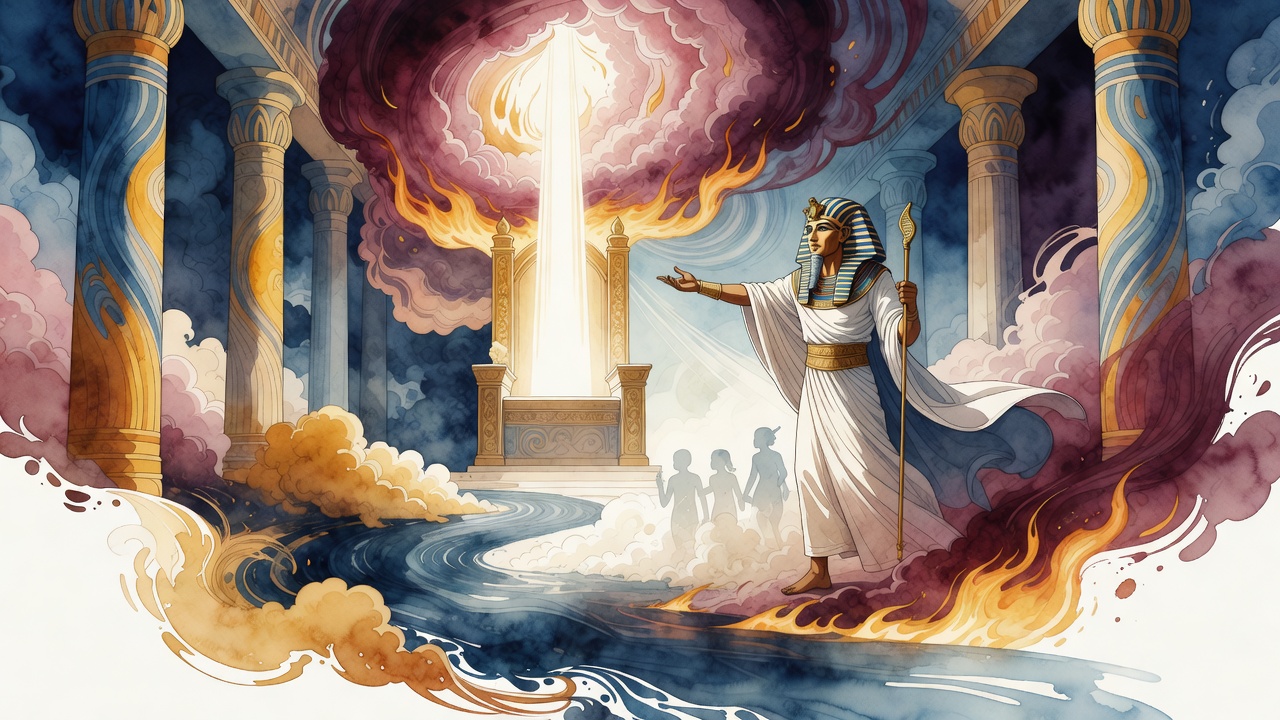
Morning after morning, Pharaoh went to the river before his servants stirred. A king who claimed divine flesh still had a body. He hid that body in the reeds and performed his human need in secret, then returned to the palace with the mask fixed back on his face.

Moses met him there, at the edge of the water, where the lie could not stand upright.

The river heard the challenge before the palace did. Is there a god who needs the riverbank before dawn? Pharaoh had built power on distance, gold, and fear. Moses dragged him down to the mud, where a king's body answered before his mouth could.

The Staff Passed to Aaron

When the first plague came, Aaron lifted the staff. The water turned against Egypt. Blood moved where the Nile had moved. Fish died. The smell rose.

Moses did not strike the river that had guarded him. Aaron did.

Then frogs came up. Then lice rose from the dust. Again Aaron stood as the instrument. The earth that had hidden Moses' violence would not be struck by Moses' own hand, so Aaron took the burden into his grip.

He did not demand the song after the miracle. He did not pull Moses aside and ask why his hand carried the blow while his brother carried the name. Aaron had learned a quieter service. A man can become necessary without becoming loud.

A Year of Blows and Waiting

The plagues did not pass over Egypt in a single night. The pressure lasted a year. Twelve months for judgment to ripen. Twelve months, like the Flood. Twelve months, like Job beneath his affliction. Twelve months, like the limit set for the wicked in Gehinnom.

Egypt had time to smell the river, hear the frogs, scratch at the lice, and still harden itself.

Aaron stood inside that year as priest before there was a sanctuary for him to enter. He knew how judgment feels when it travels through a human arm. He knew the cost of being useful to God while another man speaks at the center of the story.

That knowledge did not turn him bitter. It made him steady.

Moses Circled the Sentence

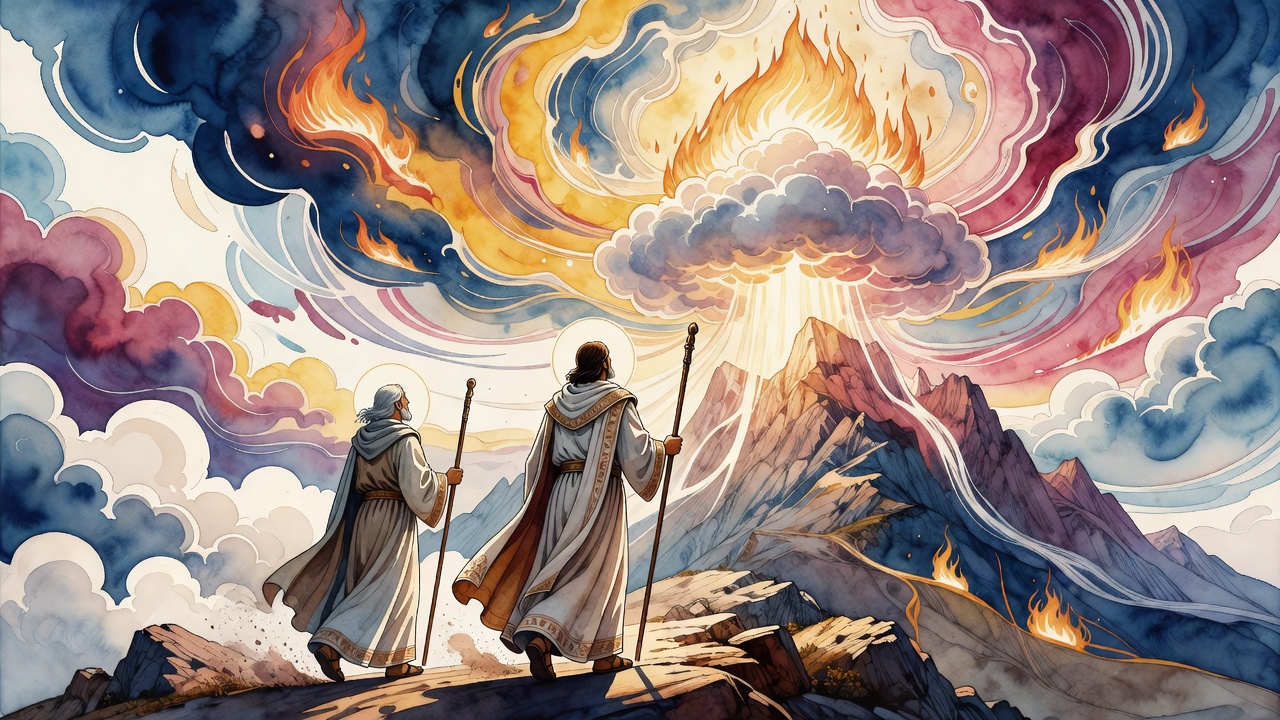
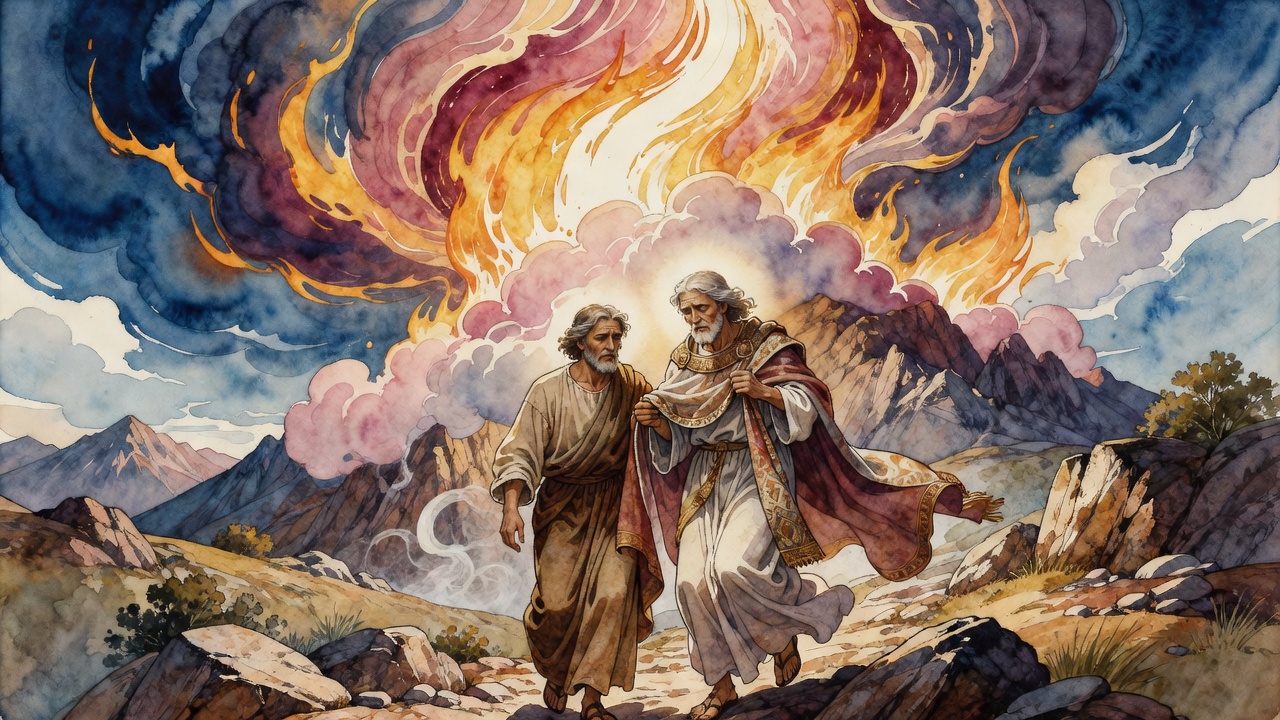
Years later, at Mount Hor, Moses could not put the sentence straight into Aaron's face. God had called for Aaron's death, but the younger brother who had leaned on Aaron in Egypt now had to lead him upward.

Moses began at a distance, with words once spoken to Abraham: You shall come to your fathers in peace.

Aaron did not take the hint.

So Moses came closer. If the Judge decreed death after a hundred years, would Aaron accept it?

Yes.

If the decree came today?

Yes again. The Judge is righteous.

There was no bargaining. No flinch. No priestly protest that the work was unfinished. Aaron followed his younger brother up the mountain like a sheep led to slaughter, and the angels wept over the sight. They had marveled at Isaac on the altar, but Isaac had been bound by his father. Aaron walked with his own feet.

The Cloud Covered Him Limb by Limb

Eleazar climbed with them. The son watched the father ascend in priestly garments, and the mountain received all three.

Moses faced a final problem. Aaron's garments had an order. They could not be torn away like common cloth. They could not be stripped in a way that shamed the priest who had worn them before God. Moses knew law. He knew love. The two stood against each other on the mountain.

Heaven made room between them.

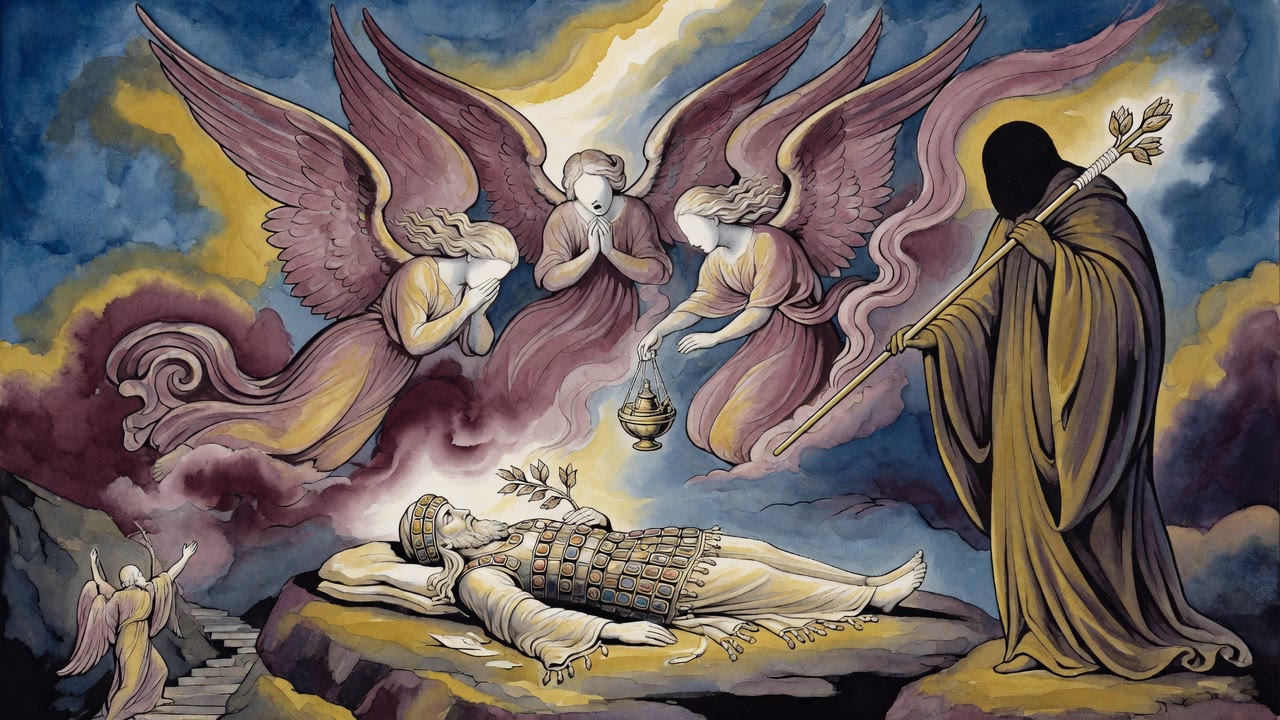
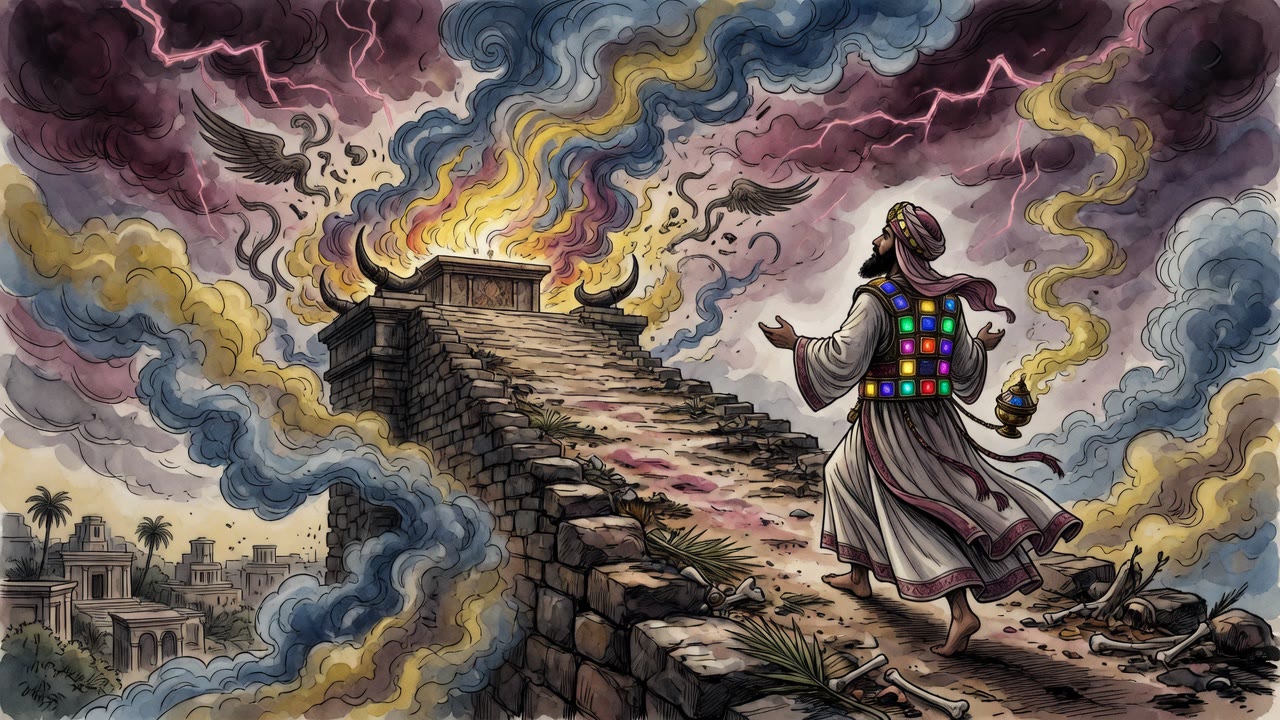
Moses removed what his hands could remove, and the cloud of glory covered what his hands could not. Limb by limb, Aaron disappeared into white. The garments passed from father to son. The priesthood did not collapse. It crossed over.

At the river, Aaron had raised the staff so Moses would not strike what had saved him. On the mountain, Moses raised his hands so Aaron would not be dishonored at the edge of death.

The cloud closed. The elder brother was gone.


← All myths

From the tradition

Sources

2 sources

The texts this telling draws on, in full. Open a card to read inline, or expand it for a wider, quieter read.

Yalkut Shimoni on Torah 787:2Yalkut Shimoni on Torah

"Moses, Aaron, and Eleazar went up Mount Hor" (Numbers 33:38). Moses was ashamed to say to Aaron, "Your time has come to depart from the world." He said to him: Aaron my brother, do you wish to know what is written about Abraham? He said: yes. He said to him, "You shall come to your fathers in peace" (Genesis 15:15), and Aaron did not sense the hint. Moses said: Aaron my brother, if the Holy One, blessed be He, said that after one hundred years you would die, what would you say? He said: the Judge is righteous. And if He said to you today, what would you say to Him? He said: the Judge is righteous; He is faithful over me. Moses said: since you have accepted it upon yourself, let us ascend to the top of the mountain, for so the Holy One, blessed be He, said to me. Aaron walked after him "as a sheep is led to slaughter" (Isaiah 53:7). The Holy One, blessed be He, said to the ministering angels: were you amazed at Isaac when he went up on the altar and did not refuse? Come and see the elder walking after his younger brother to accept death. Moses did not know how to strip Aaron's garments. To remove the outer garment and dress Eleazar in an inner one was impossible; to change the sacred garments from their order was impossible; to remove them all and leave Aaron naked was impossible. The Holy One, blessed be He, said: you do your part, and I will do Mine. Moses stripped him, and Aaron was absorbed into the mountain. The sages say: Moses stripped him, and the ministering angels dressed Eleazar. The priestly garments that Moses stripped from Aaron he dressed on Eleazar his son before Aaron's eyes, and the Holy One, blessed be He, gave Aaron comfort and made him know that no strangers were taking his greatness.

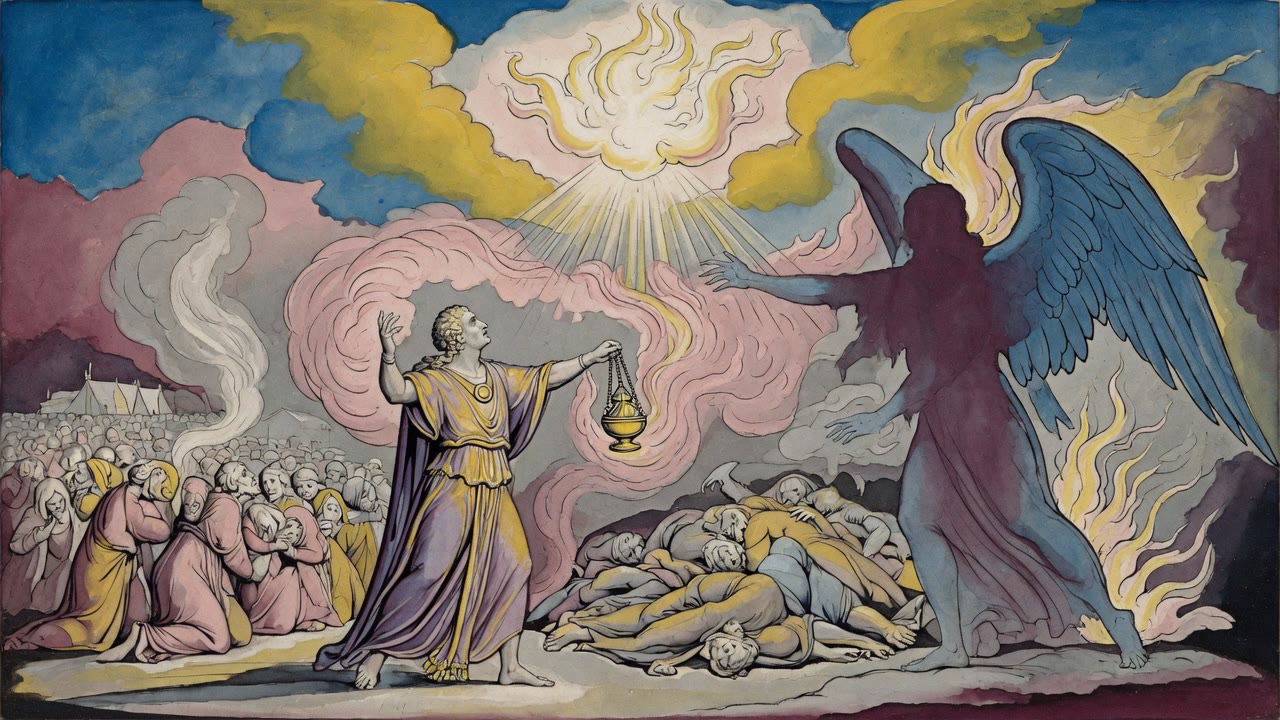
Afterward the Holy One, blessed be He, descended and took Aaron's soul with a kiss, as it is said, "by the mouth of the LORD." Moses and Eleazar kissed Aaron, Moses on one cheek and Eleazar on the other. Some say Moses stripped him from his ankles upward, and the cloud of glory rose and covered him. Moses said: what do you see? Aaron said: I see nothing except that the cloud of glory clothes the limbs that you strip. Moses stripped him up to his thigh, and the cloud of glory rose and covered him; he stripped him up to his neck. He said: Aaron my brother, what do you see? What is death? Aaron said: until now, nothing, except that a cloud of glory has risen and covered me up to my neck. Once Moses stripped him completely, the cloud covered all of him. Moses called: Aaron my brother, what is the death of the righteous? Where are you? Aaron said: I am not worthy to tell you, except that I wish I had come here before my time. When Moses saw how Aaron died, Moses desired that death. When the Holy One, blessed be He, later said to him, "as Aaron your brother was gathered" (Numbers 27:13), Moses said, "Let the LORD, God of the spirits, appoint" (Numbers 27:16). When Aaron died and was hidden from them, Moses and Eleazar descended, and all Israel stood trembling and waiting to see him, because he loved peace and pursued peace. Ha-Satan went among them and stirred all Israel against Moses and Eleazar. Israel seized them and said: where is he? They said: the Holy One, blessed be He, has stored him away for the life of the world to come. They said: we do not believe you. Perhaps he said something improper to you and you fined him with death. All Israel sought to stone Moses and Eleazar. Immediately the Holy One, blessed be He, said to the ministering angels: lift the bier of Aaron My beloved into the height of the world, so Israel will know and will not harm Moses and Eleazar. The ministering angels lifted his bier into the height of the world. The Holy One, blessed be He, walked before the bier and eulogized him, and the ministering angels answered after Him, "The Torah of truth was in his mouth" (Malachi 2:6). When Israel saw his bier in the height of the world, with the Holy One, blessed be He, and the ministering angels eulogizing him, all Israel, great and small, stood and made a great lament for him and wept a great weeping over him, as it is said, "all the house of Israel wept for Aaron" (Numbers 20:29).

Come and see the honor and praise of Aaron the righteous, that all who came into the world wept for him. But when Miriam died, they did not eulogize her and did not bury her except Moses at the head and Aaron at the foot, and they went and buried her. Even for Moses our teacher, all Israel did not weep as they wept for Aaron, because Moses rebuked them over every matter. Concerning Moses it is written, "the children of Israel wept for Moses" (Deuteronomy 34:8); concerning Aaron it is written, "all the house of Israel" (Numbers 20:29), because Aaron never judged them toward guilt and never said to a man, "you have sinned," or to a woman, "you have sinned." When Moses saw Aaron's honor and praise, his bier set in the height of the world and the Holy One, blessed be He, and the ministering angels surrounding him and binding a great lament over him, he sat and wept. He said: woe to me, for I have been left alone. When Miriam died, no one from Israel came to us except me, Aaron, and his sons; we stood before her bier, wept over her, eulogized her, and buried her. When Aaron died, I and his son attended to him and stood before his bier. What will become of me? Who will stand over me at the time of death? No father, no son, no brother, no sister. Who will weep over me? At that moment the Holy One, blessed be He, answered him: do not fear. I Myself will stand and bury you with great honor, as it is said, "He buried him in the valley" (Deuteronomy 34:6). Just as Aaron's cave was hidden and unknown, so your cave will not be known, as it is said, "no man knows his burial place" (Deuteronomy 34:6). Just as the Angel of Death did not rule over Aaron, but only a kiss, so the Angel of Death will not rule over you, and you will depart with a kiss, as it is said, "by the mouth of the LORD" (Deuteronomy 34:5). Immediately Moses' mind was settled. Fortunate are the righteous, for the Holy One, blessed be He, Himself gathers them, as it is said, "the glory of the LORD shall gather you" (Isaiah 58:8). Not only that, but the ministering angels go out to meet them, rejoice in them, receive them with a pleasant face, and say to them: come in peace, as it is said, "he shall enter into peace; they shall rest on their beds" (Isaiah 57:2).

Full source
Legends of the Jews, IV. Moses In Egypt, The Plagues Brought Through AaronLegends of the Jews

Legends of the Jews (Ginzberg) turns to The Plagues Brought Through Aaron.

In Legends of the Jews, as retold by Ginzberg, a whole year passed between the first plague and the final release of the Israelites. Why a year? Because, as the text explains, twelve months is the term God sets for the expiation of sins. the Flood lasted a year, Job suffered for a year, and even sinners in hell get a year! It's a recurring motif of divine judgment and redemption.

Let’s get back to Aaron. The story goes that Moses would announce the first plague – water into blood – to Pharaoh in the morning. Why in the morning? Well, Pharaoh had a little secret. He pretended to be a god, immune to human needs. To keep up the act, he’d sneak off to the riverbank each morning to, ahem, relieve himself. It was during one of these private moments that Moses confronted him: "Is there a god that hath human needs?" The encounter reveals the sheer absurdity of Pharaoh's claim to divinity.

It’s a great illustration of the difference between God and humans. A human might plot in secret to harm an enemy, but God? God warns publicly. Moses would give Pharaoh and the Egyptians three weeks' notice before each plague struck, even though the plague itself only lasted a week!

Now, here’s where Aaron comes in. To bring about the plague of blood, Aaron, not Moses, stretched out his rod over the waters of Egypt. Why Aaron? Because, as God said to Moses, "The water that watched over thy safety when thou wast exposed in the Nile, shall not suffer harm through thee." The river had protected Moses as a baby, so he couldn't be the one to strike it. Divine justice. As soon as Aaron acted, all the water turned to blood – even the water in wooden and stone vessels! The Egyptians were in dire straits. But here's a twist: the plague was actually a financial opportunity for the Israelites. If an Egyptian and an Israelite tried to draw water from the same source, only the Egyptian’s portion would turn to blood. So, the Egyptians had to pay the Israelites for untainted water. Talk about turning a crisis into an opportunity!

Of course, the Egyptian magicians managed to replicate the plague of blood, thanks to "Angels of Destruction." This meant Pharaoh wasn't particularly impressed. He didn't see it as a punishment from God.

Next up: the plague of frogs. Again, it was Aaron who performed the miracle, stretching out his hand over the rivers. Moses, still indebted to the water, was kept from "poisoning his savior" with reptiles. We're told that at first, only one frog appeared, but it croaked and summoned so many friends that the land swarmed with them. They even found a way into the marble palaces of the Egyptian nobles. "Make way," the frogs would call out to the stone, "that I may do the will of my Creator." Imagine that!

These frogs were serious about fulfilling God’s will. They even threw themselves into red-hot ovens to devour the bread. This act of self-sacrifice becomes a powerful parable. Centuries later, when Hananiah, Mishael, and Azariah were ordered by Nebuchadnezzar to worship idols or be burned alive, they remembered the frogs. "If the frogs. threw themselves into the fire. how much more should we be ready to expose our lives to the fire for the greater glory of His Name!"

And just as the frogs were rewarded, so too were the three holy children saved from the furnace.

This time, even though the Egyptian magicians duplicated the plague of frogs with the help of demons, Pharaoh felt the personal inconvenience. The frogs were everywhere, causing physical suffering. So, he promised to let the people go. But, as we know, Pharaoh was not the most reliable. As soon as the frogs were gone, he hardened his heart again.

Then came the plague of lice. This time, Moses was excluded, "for," said God, "the earth that afforded thee protection when she permitted thee to hide the slain Egyptian, shall not suffer through thine hand." The magicians tried to replicate this plague, but they failed miserably. Why? Because, demons can only produce things larger than a barley grain, and lice are smaller than that. "This is the finger of God," they admitted, finally acknowledging the divine power at play.

Even this wasn't enough to sway Pharaoh. So, God warned Moses that the fourth plague would be even worse.

What does this all tell us? It highlights the complex relationship between divine action, human agency, and even the natural world. Aaron’s role, in particular, reminds us that even seemingly minor figures can play a crucial part in the unfolding of monumental events. And it makes you wonder, doesn't it? What seemingly small acts of service or sacrifice might we be called upon to perform, without even realizing the profound impact they might have?

Full source