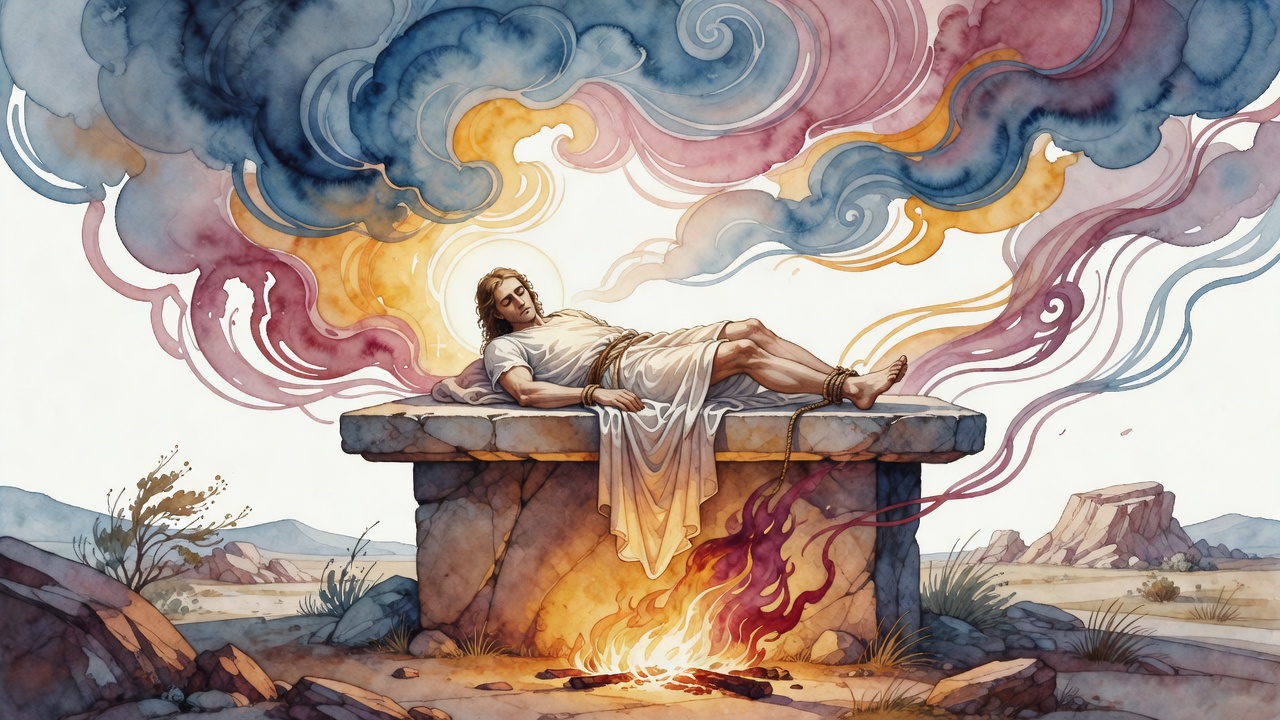
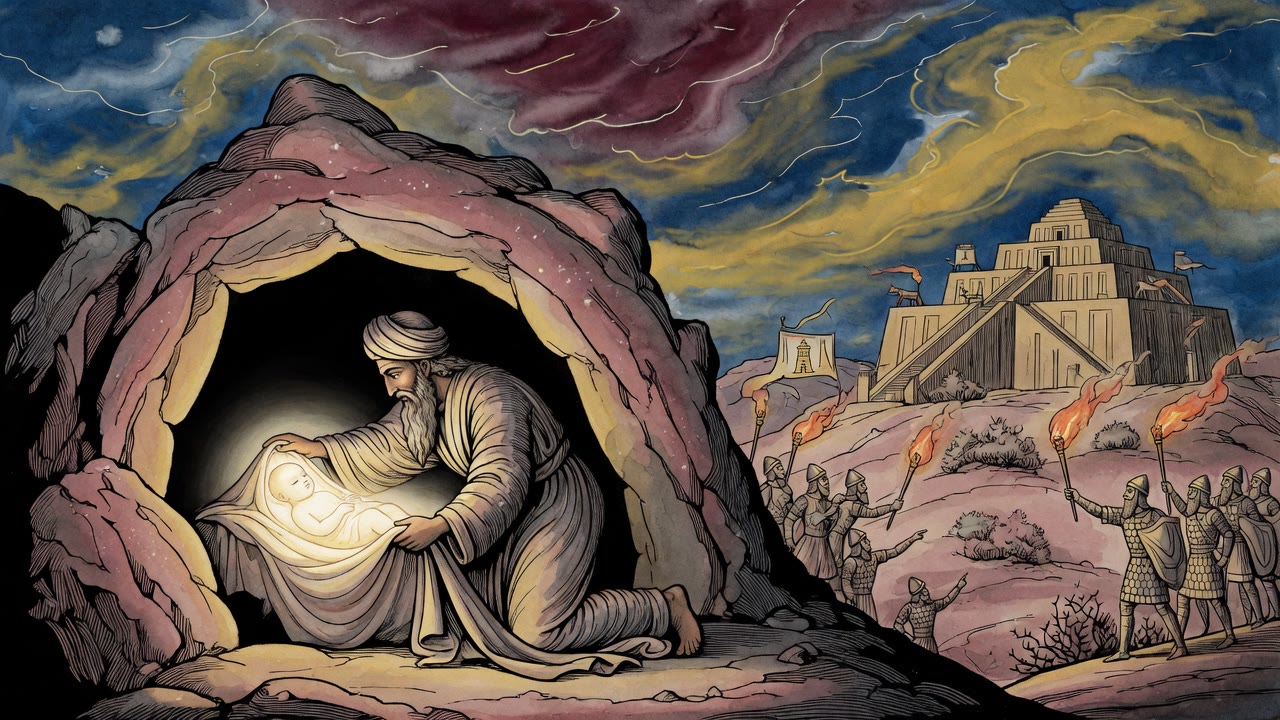
Abraham Learned the Stars Could Not Rule Him
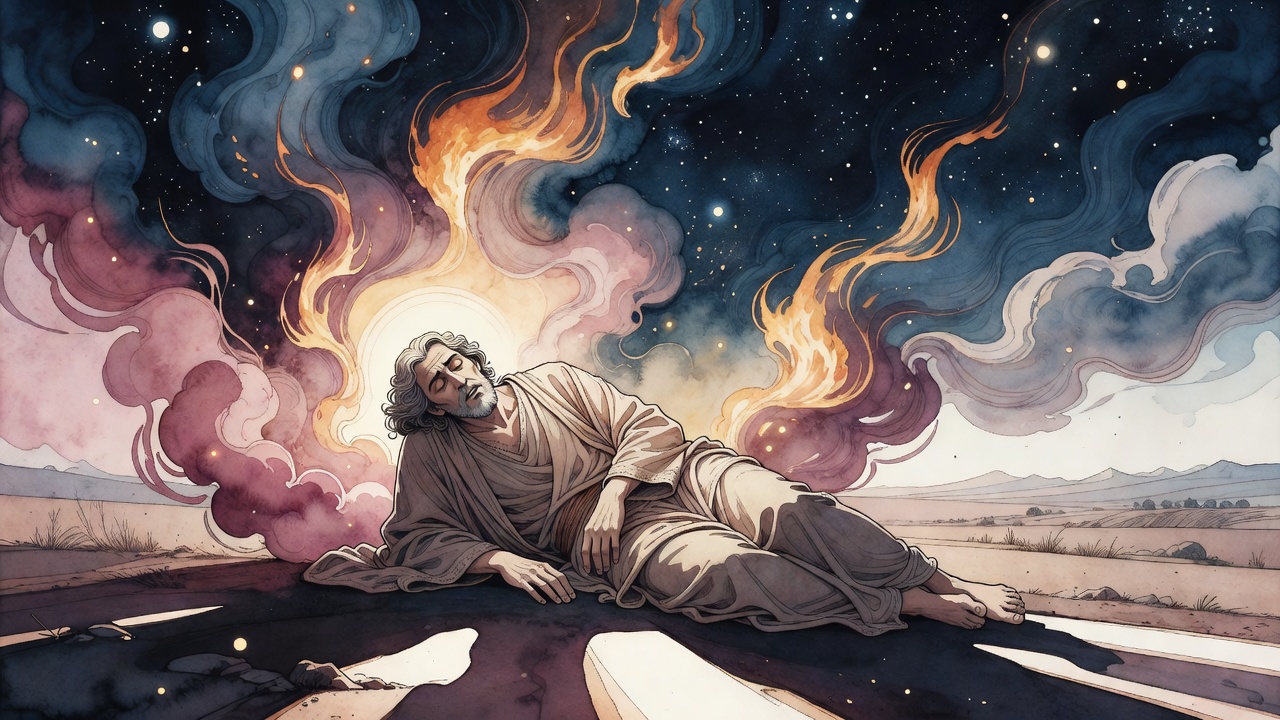
Young Abraham serves the sun until it sets, then serves the moon until it sets, and understands that anything replaceable cannot be God.
Table of Contents
 Click for full size
The Sky Could Not Answer Him
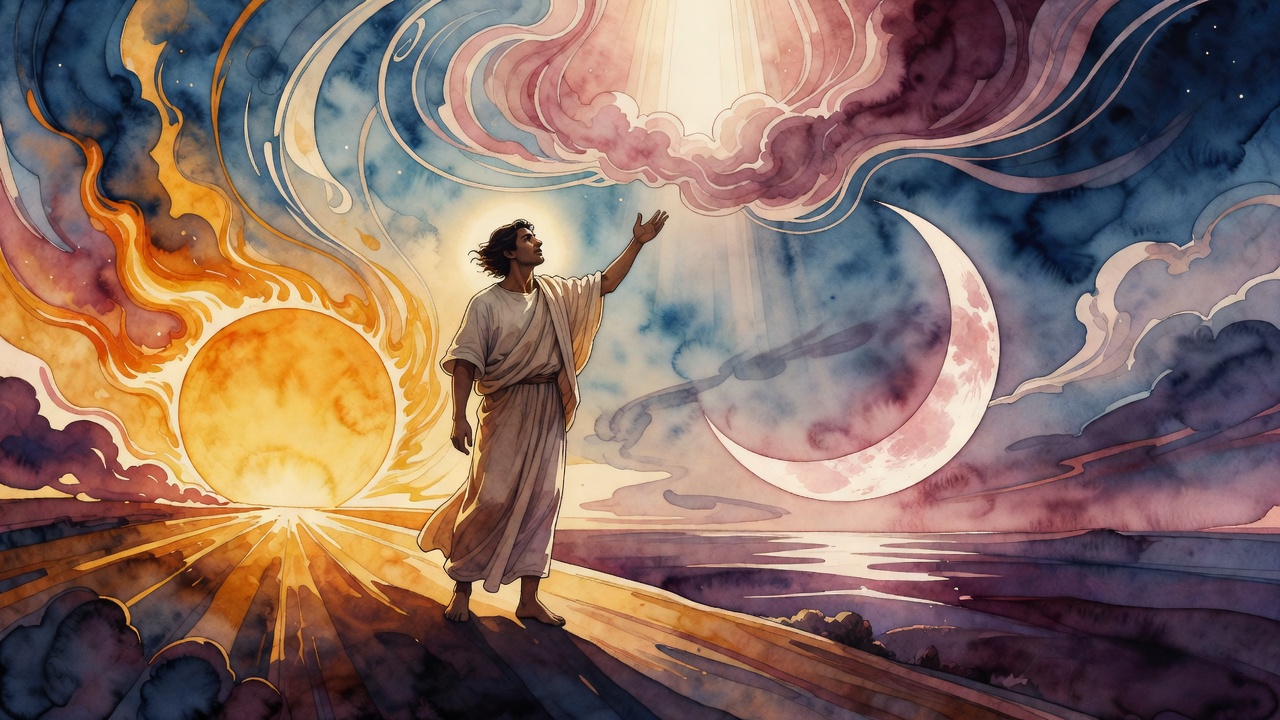
The child stood in the open air and watched the sun move across the sky. Everything in the world depended on light and warmth. This had to be the ruler. He devoted himself to it for the whole of the day, watching, following, giving the sun the attention a man gives to the one who holds his life.
Then the sun set.
The ruler of the world does not set. Anything that can be replaced by darkness is not ultimate. He waited. The moon rose with its court of stars, a different kind of majesty, cooler and more distant but still governing the night. He gave his attention to the moon. Morning came. The moon went pale and disappeared.
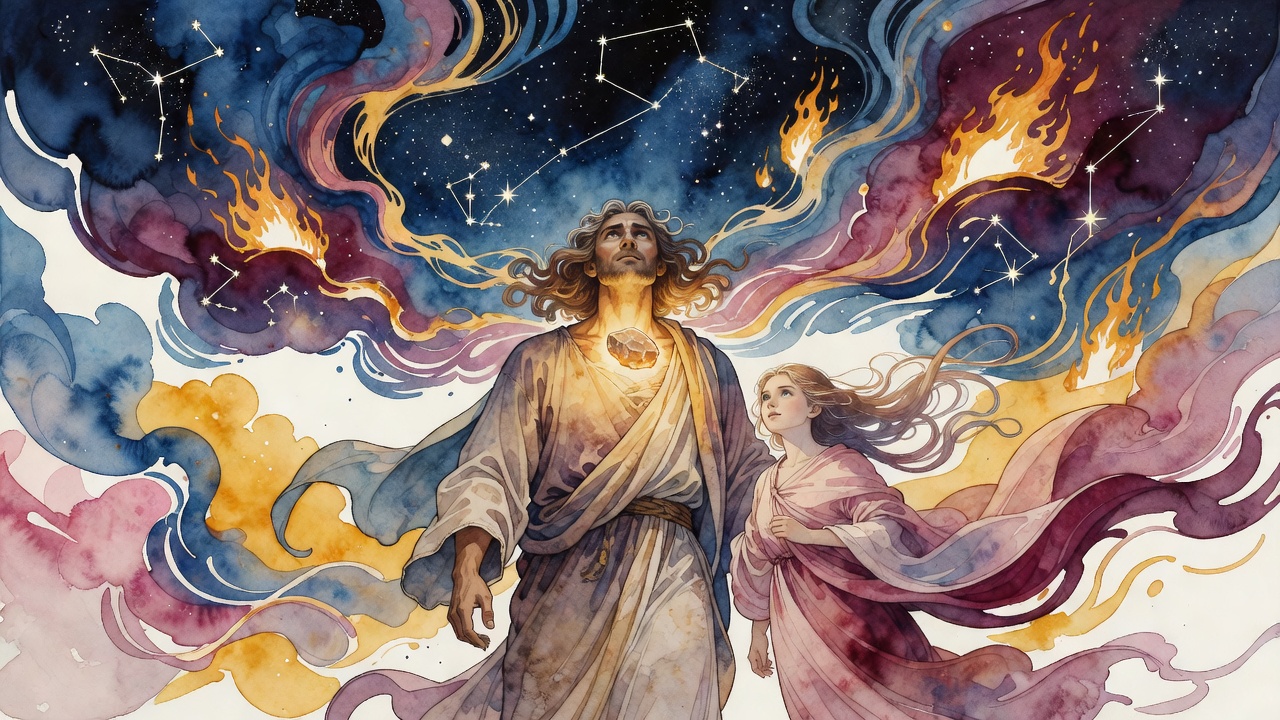
This is where Bereshit Rabbah places the beginning of Abraham's faith. Not in revelation. In failure. The sun and moon each failed him in sequence, and by the time he was through with the sky, he understood the first law of genuine worship: anything that can be replaced cannot be God.
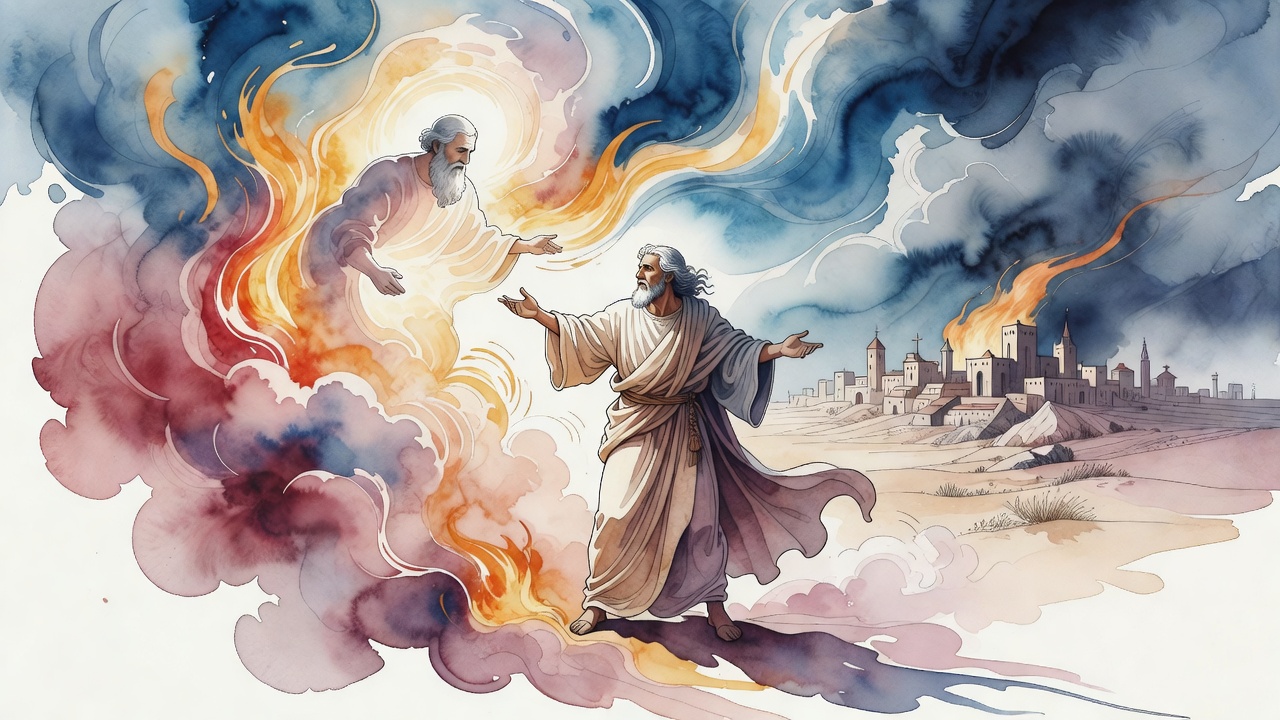
He Left After His Father Was Counted Dead
Genesis says Terah died in Haran before God told Abram to leave. Bereshit Rabbah's tradition notices a problem: the numbers do not add up cleanly. Terah was 70 when Abram was born. Abram left Haran at 75. That means Terah was 145 when Abram departed, and Terah lived to 205. If Terah was still alive, why does the Torah say his death before describing Abram's departure?
The answer Bereshit Rabbah offers is theological. God counted Terah as dead while he was still alive, because the wicked are called dead even in their lifetime. Abram leaving while Terah breathed would have dishonored his father. So God, in the divine accounting, resolved the problem by changing the order of events in the text. The death appears first so that Abram's departure is clean.
The same insight Abraham had learned from the sky returns here: the order in which things appear may not be the order in which they are. The sunset is not the death of the sun. The text's sequence is not always chronological. What looks like one thing may be something else when you press on it.
The Blessing Came Before the Covenant Was Named
After Abram left Haran and crossed into Canaan, after the famine that drove him to Egypt and the near-disaster with Pharaoh and Sarah, after the battle with the kings to rescue Lot, Melchizedek came out to meet him. The king of Salem, priest of God Most High, brought bread and wine and blessed Abram. He blessed the God who had delivered Abram's enemies into his hand.
Bereshit Rabbah reads this encounter with attention. Melchizedek is a righteous priest outside the Abrahamic family, a king of a city that will one day be Jerusalem, already recognizing what Abram's morning under the stars had begun. The blessing he gives is not invented. It acknowledges what was already there. Abram had not been blessed because of covenant and circumcision and trial. He had been blessed because he was the one who had looked at the sky and refused to worship anything that set in the west.
Resh Lakish Read the Covenant as a River
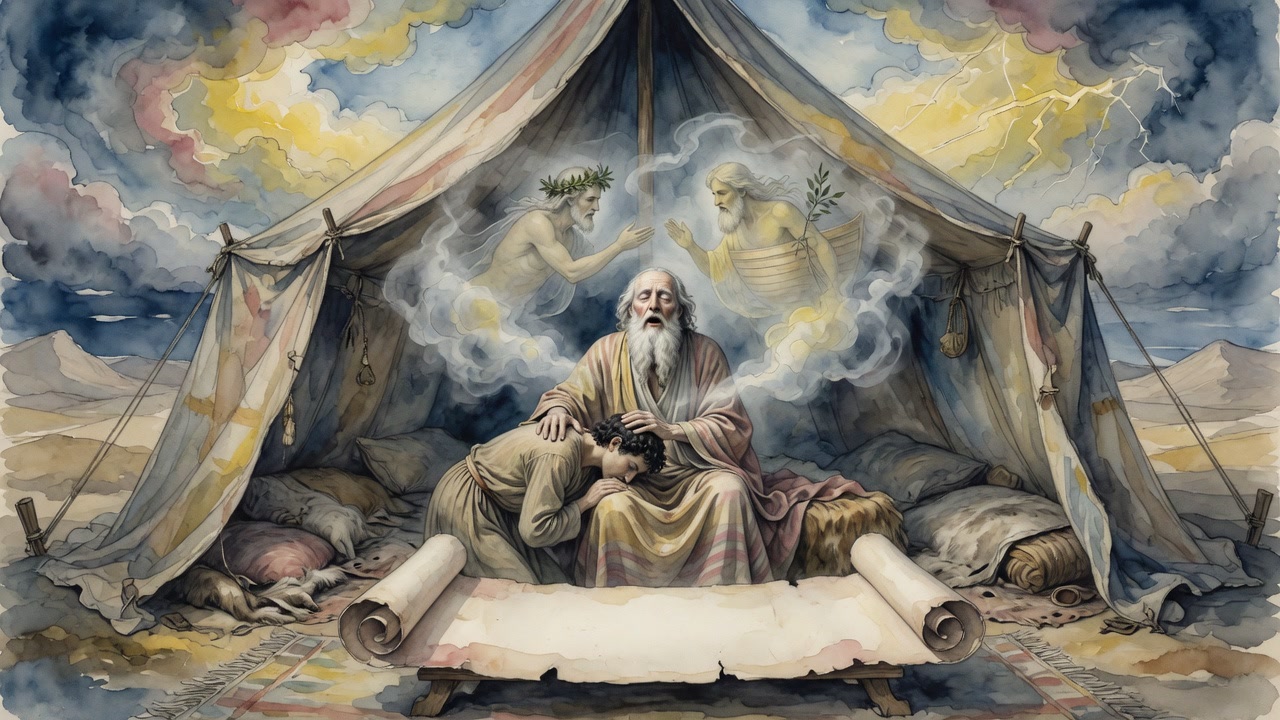
The covenant between the pieces in Genesis 15 is one of the most vivid scenes in the patriarchal narrative: animals cut in half, a smoking fire pot and flaming torch passing between the halves in the dark, Abraham falling into a deep sleep and hearing the prophecy of four hundred years of bondage and return. Resh Lakish reads this not only as a covenant ceremony but as a map of Israel's future.
The fire pot is Egypt. The torch is the divine presence that moves through history. The pieces of the animals are the nations cut away from Israel's path. The covenant was not only a promise made in private between God and one man. It was the shape of the whole of what was to come, laid out in darkness between divided animals while Abraham slept and could not interfere with the vision.
Laban and Bethuel Said It Came From God
When Abraham's servant arrived in Haran looking for a wife for Isaac, he prayed at the well and Rebekah appeared and gave water to him and to his ten camels. He went to her family and told them everything: Abraham's prosperity, Isaac's inheritance, the prayer at the well, Rebekah's response, the gifts he had given her. He laid out the whole sequence as evidence.
Laban and Bethuel listened to the entire account and said: the thing has come from God. We cannot speak against it, good or bad. The family that Abraham had left behind, the people of Haran who worshipped other things, looked at the servant's story and recognized the same pattern Abraham had recognized at the sunset: something is at work here that is not reducible to the people visible in the room. A man who had rejected the sun and the moon for a God who did not set sent his servant across a desert, and even the family of the distant cousin could see the thread running from the prayer to the well to the girl to the mission.
← All myths