5 min read

Abraham Left Twice and Refused to Build Babel

The tower builders came recruiting. Sit with us, they said, you are mighty, heaven has abandoned us down here. Abraham walked off toward the land alone.

Curated by Arthur · Told by Maggid ·
Table of Contents
  1. The Delegation on the Road
  2. Go For Yourself
  3. The Same Two Words on the Second Road
  4. The First Gray Head in Twenty Generations
Abraham Left Twice and Refused to Build Babel Click for full size

The Delegation on the Road

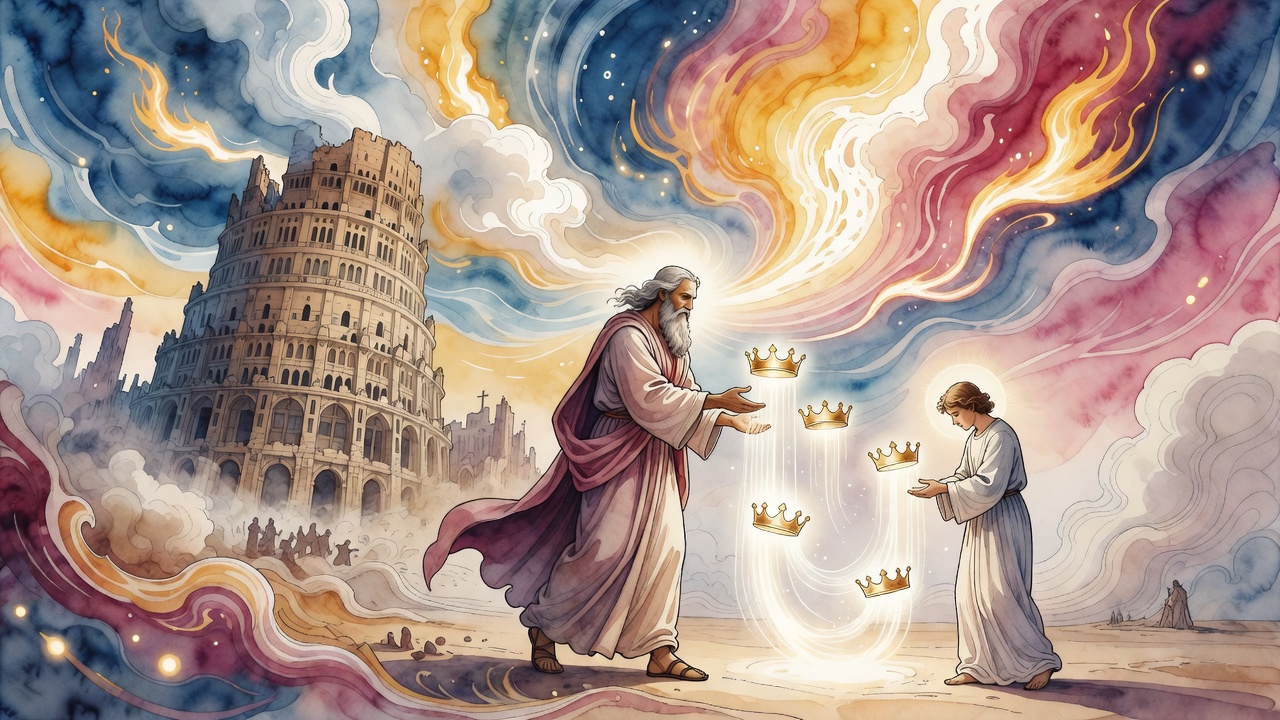
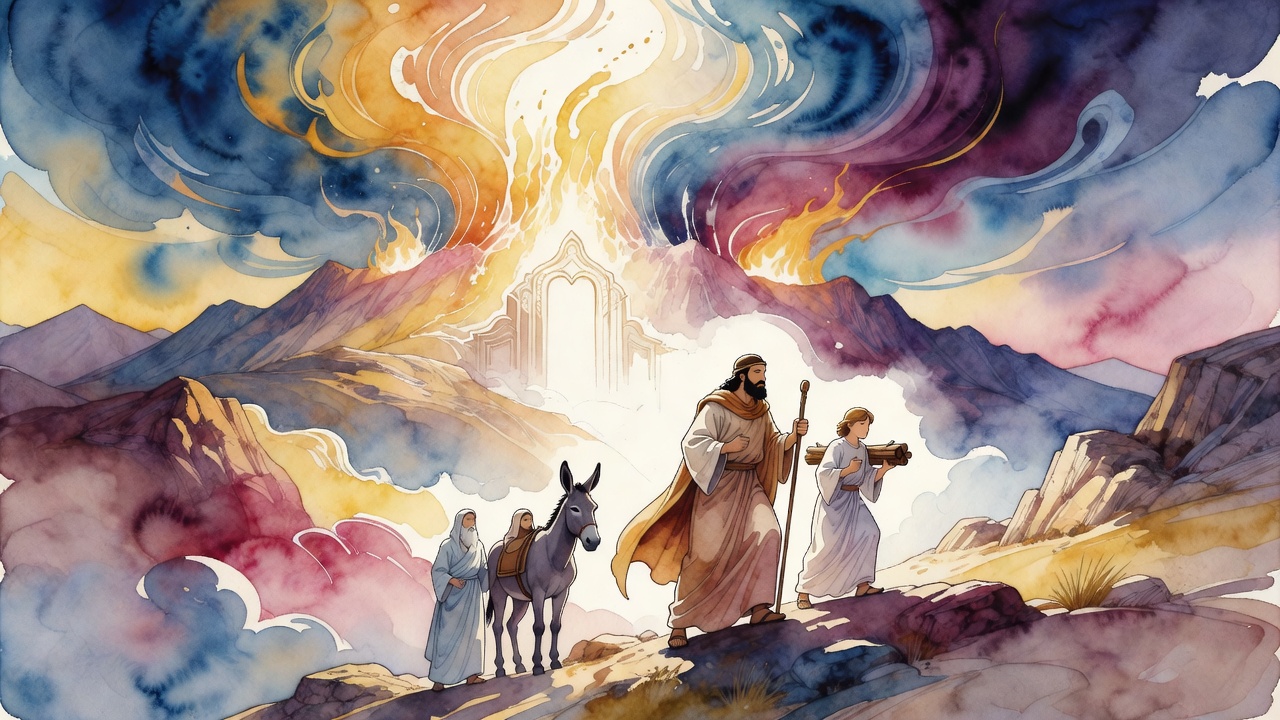
They came up the road in a group with brick dust still on their hands and found Abraham outside his tents. "Come and sit with us," they said. "You are mighty. The Holy One has seated Himself on high and abandoned us down here, so let us storm the heavens together."

Abraham wanted to know what they thought they had against Him who sits above. "Did He ever say, toil and feed Me? He makes and He bears. What is your claim?"

They had an answer ready, because they had been afraid for a long time before they ever walked out to fetch him. "Lest He do to us as He did to the generations before." Water had taken one world already, so they had stopped waiting on the next verdict. The plan was a city, a tower, an idol set above Him, and a name of their own that no flood could rinse off.

"You have abandoned a true tower of strength, the Name of the Lord," Abraham said, "and you build a name of your own?"

They went back to the brickfield, since one man refusing is only one man. The Holy Spirit was already crying against them that the wicked are like the troubled sea, and such men cannot rest easy for a single hour. Heaven laughed. The higher the courses of brick went up, the further the builders had to come down, until they were scattered and condemned out of their own counsel, dross that had tried to cast itself into gods. Abraham said that he had not sat with men of falsehood, and he went off alone toward the land he had been promised.

Go For Yourself

Alone was the cost, and alone was also the instruction. Go for yourself out of your land, out of your birthplace, out of your father's house. Three things named in that order, each one closer to the bone than the last, so that by the end of the sentence there was nothing left of him a neighbor could have identified in a crowd. The land he was walking toward went unnamed.

He had just refused a name made out of brick. What he had in its place was a road, a voice, and a promise he could not show to anyone.

The men on the plain got a name in the end, though not the one they were after. Babel is what people call the place, which in the language of that plain means confusion.

The Same Two Words on the Second Road

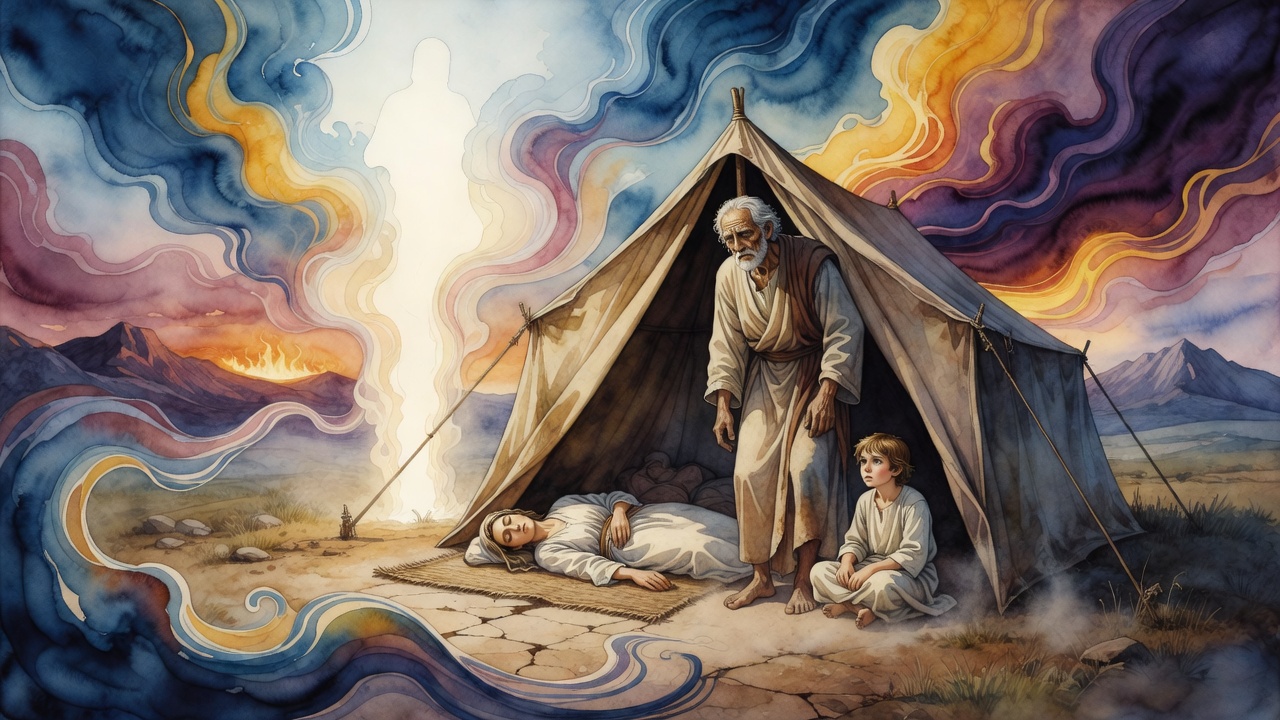
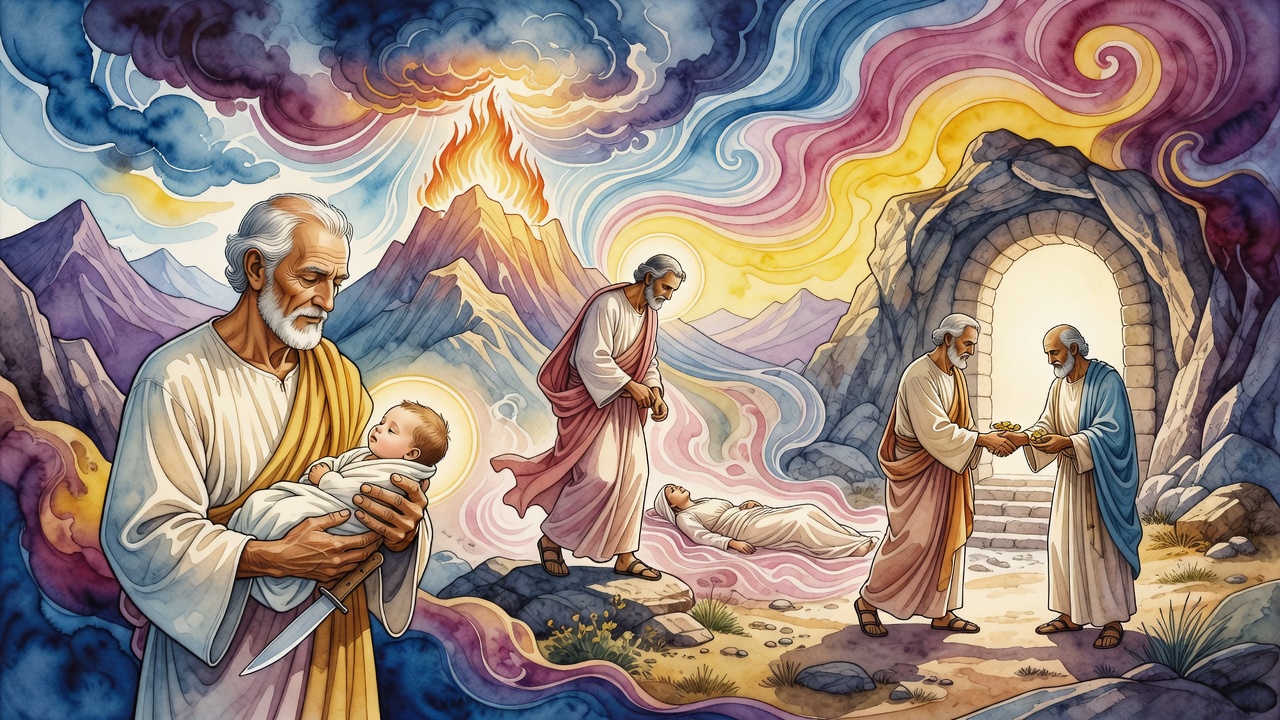
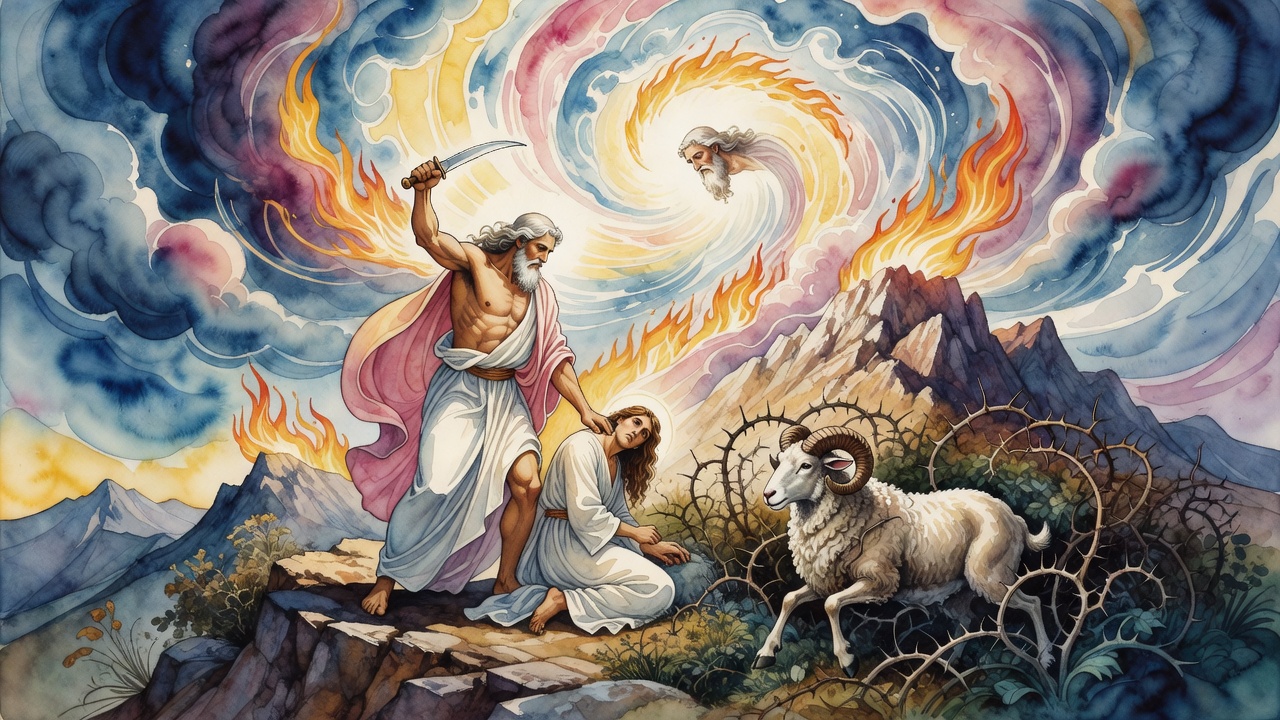
He would leave twice in one life, and both departures came out of the same two syllables. Decades later the voice used them again. Go for yourself, to the land of Moriah. The first time, the thing he had to leave was behind him. This time it walked beside him carrying the wood.

Isaac was old enough to do the arithmetic, and on the third morning he did it out loud. He looked at the fire in his father's hand and the wood on his own shoulder and said, "Behold the fire and the wood." Then he asked where the lamb was.

Abraham heard the question arrive at its own answer and did not stop walking. He shifted the fire to his other hand. He counted what was left of the road, because counting the road meant not counting anything else, and the two of them went on together with the boy still waiting on a reply.

Whatever else came off that mountain, the son came off it able to reason a thing through to the end while his own life hung on the result. That was not a small inheritance.

The First Gray Head in Twenty Generations

Twenty generations run from Adam down to Abraham, and in none of them does Scripture write the word old. It waits the whole way. Then: "And Abraham was old." After that the word could be handed on, since Isaac grew old in his turn and Jacob's eyes went dim in his, and a gray head stopped being a wound and became the beauty of old men.

A father can leave a son five things: beauty, strength, wealth, wisdom, and length of years. Abraham left all five. Isaac was fair as Joseph. His strength is countable in the wells he opened with his own hands, and his wealth in the plain sentence that the man grew great, and his wisdom on the Moriah road with the fire and the wood. The years came last and came measured. Isaac lived a hundred and eighty, which is five beyond his father, one added year for every gift he had been given.

The man with no merit takes five afflictions instead, and the house of Joab wore them under David's curse, because a curse counts as carefully as a blessing does. What the righteous inherit, the guilty forfeit in the same number.

The builders wanted a name badly enough to make war for it, and their bricks are under sand. Abraham kept the Name and gave away everything else he had. Isaac buried him, and then outlived him by five years, gray to the end.


← All myths
From the tradition

Sources

3 sources

The texts behind this telling. Some cards carry a translation of the source; others are our own retelling of it, and each card says which. Every card links out to the original.

Midrash Tanchuma Buber, Lech Lecha 4:3Midrash Tanchuma Buber, Lech Lecha

Translation of the source text.Midrash Tanchuma (Buber), Public Domain, on Sefaria · CC-BY-SA

Another interpretation: "Go for yourself" (Lech Lecha). Rabbi Levi ben Hama [said]: The Holy One, blessed be He, said to him: With your first test and your last test, I test you only with "Go for yourself" (Lech Lecha), "Go for yourself from your land" (Genesis 12:1), and "and go for yourself to the land of Moriah" (Genesis 22:2).

Full source
Midrash Tanchuma Buber, Vayera 24:1Midrash Tanchuma Buber, Vayera

Translation of the source text.Midrash Tanchuma (Buber), Public Domain, on Sefaria · CC-BY-SA

(Gen. 20:1) "And Abraham journeyed from there." This is what Scripture says (Ps. 26:4-5): "I have not sat with men of falsehood... I have hated the assembly of evildoers." "I have not sat with men of falsehood", these are the men of the Tower, who were men of falsehood. They went and said to Abraham: "Come and sit with us, for you are a mighty man, since we see that the Holy One, blessed be He, has seated Himself above and left us below." And the Holy Spirit cries out (Isa. 57:20): "But the wicked are like the troubled sea", you cannot sit at ease even for a single hour.

(Ps. 82:5) "They do not know, nor do they understand; they walk about in darkness." "They do not know", this is the generation of Enosh. "Nor do they understand", this is the generation of the Flood. "They walk about in darkness", this is the generation of the Tower.

Abraham said to them: "What do you seek from the Holy One, blessed be He, who sits above? Did He perhaps say to you, 'Go, toil and sustain Me'? He creates and He sustains; He makes and He bears. What do you seek from Him?" (They said to him) (Gen. 11:4): "Come, let us build for ourselves a city and a tower", and let us set our idol above Him, and make war with Him, as it is said (Gen. 11:4): "and let us make a name for ourselves", and it is written (Exod. 23:13): "and the name of other gods you shall not mention."

Abraham said to them: "Why all this?" They said to him: "So that He will not do to us as He did to the earlier ones." He said to them: "You have forsaken (Prov. 18:10) 'a tower of strength, the name of the LORD,' yet you say, 'let us make a name for ourselves'!" What did the Holy One, blessed be He, do to them? He scattered them, as it is said (Gen. 11:8): "And the LORD scattered them."

And how far had they built the tower and ascended? And the Holy One, blessed be He, mocked them, as it is said (Ps. 2:4): "He who sits in heaven laughs." When they had gone up above the tower, immediately (Ps. 2:5): "Then He speaks to them in His anger", and it fell from above, as it is said (Ps. 5:11): "Declare them guilty, O God; let them fall by their own counsels." And Abraham had no dealings with them.

And the Holy One, blessed be He, looks down upon them and sees them, as it is said (Ps. 53:3-4): "God looked down from heaven upon the children of men... they have all turned aside", for they became dross (sigim), they made themselves into deities. "None does good, not even one", from here you learn that Abraham was not with them. The "one" stated here is none other than Abraham, as it is said (Ezek. 33:24): "Abraham was one, and he inherited the land." Abraham began to say (Ps. 26:4-5): "I have not sat with men of falsehood... I have hated the assembly of evildoers." Therefore it is said (Gen. 20:1): "And Abraham journeyed from there."

Full source
Midrash Tanchuma Buber, Toldot 7:1Midrash Tanchuma Buber, Toldot

Translation of the source text.Midrash Tanchuma (Buber), Public Domain, on Sefaria · CC-BY-SA

Thus did R. Tanchuma expound (Genesis 27:1): "And it came to pass, that when Isaac was old," and so forth. You find that there are twenty generations from Adam to Abraham, and old age is not written concerning any of them except concerning Abraham, as it is said (Genesis 24:1): "And Abraham was old." Isaac arose, and concerning him too it is written (Genesis 27:1): "And it came to pass, that when Isaac was old." Jacob arose, and concerning him too it is written (Genesis 48:10): "Now the eyes of Israel were dim with age."

This is what Scripture says (Psalms 90:16): "Let Your work appear unto Your servants, and Your glory upon their children." And "glory" is nothing other than old age and gray hair, as it is said (Proverbs 20:29): "The glory of young men is their strength, and the beauty of old men is the gray head." Hence, "and Your glory upon their children", for Abraham endowed Isaac with five things. Thus did our Rabbis teach: A father endows his son with five things, with beauty, with strength, with wealth, with wisdom, and with years.

Beauty, from where? For Isaac was as handsome as Joseph. It is written of Joseph (Genesis 39:6): "And Joseph was of beautiful form." And when he went to his brothers, they said (Genesis 37:19): "Behold, this one (hallazeh), the master of dreams, comes." And it is said of Isaac (Genesis 24:65): "Who is this man (hallazeh)?" and so forth, that Isaac was as handsome as Joseph. From where that Isaac was mighty in strength? See how many wells he dug, as it is said (Genesis 26:18): "And Isaac dug again," and so forth; (Genesis 26:19): "And Isaac's servants dug," and so forth; (Genesis 26:21): "And they dug another well," and so forth; (Genesis 26:22): "And he removed from there and dug." See the might that was in his hand. Wealth, from where? As it is said (Genesis 26:13): "And the man grew great," and so forth; and it says (Genesis 26:14): "And he had possession of flocks," and so forth. Wisdom, from where? For he said to his father (Genesis 22:7): "Behold the fire and the wood," and so forth. And years, [from where]? For he was one hundred and eighty years old, while Abraham was one hundred and seventy-five. On account of these five things {by which he attained merit}, five years more than his father were added to him. Therefore it is said (Psalms 90:16): "Let Your work appear unto Your servants," and so forth.

Everyone who has merit attains these five things, and everyone who has no merit does not attain them, and receives in their stead five retributions. And who was this? This was Joab, as it is said (2 Samuel 3:29): "Let it fall upon the head of Joab and upon his son, [and let there not be cut off from the house of Joab one that has a discharge, or that is a leper, or that leans on a staff, or that falls by the sword, or that lacks bread]." "One that has a discharge", corresponding to strength; one who has a discharge, there is none weaker than he. "A leper", corresponding to beauty; one who is a leper, even a young man, there is none more disfigured than he. "One that leans on a staff (handles the spindle)", corresponding to wealth, for he is {like a poor woman} who, if she does not spin flax, has nothing from which to eat. "One that lacks bread", corresponding to wisdom, as it is said (Proverbs 9:5): "Come, eat of my bread." "One that falls by the sword", corresponding to years; one who sins is smitten through them, but one who has merit receives, just as Isaac did. And David gave praise (Psalms 45:17): "Instead of your fathers shall be your sons."

Full source