5 min read

Adam Built His Home Beside the Lost Gate of Eden

Driven from Eden, Adam did not run from the wound. He settled on the mountain nearest the gate he could never reopen again.

Curated by Arthur · Told by Maggid ·
Table of Contents
  1. The Creatures Bent Their Heads
  2. The Fruit Closed the Gate
  3. The Mountain Beside Eden
  4. The Place That Remembered

The Creatures Bent Their Heads

Before the gate was closed, every creature knew Adam's face.
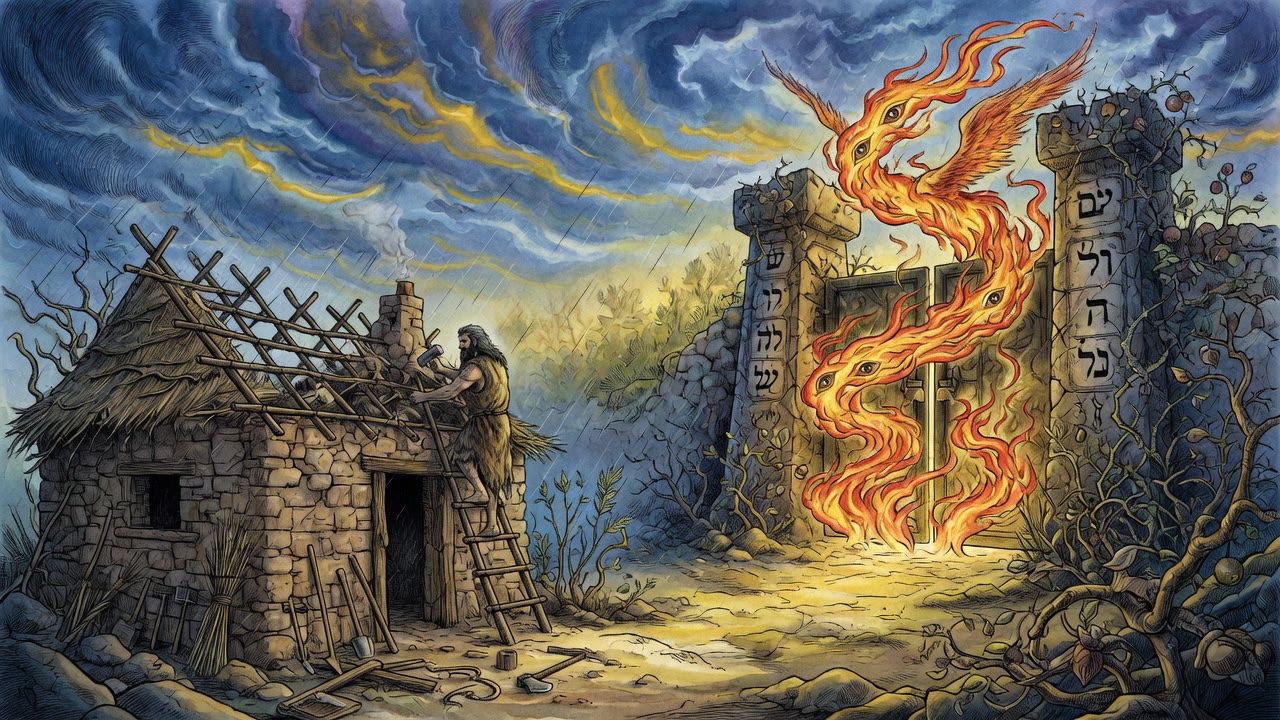
They came through the Garden in fur, feather, scale, and claw. The beasts lowered their heads. The birds folded their wings. The creeping things pressed themselves against the earth. The first man stood in the middle of all that living motion and watched the world bow.

It would have been easy to accept it.

No king had ever been crowned. No prophet had ever rebuked a throne. No elder had ever warned a ruler that glory borrowed from heaven burns the hands that hold it too long. Adam had no human teacher standing beside him. The Garden was young, and everything in it was still learning its own name.

But Adam understood the danger before anyone taught him the word for it. The creatures had mistaken the image for the Maker. They saw height, speech, uprightness, and command, and they bent toward the wrong throne.

He would not let them stay there.

Do not bow to me. Come. Crown the One who made us.

The Garden changed at that sentence. Worship moved away from the human body and rose toward God. Adam did not keep the honor that passed through him. He redirected it. For one bright moment, the first man knew exactly where majesty belonged.

The Fruit Closed the Gate

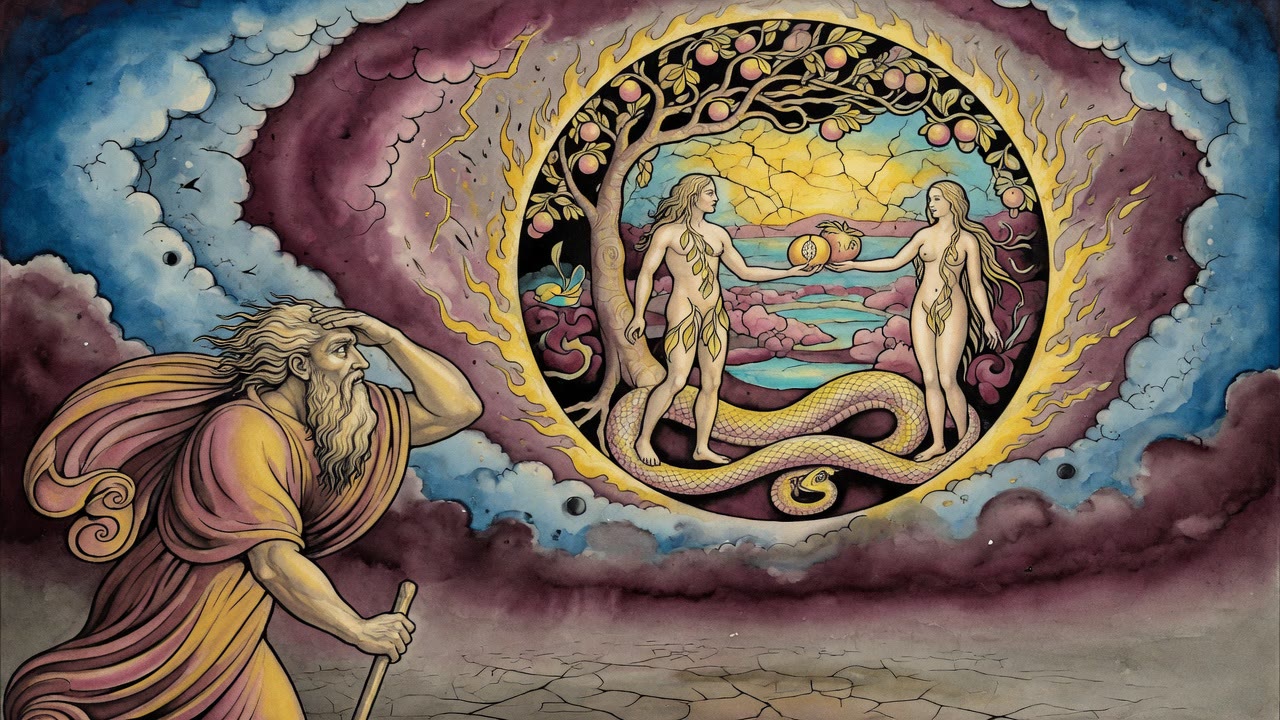
Later, his hand reached for what had not been given.

The sound in the Garden changed after that. Leaves that had once been shelter became hiding places. Footsteps that had once meant closeness made the man and woman afraid. The trees still stood, the soil still breathed, and the rivers still ran, but innocence had left the air.

Then came the sentence.

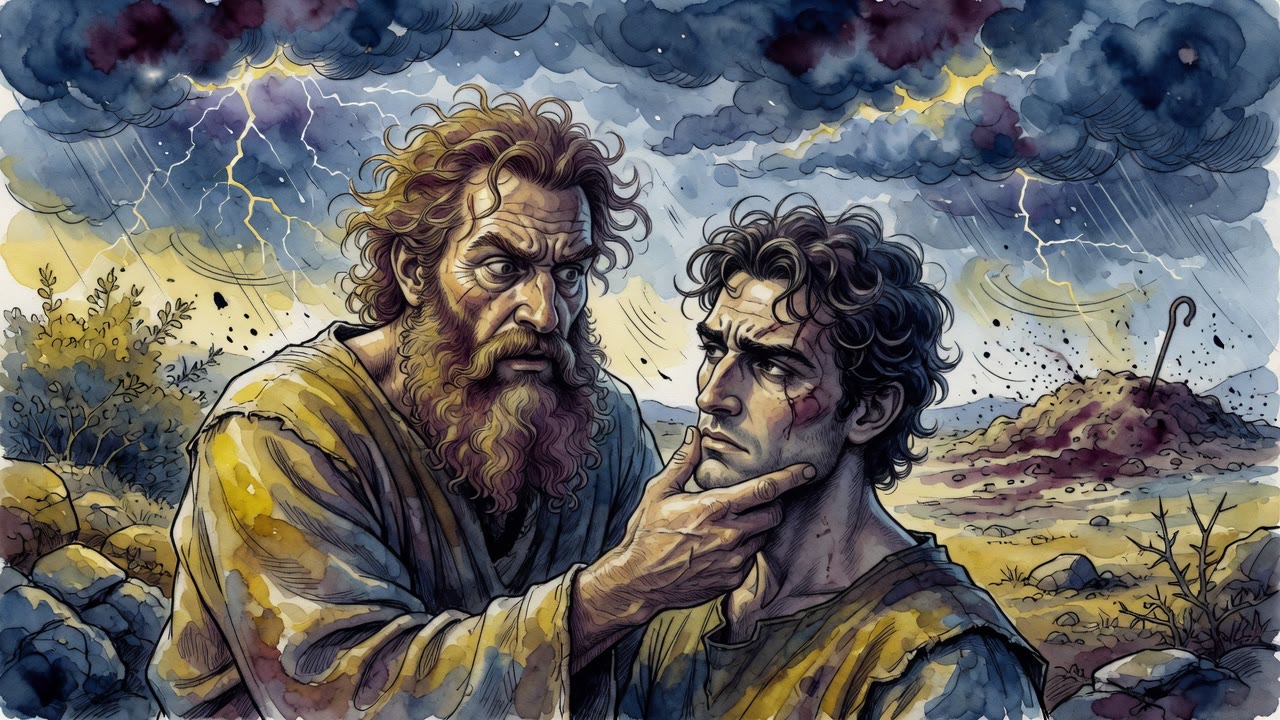
Adam was driven out. Not escorted. Not invited to think it over. Driven. The Garden that had opened around him at the beginning now stood behind him as a place with a guarded edge. The man who had named the creatures could not command the gate. The one who had taught the world to crown God could not talk his way back into the place where he first learned glory.

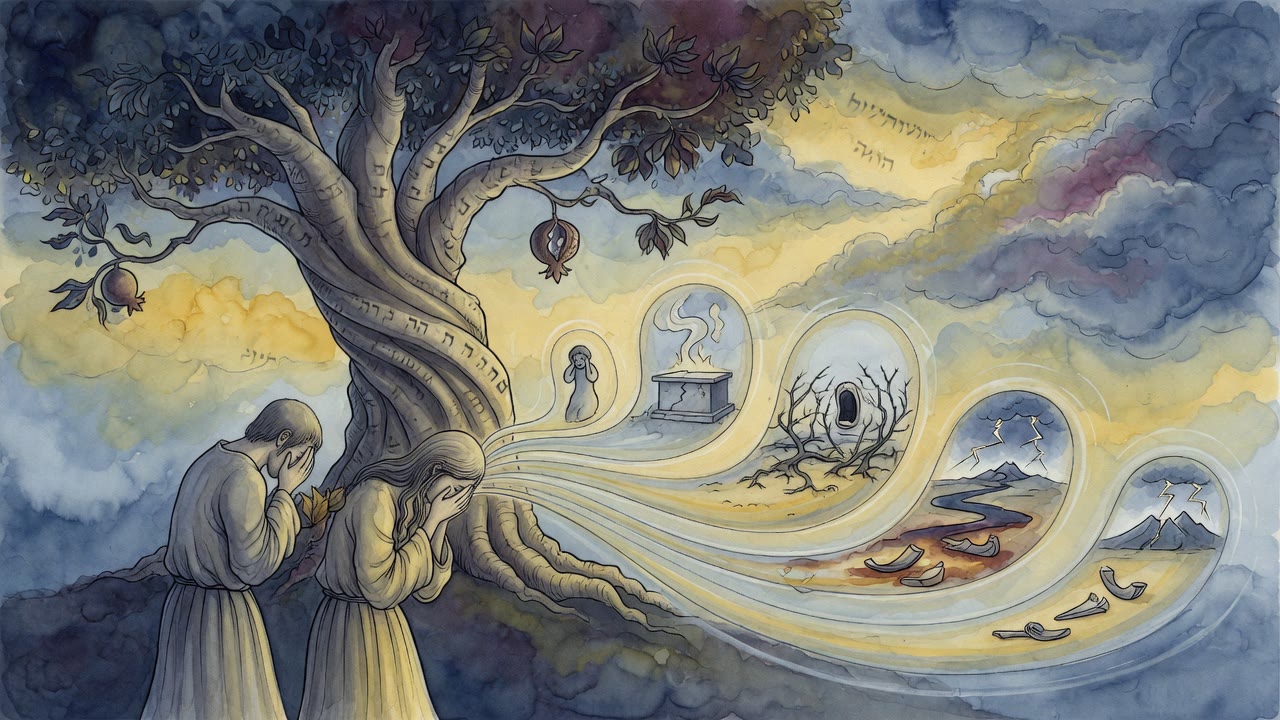
Dust clung to his feet outside. That must have been the first insult of exile, ordinary dust on skin that had known the Garden's ground. The world beyond Eden was not empty, but it was no longer home. Every step away from the gate made loss larger. Every step away proved the decree had teeth.

Adam did not keep walking.

The Mountain Beside Eden

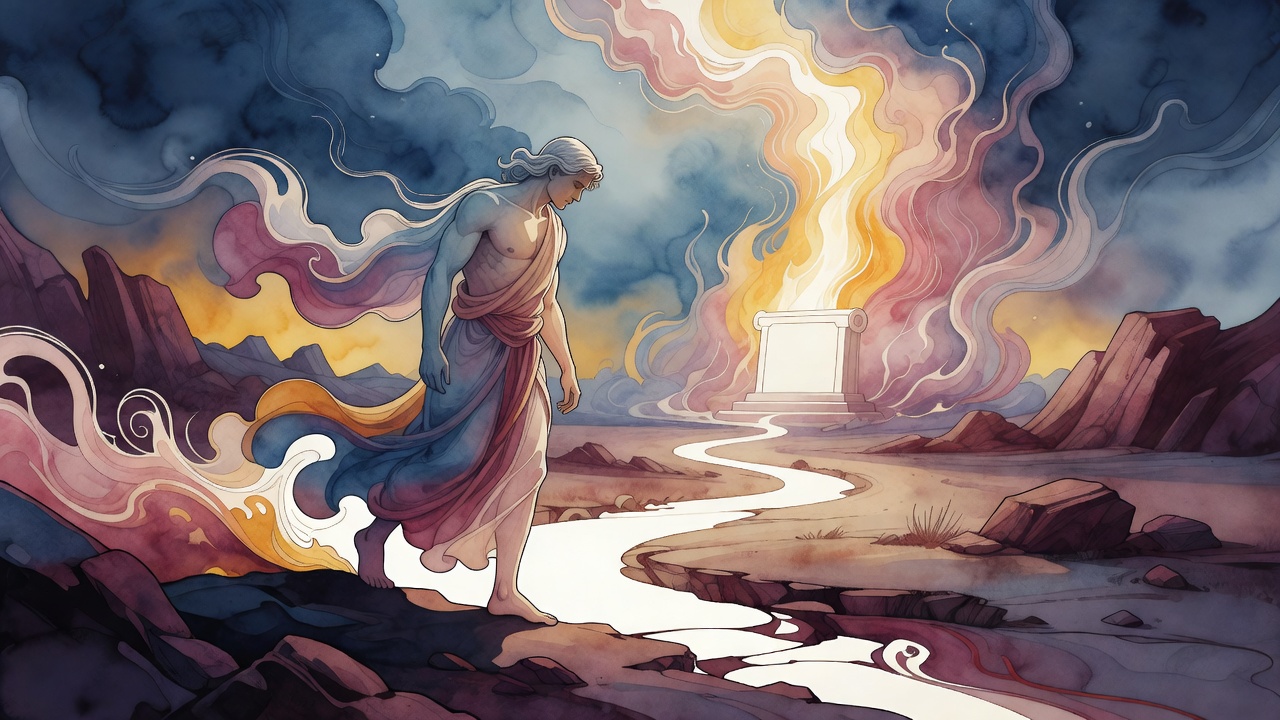
He found the nearest mountain and stayed.

Not because it was comfortable. Mountains do not comfort the newly exiled. They expose. Wind crosses them without asking permission, and stone gives nothing back to the hand except cold. But this mountain stood near the gate, near enough for longing to have an address.

Adam built his life there, at the edge of what he had lost.

That choice was its own kind of confession. He did not pretend the Garden had meant nothing. He did not bury the memory under distance. He did not say that exile was freedom by another name. He settled where absence could be seen each morning, where the closed gate pressed against the horizon like a command he could no longer obey from the inside.

There are punishments that scatter a person. This one gathered him to a border.

From that border, Adam could remember the creatures lowering themselves before him and the quick, clean answer he had once given. Crown God. From that border, he could also remember the other hand, the reaching hand, the hand that took. The mountain held both memories without softening either one.

Nearness hurt. He chose it anyway.

The Place That Remembered

The mountain did not remain only Adam's place.

Generations later, another father would climb there with his son, wood on the son's back and a knife in the father's hand. The air would tighten again around obedience, fear, love, and the unbearable cost of hearing God clearly. A blade would rise. A voice would stop it.

Later still, a king would come to a threshing floor while plague moved through the people. He would buy the ground, build an altar, and stand between death and the city. Smoke would rise where fear had settled. Mercy would answer.

Then stone would rise on stone, and the mountain would become the place where Israel brought offerings, songs, tears, vows, and trembling joy. The old border near Eden became a meeting place. Not a reopened Garden. Not the undoing of the first exile. Something stranger. A holy nearness built outside the closed gate.

Adam did not live to see all of it. He knew only the first wound and the first decision after it. He had lost the Garden, but he refused to lose the direction of his longing. He made his home where return was impossible and presence was still near.

At evening, perhaps the light struck the gate in a way that made the world before exile flash in his mind. The creatures bowing. His own voice correcting them. The fruit. The dust. The mountain under his feet.

He could not go in.

So he stayed as close as the earth allowed.


← All myths

From the tradition

Sources

2 sources

The texts this telling draws on, in full. Open a card to read inline, or expand it for a wider, quieter read.

Pirkei DeRabbi Eliezer 20:1Pirkei DeRabbi Eliezer

Pirkei DeRabbi Eliezer turns to Moriah, The Garden of Eden.

The book of Genesis tells us, "So he drove out the man" (Gen. 3:24). Simple enough. But Pirkei DeRabbi Eliezer, a fascinating text from around the 8th or 9th century CE, fills in some of the blanks.

It paints a vivid picture: Adam wasn’t just cast out into some random wilderness. He went forth outside the Garden of Eden and made his abode on Mount Moriah.

Mount Moriah! Sound familiar? It should. According to tradition, this is the very same place where Abraham later bound Isaac, and where the Temple in Jerusalem would eventually stand.

Why Mount Moriah? Pirkei DeRabbi Eliezer suggests a powerful reason: "…for the gate of the Garden of Eden is nigh unto Mount Moriah." It was as close as Adam could get to Paradise, a constant reminder of what he had lost. Exile, yes, but also a yearning for return. A longing for the divine presence he had known in the Garden.

And there's more. The text continues, "Thence He took him and thither He made him return to the place whence he was taken, as it is said, 'To till the ground from whence he was taken' (Gen. 3:23)."

So, not only was Adam near the gate of Eden, but he was also returned to the very ground from which he was created. A full circle. A harsh, but perhaps necessary, return to reality. The reality of working the land, of earning his bread by the sweat of his brow.

It's a beautiful and poignant image, isn't it? Adam, forever marked by his expulsion, forever yearning for what was, yet grounded in the very earth from which he came. It's a story of loss, but also a story of resilience. A story that reminds us that even in exile, we are connected to our origins, to the source from which we came. And maybe, just maybe, that connection is a glimmer of hope.

Full source
Pirkei DeRabbi Eliezer 11:10Pirkei DeRabbi Eliezer

Pirkei DeRabbi Eliezer turns to All Creatures Bow Before Adam in the Garden.

It all starts with Adam.

You might picture Adam in the Garden, just chilling, naming animals. But Pirkei DeRabbi Eliezer, a fascinating early medieval text, gives us a different glimpse into that primordial moment. Chapter 11, specifically, paints this incredible scene.

Adam isn't just hanging out. He's confronted by all the creatures of the world, who, get this, are prostrating themselves before him. Can you imagine? Every beast, every bird, every creeping thing bowing down to the first human?

But Adam, in his wisdom, immediately recognizes something profound. He understands that true majesty, true kingship, belongs to something far greater than himself.

So, what does he do? He doesn't accept their worship. Instead, he turns to them and says, essentially, "Whoa, hold up! What are you doing? Don't bow to me! Let's all go together and crown the One who created us!"

Think about the implications of that for a moment. Adam, in his very first act of leadership, redirects worship toward the Divine. He understands that our role isn't to be adored, but to adore.

And then comes the really beautiful part. Pirkei DeRabbi Eliezer tells us that Adam opens his mouth, and all the creatures respond. They all join together in proclaiming God as King. As the text says, they "adorned in majesty and might and acclaimed their Creator as King over themselves."

It’s an incredibly powerful image, isn't it? A unified chorus of creation, all voices raised in praise.

The text then quotes (Psalm 93:1): "The Lord reigneth, he is apparelled with majesty." It's as if the Psalmist is echoing that primal scene, that first moment of collective recognition and adoration.

There's a beautiful teaching woven into this story, I think. It’s about humility, about recognizing our place in the grand scheme of things. Adam, as the first human, could have easily taken the creatures’ adoration for himself. But he didn't. He understood that true greatness lies not in being worshipped, but in worshipping the One who created us all.

And it also speaks to the power of collective worship. Imagine the sheer force of all creation united in praise. It reminds us that our individual voices, when joined together, can create something truly magnificent. That, perhaps, is the echo of Adam's call, still resonating within us.

Full source