Parshat Bereshit5 min read

Adam Sired Spirits While Eve Stayed Apart

Rabbi Hanina paid a fortune for a silver dish and found a live frog inside. It ate everything he owned, then told him whose son it was.

Curated by Arthur · Told by Maggid ·
Table of Contents
  1. The Grave He Would Not Fill Twice
  2. What Came Through the Shut Door
  3. The Dish the Old Man Sold on Passover Eve
  4. The Frog That Ate a Fortune
  5. The Son Nobody Counted
Adam Sired Spirits While Eve Stayed Apart Click for full size

The Grave He Would Not Fill Twice

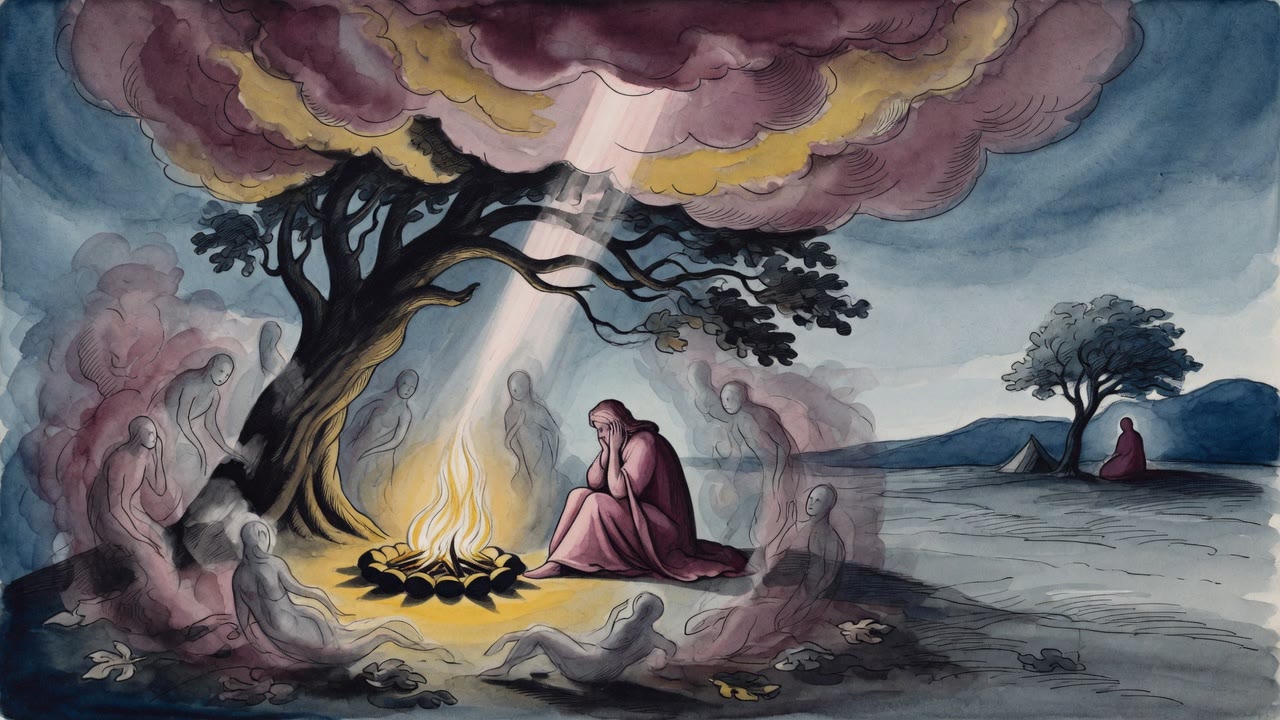
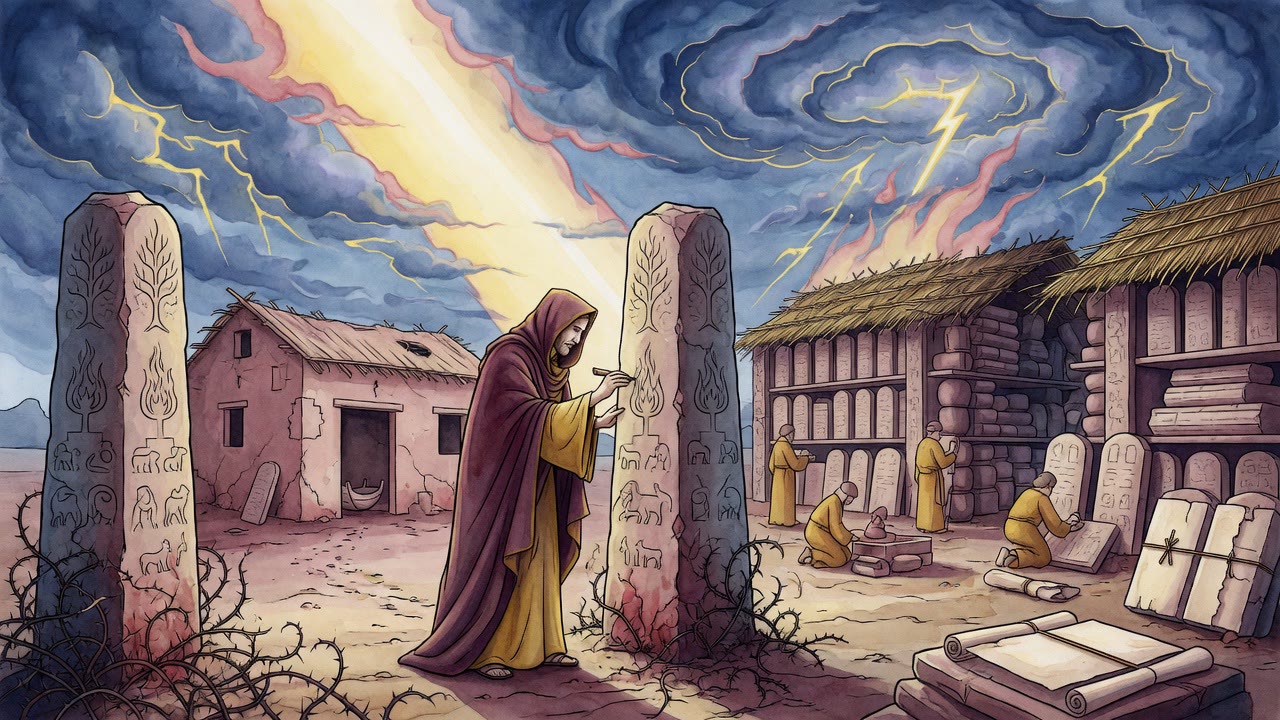
Adam buried Abel and then did the arithmetic that wrecked the next hundred and thirty years of his life. Why father more children, he asked, only to hand them over to death? He left Eve's bed and did not come back to it.

He sat down in a fast that ran a hundred and thirty years. He bound withes of fig against his skin until the bark scraped him raw. Rabbi Meir defended him as a great penitent, a man who watched death enter the world through his own mouth and tried to starve the future out of his body.

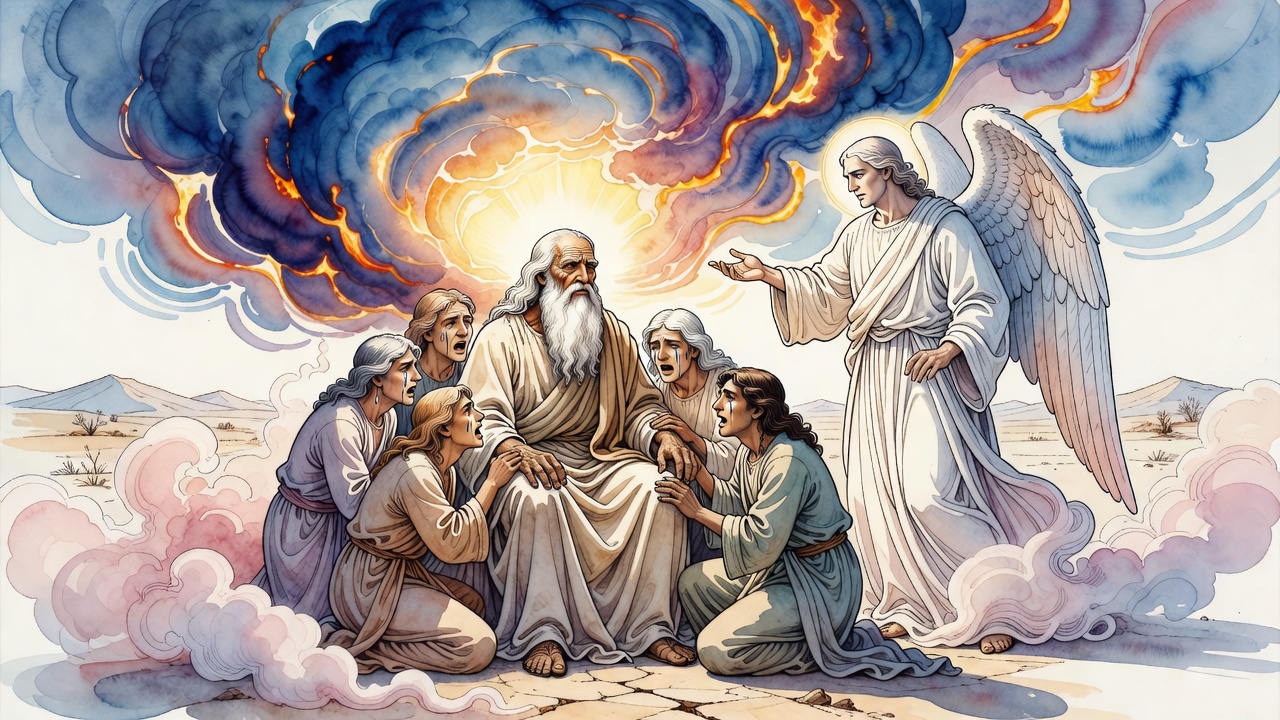
Lamech's wives heard what he had decided and turned on him. "Physician, heal your own lameness," they said. He gave them no answer. He had already chosen the empty bed.

What Came Through the Shut Door

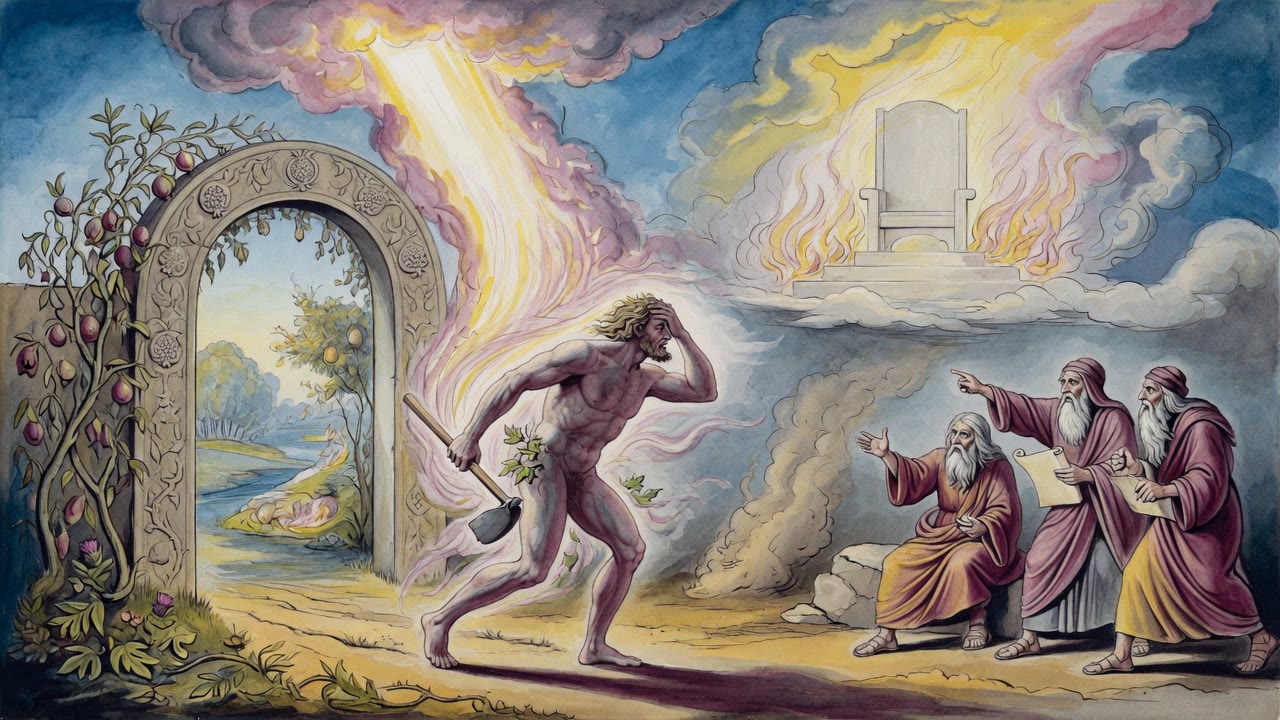
Shutting the door did not empty the nights. Female spirits came to him in his sleep, and out of those visits rose shedim and ruchin and lilin, a brood of shades with peculiar gifts and no place on any family list. Rabbi Elazar ben Azariah counted the years off the verse. Only at a hundred and thirty did Adam beget a son "in his likeness, after his image" (Genesis 5:3), which means that whatever he begot before then wore some other face.

Rabbi Simon told it from Eve's side as well. All the years she stayed apart, male spirits came for her, and she bore their children too. The first household in the world ran two lines at once, one the book of generations would count and one it refused to.

Later households inherited the brood and argued about which kind was worse to live beside. House spirits grow up with you, one side said, so they are the easier neighbors. Worse, answered the other, because a spirit raised under your roof knows every filthy thought you ever had. Field spirits never learned your habits, which makes them dangerous. Which makes them safer, came the reply. Nobody in that argument doubted the spirits were in the room.

The Dish the Old Man Sold on Passover Eve

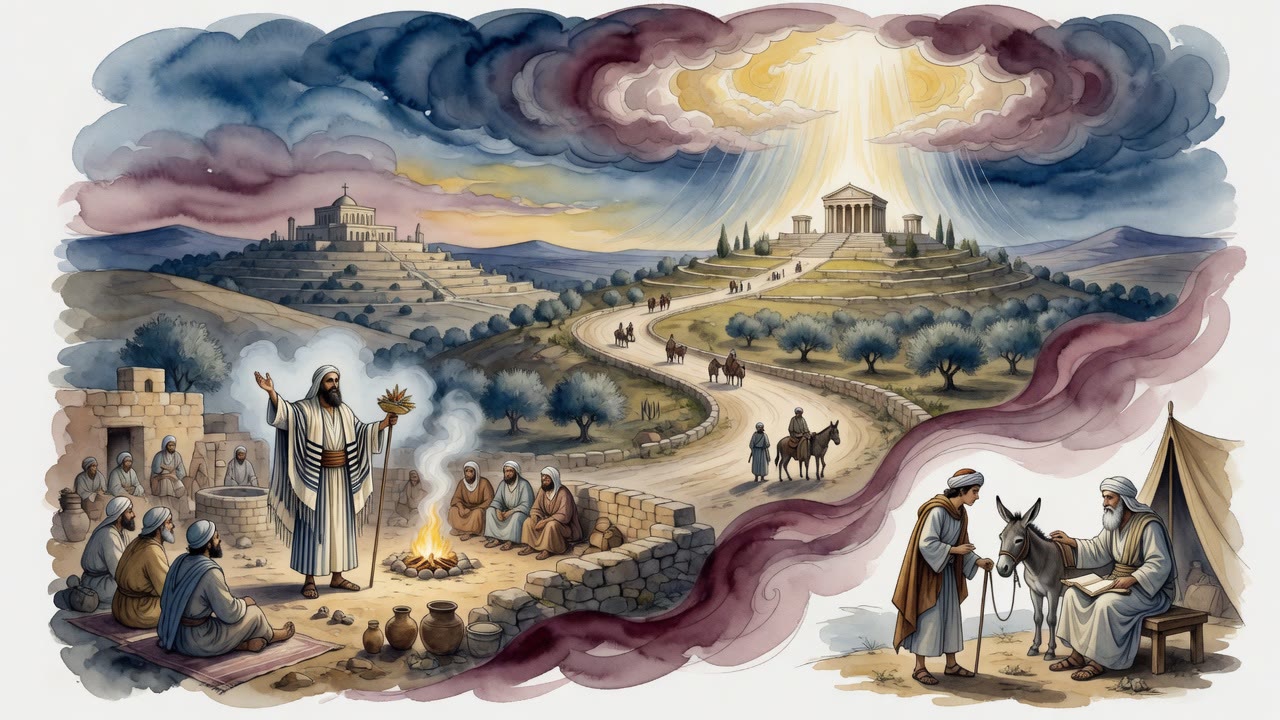
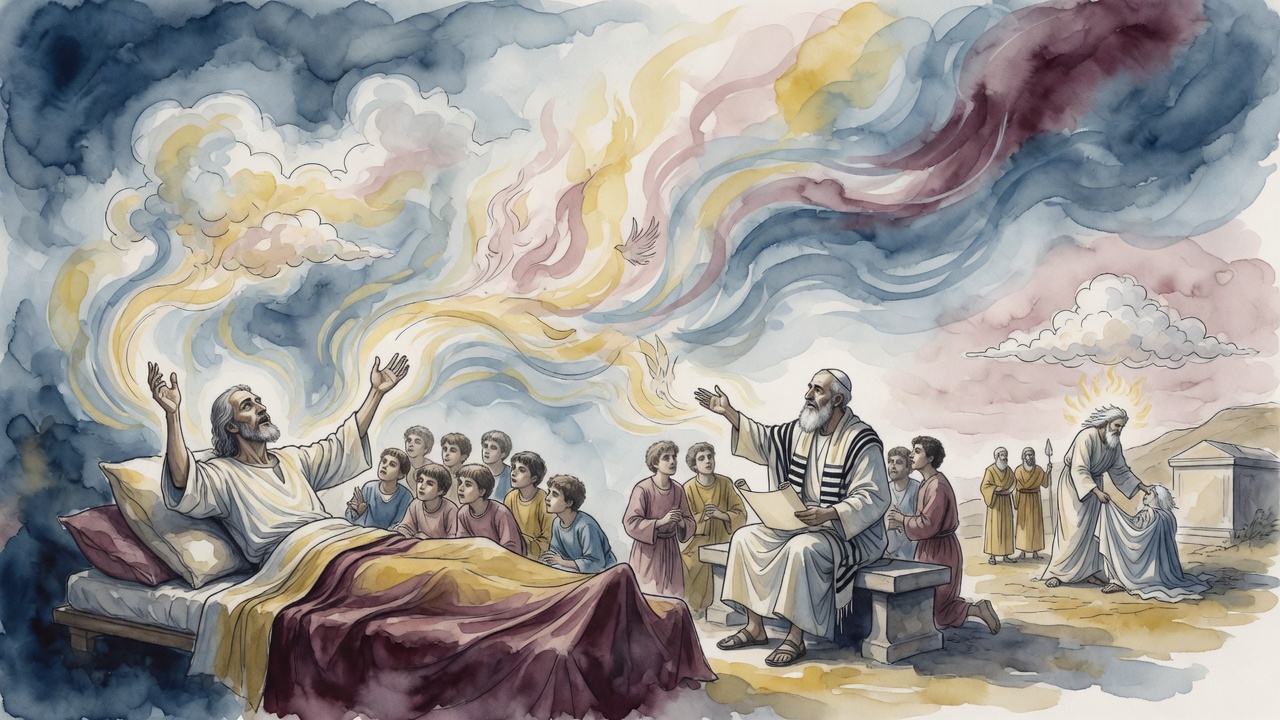
Generations later a rich man in the Land of Israel lay dying and called his son, Rabbi Hanina, to the bed. Study Torah day and night, he said. Keep the commandments. Be a friend to the poor. Then he gave him the rest of it. Your mother and I will die on the same day. The seven days of mourning will end on the eve of Passover. That morning, go into the market and buy the first thing offered to you, whatever the man asks for it.

Everything came as he said. On the eve of Passover, with the mourning barely folded away, an old man in the market held out a silver dish and named a price that could have bought a field. Hanina counted it out and carried the dish home.

At the seder table he lifted the lid. Inside sat a second dish. Inside that one, a live frog.

The Frog That Ate a Fortune

He fed it. It grew. He fed it again and it grew again, until the thing needed a chamber of its own and the chamber needed a door wide enough for it. Its appetite went through the storerooms, then the silver, then the land. Hanina kept feeding it after there was nothing left to feed it with.

Then the frog spoke. "My dear Rabbi Hanina, do not worry. You raised me and cared for me, so ask of me whatever your heart desires."

He asked to learn the whole Torah. The frog wrote words on scraps of paper and made him swallow them, and by that method taught him all of it, and seventy languages after that, and then the speech of beasts and birds.

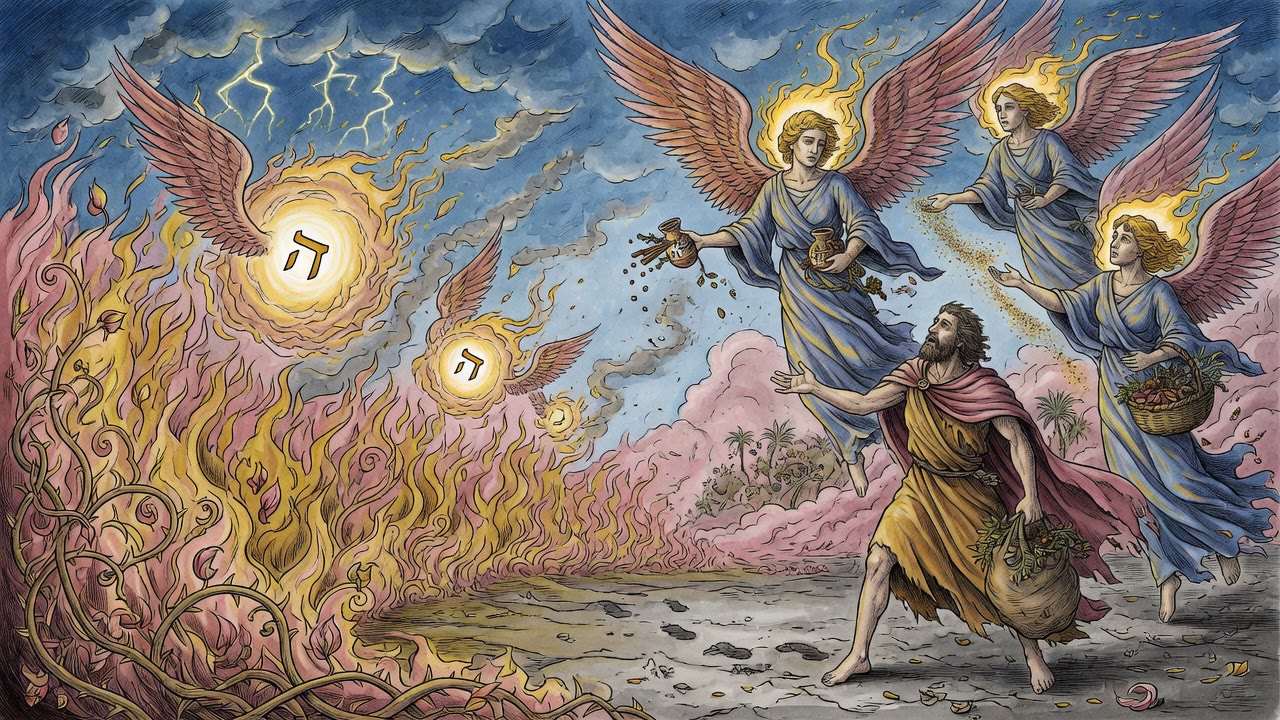
It was not finished. It led Hanina and his wife into the woods and cried out once, and every beast and bird came in. At its order they brought up precious stones and herbs out of the ground, and the frog taught the wife which herb closed which wound. The two of them walked home wealthy and were received at the king's court.

The Son Nobody Counted

Only then did the frog say what it was. "I am the son of Adam, begotten during the hundred and thirty years of his separation from Eve. God has given me the power to take any form I please."

Back at the start of the world the fast had ended. At a hundred and thirty Adam returned to Eve, and Seth was born in his likeness and after his image, born already circumcised, and every righteous generation traced its descent from him. That is the line the scroll counts.

The others were never counted. They kept their father's power and lost his face, and one of them sat for years in a rich man's house in the Land of Israel eating him down to the walls, waiting to be asked for something worth giving.


← All myths
From the tradition

Sources

3 sources

The texts behind this telling. Some cards carry a translation of the source; others are our own retelling of it, and each card says which. Every card links out to the original.

Bereshit Rabbah 24:6Bereshit Rabbah

Retold in our words. Read the original at the link below.The Sefaria Midrash Rabbah, 2022 · CC-BY

The verse says, "This is the book of the descendants of Adam" (Genesis 5:1). Seems straightforward. But the rabbis of the Midrash (rabbinic interpretive commentary) – those incredible storytellers who filled in the gaps of the biblical text – ask a pointed question: if these are his descendants, what about the previous ones? The ones mentioned before? Were they descendants in the same way?

One interpretation, offered in the name of Abba Kohen (a priest) Bardela, suggests that Adam, Seth, and Enosh were different. They were, until a certain point, in the image of God. according to Bereshit Rabbah 23:6, there's a sense that something changed after this early generation. That there was a decline from this original divine connection.

Another interpretation, attributed to Rabbi Simon, takes a completely different, and frankly, wilder, turn. He suggests that those "previous" beings weren't ordinary descendants at all. They were… spirits!

For the 130 years that Eve was separated from Adam (before the birth of Seth, as we read in Genesis 5:3), male spirits were aroused by her, and she bore their offspring. And, equally startling, female spirits were aroused by Adam, and he fathered children with them!

This idea might sound strange to our modern ears, but it speaks to a rich and complex understanding of the spiritual world intertwined with our own. The rabbis weren't afraid to explore the shadowy corners of existence. They grappled with the forces – both good and evil – that might have influenced humanity's early days.

To support this idea, the Midrash quotes II (Samuel 7:14): "Who, when he commits iniquity, I will rebuke him with the staff of men and with the afflictions of the children of man [Adam]." The "children of Adam" here, according to this interpretation, are these very malevolent spirits!

And the discussion doesn't stop there. The rabbis debate the nature of these spirits. Are the shedim (שֵׁדִים), the house spirits, good or bad? One opinion says they're better because they grow up with you, familiar with your life. Another says they're worse because they're intimately familiar with your sinful thoughts. And what about the spirits of the field? Are they better or worse than house spirits? It all depended on who you asked.

Finally, there's one more interpretation: Perhaps those "previous" descendants weren't viable because they were destined to be destroyed in the Flood. Rabbi Yehoshua ben Levi suggests that the names of Cain's lineage – Irad, and so on – were "expressions of rebellion." Each name hinted at their ultimate fate, their expulsion (ored) from the world, as we find further elaborated in Genesis Rabbah 23:2.

So, what does all this mean? Why did the rabbis spend so much time pondering the nature of Adam's early descendants? Perhaps they were trying to understand the origins of good and evil, the struggle between the divine and the earthly, the forces that shape our world.

Maybe, just maybe, they were reminding us that the stories we tell ourselves are never complete. There are always hidden narratives, alternative interpretations, and mysteries waiting to be explored. And it's in the asking, in the wrestling with these questions, that we truly come to understand ourselves and our place in the interplay of creation.

Full source
Yalkut Shimoni on Torah 42:1Yalkut Shimoni on Torah

Translation of the source text.Torat Emet (Yalkut Shimoni) · CC-BY-NC

(Genesis 5:2) "Male and female He created them." Rabbi Elazar said: Any man who has no wife is not a man, as it is said, "Male and female He created them," and so forth. (Genesis 5:3) Rabbi Elazar ben Azaryah said: During all those years that the first Adam was under the ban, he begot demons, spirits, and night-demons, as it is said, "And Adam lived a hundred and thirty years and begot a son in his likeness, after his image", which implies that until now he did not beget in his image. They raised an objection: Rabbi Meir used to say, the first Adam was a great pious man; once he saw that death had been decreed because of him, he arose and sat in fasting for a hundred and thirty years, and raised growths of fig leaves upon his flesh, and separated from his wife. We speak here of the seed that issued from him against his will.

"And Adam lived a hundred and thirty years and begot in his likeness, after his image." From here you learn that Cain was not of his seed, nor of his likeness, nor of his image, until Seth was born. Rabbi Shimon says: From Seth arose and were traced all the generations of the righteous, and so forth. Rabbi Meir says: it was the uncovering of the flesh of nakedness; they walked about like beasts, and so forth. Rabbi Yehoshua says: the angel is a flaming fire, yet the fire enters into intercourse with flesh and blood and does not burn the body; only from the hour that they fell from their place of holiness, their strength and their stature became like that of human beings, and their garments a clod of earth. Rabbi Tzadok says: from them the giants were born, "the Nephilim were in the earth" (Genesis 6:4). Rabbi Yehoshua ben Korchah says: Israel are called sons of God, "You are sons" (Deuteronomy 14:1), and the angels are called sons of God, as it is said (Job 38:7), "When the morning stars sang together," and so forth; and these, while they were in their place of holiness, were called sons of God.

"And he begot in his likeness." This teaches that he was born circumcised.

Full source
Legends of the Jews, III. The Ten Generations, The Descendants Of Adam And LilithLegends of the Jews

Retold in our words. Read the original at the link below.The Legends of the Jews, Louis Ginzberg (1909–1938) · Public Domain

Legends of the Jews (Ginzberg) turns to The Descendants Of Adam And Lilith.

In Legends of the Jews, Adam made a decision after Abel's death: he separated himself from Eve. He thought, "Why should I beget children, if it is but to expose them to death?" A reasonable question, given the circumstances! But life, as they say, finds a way.

The story continues with Lamech's wives who, upon hearing Adam's decision, turned on him, exclaiming, "O physician, heal thine own lameness!" Ouch. Harsh, but perhaps understandable.

Here's where things get really interesting. Though Adam avoided intercourse with Eve, he was, um, visited in his sleep by female spirits. The Zohar tells us of the existence of these spirits and, from his union with them, sprang shades and demons of various kinds, endowed with peculiar gifts. It's a rather… unconventional family tree, to say the least. These beings are sometimes referred to as the descendants of LILITH, Adam's mythical first wife.

And that brings us to the tale of Rabbi Hanina. This story, preserved in Legends of the Jews, tells of a very rich and pious man in Palestine who loved the Torah. On his deathbed, he instructs his son, Rabbi Hanina, to study Torah day and night, fulfill the commandments, and be a friend to the poor. He also predicts that he and his wife will die on the same day, and that the seven days of mourning will end on Passover eve. And he gives his son one very specific, very strange instruction: On Passover eve, go to the market and buy the first thing offered to you, no matter how expensive.

Everything happens as foretold. Rabbi Hanina goes to the market and finds an old man selling a silver dish for an exorbitant price. Obedient to his father’s wishes, he buys it. At the Seder table, he opens the dish to find another dish inside, and inside that dish? A live frog, hopping around!

He feeds the frog, cares for it, and the frog grows… and grows… and grows. Eventually, Rabbi Hanina has to build a whole chamber for this enormous amphibian. But the frog's appetite is insatiable, and Rabbi Hanina is eventually stripped of all his possessions.

Now, you might be thinking, "What a ridiculous story! What's the point?" But hold on. This is where the magic happens. The frog finally speaks, saying, "My dear Rabbi Hanina, do not worry! Seeing thou didst raise me and care for me, thou mayest ask of me whatever thy heart desireth."

Rabbi Hanina, ever the scholar, asks for nothing more than to learn the whole of the Torah. And the frog agrees! He teaches him the entire Torah, plus seventy languages, and even the language of beasts and birds! His method? Writing words on scraps of paper and having Rabbi Hanina swallow them. Not exactly the Rosetta Stone, but effective, apparently.

But the story doesn't end there. The frog also rewards Rabbi Hanina's wife, taking them both to the woods. There, the frog cries out, summoning all sorts of beasts and birds. He commands them to produce precious stones and herbs, teaching Rabbi Hanina's wife how to use the herbs as remedies. They return home wealthy and wise, enjoying the respect of the king.

Finally, the frog reveals his true origins: "I am the son of Adam, a son whom he begot during the hundred and thirty years of his separation from Eve. God has endowed me with the power of assuming any form or guise I desire." Talk about a plot twist!

So, what are we to make of this strange tale? Is it just a bizarre story about a giant, talking frog? Or is it a symbolic representation of something deeper? Perhaps it's a reminder that even in the darkest of times, even when we feel separated from God, from our loved ones, and from our own sense of purpose, there is still potential for connection, for growth, and for unexpected blessings. And sometimes, those blessings come in the most unusual forms… even a frog.

Full source