5 min read

Agrippa Counted Israel with Passover Lamb Kidneys

Forbidden to number Israel by head, Agrippa ordered the priests to count Passover kidneys and found a city drowning in lambs.

Curated by Arthur · Told by Maggid ·
Table of Contents
  1. Kidneys on the Stone
  2. He and His Neighbor
  3. Empty Hands Forbidden
  4. What the King Learned
  5. After the Fires Died

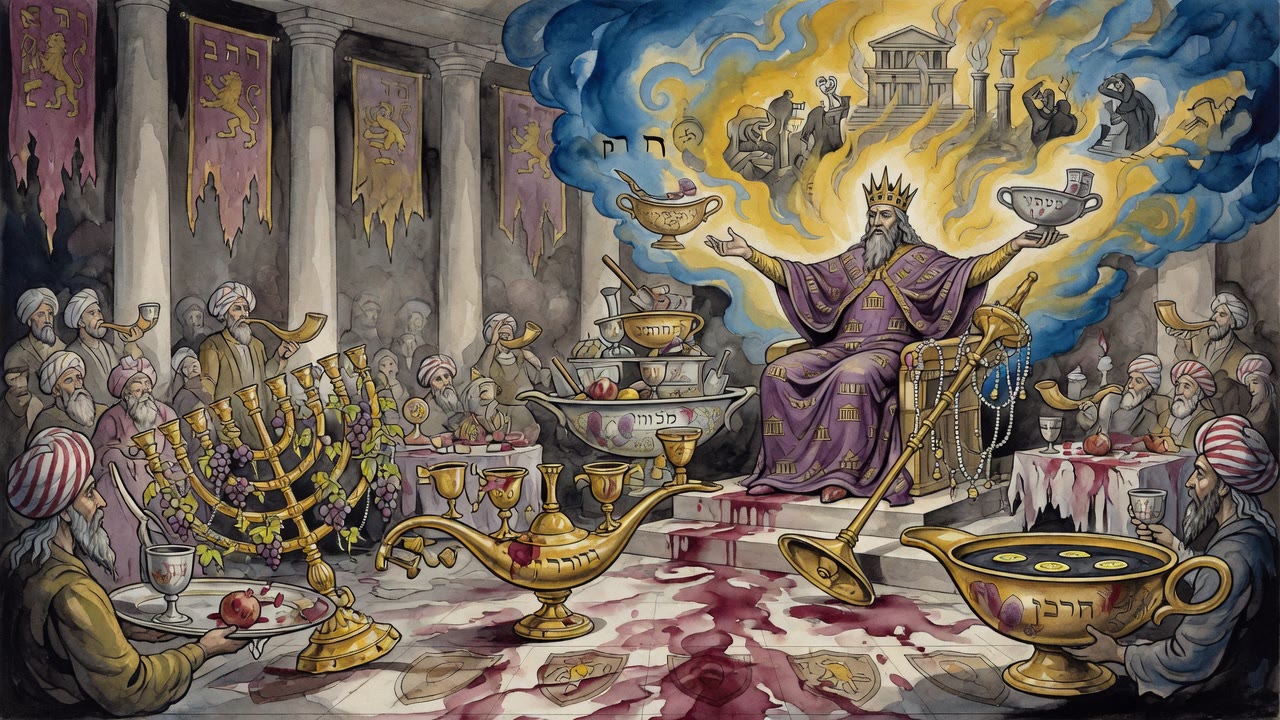
Agrippa wanted a number. Not a rumor. Not a Roman estimate scribbled by a clerk who had never climbed the Temple steps. He wanted to know how many men of Israel the city could hold when the month of green ears opened and every road turned toward Jerusalem.
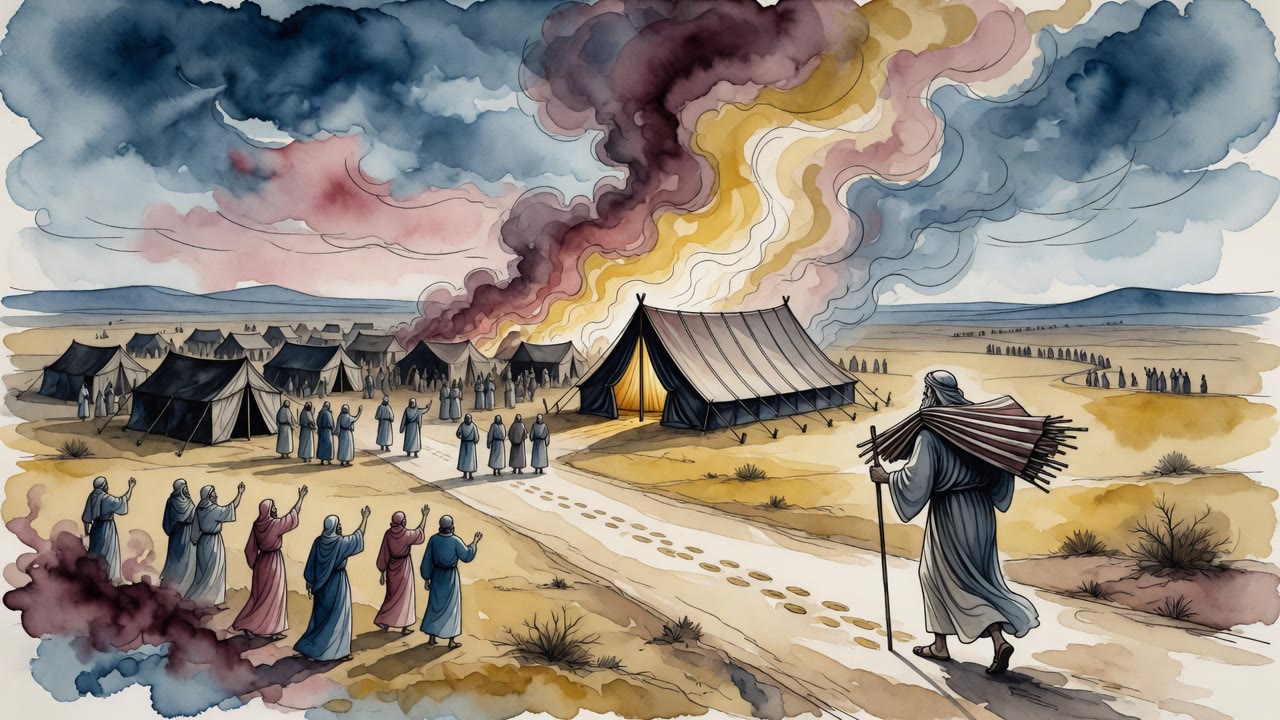
Agrippa Counted Israel with Passover Lamb Kidneys Click for full size

A direct census was forbidden. David's old plague still hung over that kind of counting like smoke that never quite left the rafters. So the king found another way. He told the priests to watch the lambs.

Kidneys on the Stone

Every Paschal lamb prepared in the courtyard had its kidneys set aside. Not as poetry. As arithmetic. Pair by pair the organs stacked into a ledger only priests could keep without calling it a head-count of Israel.

When the tally closed, the number staggered even the men who had expected a crowd. Sixty myriads of couples. Twelve hundred thousand lambs for shared groups. Double the men who had walked out of Egypt, and that without counting the unclean of that year or the travelers who never made the gate.

A single lamb was never shared by fewer than ten. The arithmetic climbed past twelve million souls pressing toward one night's meal. The walls of Jerusalem could not hold them. Tents and cook-fires ringed the hills for miles.

He and His Neighbor

The law that made the count possible was older than Agrippa. "He and his neighbor next to his house shall take it." Rabbi Akiva heard in the first word a right to stand alone: a man may bring the Passover for himself without partners if his household can finish the meat. Rabbi Yishmael heard in the same line a right to invite: a man may appoint others to share his lamb.

Both readings stood. Households varied. A rich table could swallow a whole animal. A thin table needed the neighbor's door. The verse did not force one shape of family onto the night. It held both, so that no one would be shut out of the meal for being too few or too many.

Agrippa's kidneys were only the visible tip of that flexibility. Every organ counted meant a circle of mouths that had already negotiated who sat where, who paid what, who was near enough to the house to join before sunset.

Empty Hands Forbidden

The pilgrims did not climb only to be counted. The Targum on Exodus pressed another rule into their pockets: you shall not appear before Me empty. The feast of unleavened cakes in the month of Abiba demanded a gift in the hand, an offering that cost something after the feet had already paid their road-price.

Matzah kept the taste of haste. Seven days the mouth remembered bread that never rose. The empty hand was not allowed to hide behind the memory. Presence without cost was incomplete. The meeting with Heaven required transfer: labor's fruit, not only labor's sweat.

So the city filled with people who arrived both numbered and burdened, each carrying something that proved the journey was not tourism.

What the King Learned

Agrippa, Roman-appointed over parts of Judea in the first century CE, learned that Israel under the Temple was not a small provincial cult. It was an ocean that briefly poured into one basin and then drained away again into the hills and villages.

The priests who stacked the kidneys knew the count would outlive the king. Later generations, scattered and thin, would need a picture of what the night once looked like: one lamb, ten mouths minimum, a city drowning in smoke and song.

The arithmetic became a form of memory. Not pride alone. A refusal to forget scale.

After the Fires Died

When morning came the hills were ash-circles and trampled grass. The lambs were gone. The kidneys had already entered the ledger. Agrippa had his number without having pointed at a single man's forehead and said mine.

The law of neighbor and the ban on empty hands had done their work in the same night. Israel ate together without becoming a Roman census roll, and still no one was allowed to stand before the Presence as a tourist with clean, useless palms.

The king had counted organs. The people had counted themselves by invitation and gift. Both counts said the same thing in different languages: this nation, on this night, is larger than any wall built to hold it.

Priests moved through the rows of carcasses with the calm of men who had done this every year of their lives. A boy held a basin. An older man called numbers without looking up. Agrippa, if he stood anywhere near, would have smelled smoke and blood and spring grain together, the perfume of a night that refused to be small.

Rome counted subjects to tax them. Israel counted lambs to remember a rescue and to share a meal. The kidney ledger borrowed the look of imperial arithmetic while serving a different god and a different fear: the fear of numbering heads the way David once had, and watching a plague answer.


← All myths

From the tradition

Sources

3 sources

The texts behind this telling. Some cards carry a translation of the source; others are our own retelling of it, and each card says which. Every card links out to the original.

Hebraic Literature (1901), Talmud, Pesachim 64bHebraic Literature (1901)

Retold in our words. Read the original at the link below.Project Gutenberg eBook #14368, Hebraic Literature · PD-US-pre-1929

The Roman-appointed Jewish king Agrippa II, who reigned over parts of Judea in the first century CE, once tried to count the male population of Israel. Because a direct census of Israel was forbidden. Scripture reminds us this is what brought plague in the days of David, he had to find another way.

He instructed the priests of the Temple to take careful note of every Pesach offering. Every Paschal lamb, as it was prepared, had its kidneys set aside and counted. The Talmud (Pesachim 64b) records what Agrippa learned: there were sixty myriads of couples, twelve hundred thousand lambs, offered for shared groups, the total of which came to double the number of men who had come up out of Egypt. And this count did not include those who were ceremonially unclean that year, or those who happened to be traveling and could not attend.

Since a single lamb was never shared by fewer than ten people, the arithmetic is staggering: more than twelve million Jews, the Rabbis conclude, converged on Jerusalem for that one Pesach. The city, which could not have held even a fraction of that number inside its walls, would have been surrounded by tents and campfires for miles.

The passage, preserved in the 1901 anthology Hebraic Literature, is more than a census note. It is a quiet argument. The Rabbis knew the destruction of the Temple was coming. They wanted the Jews of later centuries, scattered, exiled, small in number, to remember what the community had once looked like. An ocean of people, one lamb at a time, streaming toward a single city to eat the same meal on the same night. The arithmetic is a form of memory.

Full source
Mekhilta Tractate Pischa 3:14Mekhilta DeRabbi Yishmael

Retold in our words. Read the original at the link below.Mechilta, translated by Rabbi Shraga Silverstein · CC-BY

Mekhilta DeRabbi Yishmael turns to What If a Household Was Too Small to Eat an Entire Passover Lamb.

Rabbi Akiva asked: Where do we learn that a person may make the Passover offering entirely for himself, without joining others? From the phrase "he and his neighbor shall take", the word "he" comes first, establishing the individual's right to act alone. The neighbor is an option, not a requirement.

Rabbi Yishmael read the same verse and asked a different question: Where do we learn that a person may appoint others to share in his lamb? From "he and his neighbor", the verse explicitly envisions partnership.

Both readings are valid because the Torah's phrasing accommodates both possibilities. The individual can offer alone, and the individual can invite others. The verse is not commanding either arrangement but permitting both. This flexibility was essential for a practical reason: household sizes varied enormously in ancient Israel. A wealthy family might consume an entire lamb. A poor individual might need to join with neighbors. The Torah's careful wording ensured that both situations were legally covered without requiring a one-size-fits-all approach to the most important sacrifice of the Jewish year.

Full source
Targum Pseudo-Jonathan on Exodus 23:15Targum Pseudo-Jonathan on Exodus

Retold in our words. Read the original at the link below.The Targum of Jonathan ben Uzziel, trans. J. W. Etheridge, London, 1862 · Public Domain

Targum Pseudo-Jonathan on Exodus (Exodus 23:15) sets the pilgrimage: The feast of unleavened cakes thou shalt keep. Seven days thou art to eat unleavened bread, as I have instructed thee, in the time of the month of Abiba, because in it thou camest forth from Mizraim; and you shall not appear before Me empty.

The month of Abiba. Aviv, the month of green ears, is when the barley stands ripe in the Land of Israel. Spring. The memory of Exodus is anchored to this particular season, to this particular smell of growing grain.

The Prohibition of Empty Hands

The last clause is the striking one: you shall not appear before Me empty. Every pilgrim climbing up to Jerusalem for Pesach must bring something. An offering. A contribution. Not a single person shows up with only their own presence and no gift in hand.

The Torah's reasoning is psychological. Appearing before God is a transfer of something. You came up the road. You used your feet. Now the ritual asks for another transfer, of goods, of labor's fruit, of honest cost. The pilgrimage is not complete until your pocket has been opened.

Matzah as Memory

Seven days of matzah is not only a ritual, it is a re-enactment. You eat the bread of haste, the bread that did not have time to rise, the bread your ancestors carried out of Egypt on the run. For one week every year, the Jewish mouth tastes freedom in its unfinished form.

The Takeaway

Festivals in the Torah are not performances, they are meetings. And you do not come to a meeting with God carrying nothing. The Torah expects every pilgrim to arrive already giving.

Full source