Akiva Converted His Jailers and Smuggled the Law Past the Bars
She came into the cell to break the old man on the floor. He kept the fasts the prison could not stop. She left belonging to his God.
Table of Contents
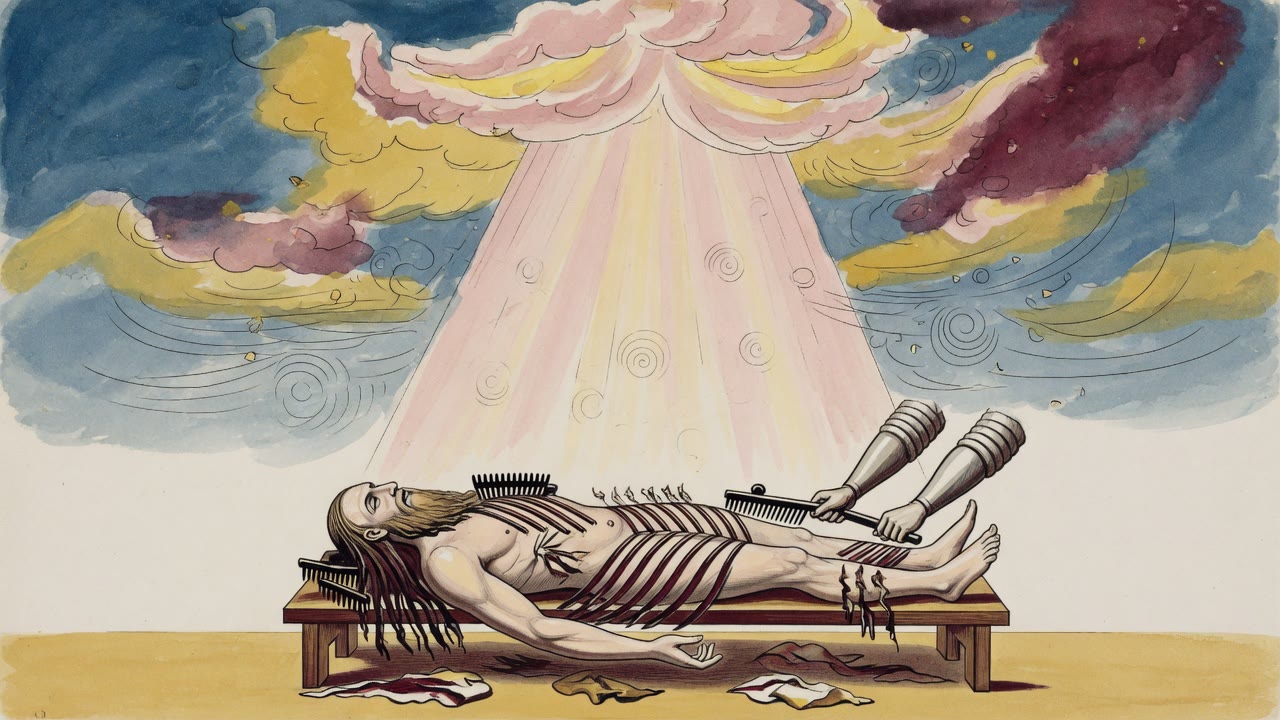
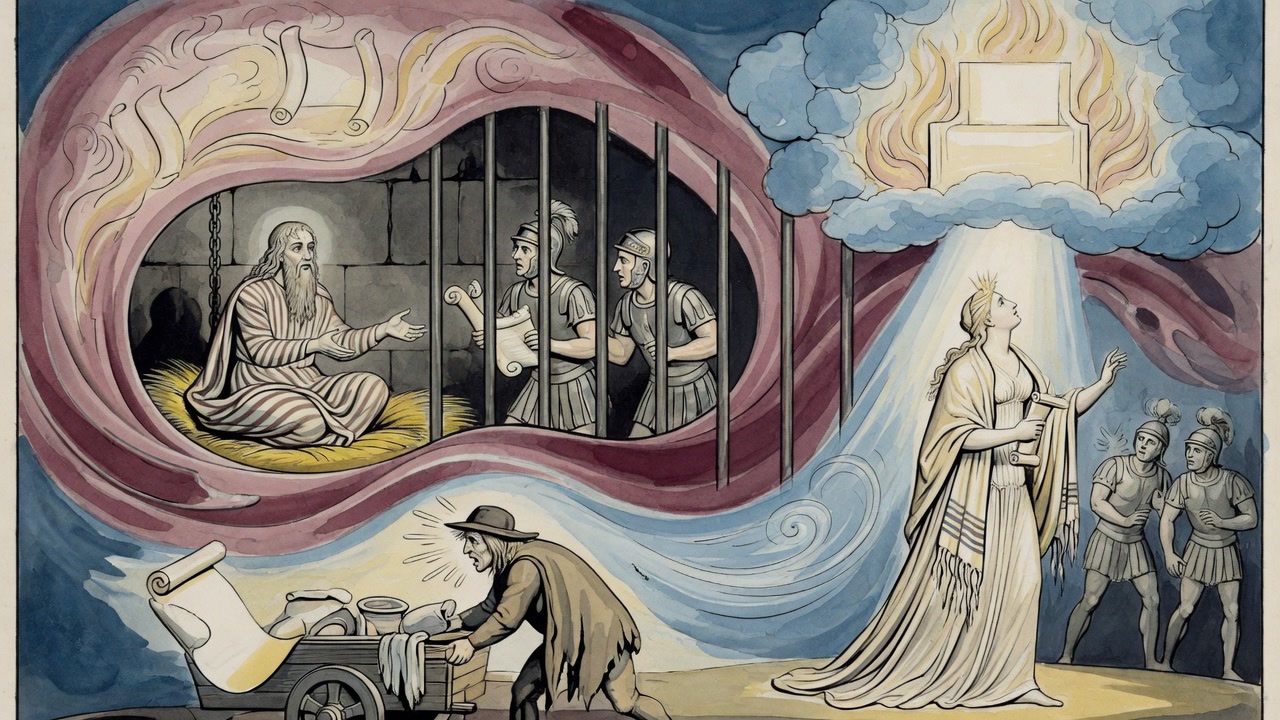
They locked Rabbi Akiva in a Roman cell in the years Hadrian tried to scour the Torah out of the world.
 Click for full size
The offer was simple. Renounce the Law, burn a pinch of incense to the empire's gods, and the door would open. Akiva said no. They came back the next day with the same offer and a harder edge. He said no again. The food thinned. The threats thickened. Every morning a guard repeated the bargain through the iron, and every morning the old man on the floor refused it.
The Governor Sent His Wife Into the Cell
When the beatings produced nothing, the governor changed weapons. He sent his own wife.
She was a noblewoman, clever and unhurried, and she had broken proud men before by the oldest method there is. She walked into the cell expecting a starved fanatic she could flatter and seduce into giving up his God. She found a man who would not look away from her and would not reach toward her either.
Akiva did not argue. He did not plead. He prayed where he sat, kept the fasts the prison could not stop, and went on being exactly what he was: a body held together by a Law that did not depend on the lock, or the food, or the woman in the doorway.
Day after day she returned to wear him down. Day after day she left with the wearing-down going the wrong direction.
She Walked Out a Jew
She had come to conquer a rabbi. She left conquered by a God she had never been introduced to. The wife of the Roman governor took the Torah of Israel onto herself and became a Jew inside the same prison her husband ran.
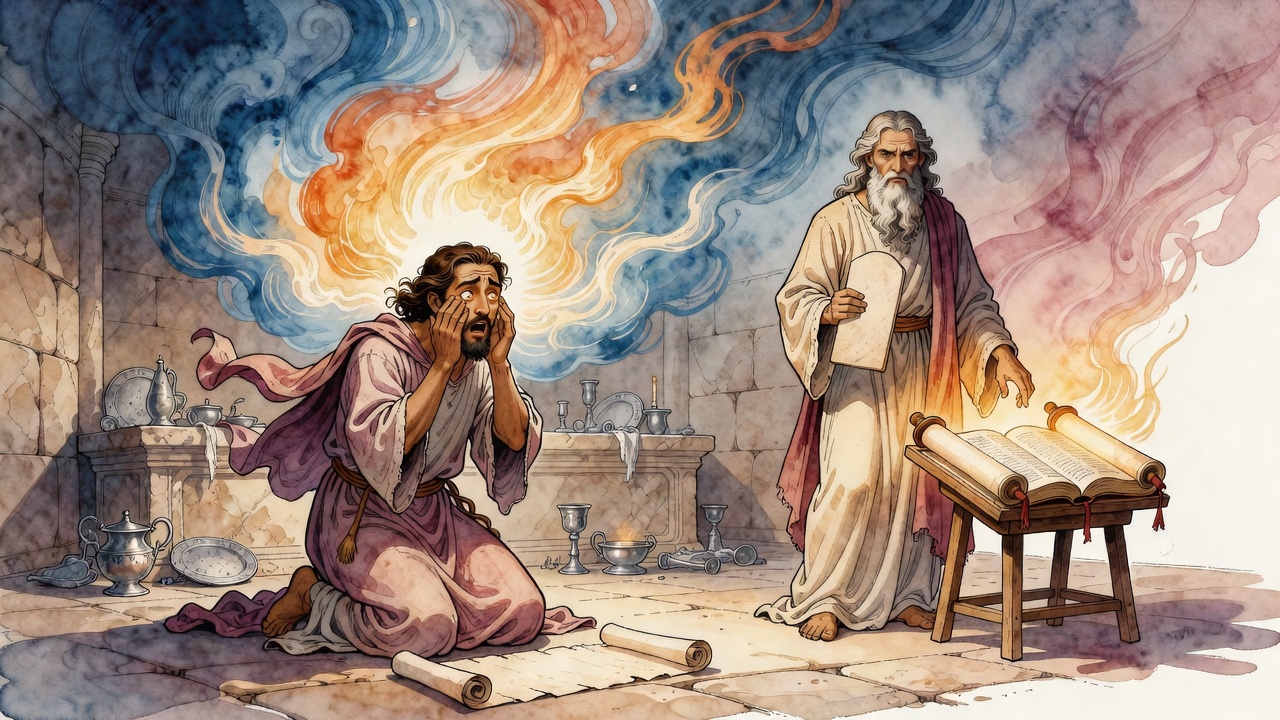
The governor heard, and his fury was the fury of a man whose own house has turned. He went down to the cell to settle it in person, certain he would walk out vindicated and the prisoner would walk out broken or dead.
The long hours in that room worked on him the way they had worked on his wife. By the end the governor of the district had bent his neck to the prisoner's God and joined his wife in the faith of the man he had been sent to destroy.
The cell still held one captive. Everyone else who entered it left more captured than the man inside.
A Student Needed a Ruling He Could Not Ask Aloud
Outside the walls a different urgency arrived. Rabbi Yochanan ben Nuri had a question that could not wait, a point of law that needed his teacher's voice and no other. Akiva was the empire's prisoner. A rabbi who marched up to the gate asking for him by name would only hand the Romans a second neck to break.
Silence was no answer. Standing in the street shouting Torah at a wall would empty the cell of its teacher and fill it with a corpse.
So Yochanan stopped being a rabbi for an afternoon.
The Question Came Disguised as a Spice
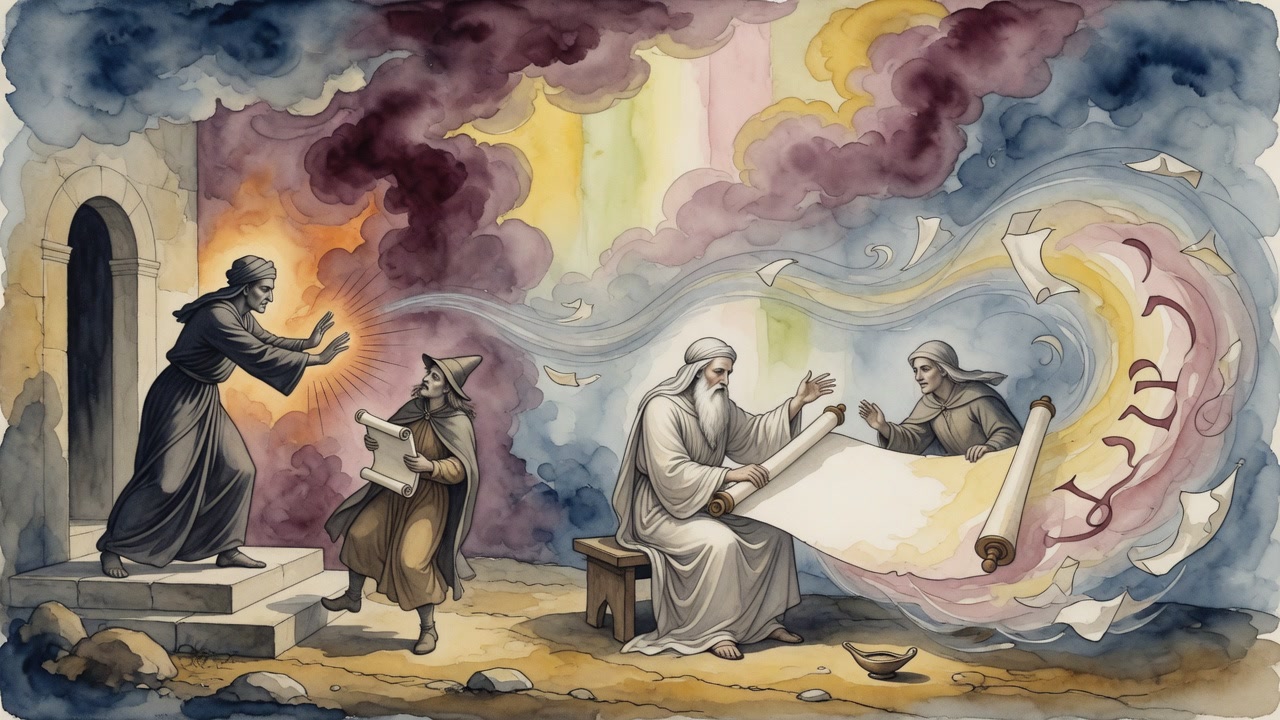
He found a cart and loaded it with spices, threw a peddler's cloak over his shoulders, and pushed the wares up and down the lane outside the prison, crying his goods in the rise-and-fall sing-song of the market. "Saffron," he called. "Cumin." Folded into the same rhythm, riding the same tune so that it landed on the ear as one more outlandish spice no shopper had heard of, he called out his question of Law.
Inside, on the floor of the cell, Akiva heard the cart approach. He heard saffron. He heard cumin. Between them he heard his student asking him to rule. The guards heard a peddler hawking powders that smelled of far countries.
Then the prisoner lifted his voice. To the men at the door it was the ordinary noise of a captive: a groan, a muttered prayer, a cracked plea that might have been for water. Woven through it, in the same broken cadence, Akiva sent back his answer. The cart in the street caught it. The peddler bent to a sack of cumin and carried the ruling away under the noise of the market, and the soldiers at the gate never knew that the Oral Torah had just passed between two men through a wall they were paid to guard.
Rome could chain the body that knew the Law. It could not chain the Law, which had learned, when it had to, to move disguised as a groan and a peddler's cry.
← All myths