Alexander Watched Justice That Would Not Kill
Gold apples, gold pomegranates, gold loaves. Alexander asked if they ate metal here. The king fed him a verdict that left two honest men alive.
Table of Contents
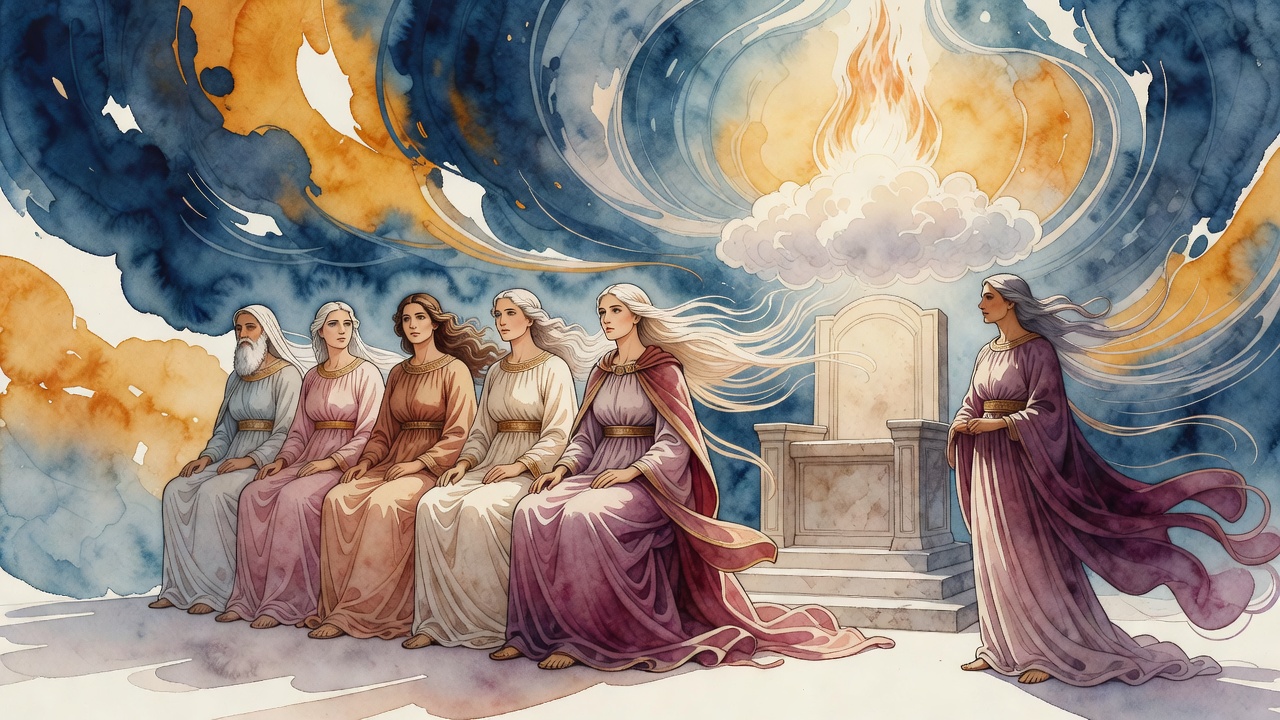
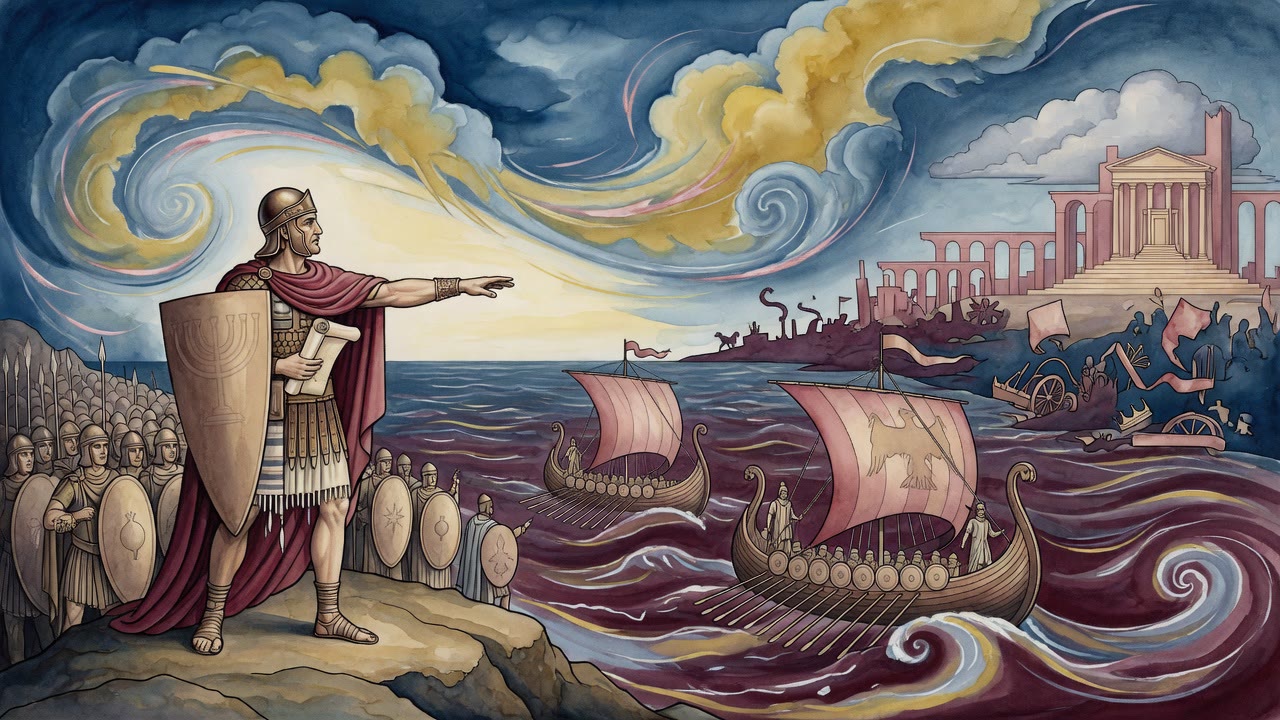
Alexander of Macedon rode past the Mountains of Darkness, hunting for the edges of the world. He found a city of women. They met him not with swords but with a trap made of wit.
 Click for full size
"Win," they said, "and the name goes out as the destroyer of women. Lose, and the name goes out as the king beaten by women. There is no honor here. Only ruin either way."
Past the Mountains of Darkness
Alexander turned back. Over the gate he carved a confession: I was a fool until women taught me counsel. The conqueror who measured continents paused for a city that refused to give him a clean victory. He left with a lesson cut into stone instead of a corpse count.
He rode on with the carving still in his hands' memory. A man who has written "fool" above his own name does not forget the letters quickly. The next land would test whether he had learned anything besides retreat.
Apples and Loaves of Gold
He came next to the land called Africa. They greeted him with apples of gold, pomegranates of gold, loaves of gold. "Do you eat gold here?" he scoffed.
"Had you nothing to eat at home, that you traveled to us?" they answered. Gold as food is an insult to a man who already owns mines. The table was a test, not a tribute.
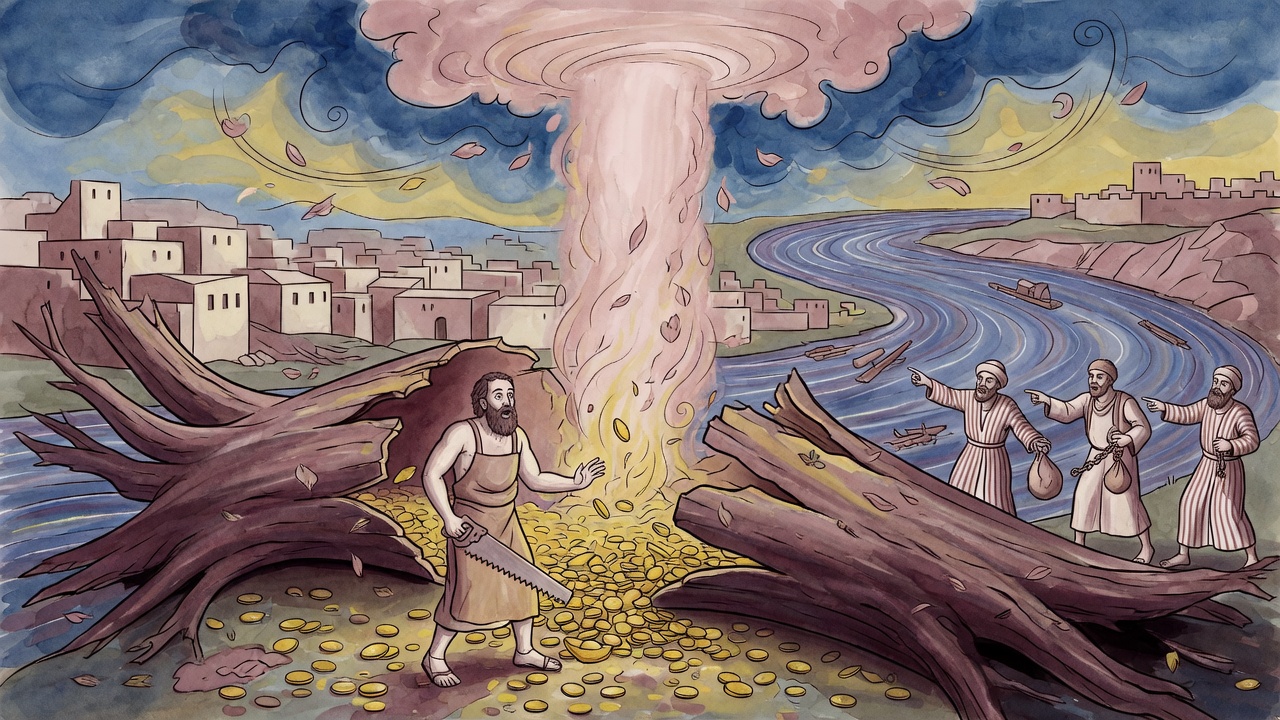
"I came not for your gold," he said, "but to watch you judge." So he watched. Two men disputed a treasure found in a sold ruin. One had bought the ruin and found a hoard inside. He insisted the gold belonged to the seller. The seller insisted he had sold the ruin and everything in it, from the depth of the earth to the height of the sky. Each man feared the punishment of theft more than he loved the metal.
The king called them near. "Have you a son?" he asked the first. Yes. "Have you a daughter?" he asked the second. Yes. "Then marry them," the king ruled, "and let both houses eat the treasure." The gold became a wedding gift instead of a corpse's prize.
What My Land Would Have Done
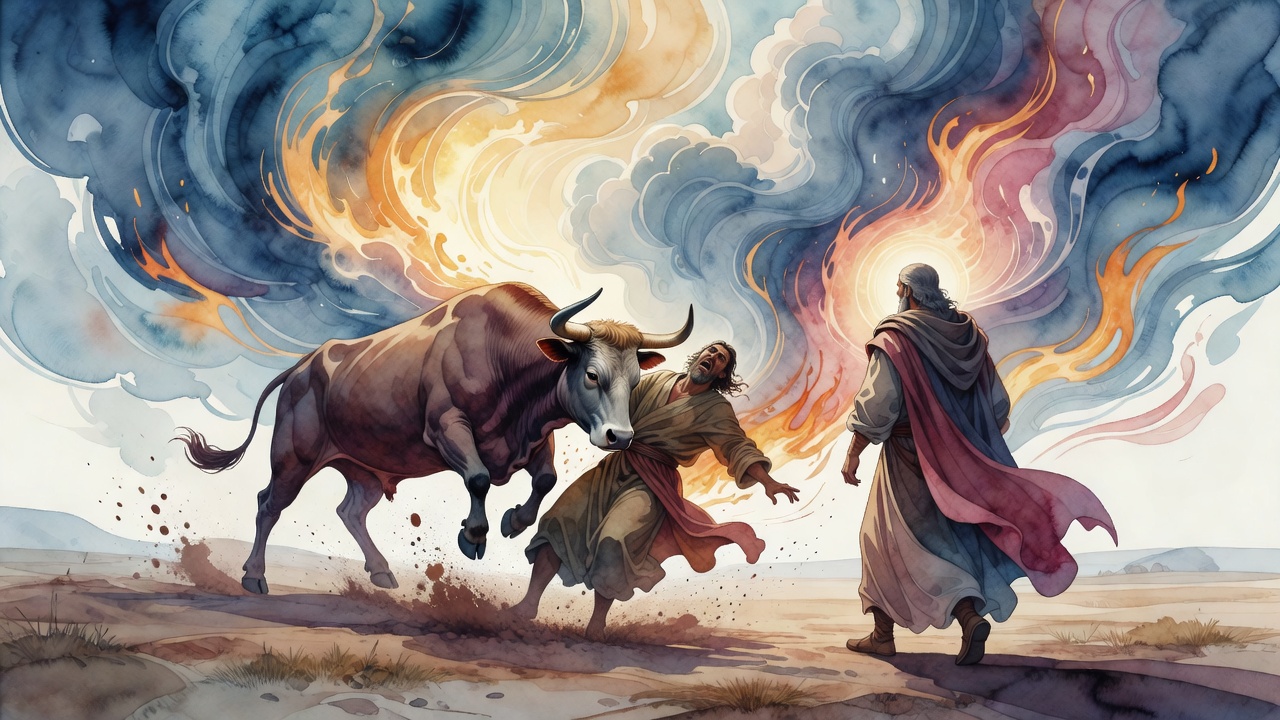
Alexander marveled, then confessed. "In my land we would have killed them both and seized the gold for the crown."
The king grew quiet. "Does your sun still rise? Does your rain still fall? Have you flocks?"
"Yes," said Alexander.
"Woe to you," the king answered. "Only for the sake of your innocent beasts does Heaven keep your land alive, for it is written, You save man and beast, O Lord" (Psalms 36:7).
The sun does not shine for Alexander's justice. The rain does not fall for his crown's appetite. The beasts who never seized a treasure keep the sky working over a kingdom that would murder two honest men for a chest of coins. Alexander came for the edge of the world and found a mirror that showed him the thinness of his own courts.
The Bachelor Who Paid Teachers
In another province a bachelor walked to a schoolhouse with an allowance in his fist. He had no child of his own to place in those rooms. He set the coins down for scribes and Mishnah teachers anyway. Boys who would never carry his name bent over the letters.
The Holy One said, "It is for Me to pay him with a son. Who has advanced Me anything that I shall repay him? Everything under the heavens is Mine" (Job 41:3).
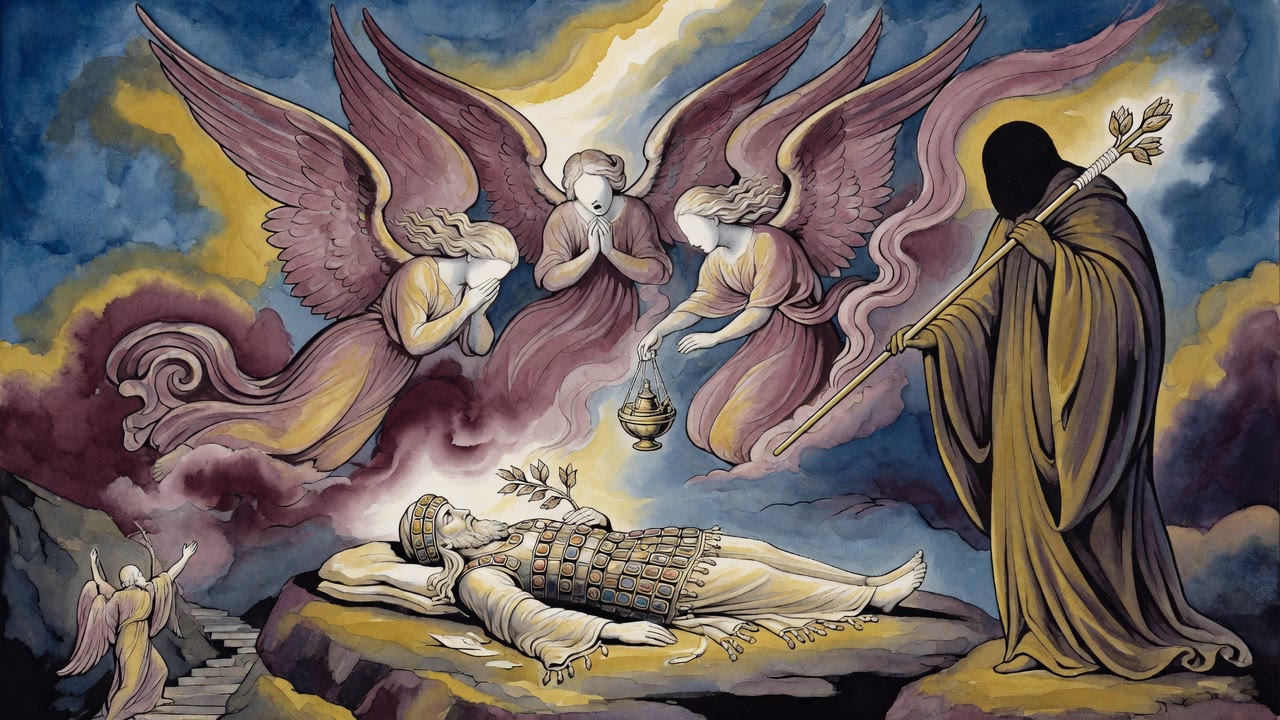
A heavenly voice exploded on the tops of the mountains. "Whoever has done something along with God, let him come and receive his reward." Who offered praise before breath was given? Who circumcised a son before the son was given? Who made a tassel before the prayer shawl was given? Who set a parapet before the roof was given? Who built a sukkah before the room was given? Who set aside pe'ah before the field was given? Who offered a sacrifice before the beast was given?
Commandments arrive as gifts after gifts. Heaven still keeps a debt book for a man who spends on Torah teachers without a private heir to collect the fruit. The bachelor left the schoolhouse door with empty hands and a credit he could not see.
Two Courts Under One Sky
Alexander's court kills for treasure. The African court marries treasure into kinship. The bachelor's quiet coins feed boys who will chant without carrying his name. Heaven answers both rooms with the same stubborn arithmetic. Beasts keep a violent kingdom under sun and rain. A child-shaped reward waits for a man who paid teachers though he had no son.
The conqueror carved his foolishness on a gate of women. The king of Africa refused to let honesty become a capital crime. Between them Job's question hangs: who advanced Me anything? The answer is never gold loaves. The answer is justice that will not kill, and charity that does not need an heir to justify itself.
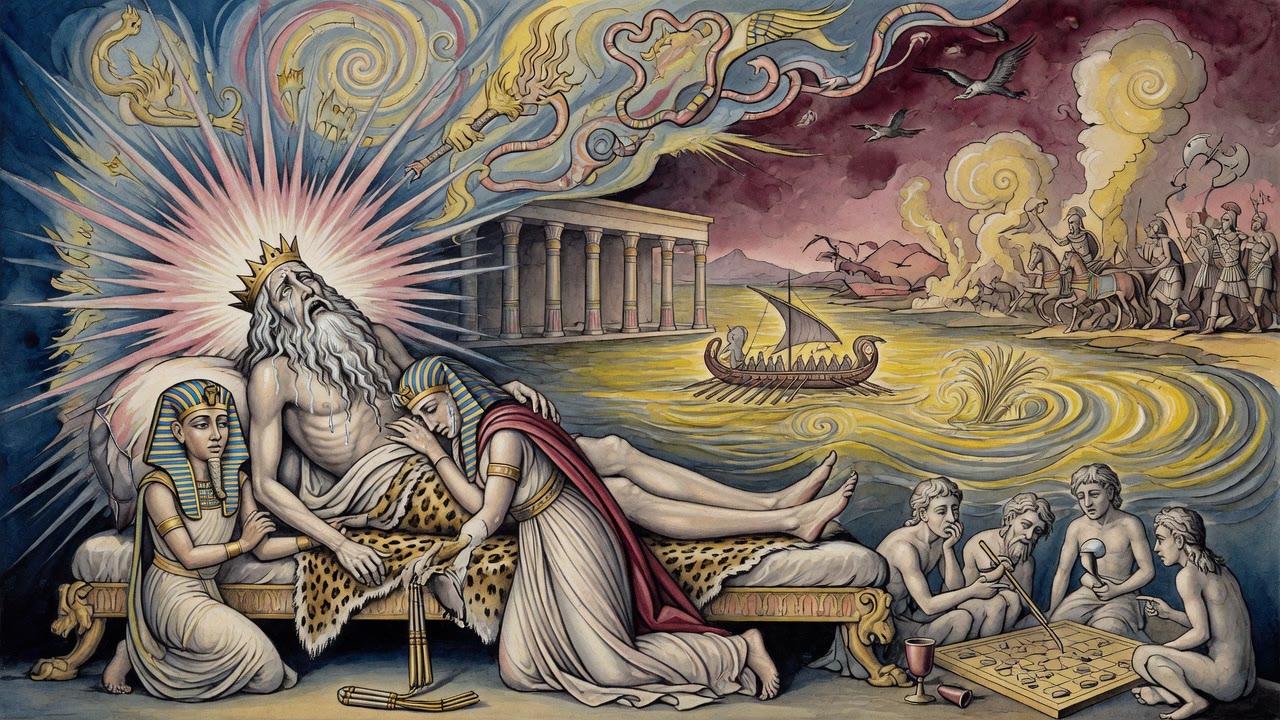
Alexander rode home under a sky that did not belong to him. The beasts of his pastures still breathed. The rain still fell. He had seen a verdict that turned two litigants into one family, and he had heard that Heaven sometimes saves a land only for the animals who never drew a sword over a coin.
← All myths