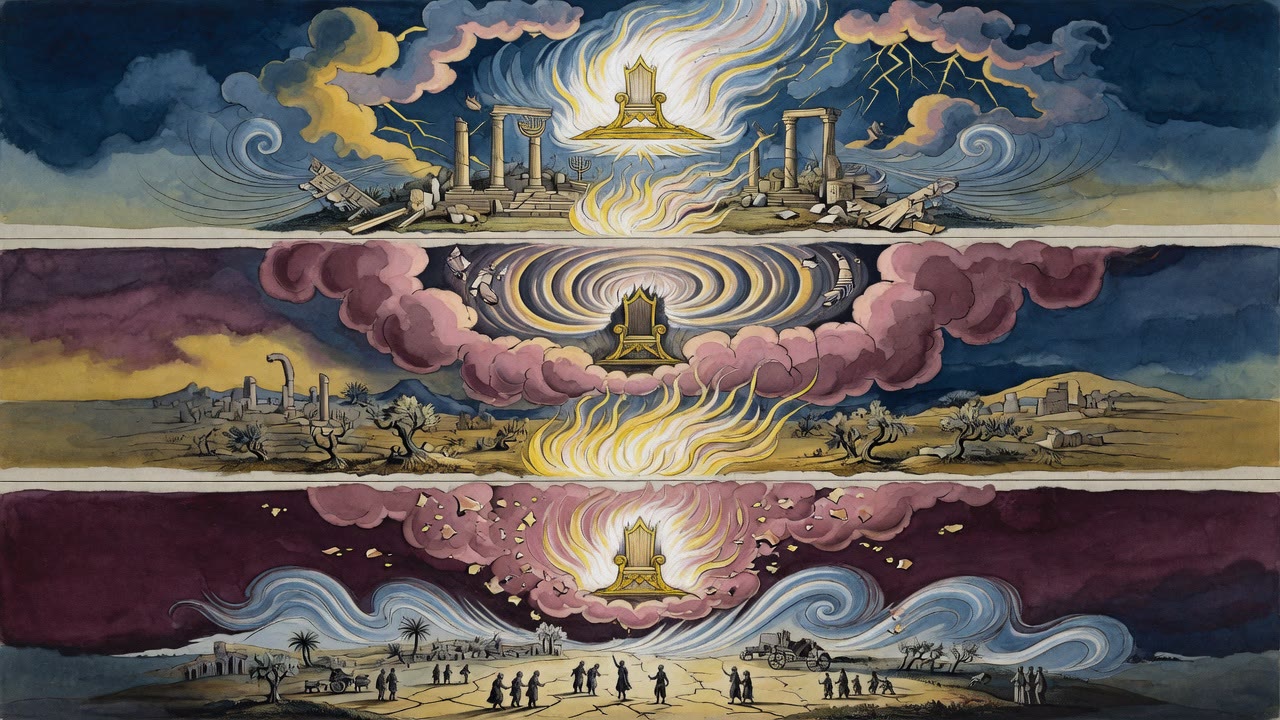
Arm Tefillin Binds Before the Head Speaks
Leather tightens first around the weaker arm, near the heart. Only then does the head-box rest between the eyes.
Table of Contents
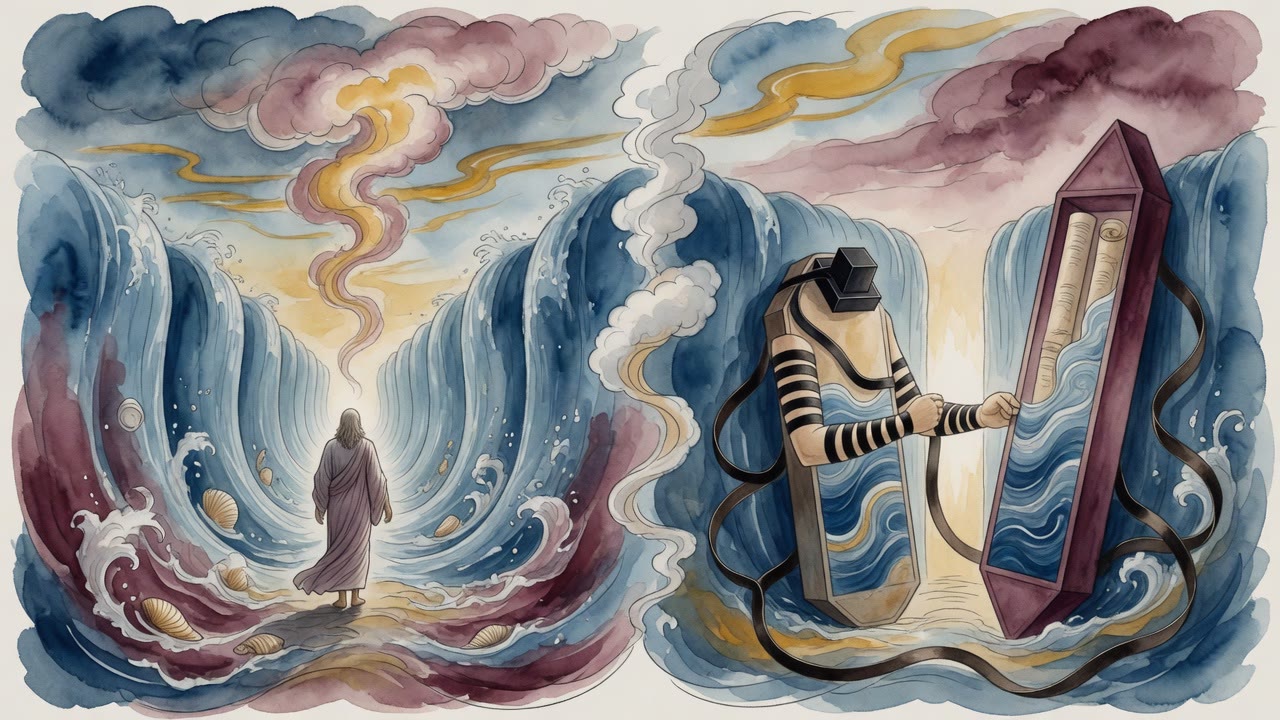
The man wound the black strap around his weaker arm until the box sat against the muscle that faces the heart. Only after the knot held did he lift the second box to the hairline between his eyes. The order was older than his habit. Sifrei Devarim had already fixed it: once the hand-piece is on, place the head-piece. Coming off, reverse the path. Head first into freedom, arm last.
 Click for full size
He pressed his palm to the arm-box as if checking a pulse. The day had not yet begun to argue with him.
Hand Before Eyes
"Bind them as a sign upon your hand, and they shall be totafot between your eyes" (Deuteronomy 6:8). The Sifrei asks which hand, and answers with more than anatomy. "Hand" can mean the right in other verses, yet the practice settles on the left for most, the arm of lesser strength, so the sign sits nearer the heart's work. Rabbi Yossi hears another mercy in the wording: the phrase still includes the person missing a left arm, who then binds on the right. The law bends toward the body that actually stands there.
Order is theology wearing leather. Deed first, then the crown of thought. The arm moves through the world before the forehead announces intention. Bind the actor, then bind the watcher.
When She Descends
Tikkunei Zohar watches the same straps and sees a cosmic marriage. As She, the Shekhinah (the Divine Presence), descends, they bind Her below with the tefillin of the hand (the leather boxes of scripture worn at morning prayer). The word qeshurah, "bound up," from Jacob's soul bound with Benjamin's (Genesis 44:30), becomes the grammar of the ritual. Below, a vowel-point holds the bond. Above, a cantillation mark like a shalshelet crowns the head the way head-tefillin (prayer boxes bound on arm and head) crown the mind.
The mystic does not replace the law. The mystic densifies it. Every morning the arm-box is also a hitching post for the Presence that wants to dwell without dissolving into abstraction. Lengthen Her with a raised movement of voice. Lower Her with a steady influence that lets Her reign below. Ascent and descent in one wrapping.
The Frontplate That Never Sleeps
A thin gold band once sat on the High Priest's forehead, engraved "Holy to the LORD." The Torah says it rests there continually. The school of Rabbi Ishmael drew the line out to ordinary tefillin: if one divine Name on gold demands constant awareness, how much more the many Names sealed in the boxes. A person must keep a hand on them in mind, never letting the straps become jewelry forgotten under a hat.
Then the sages argued whether the frontplate still wins favor when it hangs on its peg, whole but unworn. Rabbi Shimon said its power holds either way and pointed to the Day of Atonement, when the High Priest serves without it. Rabbi Yehudah answered that the holiest day bends rules for the whole community and proves nothing for ordinary service. Abaye narrowed the fight: a shattered band is finished; the dispute is only the band set down intact. One reading of "continually" means fixed place. The other means favor that outlasts the moment of wearing.
Under the argument sits a simple demand. Holiness is not a costume you put on and forget.
The Morning Sequence
So the man finishes the windings. Arm near heart. Head between eyes. Palm returns to the leather as if to say, I am still here. Somewhere in the upper grammar, She is bound without being trapped. Somewhere in memory, a gold band still teaches that a Name on the forehead is a job, not a decoration.
He steps into the street. The boxes stay. The order stays. The first act of the day was not speech. The first act was a binding that put deed ahead of display.
Outside, a cartwheel scraped stone. Inside, leather and parchment made a smaller, stricter world. A child watching from the doorway learns the sequence before he can name the verses inside the boxes. The ritual teaches with the hands what sermons try to teach with words.
The man who only sees leather still performs the marriage of upper and lower. The man who also hears the Zohar knows why the strap must not be lazy. She is called a movement and a unity. The binding is not a cage. It is a joint that keeps two worlds from losing each other in the morning noise.
Touch the box. Remember the Name. Do not coast through the hours as if the forehead were empty. By evening, when he reverses the sequence, the head comes free first, as if thought is allowed to rest only after action has been unknotted with care. The cartwheel scrapes again. The smaller world of leather folds into a bag. The larger world tests whether anything of the binding remained in the hands.
← All myths