Parshat Vayishlach5 min read

Jacob Who Wrestled Until Evening Prayer Was Born

Alone by the ford at night, Jacob held an angel until dawn, and the struggle itself bound the Divine Presence close enough to found the evening prayer.

Curated by Arthur · Told by Maggid ·
Table of Contents
  1. The Grip That Would Not Open
  2. Drawing Her Near to Her Master
  3. The Knot on the Left Arm
  4. A Dwelling Place in the Limbs
  5. When the Name Dwells

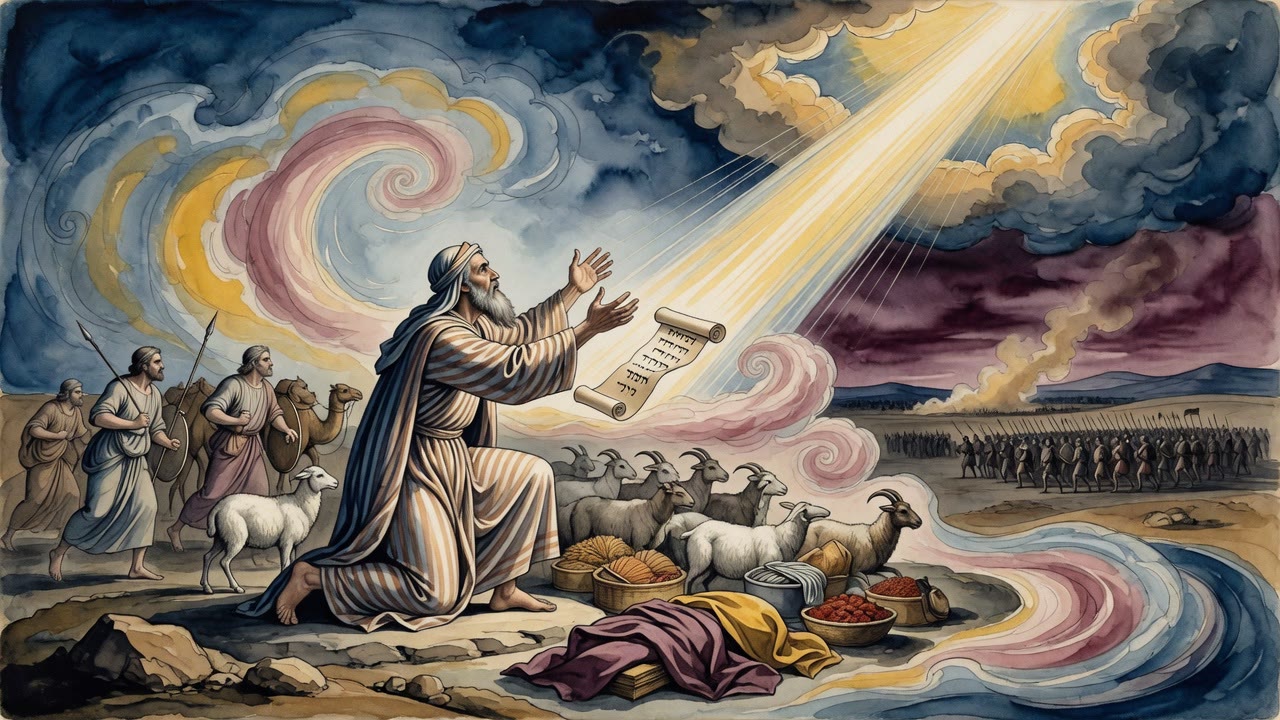
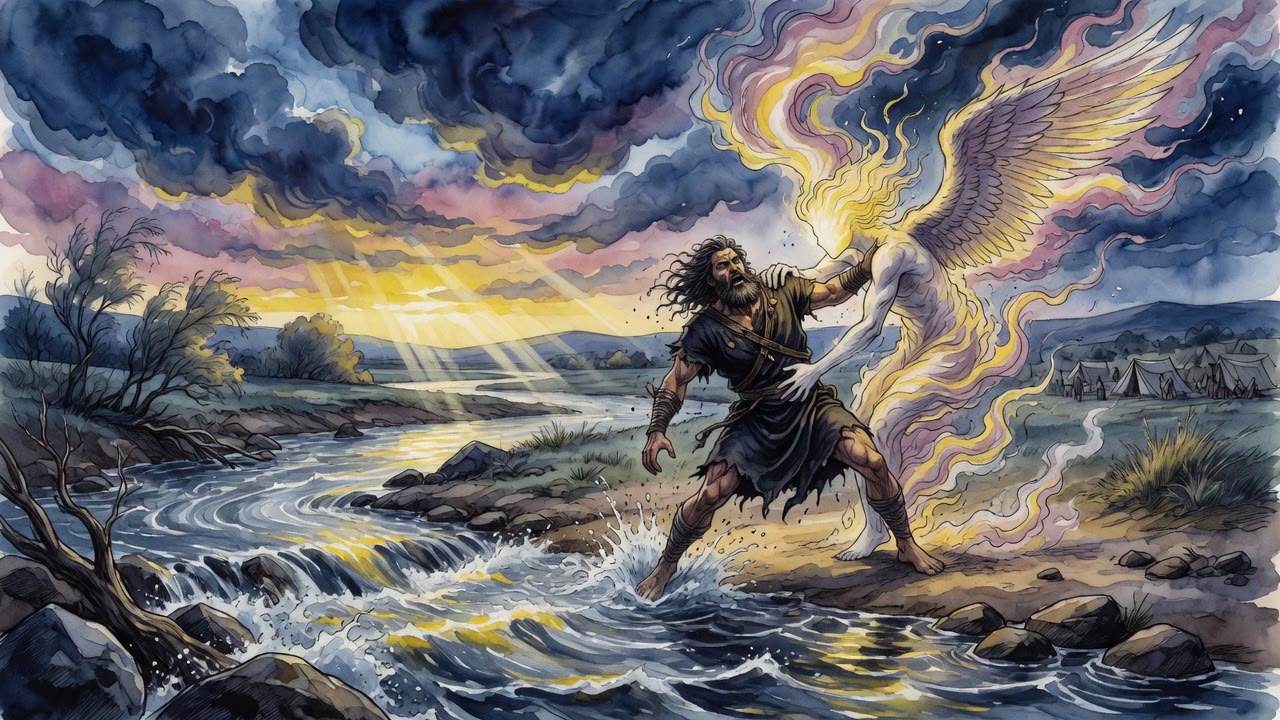
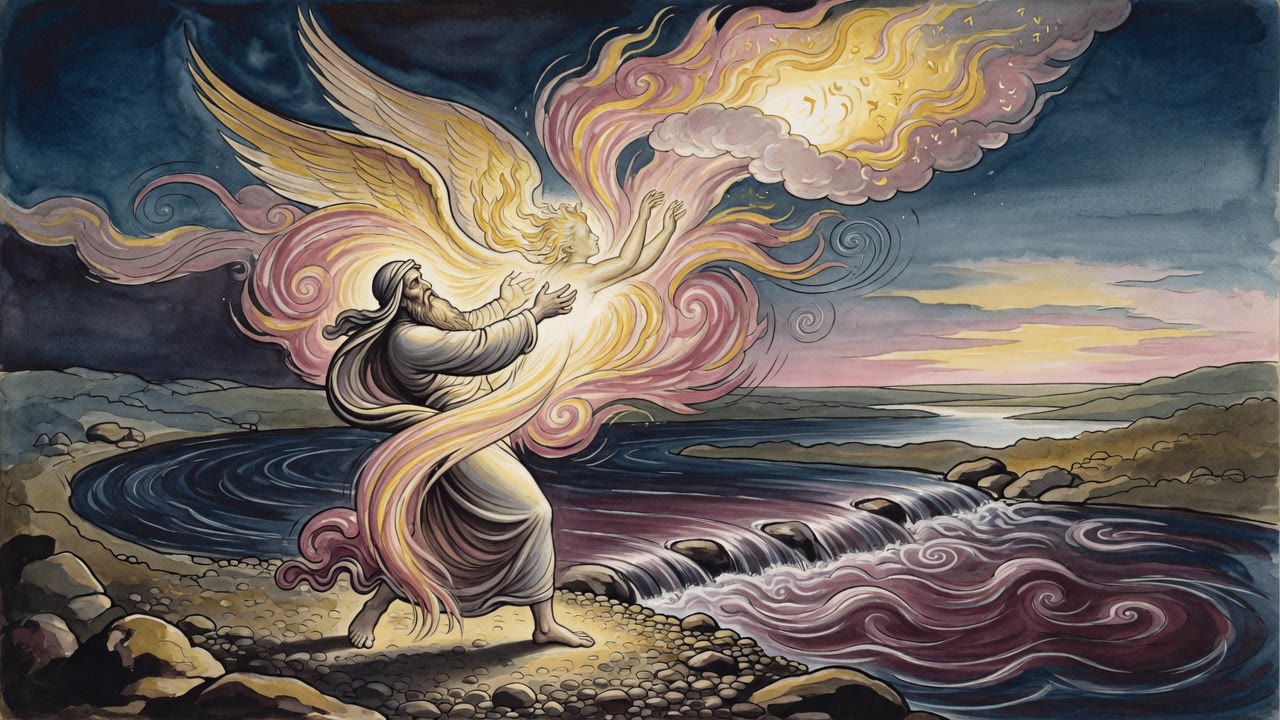
Jacob sent everyone across the Jabbok and stayed alone. Night came down on a man who had already bargained with a brother, a father-in-law, and his own fear. Then a man wrestled with him until the rising of the dawn (Genesis 32:24).
Jacob Who Wrestled Until Evening Prayer Was Born Click for full size

Dust and breath. A hip out of joint. A refusal to let go without a blessing. The river kept moving. Jacob did not. Somewhere on the far bank, wives and children slept without knowing their father was fighting for a name.

The Grip That Would Not Open

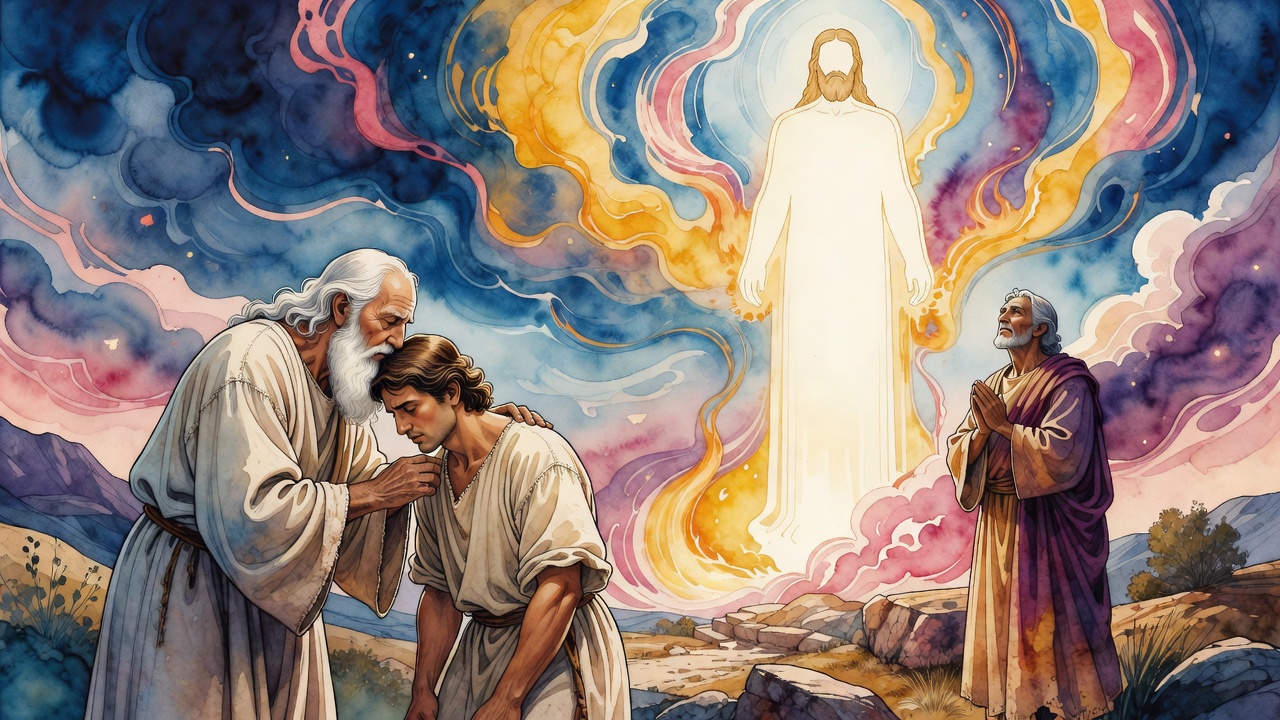
The stranger touched the hollow of his thigh and the sinew shrank, but Jacob held. "I will not let you go unless you bless me" (Genesis 32:26). Names were traded like blows. Jacob became Israel because he had striven with God and with men and had prevailed (Genesis 32:28).

He asked the other's name and received no plain answer, only the blessing pressed into him under the paling sky. He limped into the sunrise with a new name and an old hunger still half answered. Esau was still coming. The hip still hurt. The blessing had not erased the road. It had only made the road walkable under a different title.

Men would later refuse the sinew of the thigh in memory of that night (Genesis 32:32). A diet rule became a scar you could taste, generation after generation, because one body had refused to release heaven.

Drawing Her Near to Her Master

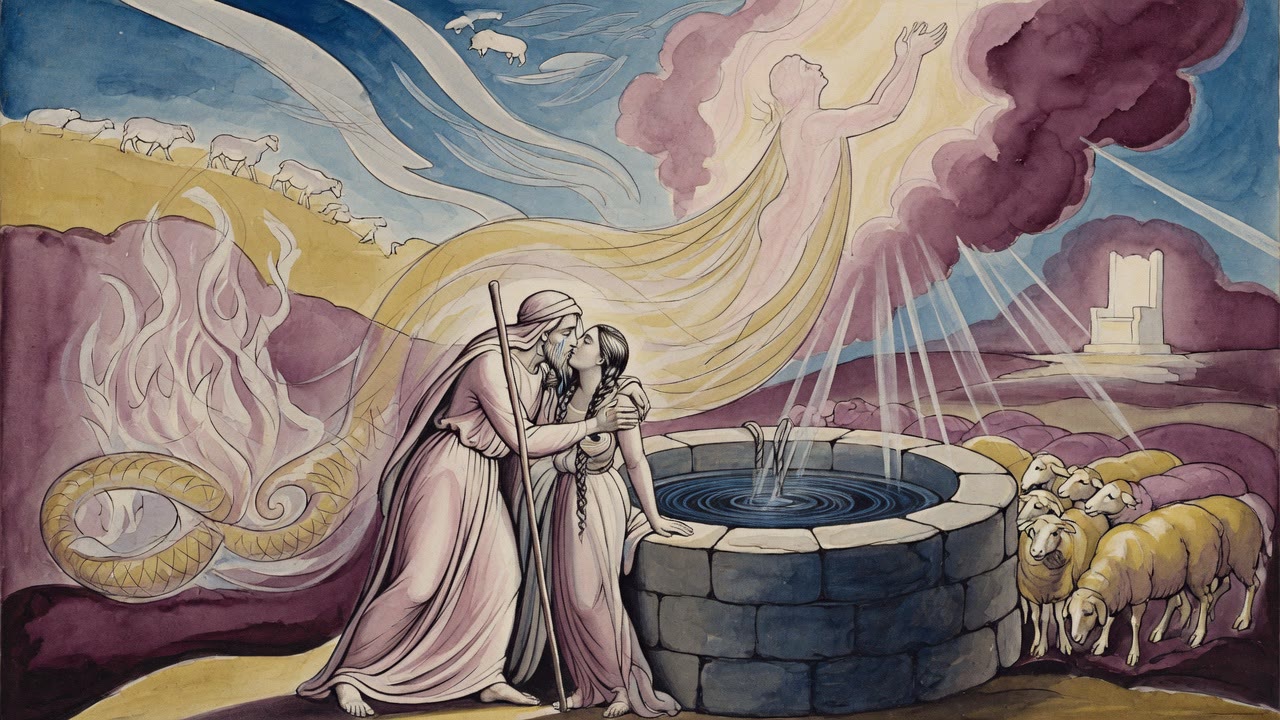
The masters of the Tikkunim heard more than a riverside brawl. They said Jacob's struggle and reconciliation drew "Her" near to "Her Master," the Shekhinah (שכינה), the Divine Presence, drawn toward the Holy One through a night of pressure that did not break.

Evening prayer, Ma'ariv, was not invented in a study hall first. It was pressed into obligation by a body that refused to release heaven until heaven answered. The sun rose upon him (Genesis 32:31), and from that light the teachers read a binding that did not loosen when the angel left.

Psalm and verse braided together: a sun and a shield is the Lord God (Psalm 84:12), and the sun rose upon him. Renewal was not abstract. It landed on a limping man who had held on past the hour when most grips fail. Night prayer still carries that stubbornness. It is the hour when a person has the fewest witnesses and the most need.

The Knot on the Left Arm

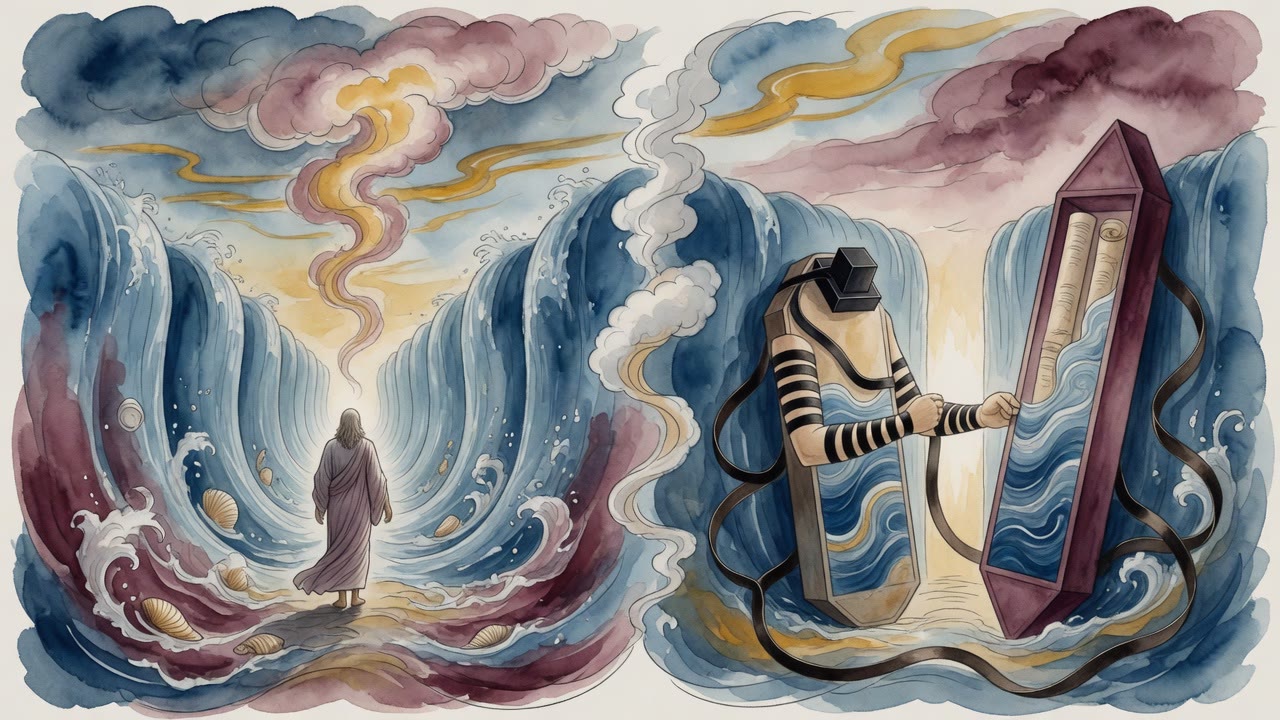
From that night forward, they said, Jacob bound Her to him. The knot of the tefillin (the leather prayer boxes bound to arm and head) on the arm became the image of that binding, especially the left arm, the side of gevurah, strength and judgment. A leather strap around flesh became a sign that the Presence would not move from him forever.

The Zohar is not only talking about boxes of parchment. It is talking about a metaphysical grip that matches the riverside grip. What the hands did to the angel, the soul does to the Presence: hold, name, refuse to treat the encounter as a one-night accident. Morning straps remember a night ford. The left arm, closer to the heart in the traditional binding, wears the severity that does not let go.

A Dwelling Place in the Limbs

Elsewhere the same stream of teaching says a person becomes worthy by preparing a dwelling for the Shekhinah (the Divine Presence) with beautiful vessels made of limbs, deeds done in the world, and by nurturing the soul as a beautiful companion within. The Higher Presence abides where the lower life makes room.

On the Sabbath the Holy One ceases and rests, shavat and naphash (Exodus 31:17), and extra soul-presence arrives like companions walking after a queen, virgins following her (Psalm 45:15). Jacob's night is weekday struggle. Sabbath is the other face of the same bond: not wrestling to seize a blessing, but opening space so the blessing can stay. Seventy faces, seventy companions, a fullness that arrives when rest is kept and not only when night is fought.

When the Name Dwells

When the Name rests upon the Presence within, the nations see that the Name of the Lord is called upon you (Deuteronomy 28:10). Inner chaos finds an order under the heart where the soul sits. The appointed forces of liver and spleen, images of darker mixture, settle under that heart's rule when the soul is whole enough to host.

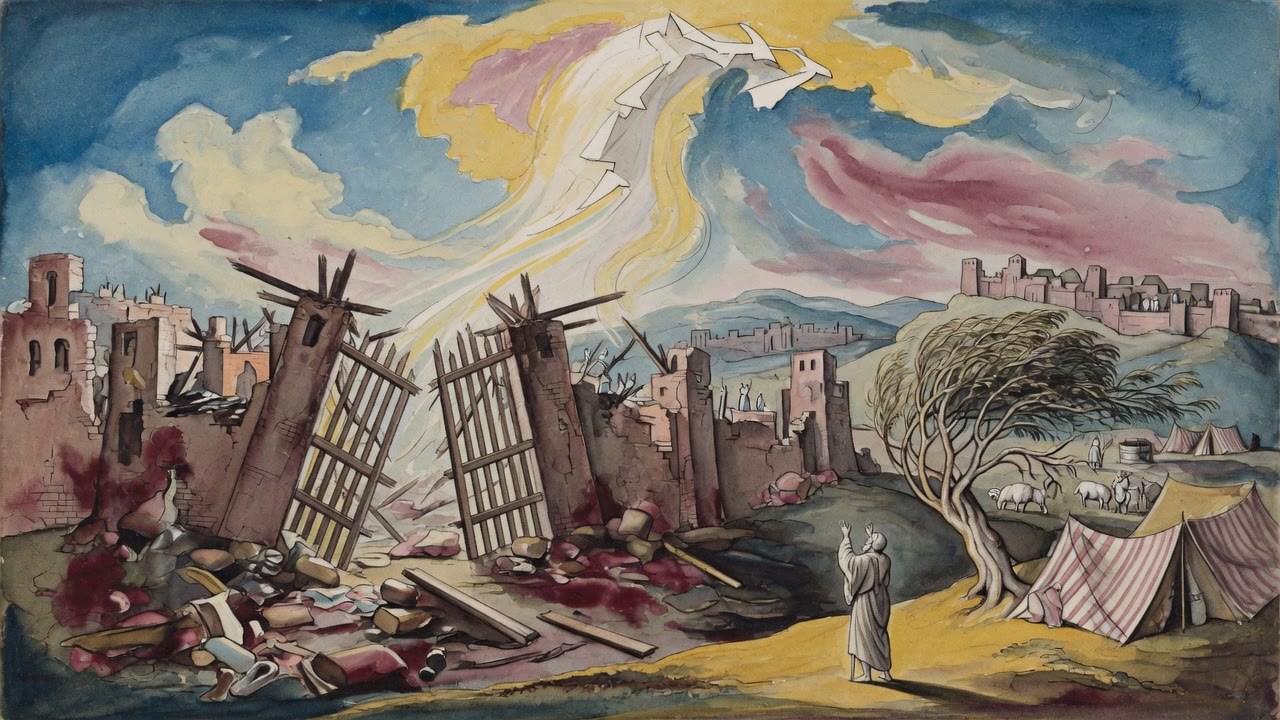
A blemish of willful neglect can keep the Holy One from resting fully on that soul, the way a blemish kept a priest from approaching the altar (Leviticus 21:18). Jacob's limp is not that blemish. It is the opposite: the mark of approach that cost him. He walked into Esau's day already altered, bowing, limping, still Israel.

Every Ma'ariv that opens after sunset is a small return to the ford. Hold. Speak a name. Do not let the encounter dissolve into ordinary night. The river is still cold. The grip is still the point.


← All myths
From the tradition

Sources

3 sources

The texts behind this telling. Some cards carry a translation of the source; others are our own retelling of it, and each card says which. Every card links out to the original.

Tikkunei Zohar 39:19Tikkunei Zohar

Retold in our words. Read the original at the link below.Sefaria-hosted English translation · CC-BY

The Tikkunei (spiritual repair) Zohar, a central text of Kabbalah, offers a unique perspective. It suggests that Jacob's encounter, his struggle and eventual reconciliation, played a crucial role in establishing the obligation of the evening prayer, or Ma'ariv. But how?

The Tikkunei Zohar tells us that Jacob, through his actions, drew "Her" near to "Her Master." Now, who are "Her" and "Her Master?" In Kabbalistic thought, these terms often refer to the Shekhinah, the Divine Presence, and God. Jacob brought the Divine Presence closer to God through his profound spiritual encounter. This act, this drawing near, is what solidified the importance of evening prayer.

The story doesn't end there. The Tikkunei Zohar then connects this to the rising sun, quoting (Psalm 84:12): "For a sun and a shield is Y”Y ELQYM," a name of God. And then, (Genesis 32:32): "..and the sun rose upon him." This verse refers to Jacob after his wrestling match with the angel. The rising sun, a symbol of renewed light and divine presence, is directly linked to Jacob.

The text goes on to say that from that moment onward, Jacob bound "Her" to him. This binding is symbolized by the knot of the tefillin, the phylacteries, worn on the arm. Tefillin are those small leather boxes containing scrolls with biblical verses, worn by observant Jewish men during morning prayers. The Zohar is not talking about literal tefillin here, but of a metaphysical binding.

The tefillin of the hand, specifically those worn on the left arm, represent this connection. Why the left arm? Because the left side is often associated with gevurah (Severity), with strength and judgement. By binding the Shekhinah to his left arm, Jacob ensures that She would not move from him forever. It's a powerful image, a commitment to maintaining a constant connection with the Divine.

This passage from the Tikkunei Zohar offers a mystical interpretation of how our prayers, our actions, can draw us closer to the Divine. Jacob's story becomes a model for our own spiritual journeys. He teaches us that through struggle, through dedication, and through commitment, we can bind ourselves to the Divine Presence and ensure that it remains with us always. It makes you think about how deeply connected our traditions are, and how much meaning lies just beneath the surface of the texts we read.

Full source
Tikkunei Zohar 44:14Tikkunei Zohar

Retold in our words. Read the original at the link below.Sefaria-hosted English translation · CC-BY

The Tikkunei (spiritual repair) Zohar, a central text of Kabbalah, the Jewish mystical tradition, speaks of just that. It tells us that we are worthy when we prepare a dwelling place for the Shekhinah, the Divine Presence, within our hearts. But what does it mean to "prepare a dwelling place"?

The Tikkunei Zohar goes on: We do so by creating beautiful vessels with our limbs – through our actions, our deeds in the world. And also, by nurturing "a beautiful woman," which, according to this passage, is our own soul. It's for the sake of this soul, this inner beauty, that the Higher Shekhinah – "the soul of all life" – abides within us. Our soul as a welcoming space for the Divine.

The text then explores the significance of the Sabbath, drawing from the verse in (Exodus 31:17). It says that the Holy One, blessed be He, "ceased" (shavat) and "rested" (naphash). The Tikkunei Zohar interprets this on two levels, aligning with the two aspects of the Shekhinah, the Higher and the Lower.

In relation to the Higher Shekhinah, God "ceased" upon them. And in relation to the Lower Shekhinah, God "rested" upon them. And even more, God gave them extra souls. What are these extra souls? The text quotes (Psalm 45:15), describing "virgins following her, her companions, which arrive with Her."

Think of it like this: when we truly connect with the Divine, when we create that space within us, we are not alone. We are joined by a host of celestial beings, angels and servants, all connected to the essence of Sabbath.

These angels are linked to the commandments to "Remember" (Zachor in Exodus 20:8) and "Observe" (Shamor in (Deuteronomy 5:1)2) the Sabbath. The text connects these angels to the number 70. This is a rich number in Jewish tradition, often associated with completeness and universality. The seventy faces of Torah, the seventy nations of the world… it hints at the vastness and inclusivity of this Divine connection.

So, what does this all mean for us in our daily lives? Perhaps it’s a reminder that our inner state matters. That by striving to live ethically, to create beauty, to nurture our souls, we are not just improving ourselves. We are actively creating a space for the Divine to dwell within us. And when we do that, we are joined by a chorus of angels, all singing the praises of the Sabbath, of rest, of connection, of the Divine spark within us all. How can you make space for the Shekhinah in your heart today?

Full source
Tikkunei Zohar 104:4Tikkunei Zohar

Retold in our words. Read the original at the link below.Sefaria-hosted English translation · CC-BY

The Tikkunei (spiritual repair) Zohar, a foundation of Kabbalistic literature, offers us a stunningly intimate glimpse into this very idea. Specifically, Tikkunei Zohar 104 speaks about the indwelling of God’s Name, the Y”Y (a shortened form of the Tetragrammaton, the ineffable Name of God), upon the Shekhinah (the Divine Presence) – often understood as the Divine Presence, the feminine aspect of God. When this happens, we are told, "all the peoples of the land will see, that the Name of Y”Y is called upon you, and they will fear you" (Deut. 28:10). Imagine: a world so filled with Divine Presence that it inspires awe and reverence in all.

It gets even more personal.

The text goes on to describe the inner workings of our being, how the "appointed-ones of the liver and its veins, and the appointed-ones of the spleen and its evil mixture, become subjugated beneath the heart, for the soul, nishmata, is there.” In other words, when we are aligned with the Divine, even the darker, more chaotic aspects of our inner landscape find their proper place, governed by the heart where the soul resides. What a powerful image!

However, there’s a crucial caveat.

The Tikkunei Zohar warns us that if the soul is "defiled by sins, or is lacking even one precept," then that creates a defect. The Masters of the Mishnah (the earliest code of rabbinic law), in Sotah 21a, teach that "a transgression extinguishes a precept.” So, in the specific place – or limb, as the text puts it – where a transgression occurs and a precept is neglected, a blemish forms on the soul. And because of this blemish, "the blessed Holy One does not reside upon the soul."

Ouch.

The verse from Leviticus (21:18) is then invoked: "Anyone in whom there is a blemish shall not approach." Meaning, a soul with a blemish in one of its 248 precepts cannot fully approach the Divine.

Now, before you start feeling overwhelmed by the sheer number of precepts and the potential for falling short, let's take a breath. This isn’t about perfection; it's about intention and direction. The Tikkunei Zohar isn’t suggesting that one misstep banishes the Divine forever. Rather, it highlights the importance of striving for wholeness, of actively engaging with the precepts as a way to purify and refine our souls. Every act of kindness, every moment of mindfulness, every effort to live ethically contributes to healing those blemishes and drawing closer to the Divine Presence within.

This teaching invites us to examine our lives, not with judgment, but with compassion and a desire for growth. Where can we strengthen our connection to the precepts? Where can we heal the "blemishes" that separate us from our truest selves and from the Divine? It's a lifelong journey, a continuous process of tikkun olam – repairing the world, starting with ourselves.

What does it mean to you to have the Divine reside within? How can we actively create space for the Shekhinah to dwell more fully in our hearts and in our world?

Full source