Parshat Miketz7 min read

Benjamin's Pebbles Struck Down the Prince Who Ambushed Asenath

Pharaoh's son rides out to seize Joseph's wife by force, and a boy's pebbles and Asenath's prayer break the ambush on an open road.

Curated by Arthur · Told by Maggid ·
Table of Contents
  1. The Prince Who Wanted Another Man's Wife
  2. Six Hundred on the Open Road
  3. The Boy and the Fistful of Stones
  4. The Swords That Fell From Their Hands
  5. Mercy in a Family Built on a Sale
Benjamin's Pebbles Struck Down the Prince Who Ambushed Asenath Click for full size

The Prince Who Wanted Another Man's Wife

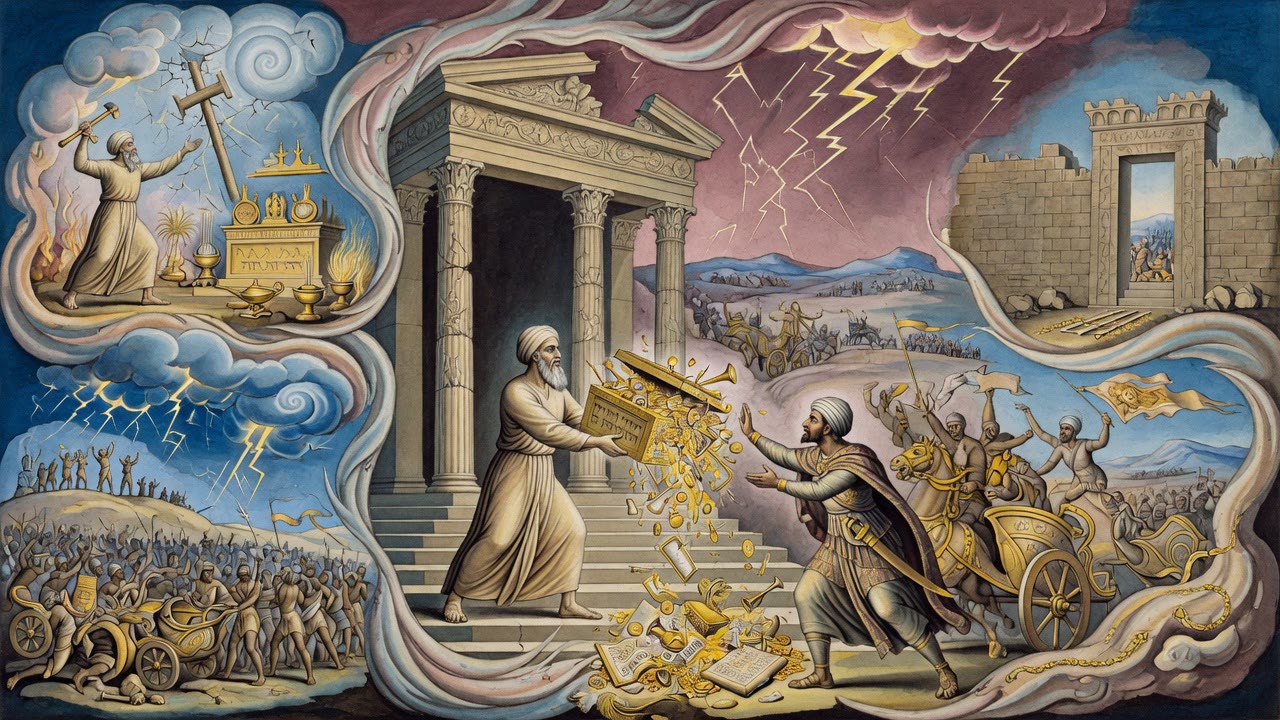
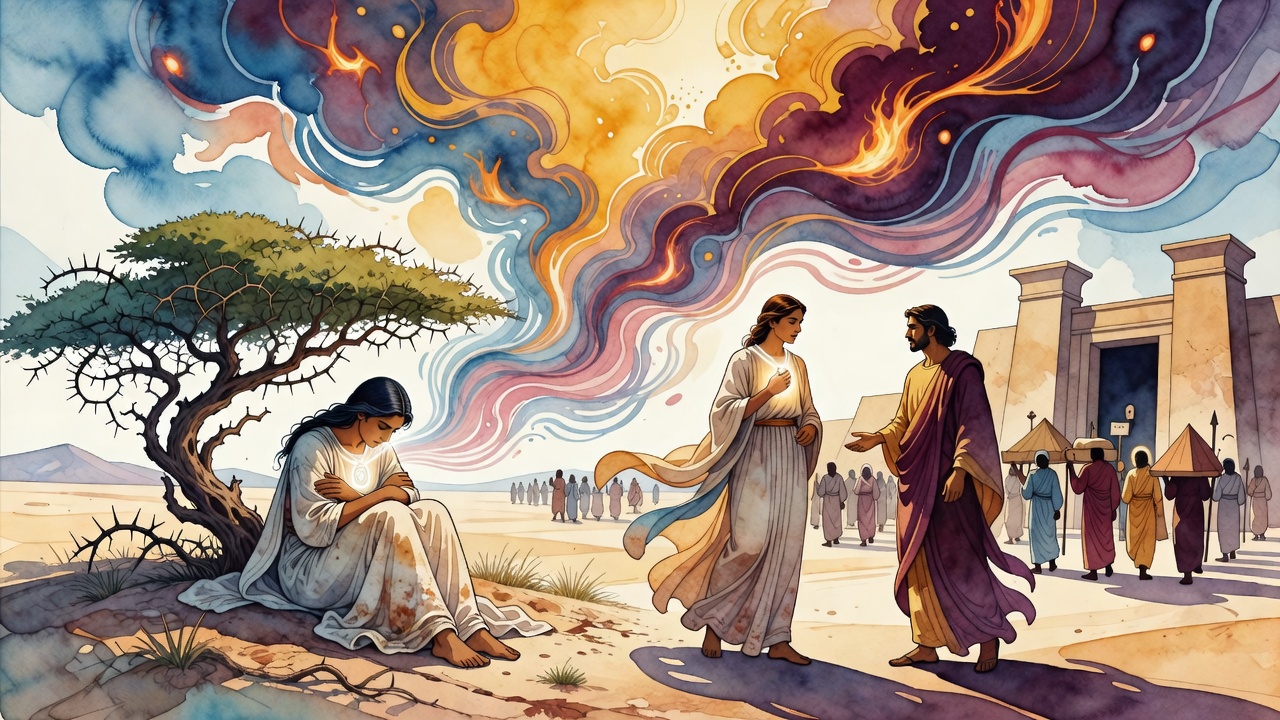
The heir to Egypt could not stop looking at another man's wife. On the road one day the son of Pharaoh passed Joseph traveling with Asenath, and the sight of her beauty lodged in him like a splinter that would not work loose. He had asked for Asenath once, before Joseph ever came, and she had refused him. Now she rode beside a former slave, a Hebrew lifted out of a prison pit, and the prince decided that the only clean way to possess her was to remove the man at her side.

He did not trust his own soldiers with a murder that touched the viceroy of Egypt. He wanted Joseph's own blood to do it. So he went to Simon and Levi, two of Joseph's brothers, and he flattered them and asked them to help him be rid of Joseph.

Simon's hand was already moving. His temper had drowned a whole city once. But Levi, who had the gift of prophecy and had read the prince's heart before the prince finished speaking, brought his heel down hard on Simon's foot. "Why art thou so angry, and so wroth with the man?" he said under his breath. "We that fear God may not repay evil with evil." Then he turned to the prince and let the mask fall. They would never lift a hand against Joseph, he said, and if the prince did, he would answer to the same sword that had emptied the streets of Shechem. The prince dropped to the dirt and begged. Levi raised him by the arm. "Fear not," he told him, "but abandon thy wicked plan, and harbor no evil design against Joseph."

Six Hundred on the Open Road

The prince abandoned nothing. He only changed his target. If he could not reach Joseph through the brothers, he would take Asenath from the road itself.

She rode out with six hundred attendants around her, a whole household on the move. The prince's riders came down on the column without warning. Fifty armed men drove into six hundred servants who had brought no war with them, and the caravan broke apart. Attendants scattered. Asenath's chariot wheeled to run, and the dust and the screaming and the turning horses closed over her like water.

She was not alone in the chariot. Beside her stood the youngest of the brothers, Benjamin, still a boy, Joseph's only full brother, the one their father could not bear to let out of his sight.

The Boy and the Fistful of Stones

Benjamin did not wait to be rescued. He jumped from the moving chariot, bent low, and came up with a fistful of pebbles off the roadbed.

The first stones flew. He had no sling and no bow, only his arm and the hard stones of an Egyptian road, and he threw them into the riders as they wheeled for another pass. One pebble left his hand, crossed the whole distance, and struck the son of Pharaoh square in the forehead. The prince rocked in his saddle. Blood sheeted down his face. The wound was deep, and it did not close.

The charioteer threw himself into the boy's fight. He gathered stones and pressed them into Benjamin's hands as fast as the boy could throw, and rider after rider went off his horse. When the count was finished, forty-eight of the fifty lay in the road.

The Swords That Fell From Their Hands

Help was already on the way. Levi's prophecy had shown him the ambush, and he had gathered the sons of Leah and ridden hard to reach her. They fell on what was left of the prince's men and cut them down.

Asenath should have been safe then. She was not. The sons of the handmaids, Jacob's sons by the secondary wives, came up now with their swords drawn, and their eyes were on Asenath and Benjamin. Their plan was to kill the two of them and vanish into the woods before the sons of Leah understood what had happened.

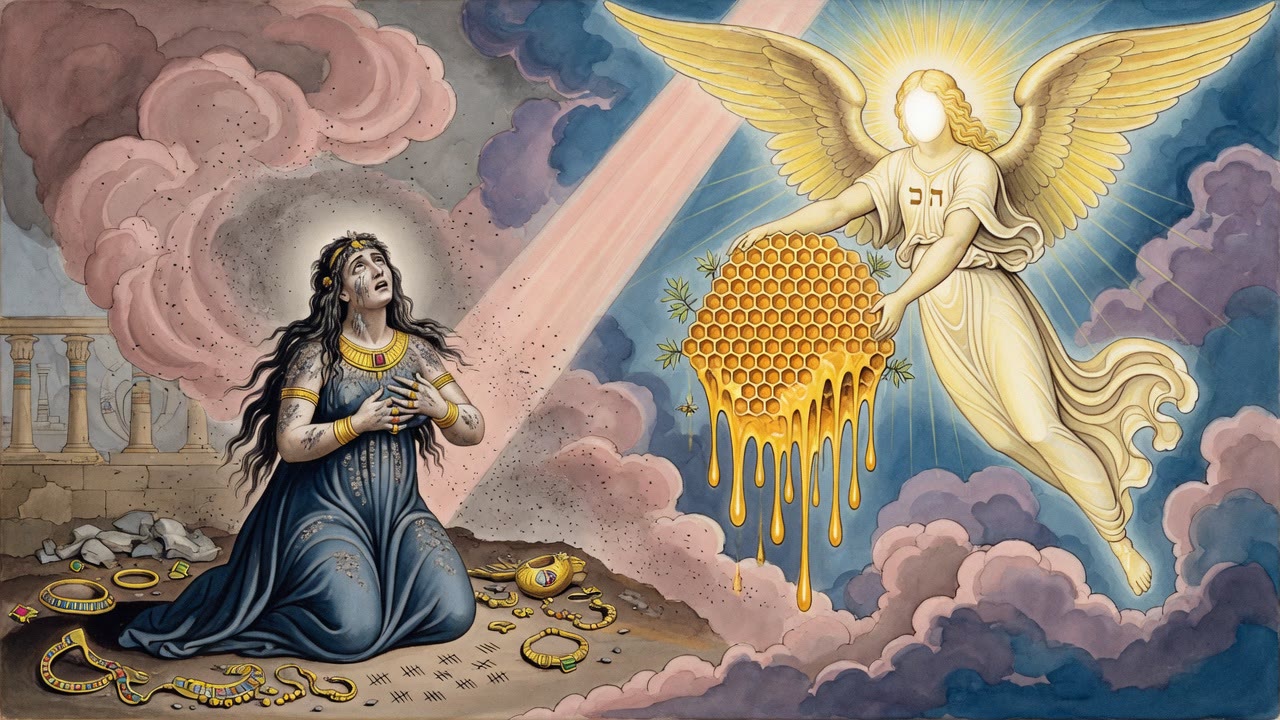
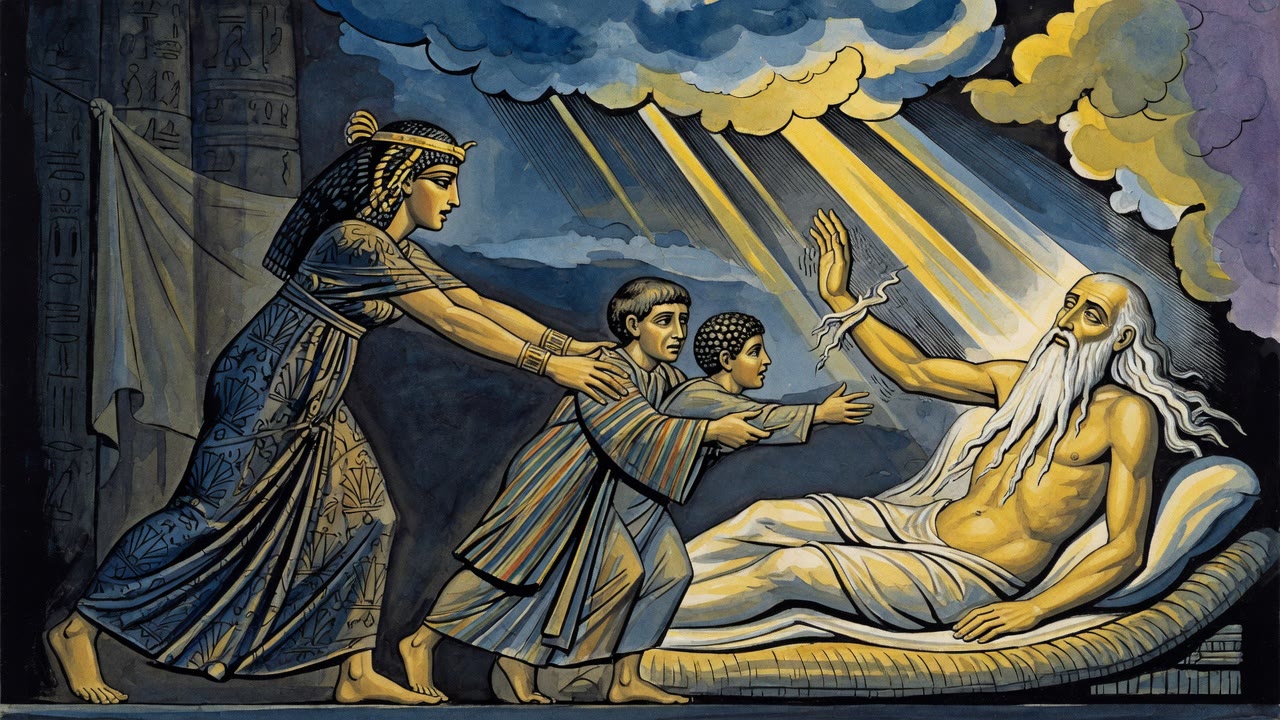
Asenath had no sword and no brother's arm to raise. She lifted her voice to God instead. She cried out for help in the open road with the blades already over her, and the blades did not fall. The swords dropped out of the hands that held them and rang on the ground. The men stood empty-handed, staring at their own fingers. They knew whose side heaven had taken. They threw themselves down at Asenath's feet and begged her to let them live.

She bent over the men who had meant to kill her. "Be courageous and have no fear of your brethren, the sons of Leah," she told them. "They are God-fearing men. Do but keep yourselves in hiding until their wrath is appeased."

Mercy in a Family Built on a Sale

When the sons of Leah came, Asenath threw herself down in front of them and begged for the lives of the handmaids' sons. Simon would not hear it. Their guilt was overflowing, he said. These were the men who had sold Joseph into slavery and broken their father's heart, and now they had drawn swords on Joseph's own wife. Let them die.

Asenath kept begging. And she had a quiet ally. Levi knew exactly where the handmaids' sons were hiding, and he said nothing to Simon, because naming the place would only feed the fire. The hidden men stayed hidden, and Simon's rage burned down for want of a target.

There was still the prince, bleeding in the road from a boy's pebble. Benjamin stood over him to finish him. Levi caught the boy's arm. Instead of the killing blow he washed the wound, lifted the son of Pharaoh into a chariot, and drove him home to his father. Pharaoh, who had sent his son out to steal and to murder, took him back from the hands of the man his son had wanted dead, and he wept over Levi's kindness.

The wound had gone too deep. Three days later the prince died of the pebble a child had thrown from a chariot on an open road. Pharaoh followed his son into grief and then into death, at the age of one hundred and seventy-seven. The crown he left went to Joseph, the Hebrew his son had schemed to kill, and Joseph wore it over Egypt for forty-eight years before he set it on the head of Pharaoh's own infant grandchild, a boy he had raised as a son of his own.


← All myths
From the tradition

Sources

2 sources

The texts behind this telling. Some cards carry a translation of the source; others are our own retelling of it, and each card says which. Every card links out to the original.

Legends of the Jews, I. Joseph, Treachery PunishedLegends of the Jews

Retold in our words. Read the original at the link below.Project Gutenberg eBook #1494, The Legends of the Jews, Volume 2 · Public Domain

Her story takes a dramatic turn in Legends of the Jews by Louis Ginzberg, and it involves treachery, divine intervention, and a whole lot of pebbles!

Asenath, surrounded by her six hundred attendants, is ambushed by the forces of Pharaoh's son. Why? Because this prince was not happy about Joseph marrying her. The attack is brutal, forcing Asenath to flee. Just when things look dire, who comes to the rescue? None other than young Benjamin, in the same chariot as Asenath!

Benjamin might have been the youngest, but he was no pushover. He leaps from the chariot, grabs some pebbles, and starts launching them at Pharaoh's son. And wouldn't you know it? One of those pebbles hits the prince square in the forehead, inflicting a severe wound! The charioteer, showing some serious team spirit, keeps Benjamin supplied with ammo, and together they take down forty-eight of the fifty riders.

The drama doesn't end there. As we read in Legends of the Jews, the sons of Leah arrive just in the nick of time. Levi, with his prophetic gift, had foreseen the attack and rallied his brothers. They engage the ambushers, cutting them down. You'd think Asenath was safe. Wrong.

Now the sons of the handmaids appear, swords drawn, aiming to kill both Asenath and Benjamin. Their plan? To vanish into the woods. But Asenath, in her desperation, cries out to God for help. And here’s where the truly miraculous happens: the swords literally fall from their hands. They realize the Divine is on Asenath’s side. Overwhelmed, they throw themselves at her feet, begging for mercy.

Asenath, showing incredible compassion, assures them, "Be courageous and have no fear of your brethren, the sons of Leah. They are God-fearing men. Do but keep yourselves in hiding until their wrath is appeased."

When the sons of Leah arrive, Asenath throws herself before them, begging them to spare the sons of the handmaids. Simon, understandably, is having none of it. He argues that they deserve to die, reminding everyone that these were the ones who sold Joseph into slavery, causing immense suffering to Jacob and his entire family.

But Asenath persists. According to Ginzberg's retelling, her heartfelt pleas eventually win over the brothers. And she has a secret ally in Levi, who knows where the sons of the handmaids are hiding and doesn't reveal their location to Simon, fearing it would only intensify his anger.

Even more remarkably, Levi prevents Benjamin from delivering the final blow to the wounded prince. Instead, he tends to the prince's wounds, puts him in a chariot, and takes him back to Pharaoh. Pharaoh is deeply grateful for Levi's act of chesed (Lovingkindness), lovingkindness.

Despite Levi’s best efforts, the son of Pharaoh dies three days later from the wound inflicted by Benjamin. And then, grief-stricken, Pharaoh himself passes away at the ripe old age of one hundred and seventy-seven.

So, who inherits the crown? Joseph. He rules Egypt for forty-eight years. And when he steps down, he passes the crown on to Pharaoh’s grandchild, an infant he had essentially raised as his own son.

What can we take away from this dramatic tale? It's more than just a story of treachery and punishment. It's a story of courage, compassion, and divine intervention. Asenath, often a background figure, emerges as a woman of incredible strength and mercy. And it reminds us that even in the midst of conflict, acts of chesed can have a profound impact. The story also demonstrates the ability of prophecy to help prepare people for danger. What does this mean for us? Perhaps it's a reminder to look beyond the familiar narratives, to consider the untold stories, and to recognize the power of compassion in a world often driven by conflict.

Full source
Legends of the Jews 1:480Legends of the Jews

Retold in our words. Read the original at the link below.The Legends of the Jews by Louis Ginzberg (1909) · Public Domain

Sometimes, the most fascinating tales are the ones that didn't quite make it into the main narrative. Consider a story spun around Joseph and his wife, Asenath.

Joseph, now a powerful figure in Egypt, is traveling with his beautiful wife, Asenath. Along their journey, they encounter none other than Pharaoh's own son, the heir to the throne. This prince is absolutely captivated by Asenath's beauty. So much so, that he hatches a truly wicked plan. He decides that the only way to possess Asenath is to eliminate Joseph.

Where does one go to get away with that kind of plot? Well, according to this legend, he turns to Simon and Levi, Joseph’s own brothers!

He tries to win them over with smooth talk and empty promises, attempting to convince them to get rid of Joseph.

Simon, known for his fiery temper, is instantly ready to strike the prince down. But here's where it gets interesting. Levi, gifted with prophecy, senses the prince's true intentions. In a flash, he subtly thwarts Simon's impulsive reaction by stepping on his foot, all while whispering a crucial reminder: "Why art thou so angry, and so wroth with the man? We that fear God may not repay evil with evil." This echoes a key theme in Jewish thought.

Levi then turns to the Pharaoh's son, making it crystal clear that they would never participate in such a heinous act. Instead, he warns the prince against taking any action against Joseph, threatening him with the same sword that was used in the slaughter of the inhabitants of Shechem. Talk about a history lesson!

The prince, understandably terrified, collapses before Simon and Levi, begging for mercy. Levi, showing remarkable restraint, raises him up and says, "Fear not, but abandon thy wicked plan, and harbor no evil design against Joseph."

What's so striking about this little detour in the Joseph saga? It shows us the constant tension between impulsive action and thoughtful restraint, between revenge and adherence to a higher moral code. And it highlights the importance of wise counsel, like Levi's, in navigating those difficult choices.

This story, though not found in the Torah itself, offers a powerful glimpse into the complex moral landscape of the time, and the ongoing struggle to choose righteousness over personal gain.

Full source