Parshat Vayechi5 min read

Asher Forbade His Sons to Live Double Lives

At one hundred twenty-five Asher ordered his sons off the double path. Reuben confessed seven months of plague and seven years of penance for one night's sin.

Curated by Arthur · Told by Maggid ·
Table of Contents
  1. One Hundred Twenty-Five and Still Teaching
  2. Flee, Do Not Sample
  3. Messengers at the End
  4. Reuben's Seven and Seven
  5. Names That Fought Idols
Asher Forbade His Sons to Live Double Lives Click for full size

One Hundred Twenty-Five and Still Teaching

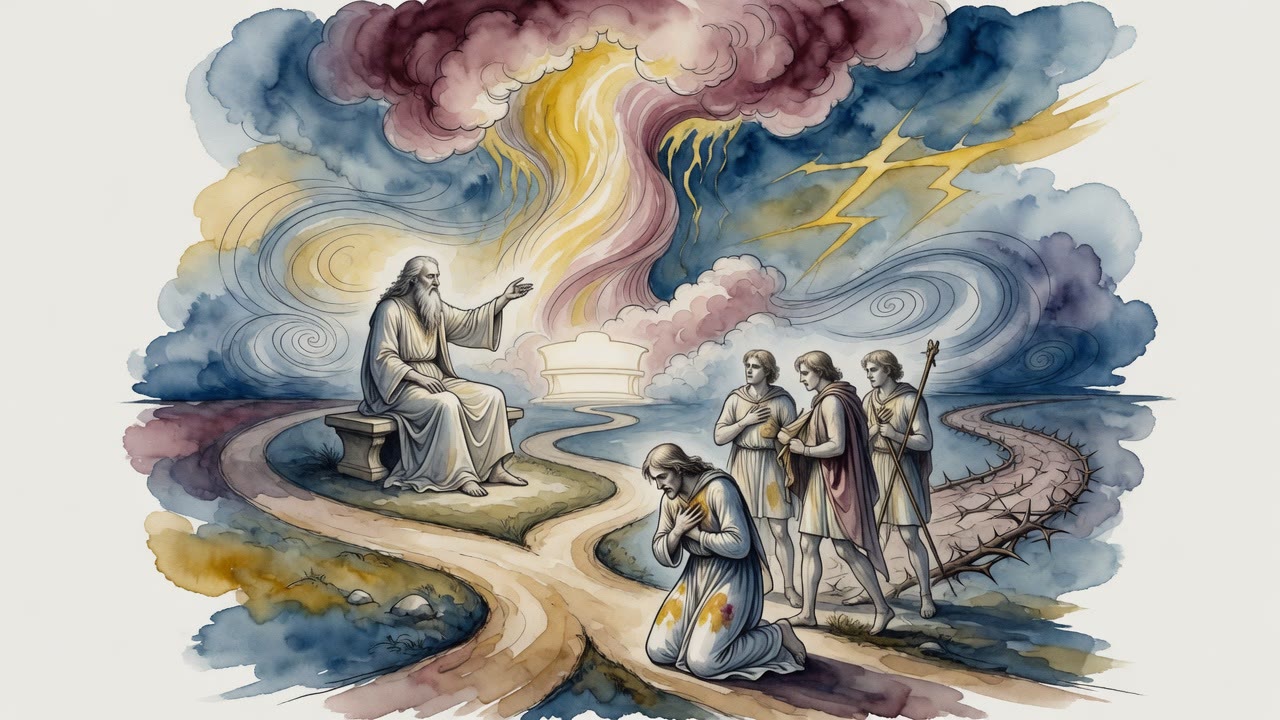
Asher called his sons while strength still held. One hundred twenty-five years sat on him without softening the edge of his warning. "Hearken, ye sons of Asher. I will show you all that is right before God." He did not offer a gentle sunset speech. He offered a fork in the road and ordered them off the middle.

"Two ways hath God put before the children of men, and two inclinations hath He bestowed upon them, two kinds of actions and two aims. Therefore all things are in twos, the one opposite to the other." Light and dark. Good and evil. The structure of the world, in his mouth, was already an ethical demand.

Then the cut. "Ye shall not be double, pursuing both goodness and wickedness. Ye shall cling only to the ways of goodness."

Flee, Do Not Sample

Asher refused the fantasy of balanced dabbling. Flee wickedness, he said, and you destroy the evil inclination's hold. Keep the same care for wicked things as for good things, and you have already lost. Eyes fixed on what is truly good. Commands of the Lord as guardrails, not as optional poetry.

The Lord delights in the single-minded. Men yearn after them. Doubleness, in this teaching, is not sophistication. It is a slow leak in the soul's hull. Asher wanted sons who would not congratulate themselves for visiting both shores.

The deathbed was a courtroom against split loyalty.

Messengers at the End

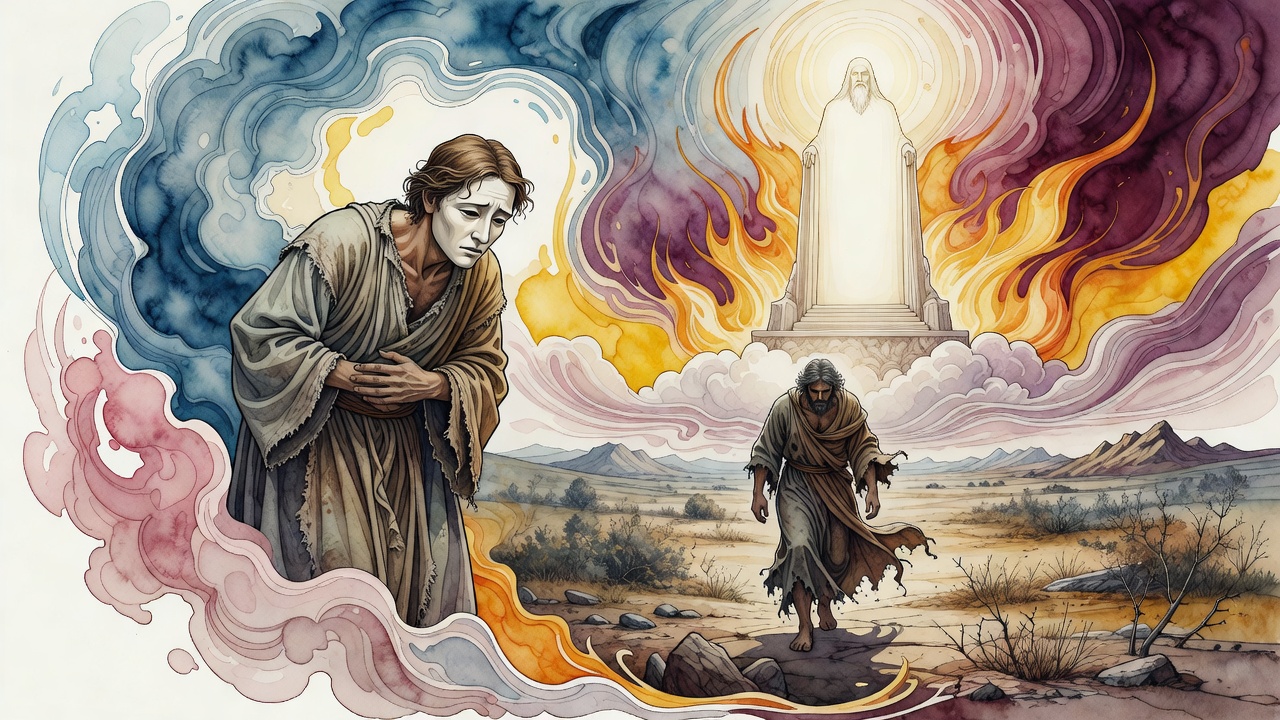
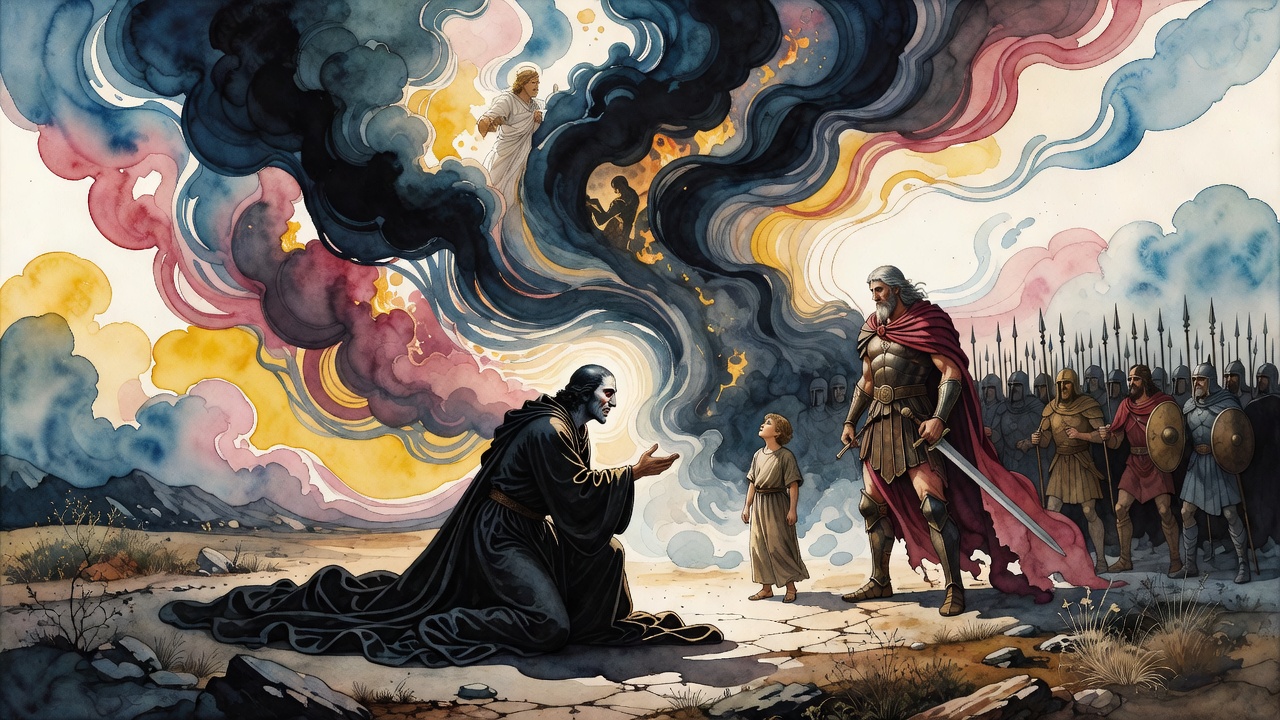
He pushed the camera forward to the last breath. When a man meets the messengers of God and of Ha-Satan, the manner of the soul's exit tells the story of the life. Leave with agitation, and the evil spirit she served with lusts and deeds will plague her. Depart tranquilly, and the angel of peace leads her to life eternal.

No abstract scoreboard. A scene at the threshold. Two reception committees. The body still warm, the soul already sorted by the habits it fed. Asher's sons were to live now as if that hallway were already visible.

Peace at the end is not a mood. It is a verdict earned in ordinary choices.

Reuben's Seven and Seven

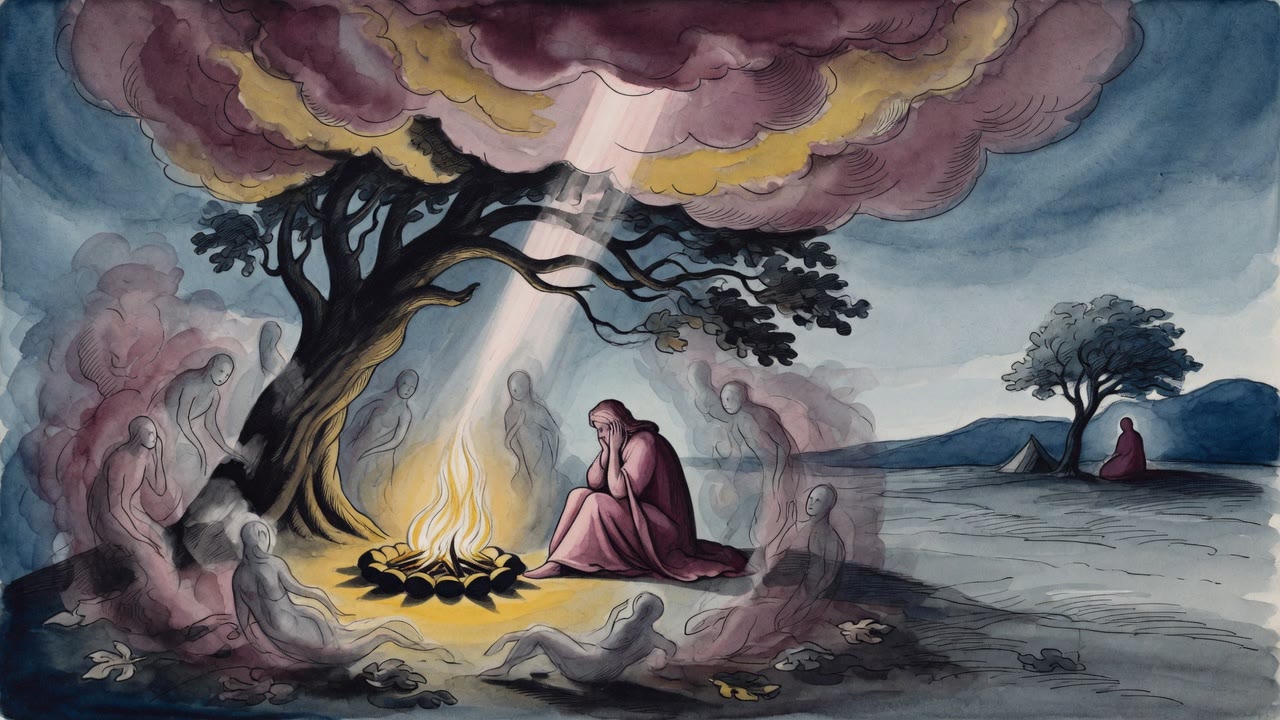
Another father in the same generation made confession instead of pure command. Reuben, near death, gathered sons, grandsons, and brothers. He named the folly of his youth, the defiling of his father Jacob's bed, and adjured them not to walk in that fire. He had been twenty when he sinned. For seven months God afflicted his loins with a terrible plague. Jacob's intercession kept him from dying inside that punishment.

After the plague, seven years of penance. No wine. No strong drink. No flesh of animals. No delicacies. Mourning scaled to the size of the sin. Reuben did not theorize about two paths. He exhibited the bill for choosing the wrong one for a single night's arrogance and desire.

Asher said do not be double. Reuben said I was, and my body kept the receipt.

Names That Fought Idols

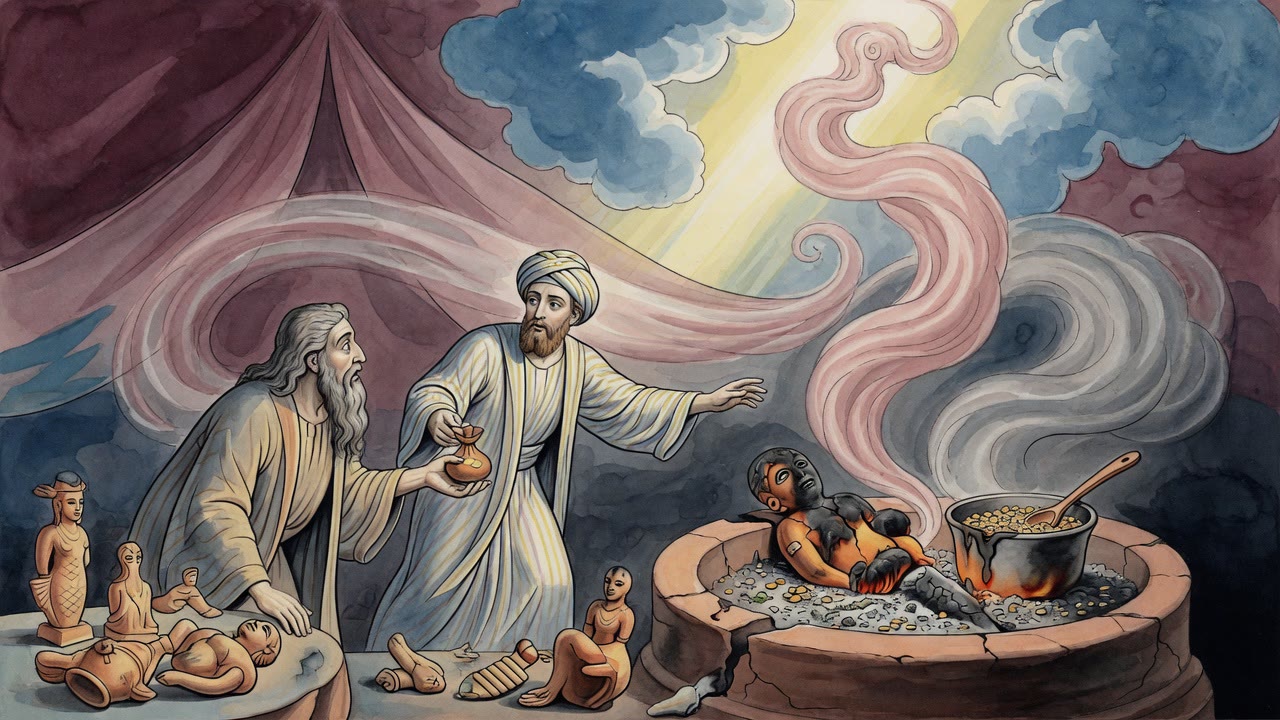
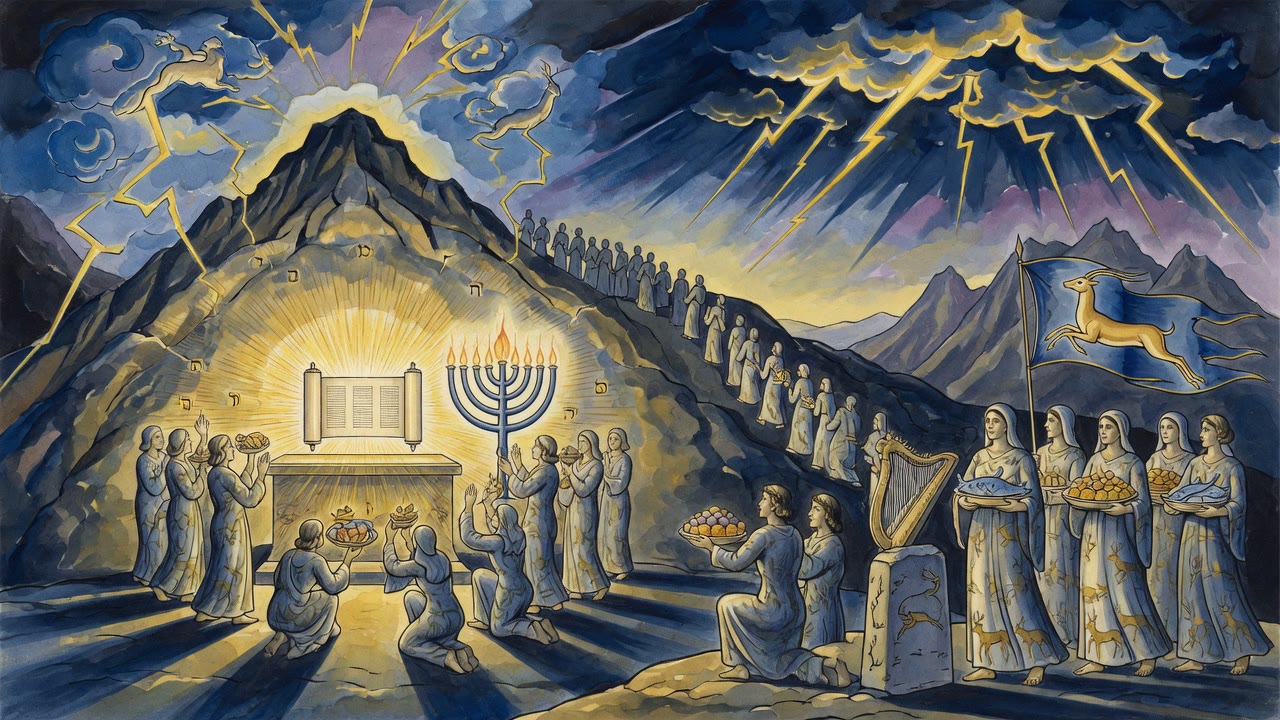
Naphtali's line entered the record differently, through names that already argued piety. Jahzeel: trust that holds idols in contempt. Guni: God as protection. Jezer and Shillem: devotion with the whole heart. The tribe's onomastic ledger read like a fence against the double life Asher hated.

Not every brother left a clean scroll. The family's power was never perfection. It was the refusal, at the end of life, to lie about which path had burned them. Reuben's penance and Asher's binary and Naphtali's naming all push the same direction. Choose. Do not decorate both altars. Do not call split desire wisdom.

When the messengers come, agitation or peace will not be negotiated with clever speech. The sons of Asher heard it as law. The sons of Reuben heard it as scar. The children of Naphtali wore it as names they had to live up to or shame.

Jacob's house prepared for Egypt and for centuries with these last instructions in its ears. Double lives would still tempt them in every empire. The deathbed voices did not pretend otherwise. They only refused to bless the split.

Asher's world of twos is not permission to sample both. It is a map that says every hour already leans. The yetzer of good and the yetzer of evil (the two inclinations pulling inside a person) do not share custody peacefully in his speech. One must be starved. Flight from wickedness is active, not a vague preference for nicer friends.

Reuben's body wrote the same lesson in medical ink. Seven months of plague in the loins answered a sin of the loins. Seven years of refusal of wine and meat answered a moment of taking what was not his to take. Jacob's prayer kept him alive long enough to become a warning instead of only a corpse of shame.

Naphtali's names try to get ahead of the problem by baptizing children into contempt for idols and trust in protection. A name is not a guarantee. It is a daily subpoena. Live up to Jahzeel or admit the label was costume. Asher would have recognized that pressure as healthy.

Deathbed rooms in Genesis are factories for future tribes. What is said there becomes culture. Asher's ban on doubleness and Reuben's autopsy of desire and Naphtali's onomastic fence all aim at a people who will soon live among Egyptian gods with Hebrew mouths. The wrong path would be easy. The fathers spent their last strength making it harder to call easy holy.


← All myths

From the tradition

Sources

2 sources

The texts behind this telling. Some cards carry a translation of the source; others are our own retelling of it, and each card says which. Every card links out to the original.

Legends of the Jews 2:77Legends of the Jews

Retold in our words. Read the original at the link below.The Legends of the Jews by Louis Ginzberg (1909) · Public Domain

He's 125 years old, feeling strong, and ready to impart some wisdom, according to Legends of the Jews.

He calls his sons together, not to Asher's message is surprisingly simple, yet profoundly powerful. He says, "Hearken, ye sons of Asher…I will show you all that is right before God."

What follows is a lesson in duality. "Two ways hath God put before the children of men," Asher explains, "and two inclinations hath He bestowed upon them, two kinds of actions and two aims. Therefore all things are in twos, the one opposite to the other.” We see it everywhere. Good and evil, light and darkness, joy and sorrow. It's the very fabric of existence.

Here’s the kicker: Asher doesn’t want his sons to straddle the fence. He doesn’t want them dabbling in both good and evil. "Ye shall not be double," he urges, "pursuing both goodness and wickedness. Ye shall cling only to the ways of goodness." It's a powerful call to commit fully to the path of righteousness. Why? Because, Asher says, "the Lord taketh delight in them, and men yearn after them." Goodness resonates. It brings us closer to the Divine and to each other.

And what about the other side of the coin? "Flee from wickedness," Asher warns, "for thus you will destroy the evil inclination." It’s not enough to simply choose good; we must actively reject evil. By doing so, we weaken its hold on us. Think of it like weeding a garden – you can’t just plant flowers; you have to pull out the weeds to let the flowers thrive.

He then emphasizes the importance of focus. "Heed well the commands of the Lord, by following truth with a single mind." Don't get distracted. Don't let your attention wander to things that are ultimately meaningless or harmful. "Observe the law of the Lord, and have not the same care for wicked things as for good things. Rather keep your eyes upon what is truly good, and guard it through all the commands of the Lord."

Asher then paints a vivid picture of what awaits us at the end of our lives. "The end of man, when he meets the messengers of God and of Satan, shows whether he was righteous or unrighteous in his life." It's a dramatic scene, straight out of Jewish tradition!

He describes two very different fates. "If his soul goes out with agitation, she will be plagued by the evil spirit, whom she served with her lusts and her evil deeds; but if she departs tranquilly, the angel of peace will lead her to life eternal." Our choices in this life, Asher suggests, determine the kind of welcome we receive in the next. A soul burdened by evil will face torment, while a soul filled with goodness will find peace.

So, what’s the takeaway from this ancient wisdom? It’s a reminder that life is a constant choice between good and evil. It’s a call to choose goodness wholeheartedly, to reject wickedness, and to keep our eyes fixed on what truly matters. And perhaps, just perhaps, if we heed Asher's words, we too can face our final moments with tranquility, knowing we lived a life worthy of the "angel of peace."

Full source
Legends of the Jews 2:10Legends of the Jews

Retold in our words. Read the original at the link below.The Legends of the Jews by Louis Ginzberg (1909) · Public Domain

They're often more than just labels – they're stories whispered on the wind, echoes of values and beliefs. Take the tribe of Naphtali, for example. According to Legends of the Jews, the names of Naphtali's sons themselves testify to the tribe's unwavering piety.

Jahzeel, for instance. The name, They trusted in God so completely that they held idols in utter contempt. A community actively building a barrier against temptation and false worship. Then there’s Guni, whose name suggests that God was their "protection." A constant reminder of divine shelter. And finally, Jezer and Shillem, names that are said to declare the Naphtalites as people devoted to God with all their hearts. These aren't just names; they are declarations of faith, etched into the very fabric of their identity.

The stories of the tribes aren't always tales of unblemished virtue. They're human stories, filled with struggles and repentance. Think about Reuben. As his life drew to a close, Legends of the Jews paints a vivid picture of a man confronting his past. He gathers his sons, grandsons, and brothers around him, ready to impart hard-earned wisdom.

"Hear, my brethren," he begins, "and do ye, my children, give ear unto Reuben your father in the commands that I enjoin upon you.” His message is stark: avoid the follies of youth, the temptations he himself succumbed to. Reuben confesses to defiling his father Jacob’s bed – a deeply shameful act. "I adjure you this day by the God of heaven that ye walk not in the follies of youth and the fornications to which I was addicted," he pleads.

The consequences of his actions were severe. Reuben reveals that for seven long months, God afflicted his loins with a terrible plague. Only Jacob’s intercession saved him from death, we’re told. He was twenty years old when he sinned, and for seven months he suffered immensely. Afterward, he undertook a seven-year period of penance, a deep dive into the innermost depths of his soul. Wine and strong drink were forbidden, the flesh of animals never passed his lips, and he refused to taste any delicacies. His mourning over his sins was profound, because his sins were great.

Reuben's story is a powerful reminder that even those who stumble can find redemption. It’s evidence of the importance of repentance, of acknowledging our mistakes and striving to live a more righteous life. One of sin, suffering, and ultimately, the possibility of forgiveness. And these are the kinds of stories that resonate, the ones that stay with us long after we've heard them. They remind us that we’re all works in progress, striving to be better versions of ourselves, just like the tribes of Israel.

Full source