Parshat Toldot5 min read

Robbers and Boils Drove Avimelekh to Isaac's Door

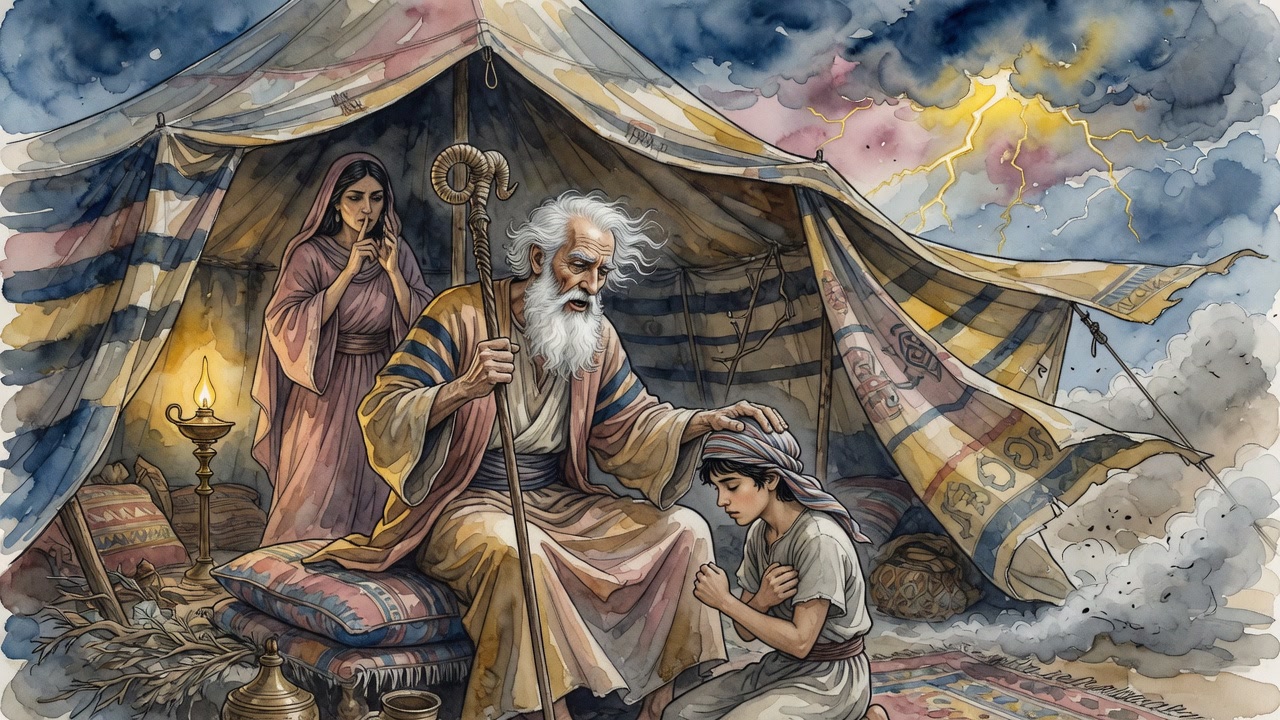
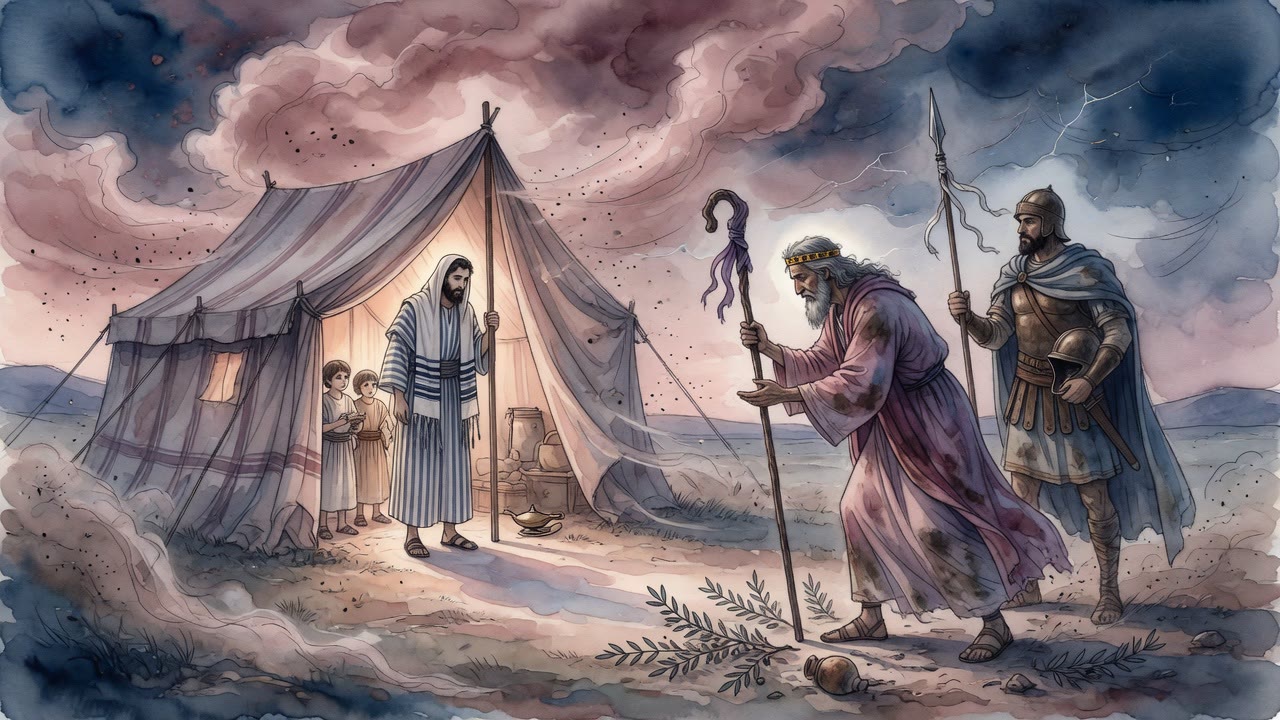
Thieves stripped the king's rooms at Gerar in one night. Avimelekh walked to Isaac's camp with his captain beside him, scratching at sores under royal cloth.

Curated by Arthur · Told by Maggid ·
Table of Contents
  1. The King Who Came Out Looking Like a Stranger
  2. What Isaac Asked at the Tent
  3. Not the Strongest Dose on the First Visit
  4. The Poor Man With the Clean Arms
  5. The Road Back to the Empty Rooms

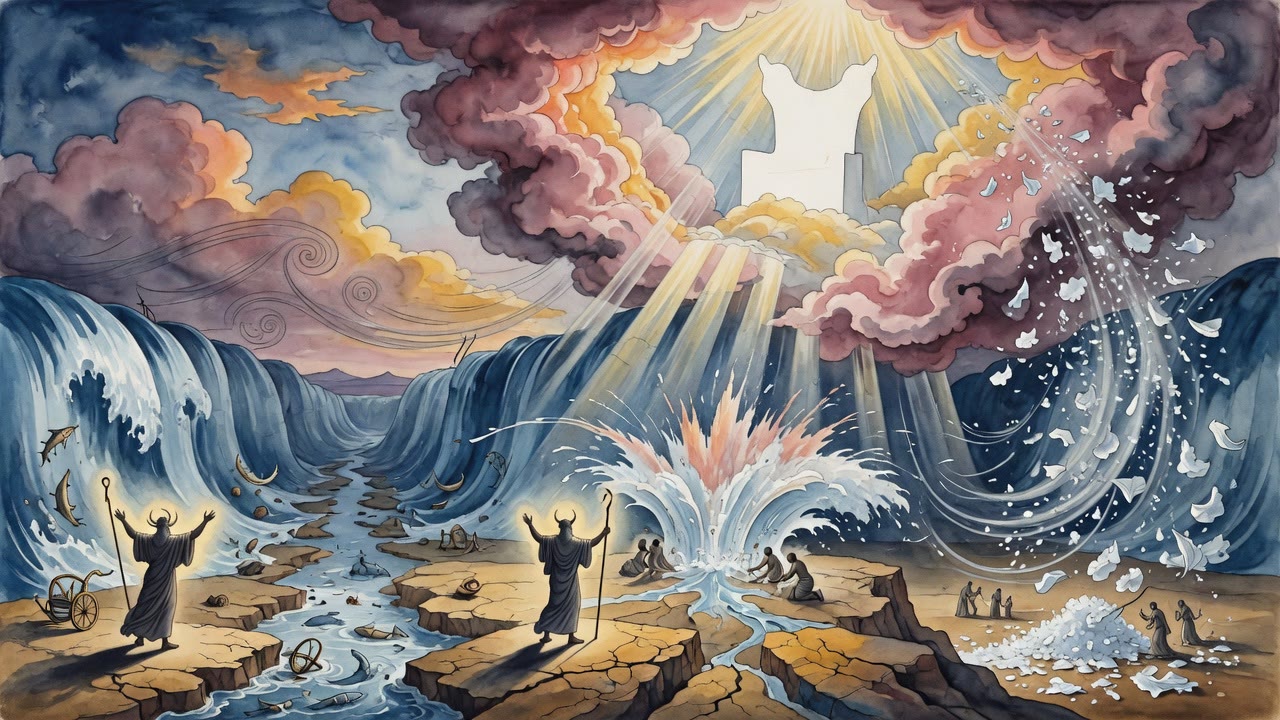
The robbers were in Avimelekh's house all night, and the king of Gerar did not send one man after them, because his hands were busy. Boils had come up along his arms and under the band of his belt, and once a man starts scratching he does not stop for a thief. He sat with a piece of broken pottery and worked at his own skin the way Job worked at his in the ashes (Job 2:8), while somebody carried his chests out through his own doorway.
Robbers and Boils Drove Avimelekh to Isaac's Door Click for full size

By morning the rooms were empty. There was nothing in that morning to build a war around, since the thieves were gone before the light, and the gold they had missed could not be spent on the thing that itched.

The King Who Came Out Looking Like a Stranger

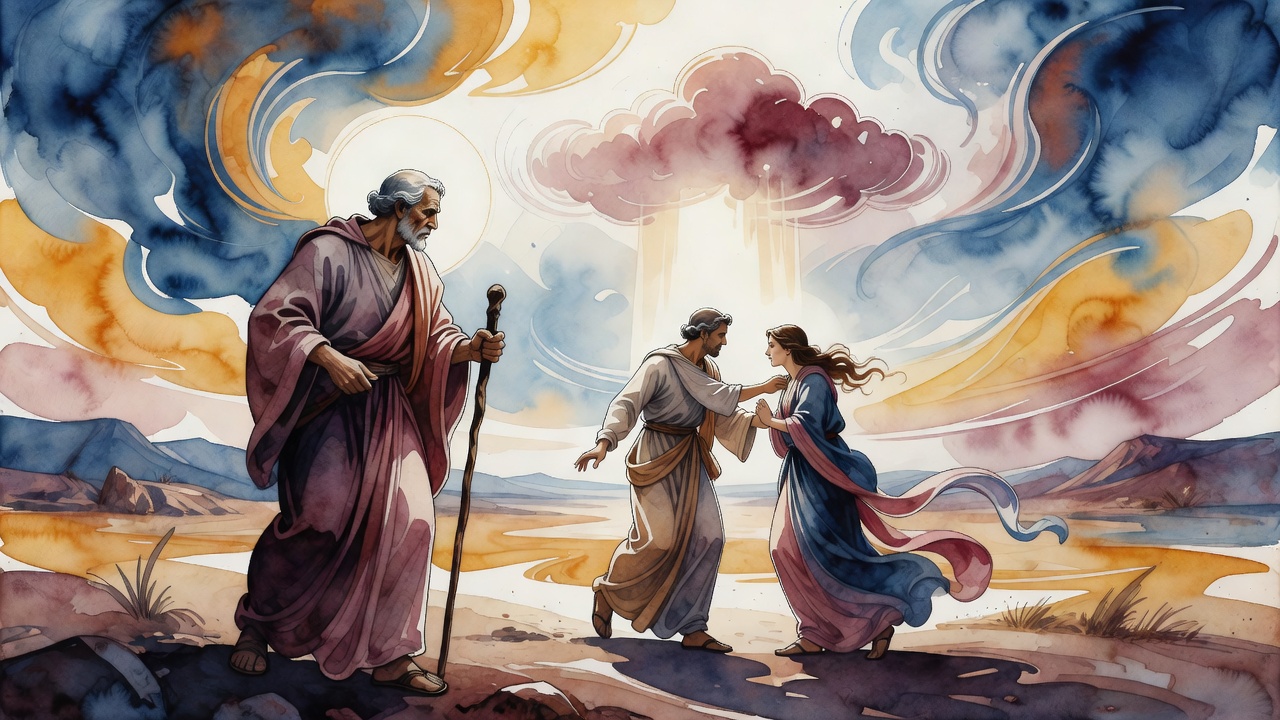
A king does not go himself. He sends men ahead with the terms, and the terms arrive before he does, but Avimelekh had no terms to send. So he walked out along the road to Isaac's camp with Fikhol at his shoulder and a band of his friends behind him, and anyone watching from the barley would have taken the party for a ger, a stranger looking for a roof.

Fikhol was more than the captain of the guard. He was the mouth of the army, and one sentence out of him moved every soldier in Gerar. That voice could empty a valley, though it could do nothing about an itch, and it could not call back a chest of oil that had changed hands in the dark. He walked beside his king carrying the most useless authority in Canaan.

The friends said very little on the road. They had come because friends are what a man has left after his house has been emptied and his skin has turned against him.

What Isaac Asked at the Tent

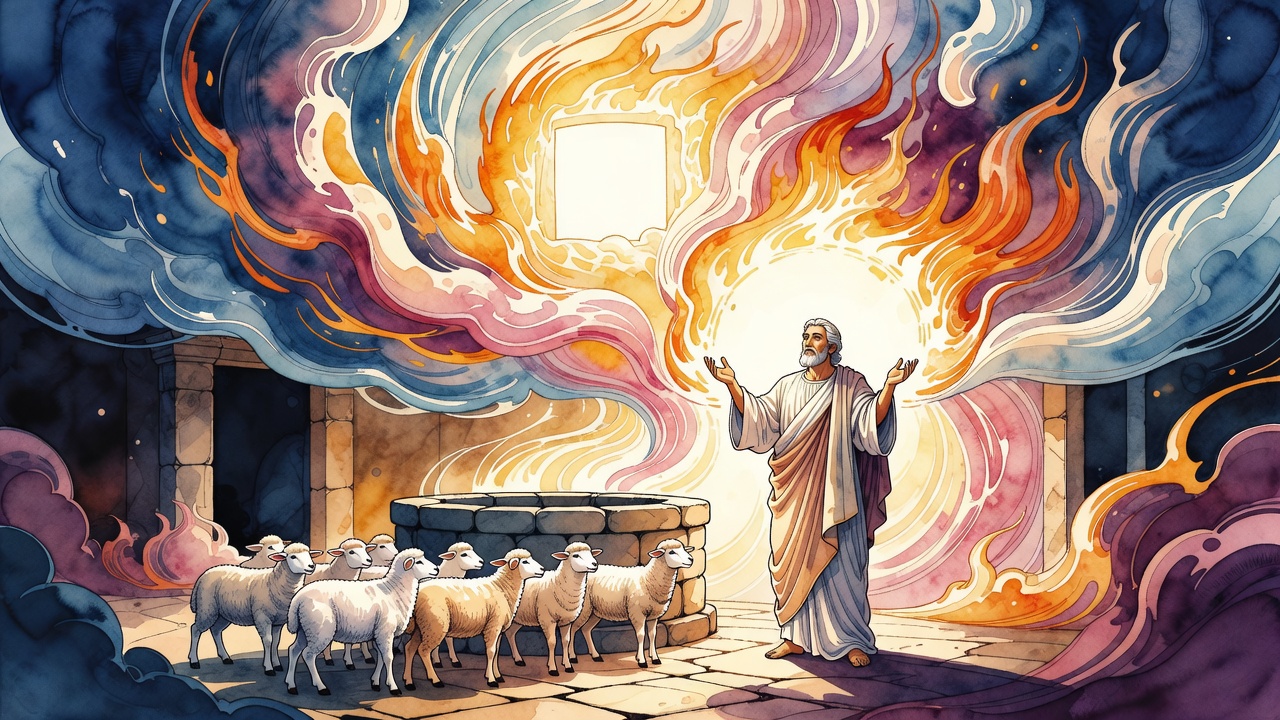
Isaac had been put out of Gerar. His wells had been stopped with dirt by that city's herdsmen, and he had moved and dug and moved and dug again until there was finally room for him, so when the king of that city walked up to his tents he did not pretend the visit was ordinary. "Why have you come to me," he said, "since you hate me and sent me away?" (Genesis 26:27).

Nobody answered right away. Avimelekh's hand had gone to his forearm and stopped there, pressed flat over the sore, because a man does not scratch himself in front of the man he expelled. He held it flat until the burning under his palm was worse than the shame. Then he spoke first, which is the one thing a king never does, and he said that they had seen plainly that the Lord was with Isaac, and that there should be an oath between them (Genesis 26:28).

Not the Strongest Dose on the First Visit

Isaac had the whole case in his hands. He could have named every stopped well while the king stood in the sun and listened, and no one in that camp would have stopped him, but he set the strongest thing he had on the ground and left it there.

A physician handles a stubborn illness the same way. He does not pour in the harshest medicine at the first visit, because a sickness fought with force fights back with force, so he gives it room, lets the body open a door for him, and works the medicine in slowly according to the law of wisdom. Isaac made a feast instead of an argument. They ate and they slept, and in the morning the two of them swore to each other, and Isaac sent the party away in peace (Genesis 26:31).

The Poor Man With the Clean Arms

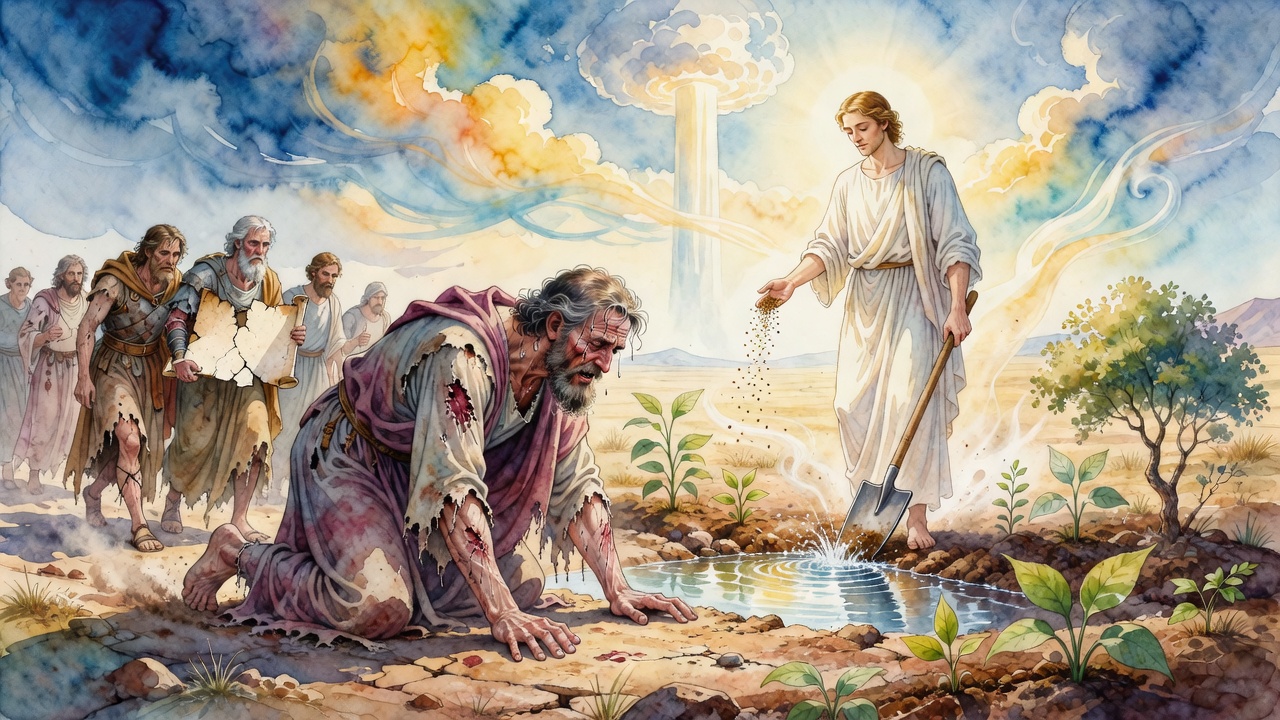
Somewhere at that feast a servant went along the mats pouring, a man who owned nothing but the cloth he stood in. His arms were clean. Avimelekh, who could have bought that servant and his whole family and had bought better men in his time, watched the clean arms pass his own and did the arithmetic, because there was no way to avoid it while the sores were still burning under his sleeve. A poor man healthy in his body had more that night than a rich man plagued in his flesh, and the rich man was the one keeping the count.

The Road Back to the Empty Rooms

They left after the oath. Fikhol's voice was not needed on the way out, since there was nothing left to command, and the friends walked behind as they had walked out. Avimelekh went back toward a house that thieves had already taught him was borrowed, and by the time the road turned he was scratching openly, because Isaac's camp was behind the hill and there was nobody left to hide it from.

Behind him the wells kept filling.


← All myths
From the tradition

Sources

3 sources

The texts behind this telling. Some cards carry a translation of the source; others are our own retelling of it, and each card says which. Every card links out to the original.

Bereshit Rabbah 64:9Bereshit Rabbah

Retold in our words. Read the original at the link below.The Sefaria Midrash Rabbah, 2022 · CC-BY

The Torah tells us Avimelekh went to him "from Gerar, and a group of his associates, and Fikhol the captain of his guard" (Genesis 26:26). Simple enough. But the Rabbis, bless their inquisitive hearts, dug a little deeper.

Bereshit Rabbah, that incredible collection of Rabbinic interpretations on the Book of Genesis, offers some fascinating. And rather dramatic, behind-the-scenes insights.

The Rabbis, with their amazing ability to find hidden meanings in the Hebrew language, play on that word. MiGerar, they suggest, can also be read as megorar. And megorar? Well, that paints a far less peaceful picture.

One interpretation, according to Bereshit Rabbah 64, is that robbers ransacked Avimelekh’s house all night long! Imagine the scene: chaos, shouting, valuables flying out the window. Is it any wonder he showed up at Isaac’s doorstep looking like a "homeless stranger [ger]"? He's fleeing for safety!

But wait, there’s more! Another interpretation of megorar links it to boils. Yes, you read that right, boils! The text connects it to the verse in Job (2:8) that says, “To scratch [lehitgared] with it." So, picture this: Avimelekh, not only robbed blind but also covered in itchy, painful boils. Suddenly, that visit to Isaac seems a whole lot less like a friendly social call.

And what about "a group of his associates [vaaḥuzat mere’ehu]?" Who were these guys? Here, we get a bit of a disagreement between two Rabbis, Rabbi Yehuda and Rabbi Neḥemya. Rabbi Yehuda suggests that Aḥuzat Mere’ehu was actually the guy's NAME. Rabbi Neḥemya, on the other hand, takes a more literal approach, interpreting it as simply "a group of his friends."

Finally, we come to Fikhol, the captain of Avimelekh's guard. Again, Rabbi Yehuda and Rabbi Neḥemya weigh in with different perspectives. Rabbi Yehuda says, plain and simple, that Fikhol was his name. Rabbi Neḥemya, however, offers a more colorful interpretation. He suggests that Fikhol was "the mouth that all his armies take action at his word [al piv]." In other words, Fikhol wasn't just a captain; he was the voice of command, the one whose orders the entire army obeyed.

So, what are we to make of all this? Is it literal history? Maybe. But more importantly, it's a glimpse into how the Rabbis of the Midrash (rabbinic interpretive commentary) engaged with the text. They weren't just reading words on a page; they were diving deep, searching for hidden meanings, and creating a richer, more nuanced understanding of the Torah.

And sometimes, those layers involve robbers, boils, and captains who are the voice of an entire army. What does that say about the world we still live in today?

Full source
The Midrash of Philo 10:2The Midrash of Philo

Retold in our words. Read the original at the link below.The Works of Philo Judaeus, trans. C. D. Yonge, London, H. G. Bohn, 1854-1890 · Public Domain

We see potential, and we want to help it blossom. But how do you actually do it?

The Midrash of Philo, a collection of interpretations and homilies attributed to the philosopher Philo of Alexandria, offers a fascinating perspective on this very question. It uses the analogy of a physician treating a stubborn illness. You can't just force someone to be different. Like a doctor, you need to give things time, and allow an opening for recovery to begin. A wise doctor doesn't rush in with the strongest medicine right away. They give nature a chance to do its work, to pave the way for healing. Similarly, someone trying to guide another toward virtue uses "the word which is in accordance with the law of wisdom" with patience and care. It's a gradual process, a gentle encouragement.

Where does wisdom itself come from? What's its foundation? Here, the Midrash (rabbinic interpretive commentary) takes an interesting turn, pointing to the number seven. It calls seven "the sacred and dominical number," linking it to the very act of creation. According to Philo, "the Father of the universe, when he made the world, is said to have looked upon his work" according to the number seven.

What does that even mean?

Well, for Philo, contemplating the world, understanding its intricate workings, that is philosophy. And the best part of philosophy? Wisdom. Wisdom, in turn, encompasses something even more vital: a constant need to be seen. This might refer to the need for self-reflection, for constantly evaluating our actions and motivations in the light of wisdom.

So, what’s the connection between the number seven, creation, and wisdom? Perhaps it suggests that wisdom isn't just about knowledge; it's about seeing the world with a creator’s eye. A holistic, thoughtful perspective. Maybe by understanding the order and balance inherent in creation, we can learn how to bring about positive change in ourselves and others, patiently, thoughtfully, and with a deep respect for the natural process of growth.

That the key to influencing change lies not in force, but in understanding, patience, and a connection to the underlying harmony of the universe. A reminder that true transformation is a journey, not a destination, and one that requires wisdom, time, and a little bit of faith.

Full source
Ben Sira 30:14Ben Sira

Retold in our words. Read the original at the link below.The Wisdom of Ben Sira, Cambridge University Press (1899) · CC-BY

Ben Sira turns to Health of Flesh Is Better Than Fine Gold.

This is part of the Wisdom Literature, not found in the Hebrew Bible as Protestants know it, but preserved outside the rabbinic canon, and part of the Apocrypha for Protestants. It’s a treasure trove of practical and ethical advice, written in Hebrew around the 2nd century BCE.

So, what does Ben Sira have to say about raising kids? Buckle up.

The passage starts with a pretty stark warning: "Let him not have rule in his youth; And bear not with his mischiefs." It paints a picture of a child unchecked, running wild. It’s a sentiment that probably resonates with any parent who’s ever negotiated with a toddler over broccoli.

Then it gets… well, let's just say it's a product of its time. "Beat his shoulder while it is yet tender (?); Bruise (?) his loins while he is yet a youth. Bow down his head in his youth; And smite through his loins when he is a little one."

Whoa.

Okay, so before we get too caught up in the potential brutality of these words, let’s consider the context. We're talking about a society where physical discipline was far more common, and frankly, expected. This isn’t necessarily an endorsement of violence, but perhaps a reflection of the prevailing attitudes of the time. Some translations interpret the Hebrew here not as commands for violence, but as metaphors for strict discipline of any kind.

The key takeaway here is about direction and guidance, not abuse. The fear, as expressed in the text, is that "Wherefore should he harden himself (M), and rebel against thee; That thou shouldest have (?) faintness of spirit because of him?" The concern is a child growing up without boundaries, becoming defiant, and ultimately causing heartache for the parent. It's about preventing a child from going down the wrong path, from developing bad habits that will lead to future struggles.

Ben Sira continues, "Chastise (or Train) thy son, and make his yoke heavy; Lest in his folly he lift himself up (M) against thee." The word "chastise" is key. Depending on the translation, it could mean anything from a gentle correction to a more forceful reprimand. But the underlying message is clear: children need guidance, they need structure, and they need to understand that their actions have consequences. The "yoke" is a metaphor for the responsibilities and expectations that come with being a member of society.

Of course, this raises a lot of questions for us today. How do we balance discipline with love and understanding? How do we set boundaries without stifling a child’s spirit? These are questions that parents have grappled with for centuries, and there are no easy answers.

The passage ends with a surprising, yet poignant, observation: "Better is one that is poor, and healthy in his body; Than a rich man that is plagued in his flesh." What's that doing here? On the surface, it seems completely unrelated to parenting. But maybe, just maybe, it's a reminder that true wealth isn't measured in material possessions, but in well-being. It's a reminder that a healthy family, built on a foundation of love and respect, is worth more than all the riches in the world.

So, what do we do with this ancient wisdom? Do we take it literally? Probably not. But can we glean some valuable insights from it? Absolutely. Ben Sira reminds us of the importance of providing children with guidance, structure, and a strong moral compass. It challenges us to think about the kind of adults we want our children to become, and to act accordingly. It's about the long game, about raising responsible, compassionate, and well-adjusted individuals.

The goal is to raise children who not only respect authority but also understand the importance of empathy, kindness, and justice. It’s a tall order, no doubt. But with a little wisdom, a lot of love, and maybe just a touch of patience, we can help our children work through the complexities of life and become the best versions of themselves.

Full source