Parshat Tzav5 min read

Balaam Outbid Israel and Lost the Offering

Balaam stacked seven altars and offered rivers of oil. Heaven wanted Israel's small gifts and Aaron's public priesthood.

Curated by Arthur · Told by Maggid ·
Table of Contents
  1. Seven Altars and a Bribe
  2. Aaron Raised in Full Sight
  3. Two Lambs, Clean City
  4. What Balaam Could Not Purchase
  5. The Olah That Climbs

Had the Holy One merely wanted an offering, He could have told the angel Michael to bring it. He asks of no angel. He asks of Israel.
Balaam Outbid Israel and Lost the Offering Click for full size

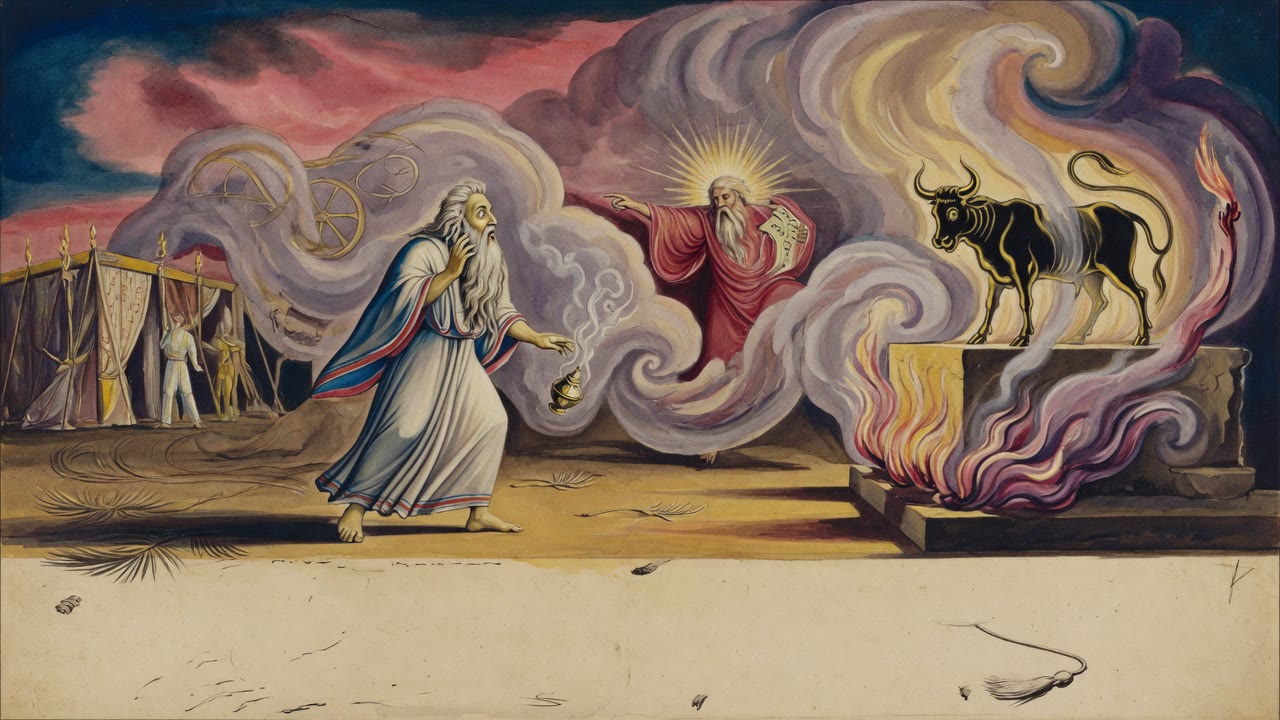
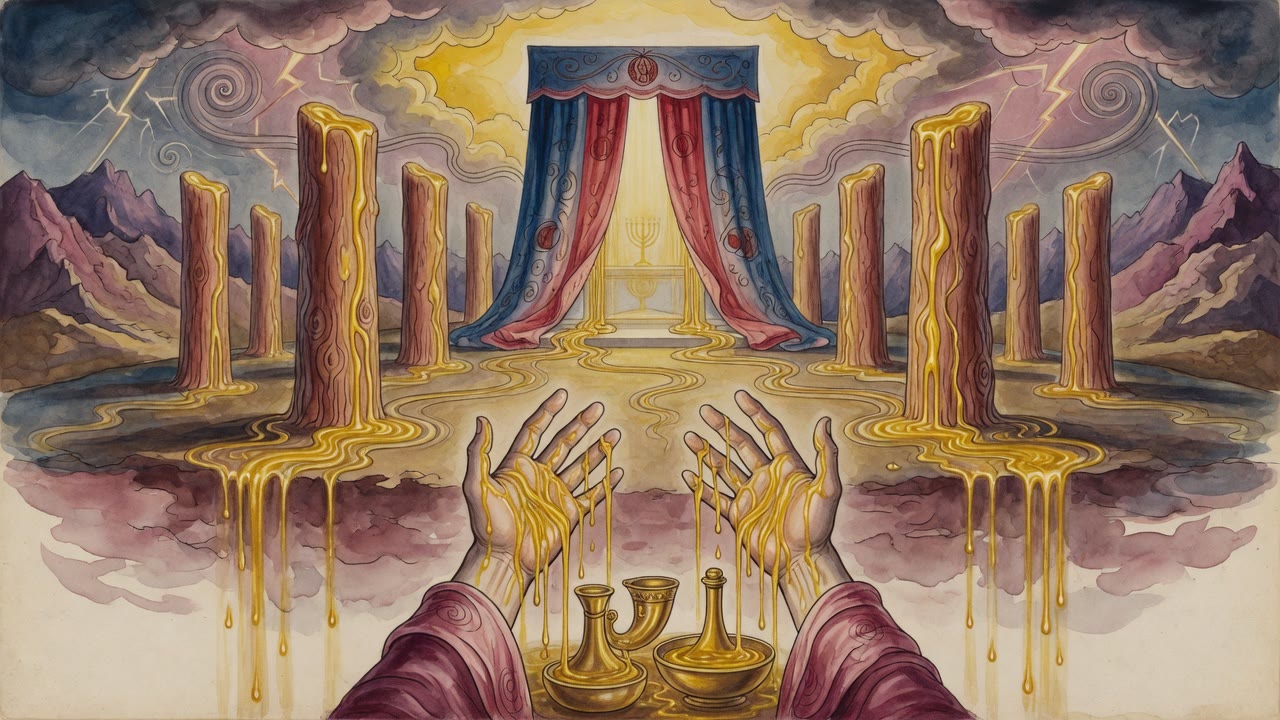
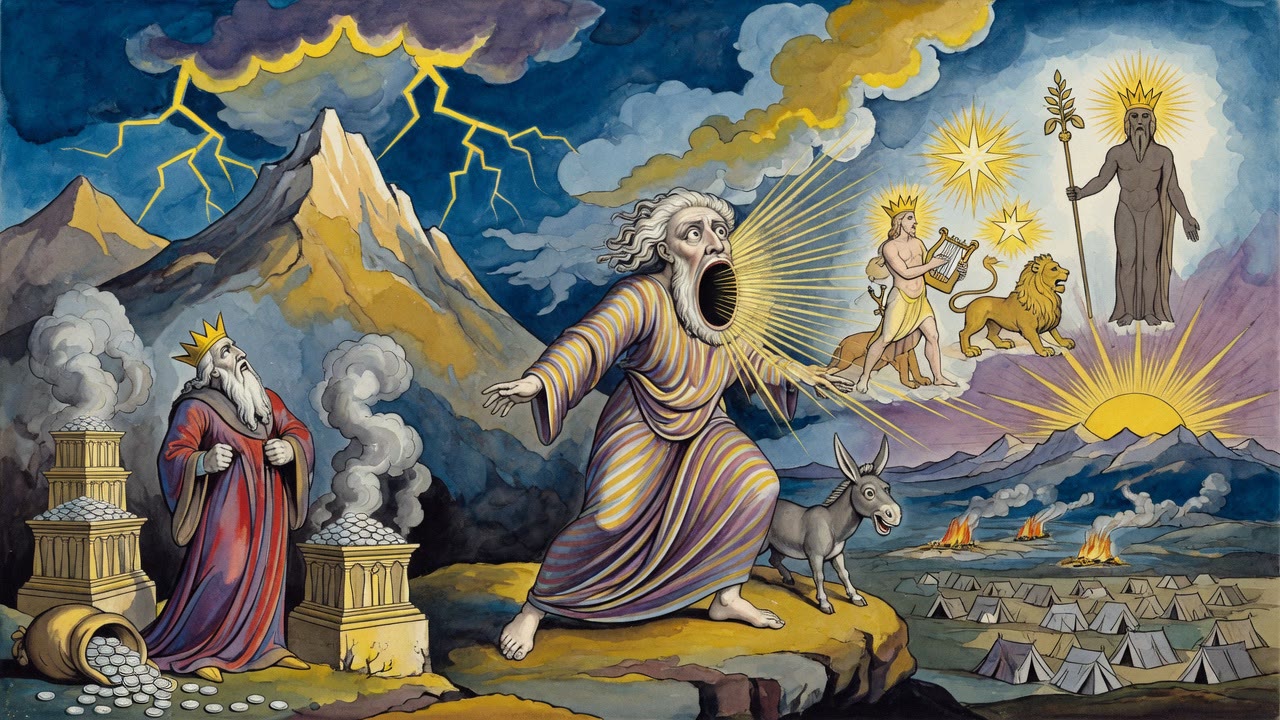
Up steps Balaam the wicked, advocate for the nations of the world. He turns the prophet Micah's words into a bidding war. Israel offers a single log of oil. We, he boasts, will pour out ten thousand rivers. Abraham offered one ram caught in the thicket. We will offer thousands. And if the Holy One should want a child, as Abraham nearly gave Isaac, Balaam cries: I will give my firstborn for my transgression, the fruit of my body for the sin of my soul, my son and my daughter both.

Seven Altars and a Bribe

See his cunning. He sets up seven altars, one for every altar built from the first Adam onward, hoping to buy what cannot be bought. He is the butcher caught staring at the inspector's gaze, blurting that the bribe is already on its way. The wood is stacked high enough to look like devotion. The numbers are loud enough to sound like love.

The Holy One answers: Wicked one, you cannot deceive yourself before Me. It is a sworn and everlasting covenant that I receive offerings from Israel alone. When the nations ask why Israel alone may offer and burn incense, the answer hides in the verse itself: this is the Torah of the burnt offering, the olah, the one who goes up, as Israel comes up from the wilderness and Moses went up to God.

Quantity is not the currency of the altar. Belonging is. The nations can stack wood until the sky darkens. The fire still waits for the people who went up with Moses. Balaam can name every firstborn on earth. Heaven still wants the climbers.

Aaron Raised in Full Sight

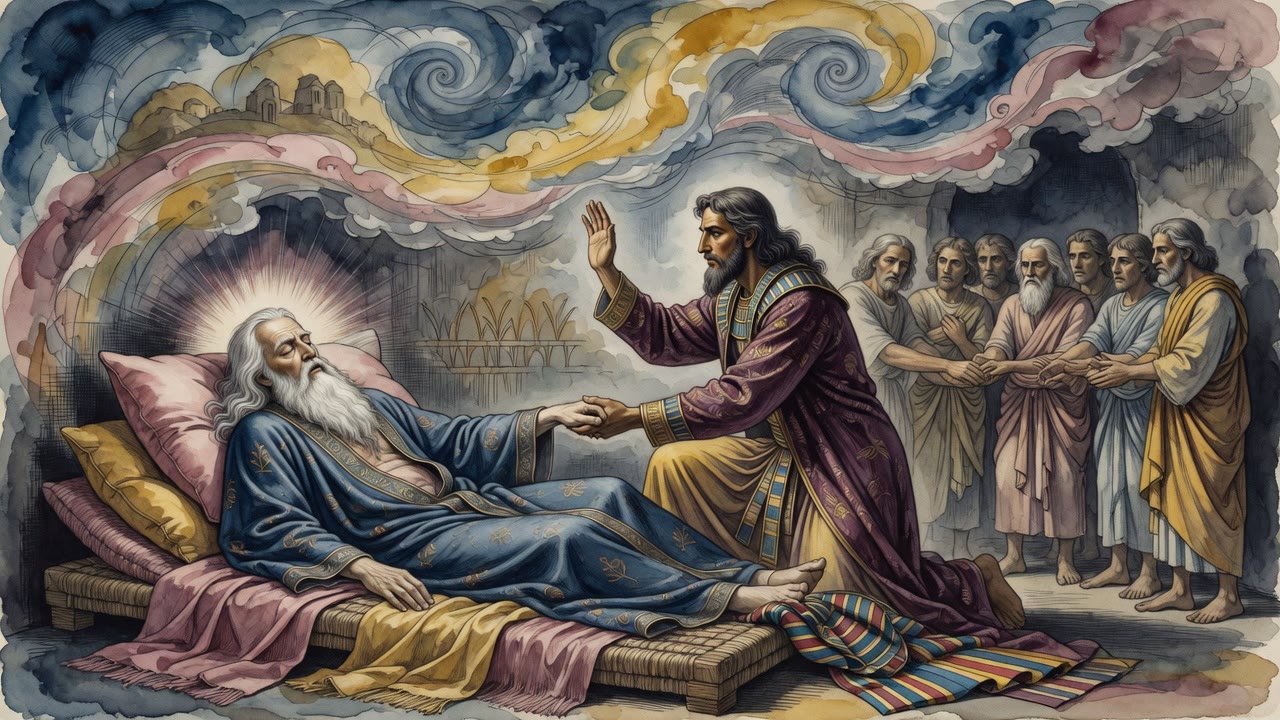
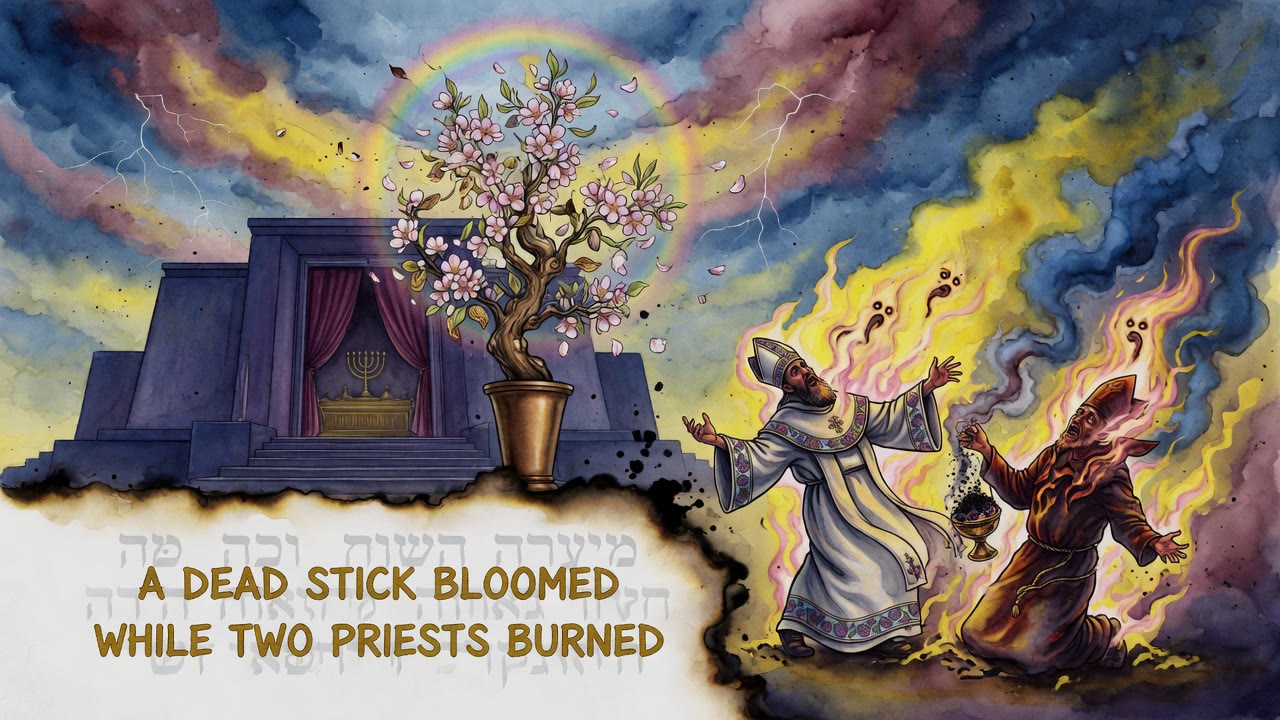
When Aaron was to be raised to the High Priesthood, the Holy One gave Moses a strange instruction: gather every last soul in Israel. Why such a crowd for one man's anointing? Honor, the Holy One answered. Let all Israel witness Aaron entering the priesthood, so that no one in days to come could claim it was done in secret.

A warning folded inside the gathering. Do not contest the priesthood as Korah and his company once did, swallowed by the earth for their rebellion. Far ahead, King Uzziah would seize what was never his, no son of Levi, just as Korah had not been. The copper covering of the altar, beaten from the censers of Korah's rebels, stood as an eternal reminder: no stranger who is not of the seed of Aaron should draw near.

How would the rebel be punished? As the altar itself testified. God recalled the sign once given Moses, the hand drawn from his bosom white with leprosy as snow. So too would Uzziah be struck, leprous, cut off from the holy things he had grasped without right. Therefore: assemble the whole congregation. The priesthood is not a private promotion. It is a public fence.

Two Lambs, Clean City

Day after day the fire offering ran on a clock. Unblemished lambs in the first year, two each day, a continual burnt offering (Numbers 28:3). One in the morning. One in the afternoon. Not at the same hour. Spaced with purpose, as if mercy needed a morning shift and an evening shift.

Rabbi Yehuda bar Rabbi Simon taught that by those carefully timed offerings there was never a person in Jerusalem with unatoned sin. The morning lamb atoned for the night's failings. The afternoon lamb cleansed the daytime slate. Righteousness lodged in the city because the clock of mercy never slept.

In this world Israel presents showbread and offerings. In the World to Come the Holy One will set a great table before them, and the idolaters will see and be ashamed. "You prepare a table before me in the presence of my enemies" (Psalm 23:5). The small daily gift becomes a feast Heaven hosts. Balaam's rivers never reached that table.

What Balaam Could Not Purchase

Balaam's rivers of oil never bought the covenant. Aaron's public anointing never needed secrecy. The lambs never needed to outshout the nations. The Holy One wanted the people who go up, the priest seen by every eye, and the quiet morning and evening that keep a city clean.

A bribe announces itself. A priesthood announced itself. Only one of those announcements was welcome. The auctioneer of firstborns left the field with full altars and an empty acceptance. The people who climbed from the wilderness kept the fire.

The Olah That Climbs

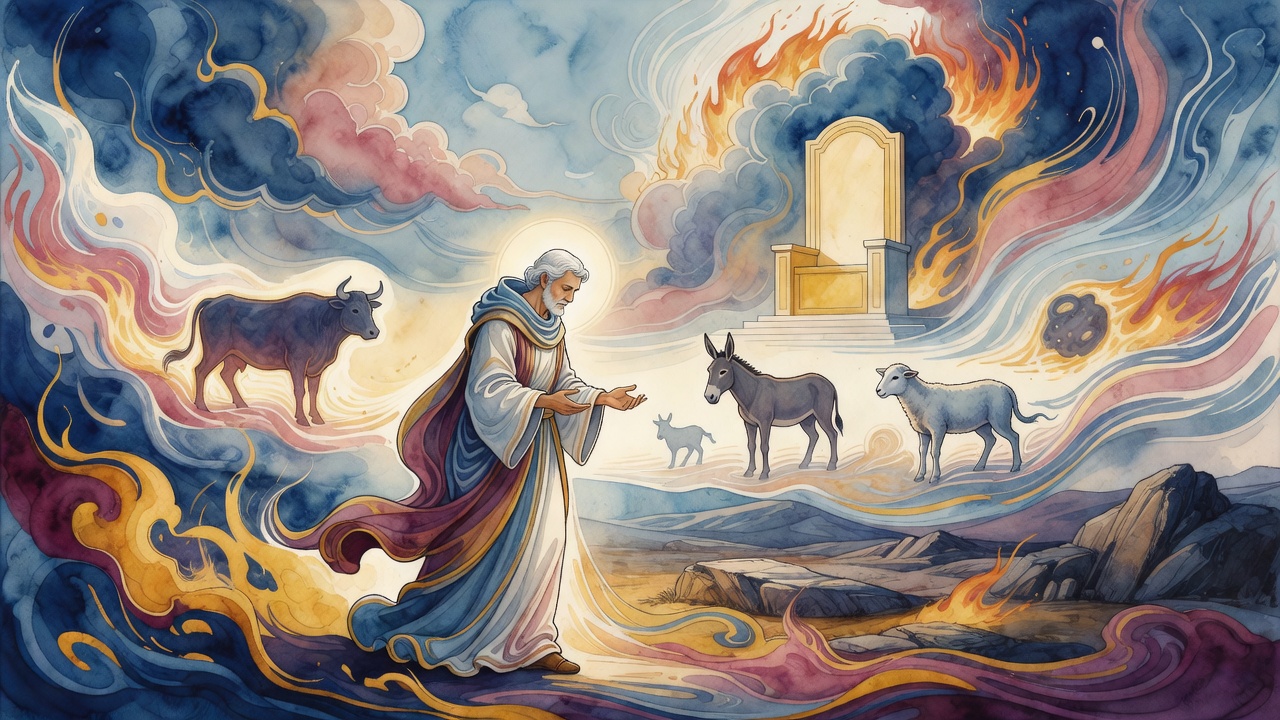
The burnt offering is called olah because it goes up. Israel goes up from the wilderness. Moses goes up to God. Balaam goes sideways into a marketplace of bodies and rivers and firstborns. The direction of the gift matters more than its size.

On the days when the morning lamb rises and the afternoon lamb answers, Jerusalem lives inside a rhythm Balaam never learned. No angel is asked to replace that rhythm. No foreign altar of seven copies can counterfeit it. The fire waits for the climbers. The copper cover of Korah's censers still warns the climbers not to seize a ladder that is not theirs.


← All myths
From the tradition

Sources

3 sources

The texts behind this telling. Some cards carry a translation of the source; others are our own retelling of it, and each card says which. Every card links out to the original.

Midrash Tanchuma Buber, Tzav 1:1Midrash Tanchuma Buber, Tzav

Translation of the source text.Midrash Tanchuma (Buber), Public Domain, on Sefaria · CC-BY-SA

"And the LORD spoke... Command Aaron..." (Leviticus 6:1-2). This is what Scripture says (Psalms 89:7): "For who in the skies can be compared to the LORD, who is like the LORD among the sons of the mighty?" The Holy One, blessed be He, said: If I had desired an offering, would I not have said to Michael to offer Me an offering? And from whom do I request an offering? From Israel. And so it says concerning the showbread (Leviticus 24:8): "Every Sabbath day [he shall set it in order before the LORD continually]." And it is written (Micah 6:7): "Will the LORD be pleased with thousands of rams, with ten thousands of rivers of oil?"

Balaam the wicked was the advocate of the nations of the world, and through him it is spoken (Micah 6:7): "Will the LORD be pleased with thousands of rams, with ten thousands of rivers of oil?" He desires what you offer Him, a log of oil; we offer Him ten thousand of ten thousands of rivers of oil. What did Abraham offer before Him? Was it not one ram, as it is said (Genesis 22:13): "And Abraham lifted up his eyes and looked, and behold, a ram caught [in a thicket]"? If He desires, we will offer Him thousands of rams. And what did his son offer Him? I will offer Him my son and my daughter, as it is said (Micah 6:7): "Shall I give my firstborn for my transgression, the fruit of my body for the sin of my soul?" "My firstborn for my transgression," this is my firstborn son; "the fruit of my body for the sin of my soul," this is my daughter.

See how crafty Balaam the wicked was. He began to say (Numbers 23:4): "I have set up the seven altars." He did not say "altars," but "the altars." These are: from when the first Adam was created until now, seven altars were built, and I offer seven corresponding to those seven. And what do they offer? Twelve cakes, as it is said (Leviticus 24:5): "And you shall take fine flour and bake it into twelve cakes." When the Holy One, blessed be He, revealed Himself to him, He said to him: Wicked one, what are you doing? He said to Him: "I have set up the seven altars." To what was this wicked one like? To a butcher who was selling in the market, and his shop was full of meat, and he saw the market commissioner, who was gazing at the meat. The butcher saw that he was gazing at the meat; he said to him: My master, I have already sent provisions to your house. So too Balaam: the Holy One, blessed be He, said to him: Wicked one, what are you doing here? He said before Him: "I have set up the seven altars, and I have offered up a bull and a ram on the altar" (Numbers 23:4). He said to him (Micah 6:7): "Will the LORD be pleased with thousands of rams?" He said before Him: "Shall I give my firstborn for my transgression?" The Holy One, blessed be He, said to him: Wicked one, if I desired an offering, I would say to Michael and to Gabriel, and they would offer before Me, as it is said (Psalms 89:7): "For who in the skies can be compared to the LORD, who is like the LORD among the sons of the mighty?" Among the sons of Abraham, Isaac, and Jacob, who are the rams of the world.

The Holy One, blessed be He, said to him: What do you seek, to deceive yourself before Me, that I should accept offerings from the nations? You cannot. He said to him: It is an oath on the part of the children of Israel, an everlasting covenant; they are conditions, that I accept offerings only from Israel, as it is said (Leviticus 6:2): "Command Aaron and his sons, saying..." And the nations say: How is it that Israel offers and burns incense? The Holy One, blessed be He, said to them: "This is the Torah of the burnt offering (ha-olah)." "Who is this coming up (olah) from the wilderness?" (Song of Songs 3:6). And "Moses went up (alah) to God" (Exodus 19:3).

Full source
Midrash Tanchuma Buber, Tzav 15:1Midrash Tanchuma Buber, Tzav

Translation of the source text.Midrash Tanchuma (Buber), Public Domain, on Sefaria · CC-BY-SA

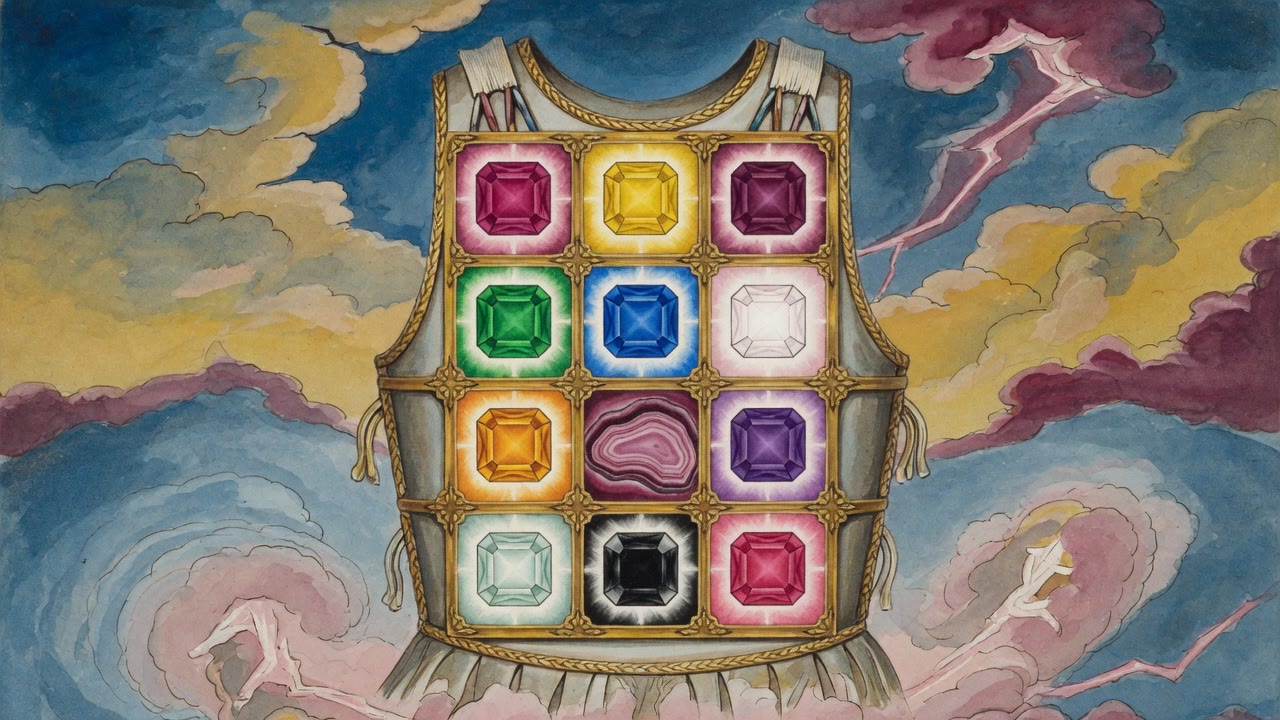
(Leviticus 8:3:) AND ASSEMBLE THE WHOLE CONGREGATION. The Holy One, blessed be He, said to Moses: Pay him honor in the presence of all Israel, so that they may see him entering into the High Priesthood, and warn them not to dispute over the priesthood like Korah and his company. For I know that Uzziah is destined to arise and dispute over the priesthood, as it is said (Numbers 17:5): "A reminder to the children of Israel, so that no stranger who is not of the seed of Aaron should draw near…" He was not of the seed of Levi, just as Korah was. It said to him: The reminder that you make for Korah, you make for him. It said to him (Numbers 17:5): "Let him not be like Korah and his company." He said to it: And how will you act toward him? It said to him (ibid.): "As the LORD spoke through Moses to him." He said to him: Just as I did to your hand (Exodus 4:6), "And he brought it out from his bosom, and behold, his hand was leprous as snow", so will I do to him. Therefore (Leviticus 8:3): AND ASSEMBLE THE WHOLE CONGREGATION.

Full source
Bamidbar Rabbah 21:21Bamidbar Rabbah

Retold in our words. Read the original at the link below.The Sefaria Midrash Rabbah, 2022 · CC-BY

Our journey starts with a verse: "Say to them: This is the fire offering that you shall bring to the Lord: unblemished lambs in the first year, two each day, a continual burnt offering" (Numbers 28:3). Seems straightforward. Two perfect lambs, offered daily. But it’s the timing that's key.

As the verse continues, "The one lamb you shall offer in the morning, and the second lamb you shall offer in the afternoon" (Numbers 28:4). Not at the same time, but spaced apart, deliberately. Why?

Rabbi Yehuda bar Rabbi Simon offers a stunning interpretation. He says that thanks to these carefully timed offerings, there was never a person in Jerusalem with unatoned sin! The morning offering, he explains, atoned for the sins committed during the night, while the afternoon offering cleansed the slate of daytime transgressions.

That! A city constantly being purified, a place where, as (Isaiah 1:21) says, "Righteousness lodged in it.. It's not about the physical location alone, but the constant ritual, the continuous striving for atonement.

But the story doesn't end there. The Holy One, blessed be He, makes a promise to Israel. "In this world," He says, "you present before Me the showbread and offerings. In the World to Come I will set a great table before you, and the idolaters will see and be ashamed." Here, in our world, we bring offerings. We make the effort, the sacrifice. But in the World to Come, Olam Ha-Ba, the tables are turned. God Himself prepares a feast for us, a reward for our devotion.

This idea is beautifully echoed in (Psalm 23:5): "You prepare a table before me in the presence of my enemies. You anoint my head with oil; my cup is full." It’s a vision of abundance, of triumph, of being honored in the face of adversity. And as (Isaiah 65:13) puts it, "Behold, My servants will eat, and you will starve; behold, My servants will drink, and you will be thirsty."

So, what's the takeaway here? Is it simply about the literal offerings in the Temple? Or is it about something deeper? Perhaps it’s about the power of consistent devotion, the continuous effort to atone and purify ourselves. Maybe it's about the promise of a future reward, a time when our efforts will be recognized and celebrated.

What are our daily offerings? What are we doing, day in and day out, to strive for righteousness and build a better world, a world worthy of that promised table in the World to Come? What kind of legacy are we leaving, and what kind of feast awaits us?

Full source