Parshat Mishpatim5 min read

The Bondwoman Raised to the Manner of Daughters

Sold in a famine year, a Hebrew girl learns the master must give her food, clothing, and time as he would a free daughter, not a tool in his house.

Curated by Arthur · Told by Maggid ·
Table of Contents
  1. Food, Cloth, and Time
  2. Why the Phrase Is Not Redundant
  3. When Six Years Open the Gate
  4. Daughter, Not Tool

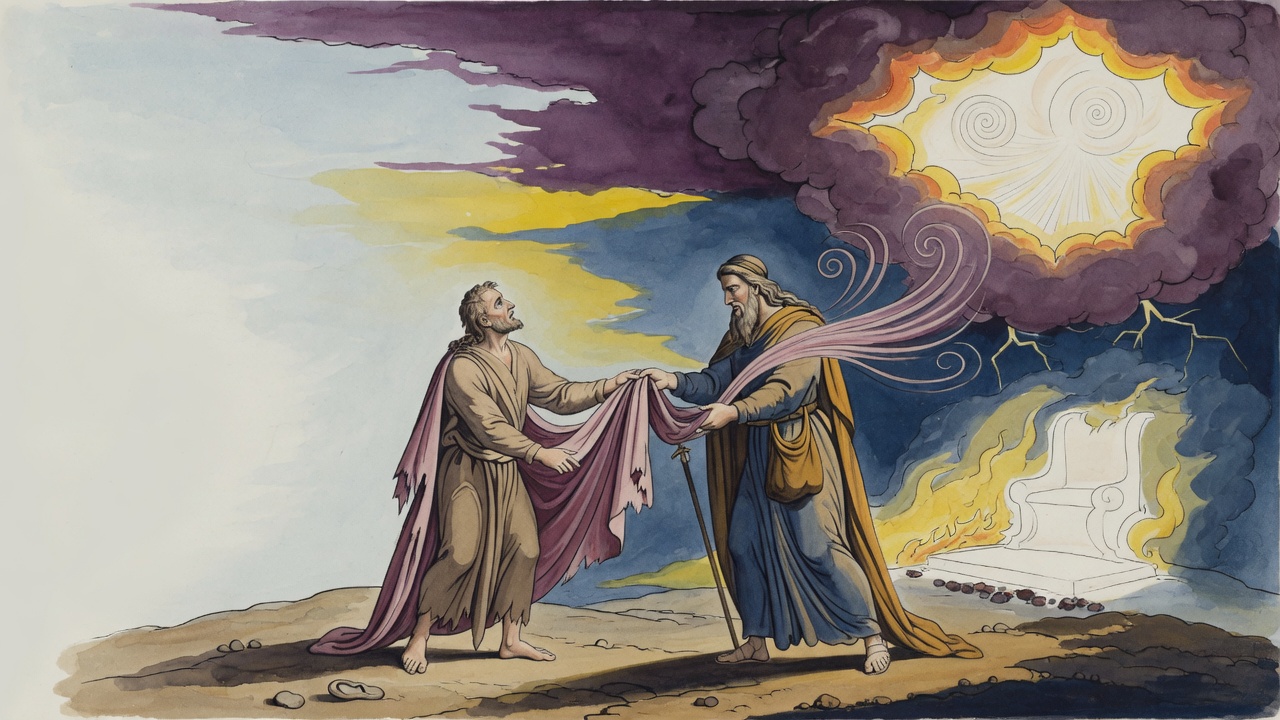
Her father sold her in the year the cisterns went low. The price bought grain for the little brothers. She walked behind the buyer with her eyes on the dust and her hands empty. The house she entered had a loom, a storeroom, and a mistress who measured everyone by usefulness.

The Bondwoman Raised to the Manner of Daughters Click for full size

The Torah had already written a different measure. A Hebrew girl sold into service is not raw labor. If the master designates her for himself or for his son, he must deal with her after the ordinance of daughters (Exodus 21:9), raised in the manner owed a freeborn girl, not left as inventory. Rabbi Yonathan heard in that phrase a lift, not a loophole: raise her toward the dignity of a freeborn daughter of Israel.

She did not know the verse. She felt the house test it every morning.

Food, Cloth, and Time

If he takes another wife, her she'er, her kesut, and her onah he shall not diminish (Exodus 21:10). Rabbi Yoshiyah read the three words as food, clothing, and conjugal time. She'er is flesh and sustenance, the same root that rains as food in the psalm and names the meat of a people in the prophet. Kesut is covering, plain as a garment. Onah is her right to intimacy, time that cannot be postponed forever without theft of a different kind.

The order matters. Survival first: bread and cloth. Then the bond of body that makes a marriage more than a contract of work. A master who feeds her scraps, dresses her in rags, or freezes her out of the room has already broken the ordinance of daughters.

In the storeroom she learned to count loaves. Counting became a quiet form of hope.

Why the Phrase Is Not Redundant

Some argued the ordinance of daughters only restates what any Jewish wife already receives. Rabbi Yonathan answered from the next verse. Since food, clothing, and onah are already guaranteed in general, the earlier phrase must add something new. What it adds is the sold girl herself. She is pulled up into the measure set for free daughters. Servitude cannot be an excuse for a thinner life.

The house tried thinner life anyway. The mistress called her "the purchase." The master's son looked at her sometimes as if she were already named in a future he had not earned. The law stood between them like a third adult in the room, invisible and heavy.

When bread was short, the verse was the only advocate who did not need courage.

When Six Years Open the Gate

Hebrew service is not endless. After six years a servant goes out free. When you send him free, bestow you shall bestow upon him (Deuteronomy 15:13-14). Gifts for the road. Seed for a life that must stand again. The sages widen the duty: not only the full six years, but release at Jubilee, at the master's death, at a maidservant's signs of puberty. The sending must come from the master's side. A servant who buys himself out early does not collect the same bestowal, because the verse keys the gifts to "when you send him free from yourself."

She marked years with notches on the loom's underside. Freedom was not a rumor. It was a calendar with weight at the end.

Bestowal is the Torah's refusal to free a person into empty hands after years of another person's profit.

Daughter, Not Tool

One evening the master set meat before her without comment. Cloth for a new dress arrived the next market day. No speech explained the change. Perhaps a teacher had sat in the gate and named the three words until the household heard them. Perhaps fear of Heaven simply woke up.

She ate. She covered herself. She understood that dignity can arrive as logistics. The ordinance of daughters is not poetry first. It is portions, seams, and time protected from erasure.

When the year of release came, gifts followed her out: stock, grain, something that could become a beginning. She did not bless the famine that had sold her. She did bless a law that refused to leave her defined by the sale. A people that remembers Egypt must remember how to treat the person who still walks out of a smaller Egypt in every generation.

Call her daughter in the measure of bread and cloth, or do not pretend the house keeps Torah.

She learned the house's calendar of festivals from the doorway, never sure if she was guest, daughter, or inventory. The verse answered with logistics when poetry would have failed. Bread on time. Cloth before winter. Hours not stolen from her body as if affection were optional rent.

In the seventh year the gifts felt almost embarrassing in their concreteness: animals, grain, things that could die or sprout. She preferred that to empty blessings. Freedom without seed is a speech. Freedom with seed is a path. She took the path and did not look back at the loom's notches.


← All myths
From the tradition

Sources

3 sources

The texts behind this telling. Some cards carry a translation of the source; others are our own retelling of it, and each card says which. Every card links out to the original.

Mekhilta Tractate Nezikin 3:21Mekhilta DeRabbi Yishmael

Retold in our words. Read the original at the link below.Mechilta, translated by Rabbi Shraga Silverstein · CC-BY

R. Yonathan reads the phrase "according to the ordinance" (Exodus 21:9) as a ruling about the Hebrew bondwoman, teaching that a master who designates such a girl for himself or his son must treat her with the full dignity owed to a freeborn Jewish daughter. The case before the rabbis is the law of the amah ha-Ivriyah, the young Hebrew girl whose impoverished father has sold her into service, and the Torah's insistence that she not be degraded but raised toward the standing of a wife.

A challenge is raised against R. Yonathan from the school that follows R. Yoshiyah. Perhaps the words "and he deal with her after the manner of daughters" are meant to clarify the rights of an ordinary Jewish daughter who marries, rather than the special case of the sold bondwoman. If so, the verse would be speaking broadly about every Jewish bride and her entitlements within marriage.

R. Yonathan answers that the very next verse settles the matter. When Scripture says, "If he take him another wife, her food, her raiment, and her conjugal rights he shall not diminish" (Exodus 21:10), it has already addressed the rights of a Jewish wife in general, guaranteeing her sustenance, clothing, and marital companionship. Since that ground is already covered, the earlier phrase "according to the ordinance of the daughters" cannot be redundant. It must therefore add something new, and what it adds is precisely the dignity of the Hebrew bondwoman, who is to be treated by the measure set for free Jewish daughters. By this reading the Torah lifts the sold girl out of mere servitude and binds her master to honor her as he would honor any daughter of Israel.

Full source
Mekhilta Tractate Nezikin 3:23Mekhilta DeRabbi Yishmael

Retold in our words. Read the original at the link below.Mechilta, translated by Rabbi Shraga Silverstein · CC-BY

The Torah lists three things a husband must provide for his wife: "she'eirah, kesuthah, and onathah" (Exodus 21:10). These three Hebrew terms are cryptic, and the Mekhilta preserves a detailed debate about what each one actually means.

Rabbi Yoshiyah identifies the three terms as food, clothing, and conjugal time, in that order. For "she'eirah," he demonstrates that the root she'er refers to food. The prophet Micah uses the same word: "and who eat the she'er of My people" (Micah 3:3), where it clearly means sustenance or flesh. The Psalmist confirms this usage: "He rained she'er upon them as dust" (Psalms 78:27), referring to the manna that God sent down as food in the wilderness. In both cases, she'er means something consumed for nourishment.

For "kesuthah," Rabbi Yoshiyah accepts the plain meaning without dispute. The word means "her clothing," from the common Hebrew root for covering or garment. This is the most straightforward of the three terms.

For "onathah," the interpretation is more delicate. Rabbi Yoshiyah identifies this as the wife's conjugal time, her right to physical intimacy with her husband. He derives this meaning from the root anah, which appears in (Genesis 34:2) in a context involving physical relations: "And he lay with her and ye'anehah." The verb connects the abstract noun "onathah" to the concrete realm of marital intimacy.

Rabbi Yoshiyah's reading establishes the order as food first, then clothing, then conjugal rights. This sequence matters in Jewish law because it defines the hierarchy of a husband's obligations. A wife's physical needs, sustenance and protection from the elements, come first. Her right to intimacy, while equally binding, follows the necessities of survival.

Full source
Sifrei Devarim 119:1Sifrei Devarim

Retold in our words. Read the original at the link below.Sifrei by Rabbi Shraga Silverstein · CC-BY

Take this one from Sifrei Devarim (Deuteronomy 15:13-14). It deals with releasing a Hebrew servant after six years of service, and the obligation to "bestow upon him", to give him gifts to start his free life. A sort of severance package, if you will.

The verses read: "And when you send him free from yourself… Bestow shall you bestow upon him…"

Here's the question: does this obligation of bestowing gifts only apply to someone who serves the full six years? What if, for instance, the Jubilee year (Yovel) arrives before those six years are up? Remember, Yovel is that super-Sabbatical year that comes every 50 years, when all indentured servants go free. Or what if the master dies? Or if a Hebrew maidservant shows signs of puberty? Do they still get the "bestowal"?

Sifrei Devarim anticipates this question. It points to the seemingly redundant phrasing: "You shall send him… And when you send him." That repetition, it argues, broadens the scope. It includes those other scenarios – the Yovel, the master's death, the maidservant reaching puberty. Even if they haven't served the full six years, the master is still obligated to bestow gifts upon them.

Pretty neat. But the Torah isn't done yet. What about a servant who basically buys their way out early? Can they just pay the master for the remaining time owed and skip out on their service? Does the master still have to give them gifts in that case?

Sifrei Devarim is clear: No.

The verse says, "And when you send him free from yourself." The key phrase is "from yourself." The sending away has to be an act initiated by the master, not the servant. If the servant is released because they paid to leave, then the obligation of bestowal doesn't apply. The act of release must come from the master's side to warrant the gifts.

It’s fascinating how the Torah, through its interpreters, seems to be thinking several steps ahead. It anticipates potential loopholes and clarifies the intent behind the law. It's not just about the technicalities; it's about the spirit of generosity and fairness.

So, what's the takeaway here? Perhaps it's a reminder that true generosity isn't about fulfilling a legal obligation in the narrowest way possible. It's about exceeding expectations, about going above and beyond what's strictly required. It's about recognizing the inherent dignity of every individual, regardless of their status or circumstances. And, more importantly, acting on that recognition. Are there areas in your life where you could be more generous, more giving, more… willing to bestow from yourself?

Full source