The Boy Who Stole Torah from Behind the Fence
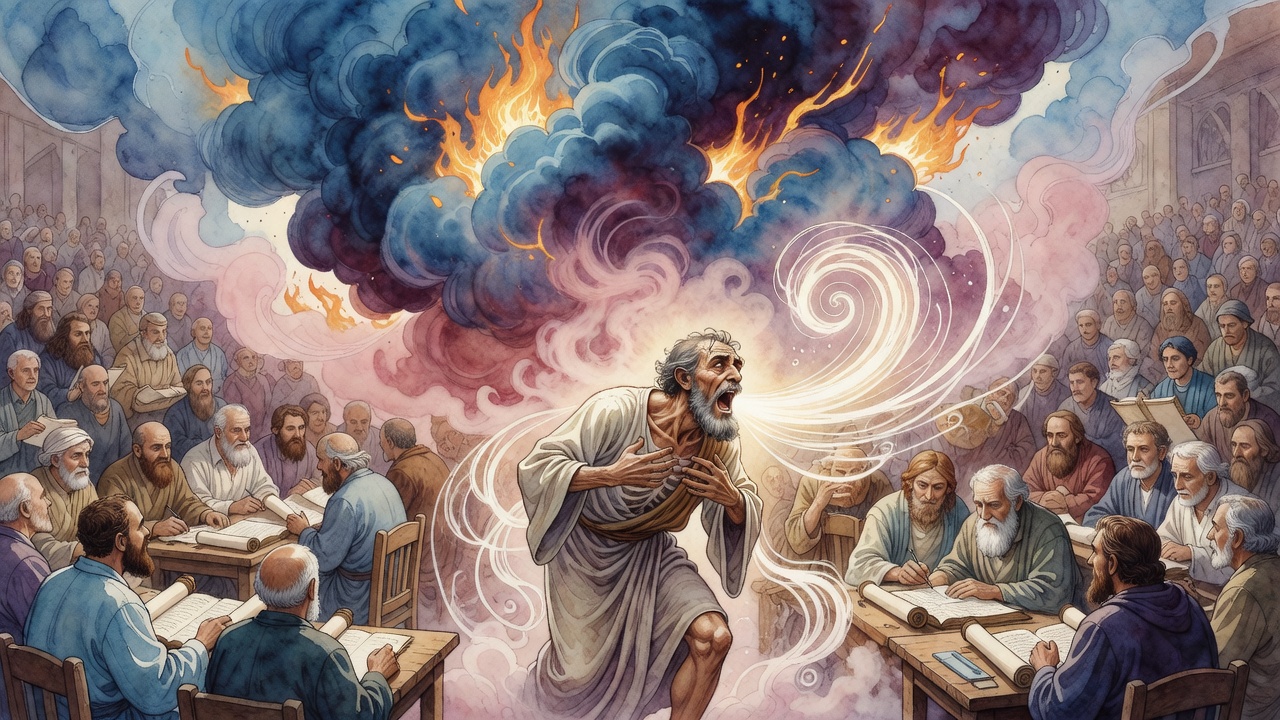
He could not pay the fee, so he hid behind a fence and listened. The sages called him a thief, then promised he would repay as a teacher.
Table of Contents
He pressed his back to the warm wood of the fence and held his breath whenever a sandal scraped on the other side. Through a crack he could see the teacher's mouth moving. He could not see the coins the other students had paid to sit in the open.
 Click for full size
He had no coins. He had hunger of a different kind.
Theft That Fills a Starving Soul
The Mekhilta turns a law about theft into a teaching about the hunger for Torah. It imagines a man whose friend teaches Torah for a fee, but who cannot or will not pay. So he hides behind a fence to overhear the teaching and learns without permission.
Strictly speaking he has taken something that was being sold, and the rabbis are willing to call him a thief. They also insist that in this one case the so-called theft earns him merit rather than guilt, because what he steals is sacred wisdom that nourishes a starving soul.
"They will not shame a thief for stealing to fill his soul that is hungry" (Proverbs 6:30). The hunger they hear is a hunger for learning. The teaching does not leave him a thief forever. In the end this eager student will be appointed as a teacher over the congregation, and in that role he will repay in full everything he once took by stealth.
"In the end he will repay seven-fold" (Proverbs 6:31). "Seven-fold" becomes a hint at Torah itself, silver refined seven times, "The words of the Lord are pure words... refined seven-fold" (Psalms 12:7).
What Torah Does While You Walk and When You Lie Down
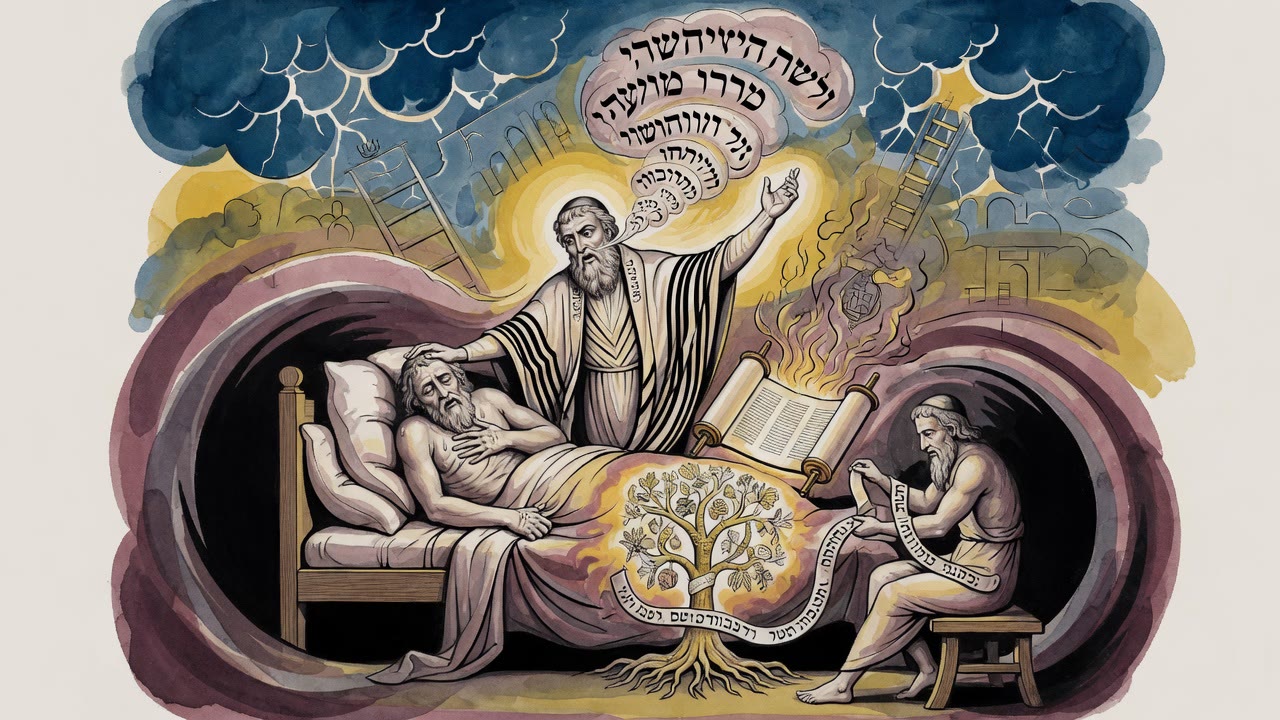
Another midrash opens Proverbs into a life-span. "When you walk, it will guide you; when you lie down, it will watch over you; and when you awaken, it will converse with you."
When you walk: the time a person toils in Torah while still alive, and the Torah he labors over walks beside him as a guide on every road. When you lie down: the grave itself, for the Torah keeps watch over the one who lay down in it, guarding his body even from the worm and the maggot that wait in the dust. When you awaken: the world to come. On the day when living and dead stand together in judgment, the Torah a person studied does not fall silent. It rises as his advocate before the court on high and pleads merit on his behalf.
The boy at the fence does not know this whole arc yet. He only knows the guide has started walking with him through a crack in the wood.
Neither Right nor Left
"Turn neither to the right nor to the left; remove your foot from evil" (Proverbs 4:27). Rabbi Yose the Galilean heard it as a charge about Torah itself. Be careful with the words of Torah that you not lean away from them to either side. You can fall off a straight road by veering right just as easily as by veering left.
Rabbi Keritzpi offered another reading. For him the caution was about the words of the sages, the living teachers who hand the tradition forward. Do not drift from their guidance to either side. Remove your foot from evil means a sharper boundary still: do not step onto the path that empties learning of obedience.
The fence-listener will need that warning later, when he becomes the teacher and other hungry souls press against his walls. Straight is not a mood. It is a road with ditches.
From Crack in the Fence to Mouth of the Court
Years later the same man stands before a congregation and opens a verse he once stole with his ears. He does not boast about the fence. He remembers the taste of dust and the fear of being found. He repays in pure currency: teaching passed on until the debt becomes abundance.
A child in the front row has empty pockets and bright eyes. The teacher sees him and does not ask for coins first.
Outside, a new fence is only a fence. Inside the teaching, the old theft has already been refined seven times into something that can stand in court for a soul.
Night settles. The former thief closes the book and walks home with a guide he no longer has to hide to keep.
The first time he nearly got caught, a dog sniffed the fence and barked. He ran, verse fragments still half-formed in his mouth, and that night he repeated them in the dark until they stuck. Fear had become a tutor. Hunger had become a curriculum.
When he finally sat as a teacher, a poor boy hovered at the edge of the circle the way he once had. He waved the boy in before anyone could ask about fees. Payment would come later, sevenfold, in the only coin that counts: words of Torah passed forward until the original theft becomes a public good.
He still corrects students who veer right into cleverness without obedience, or left into obedience without learning. Rabbi Yose and Rabbi Keritzpi live in that double caution. The road is narrow not because Heaven is mean, but because ditches are real.
On the day he dies, if the midrash on the advocate is true, the verses he once stole will stand up for him. They will remember the fence, the dust, the unpaid fee, and the decades of repayment. A soul that learned by stealth may still be guarded in the grave and spoken for at the awakening, because Torah does not abandon the one who refused to abandon her.
Neighbors who once mocked the unpaid listener later sent their sons to his table. They did not mention the fence. He did not either. The debt had changed currency so completely that only Heaven still kept the original ledger, and Heaven was satisfied with sevenfold teaching.
← All myths