5 min read

David Waited for the Trees Before Going to War

The Philistines stood only four ells away, close enough to kill. David held Israel back until the mulberry trees moved first.

Curated by Arthur · Told by Maggid ·
Table of Contents
  1. The Court Had to Read the Old Treaties
  2. The Treetops Held the Signal
  3. The Leaves Began to March
  4. The Fallen Man in Modin

The Philistines were four ells away.

Close enough for a soldier to see the hard line of another man's mouth. Close enough for spear points to stop being symbols and become metal aimed at ribs. The men of Israel wanted to charge because every animal part of the body says to move when danger comes that near.

David held them back.

The Court Had to Read the Old Treaties

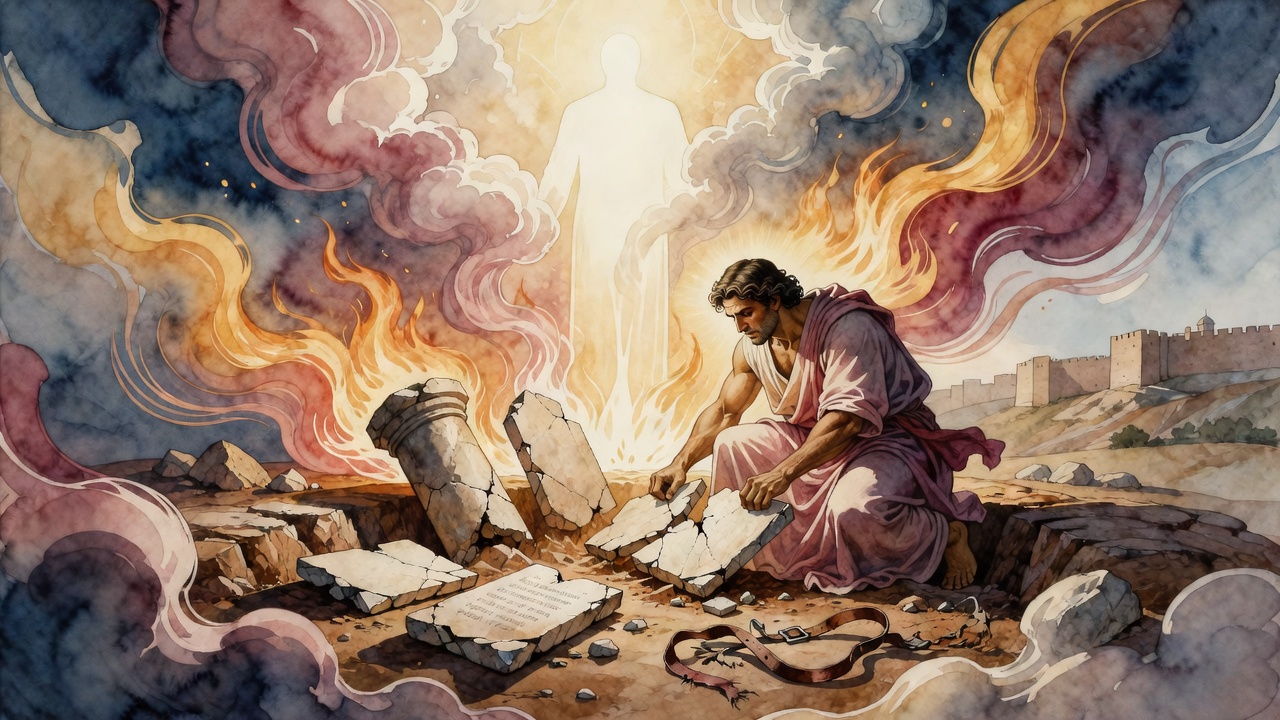
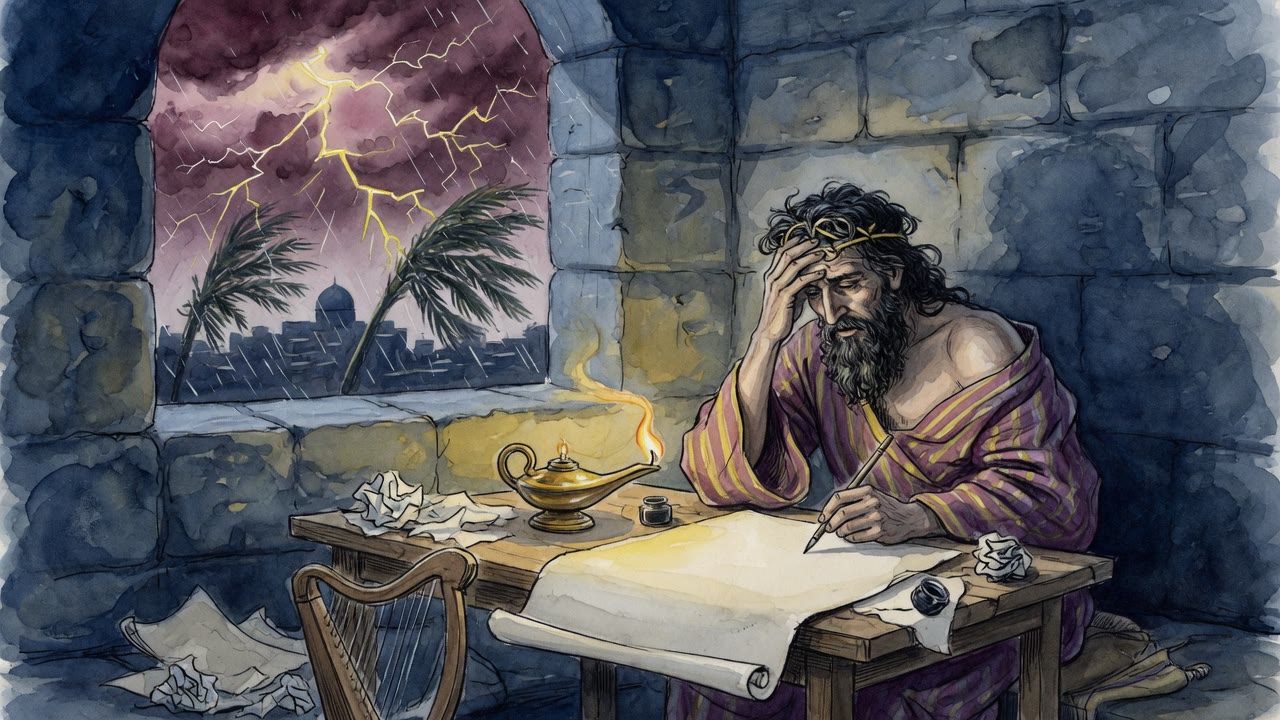
He had not come to war as a man hungry for permission to spill blood. Before fighting the Philistines and Arameans, he summoned the Sanhedrin and made the court examine the old claims. A covenant is not a scrap of memory to be trampled because a king has an army. David wanted the record searched before the sword came out.

The Philistine claim collapsed under scrutiny. They were not the people of the old agreement with Isaac, but later arrivals from Cyprus wearing an inherited name as if it were a shield. The Arameans had a different history, but their own violence had burned away any claim to protected treatment. Balaam had been hired from Aram to curse Israel. Cushan-rishathaim had oppressed Israel in the days of the judges.

David did not need less courage because he asked legal questions. He needed more. A king who pauses before battle risks looking afraid to men who only understand motion.

The Treetops Held the Signal

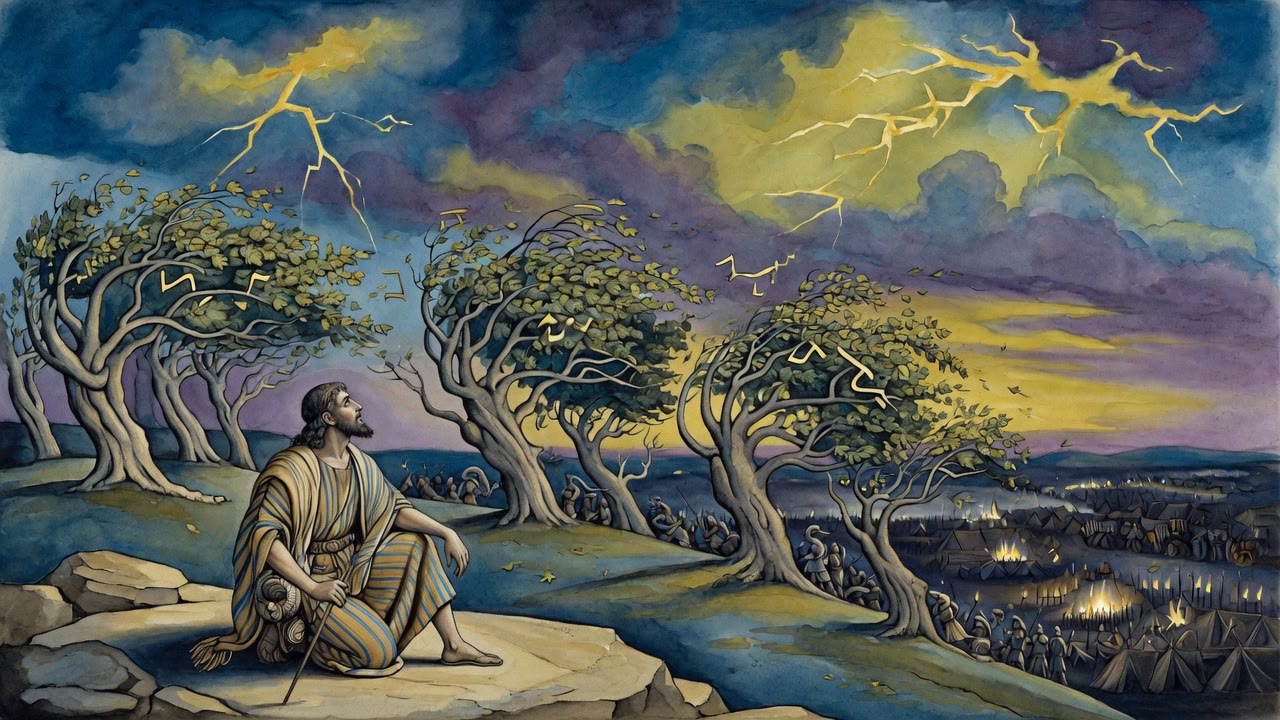
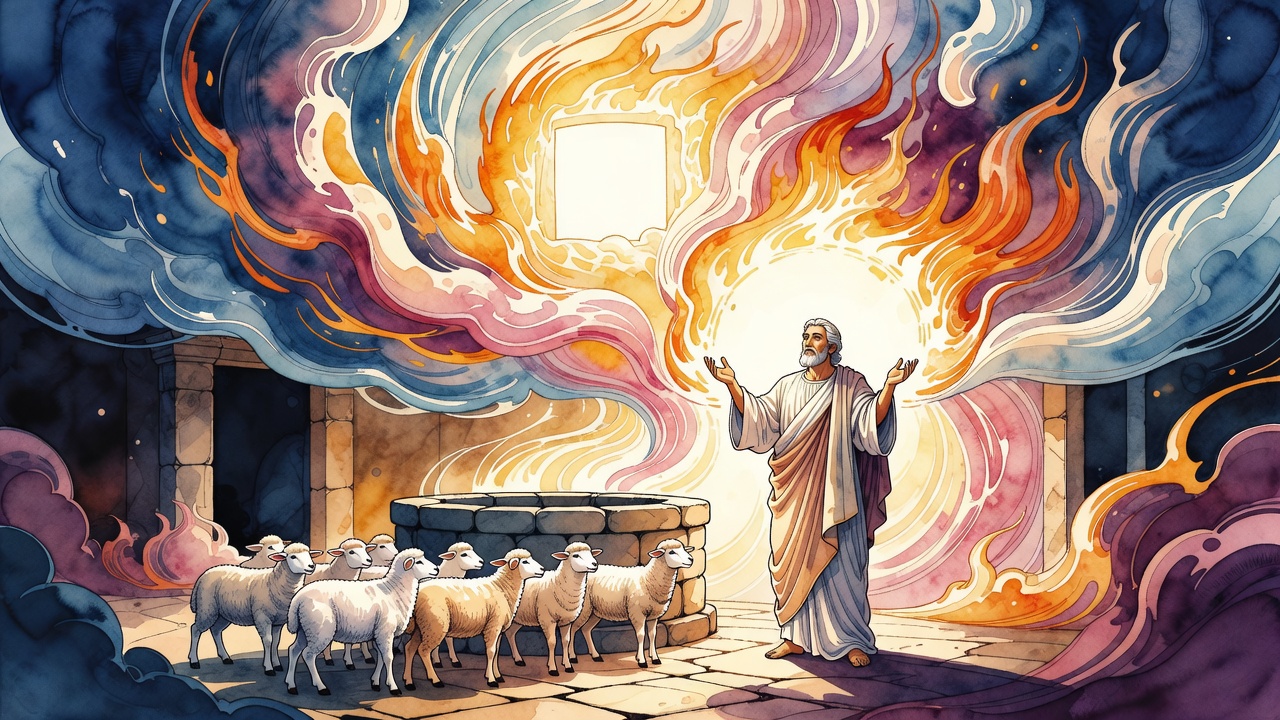
In the Valley of the Giants, the command from God was exact. "Do not attack until the sound of marching comes through the tops of the mulberry trees."

The trees became the clock. Their leaves held the difference between obedience and disaster. God would first judge the guardian angels of the Philistines, and only after that invisible judgment would the ground be ready for Israel's feet.

The soldiers did not see that court. They saw the enemy closing. Four ells. A few more breaths and the Philistines could strike first. Waiting no longer looked pious. It looked like standing still while death walked up with a blade.

David gave them the only answer a king can give when he is more afraid of disobedience than of enemy steel. If they charged before the trees moved, they would die as men who broke God's word. If they waited and the Philistines killed them, they would die as men who kept it.

The Leaves Began to March

Then the tops of the mulberry trees stirred.

Not wind, not ordinary rustling. Marching. The sound moved through the leaves like an army passing overhead, the hidden verdict arriving through green branches. David heard it. Israel heard it. The waiting snapped into motion.

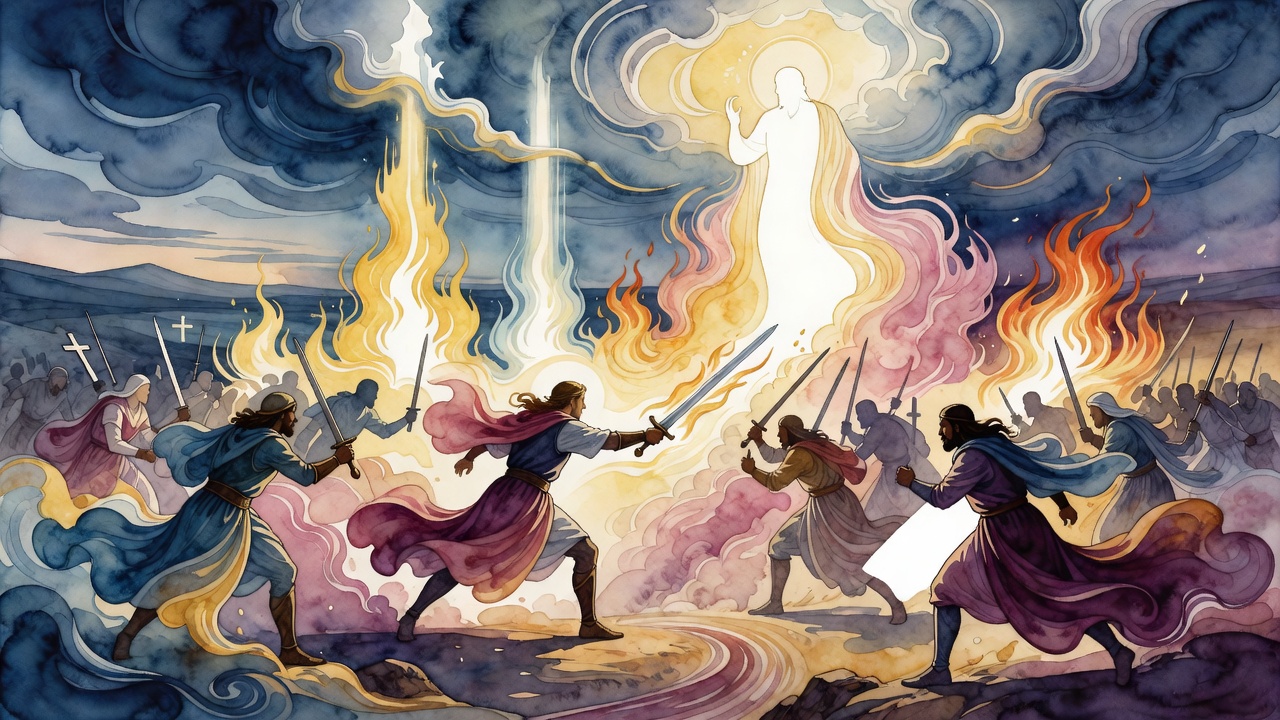
They attacked then, and not before.

The assault broke the Philistines. The difference was not tactics alone, though David knew tactics. The difference was timing submitted to command. A charge one breath too early would have been mutiny dressed as bravery. A charge at the sound in the trees became obedience with a sword in its hand.

The soldiers who had begged to rush now learned the speed of a command kept to the last instant. Their king had not saved them from fear. He had made fear wait.

Afterward, God pointed the angels to David. Saul had lost the kingship by failing to wait where waiting was commanded. David stood with the enemy nearly upon him and kept still until heaven moved first.

The Fallen Man in Modin

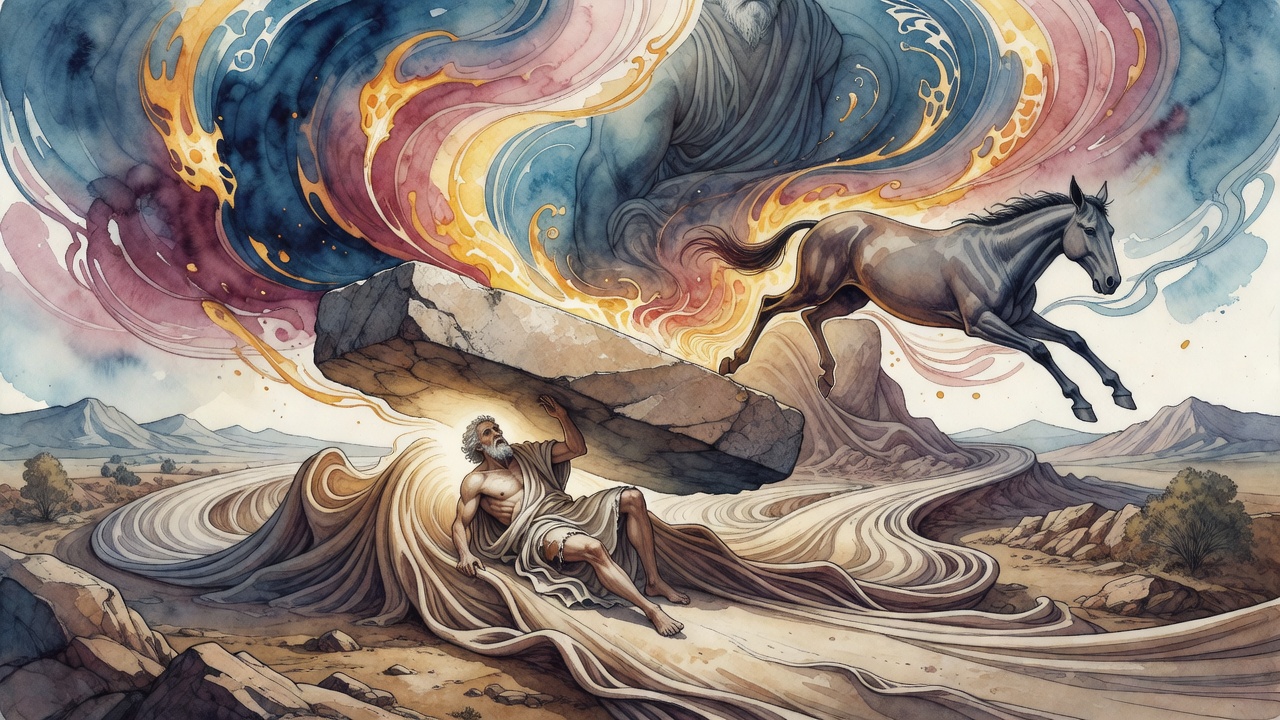
Long after David, another fighter would fall and be carried home.

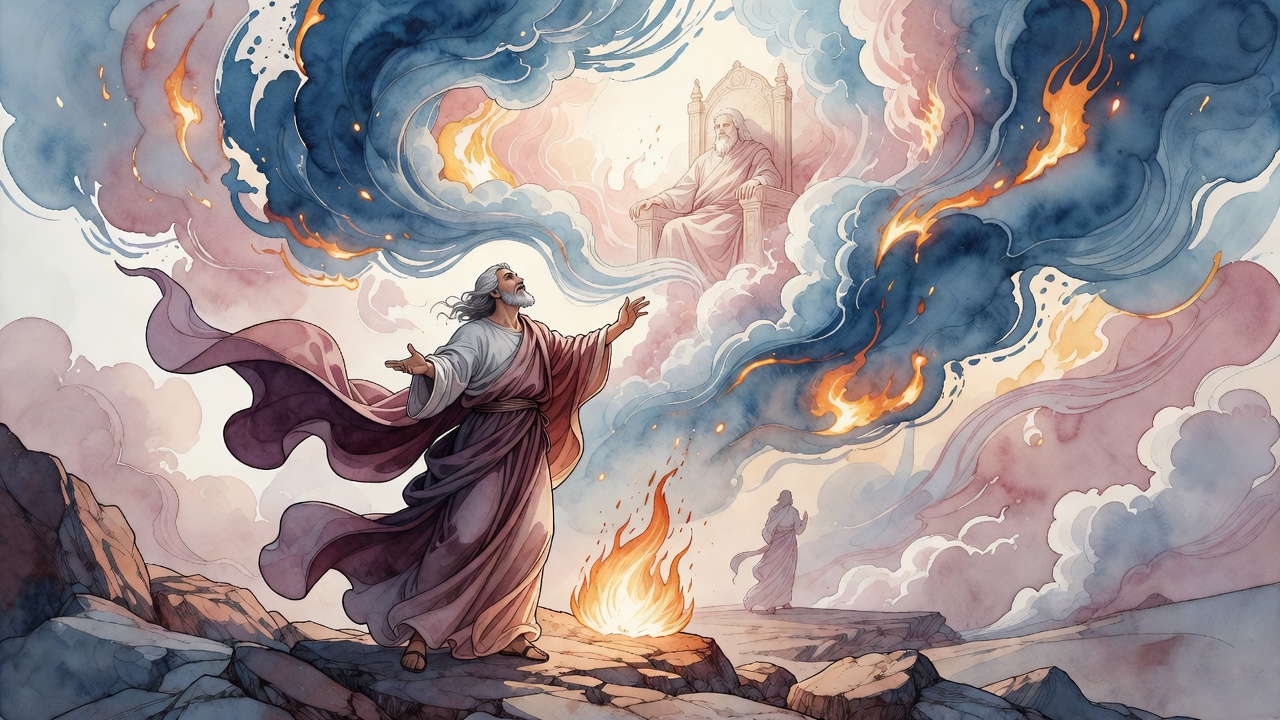
Judas Maccabeus died in battle, and his brothers Jonathan and Simon took his body back to Modin. All Israel mourned many days. The lament over him echoed the older language of David's grief for fallen heroes: how the valiant man had fallen, the deliverer of Israel.

The echo matters because Jewish memory does not treat courage as noise. Courage can be the charge, but it can also be the wait before the charge. It can be the brothers lifting a body from a battlefield. It can be a nation saying that deliverance has a human cost and not letting the fallen disappear into the dust where they died.

David's men wanted the clean thrill of movement. David gave them a harder discipline. He made an army listen to leaves.


← All myths
From the tradition

Sources

4 sources

The texts this telling draws on, in full. Open a card to read inline, or expand it for a wider, quieter read.

Legends of the Jews 4:30Legends of the Jews

A reader can imagine them as these larger-than-life figures, all might and no moral compass. But what if their greatness actually lay in their unwavering commitment to justice?

Take David, for example. We know him as the fearless warrior, slayer of Goliath, the king who united Israel. But as Ginzberg tells us in Legends of the Jews, David wasn't just bold; he was profoundly just. Disregarding the ancient covenants? Unthinkable!

Before heading off to war with the Arameans and the Philistines, David did something remarkable. He convened the Sanhedrin, the high court, instructing them to meticulously investigate the claims of these nations. He wasn't going to shed blood without understanding the historical and legal basis for conflict.

What did the Sanhedrin discover? The Philistines, it turned out, were essentially imposters. Their claim to the treaty made with Isaac was bogus. They weren't descended from the original Philistines who had entered into that agreement. Nope, they were Johnny-come-latelies, immigrants from Cyprus who arrived on the scene long after the ink had dried on the ancient pact. Their claims were deemed "utterly unfounded."

But the Arameans? Their situation was different. They did have a historical connection to the region. However, they had forfeited their rights to considerate treatment. How? Through aggression. The Zohar reminds us that actions have consequences, and violating the covenant is a serious matter.

Think back to Balaam, the "Aramean" prophet who was hired to curse the Israelites. And then there was Cushan-rishathaim, the Aramean king who oppressed Israel in the time of Othniel (Judges 3:8). Time and again, they chose conflict, attacking and waging war against the Israelites. As we find in Midrash Rabbah, these actions had lasting repercussions.

So, what does this tell us? David's commitment to justice wasn't just a nice add-on to his warrior persona. It was fundamental to his leadership. He understood that true strength lies not just in military might, but in unwavering adherence to ethical principles. It’s a powerful reminder that even in times of conflict, justice and righteousness must prevail. It's not enough to be strong; we must also be just.

Full source
Legends of the Jews 4:28Legends of the Jews

The story of David and the Philistines, as told in Legends of the Jews by Ginzberg, gives us a powerful example.

After David finally secured Jerusalem, he knew the war with the Philistines was inevitable. This wasn't just a military conflict; it was a test of David’s courage and, more importantly, his unwavering faith.

The showdown took place in the Valley of the Giants. Now, God gave David a very specific instruction: don't attack until you hear "the sound of marching in the tops of the mulberry trees." What's that all about?

Well, God wanted to judge the guardian angels of the Philistines before handing the Philistines themselves over to David and his army. The rustling of the trees would be the signal that this judgment had been carried out and it was time for battle.

Imagine the scene: the Philistine army is practically on top of them, just four ells away (that's about six feet!). The Israelite soldiers are itching to charge, ready to fight, but David holds them back.

He tells them, "God forbade me to attack until the tops of the trees begin to move. If we disobey, we will certainly die. If we wait, the Philistines might kill us, but at least we will die as pious men who keep God's command. Above all, let's have confidence in God." Talk about putting your life in God's hands!

It's a nail-biting moment. Do they risk immediate death by waiting, or risk God's wrath by acting rashly? David chooses faith.

And then, it happens. The tops of the trees rustle. It's the signal! David launches a successful assault, routing the Philistines.

The story doesn't end there. God then turns to the angels, who had been questioning his decision to take the kingship from Saul and give it to David. God says, "See the difference between Saul and David."

This story, found in Legends of the Jews, isn't just about a battle. It highlights the profound difference between obedience and disobedience, between doubt and unwavering trust. It asks us, what does it truly mean to have emunah (faith), faith, even when faced with impossible choices? And how does that faith shape not just our actions, but our very character?

Full source
Idra Zuta 1:147Idra Zuta

It suggests that even divine attributes aren't always in perfect harmony.

The Idra Zuta, a section of the Zohar (the foundational work of Jewish mysticism), explores the hidden meanings within the physical appearance – specifically, the beard – of the divine. It's wild stuff, but stick with me. It’s not a literal beard, of course, but a symbolic representation of the flow of divine energy.

Here’s the key idea: Sometimes, the divine needs to pour out Chesed (Lovingkindness), loving-kindness. Other times, it needs to unleash Din, judgment. According to the Idra Zuta, these two forces – seemingly opposites – are both always present. But they don't always manifest at the same intensity. "When it is required to pour out Chesed or judgments, one rises above the other and one hides itself from its neighbor.”

Think of it like this: when judgment is needed, the aspect of Chesed in this mystical beard is covered, and the power of judgment takes precedence. Conversely, when it's time for loving-kindness to flow, the judgment aspect recedes, and Chesed is in force.

Now, why this cosmic balancing act? The text emphasizes that both Chesed and Din are necessary. As the Idra Zuta states, "Everything therefore is necessary, both the rule of Chesed and the rule of judgment." One serves to avenge the enemies of Israel, while the other extends mercy to Israel. It's a complex dance of justice and compassion.

This idea resonates deeply. It acknowledges that the world isn't always sunshine and rainbows. Sometimes, tough love is required. Sometimes, boundaries need to be set. But even in those moments, the potential for mercy and compassion is still present, waiting for its turn to shine.

And here's where it gets even more interesting. King David, a central figure in Jewish tradition, understood this dynamic. The text references a passage in the Greater Assembly (section 259) where King David speaks of nine features in the verse, “Out of distress I called upon Yah” (Psalms 118:5). The Idra Zuta connects David's understanding of distress to this interplay of divine attributes. David, in his wisdom, recognized the need for both justice and mercy, even in times of great difficulty.

So, what does all this mean for us? Perhaps it's a reminder that life is rarely black and white. We need to embrace both our capacity for judgment and our capacity for compassion. We need to recognize that sometimes, difficult decisions are necessary, but that even in those moments, we can strive to act with kindness and understanding. It's about finding the balance, recognizing the dance of Chesed and Din in our own lives, and striving to embody both qualities in our interactions with the world. It's a tall order, no doubt, but one worth striving for.

Full source
The Book of Maccabees I 9:22The Book of Maccabees I

That feeling echoes through the ages, especially when we look at the story of Judas Maccabeus.

The Book of Maccabees I, a historical text from the Second Temple period not included in the Tanakh, gives us a glimpse into a tumultuous period in Jewish history. It’s a story filled with bravery, rebellion, and ultimately, loss.

Chapter 9 paints a stark picture. After numerous victories against the Seleucid Empire, the tide turns. "There was a sore battle, insomuch as many were slain on both parts. Judas also was killed, and the remnant fled." A simple sentence, yet it carries the weight of a nation’s hope dashed against the rocks of war. The mighty Judas, the hammer – that's what Maccabeus means, by the way, from the Hebrew word maqqebet, hammer, the one who had struck blow after blow against oppression, falls.

The scene: the surviving members of his family, Jonathan and Simon, his brothers, retrieving his body from the battlefield. They bring him back to Modin, the ancestral home. It must have been a somber procession.

"Then Jonathan and Simon took Judas their brother, and buried him in the sepulchre of his fathers in Modin." A final resting place in the land he fought so hard to protect.

The grief is palpable. "Moreover they bewailed him, and all Israel made great lamentation for him, and mourned many days." It wasn’t just the loss of a leader; it was the loss of a symbol. Judas Maccabeus represented the spirit of resistance, the refusal to succumb to tyranny.

The eulogy is simple, yet profound: "How is the valiant man fallen, that delivered Israel!" A lament that echoes the biblical mourning for fallen heroes like King David’s lament for Jonathan and Saul. It's a poignant reminder of the human cost of freedom.

And then, a final, almost heartbreaking line: "As for the other things concerning Judas and his wars, and the noble acts which he did, and his greatness, they are not written: for they were very many." We are left with a sense of incompleteness, a recognition that history can only capture a fraction of a person's life and impact. So much more could be said, and perhaps, so much more was said, passed down through oral traditions, through stories whispered around campfires, now lost to time.

It makes you wonder, doesn’t it? What stories lie hidden between the lines of history? What acts of courage and sacrifice go unrecorded? The story of Judas Maccabeus, even in its brevity, reminds us to remember the heroes, known and unknown, who fight for what they believe in, even when the odds are stacked against them. It reminds us to cherish the freedom they won, and to continue their fight for a better world.

Full source