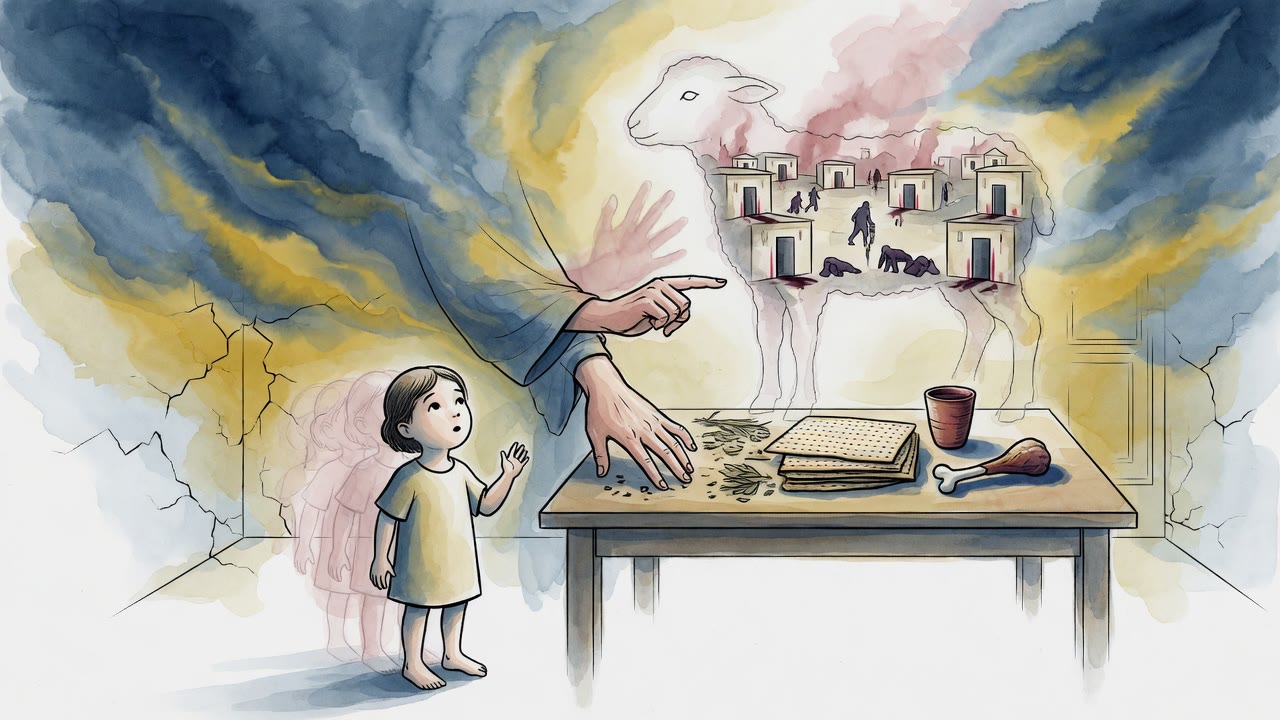
6 min read

A Disciple Stretched His Prayer and Rabbi Elazar Answered the Mockers

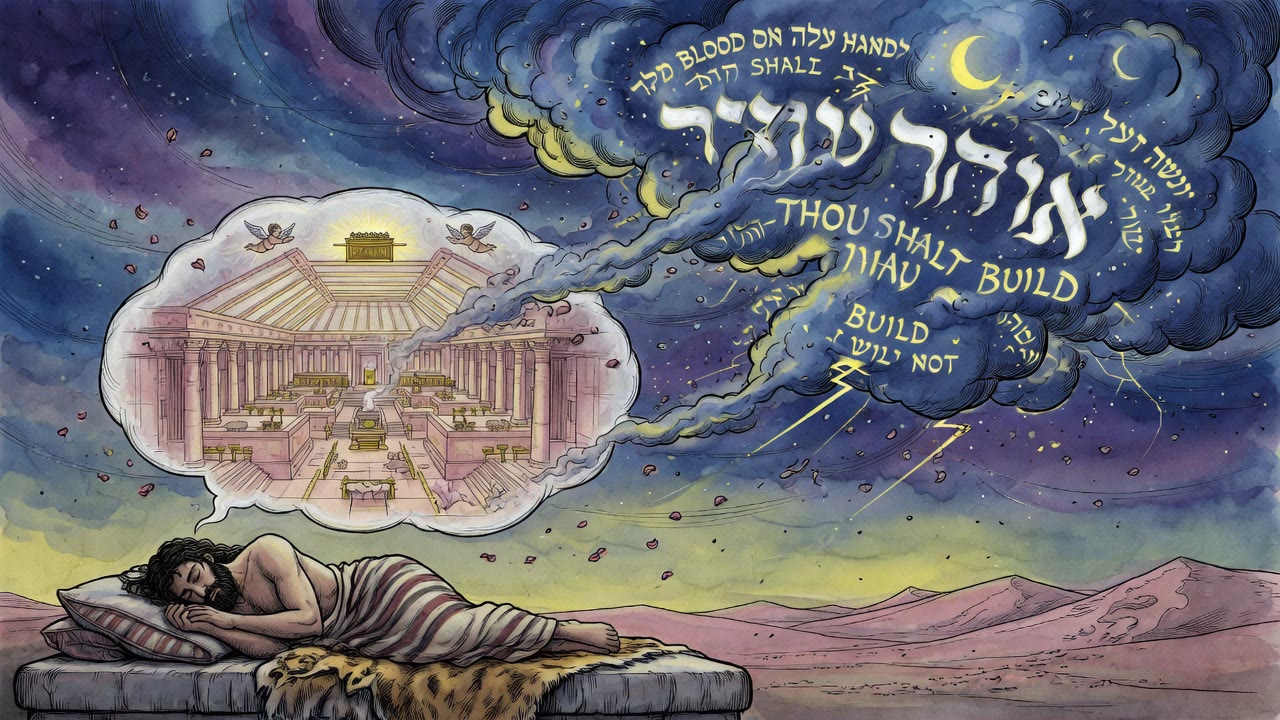
The benches were shifting before he reached the third blessing. Somebody in the back row said the word elongater and it went down the row.

Curated by Arthur · Told by Maggid ·
Table of Contents
  1. Not More Than Moses
  2. Forty Days on the Ground
  3. Five Words for a Sister
  4. The Ten Who Carry the One
  5. After the Decree Is Signed
  6. What the Benches Learned

The disciple standing at the front had stretched the third blessing past anything the room expected, and the benches began to shift. Somebody near the back said the word elongater. It went down the row like a passed cup. Rabbi Elazar heard it and said nothing until the man at the front had finished, come back to his place, and sat down.
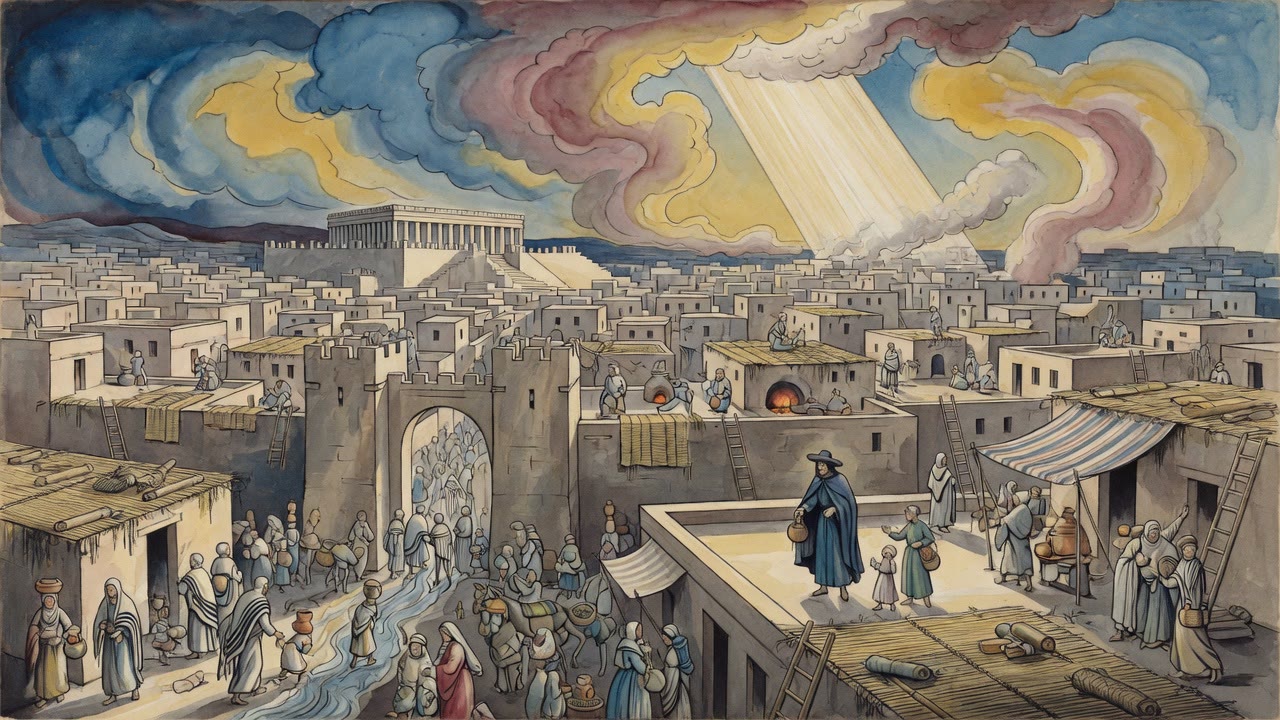
A Disciple Stretched His Prayer and Rabbi Elazar Answered the Mockers Click for full size

Not More Than Moses

"Longer than Moses?" Rabbi Elazar asked the room.

Nobody answered him.

"I fell down before the Lord these forty days and forty nights" (Deuteronomy 9:25). Elazar let the number stand in the air. Forty days. Not forty blessings. Forty days on the ground, and the man who did it is the one whose name they had all been leaning on since they were children.

Forty Days on the Ground

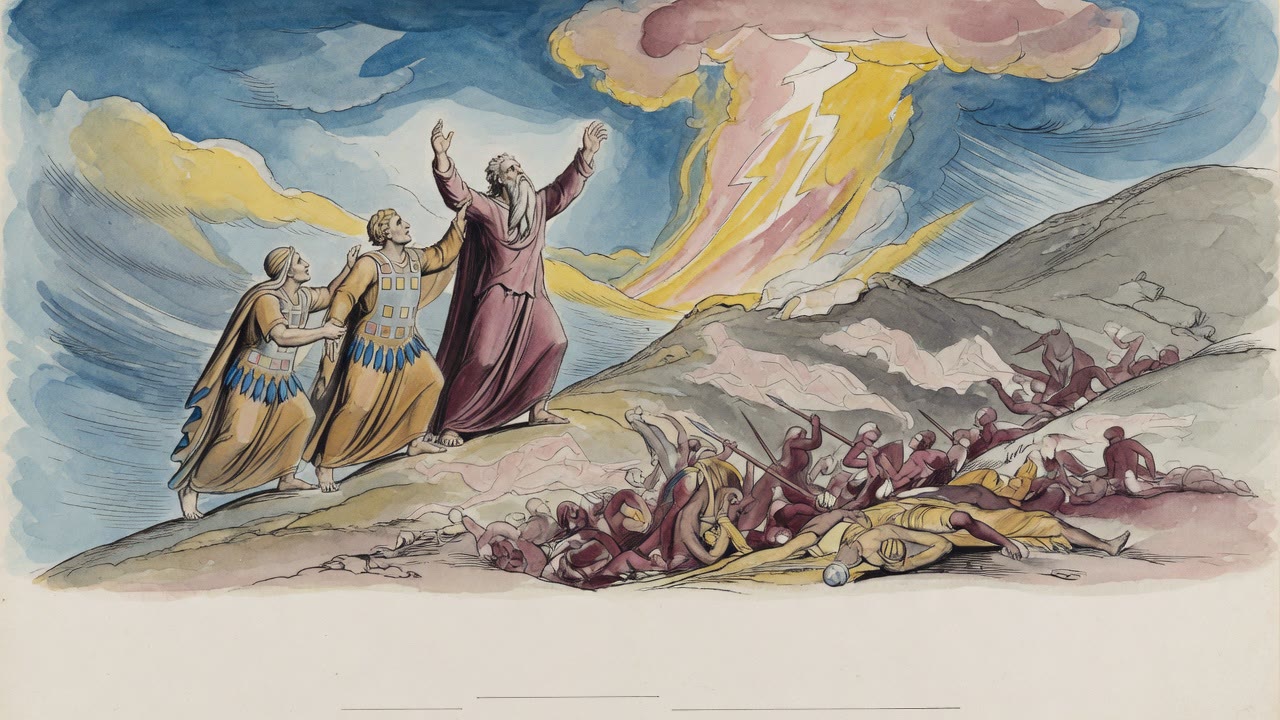
The calf was still standing in the camp when Moses went back up. He had come down once already, seen the dancing, and broken the tablets at the foot of the mountain. Now he climbed again and put his face in the dirt of the summit and stayed there.

He ate no bread. He drank no water. Forty days and forty nights he lay in front of the God who had just said He would wipe them out and start again from Moses himself, which was the offer Moses would not take. He prayed for the people who had made the thing. He prayed for Aaron, who had taken their gold and thrown it in the fire, because the anger had come down on Aaron too and Moses would not leave him standing in it alone.

Nothing says he grew hoarse. Nothing says he slept. The account gives the number and the position, face down, and leaves the rest of it to be worked out by anyone who has ever tried to hold one posture for a single hour.

He came down with the second set of tablets. That was what forty days of holding on had bought.

Five Words for a Sister

There had been another disciple, on another day, who prayed so briefly that the room barely registered it, and the whisper that time was that this one was a curtailer.

He had been answered with Moses too.

Miriam had turned white as snow in front of the whole camp, and her brother did not compose anything. He said five words. "Heal her now, O God, I beseech thee" (Numbers 12:13). Then he stopped, because the words were all in and there was nothing further to add while his sister stood there with her skin coming off.

The same mouth did both. Five words for Miriam. Forty days for a nation that had melted its earrings into a god. There is a time to be short and a time to be long, and the only real mistake is the man who insists that prayer must always come out at one length no matter what is bleeding in front of him.

The Ten Who Carry the One

Something else was working in that room while the mockers counted minutes, and it had nothing to do with the man at the front.

"He will regard the prayer of the destitute" (Psalms 102:17). Regard, not hear. The mystics pressed on that verb until it opened. When one man prays by himself, heaven leans in close and looks him over. Is this heart straight. Is this a righteous man. The prayer waits at the gate while the examination goes on.

When ten pray together, the prayer goes straight in. No one is stopped at the gate and asked to account for his week. That is why the verse ends the way it does, that He will not despise their prayer, because some of the voices woven into that sound belong to men whose own deeds would have earned a closed door, and the door stays open anyway.

Three times a day a room full of people hauls in the ones who could not have walked in alone. The men counting the length of somebody else's blessings were being carried by the same rope.

After the Decree Is Signed

Centuries later Rabbi Nachman of Breslov taught the other half of the craft, the part that has nothing to do with length.

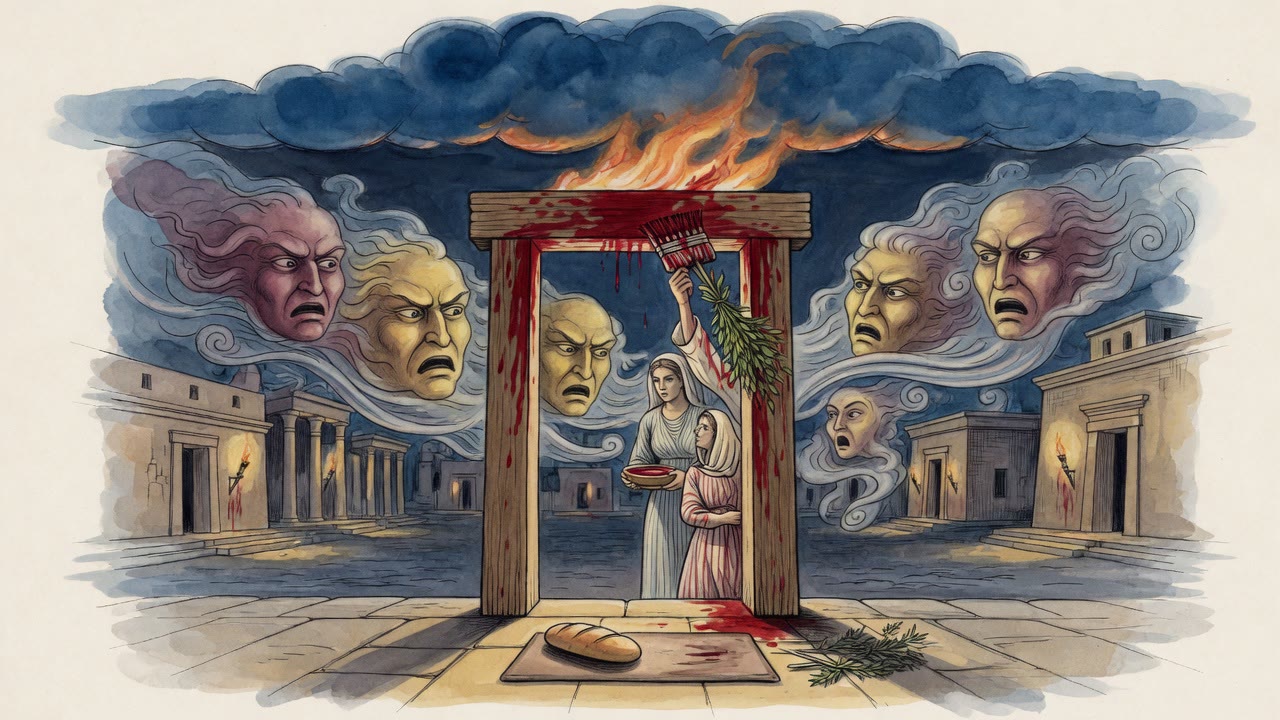
Before a harsh decree is sealed, pray in the plain order, out loud, the ordinary words in the ordinary places. After it is sealed, do not. Wrap the request inside a story. The accusing angels who stand on the Left are listening for a petition, and they will file an objection the moment they hear one, so the righteous man hides what he is asking inside a tale about a king, or a lost coin, or a bird. Downstairs, people hear a story. Upstairs, the request walks in dressed as plot.

Nachman also said what happens to a voice thrown hard enough. It goes up and strikes the rain clouds, and down below people hear thunder. Thunder was made for one purpose, the sages taught, to knock the crookedness out of a heart. A man who prays loud and long is not only taking up the room's time. He is throwing his voice at a cloud to see what comes back.

What the Benches Learned

The elongater sat with his hands in his lap while Rabbi Elazar finished. Nobody in the back row said anything else.

The next morning another man led, and he was quick, and nobody praised him for it either. Five words for a sister. Forty days for a nation. Ten voices for the one who could not pass an inspection alone. A story with a petition sewn into the lining for the day the verdict is already written.


← All myths

From the tradition

Sources

3 sources

The texts behind this telling. Some cards carry a translation of the source; others are our own retelling of it, and each card says which. Every card links out to the original.

Mekhilta Tractate Vayassa 1:15Mekhilta DeRabbi Yishmael

Retold in our words. Read the original at the link below.Mechilta, translated by Rabbi Shraga Silverstein · CC-BY

The Mekhilta immediately balances its teaching about short prayers with a counter-example. On another occasion, a disciple led the prayer service before Rabbi Elazar and was extremely long in his blessings. The other students complained: "This one is an elongater", stretching the prayers far beyond what anyone expected or wanted.

Rabbi Elazar defended him with the same method his colleague had used: a precedent from Moses. "Not more so than Moses," he said, "who prayed (Deuteronomy 9:25): 'And I fell in prayer before the Lord these forty days and forty nights.'" Moses, the same prophet who healed Miriam with five words, also prayed for forty consecutive days and nights when he interceded for Israel after the sin of the Golden Calf.

The conclusion is elegant in its simplicity: "There is a time to be short and a time to be long." Prayer has no single correct length. The same Moses who demonstrated brevity also demonstrated endurance. Context determines form. A sister's illness called for five urgent words. A nation's apostasy called for forty days of sustained intercession.

Together with the previous teaching, this passage establishes one of the most balanced approaches to prayer in rabbinic literature. The rabbis refuse to legislate a single correct style. They mock neither the one who is brief nor the one who is lengthy. Both have Moses as their precedent. The only error is rigidity, insisting that prayer must always take one form when the greatest prophet showed it could take any form the moment required.

Full source
Kitzur Shnei Luchot ha-Brit 51aHebraic Literature (1901)

Retold in our words. Read the original at the link below.Project Gutenberg eBook #14368, Hebraic Literature · PD-US-pre-1929

The Psalmist wrote, "He will regard the prayer of the destitute" (Psalms 102:17), and the Kabbalists pressed hard on the verb. Why does it say regard, and not simply hear?

Because there is a distinction, they taught, between the prayer of a single person and the prayer of a community. When a congregation prays together, their prayer enters directly before the Holy One, blessed be He. He does not first scrutinize every worshiper's deeds; He does not weigh each heart to see whether it deserves an answer. The communal prayer passes the gate on its own strength.

When an individual stands alone before God, heaven leans close to examine. Is this heart devout? Is this person righteous? Now the prayer is subject to regard, to God's attentive, discerning look, before it is received.

This, the mystics teach, is why a person should always try to pray with the community, even when he would rather daven alone. The end of that same Psalm confirms it: "And He will not despise their prayer" (Psalms 102:17). Although some individuals in the congregation, on the strength of their own deeds, might deserve to have their prayers brushed aside, when their voices are woven into the minyan, the whole prayer is received together.

The community lifts the person who could not lift himself. That, the Kabbalists say, is one of the quietest miracles Judaism practices three times a day.

(From the 1901 Hebraic Literature anthology, drawing on Kitzur Shnei Luchot ha-Brit.)

Full source
Likutey Moharan, Lesson 5Likutey Moharan (Rabbi Nachman)

Retold in our words. Read the original at the link below.Sefaria-hosted English translation · CC-BY-SA

"The entire world was created only for my sake" (Sanhedrin 37a). Rabbi Nachman of Breslov takes this teaching at face value: if the world exists for you, then you are responsible for improving it.

This responsibility plays out through prayer. But Rabbi Nachman distinguishes two modes of prayer depending on timing. Before a harsh decree has been issued in the heavenly court, you can pray openly, following the regular liturgy. But after the decree, the prayers must be disguised within stories, so that the accusing angels on the left side cannot understand them and protest. As the Book of Daniel says, "The verdict is decreed by the destroying angels, and the request is through the maamar of the holy ones" (Daniel 4:14). The tzaddikim (a righteous person) (the righteous) hide their petitions inside narratives.

By the quality of your mitzvot (commandments). If you perform commandments with such overwhelming joy that you desire no reward whatsoever, not even the bliss of the World to Come, if the only thing you want is the opportunity to perform another mitzvah, then you can see reality clearly, like Moses who prophesied through a "clear looking-glass." This corresponds to zeh hadavar (זה הדבר), "this is the word" (Numbers 30:2).

If you perform mitzvot for the sake of future reward, you are seeing through a "dull looking-glass," the level of koh (כה), "thus," which was the level of all other prophets. You are looking at something from a distance, performing the deed now for payment later.

The person who does a mitzvah purely for the mitzvah itself has already tasted the World to Come. They do not need to wait. The joy of the act is the reward, and from that vantage point they can see clearly whether the heavenly court has already ruled, and adjust their prayers accordingly.

Full source