Drums Hid the Child's Cry in Topheth's Valley
The calf's hands were already hot. A father kissed the metal and gave over his child. Drums started so he would not hear the moan.
Table of Contents
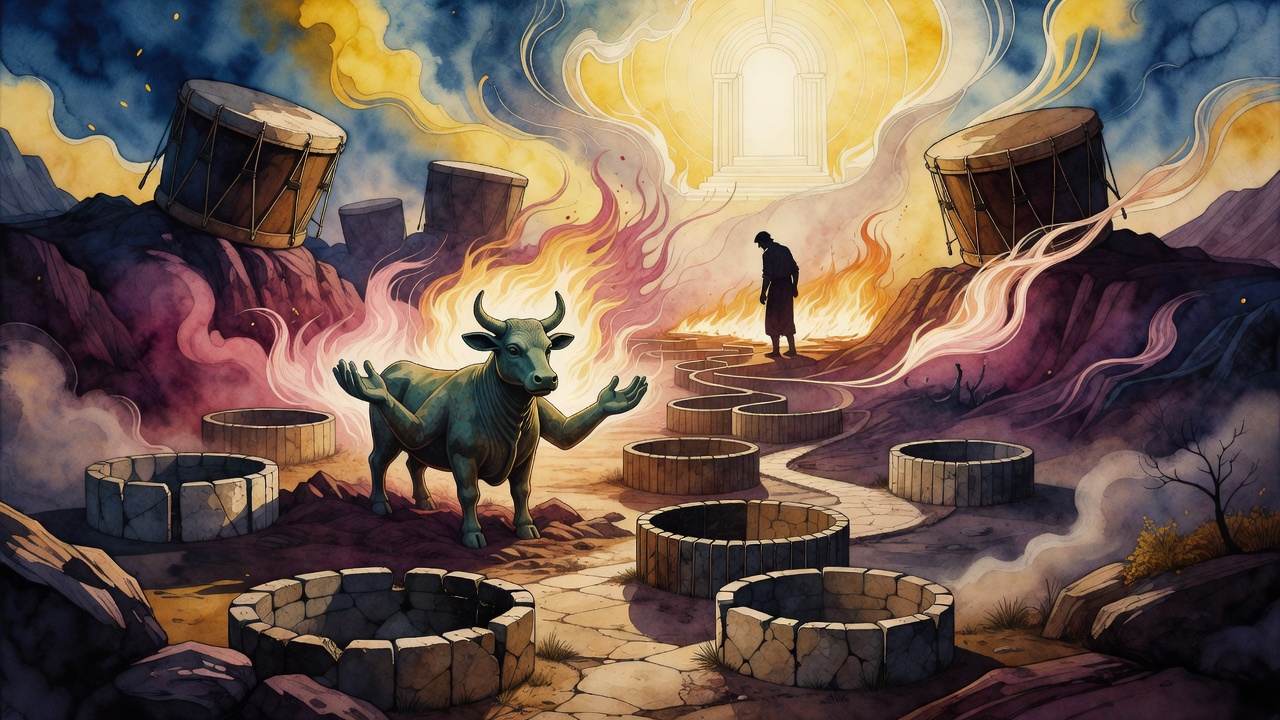
Drums rolled across the Valley of Ben-hinnom until the ground itself shook. The men who beat them did not play for dance. They played so a father would not hear the sound that would turn his own guts soft.
 Click for full size
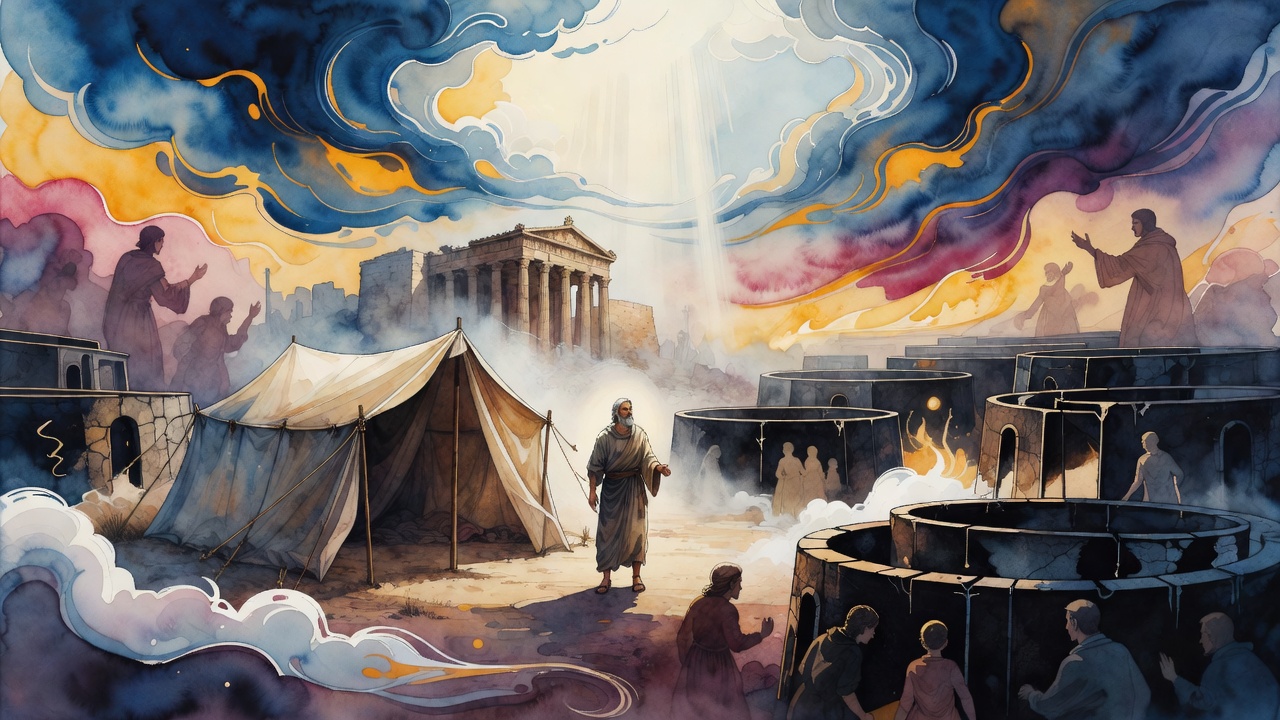
Outside Jerusalem, farther than the ordinary houses of idols, stood the Molekh. Other shrines crowded streets and courtyards. This one was set apart on purpose. The rite needed room for fire, for ranks of enclosures, and for noise loud enough to erase a child's voice.
The Calf With Open Hands
The image had the face of a calf and hands stretched out the way a man opens his palm to take a gift from a neighbor. It was hollow. Fire lived inside it. They stoked that fire until the metal hands glowed like lamps, bright enough to light the sweat on a face leaning close.
Around the figure rose seven enclosures. A man with a bird entered only the first. Lambs opened the second. A sheep, the third. A calf, the fourth. A cow, the fifth. A bull, the sixth. Rank by rank, the price climbed. Cheap blood stayed at the outer ring. The center demanded a different currency.
Only the one who brought his child passed into the seventh chamber. There he kissed the calf. Those who sacrifice men kiss calves (Hosea 13:2). The kiss was not tenderness. It was admission into the innermost ring, lips against metal that had already begun to heat.
The Drums That Hid the Moan
They set the infant before the Molekh. The hands, white-hot, received him. The child moaned. That moan gave the valley its name: Ben-hinnom, because the voice of the youth was nohem, moaning, under the force of the fire. Geography remembered what fathers tried not to hear.
The drums answered the moan. Their din filled the valley so the father would not hear and his innards revolt. Sound covered sound. Someone had decided that a man's compassion was the one obstacle the idol could not burn away on its own. A man who could still feel would have run. The drums made running harder. They drowned the one voice that might have broken the spell.
The father stood in the seventh chamber with the kiss still on his mouth and the percussion in his bones. He had come this far. The noise let him stay. When the drums paused for a breath, handlers beat them harder, because a pause was how a parent came back to himself.
Gods Small Enough for a Pocket
Years earlier, when Gideon died, Israel turned to Baal-berith, which the old readers link to the Fly-Baal of Ekron. Each person made a little god and kept it in a pocket. When memory struck, he pulled it out, hugged it, kissed it, and put it back among coins and crumbs.
A man could kiss a fly in a sleeve on a market morning and later kiss a calf in a valley. One god fits a pocket. One fills a gorge. Both shrink the Living God into something a human hand can manage. After a judge who smashed public idols, the people did not only rebuild altars. They invented portable ones. Convenience went into the cloth, then into the seven doors, then into the drums.
The same mouth did both kisses. The pocket god never answered. The calf with glowing hands answered with a moan the drums were built to hide.
The Heifer Led Outside the Camp
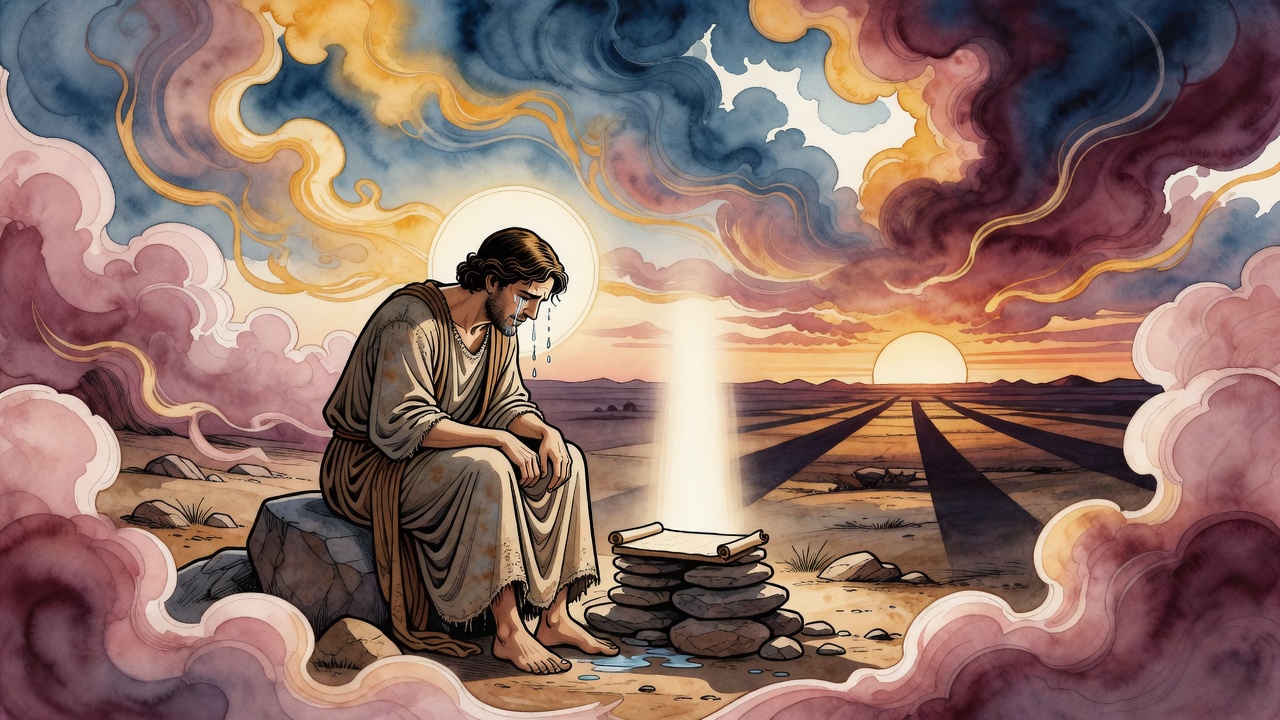
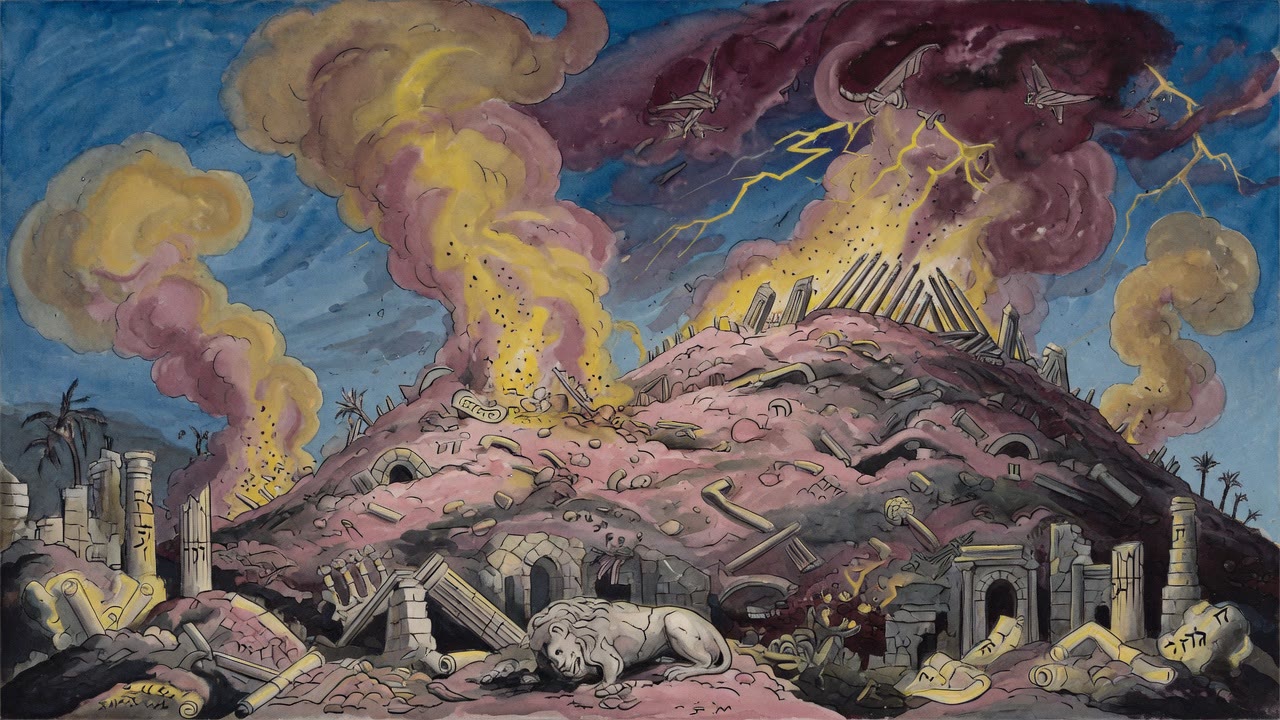
They led Jeremiah of Anathoth out of the city the way a priest leads a red heifer. The cow in the rite had been stubborn, ruddy, called perfect, a dove without blemish in the Beloved's mouth (Song of Songs 6:9). Jeremiah walked. Babylon was the ground outside the camp. The sons of Zedekiah fell in front of their father (2 Kings 25:7). The Temple burned. The great house burned with it, even the study hall where the greatness of God had been told aloud.
In a foreign court Hananiah, Mishael, and Azariah walked into a furnace. Nebuchadnezzar took what a priest would take. Jeremiah watched a king's sons fall and then watched the house burn. The valley that had practiced not hearing sat under the same sky as the fire on the Mount.
Ash waited. The Holy One would gather it. In this world a priest declares pure or impure. In the days to come God would sprinkle His people clean Himself, with water that belongs to Him alone (Ezekiel 36:25).
The Name That Kept the Moan
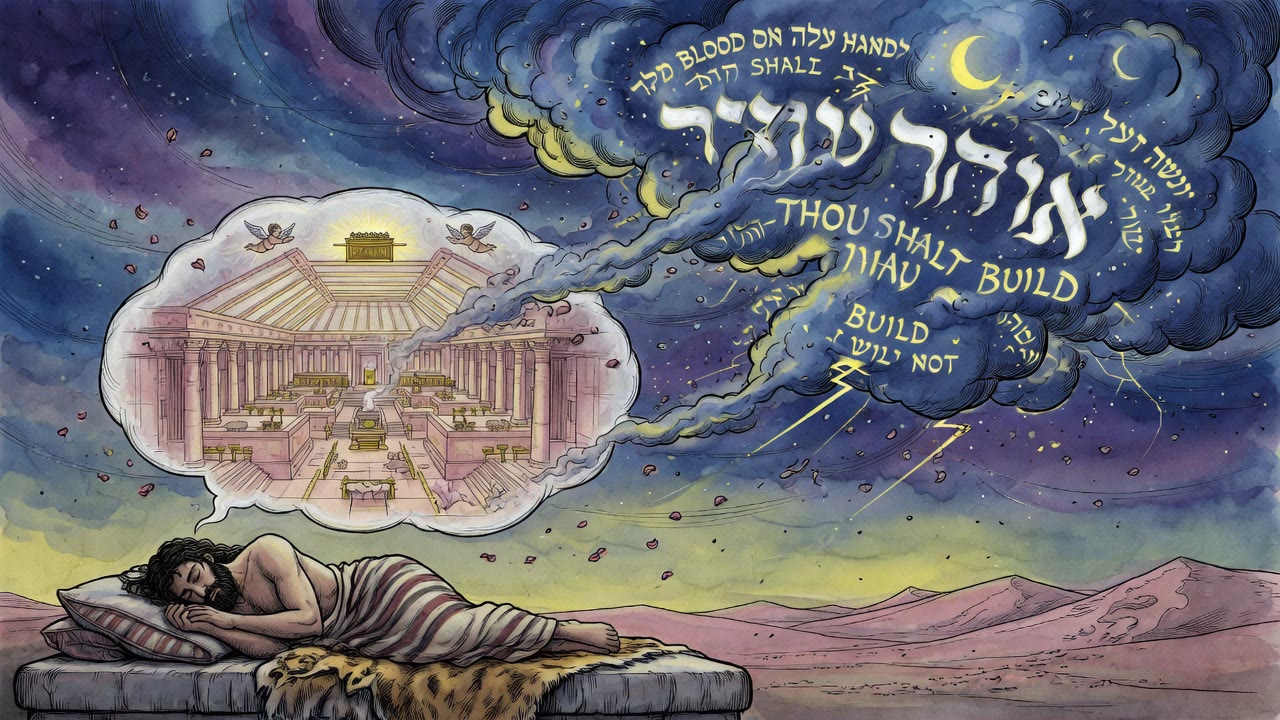
The father from the seventh chamber went home to a quieter house. The drums faded as he climbed toward the city. The child's voice did not. It stayed in the name of the place. Ben-hinnom. The moan. Topheth kept the fire-pit even after kings tried to defile it so no one would use it again.
At night, in a house with one less bed, a man could still hear percussion if he let the quiet go on too long. The idol's hands were cold by then. The name of the valley was not. Water, when it came, would not be a priest's to declare. It would have to come from the One the drums had been beaten to drown out.
← All myths