Parshat Vayechi6 min read

The Dying Patriarch's Warning Against the Sword of Beliar

A dying father warns his children of Beliar's sword and its seven evils, then swears that repentance can still bring the scattered home.

Curated by Arthur · Told by Maggid ·
Table of Contents
  1. The Old Man Gathers His Children at His Bedside
  2. The Sword That Is Mother of Seven Evils
  3. The Angel Who Guards the Righteous Soul
  4. The Curse Carried Down from Cain
  5. A Warning for the Last Generation
  6. The Door Left Open on the Way Out
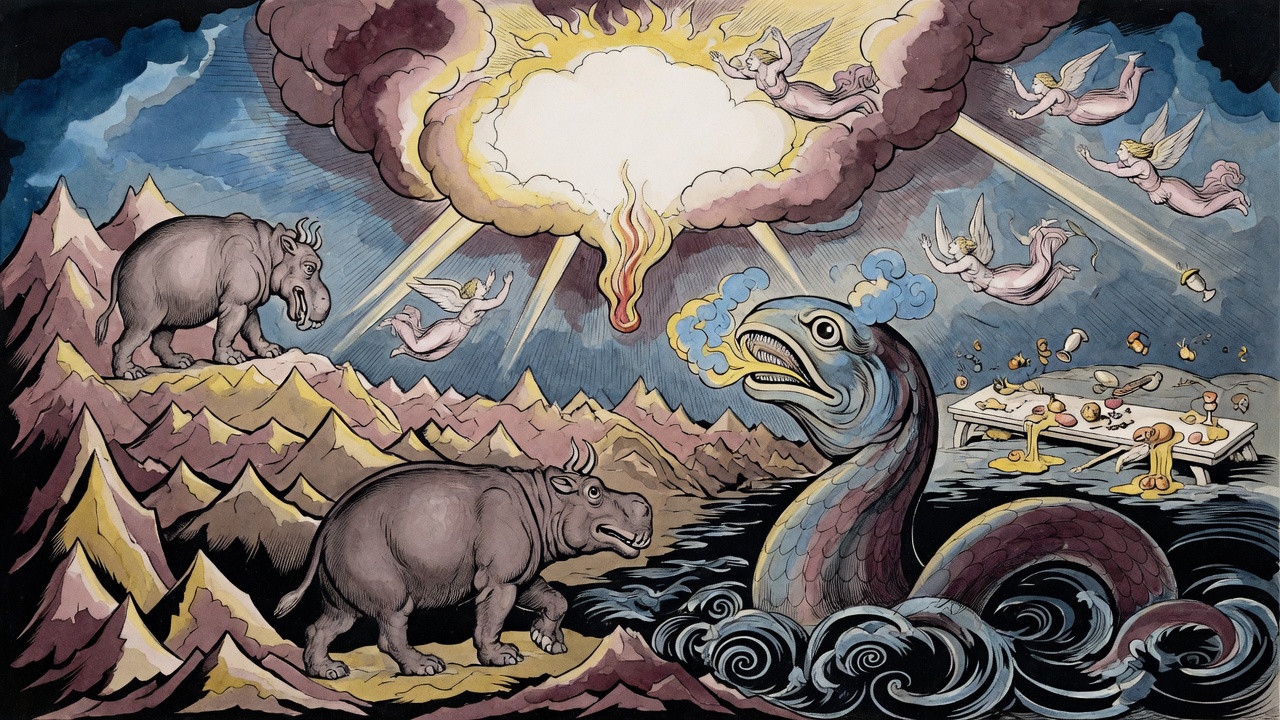
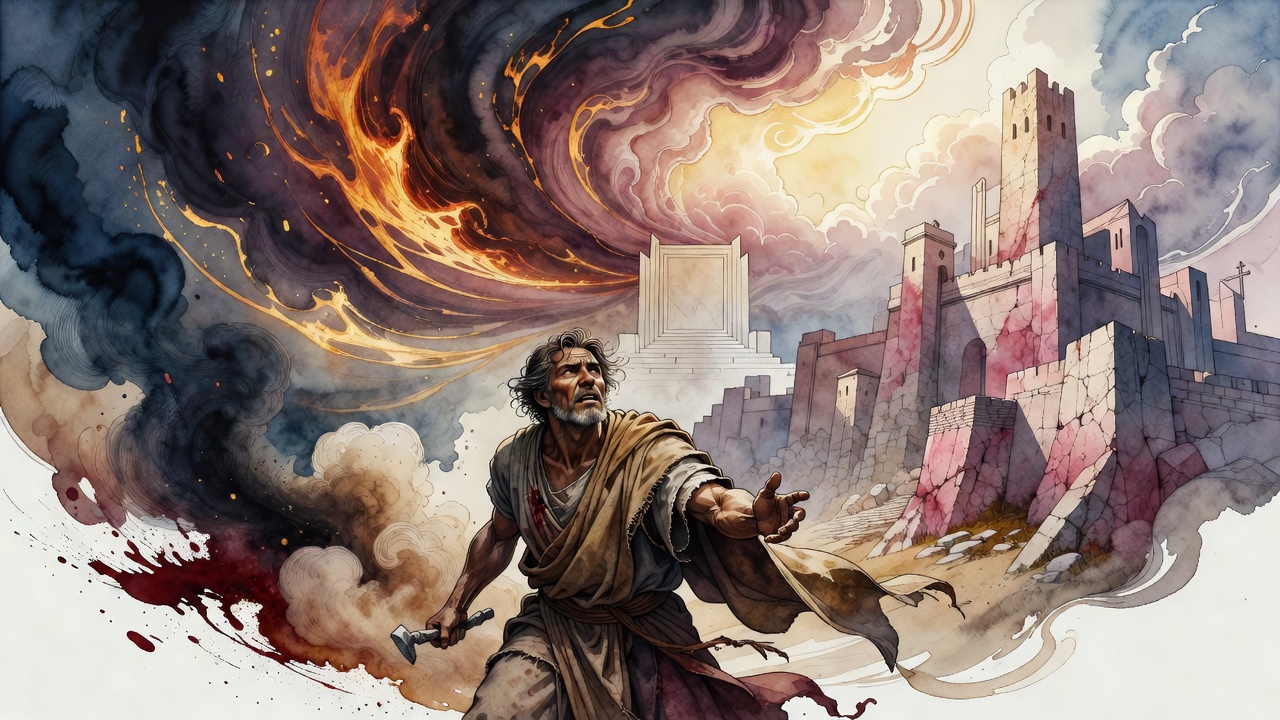
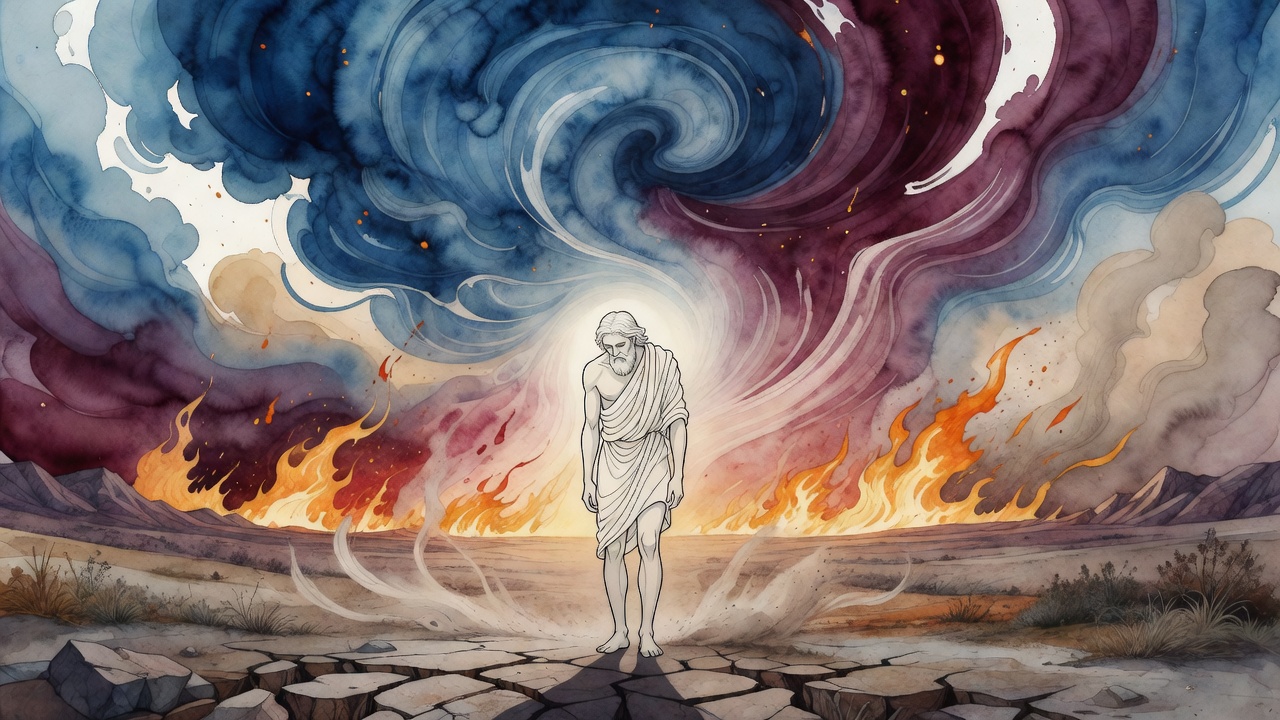
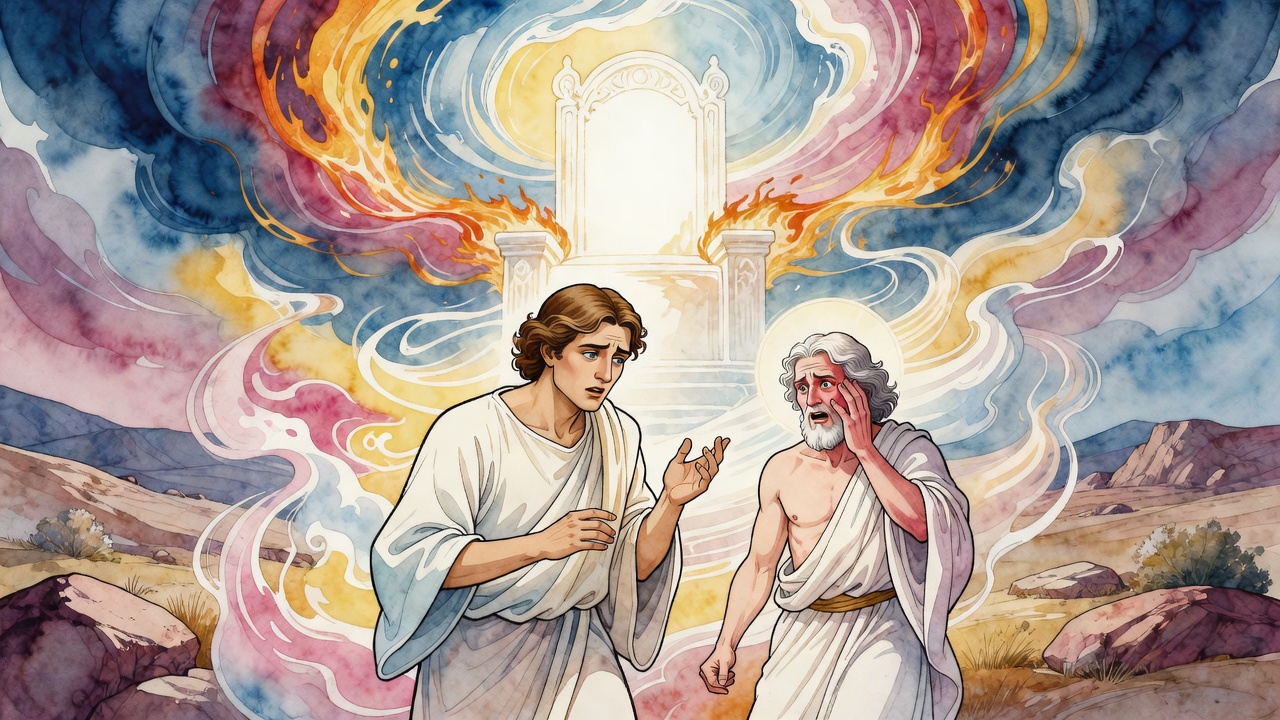
The Dying Patriarch's Warning Against the Sword of Beliar Click for full size

The Old Man Gathers His Children at His Bedside

His breath had gone shallow, and the lamp threw more shadow than light across the goatskins where he lay. Sons and daughters and their small children crowded the tent until there was no floor left to stand on, only the warmth of bodies leaning toward a father who was leaving them. He had held this hour back for years. Now he lifted a hand that shook and drew them nearer, because what he had to say could not be shouted and could not wait.

"My children," he said, "have you watched the mercy of the good man? Imitate it with a pure heart, that you too may wear crowns of glory." He told them what he had learned in a long life of watching. The righteous man carries no envious eye. He has mercy on everyone, even on sinners, even on the ones whose schemes are aimed straight at his own throat. "By his good deeds he conquers the evil," the old man said, "for so it was ordained by God."

The Sword That Is Mother of Seven Evils

Then his voice dropped, and the children felt the cold come into the tent before he named it. There was another prince loose in the world, he told them, and his name was Beliar. He did not walk in daylight. He worked in the crook of the heart, in the whisper that made a man reach for what was not his. And Beliar carried a sword, always drawn, and that blade hung over the neck of every soul that bent the knee to him.

"Flee before the malice of Beliar," the father said, "whose sword is drawn to slay all who obey him." He named what the blade gave birth to, counting on his fingers so the little ones would remember. That single sword was the mother of seven evils. Bloodshed. Corruption. Error. Captivity. Hunger. Panic. And devastation, the last and widest, which swallowed the other six. To take one step behind Beliar was to invite all seven to follow you home.

The Angel Who Guards the Righteous Soul

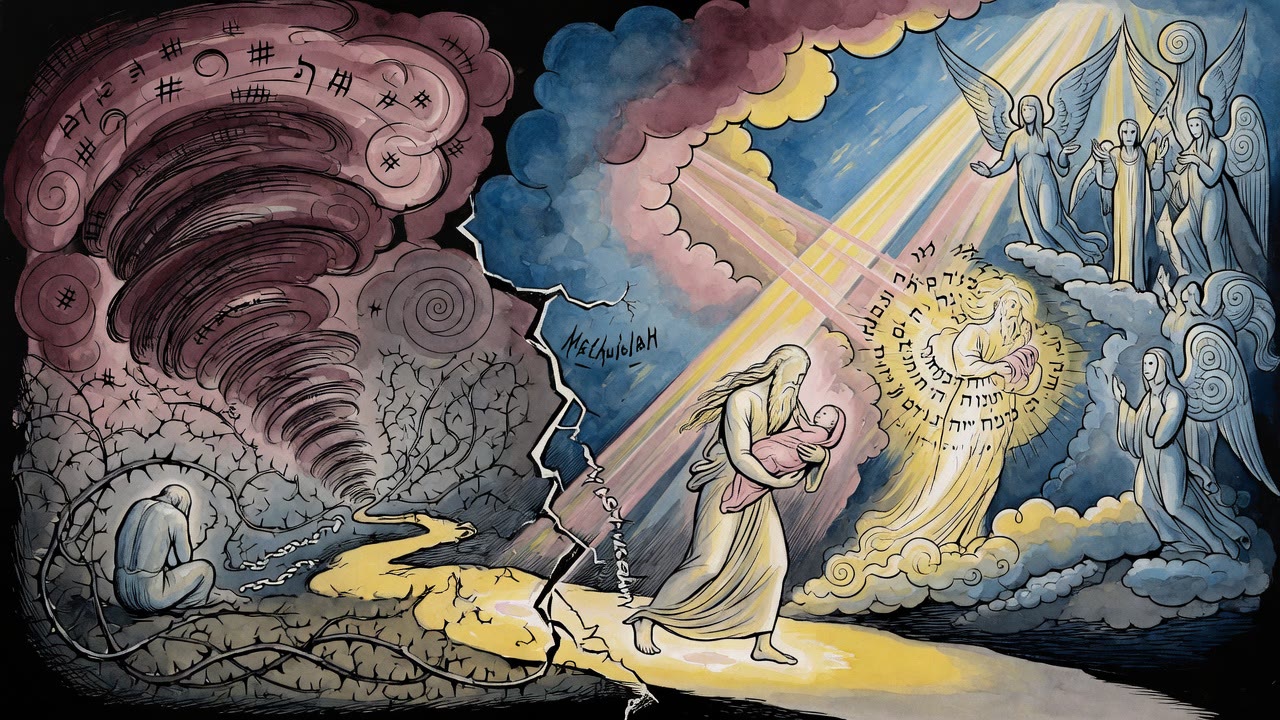
But the tempter did not own everyone, and this was the marrow of what the dying man wanted his children to carry. "The inclination of the good man does not lie in the power of the tempter spirit," he said. Over the righteous soul stood another presence entirely, the angel of peace, who guided it the way a shepherd walks a flock past a cliff edge. Where that angel kept watch, the drawn sword found no neck to fall on.

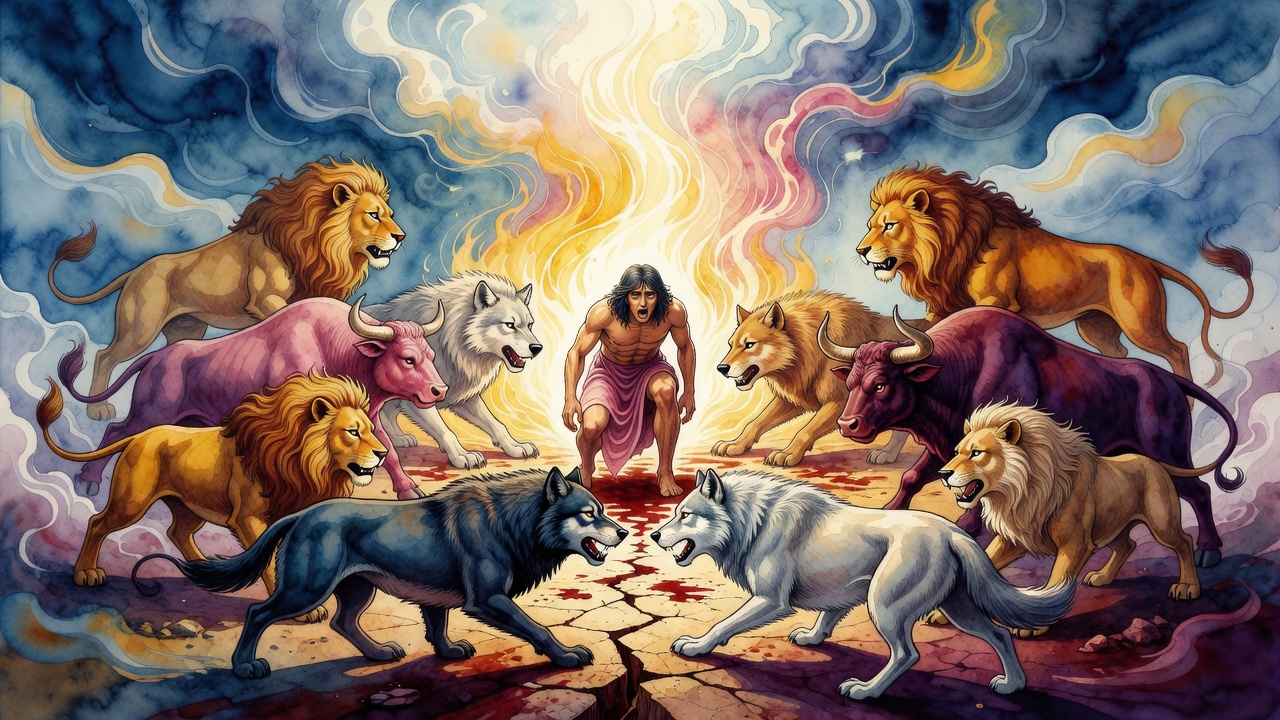
Do good, the old man promised, and the change would be plain even to the beasts. "If you do good, the unclean spirits will depart from you, and even the wild animals will stand in fear of you." He had seen it with his own eyes. A man whose hands were clean walked through a world that flinched from harming him, while the man who fed Beliar found that the whole of creation had grown teeth.

The Curse Carried Down from Cain

To show them the far end of the wrong road, he told the oldest murder over again. Cain had lifted his hand against his brother, and the earth had drunk the blood of righteous Abel. For that, God did not strike Cain down in a single afternoon. He handed him over to seven punishments and stretched them across the long generations, one castigation falling once in every hundred years. The afflictions began when Cain was two hundred years old and did not end until his nine hundredth year, when the waters of the flood at last closed over the first man who had ever killed.

"And those who are like Cain," the father warned, "will be chastised forever with the same punishments as his." The blade of Beliar and the fate of Cain were one road seen from its two ends.

A Warning for the Last Generation

Then his eyes went past his children, past the walls of the tent, toward a time none of them would live to see, and his warning changed shape. "Know, my children," he said, "that in the latter days your descendants will forsake what is upright." He described them the way a man describes a dream he cannot wake from. They would trade honest dealing for craft. They would abandon the commands of the Lord and give up the land itself, letting the fields run wild while they chased schemes that promised them more. They would walk behind Beliar with their eyes wide open. And for it they would be scattered among strangers and made to serve their enemies in places far from home.

The Door Left Open on the Way Out

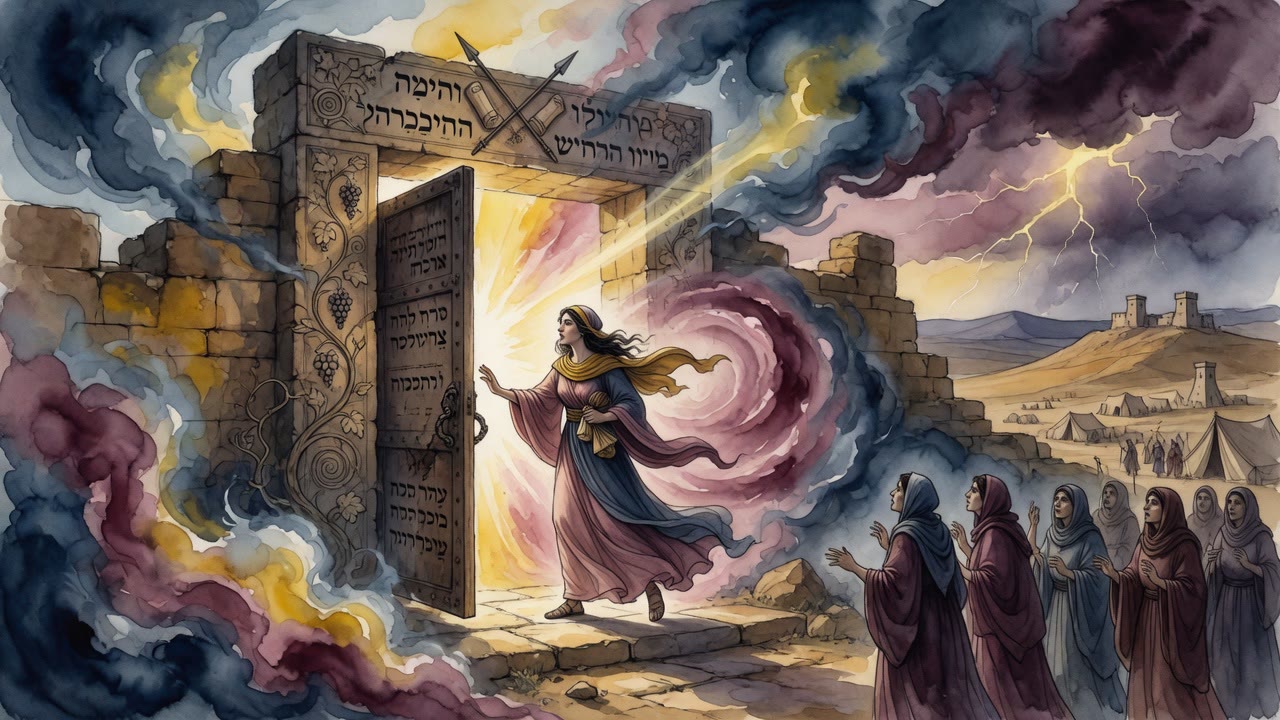
The children were weeping now, and he heard it, and he would not let that grim vision be the last thing his voice gave them. There was a way back, and it was never sealed. "Tell this to your own children," he said, "so that if they sin, they may repent quickly and return to the Lord." That was the whole of it. God was merciful. However far the last generation wandered, however deep the sword had cut, the turning of a single heart could still reach him, and he would take his people out from among the nations and bring them home to their own land.

He said it twice, to be sure it held, and then the shallow breath grew shallower still. His children carried two things out of that tent into the rest of their lives. A drawn sword waited in the world for anyone who chose to follow it. And a door had stood open behind them the whole time, for anyone willing to turn around and walk back through.


← All myths
From the tradition

Sources

2 sources

The texts behind this telling. Some cards carry a translation of the source; others are our own retelling of it, and each card says which. Every card links out to the original.

Legends of the Jews 2:84Legends of the Jews

Retold in our words. Read the original at the link below.The Legends of the Jews by Louis Ginzberg (1909) · Public Domain

That struggle is ancient, woven into the very fabric of our stories. And in those stories, readers often find wisdom, guidance on how to navigate this messy thing called life. One recurring theme? The power of being a tzaddik, a righteous person.

Think of the classic battle between good and evil. We see it played out in countless narratives. But what does it actually mean to be good? What does it look like in practice?

One powerful teaching, drawn from Legends of the Jews, talks about imitating the mercy of a good person. It urges us, "My children, have you observed the mercy of the good man? Imitate it with pure intention, that ye, too, may wear crowns of glory." It's a call to action, a reminder that goodness isn't passive. It's something we actively cultivate.

Here’s the really challenging part: a truly good person, according to this tradition, shows mercy even to sinners, even when those sinners are actively trying to harm them. "A good man has not an envious eye, he has mercy with all, even with sinners, though their evil designs be directed against him, and by his good deeds he conquers the evil, since it was ordained of God. To meet hatred with compassion, to overcome evil with goodness.

Why bother? What's the payoff?

The text suggests that doing good has a ripple effect. "If you do good, the unclean spirits will depart from you, and even the wild beasts will stand in fear of you." It's not just about being morally superior; it's about creating a safer, more peaceful world around you. The yetzer hara, the evil inclination, loses its grip. "The inclination of a good man lies not in the power of the tempter spirit Behar, for the angel of peace guides his soul."

But the flip side is also explored. The text warns against the malice of Beliar, a figure often associated with evil and temptation. "Flee before the malice of Beliar, whose sword is drawn to slay all that pay him obedience, and his sword is the mother of seven evils, bloodshed, corruptness, error, captivity, hunger, panic, and devastation." Beliar's sword represents a cascade of negativity, a slippery slope that leads to destruction.

And to illustrate the consequences of choosing the wrong path, the story of Cain is invoked. Remember Cain, who murdered his brother Abel? The text says that God subjected Cain to seven punishments. "Therefore God surrendered Cain to seven punishments. Once in a hundred years the Lord brought a castigation upon him. His afflictions began when he was two hundred years old, and in his nine hundredth year he was destroyed by the deluge, for having slain his righteous brother Abel." Cain's act of violence wasn't just a one-time offense; it set in motion a cycle of suffering. The text concludes with a sobering warning: "And those who are like unto Cain will be chastised forever with the same punishments as his."

It’s a stark reminder that our actions have consequences, not just for ourselves, but for the world around us. We have a choice: to follow the path of goodness, mercy, and peace, or to succumb to the allure of evil and destruction.

So, what kind of world do you want to create? What kind of person do you want to be? Maybe, just maybe, the answer lies in choosing mercy, even when it's hardest. Maybe it's in striving to be that tzaddik, that righteous individual, who, through their actions, brings a little more light into the world.

Full source
Legends of the Jews 2:43Legends of the Jews

Retold in our words. Read the original at the link below.The Legends of the Jews by Louis Ginzberg (1909) · Public Domain

There's a powerful, almost prophetic passage preserved in Ginzberg's Legends of the Jews, a collection that draws together centuries of stories and interpretations. It speaks of a future time – maybe our own? – when things will go seriously off the rails.

"Know, my children," it begins, with a tone of urgent warning. It paints a picture of our descendants, "in the latter time," abandoning what’s right and just.

What do they turn to instead? Greed. Pure, unadulterated self-interest. They forsake rectitude, that sense of moral uprightness, and instead practice craft – trickery and deceit. They stray from the commands of the Lord, turning their back on the very foundations of their faith.

Who do they follow? Beliar. You might not be familiar with that name. He represents lawlessness, wickedness, the antithesis of everything holy. Some traditions equate him with Satan himself.

The passage continues, painting an even bleaker picture. These future generations will "give up husbandry" – they'll abandon the land, the connection to the earth, the simple life. Instead, they'll pursue "their evil plans." Their actions will lead to scattering, to exile. "They will be scattered among the heathen and serve their enemies." A painful image of subjugation and loss.

Pretty grim stuff. So, is that it? A prophecy of doom with no way out?

Thankfully, no. The passage doesn’t end there. It carries a glimmer of hope, a lifeline thrown across the generations.

"Tell this unto your children," it urges. Pass this warning on. Because knowledge is power. Understanding the potential for wrongdoing is the first step toward avoiding it.

And here’s the crucial part: "so that, if they sin, they may repent speedily, and return to the Lord." Teshuva, repentance, is at the heart of Jewish thought. It’s never too late to turn back, to correct our course. The passage emphasizes that God is merciful. He will "take them out to bring them back unto their land." A promise of redemption, a return from exile, both literal and spiritual.

This isn't just an ancient warning. It's a call to action. A reminder that the choices we make today shape the future. And that even when we stumble, even when we lose our way, the path back is always open. Will we heed the call?

Full source