5 min read

Elijah the Beggar Tested Two Brothers Hard

Elijah begged as a poor man. The kind brother's coins never ended until he cried enough. The rich couple's first act never ended until they died.

Curated by Arthur · Told by Maggid ·
Table of Contents
  1. Fire and a Beggar's Hand
  2. Supper Shared, Coins Without End
  3. The Same Words, Another House
  4. Elijah at Another Door of Fear
  5. Enough as a Holy Word
Elijah the Beggar Tested Two Brothers Hard Click for full size

Fire and a Beggar's Hand

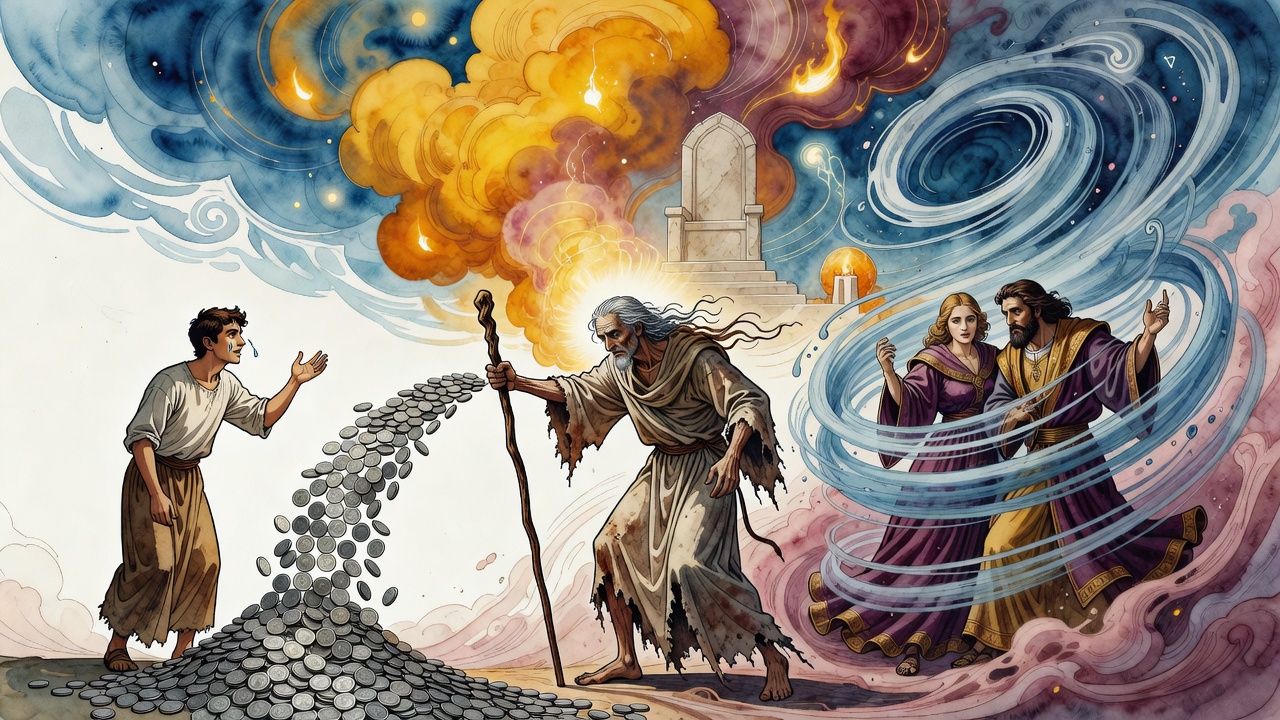
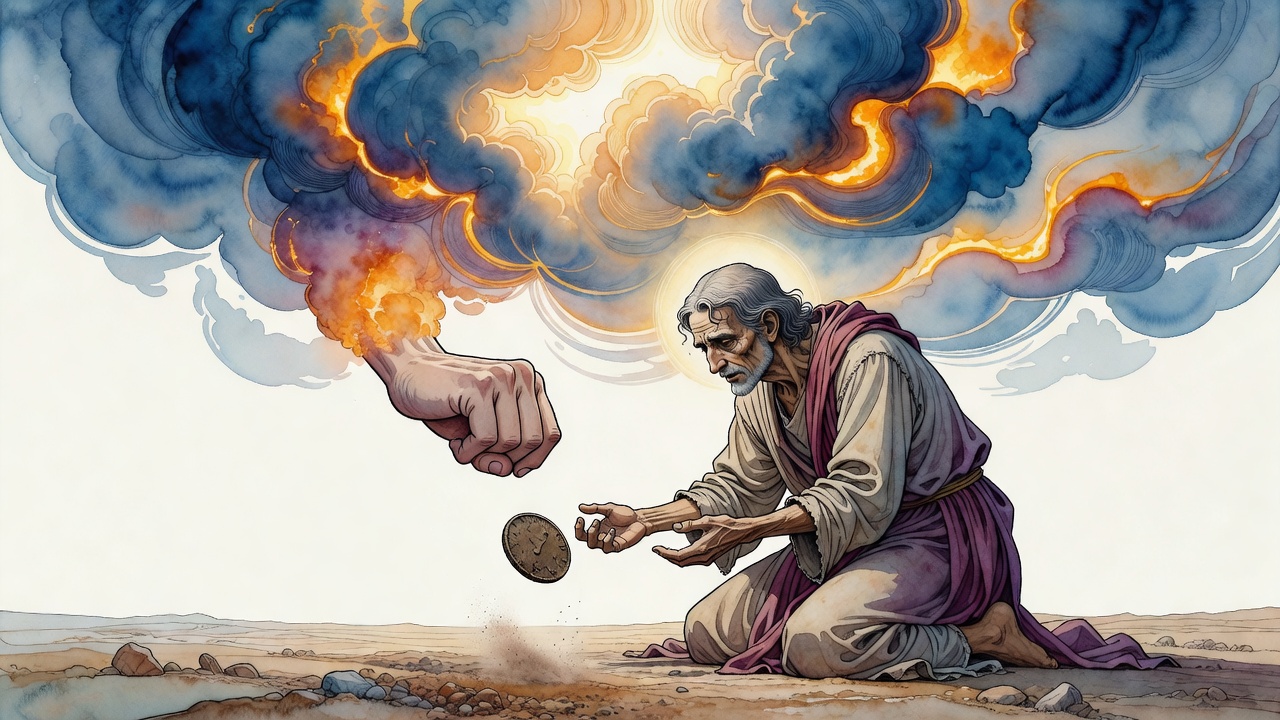
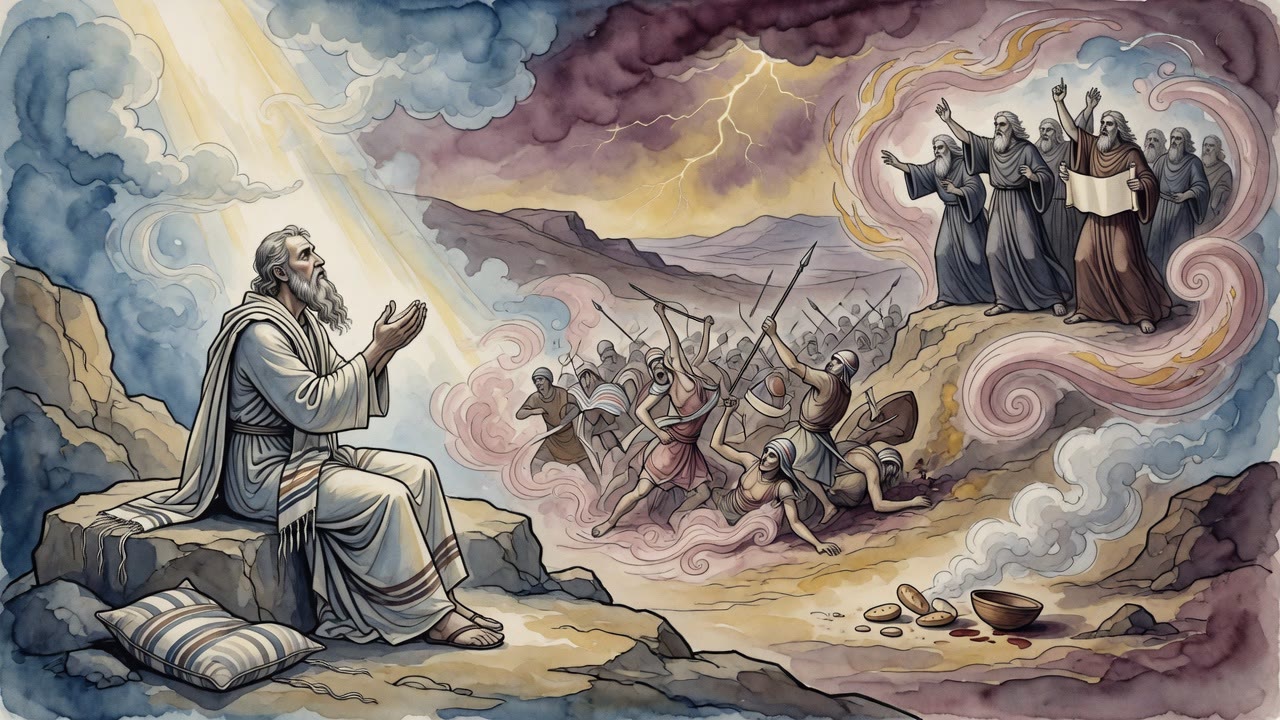
Elijah is remembered for fire on Carmel and for a whirlwind that lifts him from the earth. The legends also call him the stern and inexorable censor. One man who prayed without reverence fell dead under Elijah's zeal. The same prophet walks roads in other tales as a beggar, testing houses with an empty palm before he tests them with miracle.

Two brothers lived under one sky and two hearts. The rich one loved his store. The poor one loved the guest.

Supper Shared, Coins Without End

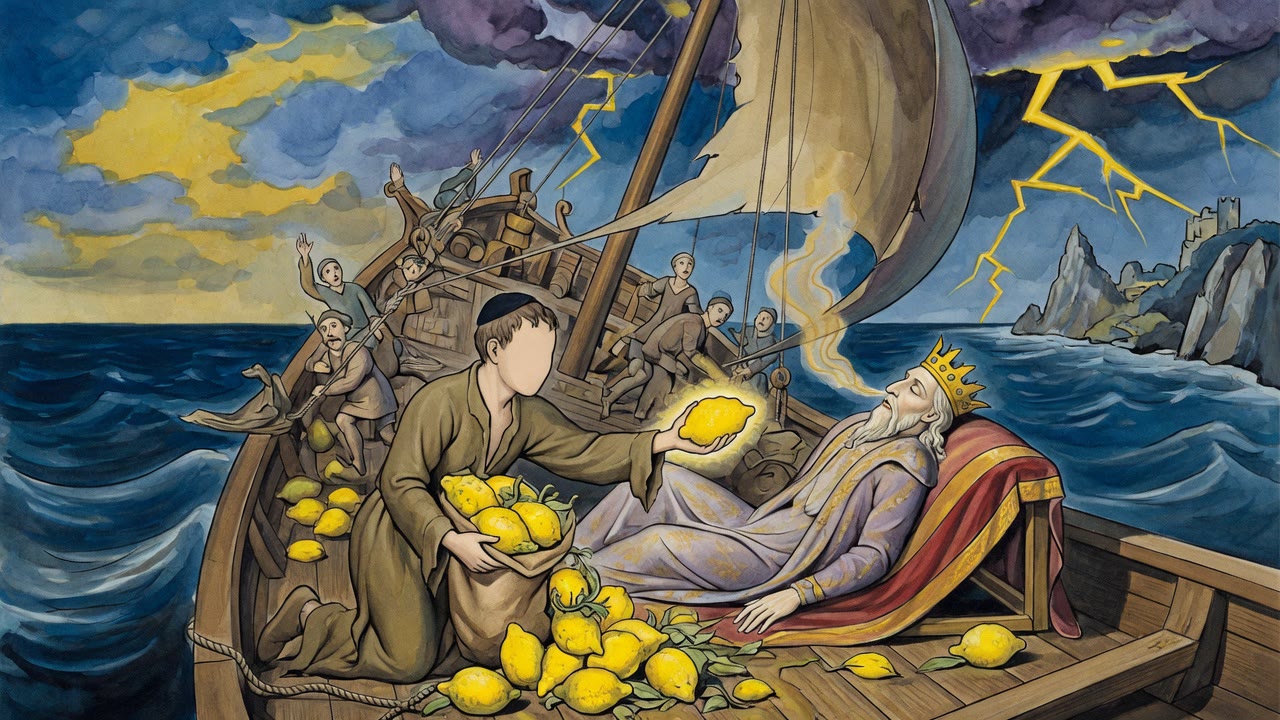
Elijah came first to the wealthy door in rags. The rich brother turned him away. He went to the poor brother, who set out a thin supper and shared it without speech about shortage. At the threshold the prophet blessed the couple: "May God reward you. The first thing you undertake shall be blessed and shall take no end until you yourselves cry out Enough!"

The poor man, anxious for bread, began to count his few pennies. The coins multiplied under his fingers. Day and night he counted until exhaustion tore the word from him: "Enough!" Wealth stood in the room because hospitality had stood there first.

The Same Words, Another House

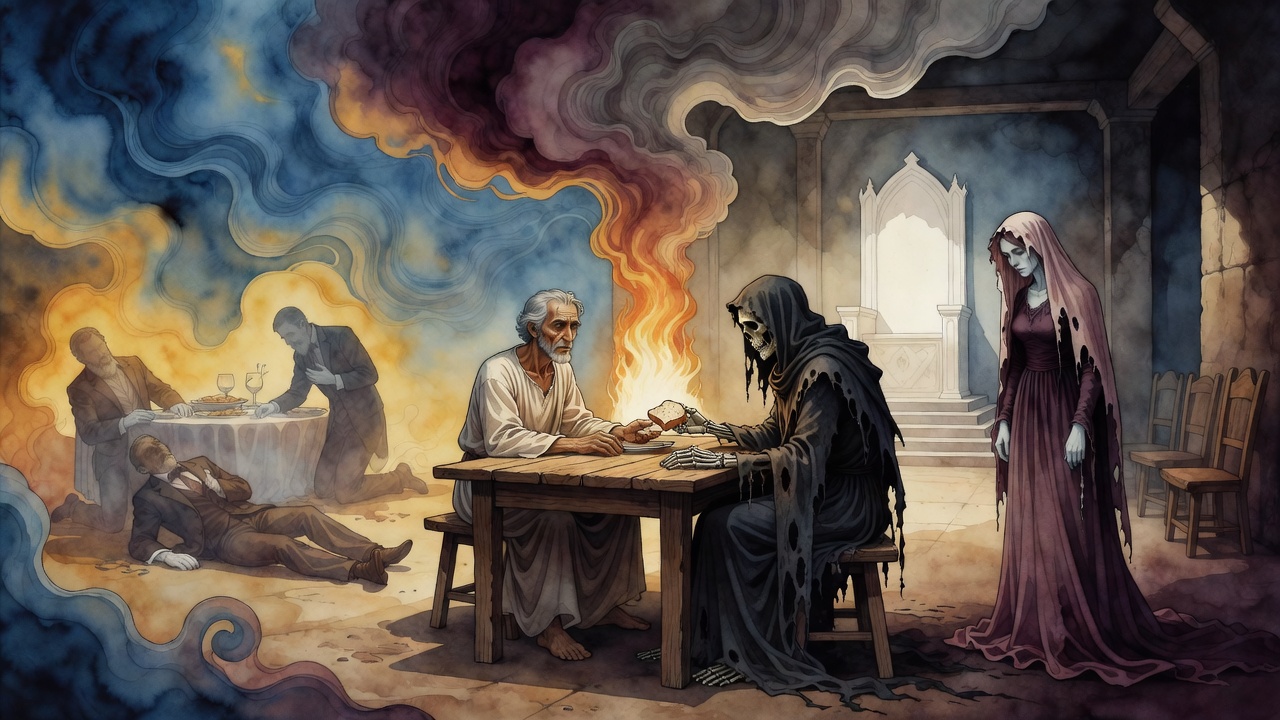
Envy taught the rich brother a new hospitality. When Elijah returned, apologies and rich food poured out. The blessing came again in similar shape: the first act would not end until it was enough. The wife urged that they first attend to urgent bodily need so they might later count gold without pause. They began that first act. They could not stop. The blessing ran until their lives were extinguished. What had been gift for the open hand became death for the greedy schedule.

Intention turned the same sentence into two destinies. The poor counted coin because fear of hunger made counting the first task. The rich chose a first task that could not be finished without consuming them. Heaven's arithmetic is not mocked by clever sequencing.

Elijah at Another Door of Fear

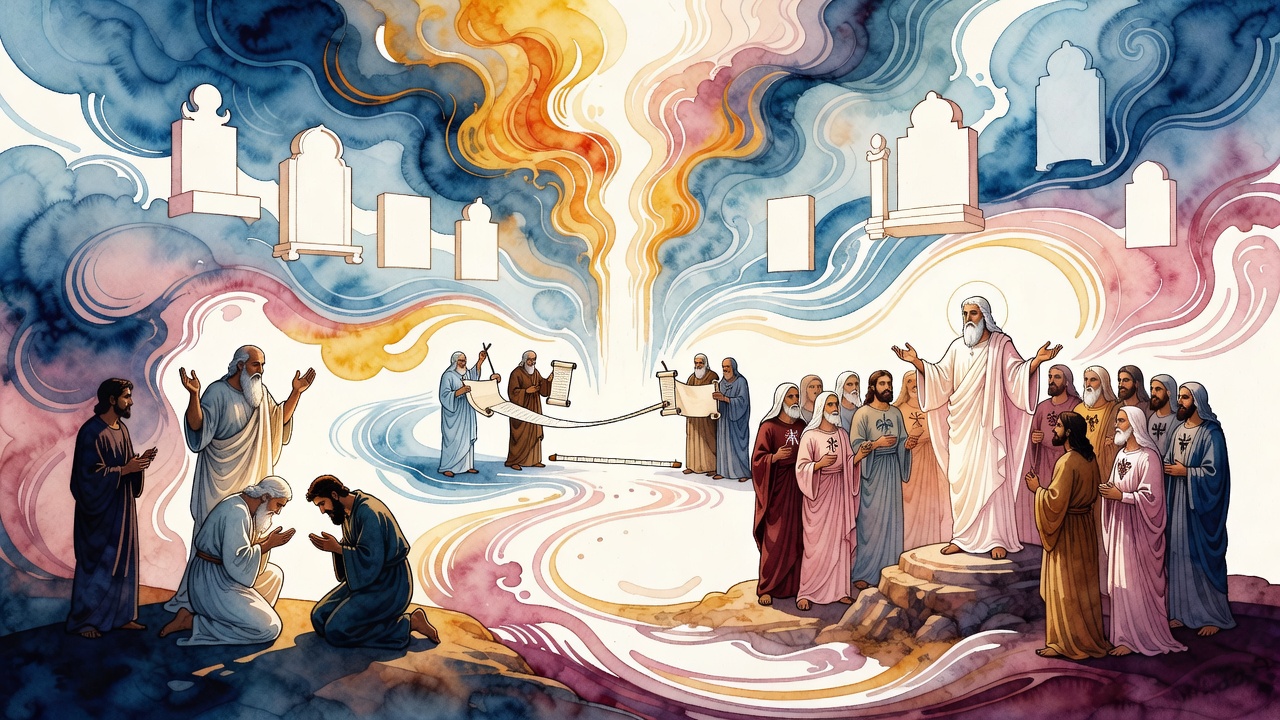
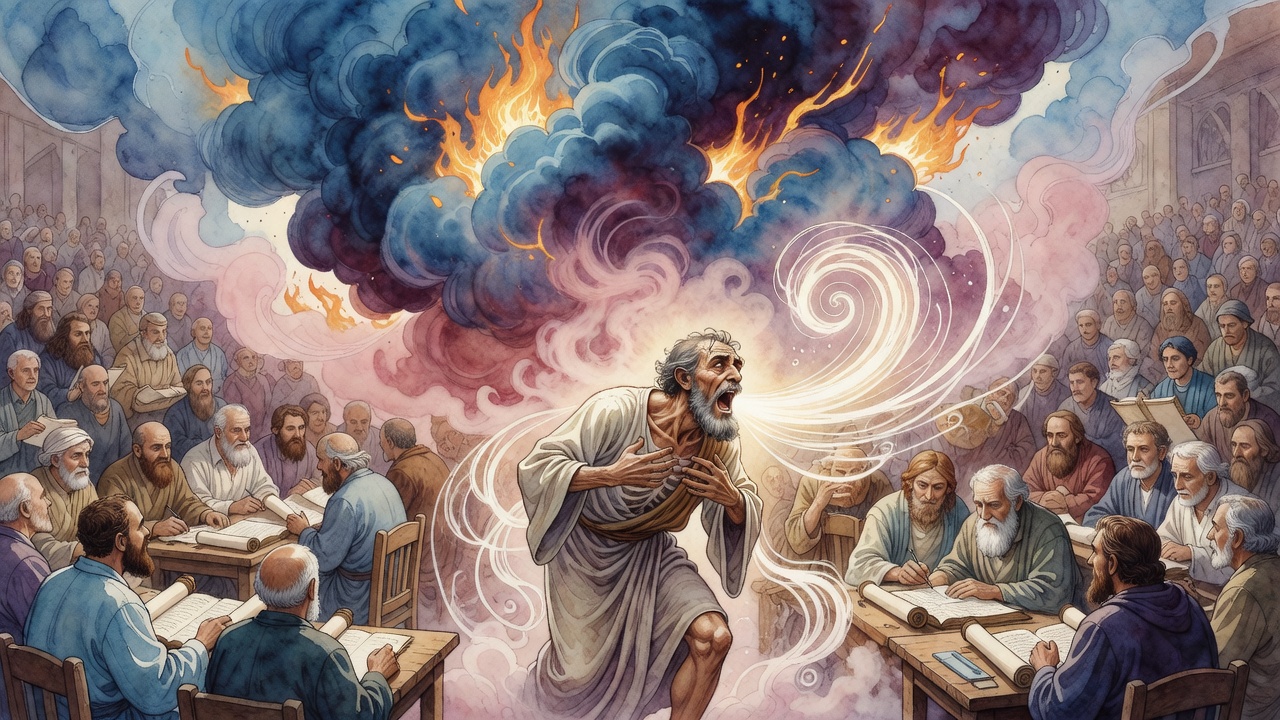
Elsewhere the same Elijah rushes to Mordecai with news of a decree that would uproot Israel under Haman. Mordecai tears his garments. Fear hits even a righteous man. He gathers schoolchildren to fast, trusting pure hunger to climb higher than polished prayer. Israel cries that the nations do not want silver. They want the vine torn out, as Nebuchadnezzar once tried when only Hananiah, Mishael, and Azariah kept the people from vanishing in fire.

Elijah the tester of private doors is also Elijah the messenger of public doom. Kindness at a table and terror in a city both fall under his path. The prophet who multiplies pennies also multiplies urgency when a whole people faces erasure.

Enough as a Holy Word

The brothers' tale turns on one cry. "Enough!" ends miracle for the generous and never arrives cleanly for the greedy who tried to game the order of acts. Mordecai's tale turns on another cry: children fasting, a nation naming the vine Haman means to tear. Both scenes refuse a religion of empty spectacle. Both demand that the first motion of the heart be true.

Stand at the poor table with the beggar who is not only a beggar. Watch coins rise like a tide that stops only for honesty. Then stand at the rich bed where a first act will not release its prisoners. Then stand with Mordecai as Elijah arrives and garments tear. The stern censor and the compassionate guest are one figure. He kills irreverence, rewards bread shared with a stranger, and shakes a leader who must gather children before he gathers strategies.

Jewish legend will not let Elijah shrink to a single mood. He is fire, whirlwind, beggar, messenger, and measure. The house that feeds him without calculation lives. The house that feeds him as investment dies of its own first choice. The people that hears him in crisis answers with fasting mouths still small enough to be pure. That is the hard mercy of his road.

Disguise is Elijah's old tool. Kings meet him as adversary. Widows meet him as guest. Here brothers meet him as need itself. The rich man fails a test that costs only a crust. The poor man passes a test that costs half his supper. Miracle then amplifies what was already true in the will. Multiplication is not random lottery. It is exposure.

The rich couple's attempt to order the blessing, body first so gold can be counted later, is a small theology of control. They treat heaven like a machine that runs once primed. The machine runs until it kills the operators. Jewish storytelling loves this cruelty because it is precise. The wording of the blessing was fair. The hearts that received it were not.

Mordecai's fear when Elijah brings Haman's news protects the beggar tale from becoming a neat proverb about charity alone. Even the righteous tear cloth. Even leaders need children's fasts. Elijah moves from private kitchen to public crisis without changing office. He remains the one who will not let Israel sleep through either greed or genocide. Pennies without end and decrees of death both answer to his arrival at the door.


← All myths
From the tradition

Sources

2 sources

The texts behind this telling. Some cards carry a translation of the source; others are our own retelling of it, and each card says which. Every card links out to the original.

Legends of the Jews 7:40Legends of the Jews

Retold in our words. Read the original at the link below.The Legends of the Jews by Louis Ginzberg (1909) · Public Domain

Elijah the prophet. Just the name conjures up images of fire, brimstone, and unwavering devotion to God. But was he all thunder and lightning? Or was there more to this fiery figure than meets the eye?

The familiar telling remembers Elijah's compassion, his role as a protector of the downtrodden. But let's not forget, as the Legends of the Jews reminds us, he was also "the stern and inexorable censor" – the one who held people accountable, even with deadly consequences. Ginzberg tells us of one unfortunate soul who failed to perform his devotions with enough reverence and was struck dead by Elijah's hand! It's a stark reminder that zeal for the true and the good can sometimes take a harsh form.

Here's a story that shows both sides of Elijah, the compassionate and the stern. It's a tale of two brothers, one rich and miserly, the other poor but kind. Elijah, disguised as a humble beggar – a classic trope. – approached the wealthy brother, seeking alms. But the rich man, true to form, turned him away.

Dejected, Elijah then went to the poor brother, who welcomed him with open arms, sharing his meager supper without hesitation. As Elijah prepared to leave, he bestowed a blessing upon the kind couple: "May God reward you! The first thing you undertake shall be blessed, and shall take no end until you yourselves cry out Enough!"

What happened next? Well, the poor man, anxious about providing for his family, began counting his few pennies, just to make sure he had enough for bread. But here's the miracle: the coins multiplied! He counted and counted, the pile growing ever larger. He spent the entire day, then the night, counting, until finally, exhausted and overwhelmed, he cried out, "Enough!" And enough it was – he had become a very wealthy man.

Now, the rich brother, seeing this incredible turn of events, was naturally envious. When he learned how his brother's fortune had changed, he resolved to be much more hospitable should the old beggar return. And wouldn't you know it, a few days later, Elijah passed by again! The rich man rushed to greet him, apologizing for his past unkindness and inviting him into his home, showering him with food and hospitality.

As he departed, Elijah bestowed a blessing on the rich man and his wife: "May the first thing you do have no end, until it is enough." The wife, eager to capitalize on this blessing, turned to her husband and said, "Let's attend to our most urgent physical needs so that we count gold upon gold undisturbed." And so they did. And they had to continue doing it…until their very lives were extinguished.

The blessing, intended as a gift, became a curse because of their greed and lack of understanding. It reminds me of other tales in Jewish tradition, like the story of King Midas, whose golden touch became a burden. What does this story tell us? Perhaps it's a warning against seeking blessings for selfish gain. Maybe it’s a reminder that true generosity comes from the heart, not from a desire for reward.

The Zohar, that mystical text, speaks of the importance of intention in all our actions. It’s not enough to simply do the right thing; we must also want to do it for the right reasons. The poor brother's kindness was genuine, born of empathy and compassion. The rich brother's hospitality, on the other hand, was merely a calculated attempt to get rich quick.

So, the next time you encounter a situation where you can offer help or kindness, ask yourself: what are my motivations? Am I acting out of genuine compassion, or am I hoping for something in return? Because, as the story of Elijah and the two brothers reminds us, blessings can be a double-edged sword, and true reward lies not in material wealth, but in the purity of our intentions.

Full source
Legends of the Jews 12:157Legends of the Jews

Retold in our words. Read the original at the link below.The Legends of the Jews by Louis Ginzberg (1909) · Public Domain

Legends of the Jews turns to Mordecai's Prayer.

In Ginzberg's retelling in, Legends of the Jews, Elijah himself, the prophet, rushed to Mordecai with the terrible news. The very prophet who ascends to heaven in a whirlwind, appearing to you with a message of impending doom.

What was Mordecai’s first reaction? You might expect unwavering faith. Nope. He tore his garments. He was overcome by fear. Even though, just moments before, he’d been so certain that God would intervene. It just goes to show, even the most righteous among us have moments of doubt.

What did he do next? He gathered all the school children. The little ones. And he had them fast. Why the children? Their innocence, their purity. Mordecai knew that their hunger, their cries, would reach the heavens with a power that even his own prayers might lack. He wanted their pain to serve as a stark reminder of what was at stake.

And then, Israel, the collective voice of the Jewish people, spoke to God. The passage in Legends of the Jews really captures the raw emotion here. "O Lord of the world!" they cried. "When the heathen rage against me, they do not desire my silver and gold, they desire only that I should be exterminated from off the face of the earth."

The plea continued, echoing the historical trauma, reminding God of past persecutions. "Such was the design of Nebuchadnezzar when he wanted to compel Israel to worship the idol. Had it not been for Hananiah, Mishael, and Azariah, I had disappeared from the world." Remember them? Thrown into the fiery furnace, but saved by their unwavering faith (Daniel 3). Israel was saying, "This isn’t new. This is a pattern. And now, Haman desires to uproot the whole vine."

A vine represents life, growth, continuity. Haman wasn’t just after individual lives; he was after the very root of their existence. Their connection to the past, their hope for the future.

Perhaps it’s a reminder that even in the darkest of times, when fear threatens to overwhelm us, we can find strength in community, in prayer, and in remembering the resilience of our ancestors. And maybe, just maybe, in the cries of the innocent.

Full source