5 min read

Ephraim Marched Eighty Years Too Early and Fell

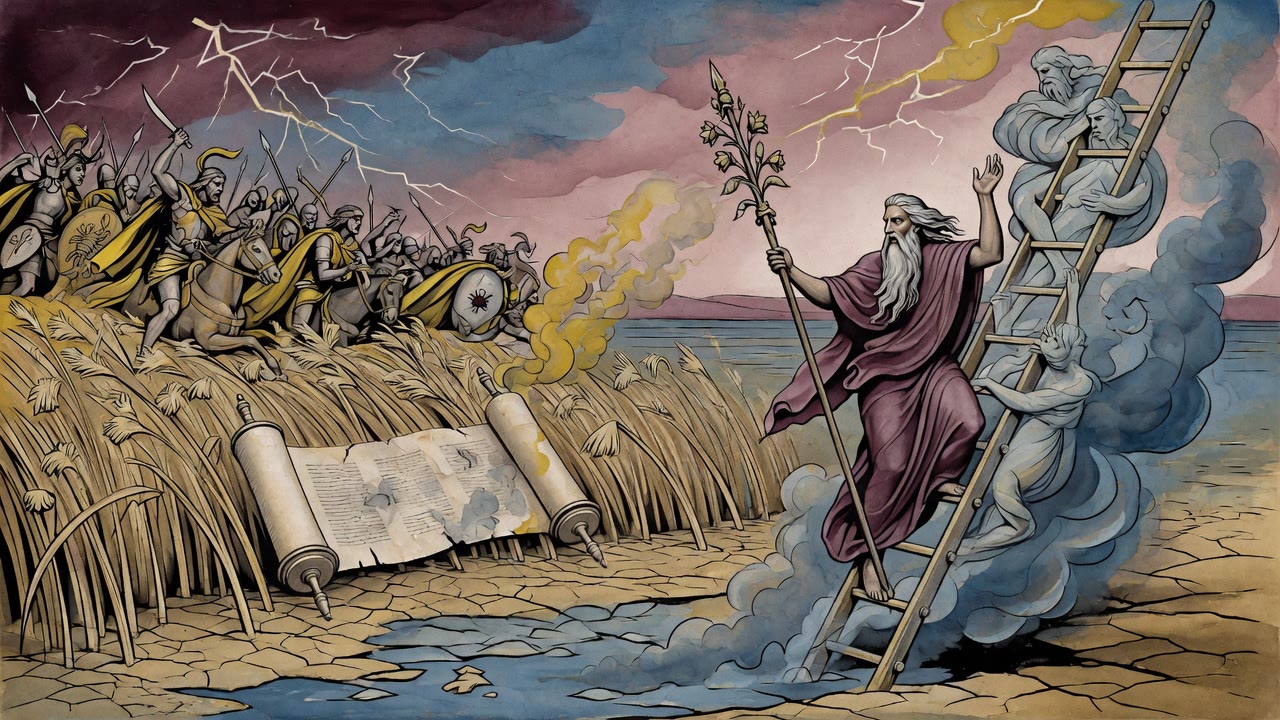
Out of Egypt the column took the long way. The child who pointed at a shorter ridge was told no. Behind that no lay a hundred eighty thousand dead archers.

Curated by Arthur · Told by Maggid ·
Table of Contents
  1. Why the Long Road
  2. The Gazelle That Leaps
  3. Sinai as a Future Already Tasted
  4. What the Survivors Carry

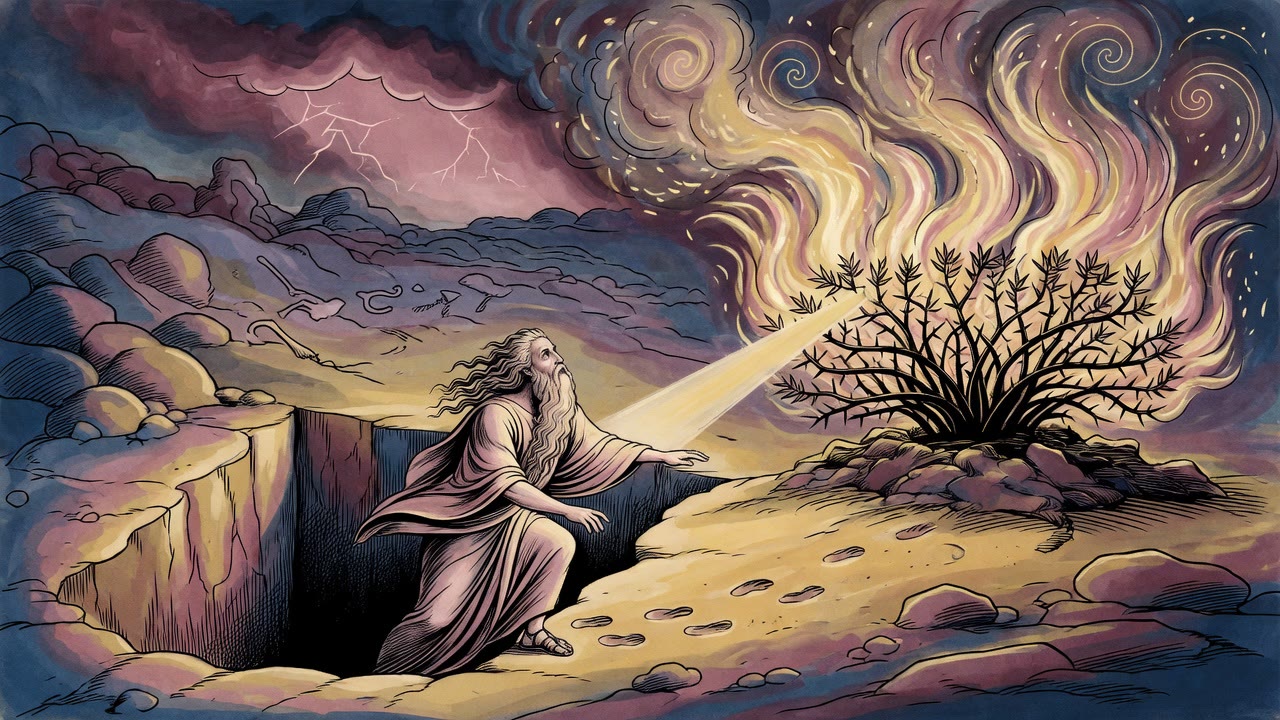
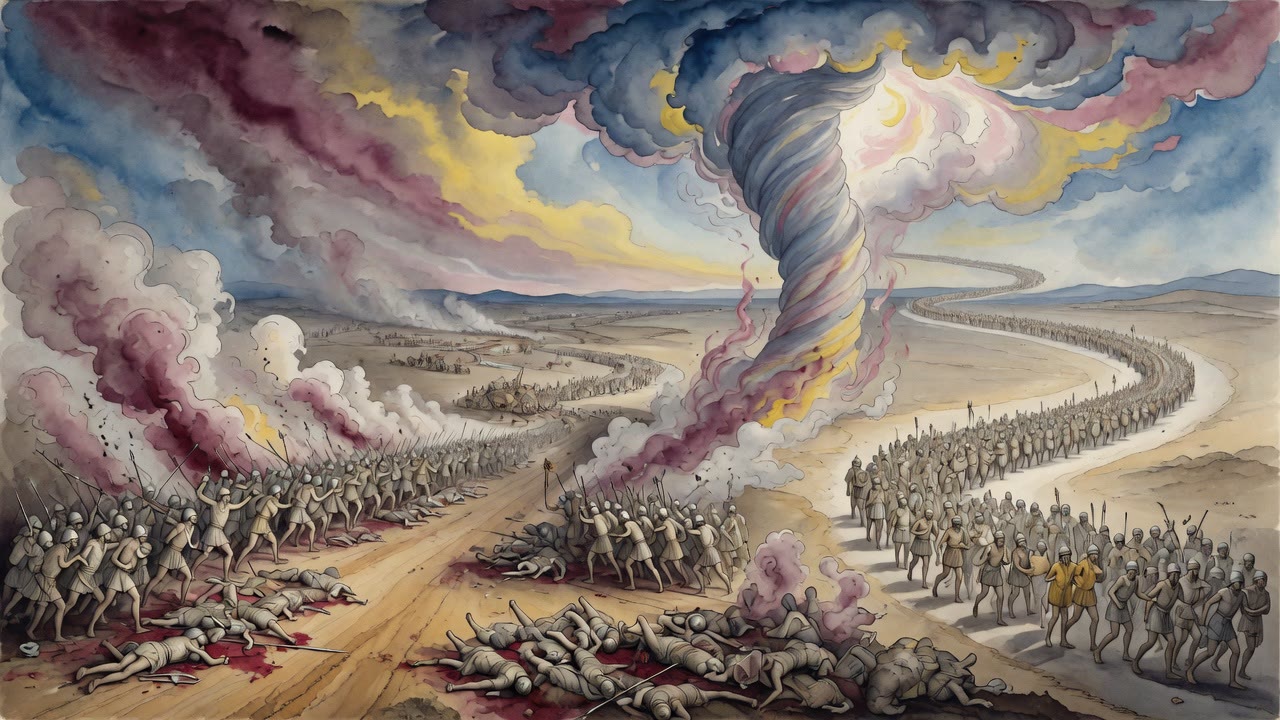
Long before Moses raised a staff over the sea, young archers from Ephraim decided the end had already arrived. They counted the years of the promise, added wrong, and trusted the sum more than the calendar of Heaven. Eighty years early, they armed themselves and marched out to claim freedom before its time had come.
Ephraim Marched Eighty Years Too Early and Fell Click for full size

They were skilled. Skill does not fix a clock. On the day of battle they turned back, and a hundred and eighty thousand fell. The midrash leaves the field littered with the cost of courage without timing. Redemption keeps its own hours. The ones who try to outrun it learn that bravery can be another way to die.

Bows that should have waited in sheds snapped in hands that would not wait. Fathers who had whispered the promise by night watched sons make a schedule of it by day, and the schedule killed them.

Why the Long Road

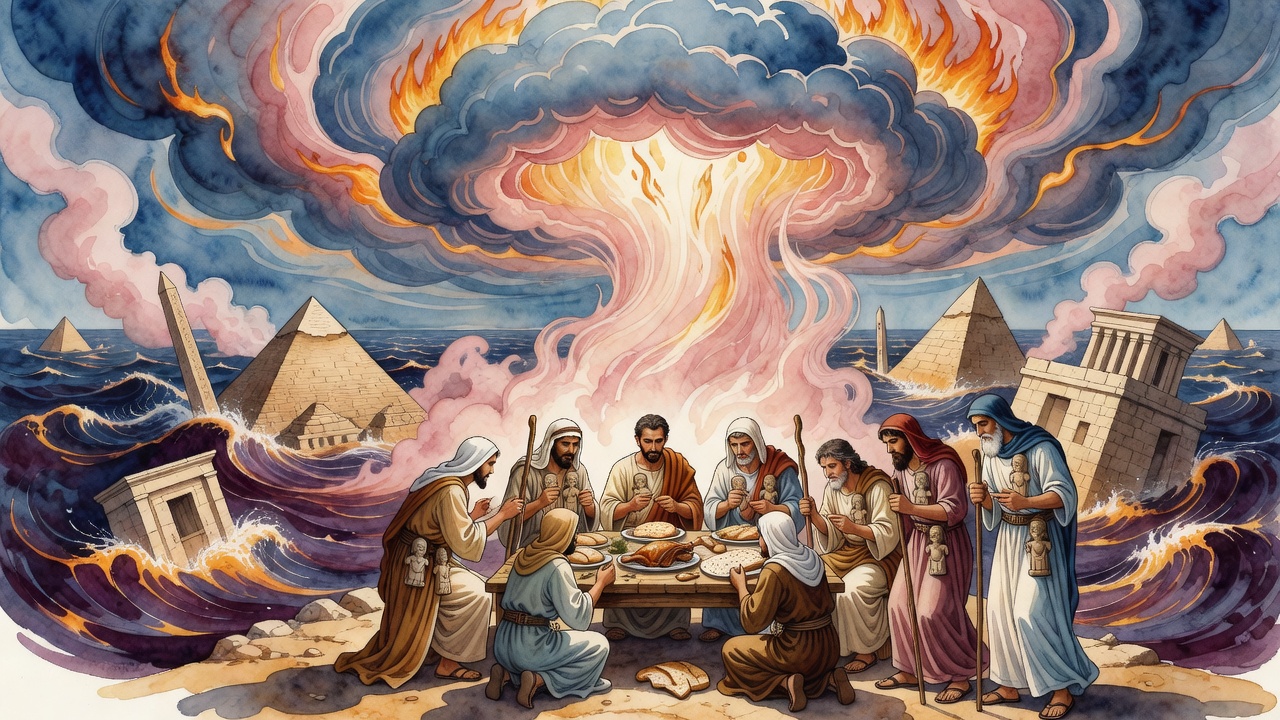
When the true Exodus finally began, God turned Israel away from the direct road. War in plain sight might break their nerve and send them running back to Egypt. Behind that fear stood Ephraim's failure as warning. The Holy One knew how fragile a newly freed people could be when blood filled the horizon. He knew the price of acting before the moment ripens.

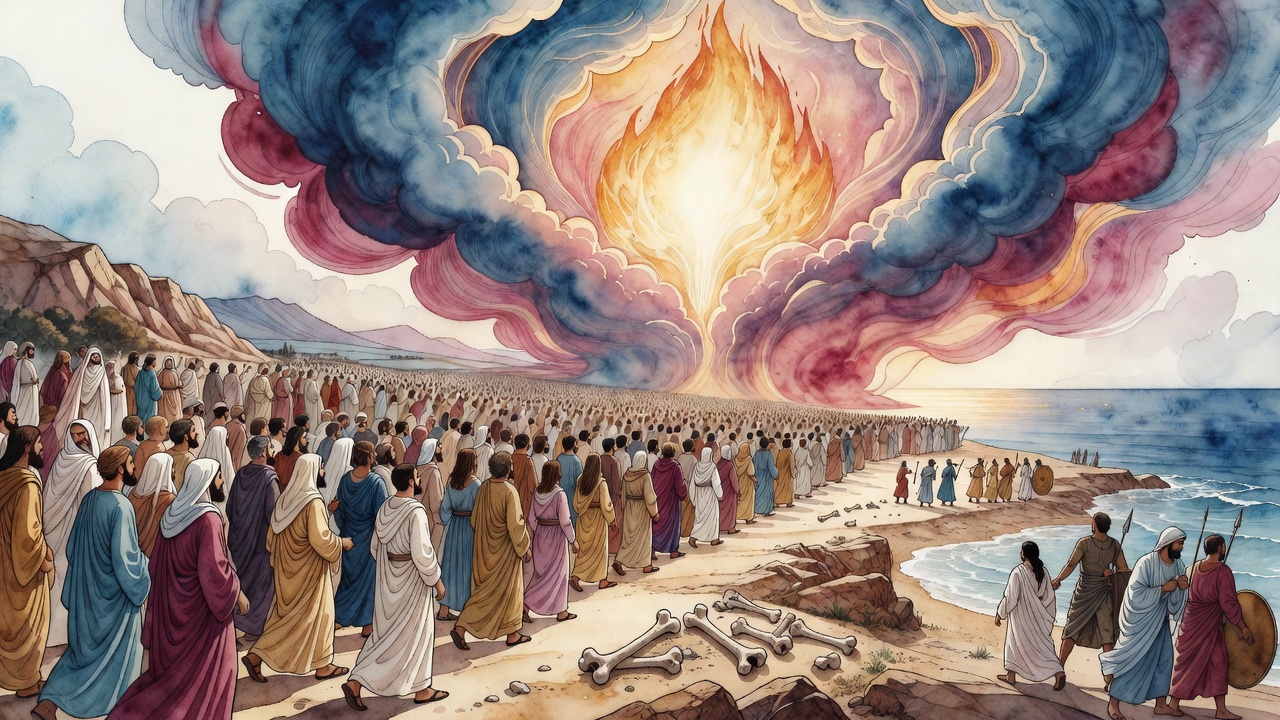
So the column took the long way. Children asked why the path bent. Elders answered with a silence that still remembered cousins who had left too soon. The desert was not only geography. It was a delay that saved the living from the arithmetic of the dead. Sand underfoot became a teacher. Every extra mile was an argument against the field where archers learned that early is not holy.

A boy pointed toward a shorter ridge and was told no. The no carried the weight of one hundred eighty thousand reasons.

The Gazelle That Leaps

Rabbi Yitzhak watched a gazelle and saw the opposite of Ephraim's forced march. The animal does not grind a steady road. It springs from fence to fence, appears, vanishes, shows itself again. Scripture says, "My beloved is like a gazelle" (Song of Songs 2:9). God leaped from Egypt, where Israel saw Him pass in the night, to the sea, where they saw the great hand, to Sinai, where He shone and spoke the first word of the commandments.

The leap is not human impatience. It is divine timing that refuses a straight line drawn by anxious counters. The gazelle also bounds from booth to booth in later prayer, moving from synagogue to study house to bless children who sit while glory stands among them. Presence arrives on its own feet. It does not answer a premature muster.

When God appeared to Abraham, Abraham rose to stand, and God told him to sit. From that day Israel may sit in the house of prayer while glory stands among them. He looks through windows, peering from between the shoulders and fingers of priests as they lift hands in blessing. The gazelle shows itself and conceals itself. The first redeemer, Moses, vanished for a time before returning. The last redeemer, the midrash says, will appear and hide again, leading those who trust him into wilderness feeding until God rains manna as in early days. Showing and concealing belong to the same motion. Forcing the end belongs to another.

Sinai as a Future Already Tasted

Three sages pressed a hopeful claim. A fresh redemption still waits. One heard the promise only ahead. Another said Israel had already tasted that future once, standing at the mountain. They laid Isaiah's vision beside the day Torah was given, line by line.

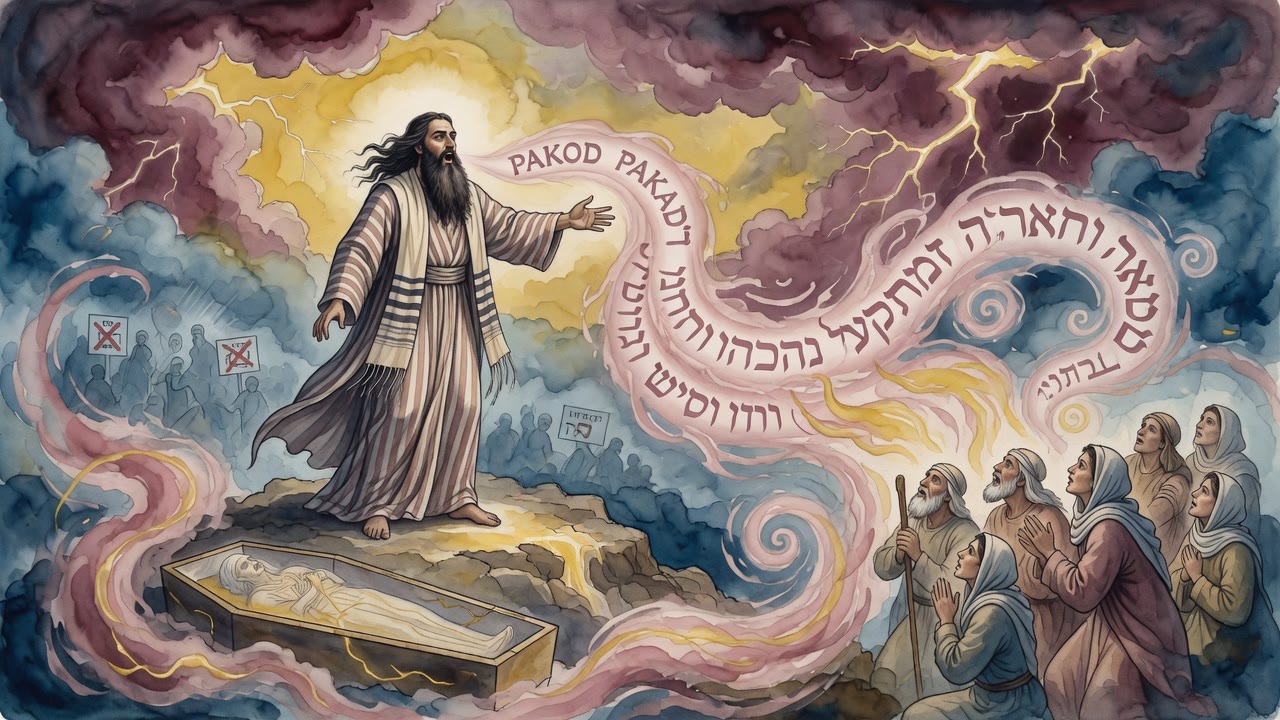
The eyes of the blind will be opened, and at Sinai the people saw the thunder itself. The ears of the deaf will be unstopped, and Israel answered, all that the LORD has spoken we will do and we will hear. The lame will leap like a deer, and Moses brought them surging to meet their God. The tongue of the mute will sing, and the whole nation answered with one voice.

The redemption longed for is not entirely strange. It was rehearsed in a single trembling morning when weak bodies did what weak bodies cannot usually do. Ephraim had tried to seize freedom with bows. Sinai gave a foretaste that arrived on Heaven's schedule, not on a tribe's miscount. Blind eyes saw. Mute mouths sang. The mountain did in an hour what eighty early years of archery could not buy.

What the Survivors Carry

In the long wilderness, every forced march of memory still meets the gazelle's leap. Men who want the end now learn the field where archers fell. Men who wait learn the mountain where blind eyes saw and mute mouths sang. The calendar is not cruelty. It is the difference between a people that arrives and a people that is buried eighty years too early under a sky that was not yet ready to open.

God led the rest around war because He had already watched kinsmen try to invent the hour. The road bent. The dead of Ephraim stayed behind as the argument for patience. The living walked toward a sea, a song, and a mountain that would briefly make the world to come feel near enough to touch.

At night someone still does the math again, sure the numbers finally line up. The gazelle is already somewhere else. The mountain remembers who waited.


← All myths
From the tradition

Sources

3 sources

The texts behind this telling. Some cards carry a translation of the source; others are our own retelling of it, and each card says which. Every card links out to the original.

Pesikta DeRav Kahana 11:10Pesikta de-Rav Kahana

Translation of the source text.Pesikta de Rav Kahana according to an Oxford manuscript, Dov Mandelbaum ed., N.Y. 1987 · CC-BY

"For God said, Lest peradventure the people repent when they see war" (Exodus 13:17). And who were they? The Rabbis said: They were the sons of Ephraim and the sons of Shuthelah, who, because they erred concerning the calculation of the appointed end by eighty years, fell, one hundred and eighty thousand of them. This is what is written, "The children of Ephraim, being armed, and carrying bows, turned back in the day of battle" (Psalms 78:9).

Full source
Pesikta DeRav Kahana 5:8Pesikta de-Rav Kahana

Translation of the source text.Pesikta de Rav Kahana according to an Oxford manuscript, Dov Mandelbaum ed., N.Y. 1987 · CC-BY

"My beloved is like a gazelle or a young stag" and so forth (Song of Songs 2:9). "My beloved is like a gazelle" - Rabbi Yitzhak said: you say to us, "Come, come to us," if you would come to us first. Rabbi Yitzhak said: just as this gazelle leaps and bounds from tree to tree, from booth to booth, from fence to fence, so the Holy One, blessed be He, leaps from Egypt to the sea, and from the sea to Sinai. In Egypt they saw Him, "and I will pass through the land of Egypt on that night" (Exodus 12:12). At the sea they saw Him, "and Israel saw the great hand" (Exodus 14:31). At Sinai they saw Him, "and he said, the LORD came from Sinai and shone forth from Seir to them" (Deuteronomy 33:2). "Or a young stag" (Song of Songs 2:9) - Rabbi Yose son of Rabbi Hanina said: like the young of a hind. "Behold, he stands behind our wall" (ibid.) - "for on the third day the LORD will come down before the eyes of all the people" and so forth (Exodus 19:11). "Looking through the windows" (Song of Songs ibid.) - "and the LORD came down" and so forth (Exodus 19:20). "Peering through the lattices" (ibid.) - at the moment He said, "I am the LORD your God" (Exodus 20:2). "My beloved answered and said to me" (Song of Songs 2:10) - what did He say to me? "I am the LORD your God" (Exodus ibid.).

Another interpretation: "My beloved is like a gazelle" (Song of Songs 2:9). Rabbi Yitzhak said: just as this gazelle leaps over the mountains and bounds from tree to tree, from booth to booth, from fence to fence, so the Holy One, blessed be He, leaps from this synagogue to that synagogue, from this house of study to that house of study. For what purpose? In order to bless Israel. By whose merit? By the merit of the one who sat in the oaks of Mamre, as it is written, "and the LORD appeared to him in the oaks of Mamre" and so forth (Genesis 18:1). Rabbi Berekhiah in the name of Rabbi Levi: it is written "sitting" [the spelling reads yoshev]. When the Holy One, blessed be He, revealed Himself to him, our father Abraham sought to stand. The Holy One, blessed be He, said to him, "Sit," and our father Abraham sat. The Holy One, blessed be He, said to him, "Abraham, whenever your children enter synagogues and houses of study they will sit while My glory stands." And what is the reason? "God stands in the assembly of God" (Psalms 82:1). Rabbi Haggai in the name of Rabbi Yitzhak: it does not say "God stands" but "God stations Himself," ready. Rabbi Shemuel bar Hiyya bar Yehudah in the name of Rabbi Hanina: every single praise that Israel offers to the Holy One, blessed be He, His glory sits among them. And what is the reason? "And You are holy, enthroned on the praises of Israel" (Psalms 22:4).

"Or a young stag" (Song of Songs ibid.) - Rabbi Yose son of Rabbi Hanina said: like the young of a hind. "Behold, he stands behind our wall" (ibid.) - behind the walls of synagogues and houses of study. "Looking through the windows" (ibid.) - from between the shoulders of the priests. "Peering through the lattices" (ibid.) - from between the fingers of the priests. "My beloved answered and said to me" (ibid.) - what did He say to me? "May the LORD bless you and keep you" (Numbers 6:24).

Another interpretation: "My beloved is like a gazelle" (Song of Songs 2:9). Rabbi Yitzhak said: just as this gazelle is seen and then hides again, so the first redeemer was revealed to them and then hid from them. How long did he hide from them? Rabbi Judah son of Rabbi said three months, as it is written, "and they met Moses and Aaron standing to meet them" and so forth (Exodus 5:20).

"Or a young stag" (Song of Songs ibid.) - Rabbi Yose son of Rabbi Hanina said: like the young of a hind. "Behold, he stands behind our wall" (ibid.) - behind the Western Wall of the Temple, which will never be destroyed. "Looking through the windows" (ibid.) - by the merit of the fathers. "Peering through the lattices" (ibid.) - by the merit of the mothers, to teach you that just as there is a difference between a window and a lattice, so there is a difference between the merit of the fathers and the merit of the mothers.

Rabbi Berekhiah in the name of Rabbi Levi: as the first redeemer, so the last redeemer. Just as the first redeemer was revealed to them and then hid from them, so the last redeemer will be revealed to them and then hide from them. How long will he hide from them? Rabbi Tanhuma in the name of Rabbi Hama son of Rabbi Hoshaya, and Rabbi Menahem in the name of Rabbi Hama son of Rabbi Hanina, said forty-five days, as it is written, "and from the time the continual offering is removed and the desolating abomination set up, there shall be one thousand two hundred and ninety days. Happy is the one who waits and reaches the one thousand three hundred and thirty-five days" (Daniel 12:11-12). What are these extra days here? They are the forty-five days during which the Messiah will be revealed to them and then hide from them. To where will he lead them? Some say to the wilderness of Judah, and some say to the wilderness of Sihon and Og, as it is written, "therefore behold, I will entice her and lead her into the wilderness" and so forth (Hosea 2:16). Whoever believes in him will eat saltwort and the roots of broom shrubs and live, as it is written, "who pluck saltwort beside the bushes, and the roots of the broom for their food" (Job 30:4). And whoever does not believe in him and goes off to the nations of the world, they will kill him. Rabbi Yitzhak bar Maryon said: at the end of forty-five days the Holy One, blessed be He, will be revealed to them and bring down the manna for them. Why? Because "there is nothing new under the sun" (Ecclesiastes 1:9). And what is the reason? "And I am the LORD your God from the land of Egypt; I will again make you dwell in tents as in the days of the appointed time" (Hosea 12:10).

Full source
Pesikta DeRav Kahana 5:16Pesikta de-Rav Kahana

Translation of the source text.Pesikta de Rav Kahana according to an Oxford manuscript, Dov Mandelbaum ed., N.Y. 1987 · CC-BY

Rabbi Nachman and Rabbi Eleazar bar Rabbi Yose and Rabbi Acha. One said: the Holy One, blessed be He, said to Israel: My children, you have a renewal of redemption destined for the time to come. And the other said: the renewal that is destined for the time to come, you have it here already.

Just as in the time to come, "Then the eyes of the blind shall be opened" (Isaiah 35:5), so here too, "And all the people saw the thunderings" (Exodus 20:15). Just as in the time to come, "And the ears of the deaf shall be unstopped" (Isaiah 35:5), so here too, "And they said, all that the LORD has spoken we will do and we will hear" (Exodus 24:7). Just as in the time to come, "Then shall the lame man leap as a deer" (Isaiah 35:6), so here too, "And Moses brought forth the people to meet [God]" (Exodus 19:17). Just as in the time to come, "And the tongue of the mute shall sing" (Isaiah 35:6), so here too, "And all the people answered together and said" (Exodus 19:8).

Full source