6 min read

Eve Was Tested Twice by the Accuser at the River

Eve was tested twice after Eden, first by the serpent and then by the Accuser, who came with angelic tears to pull her from mercy.

Curated by Arthur · Told by Maggid ·
Table of Contents
  1. Full Grown Outside the Garden
  2. Water Took the Shape of Regret
  3. The False Angel Wept
  4. Adam Turned the Accuser Away
  5. Seth Walked Back to Eden
  6. Michael Refused the Oil

Eve stood in the Tigris until the river became another skin.

No bread. No speech. No hand reaching toward fruit. Across the distance, Adam stood in the Jordan and counted the days with his body. Forty days for him. For Eve, eighteen days had already passed in cold water, with the mud closing over her feet and hunger thinning every thought except one: let the gate open again, or at least let the sin loosen its teeth.

Full Grown Outside the Garden

They had not entered life as children. Adam and Eve had been formed complete, like young bodies in their strength, old enough to choose and young enough to have no past. There had been no childhood to soften them into obedience, no years of falling and being lifted, no mother calling them back from danger. One day there was dust, breath, bone, flesh, and the trees of Gan Eden. Then there was command.

That made the world outside the Garden crueler. Their hands knew work before they knew practice. Their mouths knew blame before they knew repair. They had been made whole, and almost at once they learned what a broken thing felt like from the inside.

Water Took the Shape of Regret

So they made their bodies speak. Adam entered the Jordan. Eve entered the Tigris. Water pressed against them hour after hour, patient as judgment. The rivers did not forgive. They did not accuse. They only held the first man and the first woman in place while the world continued without them.

The animals moved somewhere beyond the reeds. The sun climbed and fell. Hunger sharpened, then dulled, then became a heavy stone beneath the ribs. Eve remained in the current. She had already listened to one voice that promised elevation and delivered exile. Silence was safer.

For eighteen days, silence held.

The False Angel Wept

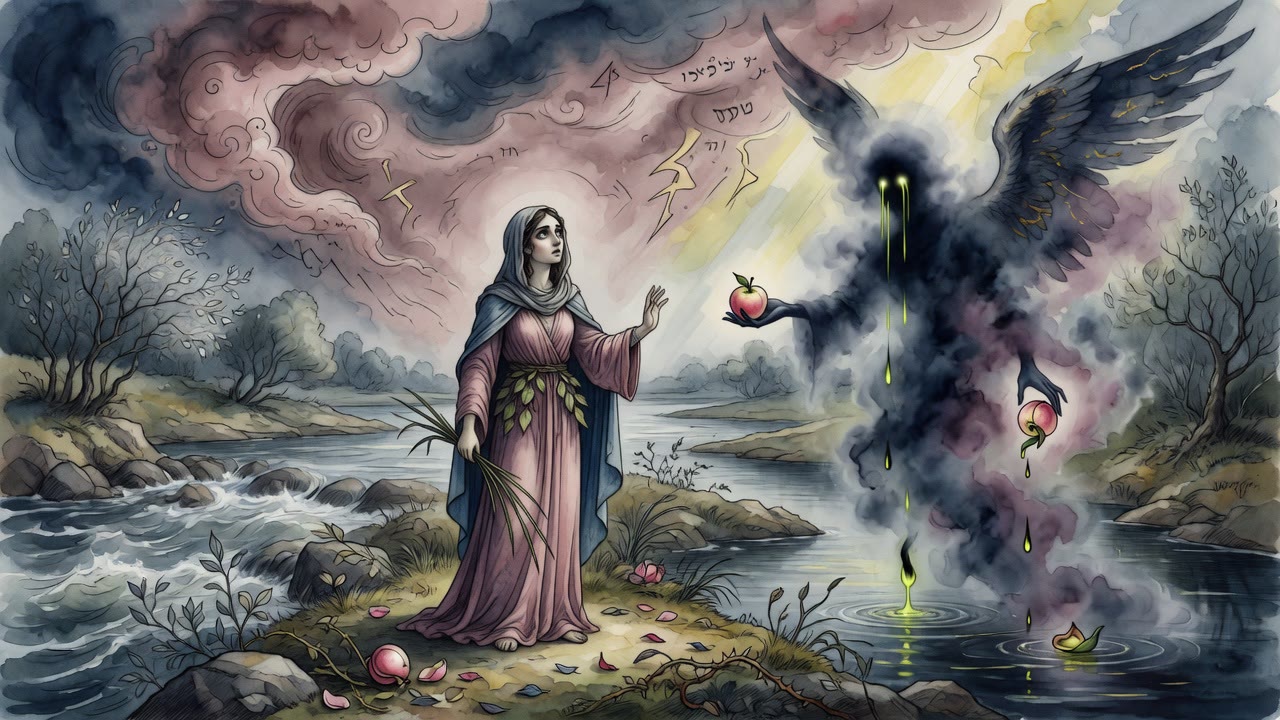
Then a figure came to the bank and began to cry.

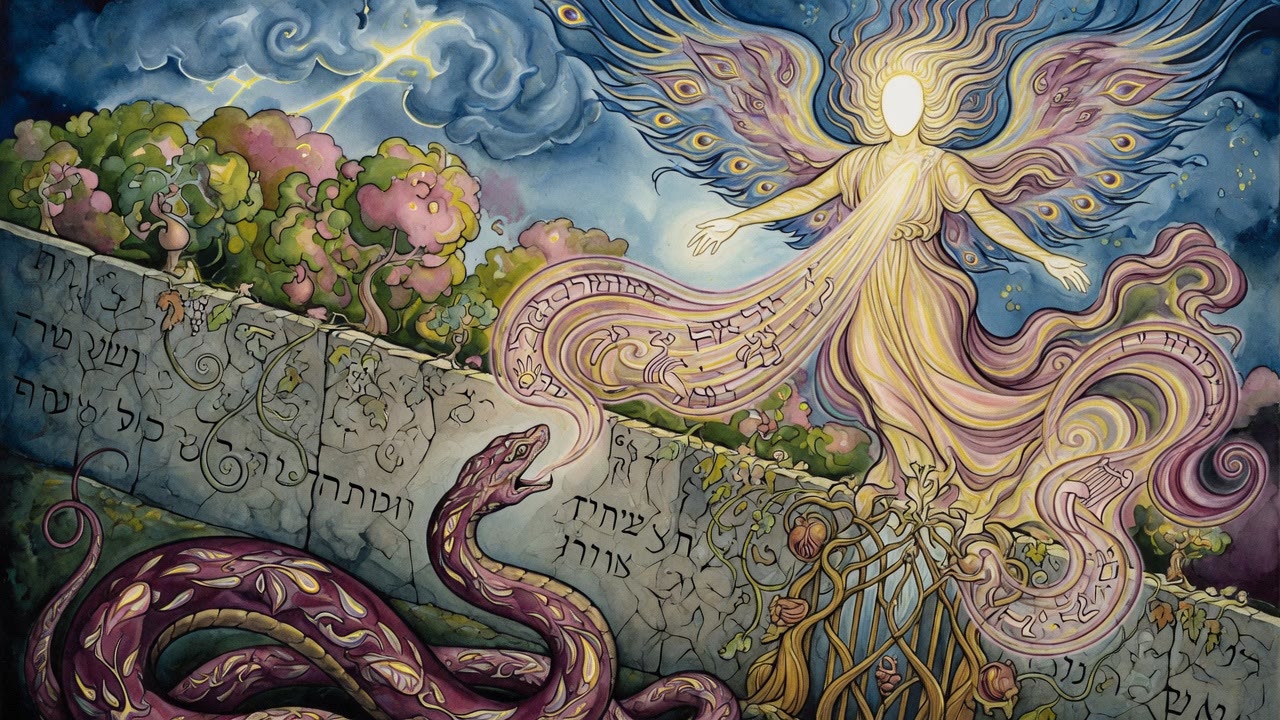
He did not come with fangs. He did not come with a hiss among leaves. Ha-Satan, the Accuser, came dressed as mercy, and mercy is a dangerous garment when grief is looking for permission to stop hurting. He wept for her. He told her that God had heard her mourning. He told her the angels had pleaded for her. He told her her penitence had been accepted.

"Come out," he said. "Eat."

The old wound opened because the lie sounded like healing. Eve stepped from the Tigris, the river sliding from her limbs, and followed him. Her feet found the bank. Her fast broke before its time. The Accuser had not needed a fruit this time. He had used the hope of forgiveness.

Adam Turned the Accuser Away

When Adam saw her, the pattern was already clear. The face had changed. The trap had not. Eve had been approached alone, spoken to with false tenderness, and drawn out from obedience by a voice that borrowed heaven's language.

Adam did not raise his hand against her. He turned toward the Accuser.

"Why do you wage war against us again?" The question came from a man who had already lost Eden, ease, and the shining nearness of God. There was almost nothing left to steal, and still the Accuser had come back to the wound. Adam asked why the first ruin had not been enough.

Then Adam prayed. His words did not bargain with the disguise. He placed his life in God's hands and asked that the adversary be removed from him, the one who sought to drag his soul toward destruction. He asked that the glory the Accuser had forfeited be restored where it belonged.

The false angel vanished. The river kept moving.

Seth Walked Back to Eden

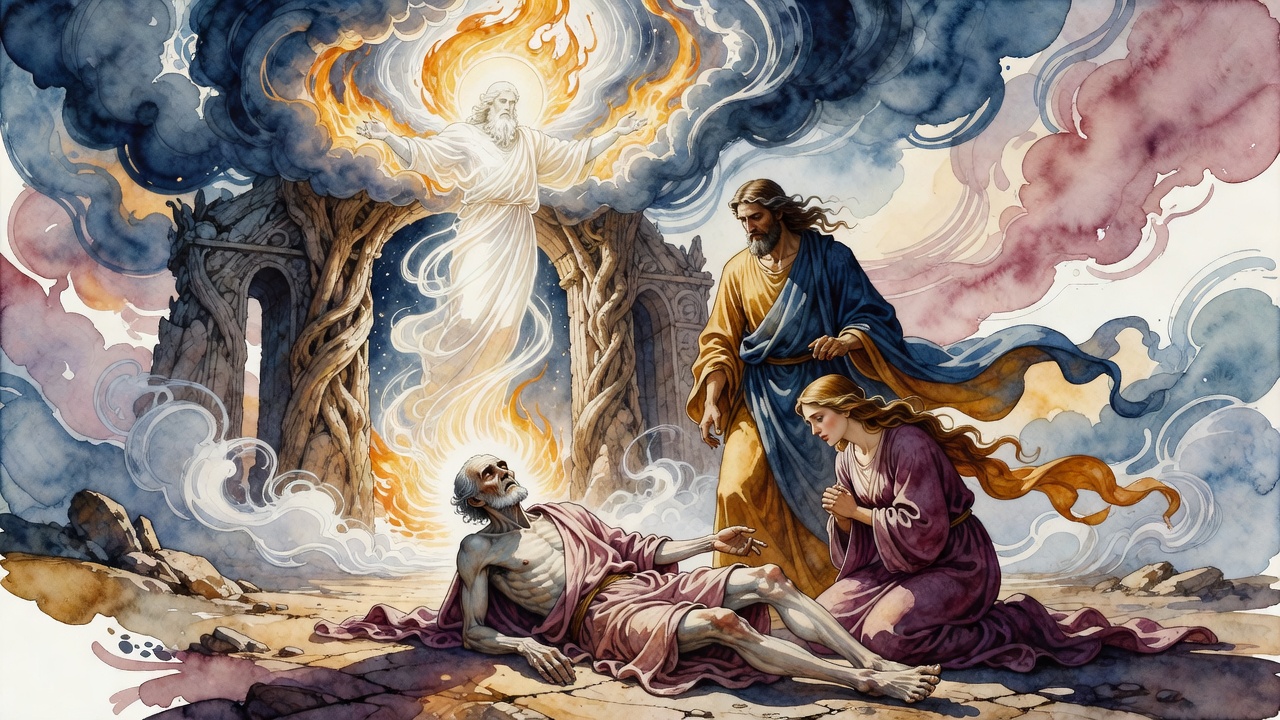
Years gathered around the first family, but the Garden did not become ordinary in memory. It remained behind them like a locked room still bright under the door. When Adam's life bent toward its end, Eve went back toward that brightness with Seth beside her.

They did not come as rebels. They came as beggars.

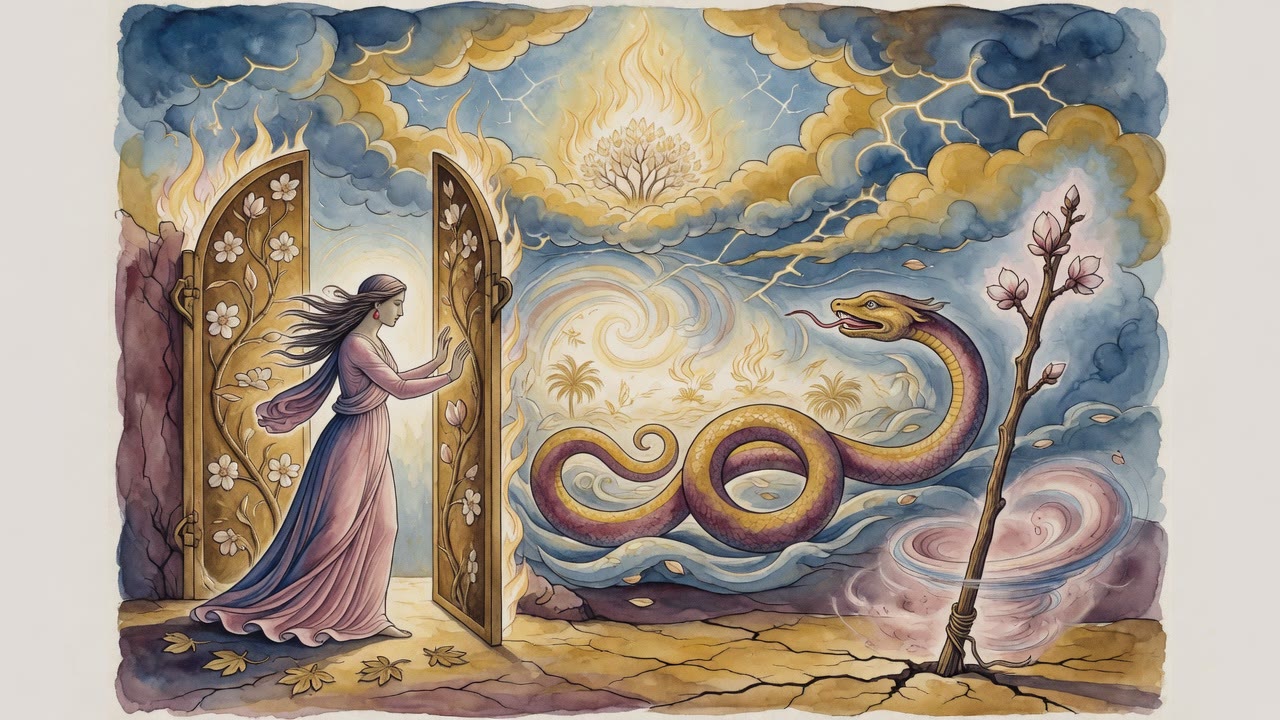
At the gates of Eden they wept for hours. Not for fruit. Not for the old command to be undone. They asked for oil from the tree of mercy, oil that might touch Adam's failing body and draw death backward. The gate stood before them, and every tear admitted the same fact: the woman made full grown at the beginning had grown old enough to beg for medicine for the man made from dust.

Michael Refused the Oil

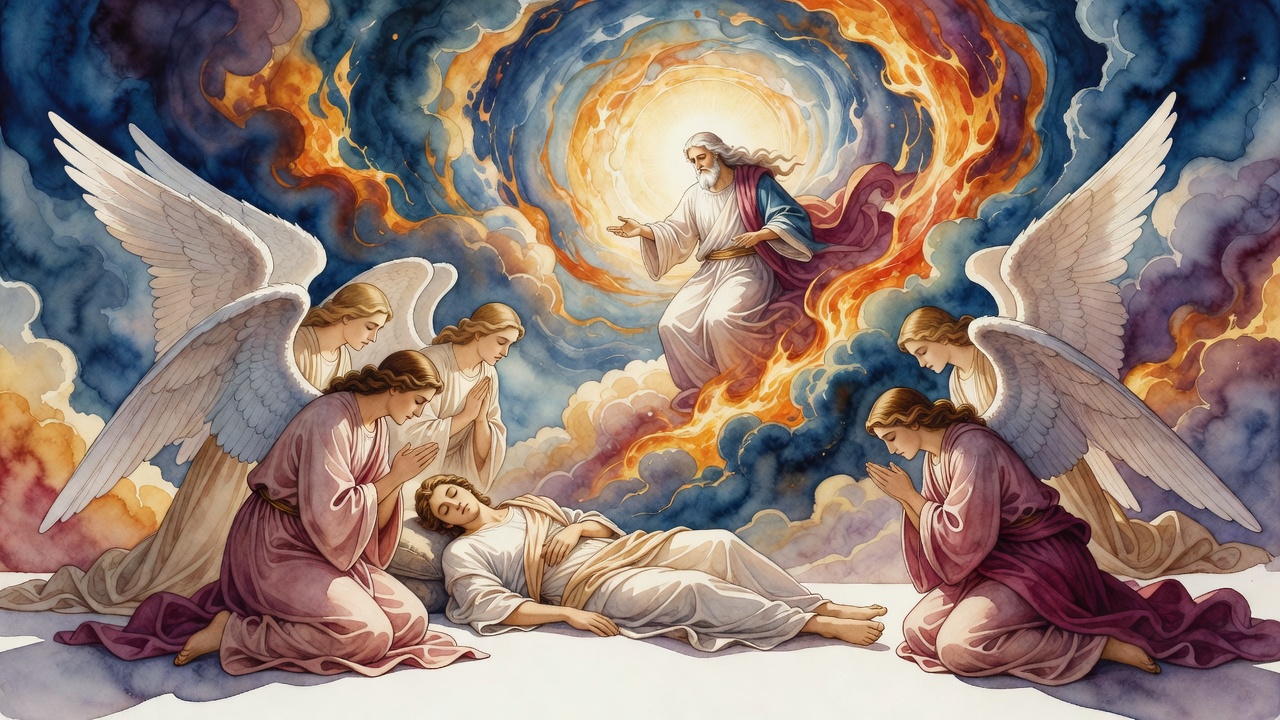
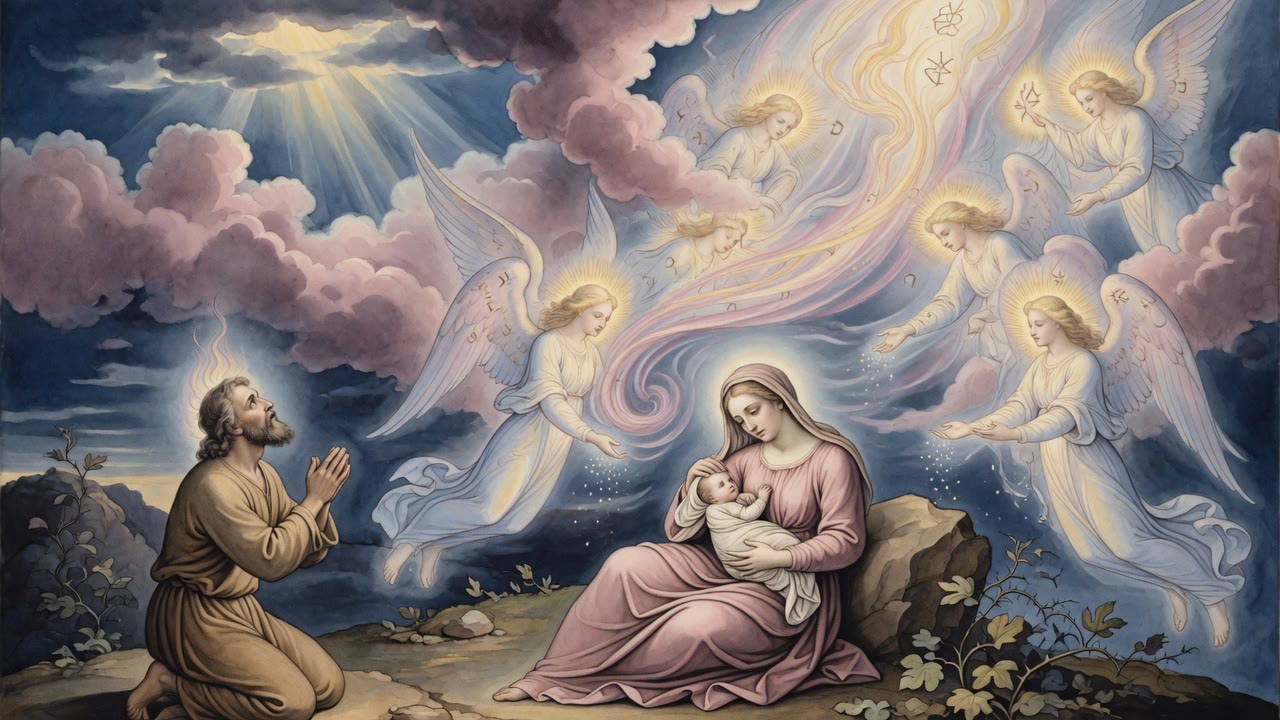
Michael came to the gate with an answer that did not soften because it came from an angel. The oil could not be given. Adam would die in a few days. Mortality would not stop with him. It would pass into his descendants like an inheritance no child had asked to receive.

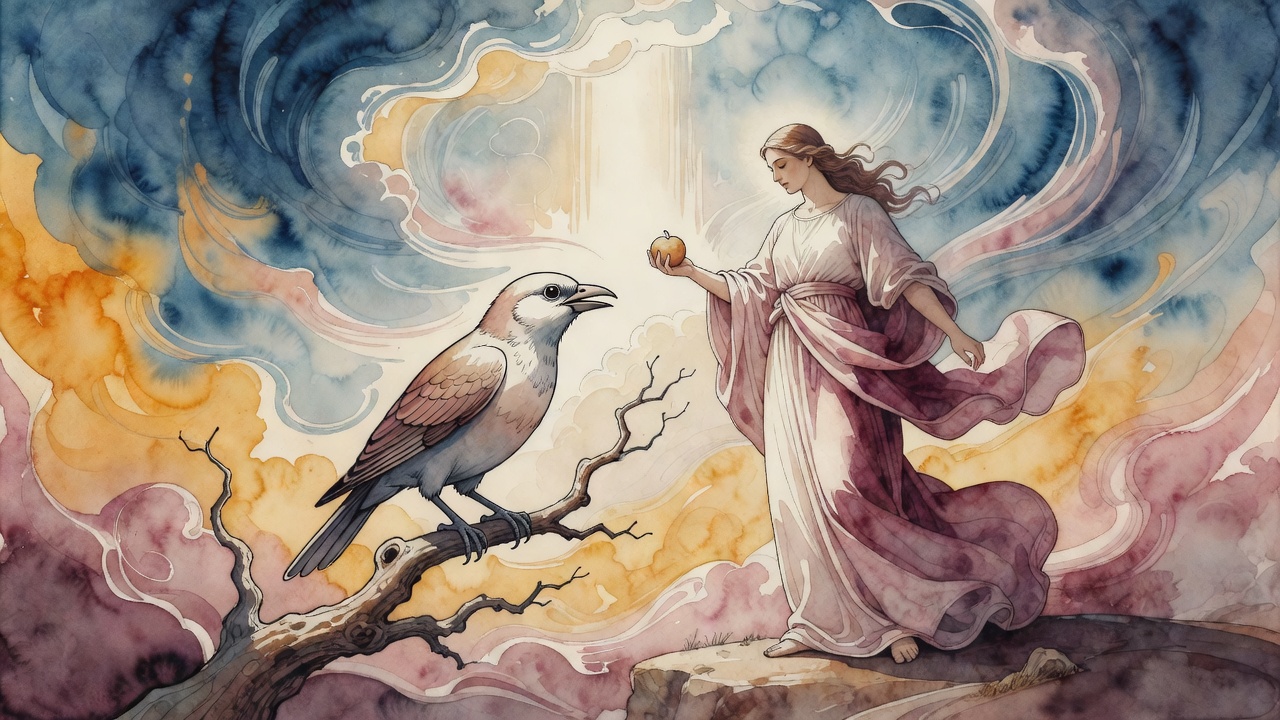
Eve had been tested by sweetness in the Garden and by counterfeit pity at the river. At the gate she met something harder than temptation: a true refusal from heaven. No disguise. No false tears. No voice pretending that pain had ended before its time.

She left with Seth beside her and no oil in her hands. Behind them, Eden remained closed. Ahead of them, Adam was dying. The mercy they wanted did not arrive as medicine. It arrived as truth, and truth did not open the gate.


← All myths

From the tradition

Sources

4 sources

The texts this telling draws on, in full. Open a card to read inline, or expand it for a wider, quieter read.

Legends of the Jews 2:87Legends of the Jews

A reader can picture them, just the two of them, confronting their guilt and trying to make amends. But what if there was another player, a persistent tempter who wasn't quite ready to let them off the hook?

The legends paint a picture of Satan, not content with his initial victory. According to Legends of the Jews, he was actually worried that God might forgive Adam and Eve. Can you imagine? He had to intervene, to keep them mired in their despair.

So, what did he do? After 18 days of their self-imposed penance, he approached Eve, disguised as an angel. Think about the audacity! He feigned concern, weeping as he told her to emerge from the river where she was standing in repentance. "The Lord God hath heard your mourning," he said, dripping with false sincerity, "and your penitence hath been accepted by Him. All the angels supplicated the Lord in your behalf, and He hath sent me to fetch you out of the water and give you the sustenance that you enjoyed in Paradise."

Poor Eve. Weakened by her suffering, she fell for it. She trusted him. And he led her straight to Adam.

But Adam, wiser perhaps, or simply more wary, immediately recognized their adversary. Can you hear the anguish in his voice as he cried out, "O Eve, Eve, where now is thy penitence? How couldst thou let our adversary seduce thee again--him who robbed us of our sojourn in Paradise and all spiritual joy?"

Then Eve, realizing her mistake, turned on Satan. "Woe unto thee, O Satan! Why strivest thou against us without any reason? What have we done unto thee that thou shouldst pursue us so craftily?"

And here's where the story takes an interesting turn. Satan, with a "deep-fetched sigh," revealed his true motivation. It wasn't just about tempting humanity; it was personal. He confessed that Adam, the man he had been jealous of, had been the reason for his fall from grace. Having lost his glory because of Adam, he schemed to have him banished from Paradise. It was revenge, plain and simple.

So, what does this tell us? It reveals a multi-layered conflict. It's not just about good versus evil or obedience versus disobedience. It's about jealousy, pride, and the long-lasting consequences of choices. It reminds us that even in moments of repentance, we must be vigilant against those who seek to exploit our vulnerabilities.

And perhaps, it’s a reminder that even the most legendary stories are, at their heart, deeply human ones.

Full source
Legends of the Jews 2:99Legends of the Jews

A reader can imagine the immediate regret, the shame, the weight of their choice. But the legends take us even deeper, into their desperate attempts to undo what had been done.

Eve, along with Seth, Adam's son, standing at the very gates of Gan Eden (the Garden of Eden, paradise), Paradise. They are not there for a casual stroll,. They are there, the legends tell us, begging, pleading, weeping bitterly. What could possibly drive them to such a state?

They were desperate for oil from the "tree of His mercy." For hours, they poured out their hearts in prayer.

Then, an answer. But not the one they hoped for.

The archangel Michael, a messenger of God himself, appeared to them. But he didn't bring good news. According to Legends of the Jews, their request couldn't be granted. Adam was destined to die in just a few days, and with him, mortality would become the inheritance of all his descendants.

But there was a glimmer of hope. Michael revealed that the "oil of life" – the ultimate healing – would be dispensed at the time of resurrection, but only to the pious, together with all the bliss and delights of Paradise. A future promise, but a present sorrow.

Can you imagine their devastation? They returned to Adam, their hearts heavy with the archangel's pronouncement. "What misfortune didst thou bring upon us when thou didst arouse great wrath!" he lamented to Eve. "See, death is the portion of all our race!"

He then asks Eve to gather their children, and their children's children. He wanted them to know the truth. According to the legend, Adam lay prostrate, consumed by pain. Eve then recounts the story of their fall, the first transgression, the moment that changed everything. A painful confession, a legacy of sorrow, and a stark reminder of the consequences of choice.

What a burden to carry. Adam and Eve’s story is more than just a tale of disobedience. It's a story about the human condition, about mortality, about the search for redemption. And even in the face of immense loss, there is still a promise of hope, a future where the oil of life flows freely for those who seek it.

Full source
Legends of the Jews 2:101Legends of the Jews

Legends of the Jews turns to Teachings of Eve.

Well, according to some traditions, Eve wasn't alone at the start. Before her, there was Lilith.

Stick with me. This isn't your Sunday school lesson.

In Ginzberg's retelling in, Legends of the Jews, after Lilith was created, God actually divided up Paradise between Adam and her. Adam got the east and the north, along with all the male animals. And Lilith? She was mistress of the west and the south, ruling over all the female animals.

Imagine that for a moment. Two powerful figures, each with their own domain in the Garden.

But this idyllic scene didn't last. Enter Satan. Still stinging from his fall from grace, smarting, as Ginzberg puts it, under the "disgrace of having been dismissed from the heavenly host", he was looking for revenge. And who better to target than the new kids on the block, Adam and Lilith?

So, how did he do it?

He needed a pawn, an accomplice. And he found one in the serpent. Satan, ever the smooth talker, convinced the serpent that Adam's arrival had ruined things for all the animals. Before Adam, they could eat anything they wanted. Now, they were stuck with weeds! Kicking Adam out of Paradise, Satan argued, would be for the good of everyone.

The serpent wasn't so sure. He was afraid of God's wrath. But Satan, oh, he had a plan. "Just become my vessel," he told the serpent, "and I will speak a word through your mouth that will seduce man." for a second. Satan, using the serpent as a puppet, ready to unleash his plan. It's a reminder that even in the most beautiful of settings, darkness can lurk, whispering temptations and seeking to upset the balance.

And all because of a bruised ego and a desire for revenge. What happens next, well, that's a story for another time. But it all starts with this moment, with Satan's cunning and the serpent's vulnerability. It makes you wonder, doesn't it, about the forces at play behind the scenes of even the most familiar stories.

Full source
Bereshit Rabbah 14:7Bereshit Rabbah

The Torah tells us, “[The Lord God formed the man] of dirt [afar]” (Genesis 2:7). But Bereshit Rabbah, that treasure trove of rabbinic interpretations on the Book of Genesis, teases out something fascinating from that simple verse. It suggests we read the word "afar," dirt, as "ofer," meaning a young gazelle, implying that Adam was created in his full form, like a young man in his prime. In other words, Adam wasn't a baby. He wasn't created needing diapers and lullabies! He sprung into existence fully formed.

It wasn't just Adam. Rabbi Elazar bar Rabbi Shimon goes even further, suggesting that Eve, too, was created in her full form. Rabbi Yoḥanan adds that both Adam and Eve were created with the bodies of people who were approximately twenty years old. Imagine! Two twenty-year-olds, suddenly in existence, in the Garden.

The midrash (rabbinic interpretation) doesn't stop there. Rabbi Huna dives into the nuance of the words "afar" and "adama," both referring to earth. Why use both? Afar is a masculine word, adama is feminine. Rabbi Huna explains that a potter brings masculine dirt and feminine ground, mixing them so that the vessels he makes will be strong. Similarly, Adam was created from two different kinds of earth to make him more robust. A beautiful image, isn't it? A perfect blend.

This concept of resurrection, inherent in the creation story, is further explored through a powerful anecdote. The text relates an incident involving a mourner from Tzippori whose son had died. Some say the mourner was a heretic; others say a heretic was simply there to console him. Rabbi Yosei bar Ḥalafta visited him, and the heretic, seeing Rabbi Yosei smiling, challenged him. "Why are you smiling? Is this man’s grief not enough for him, that you come and aggrieve him further? Are there earthenware vessels that can be repaired? Is it not written: 'Shatter them like a potter’s vessel'?" He was essentially saying, “Death is final. Just like a broken pot can’t be fixed, neither can a dead person come back to life.”

Rabbi Yosei's response is brilliant. He points out the difference between earthenware and glassware. Earthenware is formed with water and hardened by fire. Glassware, on the other hand, is formed with fire and hardened by fire. And yet, glassware, when broken, can be repaired, while earthenware often cannot. "This is astonishing," the heretic admits.

Then, Rabbi Yosei delivers the punchline: "It is because it [glassware] is made by blowing." Rabbi Yosei seizes on this. "Let your ears hear what your own mouth is saying," he exclaims. "If this one [glassware], that is made with the breath of mortal man, can be repaired, [that which is made] with the breath of the Holy One blessed be He, all the more so!" What a powerful argument for resurrection! If human breath can create something repairable, how much more so can God's breath?

Rabbi Yitzḥak adds another layer to this. He points out that the verse in Psalms (2:9) doesn't say "Shatter them like an earthenware vessel," but rather, "Shatter them like a potter's vessel." A potter's vessel, he explains, is one that hasn't yet been fired, and can still be repaired. So, too, man will be resurrected after death.

These interpretations, woven together in Bereshit Rabbah, give us so much more than a simple story of creation. They offer a glimpse into the rabbinic mind, their ingenious interpretations of scripture, and a profound message of hope and resilience. They remind us that even in the face of loss and despair, the possibility of renewal, of being "repaired," remains. And ultimately, that we are formed from the very earth, and imbued with the breath of the Divine. the next time you see a potter at work.

Full source