5 min read

Five Men Who Walked Out Into a New World

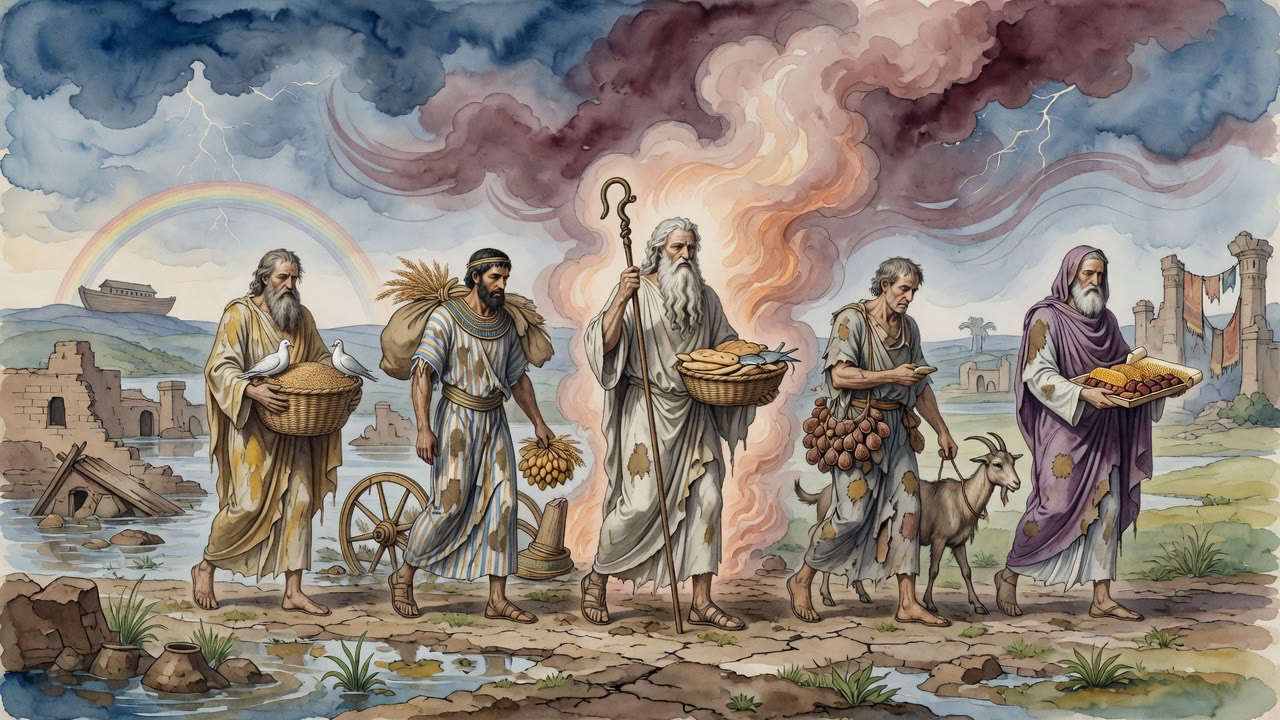
Noah, Joseph, Moses, Job, and Mordecai each watched a life collapse, then walked into a washed world as providers who fed others first.

Curated by Arthur · Told by Maggid ·
Table of Contents
  1. The Door of the Ark Opens
  2. Providers Before Heroes
  3. Shem and the Map After Water
  4. Collapse as a Doorway
  5. What the Five Leave Standing
Five Men Who Walked Out Into a New World Click for full size

The Door of the Ark Opens

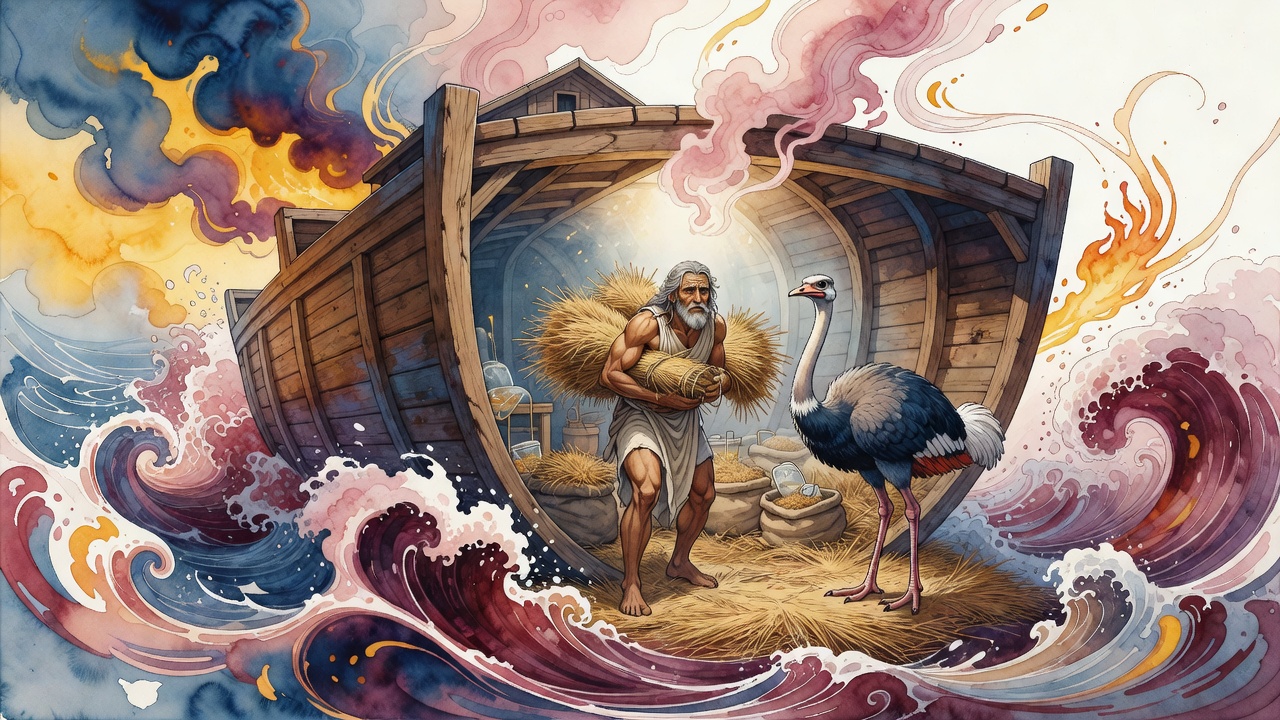
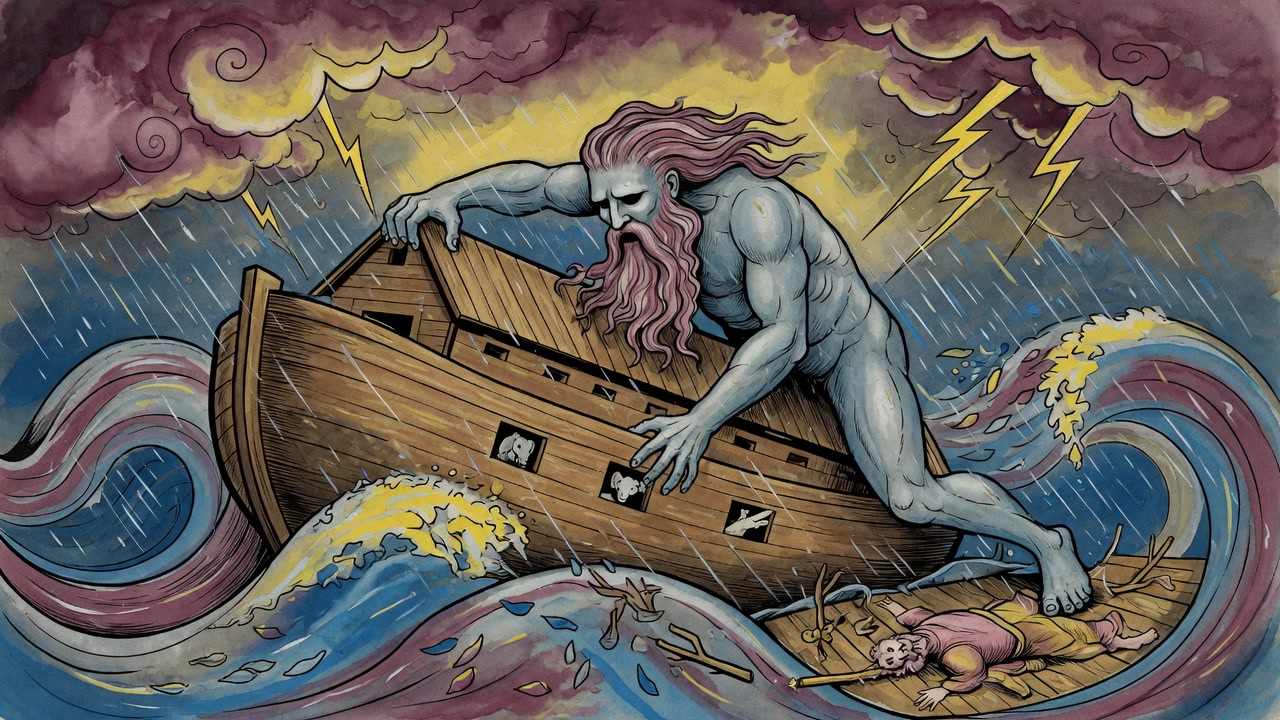
Noah put his palm on wood that still smelled of pitch and rain. The flood had ground millstones to powder. Mountains had been suggestions under a sky that forgot how to stop. When the door finally opened, the earth was a washed room with no furniture left. He stepped out into a world that had never seen him before, though he was the same man who had hammered for years while neighbors laughed. Birds found air that did not taste of drowning. The ground steamed. Nothing answered when he called except the animals pressing toward open space. Behind him, every species that still breathed had eaten from his hand for twelve months.

Rabbi Samuel counted five men who watched their lives collapse and then watched a brand new world rise from the rubble. Noah was the first name on the list.

Providers Before Heroes

Joseph went from iron fetters to the second chair in Egypt and fed his father and brothers when famine made kinship practical again. Moses fled Pharaoh with blood still drying on a buried Egyptian, then watched the sea swallow the same king's army and carried Israel through forty years of wilderness bread. Job lost children, herds, and skin, then received double and still shared bread with orphans who had no claim on his rebuilt house. Mordecai was measured for the gallows and lived to see his enemy hang there instead. Finding no wet-nurse for the orphaned Esther, he nursed her himself, a man feeding a child with a body that should not have been able to do it, according to the bold midrashic image.

Each of them, the sages say, saw a new world. Each of them was also a provider. The miracle was never only survival. It was the refusal to eat the new world alone.

Shem and the Map After Water

After the flood, the Book of Jubilees draws lines across the cleaned earth. North belongs to Japheth. South belongs to Shem. Rivers pour into seas with names that scholars still argue over, tongues of the Egyptian Sea, markers like Karaso in the bosom of a southern tongue. The geography is not a travel guide. It is a claim that destiny has borders, that inheritance is not random scatter after catastrophe. Shem receives the long reach along the great sea, the portion that will later hold the story of Israel. Order returns as lines on a map before it returns as cities.

Noah's righteousness "in his generations" still splits the teachers. Rabbi Judah is blunt: among the wicked Noah shone, but set him beside Moses and he would dim, like the only drinkable barrel in a cellar of vinegar. Rabbi Nehemiah answers just as firmly: if a sealed flask of perfume can scent a graveyard, imagine it in open air. Noah was the real thing. Better company would only have made him brighter.

Collapse as a Doorway

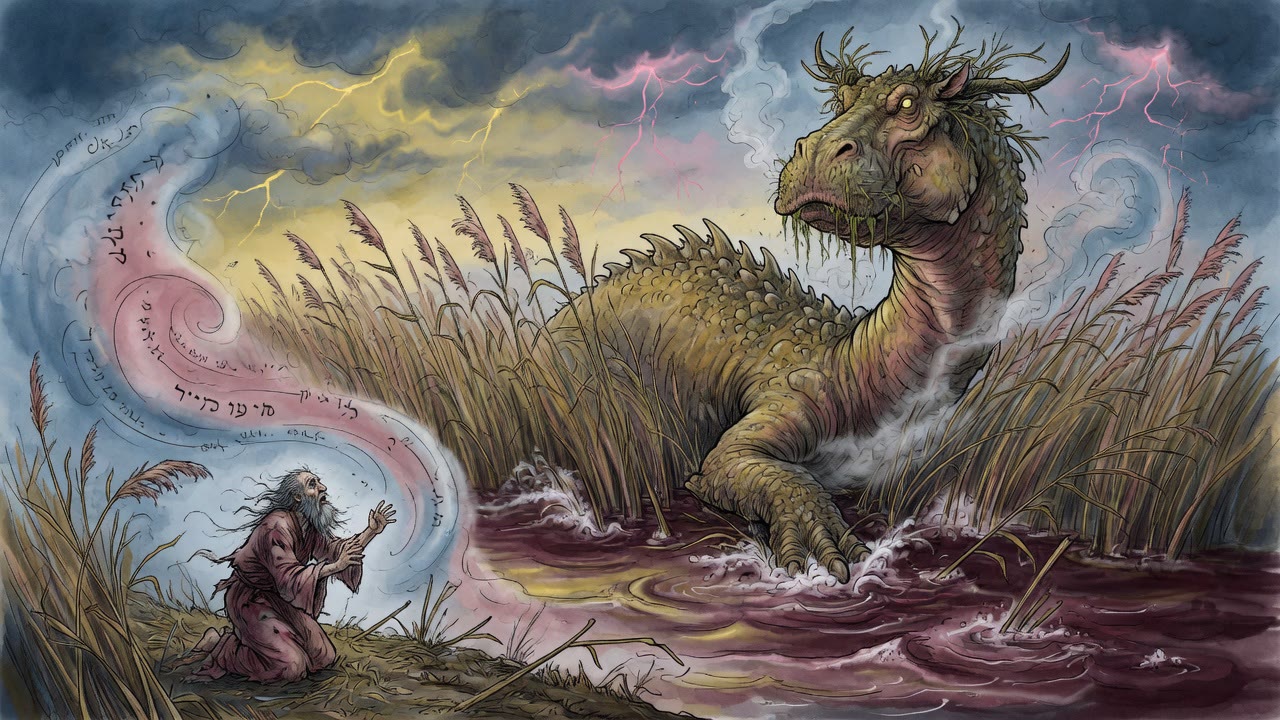
Joseph's new world began in a pit and a sale. Moses' new world began as a wanted man on Midian's ridge. Job's new world began on an ash heap where friends talked theology at a body that barely listened. Mordecai's new world began under a decree written to erase his people, and under a king who could not sleep. The pattern is severe. Heaven does not always rebuild the old house. Sometimes it hands a man a different landscape and asks whether he will feed anyone else in it.

Noah planted a vineyard after the water and learned that a new world can still make a man drunk. Joseph stored grain and later wept so loudly that Egyptians in other rooms heard him. Moses struck rock and argued with God and still kept walking. Job demanded answers and received a whirlwind. Mordecai put on royal clothes only after fasting in sackcloth. None of them graduated into ease. They graduated into responsibility with the dust of the old life still under their nails.

What the Five Leave Standing

The list is not a medal ceremony. It is a warning and a comfort braided together. Lives end in water, iron, exile, boils, and gallows-wood, and still a door can open onto something unrecognizable that must be tended. The animals leave the ark hungry. Egypt's storehouses need a manager who will not steal the credit. Israel needs water and law. Orphans need bread. An orphaned girl needs a guardian who will risk a palace for her.

Shem walks his southern portion under a sky that no longer rains without end. The lines on Jubilees' map hold. The five providers hold too, each in his century of ruin, each proving that a new world is not a prize for the pure so much as a job for the ones who refused to stop feeding others while the old world finished dying.


← All myths
From the tradition

Sources

2 sources

The texts behind this telling. Some cards carry a translation of the source; others are our own retelling of it, and each card says which. Every card links out to the original.

Yalkut Shimoni on Torah 49:1Yalkut Shimoni on Torah

Translation of the source text.Torat Emet (Yalkut Shimoni) · CC-BY-NC

Rabbi Samuel said: There are five [men of whom Scripture says they "were"]. Noah: yesterday it was said, "The waters wear away the stones" (Job 14:19) - for Rabbi Levi said in the name of Rabbi Yochanan, even the iron axle-pivot of a mill is dissolved in the waters - yet here you say, "And the sons of Noah who went out of the ark" (Genesis 9:18)! This is astonishing. Rather, he saw a new world. Joseph: yesterday, "They afflicted his foot with fetters, his soul came into iron" (Psalms 105:18), and now, "And Joseph was the ruler over the land" (Genesis 42:6). Rather, he saw a new world. Moses: yesterday fleeing before Pharaoh, and now he is sinking him in the sea. Rather, he saw a new world. Job: yesterday, "He pours out my gall upon the ground" (Job 16:13), and now, "And the LORD added to all that Job had, double" (Job 42:10). Rather, he saw a new world. Mordecai: yesterday he was set up for hanging, and now he hangs those who would have hanged him. Rather, he saw a new world.

The Rabbis say: Everyone of whom "he was" is said, fed and provided. Noah fed and provided for all twelve months in the ark. Joseph fed and provided, "And Joseph sustained his father and his brothers" (Genesis 47:12). Moses fed and provided all forty years in the wilderness. Job fed and provided, "And I ate my morsel alone" (Job 31:17) - perhaps no orphan ate of it? [The verse implies the opposite.] Mordecai fed and provided: once he went around among the wet-nurses and found none for Esther, and he himself nursed her. When Rabbi Abbahu expounded this in public, the congregation laughed at his statement. He said to them: Is it not a teaching? The milk of a male is clean [ritually pure].

"In his generations" (Genesis 6:9). Rabbi Judah says: In his generations he was righteous; thus in the generations of Moses and Samuel he would not have been righteous. In the street of the blind they call the one-eyed man "full of light." A parable: of one who had a cellar of wine. He opened the first cask and found it vinegar, and so the second, and so the third, and found it fermenting. He said, "There is none here better than this." So, in his generations he was righteous; but had he been in the generation of Moses and Samuel he would not have been righteous. Rabbi Nehemiah says: If in his generations he was righteous, had he been in the generation of Moses, how much more so! A parable: of a flask of balsam-oil sealed tight with a stopper and set in a graveyard, and its scent wafted out; had it been outside the graveyard, how much more so! A parable: of a virgin who dwelt in a street of harlots and no evil report went out about her; had she been in a street of proper women, how much more so!

Full source
Book of Jubilees 8:23Book of Jubilees

Retold in our words. Read the original at the link below.Sefaria Community Translation · CC-BY

Book of Jubilees turns to Story of Shem.

Chapter 8 gives us a glimpse into the post-Flood world order, focusing on the division of the earth among Noah's sons. It's a geographical snapshot, but also a theological statement about destiny and inheritance.

Our passage speaks of a river that "poureth its waters into the sea Mê’at, and this river floweth into the great sea." Now, pinpointing exactly which river this refers to is a bit of a puzzle for scholars. It could be a reference to the Nile, or perhaps another river system in the ancient Near East. The important thing is that it serves as a geographical marker.

Then comes the really interesting part: the division itself. "And all that is towards the north is Japheth's, and all that is towards the south belongeth to Shem." Simple enough. North for one, south for the other. But the text gets more specific, grounding this division in concrete locations.

It "extendeth till it reacheth Kârâsô: this is in the bosom of the tongue which looketh towards the south." Kârâsô is another geographical marker, a place name that helps define the boundary between the territories of Japheth and Shem. It's a point of reference, anchoring the narrative in a specific, albeit somewhat mysterious, location.

And Shem's portion? "It extendeth along the great sea, and it extendeth in a straight line till it reacheth the west of the tongue which looketh towards the south; for this sea is named the tongue of the Egyptian Sea." This "tongue of the Egyptian Sea" is likely a reference to a gulf or bay along the coast of Egypt. Again, the text is using geographical features to define borders, giving us a sense of how the world was understood and mapped in the minds of the ancient authors.

What's striking about this passage is its attempt to impose order and structure on the world. It's not just a random scattering of lands; it's a carefully divided inheritance, evidence of God's plan for humanity after the Flood. It’s a reminder that even in the aftermath of chaos, there is an impulse toward order, toward establishing boundaries and defining territories.

About the human need to map and divide, to understand our place in the world, and to create a sense of belonging. These ancient texts, even in their seemingly obscure geographical details, offer us a glimpse into the ways our ancestors grappled with these fundamental questions. And perhaps, in understanding their world, we can better understand our own.

Full source