4 min read

Flies Ate Job While Heaven Kept the Wager Open

A lost Book of Delicacies left one line that still stings. Flies consumed Job. On the ash heap the righteous man learned dew on a harvest does not cancel trial.

Curated by Arthur · Told by Maggid ·
Table of Contents
  1. One Line From a Lost Book
  2. Dew on a Harvest That Still Hurts
  3. Land Lost for a Closed Mouth
  4. What the Flies Refuse to Explain
  5. Ash, Wings, and a Name Still Spoken

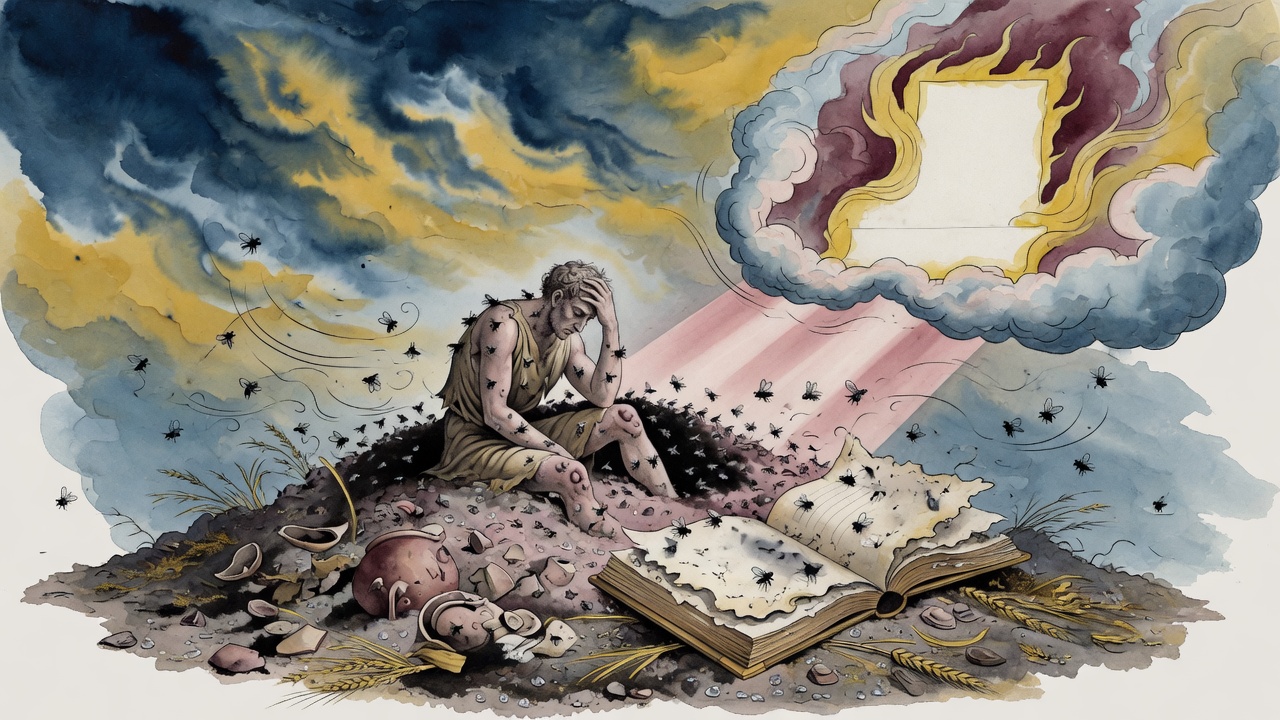
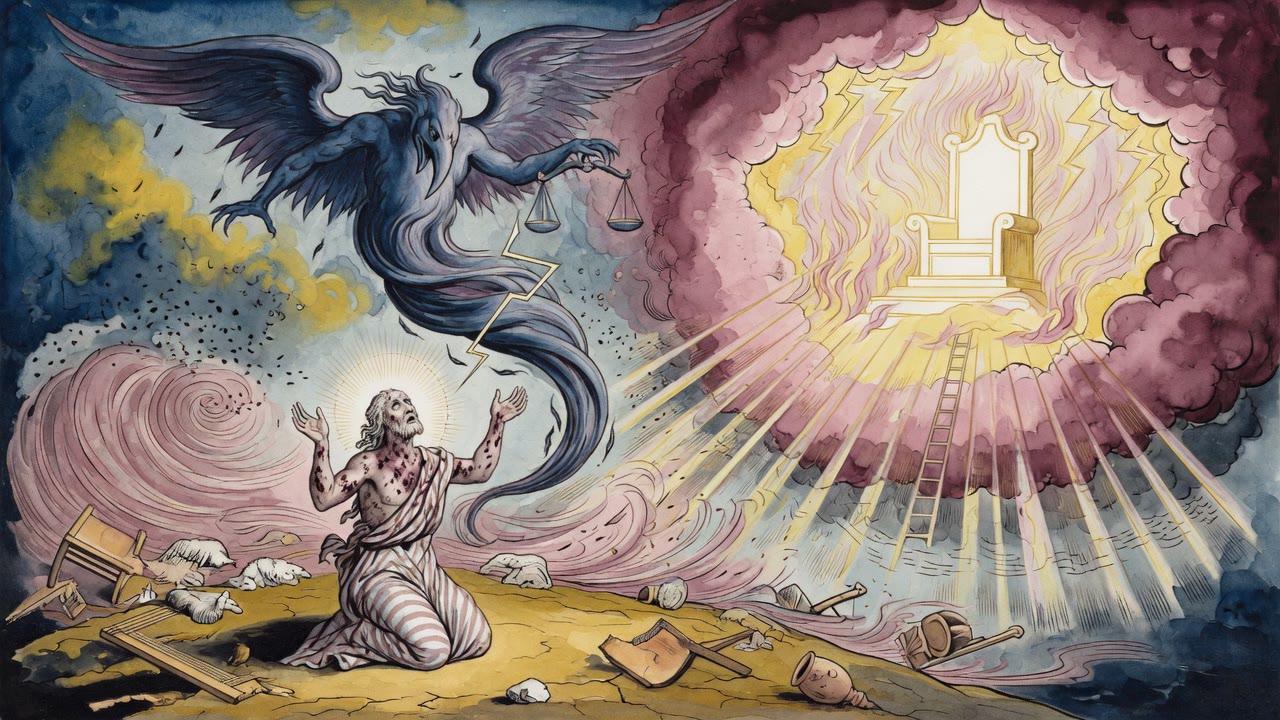
Job sat on the ash and felt wings land on open sores. The boils ran from sole to crown (Job 2:7). The flies did not wait for the friends to finish their speeches. They treated living flesh like a table set without permission. Job lifted a hand, then let it fall. Even brushing them hurt.

Flies Ate Job While Heaven Kept the Wager Open Click for full size

One Line From a Lost Book

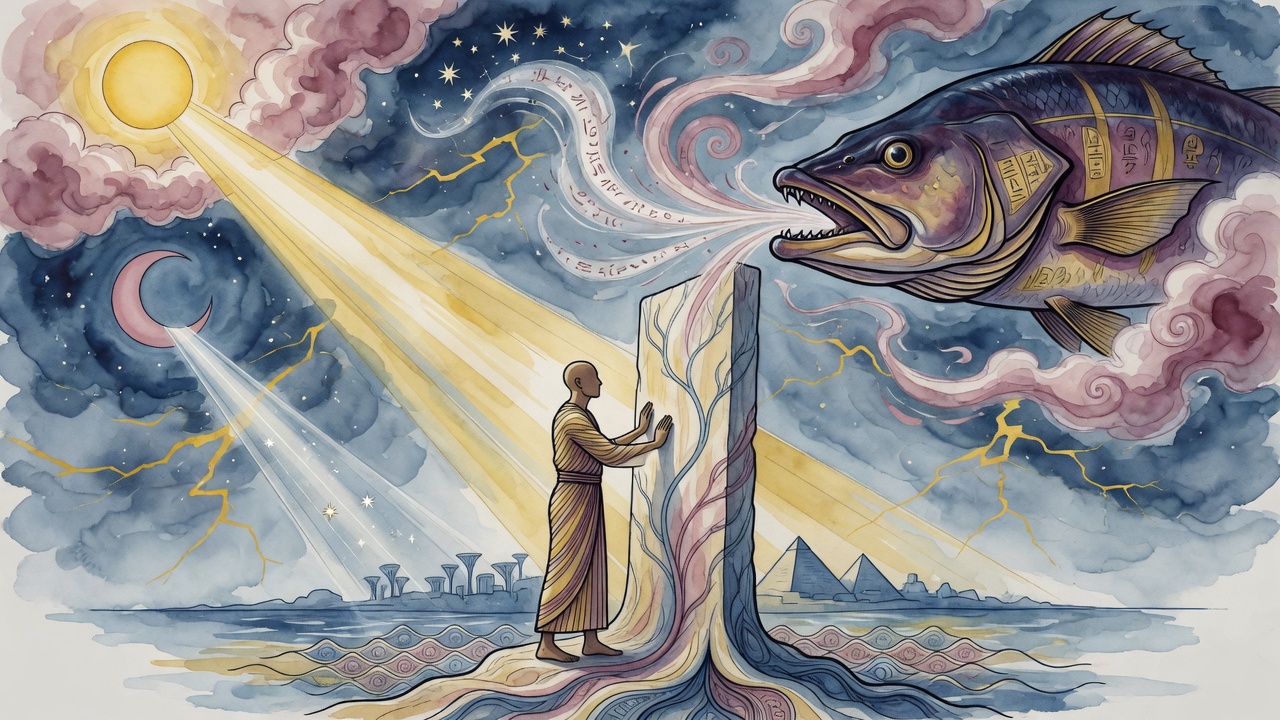
A book called Sefer Adinut, the Book of Delicacies, survives mostly as a ghost in other men footnotes. Rabbi Aaron the Elder quoted a single line from it that refuses to leave the ear. "Flies consumed Job." Rabbi Shimshon of Ostropoli later called the work holy of holies and traced its pedigree toward the Men of the Great Assembly. Almost all of it is gone. The flies remain.

Delicacies is a cruel title for a book that remembers insects feeding on a righteous person. Or it is exact. Righteousness did not make him unappetizing to flies. That sentence alone is a theology of honesty. Between the speeches of friends the flies kept working, indifferent to debate.

Dew on a Harvest That Still Hurts

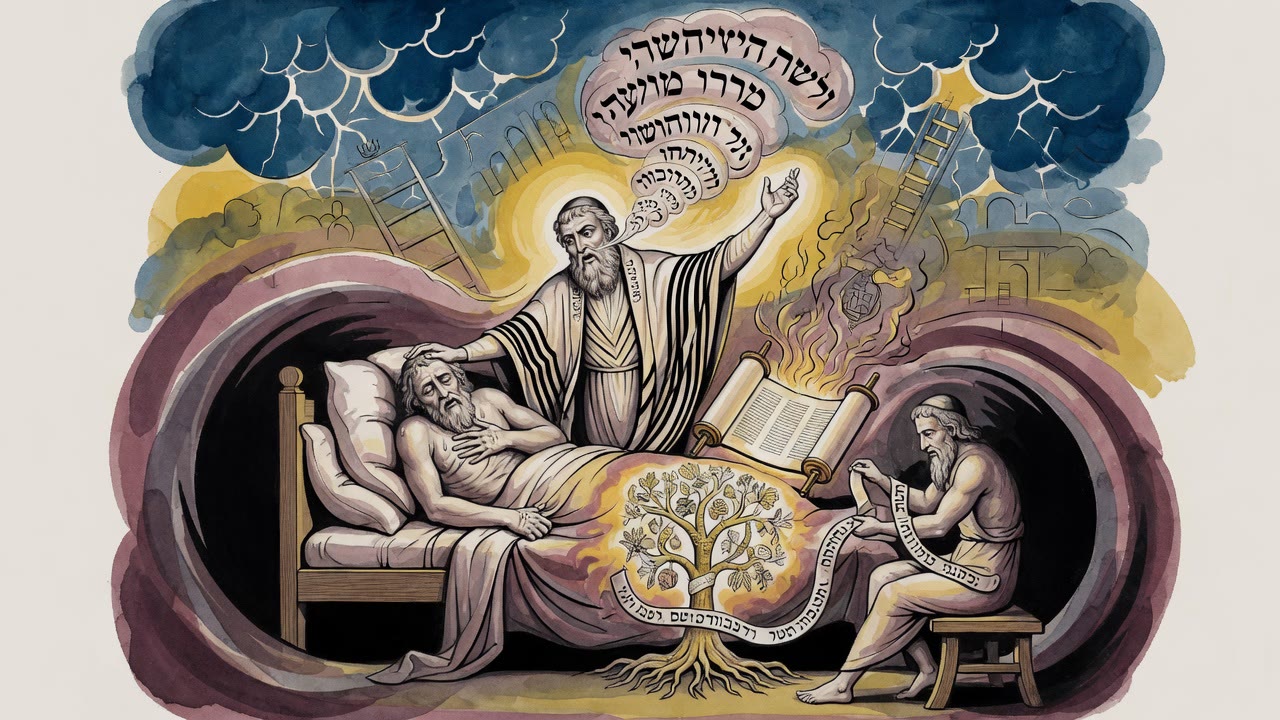
Iyyov once spoke of dew resting on his harvest (Job 29:19). Sifrei sets that line beside the duty to gather corn and still learn Torah. Rabbi Yishmael hears balance. Work the land. Study when hands rest. Rabbi Shimon bar Yochai hears danger in endless labor. If you plow and harvest without pause, when will Torah enter?

Job body becomes the extreme form of the question. What is left to study when the harvest is ash and the only movement on your skin is flies? The trial does not cancel Torah. It strips every softer reason for approaching it. Friends arrive with systems. Flies arrive with hunger.

Land Lost for a Closed Mouth

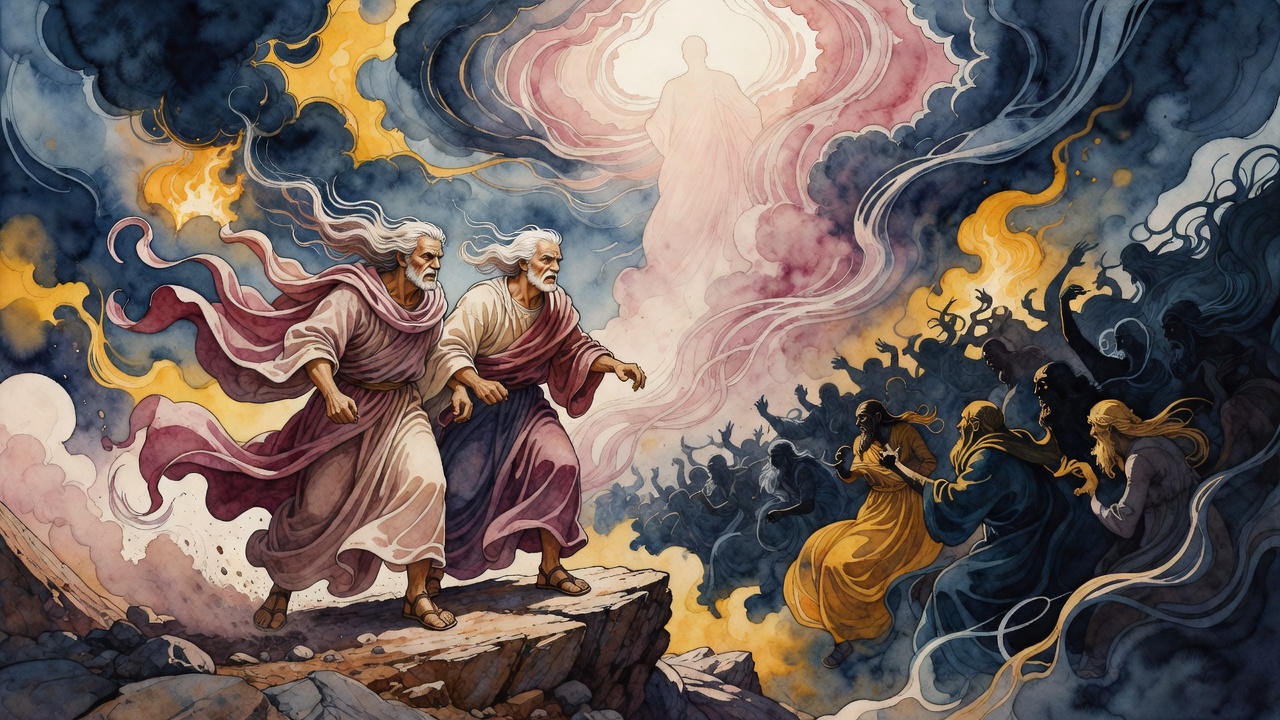
Jeremiah cried over a land parched like desert without a passerby and asked who was wise enough to understand why (Jeremiah 9:11-12). The Sifrei answers with Torah abandoned. Amos, who saw ivory beds and calves from the stall, stands in the same indictment when luxury eats while justice starves.

Job is the private version of that public loss. Heaven keeps the wager open longer than advice can reach. The land-loss of a people and the flesh-loss of one man rhyme.

What the Flies Refuse to Explain

Job does not get a lecture on insects. He gets presence in a whirlwind later, and before that he gets the honesty of a body that will not stop hurting for anyone theology. The lost book one line refuses comfort. A man covered in boils is also a man covered in wings that feed.

That is why the line was kept when the rest of Sefer Adinut vanished. Israel needed one sentence that would not polish the ash heap.

Ash, Wings, and a Name Still Spoken

When the trial ended, Job received double. The tradition does not say the flies apologized. It says a man who had been food for them still spoke to God without lying about the ash.

Somewhere a scrap of a lost book still bites. Flies consumed Job. The rest of the page is silence. The silence is loud enough to keep false comfort from sitting too easily beside a righteous man open wounds.

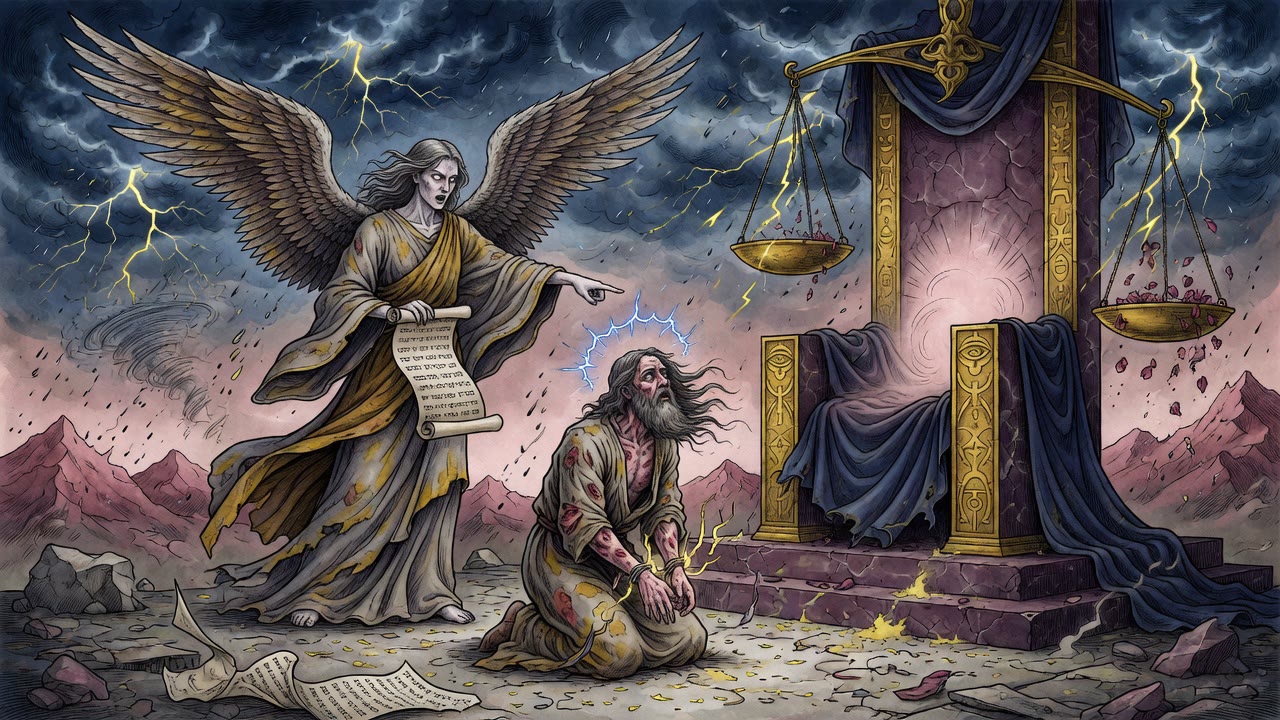
Job sat in the ash. Flies landed on the open sores. Heaven had not closed the wager, and the man under the sores still had to answer without knowing the court above him.


← All myths
From the tradition

Sources

3 sources

The texts behind this telling. Some cards carry a translation of the source; others are our own retelling of it, and each card says which. Every card links out to the original.

Sefer AdinutOtzar Midrashim (Eisenstein)

Retold in our words. Read the original at the link below.Sefaria Community Translation · CC0

This passage, preserved in Eisenstein's Otzar Midrashim, records the strange afterlife of a lost book called the Sefer Adinut, the Book of Delicacies. Rabbi Aaron the Elder cited it in his work Keranayim, in the thirteenth discourse, quoting a single arresting line from it: "Flies consumed Job." The reference connects to the trials of Job, the righteous man whom (Job 2:7) describes as struck "with sore boils from the sole of his foot unto his crown," his afflicted flesh becoming, in this tradition, food for the flies that settled upon his wounds.

The account then turns to Rabbi Shimshon of Ostropoli, the renowned kabbalist, who in his commentary on the work Dan Yadin described the book's pedigree. According to him the Book of Delicacies was composed by Rabbi Shimon the Great, counted among the great sages of Lutir, and tradition held that its ultimate origin reached back to the Men of the Great Assembly in the days of Ezra the Scribe, the body the Mishnah in Avot credits with safeguarding and transmitting the Torah after the return from Babylon. Rabbi Shimshon called the book "holy of holies," full of wondrous mysteries, and lamented that only a fragment of it remained in Jewish hands, the rest having been carried off by gentiles. The notice closes by pointing the reader to a further marvel concerning the fly discussed in the responsa Rav Pe'alim, leaving us a tantalizing record of esoteric writings that the tradition mourns as nearly lost.

Full source
Sifrei Devarim 42:8Sifrei Devarim

Retold in our words. Read the original at the link below.Sifrei by Rabbi Shraga Silverstein · CC-BY

There's a fascinating little passage in Sifrei Devarim that wrestles with this very tension.

But it's not just a random occurrence. It speaks to a deeper struggle. The text connects this to a verse from Iyyov (Job 29:19), "and the dew rested on my harvest," suggesting that even in times of abundance, there can be a sense of misplaced effort.

Then the text shifts gears, quoting the verse: "and you shall gather in your corn." Seems obvious. Why even mention it? Well, the question arises because of another verse, (Joshua 1:8): "Let not this book of the Torah depart from your mouth." We might think this means constant, uninterrupted Torah study. So, Sifrei Devarim uses "and you shall gather in your corn" to teach us a crucial balance: Engage in the "way of the land" – meaning, have an occupation – but learn Torah whenever you're not working. This is the teaching of Rabbi Yishmael. A beautiful balance between the practical and the spiritual.

Hold on, because Rabbi Shimon b. Yochai offers a completely different perspective! He argues, if a person is always busy – harvesting during harvest, plowing during plowing, threshing during threshing, and winnowing when it’s windy – when will they ever find time to learn Torah? He presents a radical idea: When Israel does God's will, our work is done by others! As it says in (Isaiah 61:5), "And strangers shall arise and graze your flocks." Imagine that! A world where we are free to pursue spiritual growth because our material needs are taken care of.

But, and this is a big but, when we don't do God's will, we’re stuck doing all the work ourselves. And, even worse, we end up doing the work of others, too! The text drives this point home with a stark verse from Devarim (Deuteronomy 28:48): "And you shall serve your foes." Ouch.

So, what do we make of these contrasting views? Rabbi Yishmael offers a practical approach: find balance. Work, but don’t neglect Torah. Rabbi Shimon b. Yochai presents a more idealistic vision: a world where devotion to God frees us from the endless grind.

Maybe the truth lies somewhere in between. Perhaps striving to live in accordance with God's will – through acts of kindness, justice, and learning – gradually shifts the balance. Maybe it doesn't magically eliminate work, but it infuses it with meaning. It transforms the plowing and harvesting from mere chores into acts of service. And perhaps, just perhaps, it creates space for a little more dew to rest on our harvest. A little more time for what truly matters.

Full source
Sifrei Devarim 41:10Sifrei Devarim

Retold in our words. Read the original at the link below.Sifrei by Rabbi Shraga Silverstein · CC-BY

They had some pretty strong ideas about the root cause. Jeremiah, in the book that bears his name, cries out (Jeremiah 9:11-12): "Who is the wise man who will understand this, and to whom the mouth of the L-rd has spoken and who can tell it? Why was the land lost and parched like a desert without a passerby? A land desolate, utterly abandoned. And the answer? Stark and unwavering. "'Because they forsook My Torah which I placed before them, and they did not keep My voice nor follow it.'"

Ouch.

It's a tough message. It suggests a direct link between our actions and the state of the world. Between our commitment to Torah, to God's teachings, and the flourishing or withering of everything around us. Is it really that simple? Is it that direct?

Well, the story turns to another prophet. Amos.

Amos, in (Amos 2:4), delivers a similar indictment: "Thus said the L-rd: 'For three offenses of Judah (I looked away), but for the fourth I will not pardon them, for their despising the Torah of the L-rd, and for not observing His statutes.'" Notice the language: "despising the Torah." It's not just about passively ignoring it. It's about active rejection.

So, what does it mean to "despise the Torah"? Is it just about breaking commandments? Maybe. But perhaps it’s also about failing to see the Torah as a living, breathing guide for our lives. A source of wisdom and connection. Maybe it's about letting it become something dusty and irrelevant, instead of a vibrant conversation that challenges and inspires us.

These aren't easy passages to read. They force us to confront uncomfortable truths about ourselves, about our communities, and about our relationship with the Divine. They challenge us to ask: Are we truly listening? Are we truly engaging with the wisdom that has been passed down through generations? Are we actively choosing to follow its path?

Because the prophets seemed pretty convinced that the answer has profound consequences.

Full source